
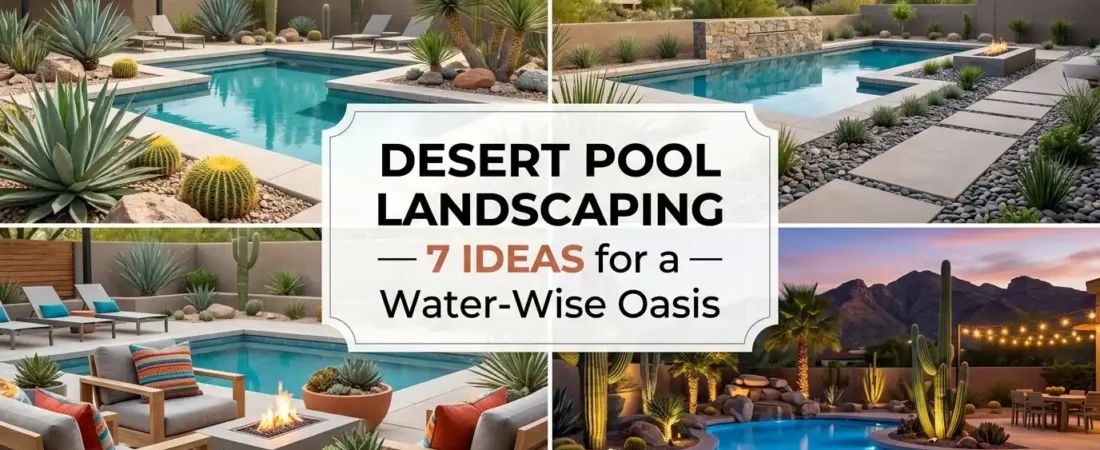
A desert pool is more than just a place to swim. It is a statement of contrast, sparkling turquoise water set against sun-bleached stone, rugged boulders, and sculptural cacti. In dry climates where water is precious, desert pool landscaping offers a sustainable, low-maintenance solution that feels like a natural extension of the landscape rather than a foreign addition. Whether you have a sprawling backyard or a compact courtyard, these seven ideas will help you create a cool retreat that thrives in the heat.
Table of Contents
1. Boulders and Natural Stone Borders
✦ Best for: Creating a rugged, natural look that blends the pool into the desert landscape
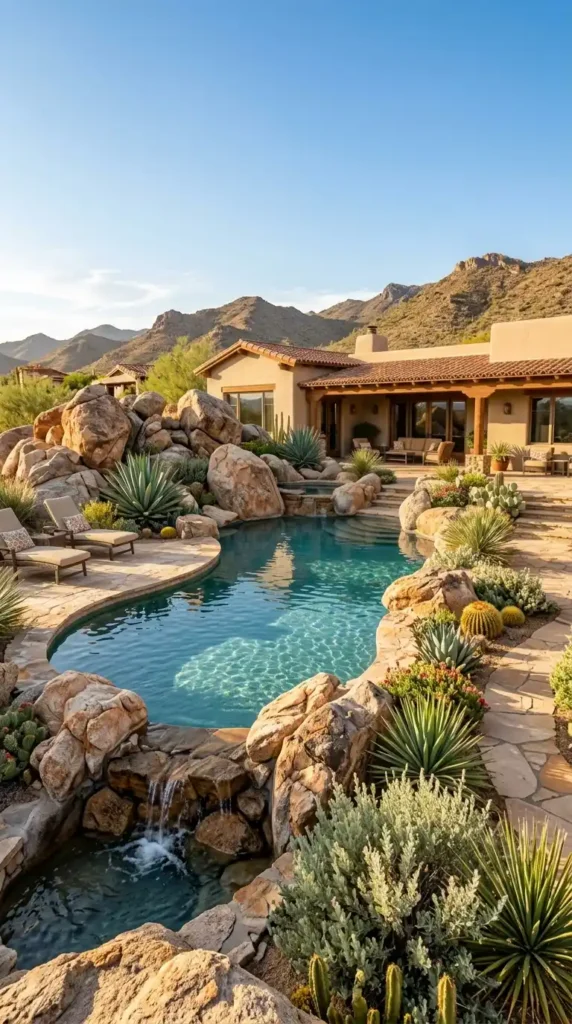
Boulders give a desert pool its backbone. They anchor the space, define edges, and create a sense of permanence that flat paving cannot match. Large stones placed around the pool mimic the rocky outcroppings found in desert canyons, making the water feel like a natural spring. This look works best in yards where the land already feels wild and rugged.
How to do it: Use locally sourced stone in warm earth tones. Place boulders in clusters rather than in a straight line. Bury each rock at least one-third of its depth so they look like they belong. Leave gaps between stones for drought-tolerant plants like agave or yucca. The contrast between rough stone and smooth water is what makes this design work.
2. Succulent and Cactus Gardens
✦ Best for: Adding sculptural interest with minimal water and maintenance
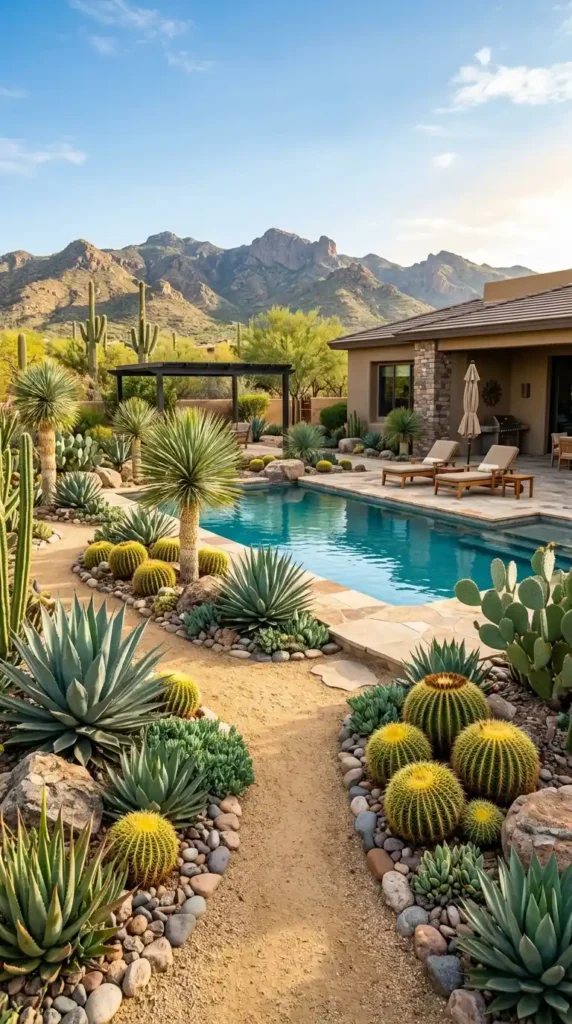
Succulents and cacti are the stars of desert pool landscaping. They bring architectural form, texture, and a striking silhouette that changes with the light. Agave, yucca, aloe, and barrel cacti are all excellent choices that require very little water and thrive in full sun. Aloe even works as a natural remedy for sunburns, a practical bonus in a hot climate.
How to do it: Group plants in drifts for maximum visual impact. Place taller plants like saguaro or yucca behind shorter ground covers. Use gravel or decomposed granite as mulch to retain moisture and control weeds. Leave a clear zone between the plants and the pool edge for easy access and maintenance.
3. Modern Geometric Pool with Clean Lines
✦ Best for: A contemporary look that contrasts sharply with the natural desert surroundings
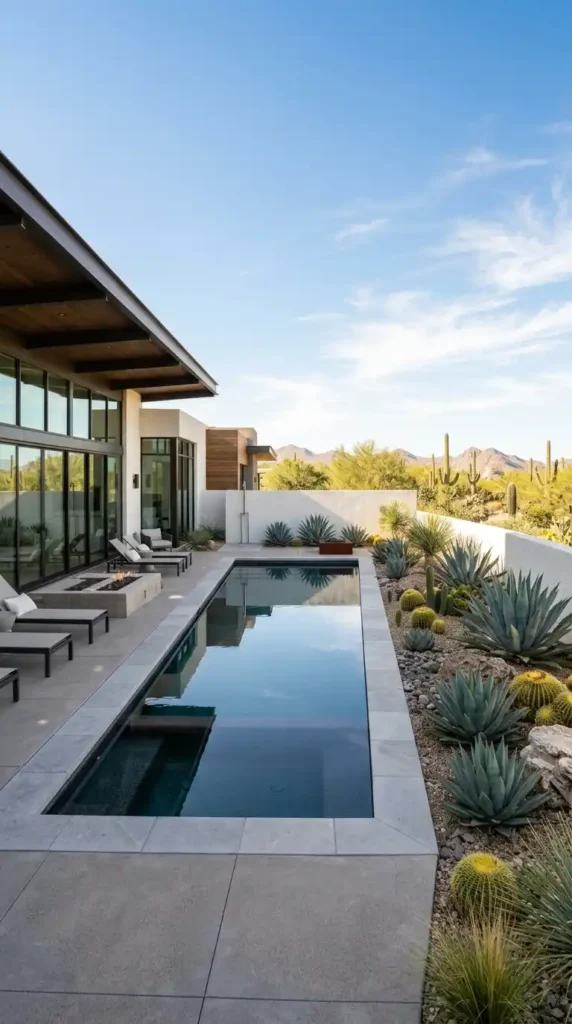
Modern geometric pools create a powerful visual statement in the desert. The stark contrast between the crisp architectural lines of the pool and the organic, rugged landscape is what makes this design so effective. A dark tile interior turns the water into a mirror, reflecting the sky and surrounding plants. This style is a departure from the naturalistic oases that were popular in the past, embracing the idea that the pool should stand out rather than blend in.
How to do it: Keep the pool shape simple, a rectangle or square works best. Use a dark liner or tile finish for a reflective surface. Pair with natural stone coping and a neutral-colored deck. Frame the pool with agave plants and a white stucco wall for a crisp, clean backdrop. This design is often paired with minimalist outdoor furniture and a monochromatic color palette.
4. Pool with a Dry Creek Bed Feature
✦ Best for: Adding visual flow and managing rainwater runoff
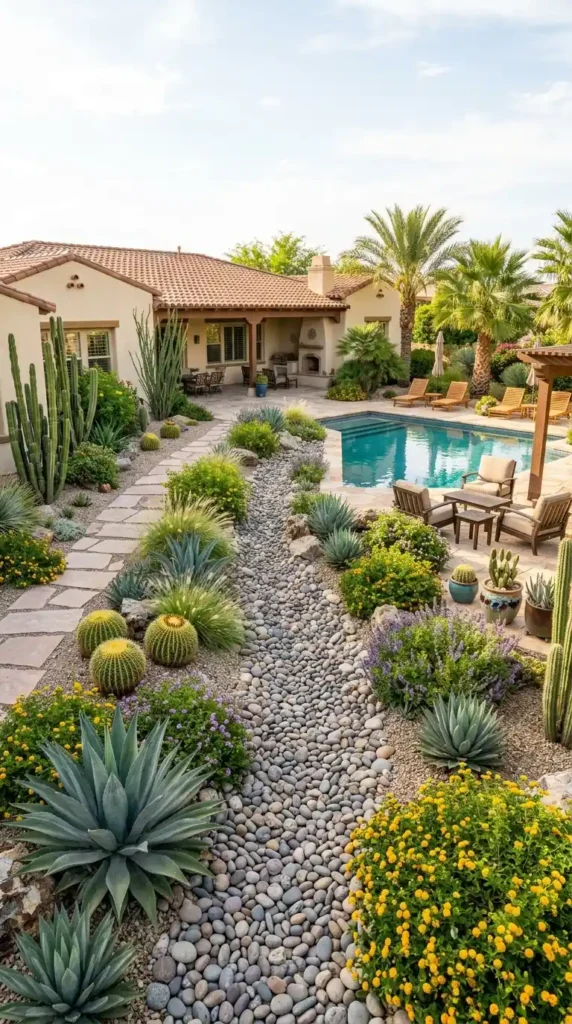
A dry creek bed is a natural-looking channel of rocks that adds movement and texture to a desert landscape. It can also serve a practical purpose, directing rainwater away from the pool area during rare but intense desert storms. The flowing lines of the creek bed create a visual connection between different parts of the yard and soften the edges of the pool.
How to do it: Use smooth river rocks in various sizes, with larger stones along the edges and smaller pebbles in the center. Let the creek bed meander through the landscape, leading toward the pool. Add drought-tolerant plants like ornamental grasses along the banks to soften the look. The creek bed can also frame a pathway or connect different zones in the yard.
5. Natural Stone Pavers and Flagstone Deck
✦ Best for: A durable, non-slip surface that stays cool underfoot
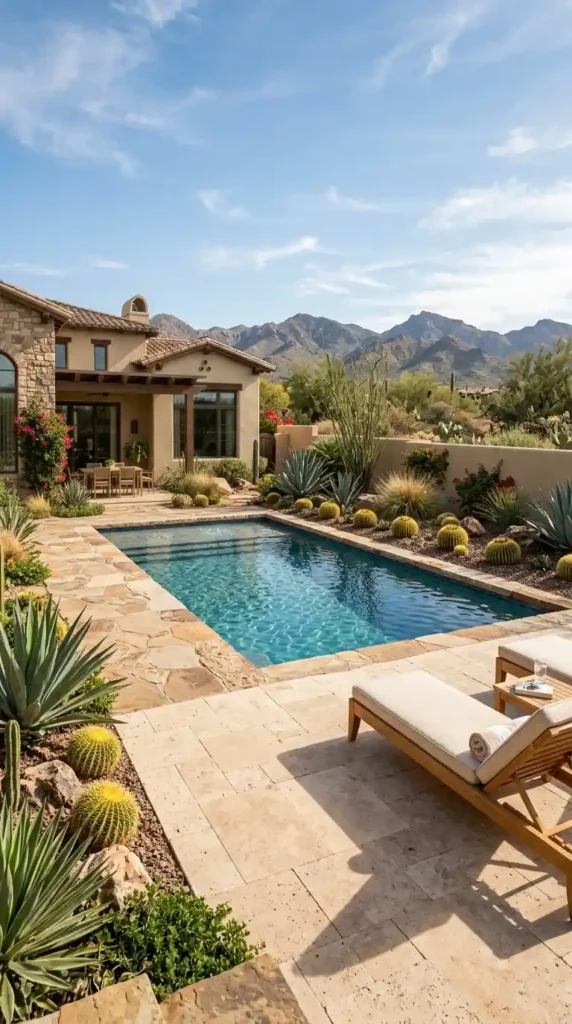
The material surrounding your pool matters just as much as what is inside it. Natural stone like flagstone, travertine, or locally excavated stone is ideal for desert pool landscaping. These materials remain cooler underfoot than concrete or tile, making them more comfortable for bare feet on a hot day. The irregular shapes and warm earth tones also help the pool area feel more natural and integrated with the landscape.
How to do it: Choose stone in warm tones like beige, taupe, or sun-bleached gray. Use flagstone in irregular shapes for a rustic look, or travertine pavers in a French pattern for a more polished feel. Ensure the surface has a textured finish for slip resistance. Pair with a low-profile pool edge to maintain expansive sightlines.
6. Gravel and Decomposed Granite Beds
✦ Best for: A low-maintenance, water-wise alternative to traditional planting beds
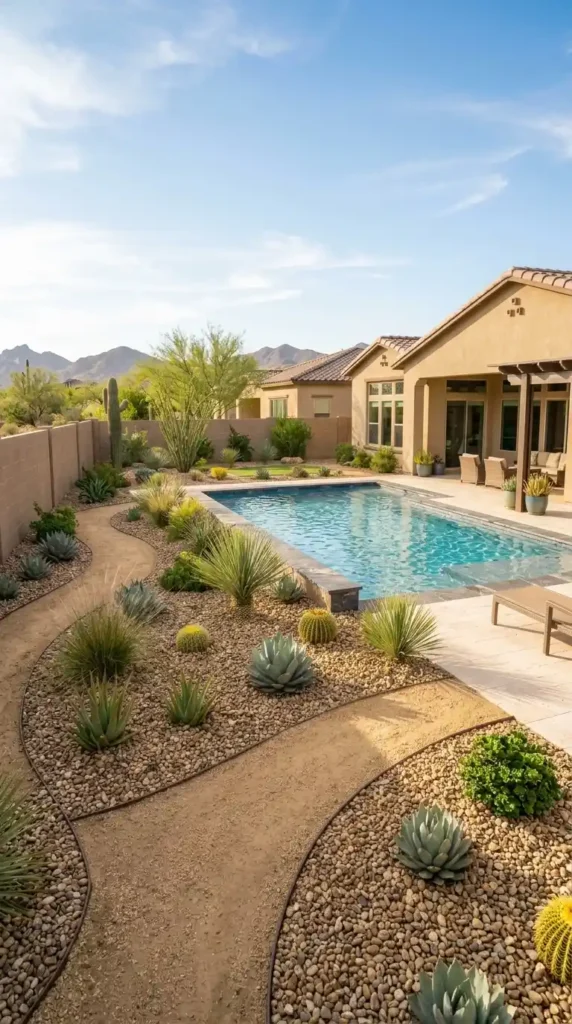
Gravel and decomposed granite are the unsung heroes of desert pool landscaping. They provide a clean, low-maintenance surface that prevents weeds and reduces water usage. Raked gravel beds between the pool coping and the patio create a sense of stillness that mirrors the calm of the water. Decomposed granite paths wind easily through the landscape, offering a practical way to move through the garden without compacted dirt.
How to do it: Use gravel or decomposed granite in place of mulch or turf. Rake it in patterns for a clean, intentional look. Add a few smooth river rocks or a single architectural plant within the gravel for subtle contrast. For pathways, decomposed granite provides a stable, dust-free surface that blends with the desert aesthetic.
7. Pool with a Rock Waterfall Feature
✦ Best for: Adding the soothing sound of water and a dramatic focal point
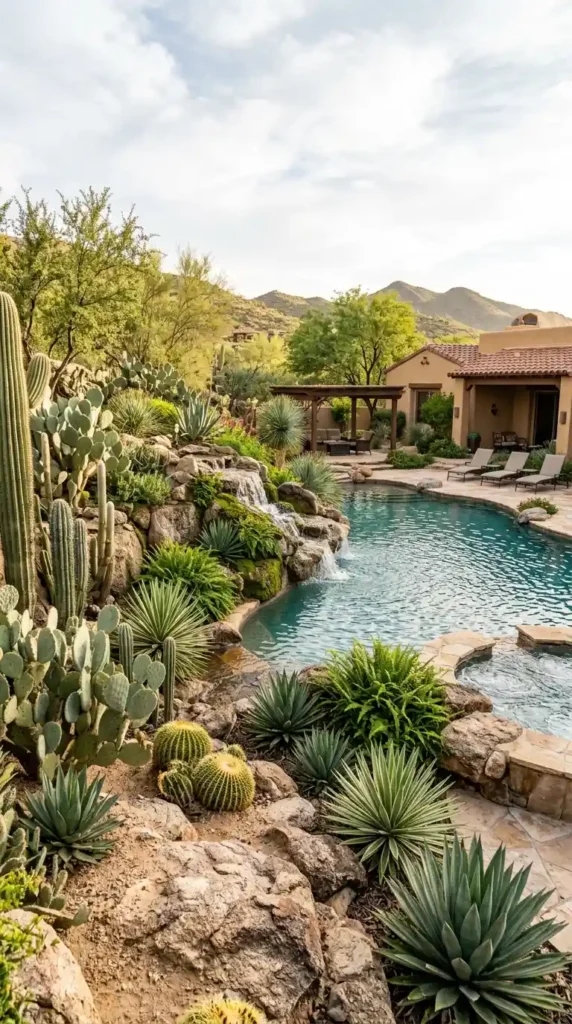
A rock waterfall adds a sensory dimension to a desert pool. The sound of trickling water masks ambient noise and creates a sense of tranquility. In a dry landscape, the presence of moving water is especially compelling, making the pool feel like a rare and precious oasis. The waterfall can be built from local stone or artificial rockwork designed to blend with the natural surroundings.
How to do it: Build a waterfall using stone that matches the local geology. Allow moss and plants to grow naturally around the rocks for a more established look. The waterfall can be designed to recirculate pool water, supporting an eco-friendly pool design. Place it where it serves as a focal point from the main house.
Frequently Asked Questions
1. What plants work best for desert pool landscaping?
Agave, yucca, aloe, and barrel cacti are excellent choices. They are drought-tolerant, sculptural, and require minimal maintenance. For added color and seasonal interest, consider desert marigold, red yucca, or penstemon, which attract pollinators. Ornamental grasses like blue fescue and Mexican feather grass add movement and softness.
2. How do I maintain a desert landscape around my pool?
Desert landscapes are low-maintenance but not no-maintenance. Monitor for overgrowth and prune plants when needed to keep a neat look. Use decomposed granite or gravel mulch to control soil temperatures and retain moisture. Drip irrigation delivers water directly to the roots with minimal loss.
3. What materials work best for a desert pool deck?
Flagstone, travertine, and locally excavated stone are ideal. They stay cooler underfoot, provide slip resistance, and blend with the natural environment. Use a neutral color palette of beige, taupe, and warm browns to complement the desert setting.
4. Can I have a tropical theme in a desert pool landscape?
Yes. Use desert-adapted plants that resemble tropical varieties, such as windmill palms, mesquite trees, and bougainvillea. Planting densely and using plants from different size categories helps achieve a tropical look while keeping water usage low.
5. How do I keep a desert pool cool in extreme heat?
Natural stone stays cooler than concrete, making it a good choice for the deck. Add shade structures like pergolas, shade sails, or umbrellas to provide relief from the sun. Consider an automatic pool cover to reduce evaporation and keep water temperatures down.
Related Articles
7 Best Small Spanish Style Pool Ideas
How to Decorate a Mediterranean Pool — 7 Steps to a Resort-Style Escape
7 French Country Pool Ideas That Feel Like a Luxury Escape
A desert pool is a celebration of contrast. It is where turquoise water meets sun-bleached stone, and where the harshness of the desert is softened by the cool relief of the water. With the right materials and plants, your backyard can become a water-wise oasis that thrives in the heat.

Sheikh Hassaan is a digital architect for small businesses and the founder of The Glow Up System. He writes about home decor, garden design, and outdoor living for real American homes – practical ideas that work in actual spaces without oversized budgets.