
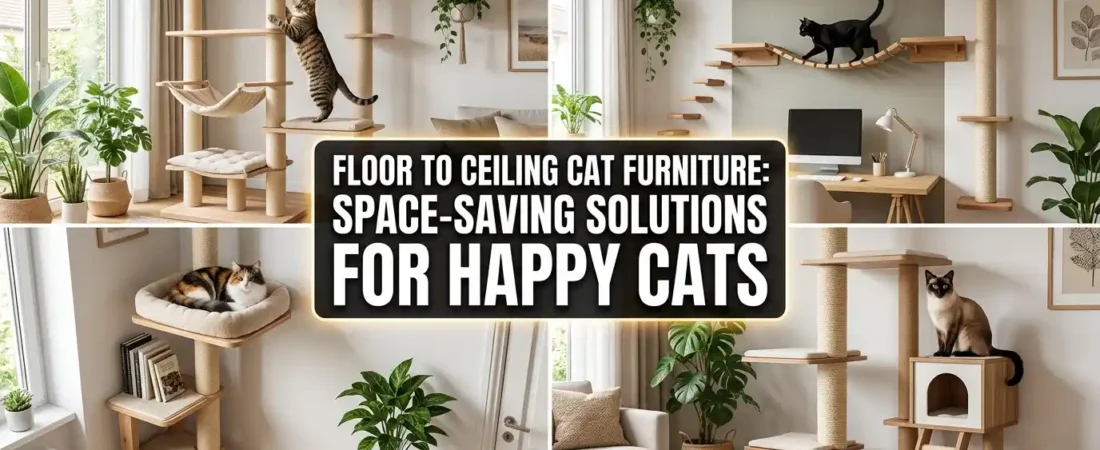
Floor-to-ceiling cat furniture is a game-changer for cat owners with limited floor space. These vertical structures allow your cat to climb, perch, and play without taking up valuable square footage. They work by extending from the floor to the ceiling with a tension-based system, making them renter-friendly since you do not need to drill into walls. Unlike traditional cat trees that rely on a wide, heavy base, these towers use adjustable poles that press firmly against the ceiling for stability. Most can be adjusted to different ceiling heights using mechanisms like screw adjustments or clip systems, so you can find a perfect fit for your home.
Table of Contents
1. Tension-Mounted Cat Towers
✦ Best for: Renters and small apartments where you cannot drill into walls
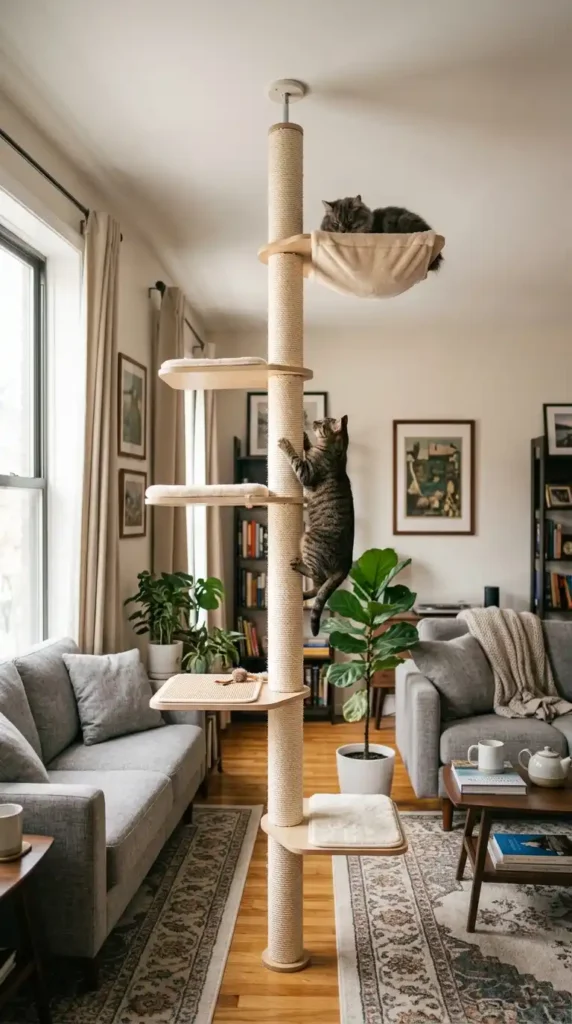
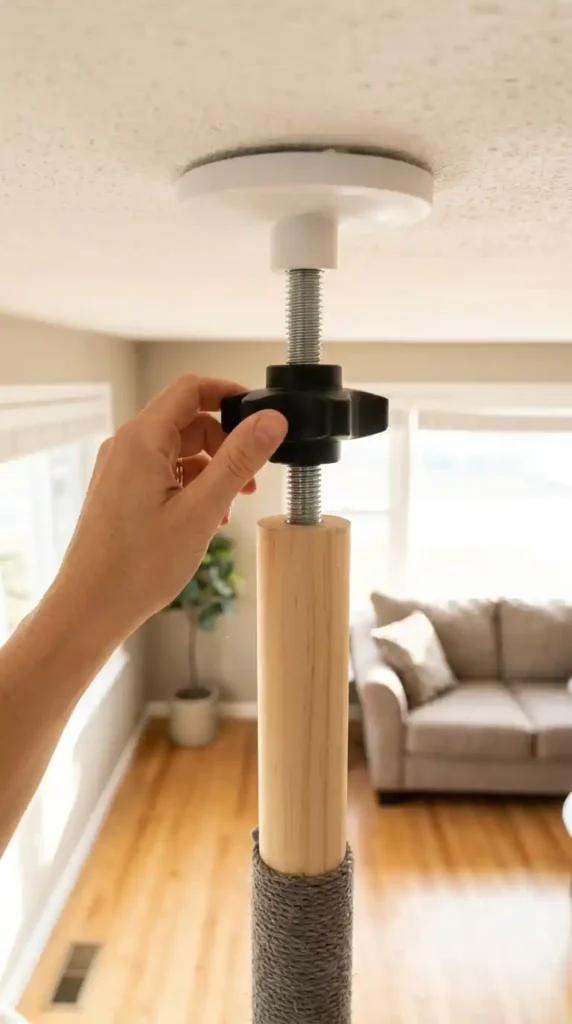
Tension-mounted cat towers use a spring or screw mechanism to press firmly between the floor and ceiling. This means no drilling into walls, making them perfect for renters. As one reviewer noted, “It’s very stable if twisted correctly, it’s also not screwed into anything so it’s renter friendly.”
What to look for: Ensure the tower’s height range matches your ceiling height. Most models are adjustable between 95 to 108 inches. Look for a wide, sturdy base and a ceiling cap to distribute pressure evenly.
Best features: Multiple platforms for climbing, sisal-wrapped scratching posts, cozy hammocks or condos, and dangling toys for entertainment.
2. DIY Cat Wall Shelves
✦ Best for: Customizable setups that save even more floor space and match your decor
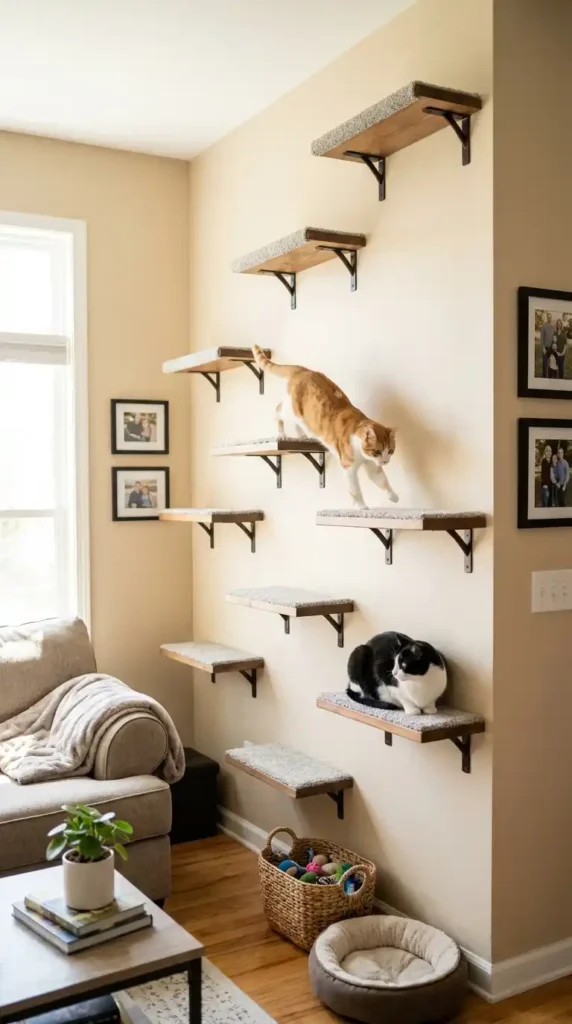
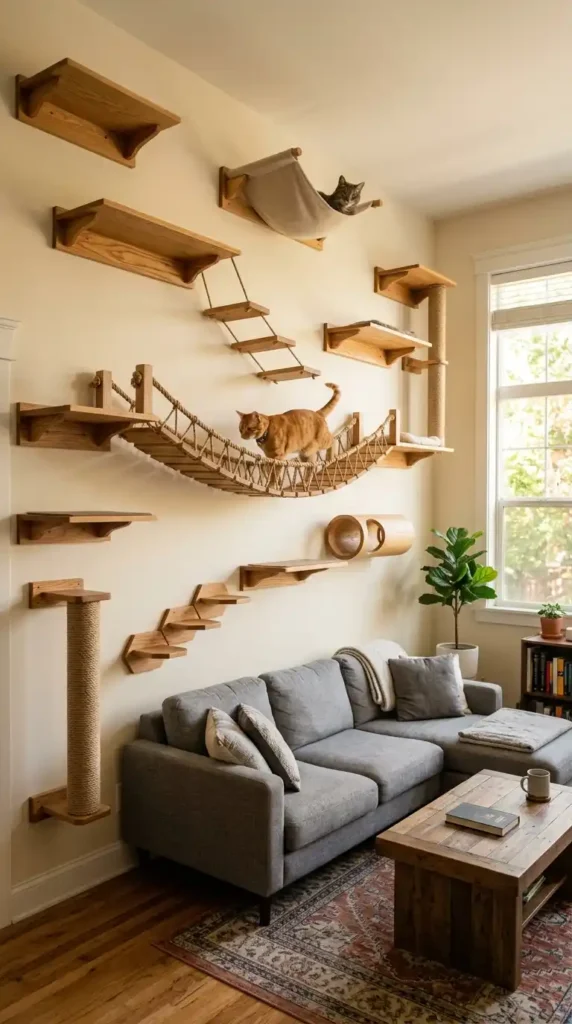
If you want a more custom look, DIY cat shelves are a fantastic option. Wall-mounted cat shelves create a “cat superhighway,” allowing your cat to navigate the room without touching the floor. Requests for help creating cat walls have increased by 92% recently, showing this trend is rapidly growing in popularity.
Materials: 1/2-inch thick wood boards at least 12 inches deep and 18 inches wide, sturdy L-brackets, and heavy-duty wall anchors. You can also use pine boards, carpet scraps for grip, and sisal rope for scratching surfaces.
Safety first: Always secure shelves into wall studs when possible. If you cannot hit a stud, use heavy-duty drywall anchors rated for at least 50 pounds. A jumping cat can multiply their weight significantly when landing.
Creative ideas: Create a “cat highway” by placing shelves with enough space to jump between them. Use a mix of platforms, hammocks, and rope bridges for variety. A popular approach is using a single large piece of carpet running up the wall with shelves placed along it.
3. Multi-Level Cat Gyms
✦ Best for: Active cats and multi-cat households
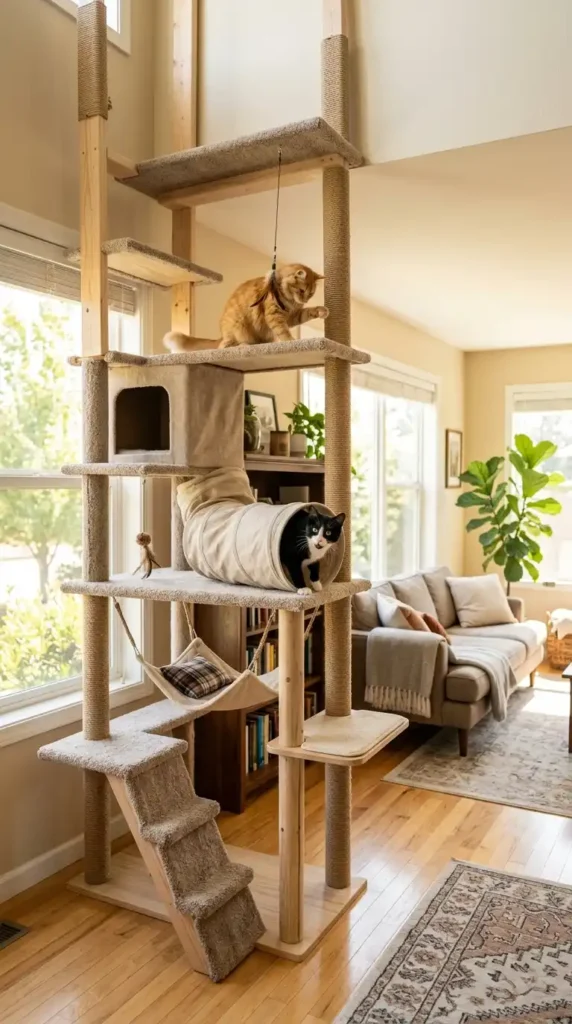
Cat gyms are more elaborate than traditional towers. They feature platforms at alternating levels, tunnels, steps, and multiple scratching surfaces. These provide more opportunities for exercise and mental stimulation.
Why they work: Multi-level gyms encourage natural climbing behavior and give cats a safe way to release energy. In multi-cat households, different levels provide separate resting areas to reduce territorial conflicts.
Pro tip: Look for gyms with a stable, wide base to prevent tipping, especially for taller units.
4. Modern Wall-Mounted Cat Shelves
✦ Best for: Homeowners who want pet furniture that looks like stylish decor
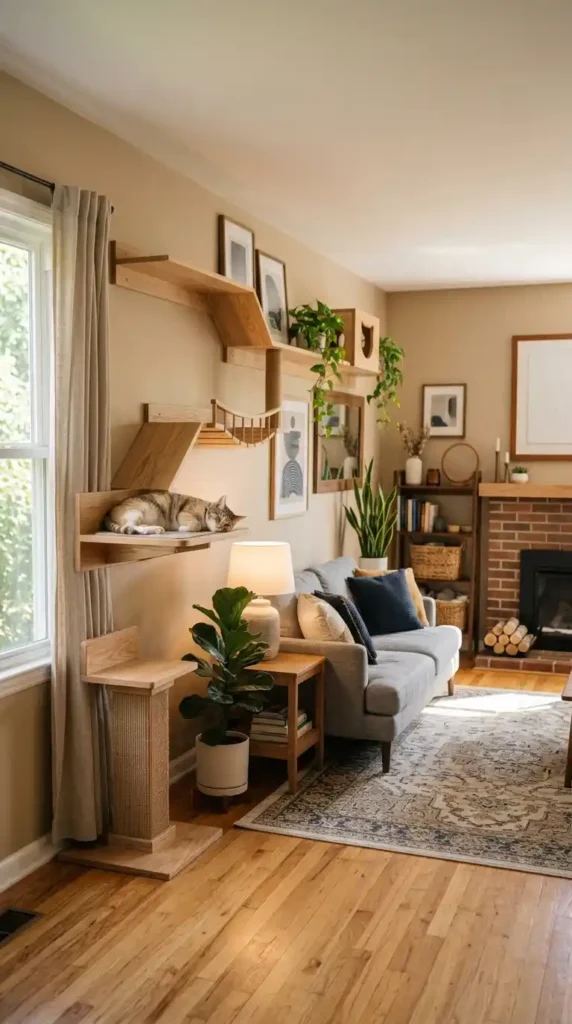
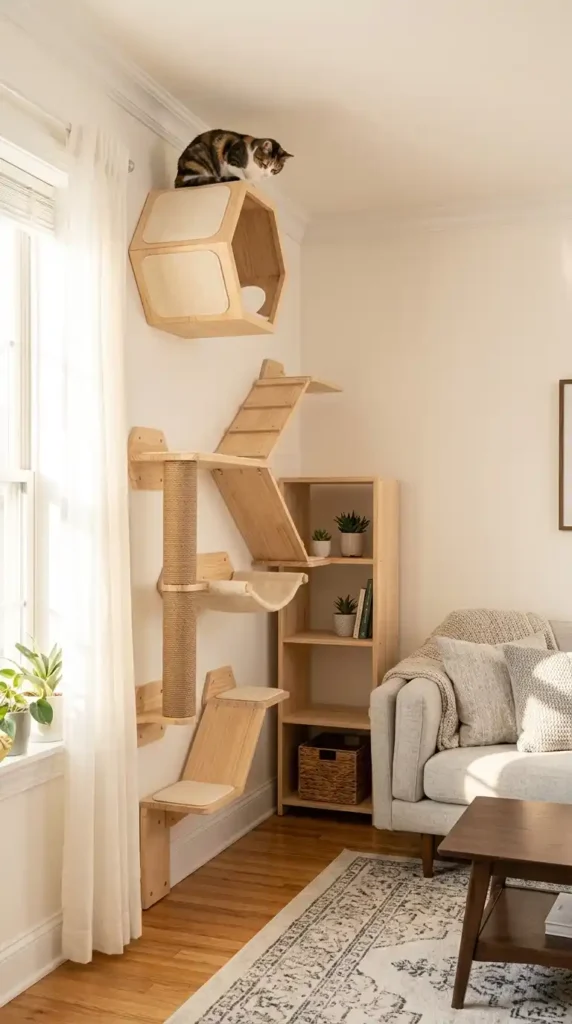
Modern cat furniture is designed to blend with home decor. Some products are made from premium, recyclable materials and feature universal joineries with interchangeable accessories. Others offer minimalist designs that look like stylish shelving.
What to look for: Solid wood construction like E0-grade pine that is non-toxic and odorless. Plush padding on shelves for comfort and slip-resistance. Weight capacity of at least 40 pounds.
Modular options: Some systems allow you to reconfigure the setup as your cat’s needs or your space changes. This flexibility is perfect for growing cats or changing decor.
Frequently Asked Questions About Floor to Ceiling Cat Furniture
1. Are floor-to-ceiling cat trees safe?
Yes, when installed correctly. Tension-mounted towers must be twisted tightly enough to create proper tension, or they will wobble. Wall-mounted shelves must be anchored into wall studs or heavy-duty drywall anchors. For extra security, some users screw in the wall mount portion for added support.
2. Will my cat actually use it?
Most cats take to these structures quickly. One reviewer noted, “My cats love this tree. They jump on it and run up and down it all day long.” They are especially valuable for indoor cats that need exercise and a sense of security from high perches. To encourage use, place catnip on the shelves or position them near a window with a view.
3. What if I have a big cat?
Look for towers with a weight capacity of at least 40 pounds. Some reviewers noted that larger cats may only use the bottom tiers on smaller models. Ensure the platforms are large enough for your cat to turn around and crouch comfortably. Maine Coon owners have had success with floor-to-ceiling towers that have larger platforms.
4. How much does floor-to-ceiling cat furniture cost?
Prices vary widely. Simple tension-mounted towers start around $100, while high-end modular systems can cost significantly more. DIY cat shelves are the most budget-friendly option, costing as little as materials for a few wood boards and brackets.
Related Articles
Non-Toxic Plants for Dogs: A Pet-Safe Indoor Garden Guide
12 Dog-Friendly Backyard Ideas For Active Pets
Dog Furniture: 10 Stylish Ideas That Blend with Your Home Decor
Floor-to-ceiling cat furniture keeps your cat happy and your home stylish. Whether you choose a tension-mounted tower or a custom DIY cat wall, your feline friend will thank you for the vertical playground.

Sheikh Hassaan is a digital architect for small businesses and the founder of The Glow Up System. He writes about home decor, garden design, and outdoor living for real American homes – practical ideas that work in actual spaces without oversized budgets.