
There is a house on my street where I slow down every time I walk past. Nothing dramatic — a cottage border that spills slightly over the path edge, a climbing rose on the fence, lavender in groups of five or six. The front door is painted dark green.
I have never met the owner. I feel like I know something about them anyway.
That is what a front yard garden does. It communicates before anyone speaks. These 12 ideas cover every style and every budget — from a single solar light as a starting point to a complete layered front garden that changes through all four seasons.
Table of Contents
1. Plant Cottage Style Flower Beds for an Effortlessly Charming Front Yard
✦ Cottage Style Flower Beds
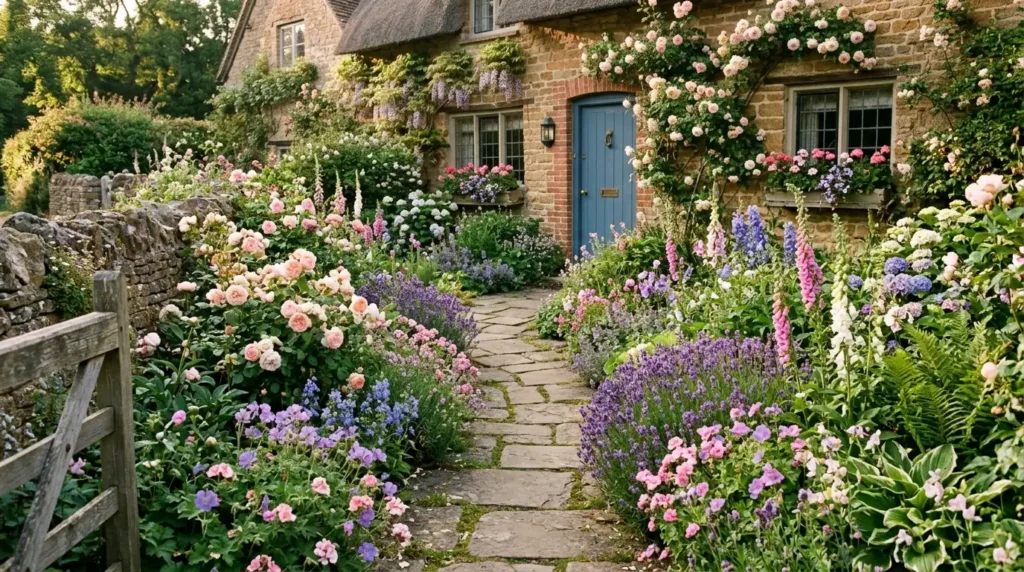
The cottage front yard is the one that makes people slow down. Not because it looks expensive. Because it looks genuinely cared for.
The deliberate informality — lavender spilling over the path edge, roses on the fence, foxgloves appearing where they seeded themselves last summer — communicates something that a formally planted border cannot. Someone lives here who pays attention.
Choose plants that give the cottage look its character — roses, lavender, foxgloves, hollyhocks, geraniums, and sweet peas all define the aesthetic. Mix perennials that return each year with annuals for seasonal variation. Let plants self-seed slightly between beds for the natural quality that distinguishes a true cottage garden from a formal planting scheme. The self-watering hanging planters with macrame rope hangers add beautiful vertical greenery to any cottage-style porch entrance. Find them linked on Amazon.
PRO TIP: Plant cottage flower beds in odd-numbered groups of three or five rather than single specimens. Three lavenders together look like a drift. One lavender looks like an afterthought. The grouped approach creates the abundance that cottage style requires.
2. Create a Minimal Modern Front Yard With Clean Lines and Structure
✦ Minimal Modern Landscaping
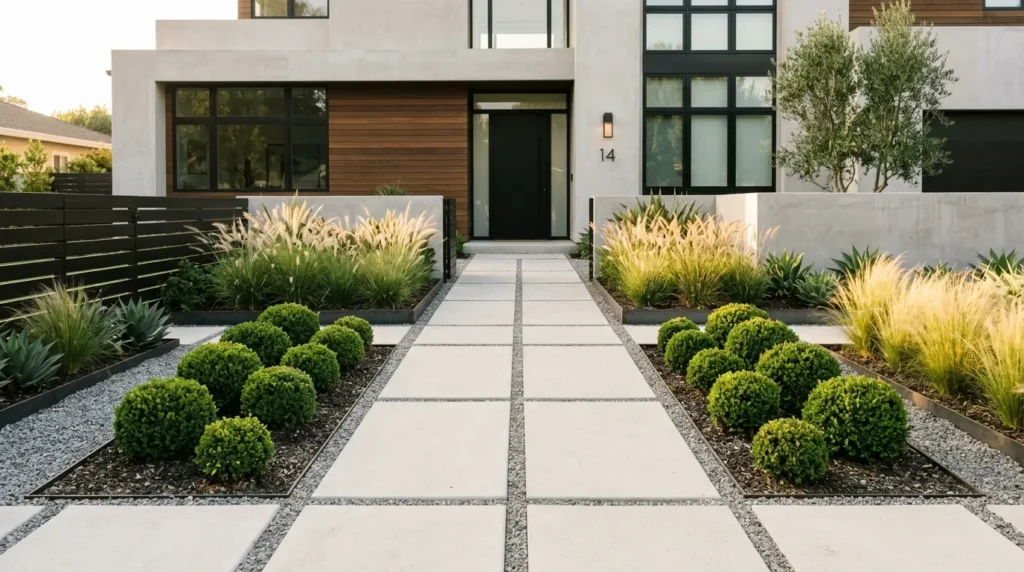
The minimal modern front yard is the one that looks effortless and takes the most intention to achieve. Nothing accidental. Nothing informal. Every plant chosen for its form rather than its flowers.
I find this style consistently harder to execute than cottage planting because the restraint is the skill. Cottage gardens forgive an extra plant. Minimal modern gardens do not.
Choose plants valued for their architectural form rather than their flowers — clipped box spheres, ornamental grasses, agapanthus, and structural succulents all suit the modern minimal aesthetic. Use one or two plant varieties consistently rather than mixing many different species. Define the path edges with clean metal landscape edging. The restraint of the palette and the precision of the planting is what creates the impact.
3. Transform Your Front Yard on a Budget With Simple Green Upgrades
✦ Budget-Friendly Green Upgrade
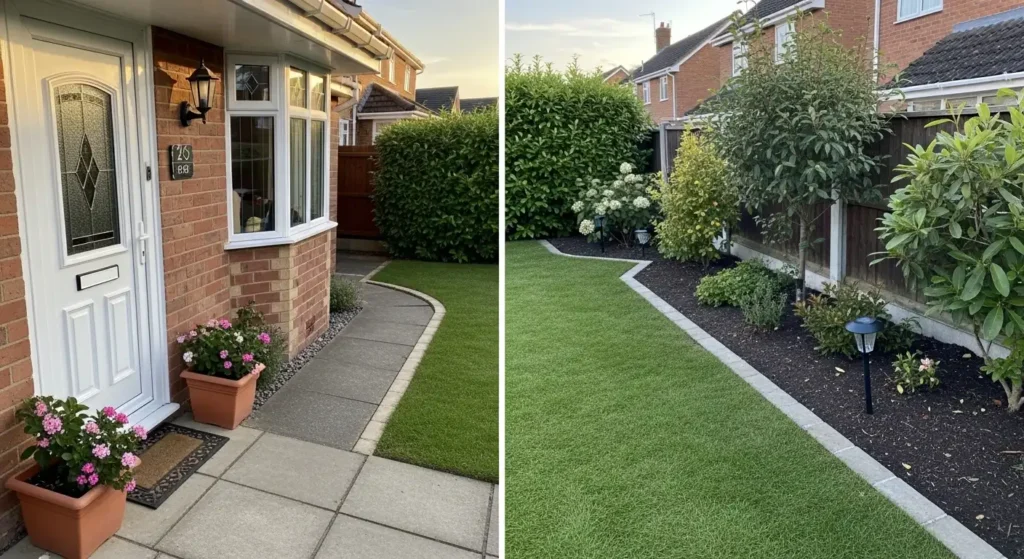
A front yard garden transformation does not require a large budget. The highest-impact budget upgrades for any front yard are: clean defined lawn edges, a fresh mulch layer over existing beds, one or two statement plants in good pots flanking the front door, and a single garden light as a focal point. These four changes cost under $100 combined and deliver a dramatic visible improvement.
Start with lawn edging — a sharp defined edge between lawn and bed immediately makes the whole front yard look more maintained. Add fresh bark mulch over all bare soil in existing beds. Flank your front door with two matching pots of seasonal flowering plants. Add the VOOKRY Solar Watering Can Light in the main border as a focal point that draws the eye from the street. Find it linked on Amazon.
The lawn edge is the budget front yard improvement I recommend before anything else. Not plants. Not pots. The edge. A sharp defined boundary between lawn and bed makes the whole front yard read as maintained and the effect is immediate from the street.
PRO TIP: Clean defined lawn edges deliver more visual impact per dollar than any other front yard upgrade. Rent a half-moon edging tool from a hardware store for $10 a day and edge all your borders. The clean lines instantly make even an average front yard look professionally maintained.
4. Design a Symmetrical Entry Garden for a Classic Formal Entrance
✦ Symmetrical Entry Garden
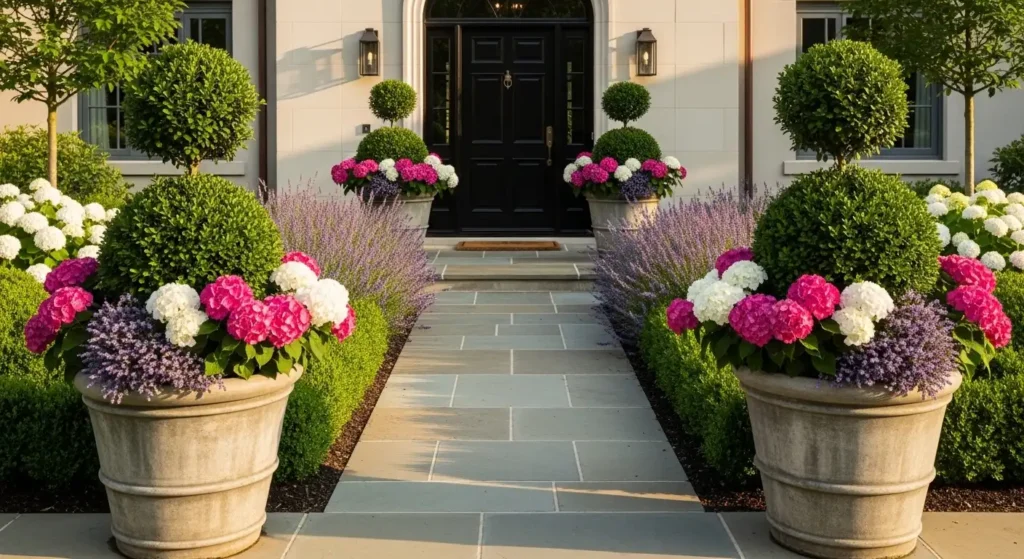
Symmetrical planting on either side of a front yard path or entrance creates instant visual order and formality that communicates confidence and design intention from the street. Even a simple arrangement — two matching pots with identical plants flanking the path — creates a sense of arrival that asymmetric planting cannot achieve.
Mirror your planting identically on both sides of the central axis from the street to your front door. Use matching containers, identical plant varieties, and the same spacing on both sides. Symmetry does not require expensive plants — two clipped bay trees in identical pots, two lavender standards, or two box spheres all create the formal entrance effect for a modest investment. The Quarut barrel planters in matching pairs create beautiful symmetrical anchors on either side of any front entrance. Find them linked on Amazon.
5. Plant Seasonal Blooms for a Front Yard That Changes Through the Year
✦ Colorful Seasonal Blooms
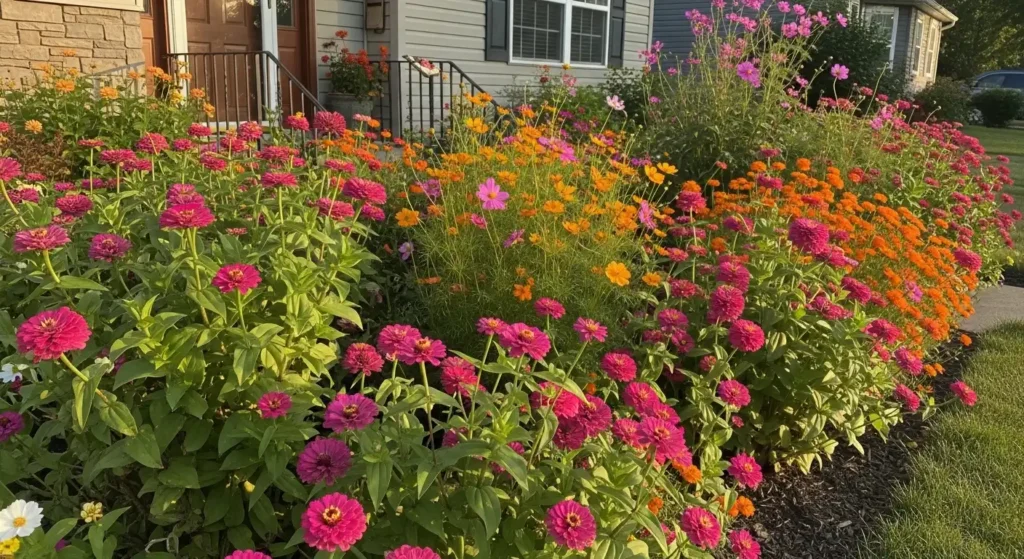
A front yard garden planted for seasonal change gives you a display that evolves through the year — spring bulbs, summer annuals, autumn asters, and winter structure plants mean there is always something interesting happening from the street. The succession of different plants and colors communicates an engaged and attentive gardener rather than a once-a-year effort.
Plan your seasonal succession in advance. Spring — tulips, narcissus, wallflowers. Early summer — geraniums, sweet peas, salvias. High summer — zinnias, marigolds, cosmos, dahlias. Autumn — asters, rudbeckia, sedums. Winter — ornamental grasses, evergreen structure, hellebores. Each season’s planting goes in as the previous one finishes. The front yard never looks bare and always has something worth noticing.
PRO TIP: Leave the seed heads of late-flowering plants like rudbeckia, echinacea, and alliums standing through winter rather than cutting them back immediately after flowering. The architectural seed heads look beautiful in frost and provide essential food for birds through the coldest months.
6. Add a Stone Pathway for a Defined and Beautiful Front Garden Entrance
✦ Stone Pathway Entrance
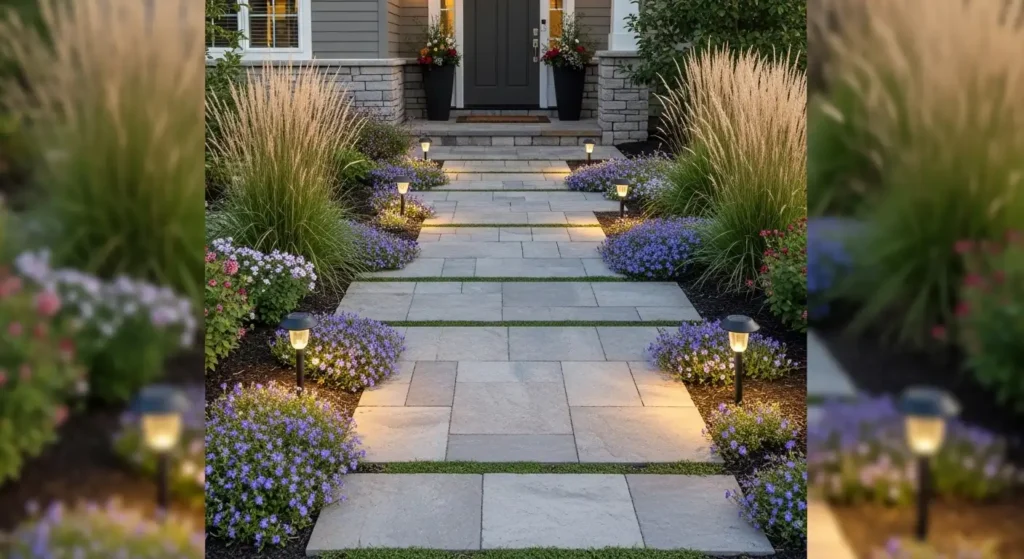
A defined stone pathway through a front yard creates order and invitation simultaneously. It tells visitors where to walk, defines the planted areas on either side, and creates a visual axis from the street to your front door that gives the whole front garden a clear structure. Without a defined path even a beautifully planted front yard can look like a space without a clear focal point.
Use natural flagstone, brick, or concrete pavers to create a pathway at least 3 feet wide for comfortable movement. Line both sides with low flowering plants or ground cover that softens the hard edge of the path material. The LANSOW solar spotlights positioned along the path edges illuminate the entrance beautifully after dark and create a welcoming arrival for evening visitors. Find them linked on Amazon.
For a complete guide to pathway materials and edging options for front garden entrances see our backyard hardscape ideas guide which covers every material from gravel to natural stone with honest cost comparisons.
7. Transform a Tiny Front Yard Into a Big Design Statement
✦ Small Space Front Garden
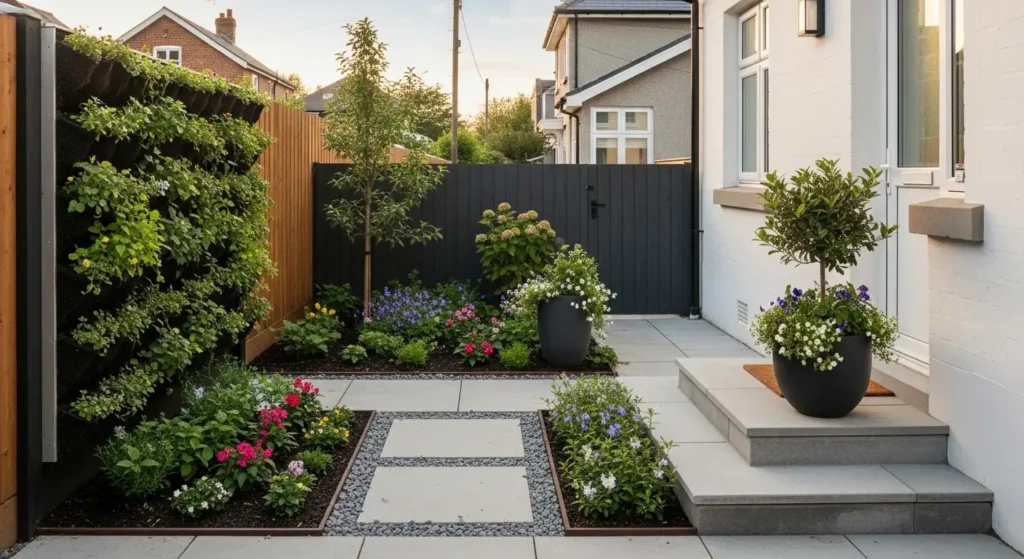
I have seen a 4 by 6 foot front yard stop people mid-stride. One statement plant in a beautiful pot. A defined path. A solar focal light. Nothing else.
The constraint of a tiny front yard forces the discipline that large front yards allow people to avoid. When there is only room for three decisions all three have to be right.
Maximize a small front yard by going vertical — climbing plants on the fence or wall add green coverage without using ground space. Choose one bold statement plant as a focal point rather than many small plants competing for attention. Keep the path clean and well-defined. A single beautiful solar garden focal light creates a point of interest that draws the eye from the street and makes even the smallest front yard feel designed.
8. Create a Low-Maintenance Front Yard That Always Looks Good
✦ Low Maintenance Planting
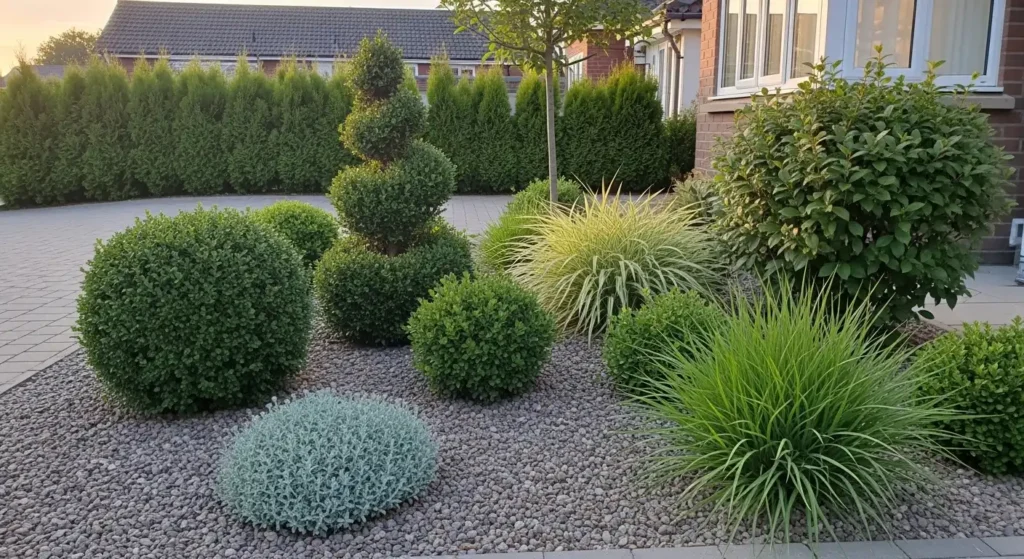
A low-maintenance front yard garden is not the same as a boring front yard garden. The key is choosing plants that look after themselves — evergreen structure plants that need clipping once a year, drought-tolerant perennials that come back annually, and ground cover that suppresses weeds while looking attractive.
Build your low-maintenance front yard around a framework of evergreen structure plants — clipped box, lavender, ornamental grasses, or dwarf conifers. Fill between them with a deep gravel mulch that suppresses weeds and reduces watering needs. Choose perennials like agapanthus, sedum, and rudbeckia that return each year without replanting. The total annual maintenance time for a well-designed low-maintenance front yard is typically under 5 hours.
PRO TIP: Apply a 3-inch deep layer of bark or gravel mulch over all soil in your front garden beds immediately after planting. This single action eliminates the majority of weeding for the entire season and is the most effective time-saving investment in any low-maintenance garden.
9. Frame Your Front Lawn With an Elegant Planted Border
✦ Elegant Lawn Border Design
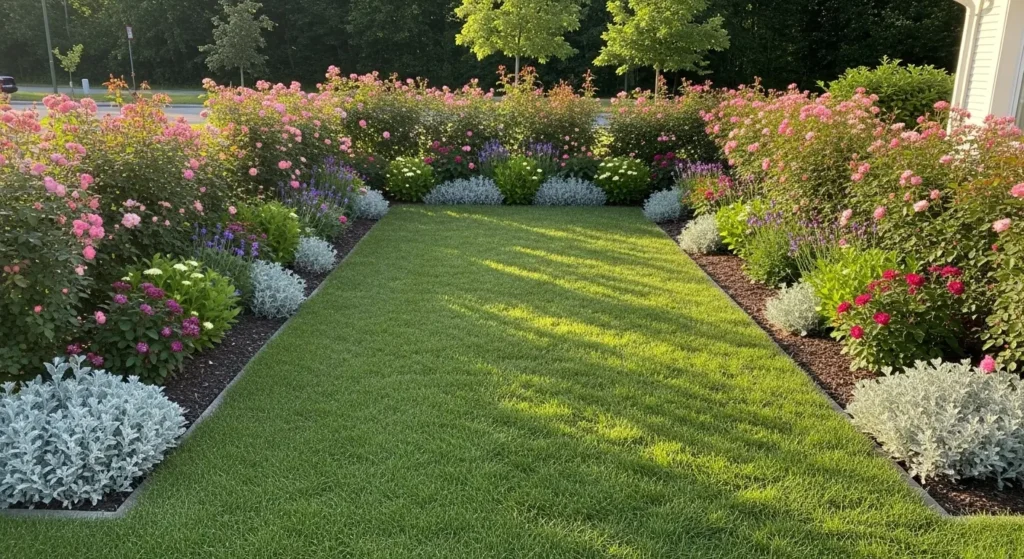
A front lawn framed by deep planted borders on both sides is one of the most classic and consistently beautiful front garden compositions. The lawn becomes a designed element — a green panel framed by color and texture on either side — rather than just the default surface between the street and the front door.
Create deep borders of at least 36 inches on both sides of your front lawn. Plant in three layers — tall plants at the back, medium plants in the middle, low edging plants at the front. Choose a color palette for the border planting and stick to it — cream and blue, pink and purple, or yellow and orange all create cohesive border designs that look intentional from the street. Define the lawn edge with a clean metal or brick edging strip.
10. Create a Rustic Natural Front Garden With Wildflowers and Native Plants
✦ Rustic Natural Look
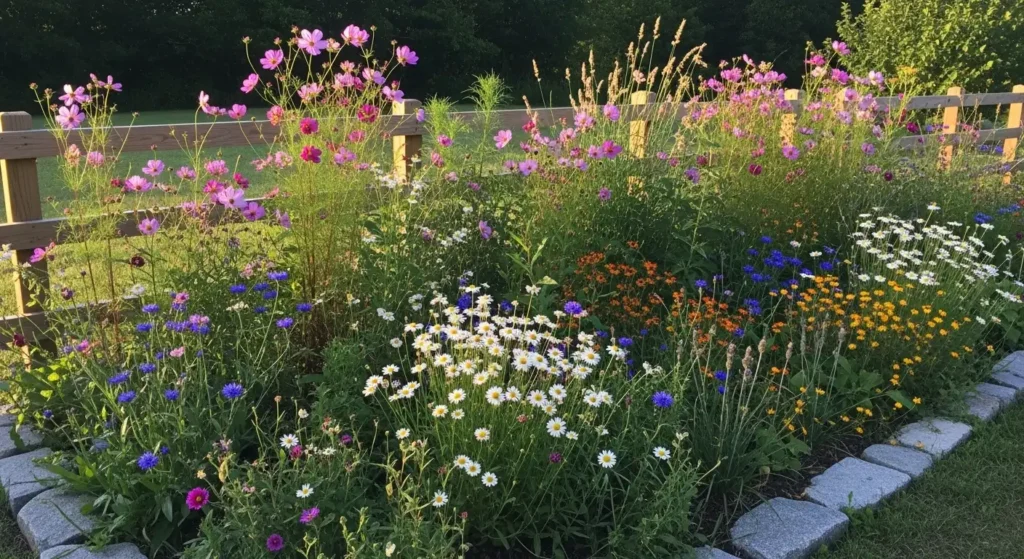
A rustic natural front yard garden built around wildflowers and native plants creates something genuinely different from any other front garden style. The loose informal planting looks effortless while being deeply intentional — wildflower gardens that look genuinely natural require careful species selection and thoughtful management to maintain the appearance of natural abundance.
Sow a wildflower mix specifically formulated for your regional climate in a prepared front yard bed. Supplement with native perennials that suit your local conditions — native plants require far less supplemental watering and feeding than non-native garden plants. Define the edges of your wildflower area clearly with a clean-mown border or edging stone. The contrast between the wild interior and the defined edge is what makes a wildflower front garden look designed rather than neglected.
For the specific wildflower and native plant varieties that perform best in US front yard conditions see our deer resistant drought tolerant plants guide which covers the low-maintenance perennials that establish quickly and return annually.
PRO TIP: Add a small sign at the front of your wildflower garden identifying it as a native plant habitat. This communicates to neighbors that the informal planting is intentional and environmentally motivated rather than neglected — a small detail that prevents misunderstanding and makes the garden a talking point.
11. Use Layered Height Planting for a Front Garden With Depth and Drama
✦ Layered Height Plant Design
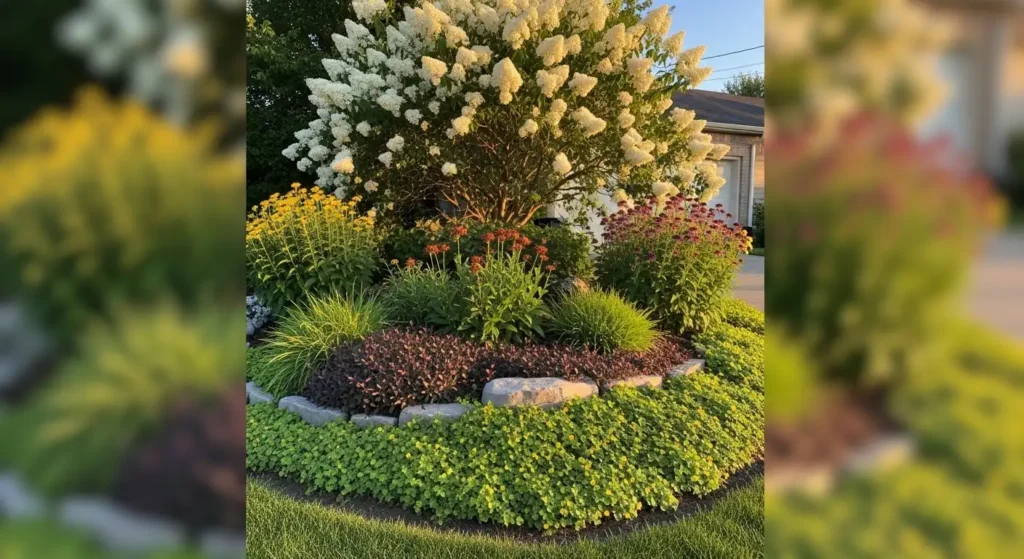
Layered height planting is the design technique that separates amateur planting from professional landscape design. When a front yard border has tall plants at the back, medium plants in the middle, and low plants at the front the eye reads the depth of the planting and the border looks significantly more designed and substantial than flat single-level planting.
Plan your front yard planting in three clear layers. Back layer at 4 to 6 feet — roses, tall grasses, tall salvias, or feature shrubs. Middle layer at 18 to 36 inches — geraniums, lavender, agapanthus, mid-height perennials. Front layer at 6 to 12 inches — low sedums, alyssum, creeping thyme, or dwarf bulbs. Each layer should be visible from the street and the combination should create a sense of generosity and abundance.
For the specific plant combinations that create the best three-layer front yard border see our plant screening for privacy guide which covers height, texture, and seasonal interest in front garden border planting.
12. Add Solar Garden Lighting for a Front Yard That Glows After Dark
✦ Pinterest Favorite Curb Appeal
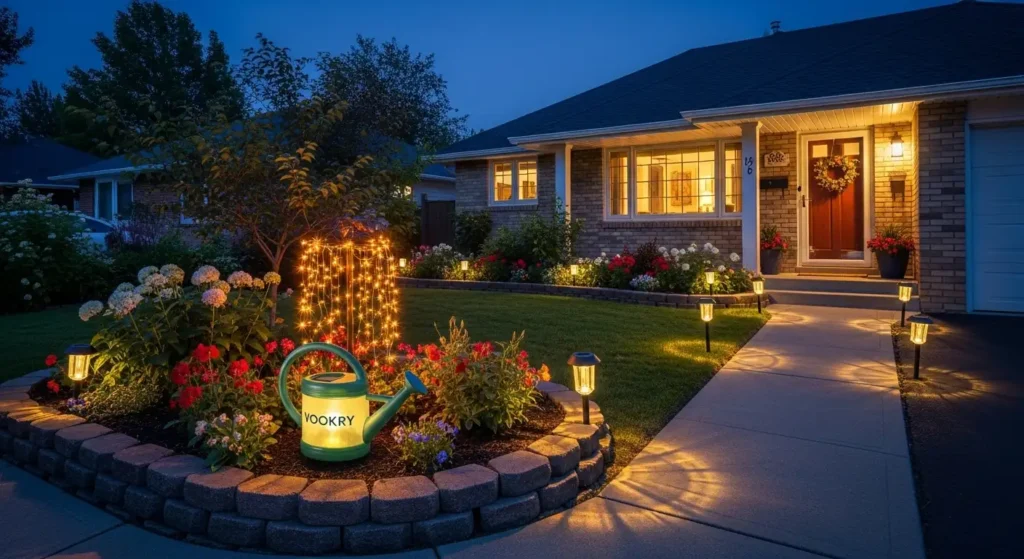
Most front yards switch off at dusk. The house becomes a dark shape at the end of a dark path. Solar lighting fixes that in thirty minutes for under $30.
I find front yard lighting the single most underused curb appeal improvement available. The daytime garden people see when they drive past is one thing. The lit garden they see when they come home in the evening is the one that makes them feel something.
Layer your front yard lighting for maximum effect. A solar focal point light in the main border as the hero element — the VOOKRY Solar Watering Can Light is unmatched for this. Solar path lights along both sides of the front path for safety and definition. The LANSOW solar spotlights uplighting the front of the house or a feature plant for architectural drama. All solar, all automatic, all adding to curb appeal every single evening. Find both linked on Amazon.
PRO TIP: Warm amber solar lights create the most welcoming front yard atmosphere after dark. Cool white lights look clinical and uninviting on a residential front garden. Always choose warm white or amber solar lights for any residential front yard application.
Frequently Asked Questions
How do I design a beautiful front yard garden?
The most important principles for designing a beautiful front yard garden are: start with a clear focal point that the eye goes to first from the street, define all edges cleanly between lawn, path, and planting, choose a limited plant palette of 5 to 7 varieties and plant in groups of three or more, build in year-round interest with a mix of seasonal and evergreen plants, and add lighting for evening impact. According to Better Homes and Gardens the most consistently admired front yards combine strong structure with seasonal planting rather than relying on flowers alone.
What plants are best for a front yard garden?
Lavender, roses, ornamental grasses, agapanthus, sedum, and evergreen structure plants like box all look good for extended periods rather than just peak flowering weeks. Avoid plants that look untidy for long periods or require frequent division and replanting — the front yard needs to perform consistently without constant intervention.
How do I improve my front yard on a tight budget?
Clean lawn edges cost almost nothing and deliver more visible impact than most expensive planting upgrades — a sharp defined border edge makes the whole front yard read as maintained. Fresh bark mulch at $20 to $40, two matching pots flanking the door at $30 to $50, and one solar garden focal light at $20 to $30 completes a full transformation for under $100.
How do I make my small front yard look bigger?
Use vertical planting on fences and walls to add green without consuming ground space, and choose a single clear path rather than multiple routes which fragment a small area. One bold focal point rather than many small elements keeps the eye focused rather than making the space feel cluttered.
More Garden Ideas You Will Love
→ 25 Simple But Stunning Garden Lighting Ideas
→ 12 Boho Garden Ideas You’ll Love
→ 25 Stunning Back Porch Patio Ideas
→ 14 Coastal Patio Decor Ideas With Summer Vibes ☀️
The house I slow down for on my street did not happen in a weekend. But it started in a weekend. One border planted with lavender in groups. One climbing rose on the fence.
Start with the idea on this list that is most achievable this Saturday. The path edging. The two matching pots. The solar light in the border. Each addition builds on the last and the front yard gradually becomes the one neighbors ask about.

Sheikh Hassaan is a digital architect for small businesses and the founder of The Glow Up System. He writes about home decor, garden design, and outdoor living for real American homes – practical ideas that work in actual spaces without oversized budgets.