

Making a modern geometric Christmas tree frame is the seasonal craft that produces the most striking result relative to the skill level required. A geometric christmas tree built from copper pipe, wooden dowel, or wire creates an architectural Christmas decoration that suits contemporary and Scandinavian interiors far better than a traditional tree and takes up a fraction of the floor space.
This guide covers three complete geometric Christmas tree frame builds at different scales and material costs — a desktop copper wire version that takes one hour, a floor-standing wooden dowel version that takes an afternoon, and a statement wall-mounted version that becomes the room’s primary Christmas decoration. All three use basic materials and no specialist tools.
Table of Contents
Why Geometric Christmas Trees Work So Well in Modern Homes
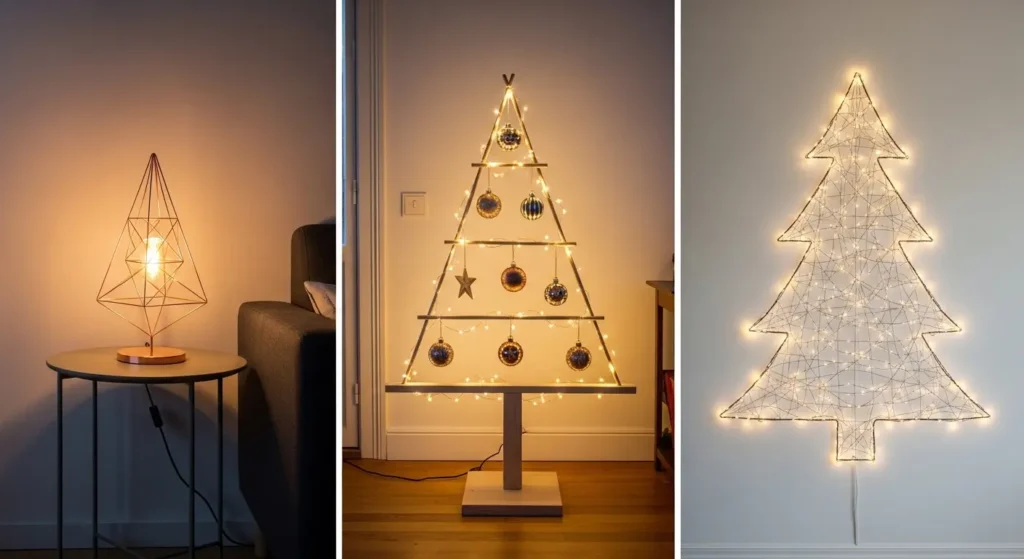
A geometric Christmas tree frame works in contemporary interiors because it references the Christmas tree tradition through form rather than literal representation. The triangular silhouette communicates Christmas immediately — the brain recognizes the tree shape before consciously registering that it is made from copper pipe or wooden dowel rather than branches. This recognition-through-abstraction is the quality that makes geometric trees feel current rather than themed.
The practical advantages over a traditional tree are significant in a modern home: no needles on the floor, no watering required, no size compromise between the tree you want and the space available, and a decoration that stores flat between seasons. A geometric tree frame built well lasts for years and improves as it acquires patina and as the decoration collection built around it grows richer.
The styling flexibility is the final advantage — a geometric frame can be left completely bare as a minimalist architectural object, hung with a curated selection of ornaments and lights as a traditional decorated tree alternative, or combined with greenery and natural materials for a hybrid approach that references both the geometric and the organic Christmas tree traditions simultaneously.
Build 1: Copper Wire Desktop Geometric Tree (1 Hour, Under $10)

Materials for the Copper Wire Tree
2mm copper craft wire — approximately 3 meters. A pair of pliers. Wire cutters. A ruler and pencil for marking lengths. Optional: battery-operated micro LED fairy lights in warm white, small beads or tiny ornaments for hanging on the wire frame.
Step-by-Step: Copper Wire Geometric Tree
Step 1: Cut the frame pieces
For an 8-inch tall tree cut the following copper wire lengths: two pieces at 10 inches for the front and back vertical edges, one piece at 6 inches for the base front edge, one piece at 6 inches for the base back edge, two pieces at 4 inches for the base side edges, and two pieces at 5 inches for the mid-level horizontal bracing. These seven pieces create a three-dimensional triangular prism tree shape.
Step 2: Form the front triangle
Bend one 10-inch wire piece into a triangle shape — both ends meeting at the apex point and the middle forming the base. Use pliers to crimp the apex joint tightly and twist the ends together to secure. The resulting triangle should have a height of approximately 8 inches with a 6-inch wide base. This is the front face of the geometric tree.
Step 3: Build the 3D structure
Make an identical back triangle. Connect the two triangles by twisting the 4-inch side edge pieces between the corresponding corner points of front and back triangles — two at the base corners and two connecting the mid-point of each sloped side. The completed frame is a three-dimensional triangular prism that stands on its base when placed on a flat surface.
Step 4: Add the horizontal layer lines
Add two or three horizontal wire rings at even intervals between the base and apex — these create the layered appearance of a Christmas tree’s tiered branches within the geometric framework. Cut wire pieces to the correct length at each level and twist them around the vertical edge wires. Each horizontal ring is shorter than the one below following the triangular taper.
Step 5: Add the star and lights
Bend a 3-inch piece of copper wire into a five-pointed star and attach it to the apex. Wind micro LED fairy lights around the frame starting at the base and spiraling upward to the star. The warm amber glow of LEDs through copper wire at night is the most beautiful finish this build achieves — the metal and the light create the most convincing small-scale geometric Christmas tree display available.
The completed copper wire desktop tree stands 8 inches tall. Make three in graduated sizes — 8 inch, 10 inch, and 12 inch — and group them as a tabletop display for the most striking arrangement.
Build 2: Wooden Dowel Floor-Standing Geometric Tree (One Afternoon, Under $25)

Materials for the Dowel Tree
10mm diameter wooden dowel — 6 meters total length. A saw or strong craft knife. Wood glue and rubber bands for clamping. Sandpaper. Paint or wood stain in white, gold, or natural finish. Eye hooks for hanging ornaments. String or twine for structural lashing. One set of battery LED fairy lights in warm white.
Step-by-Step: Wooden Dowel Geometric Tree
Step 1: Cut the dowel pieces to length
For a 4-foot tall tree cut the following dowel lengths: three pieces at 48 inches for the three vertical corner edges, three pieces at 24 inches for the base triangle, two pieces at 18 inches for the first horizontal layer, two pieces at 12 inches for the second horizontal layer, and two pieces at 6 inches for the upper horizontal layer. Sand all cut ends smooth.
Step 2: Build the base triangle
Join the three 24-inch base pieces into an equilateral triangle using wood glue at the corner joints. Lash each joint with string or twine while the glue dries — wrap the string tightly in an X pattern across each corner joint and tie firmly. Allow the base triangle to dry completely — minimum 1 hour — before adding the vertical pieces.
Step 3: Attach the vertical edges and apex
Stand one 48-inch dowel at each corner of the base triangle and lean all three together at the top so they meet at a single apex point. Secure the apex junction by lashing all three dowel tops together tightly with string — wrap in multiple directions to create a secure X-pattern lashing at the joint. Apply wood glue inside the string lashing and allow to dry. The three vertical pieces now form a triangular pyramid.
Step 4: Add the horizontal layer rings
Attach the three horizontal layer rings at evenly spaced intervals between base and apex — the 18-inch pieces at one third height, the 12-inch pieces at two thirds height, and the 6-inch pieces near the top. Glue and lash each horizontal ring piece to the vertical edge dowels at the correct height. The horizontal rings create the layered Christmas tree silhouette within the triangular pyramid structure.
Step 5: Finish and decorate
Paint or stain the completed frame — white paint creates the most minimal Scandinavian aesthetic. Gold paint creates the most glamorous version. Natural unfinished wood creates the warmest organic result. Screw small eye hooks into the horizontal dowel rings at intervals for hanging ornaments. Wind LED fairy lights around the full frame. Hang a selection of ornaments — white ceramic, natural wood, and gold metallic tones suit the geometric tree aesthetic best.
The completed floor-standing geometric tree is 4 feet tall and 24 inches wide at the base — substantial enough to serve as the room’s primary Christmas tree and significant enough to be seen from across the room.
Build 3: Wall-Mounted Wire Christmas Tree Frame (2 Hours, Under $15)

The wall-mounted geometric tree is the most space-efficient and most dramatically impressive of the three builds — a flat wire frame mounted against a white wall that creates a glowing tree silhouette from fairy lights. It takes zero floor space and produces a statement Christmas decoration visible from across the room.
Materials for the Wall-Mounted Tree
3mm black or gold craft wire — approximately 5 meters. Wire cutters and pliers. Command strips or small picture hooks for wall mounting. Battery LED fairy lights. Small ornament hooks. A pencil and ruler for planning the frame proportions on paper before building.
Step-by-Step: Wall-Mounted Wire Tree
Step 1: Plan the frame on paper first
Sketch the tree frame to scale on paper before cutting any wire. A 36-inch tall tree with a 24-inch wide base and four horizontal branch lines at 6-inch intervals works well for a standard wall space. Mark every wire length needed on the sketch — the two diagonal sides, the base, and each horizontal branch line at its correct width at that height.
Step 2: Cut and shape the outer triangle
Cut one long wire piece that will form both diagonal sides of the triangle continuously — approximately 80 inches for a 36-inch tall tree with a 24-inch base. Bend it at the apex midpoint into an inverted V shape. Bend each end outward at the base corners to form the base width. Join the two base ends by twisting them together — this junction becomes the base center point.
Step 3: Add the horizontal branch lines
Cut four horizontal wire pieces at progressively shorter lengths following the tree taper — 20 inches, 15 inches, 10 inches, and 5 inches. Twist each end of each horizontal piece around the diagonal side wire at the correct height interval. The horizontal lines create the layered branch appearance and provide the hanging points for ornaments.
Step 4: Mount on the wall and add lights
Attach the wire frame flat against the wall using Command strips at the apex, both base corners, and the midpoints of the diagonal sides. Press firmly and allow 30 minutes for the strips to bond fully before hanging anything. Wind battery LED fairy lights around the full wire frame. Hang three to five delicate ornaments from the lower horizontal branch lines.
Switch on the fairy lights in a darkened room to see the full effect — the wall behind the wire frame glows with the reflected light of the LEDs creating a halo effect that makes the tree shape even more visible and more beautiful than in full daylight.
Stunning Ways to Decorate Your Geometric Christmas Tree Frame

Bare minimalist:
No ornaments. No lights. The geometric frame as a pure sculptural object. This approach suits the most minimal interiors and requires the highest quality frame construction because every detail is visible. A copper wire tree or gold-painted dowel tree in bare form makes the most sophisticated statement.
Lights only:
Fairy lights wound around the complete frame with no ornaments. The simplest decoration approach and one of the most beautiful — the geometric tree glowing with warm white light in an evening room creates an effect that no amount of ornament hanging can improve upon.
Curated ornaments and lights:
A restricted selection of ornaments in a consistent palette — white ceramic, natural wood, and gold metal. No more than 15 ornaments on a 4-foot tree. Fewer ornaments at higher individual quality creates the curated quality that geometric trees suit best. Avoid plastic or multicolored ornaments — they contradict the architectural quality of the frame.
Greenery and naturals:
Tuck fresh or dried eucalyptus, pine sprigs, and rosemary into the horizontal branch sections of the dowel tree. The natural greenery against the geometric frame creates the hybrid tree that references both the traditional Christmas tree and the contemporary geometric version simultaneously. The GIGALUMI Mason Jar Solar Lanterns positioned at the base of a floor-standing geometric tree create the perfect ground-level warm glow that completes the display at night. Find them linked on Amazon.
📌 More craft and seasonal decor ideas: How To Make a Mini Christmas Tree From Pipe Cleaners
Frequently Asked Questions
How do you make a geometric Christmas tree?
A geometric Christmas tree is made by constructing a triangular frame from wire, wooden dowel, or copper pipe that creates the Christmas tree silhouette through geometric form rather than branches. The simplest version uses copper craft wire bent into a three-dimensional triangular prism and takes one hour. The most impressive floor-standing version uses 10mm wooden dowel cut and assembled into a 4-foot triangular pyramid with horizontal layer rings and takes one afternoon. Both can be decorated with fairy lights and ornaments or left bare as minimalist architectural decorations.
What materials do you need for a geometric Christmas tree frame?
The three most popular materials for geometric Christmas tree frames are: copper craft wire (2mm to 3mm thickness) for desktop and wall-mounted versions — flexible easy to bend and creates a warm metallic finish. Wooden dowel (10mm diameter) for floor-standing versions — strong enough to be freestanding and can be painted or stained. Black or gold craft wire for wall-mounted flat frames — lightweight enough to mount with Command strips and creates a dramatic silhouette effect with fairy lights. All three materials are available from craft stores at under $10 per project.
How do you decorate a geometric Christmas tree frame?
The most effective geometric Christmas tree decoration approach uses a restricted palette of three material types maximum — fairy lights, one ornament material type such as white ceramic or natural wood, and one accent material in gold or silver metallic. Fewer ornaments of higher quality suit geometric trees better than abundant decoration — the architectural quality of the frame is the primary visual element and ornaments should complement rather than conceal it. Wind fairy lights along the frame wires or dowels first before hanging any ornaments.
How long does a geometric Christmas tree frame last?
A well-constructed geometric Christmas tree frame lasts indefinitely — copper wire frames last 10 or more years and develop a beautiful natural patina. Wooden dowel frames last many years when stored carefully between seasons in a dry location. Wire frames stored flat take up minimal storage space. Unlike traditional trees geometric frames improve with age as the materials develop character and as the decoration collection curated around them grows richer each year.
More Craft and Seasonal Decor Ideas
→ How To Make Christmas Gnomes From Mesh Shower Sponges
→ 10 Cozy Christmas Living Room Ideas
→ How To Make Fake Christmas Porch Candle Decorations
Start with the copper wire desktop version tonight — one hour, under $10, and the result will tell you immediately whether you want to build the floor-standing version for the main room this weekend.

Sheikh Hassaan is a digital architect for small businesses and the founder of The Glow Up System. He writes about home decor, garden design, and outdoor living for real American homes – practical ideas that work in actual spaces without oversized budgets.