

The how to water tomatoes finger test is one of the simplest and most reliable ways to know exactly when your tomato plants need water. Instead of following a fixed watering schedule, this easy method lets you check the soil before watering, helping prevent both overwatering and underwatering.
Watering tomatoes is the number one struggle for gardeners of all experience levels. Too much water, and you risk root rot, cracked fruit, and disease. Too little water, and your plants wilt, drop blossoms, and produce small, mealy tomatoes. The solution is simpler than you think: stop following a schedule and start listening to your soil.
The finger test is a foolproof method that tells you exactly when your tomato plants need water. No fancy tools. No complicated calculations. Just your finger and a few seconds of your time. This is the method that experienced gardeners swear by, and it works for every container, grow bag, and garden bed.
Table of Contents
The Finger Test: Step-by-Step
Step 1: Push your finger 2 inches into the soil. Insert your index finger into the soil near the base of the plant, about two inches deep. In containers or grow bags, push your finger in up to the second knuckle .
Step 2: Dry = Water now. If the soil feels dry and crumbly at your fingertip, it is time to water. Give your tomato a deep, thorough soak until water runs out of the drainage holes. The top layer may look dry, but the soil deeper down is what really matters .
Step 3: Moist = Wait. If the soil feels moist or cool, your plant has enough water for now. Check again tomorrow. The goal is consistent moisture, not a fixed calendar date .
Step 4: Wet = Skip today. If the soil is soggy or waterlogged, skip watering entirely and check again tomorrow. Overwatering can suffocate roots and lead to root rot. Let the soil dry out slightly before the next watering .
Why the Finger Test Works
Tomato plants cannot talk, but they give clear signals through their soil. The finger test is the most accurate way to know if your plants need water . Unlike a set schedule, this method adapts automatically to changes in weather, temperature, and plant growth .
The reason watering schedules fail is simple: your plant’s water needs change daily. A tomato in a pot on a hot, windy day will dry out much faster than one in the ground on a cool, cloudy day . The finger test accounts for all these variables automatically.
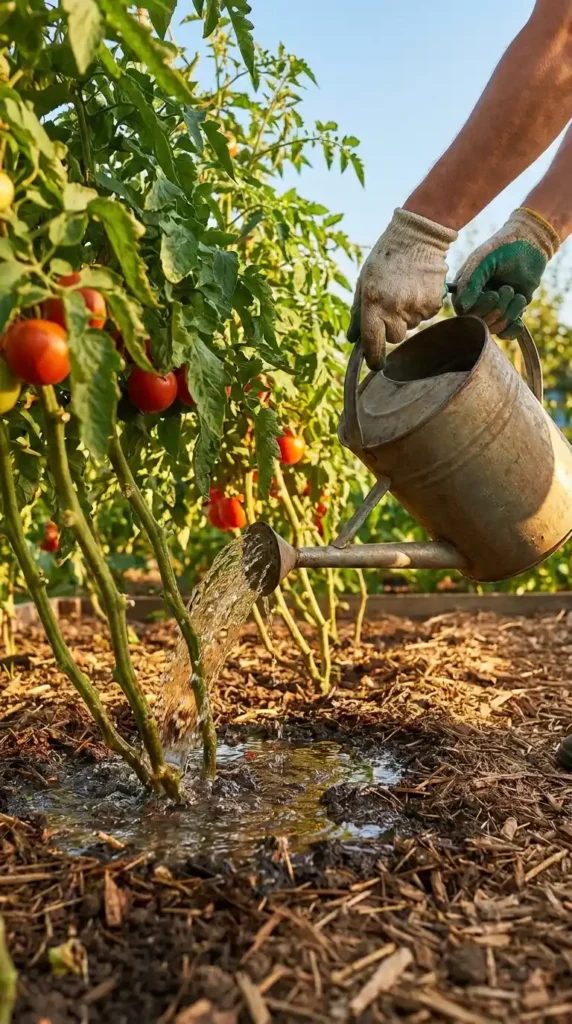
How to Water Correctly Once You Know When
The finger test tells you when to water. The next step is knowing how to water for the best results.
Water deeply and slowly. Apply water until it runs freely out the bottom drainage holes. This ensures the entire root zone is wet. A quick sprinkle only moistens the top inch and encourages shallow roots .
Water at the soil level. Avoid wetting the leaves, as water splashing on leaves can spread fungal diseases like blight. Use a watering can with a long spout or a hose directed at the soil .
Water in the morning. Early morning watering gives leaves time to dry if they get splashed, and the plant is hydrated for the hot day ahead. Evening watering leaves the plant damp overnight, inviting disease .
Mulch around the base. A layer of organic mulch helps retain soil moisture and prevents the soil from drying out too quickly .
Key Factors That Change Watering Frequency
The finger test helps you adjust for these variables automatically.
Climate. In hot, dry climates, you may need to water daily. In cooler climates, every few days may be enough .
Container vs. garden. Potted tomatoes dry out much faster than in-ground ones and often need daily watering, especially in summer heat .
Plant growth stage. Young seedlings need consistent moisture. Fruiting plants need steady watering to prevent blossom end rot and cracking. Once fruit sets, reduce volume but water more frequently to keep moisture consistent .
Soil type. Sandy soil drains quickly and may need watering every three or four days. Clay soil holds water and may only need watering once a week .
Signs Your Tomato Plant Needs Water
Besides the finger test, your plant gives visual clues when it is stressed.
- Wilting or drooping leaves during the day, especially early in the morning
- Curling leaves
- Yellowing leaves and dropping flowers
Signs of Overwatering
- Yellowing leaves and root rot
- Soggy soil that stays wet for long periods
- Splitting or cracking fruit
Frequently Asked Questions
1. How often should I water tomatoes in containers?
There is no set schedule. Check daily using the finger test. In hot weather, you may need to water every day. In cool weather, every two to three days may be enough .
2. How deep should I water tomato plants?
Water deeply and thoroughly until water runs out of the drainage holes. This encourages deep root growth and healthier plants .
3. Should I water tomatoes every day?
Only if the soil is dry. Use the finger test to determine if water is needed. A daily schedule can lead to overwatering if the weather is cool or rainy .
4. Can I water tomatoes from above?
Avoid overhead watering. Water at the soil level to prevent fungal diseases and leaf burn .
5. What happens if I overwater tomatoes?
Overwatering can cause root rot, yellowing leaves, blossom end rot, and cracked fruit. It suffocates the roots and invites disease .
Related Articles
What Causes Blossom End Rot on Tomatoes? (It’s a Watering Problem)
Companion Plants for Cucumbers for Bigger, Better Harvests
Companion Plants for Tomatoes That Boost Your Harvest
Stop guessing. Start growing. The finger test is the simplest, most reliable way to water tomatoes perfectly every time. Your harvest will thank you.

Sheikh Hassaan is a digital architect for small businesses and the founder of The Glow Up System. He writes about home decor, garden design, and outdoor living for real American homes – practical ideas that work in actual spaces without oversized budgets.