
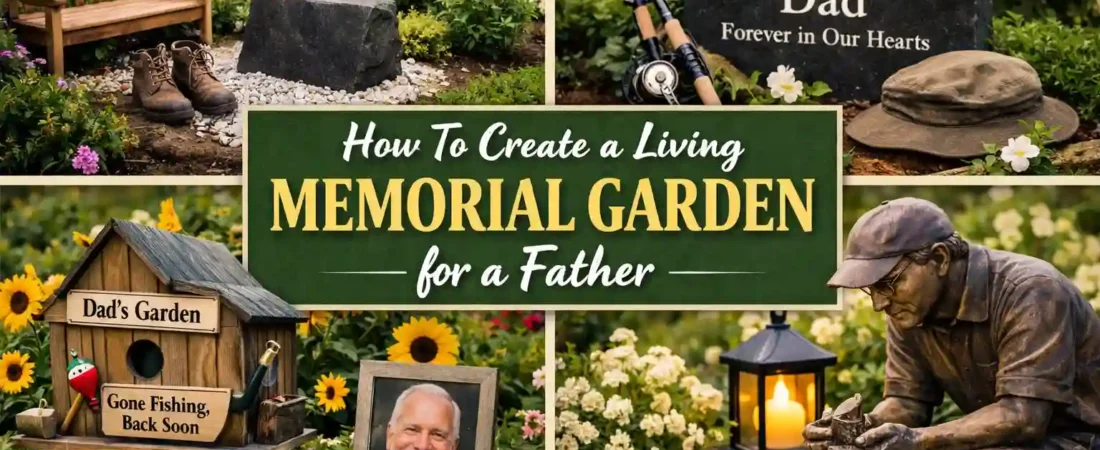
A memorial garden ideas approach to honouring a father who has passed creates something genuinely permanent in the world — a living space that grows more beautiful each year and that provides a peaceful place to sit and remember without the weight of a formal monument. A living memorial garden for a father is not a sad space. Done well it is one of the most beautiful and most used parts of any garden.
This guide covers how to create a living memorial garden — from choosing the right location and the plants that carry personal meaning through the structural elements, water features, seating, and the specific details that transform a garden corner into a genuine place of remembrance and peace.
Table of Contents
Why a Living Memorial Garden Lasts When Other Tributes Fade
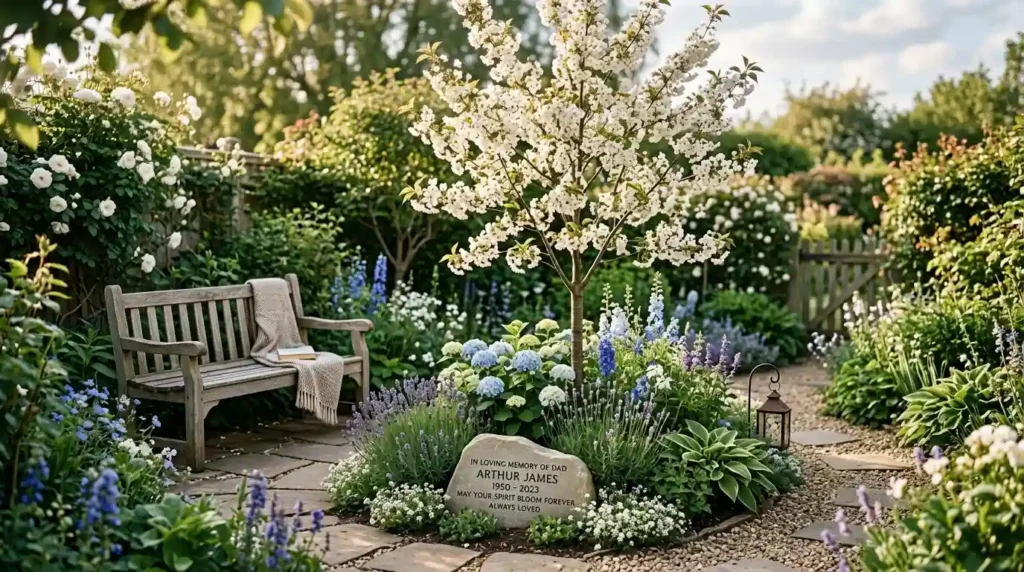
A living memorial garden grows more meaningful over time in a way that cut flowers and purchased tributes cannot. The plants chosen with specific meaning — his favourite rose, the tree he always wanted to plant, the herb he grew in every garden he ever had — create a living connection that deepens as the plants mature and fill the space he never saw them reach.
The practical value of a memorial garden is equal to its emotional value — it creates a specific place to go when the garden is where you want to be close to his memory, a place to sit that carries his presence without requiring any verbal acknowledgement of why you are there. Families who create memorial gardens consistently report using them far more than they expected and finding them genuinely comforting rather than painful.
A living memorial garden also gives family members an active ongoing relationship with the memorial — there is always something to do there, always something changing, always a reason to tend it and be in it. This ongoing engagement is the quality that makes it so different from a static memorial and so much more comforting for many people.
Choosing the Right Location for a Memorial Garden
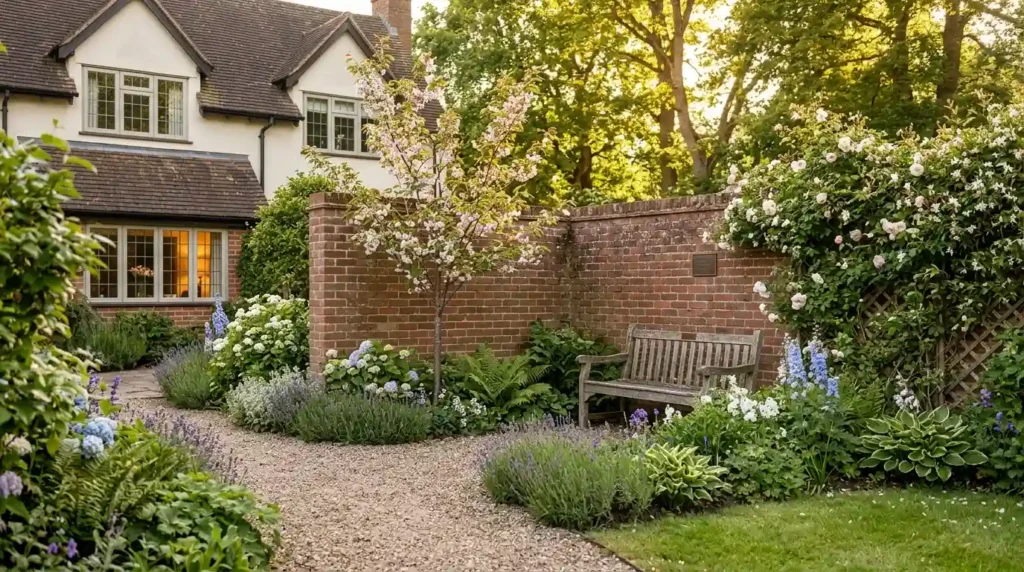
The memorial garden location should satisfy three criteria simultaneously: it should be visible from the house so it can be seen and connected with daily without requiring a deliberate visit. It should be somewhat enclosed — a corner position, a partially screened area — so it feels like a defined separate space rather than just a part of the main garden. And it should receive enough light for the plants chosen to thrive.
A corner position visible from the kitchen window is the most common and most satisfying memorial garden placement — the family can see it every morning from the most-used room in the house, and it is accessible directly from the house without a long walk. If the father loved a particular part of the garden during his life that specific location carries additional meaning regardless of its practical position.
Choosing a Memorial Tree as the Garden’s Anchor
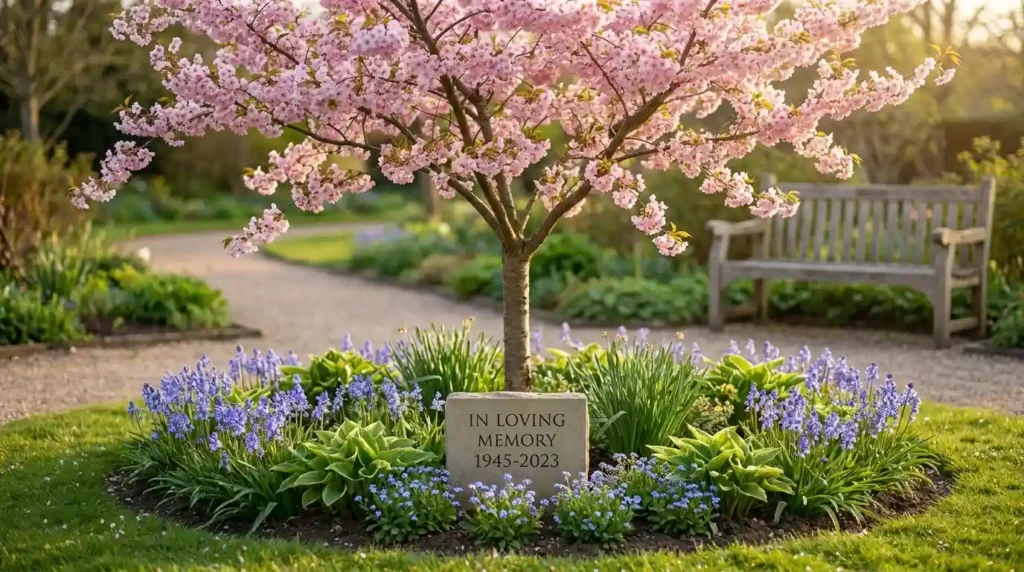
A memorial tree planted at the center of the garden creates the living structural anchor around which everything else is designed. A tree grows more significant with every passing year — what is planted as a small specimen becomes a substantial presence over a decade, a genuinely impressive tree over two decades, and something approaching a landmark over longer periods.
Best memorial trees for a father’s garden:
Prunus — the ornamental cherry family produces the most spectacular spring blossom display of any garden tree and comes in sizes from large shrub to substantial tree. Prunus ‘Kanzan’ for double pink blossom. Prunus ‘Shirotae’ for pure white blossom. Both are reliable performers in any garden soil.
Malus — flowering crab apple trees provide spring blossom followed by autumn fruit that birds feed on through winter. A year-round interest tree that connects all four seasons to the memory of the father.
Betula — silver birch trees have a specific quality of light movement through their leaves and a beautiful white bark that creates winter garden interest when most other trees are bare. A mature silver birch in a memorial garden is genuinely beautiful in every season.
If the father had a specific favourite tree or a tree associated with a meaningful memory plant that species above all other considerations — the personal connection to a specific tree is more meaningful than any generic recommendation.
Choosing Deeply Meaningful and Long-Lasting Heirloom Plants
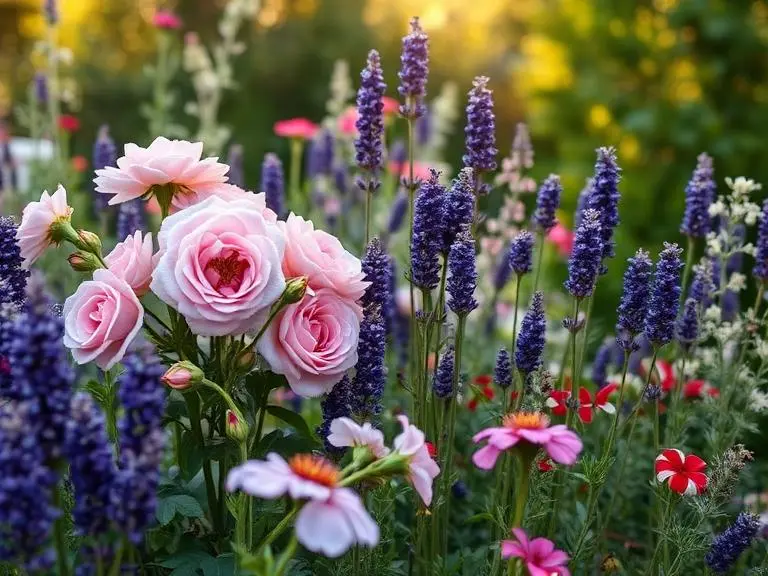
The plants chosen for a living memorial garden carry the most meaning when they have a personal connection to the father — a rose he grew, an herb he used, a flower that reminds the family of a specific place or time. Beyond personal connection the plants should be genuinely long-lived so the memorial garden improves rather than requiring replanting every few years.
Old-fashioned roses:
Heritage rose varieties — David Austin English roses, old Gallica and Bourbon roses — carry a fragrance depth that modern hybrid tea roses do not. A named rose planted as a memorial can be selected to match his favourite colour or to reference a rose he grew in his own garden.
Lavender:
Lavender is one of the most frequently chosen memorial plants because its fragrance is so strongly connected to memory — the scent of lavender has a specific nostalgic quality that triggers memory more powerfully than almost any other garden fragrance. A lavender edging around the memorial tree base connects fragrance to visual memory every time the garden is visited.
Long-lived perennials:
Peonies live for 50 or more years in the same position and produce some of the most beautiful flowers available in a garden. Hostas establish slowly but live indefinitely in a shaded memorial garden position. Geranium ‘Johnson’s Blue’ spreads gently and self-seeds to fill the garden floor over years. All three are plants that will still be growing in the memorial garden long after the people who planted them are gone.
Structural Elements That Give the Memorial Garden Permanence
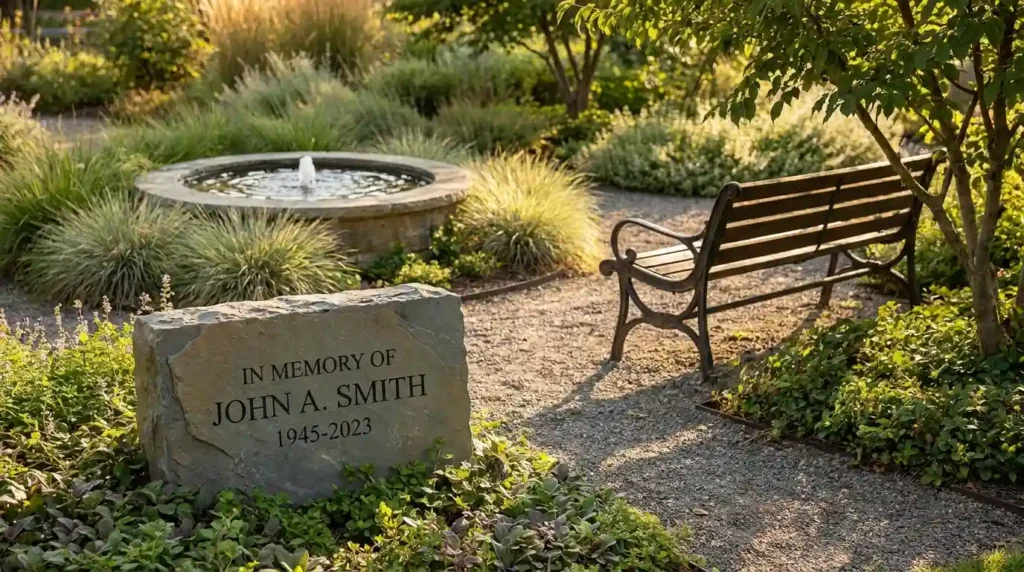
Engraved memorial stone:
A simple natural stone with his name, dates, and a short meaningful phrase set at the base of the memorial tree or among the planting provides the permanent named element that confirms this is a specific memorial space. Natural slate or yorkstone engraved by a local stone mason is more personal and more beautiful than a standard purchased memorial plaque.
A small bench:
A simple bench — timber, cast iron, or stone — positioned to face the memorial tree and the main planting area gives the family a reason and a place to sit in the memorial garden. A bench without a seat invitation never gets used for more than standing and looking. A comfortable bench creates the possibility of sitting for twenty minutes quietly in the garden with him.
A small water feature:
The sound of moving water in a memorial garden adds the sensory layer that makes sitting in it feel genuinely restorative rather than simply sad. A small solar-powered fountain in a simple stone or ceramic bowl requires no electrical installation and provides gentle water sound that fills the garden space with a quality of peace that no other element provides.
📌 More garden ideas: How To Build a Small Pond With a Waterfall
Frequently Asked Questions
What plants are good for a memorial garden?
The best plants for a memorial garden are those with personal meaning to the person being remembered combined with genuine longevity so the garden improves rather than requiring repeated replanting. The most commonly chosen memorial garden plants: old-fashioned heritage roses for fragrance and personal connection, lavender for its powerful scent-memory association, peonies which live for 50 or more years in the same position, and a memorial tree as the long-term anchor — ornamental cherry, crab apple, or silver birch. According to the Royal Horticultural Society scented plants are particularly meaningful in memorial gardens because fragrance is the sense most powerfully connected to autobiographical memory.
How do you create a memorial garden at home?
Creating a memorial garden at home requires five decisions in sequence: choosing a location that is visible from the house and somewhat enclosed, selecting a memorial tree as the long-term anchor plant, choosing companion plants with personal meaning and genuine longevity, adding a permanent structural element such as an engraved stone, and positioning a small bench that creates an invitation to sit. The garden does not need to be large — a 3 by 3 meter corner space is sufficient to create a genuinely beautiful and meaningful memorial garden that grows more beautiful each year.
What tree should I plant in memory of my dad?
The best memorial tree is one with personal meaning to the father — a tree he loved, grew himself, or associated with a meaningful place. If no specific tree has personal meaning the best choices by garden size and preference: for a small garden an ornamental cherry such as Prunus ‘Shirotae’ for white blossom or Prunus ‘Kanzan’ for double pink blossom. For a medium garden a crab apple Malus ‘Red Sentinel’ for spring blossom and winter fruit. For a larger garden a silver birch Betula pendula for year-round beauty and the specific quality of light through its leaves that makes it one of the most beautiful native trees available.
How big does a memorial garden need to be?
A memorial garden does not need to be large to be meaningful — a 2 by 2 meter corner space is sufficient for an engraved stone, lavender edging, and a small companion shrub. A 3 by 3 meter space accommodates a small memorial tree, surrounding planting, and a compact bench. A 4 by 5 meter space allows a substantial tree, generous mixed planting, a bench, and a small water feature — the most complete memorial garden experience available in a domestic garden. The emotional quality of the space is determined by the plant choices and structural elements rather than by its size.
More Garden Ideas
→ 10 Peaceful Garden Nook Ideas
→ How To Build a Cozy Dad’s Retreat Patio Corner
→ Best Ergonomic Gardening Tools for Older Dads
Plant the tree first. Everything else grows around it over time — the same way memory works.

Sheikh Hassaan is a digital architect for small businesses and the founder of The Glow Up System. He writes about home decor, garden design, and outdoor living for real American homes – practical ideas that work in actual spaces without oversized budgets.