
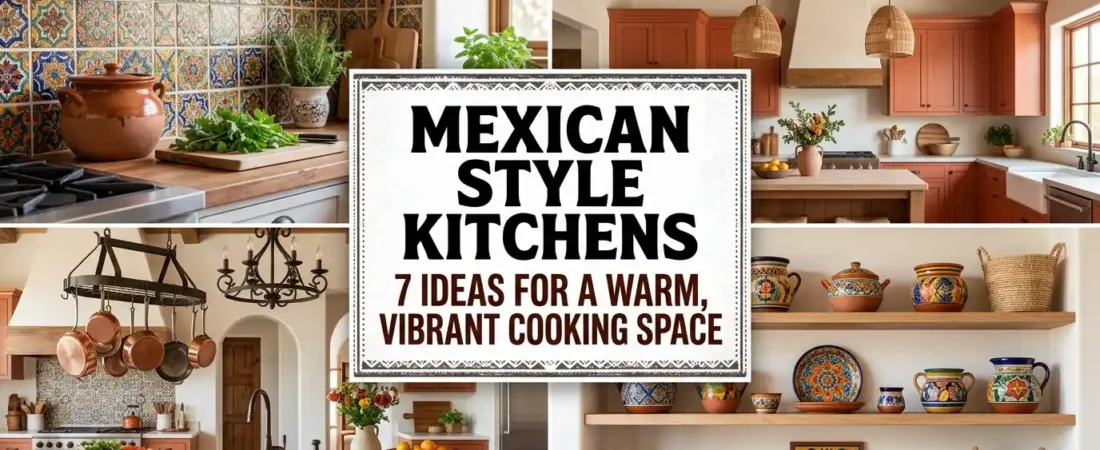
A Mexican-style kitchen is more than just a place to cook. It is the heart of the home, where family gathers, meals are shared, and life happens. Rich in color, texture, and tradition, these kitchens are known for their warmth, vibrancy, and welcoming atmosphere. Whether you want to completely renovate or just add a few authentic touches, this guide will help you create a kitchen that feels warm, lively, and full of character.
Table of Contents
1. Talavera Tile Backsplash
✦ Best for: Adding vibrant color and authentic Mexican artistry to your kitchen walls
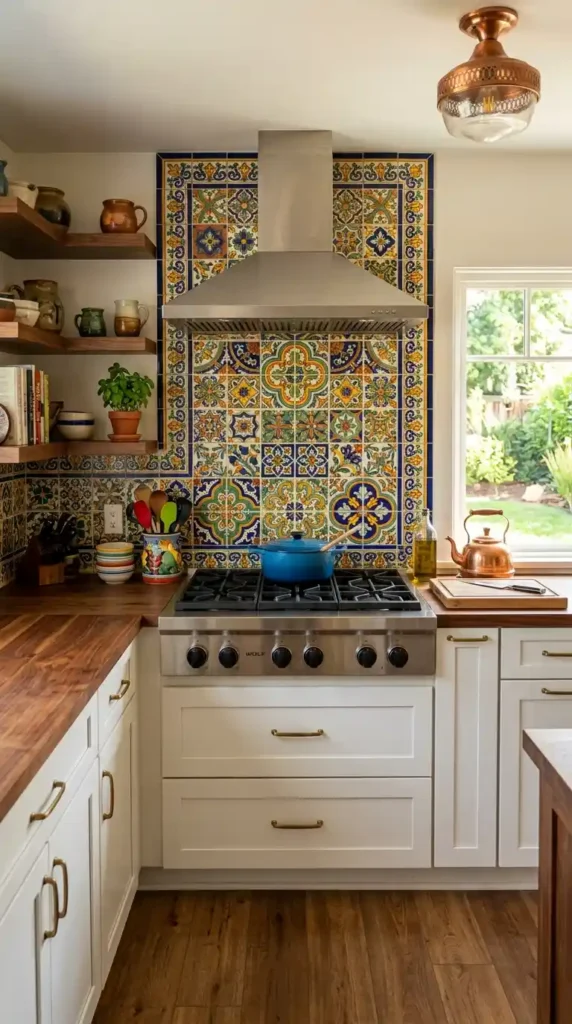
Hand-painted Talavera tiles are the soul of Mexican kitchen design. Originating from Puebla and Dolores Hidalgo, these colorful glazed ceramic tiles feature intricate patterns inspired by Spanish, Moorish, and indigenous art. Their bright colors and detailed designs bring instant energy and personality to any kitchen.
How to do it: Use Talavera tiles as a backsplash behind the stove or sink. You can cover the entire wall or create a smaller accent panel if you are working with a tighter budget. Mix different patterns for an eclectic look or stick with matching designs for something more uniform. The moisture-resistant surface makes them practical for daily use.
2. Saltillo Terracotta Flooring
✦ Best for: Creating a warm, earthy foundation with authentic rustic charm
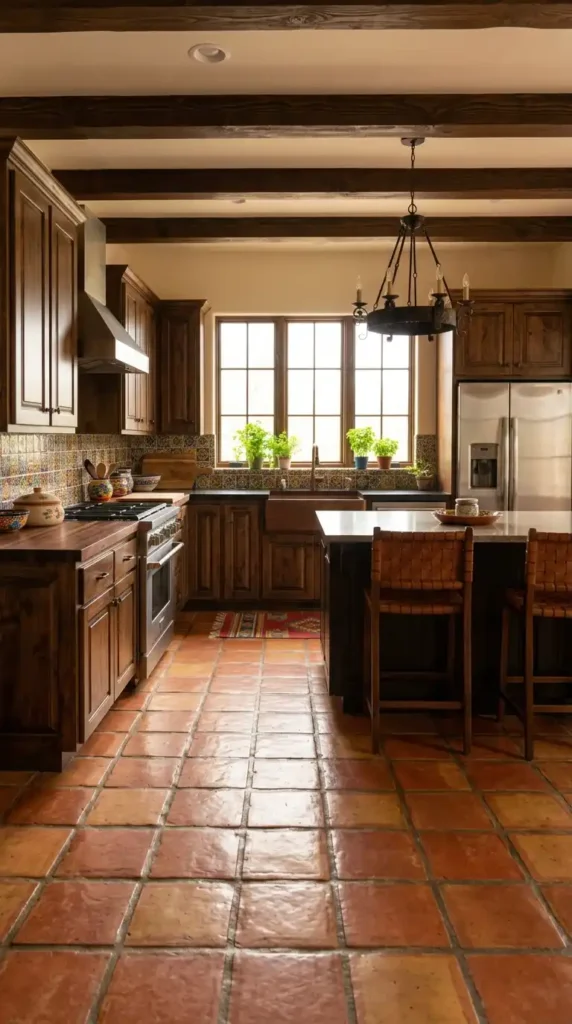
Saltillo tiles are handmade clay tiles from Mexico, known for their warm terracotta hue and rustic character. These earthy tiles create a cozy foundation that grounds the room, while their textured surface adds a touch of rustic authenticity. They are durable enough to withstand daily use in a busy kitchen.
How to do it: Use Saltillo tiles across the entire kitchen floor. You can also use terracotta-look porcelain tiles for a more budget-friendly option that still captures the warm, earthy feel. The natural color variations in each handmade tile add character that works beautifully with other Mexican design elements. Pair them with modern metals like brushed brass or matte black fixtures for a balanced look.
3. Rustic Wood Open Shelving
✦ Best for: Displaying colorful pottery and cookware while adding warmth
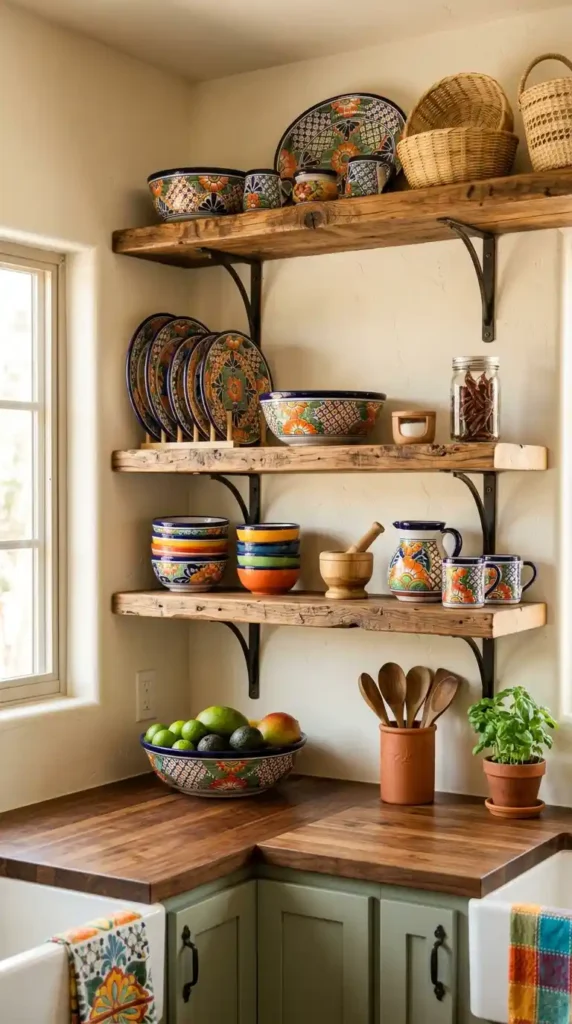
Open shelving made from reclaimed wood brings warmth and character to a Mexican-style kitchen. The natural grain and weathered texture create a lived-in feel that pairs perfectly with colorful pottery and hand-painted ceramics. These shelves also provide easy access to everyday items while creating visual interest on your walls.
How to do it: Install rustic wooden shelves to display your collection of Mexican pottery, colorful dishes, and glassware. You do not need to fill every inch of space. A few carefully chosen pieces look better than cramming everything on display. Use the shelves to showcase traditional cookware, clay pots, and woven baskets as part of the decor. Even one or two reclaimed wood shelves can make a big impact.
4. Carved Plaster Range Hood
✦ Best for: Creating a stunning focal point that anchors the cooking area

A hand-carved plaster range hood is a show-stopping element in any Mexican-style kitchen. It combines functionality with artistry, creating a focal point that draws the eye. The carved details add that handmade quality that makes modern Spanish-Mexican decor so special.
How to do it: Have a custom plaster hood created on-site with bas-relief decorations inspired by traditional Mexican patterns. The hood can be smooth or textured, painted white or left in natural earth tones. Frame it with an ornate tile backsplash featuring geometric patterns or floral motifs to complete the look.
5. Handcrafted Pottery and Talavera Accents
✦ Best for: Adding personality and artisanal charm to countertops and shelves
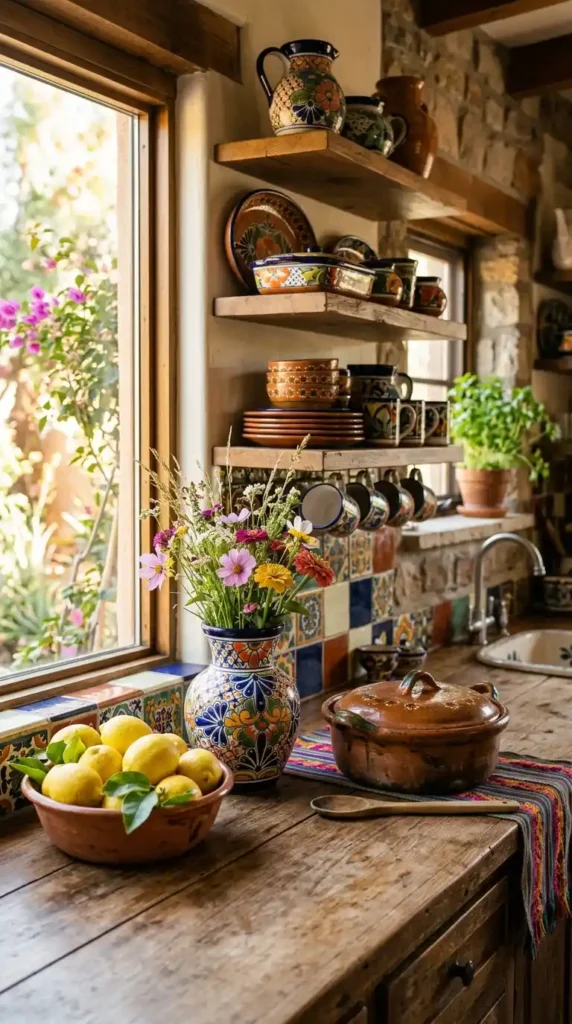
Handcrafted Mexican pottery and Talavera ceramics bring personality and warmth to your kitchen. These pieces add color and a handcrafted feel while serving practical purposes. Displaying them on countertops or open shelves is a great way to evoke the charm of a traditional Mexican kitchen.
How to do it: Use clay bowls and ceramic jars for storing fruit, utensils, or cooking oils. Display traditional clay dishes, vases, and painted plates as decorative accents. For a truly authentic touch, include traditional Mexican cookware like cazuelas, molcajetes (stone mortars), and clay pots. You do not need many pieces. Start with two or three items in different sizes.
6. Exposed Wooden Beams
✦ Best for: Adding rustic charm and architectural warmth to the ceiling
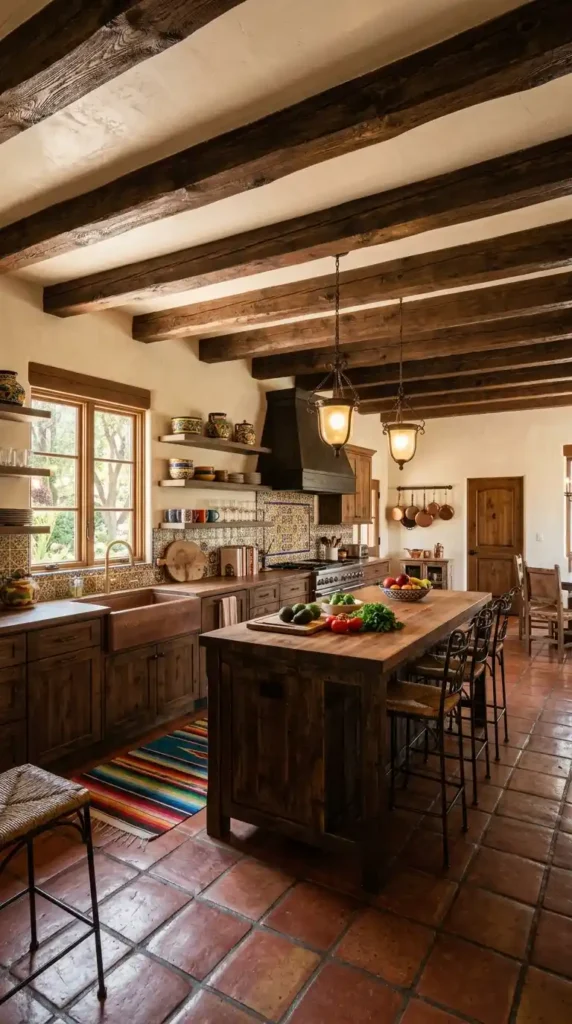
Exposed wooden beams are a signature element of Mexican and hacienda-style kitchens. They add rustic charm and architectural warmth, creating a sense of history and craftsmanship. Dark-stained wood provides a striking contrast against light walls.
How to do it: Install exposed wooden beams on your kitchen ceiling. Leaving them in their natural wood color allows their unique character to shine. The contrast between the rustic beams and bright walls or colorful tiles creates a warm, inviting atmosphere. For a more contemporary look, combine clean-lined beams with traditional details.
7. Wrought Iron and Copper Accents
✦ Best for: Adding old-world charm and elegant contrast
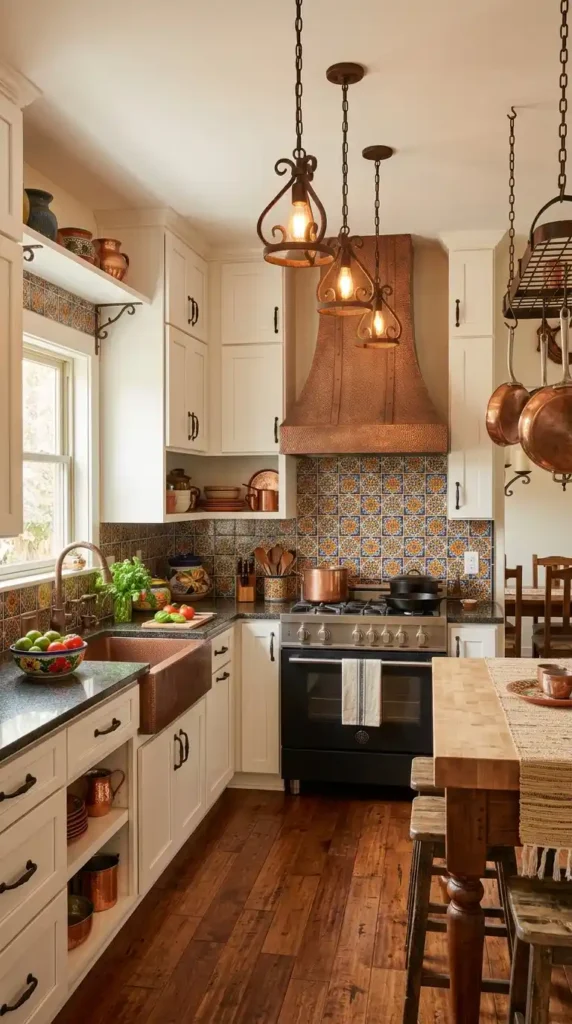
Wrought iron and copper accents add old-world charm and elegance to a Mexican-style kitchen. The dark metal of wrought iron provides beautiful contrast against bright textiles and tiles, while copper adds warmth and a naturally aged look.
How to do it: Choose wrought iron pendant lights, chandeliers, cabinet hardware, or bar stools. Add hammered copper pots, a copper range hood, or a copper farmhouse sink. The combination of wrought iron and copper creates a warm, rustic ambiance that is characteristic of traditional Mexican design. A copper range hood, in particular, can be a striking focal point above the stove.
Frequently Asked Questions
1. What colors define a Mexican-style kitchen?
Key colors include terracotta, cobalt blue, sunny yellow, deep red, and vibrant green. Earthy tones like warm browns and beiges also form a strong foundation.
2. What are Talavera tiles and how are they used?
Talavera tiles are hand-painted ceramic tiles from Mexico, known for their intricate patterns and vibrant colors. They are commonly used as backsplashes, countertops, or decorative accents on open shelves.
3. What materials are essential for a Mexican-style kitchen?
Key materials include terracotta or Saltillo tiles, rustic wood for cabinets and shelving, wrought iron for fixtures and hardware, and hand-painted Talavera tiles. Natural stone countertops also work well.
4. How do I add color to a Mexican-style kitchen?
Use colorful Talavera tiles as a backsplash. Paint cabinets in bold hues like turquoise or deep blue. Add colorful textiles through table runners, curtains, and cushions. Display hand-painted pottery and ceramics.
5. What is the difference between a hacienda and a modern Mexican kitchen?
Hacienda-style kitchens often feature more rustic, traditional elements like carved plaster hoods, Saltillo tiles, and heavy wooden beams. Modern Mexican kitchens blend these traditional materials with sleek finishes, contemporary appliances, and cleaner lines while still embracing color and craftsmanship.
6. Can I create a Mexican-style kitchen on a budget?
Yes. Start with small accents like colorful textiles, hand-painted pottery, and copper accessories. Add a single tile backsplash. Use open shelving to display colorful dishware. Even a few small changes can make a big impact.
Related Articles
Mexican Hacienda Patio — 7 Timeless Ideas for Outdoor Living
Mexican Style Bathroom — 7 Ideas for a Vibrant, Culturally Rich Space
Modern Mexican Home Decor — 7 Ideas to Infuse Tradition with Contemporary Style
A Mexican-style kitchen is a celebration of color, craft, and culture. It invites warmth, authenticity, and the joy of gathering around good food.

Sheikh Hassaan is a digital architect for small businesses and the founder of The Glow Up System. He writes about home decor, garden design, and outdoor living for real American homes – practical ideas that work in actual spaces without oversized budgets.