
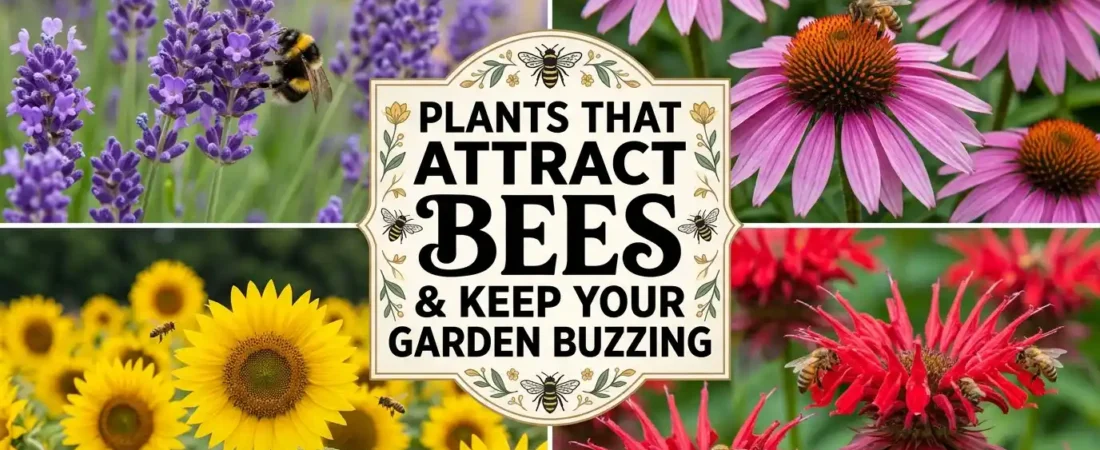
Bees are the unsung heroes of the garden. Without them, many of the fruits and vegetables we love would not exist. But bee populations are declining, and your garden can be part of the solution. By planting the right flowers, you can provide essential food and habitat for bees while enjoying a vibrant, colorful outdoor space. The key is choosing plants that bloom at different times of the year so bees always have something to eat from early spring through late autumn .
That is what makes knowing which plants that attract bees so valuable for American gardeners, turning your yard into a pollinator paradise that supports these essential creatures.
Table of Contents
Why Bees Matter and How Plants Help
Bees are responsible for pollinating more than 70% of the world’s flowering plants, including many of our favorite fruits and vegetables. Without them, gardens would be far less productive. Creating a bee-friendly garden with plants that attract bees is one of the most impactful things you can do for your local ecosystem and your vegetable patch.
The best plants for bees share a few key characteristics. They have simple, open flowers with a single layer of petals, making nectar and pollen easily accessible . They produce large amounts of nectar and pollen, the two main foods bees need. They are often blue or purple, colors bees see most clearly in the ultraviolet spectrum . Most importantly, they bloom at different times of the year to provide a continuous food supply .
1. Lavender: The Fragrant Favorite
✦ Best for: Sunny borders, herb gardens, and anywhere you want fragrance and non-stop bee activity
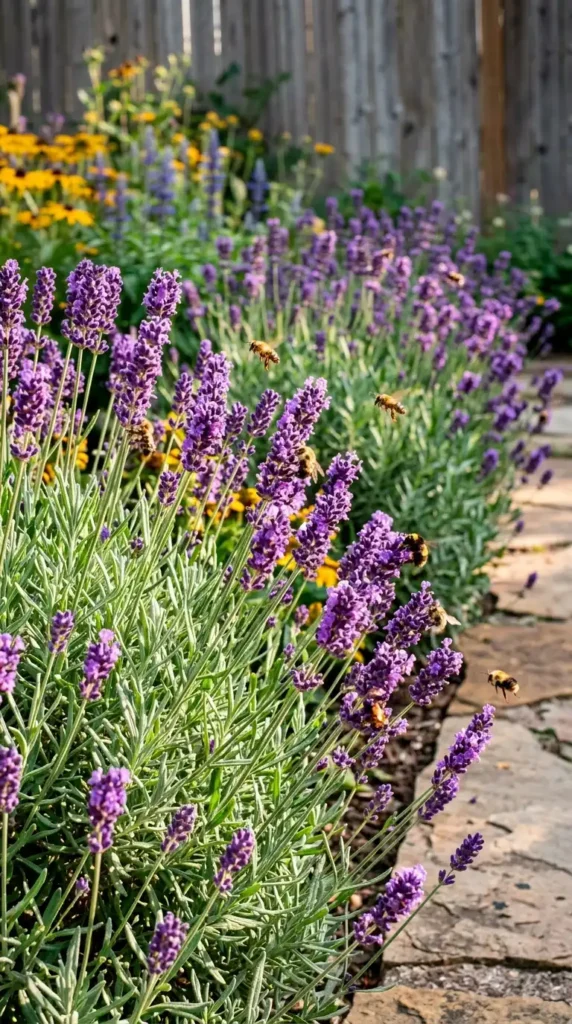
Lavender is perhaps the most famous bee plant, and for good reason. Its aromatic, purple flower spikes are packed with nectar that bees find irresistible. Some varieties are among the highest nectar producers per flower of any plant in the garden . Bees, butterflies, and hoverflies are particularly drawn to it .
Lavender has a long blooming period, beginning in spring and often continuing through fall. This makes it a reliable food source that bridges gaps between other seasonal blooms . It is drought-tolerant, deer-resistant, and thrives in full sun with well-drained soil. Plant lavender in masses for the most dramatic effect and to make it easier for bees to forage .
2. Borage: The Bee’s Bread
✦ Best for: Vegetable gardens, herb gardens, and anywhere you want a plant that flowers continuously
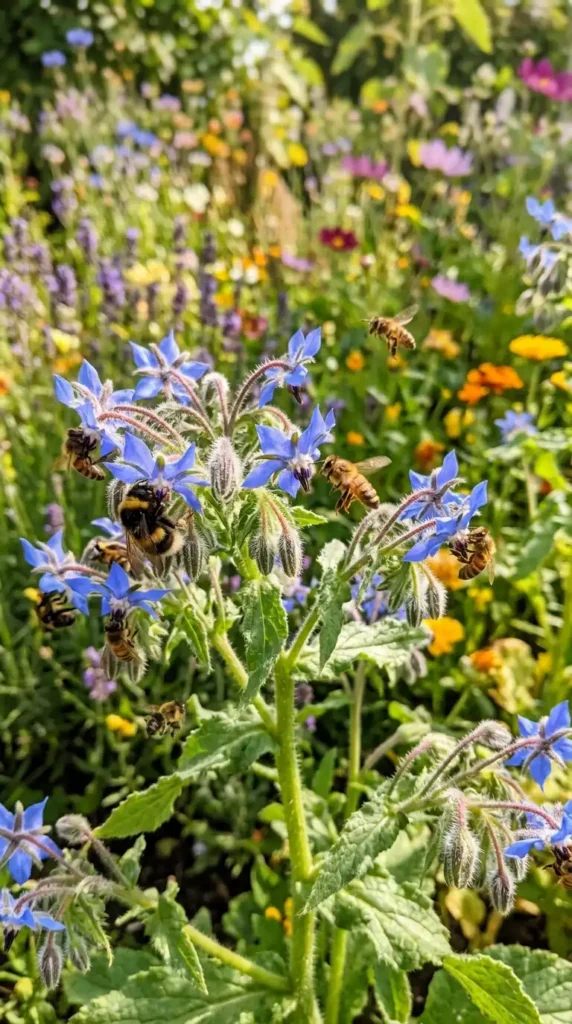
Borage has a nickname: “bee’s bread.” That is because it produces more nectar than most other plants, and it replenishes quickly so bees can revisit the same flowers later in the day . Its star-shaped blue flowers are exceptionally nectar-rich and easily accessible to bees .
Borage blooms from late spring through fall, providing a long season of food for pollinators . The flowers are edible and can be added to salads or frozen in ice cubes. It is easy to grow from seed and self-seeds readily, so once planted, it will likely return year after year.
3. Sedum (Stonecrop): The Late-Season Lifeline
✦ Best for: Autumn gardens, rock gardens, and dry, sunny spots where you want late-season color
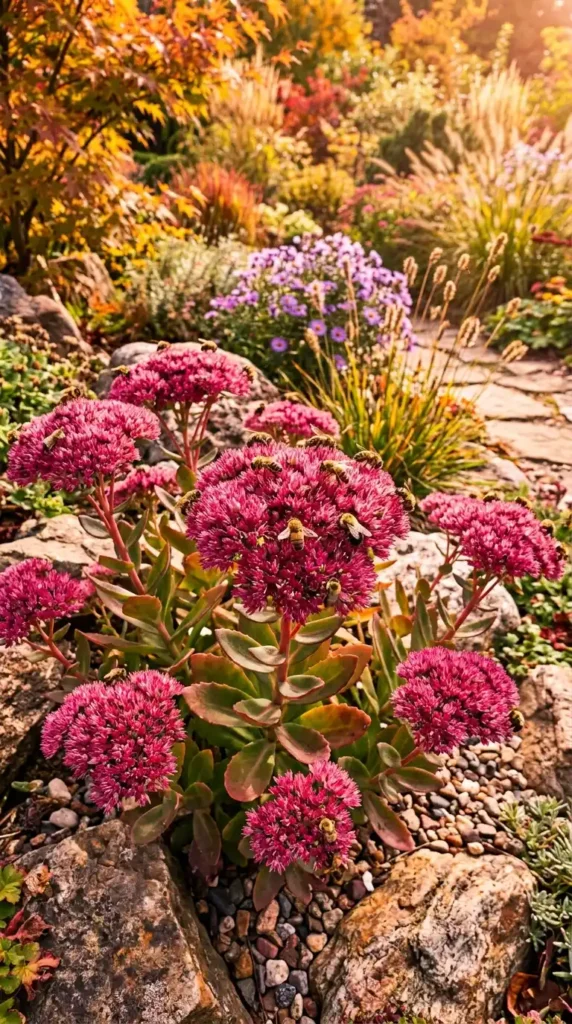
Sedum is a traditional favorite that flowers late into summer and early autumn . Its large, umbrella-shaped flower heads are super accessible to hungry bees, making it a popular plant for several bee species . When other flowers are fading, sedum provides a crucial late-season food source.
Sedum is drought-tolerant, thrives in full sun, and requires minimal care. It works well in rock gardens, borders, and containers. Its succulent leaves store water, making it a resilient choice for dry spots. Be sure to choose single-flowered varieties rather than double, as doubles have reduced nectar and pollen .
4. Phacelia: The Super-Attractor
✦ Best for: Cover crops, wildflower meadows, and anywhere you want to attract massive numbers of bees
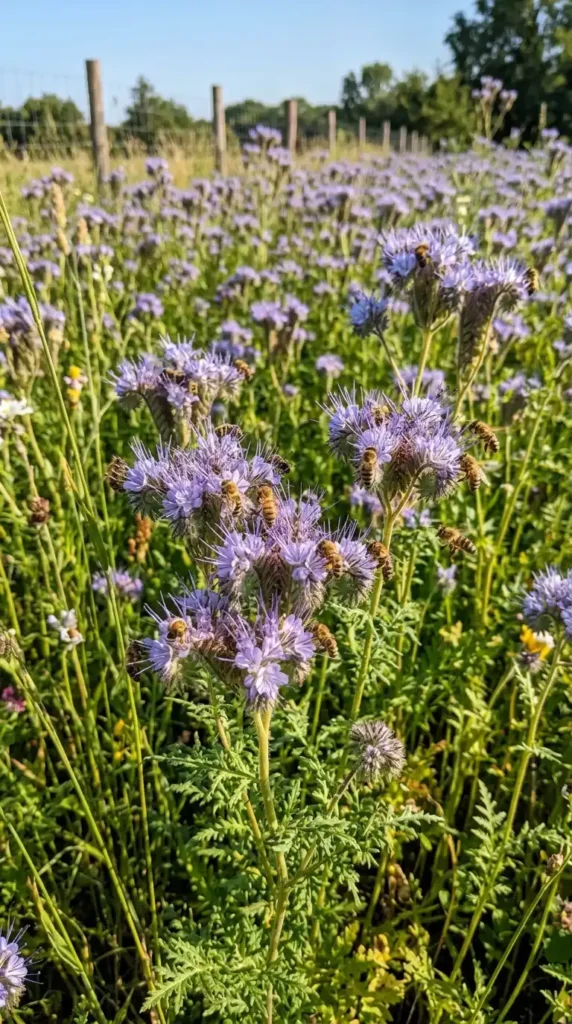
Biologist Dave Goulson describes phacelia as “perhaps the single most attractive plant for bees on the planet” . Its sweetly scented blue flowers produce an abundance of nectar and pollen. It flowers in summer, filling an important gap when bees are most active.
Phacelia is easy to grow from seed and can be used as a green manure, improving soil while feeding bees . It is an annual that blooms quickly and heavily. Plant it in blocks or drifts for maximum impact.
5. Marjoram and Oregano: The Long-Blooming Herbs
✦ Best for: Herb gardens, vegetable gardens, and sunny borders where you want edible plants that feed bees
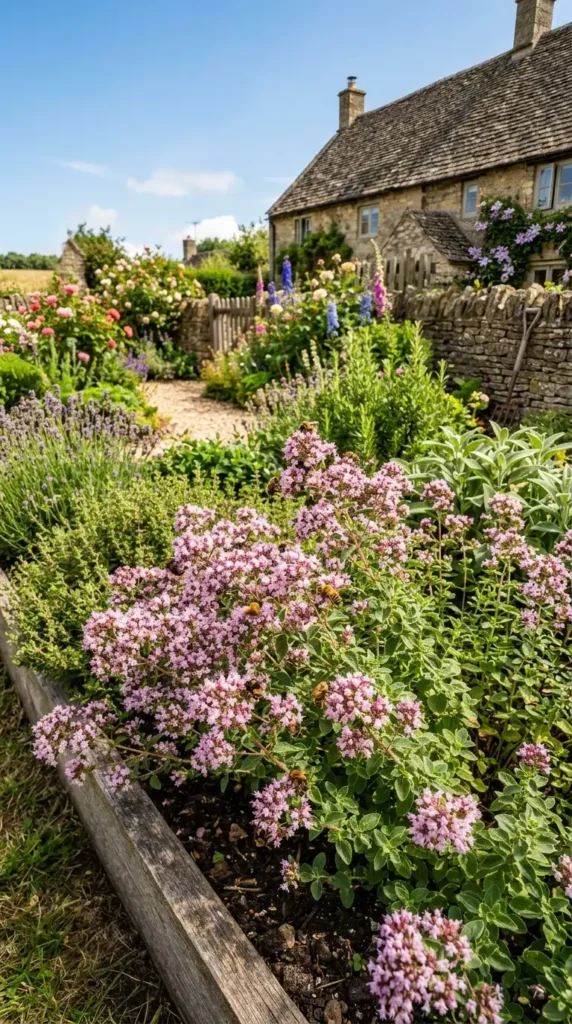
When allowed to flower, marjoram and oregano are among the best plants for bees . The small clusters of aromatic flowers are nectar-rich and bloom for up to eight weeks in late summer, during a time when many insects are searching for scarce food sources .
Oregano is compact, and its flowers are plentiful and closely spaced, allowing bees to forage without expending much energy . It is drought-tolerant, thrives in full sun, and requires minimal care. It is a perfect addition to the vegetable garden where it will attract bees to pollinate your crops.
6. Cosmos: The Long-Blooming Annual
✦ Best for: Cutting gardens, borders, and anywhere you want non-stop color that bees love
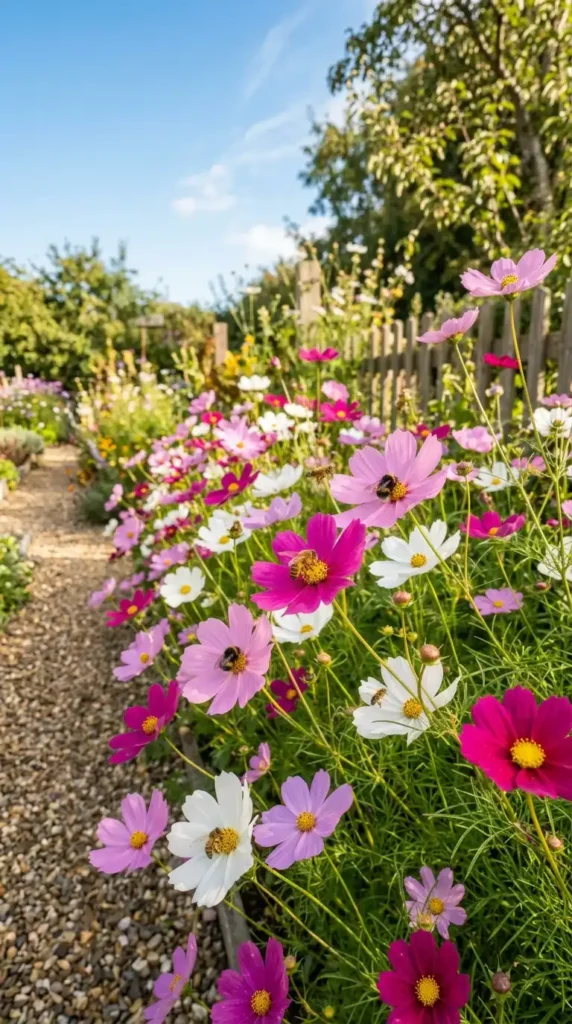
Cosmos is a long-blooming annual that bees absolutely adore. Its simple, open, daisy-like flowers provide easy access to nectar and pollen . It blooms continuously from summer until the first frost, providing a long season of food for bees and butterflies .
Cosmos is easy to grow from seed and thrives in full sun with well-drained soil. It is drought-tolerant and low-maintenance, making it an excellent choice for beginner gardeners. The flowers also make wonderful cut flowers, so you can enjoy them indoors too.
7. Sunflowers: The Pollinator Magnets
✦ Best for: Sunny borders, cutting gardens, and anywhere you want dramatic, bee-friendly flowers
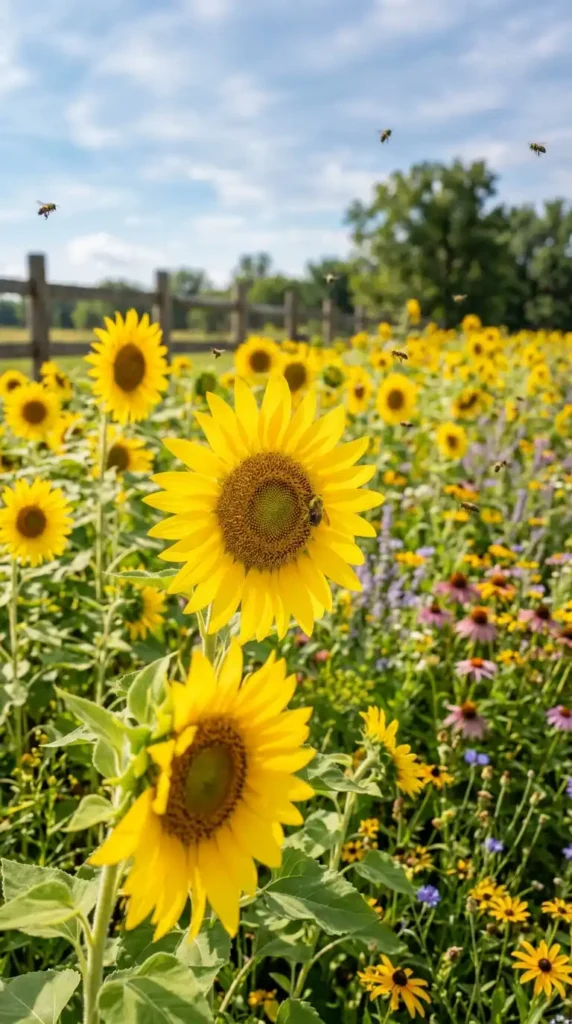
Sunflowers are not just beautiful; they are also excellent for bees. The large central disk is made up of hundreds of tiny flowers, each producing nectar and pollen . Bees of all kinds visit sunflowers, often becoming completely covered in bright yellow pollen.
Sunflowers come in a range of sizes, from giant varieties to compact types suitable for containers. They are easy to grow from seed and thrive in full sun. They make a dramatic statement in any garden while providing essential food for bees .
Frequently Asked Questions About Plants That Attract Bees
What are the best plants that attract bees?
The best plants for bees include lavender, borage, sedum, phacelia, marjoram, oregano, cosmos, and sunflowers. These plants produce abundant, accessible nectar and pollen and bloom for long periods throughout the growing season. Simple, open flowers with a single layer of petals are much easier for bees to access than double blooms .
What color flowers attract bees the most?
Bees are most attracted to blue and purple flowers, as these colors are highly visible to them in the ultraviolet spectrum . However, they will also visit white, yellow, pink, and orange flowers. Red flowers are less visible to bees and are often more attractive to hummingbirds .
What trees attract bees?
Flowering trees are an excellent source of food for bees, providing nectar and pollen in large quantities. Spring-blooming trees like apple, crab apple, cherry, and willow are especially important for bees emerging from hibernation . Ivy is a late-season lifeline for bees, blooming in autumn when few other plants are flowering .
What herbs attract bees?
Many herbs are excellent for bees, especially when allowed to flower. Lavender, borage, marjoram, oregano, thyme, rosemary, chives, and bee balm are all highly attractive to bees . Herbs are low-maintenance, drought-tolerant, and provide food for bees while also being useful in the kitchen.
Related Articles
Flowers That Bush: 10 Stunning Shrubs for a Lush, Vibrant Garden
Summer Plants That Thrive in Heat and Keep Your Garden Blooming
Flowers That Start With P: 15 Stunning Blooms for Every Garden
A garden full of bees is a garden full of life. Plant these bee-friendly flowers, and you will be rewarded with the constant buzz of wings and the satisfaction of supporting nature’s hardest workers.

Sheikh Hassaan is a digital architect for small businesses and the founder of The Glow Up System. He writes about home decor, garden design, and outdoor living for real American homes – practical ideas that work in actual spaces without oversized budgets.