
I planted a hundred tulip bulbs one October afternoon — about forty minutes of work — and forgot about them entirely. The following April the border I had planted them in looked like a photograph from a garden magazine. I had done nothing in between.
That is the specific magic of spring bulbs to plant in fall. You plant in October. The garden rewards you in April. The bulbs do everything in between without any assistance.
The planting window is October and November when soil temperatures drop below 50°F. Miss it and you wait a full year. These 12 bulbs cover everything from the earliest snowdrops in January to dramatic crown imperials in May — with planting depth, spacing, and the specific tips that make the difference between a good display and an exceptional one.
Table of Contents
1. Tulips — The Most Spectacular Spring Bulb Available
✦ Tulips
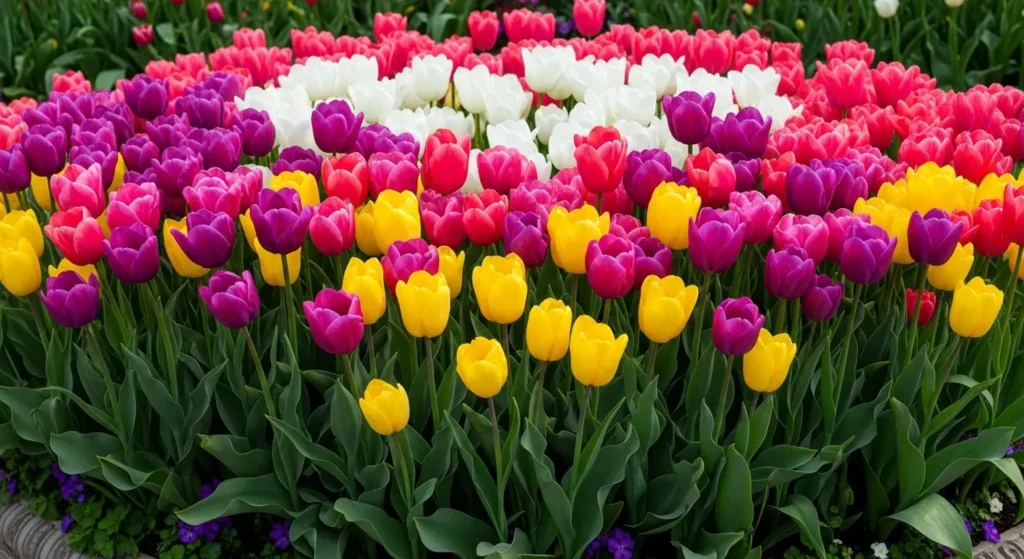
Tulips are the spring bulbs to plant in fall that create the most dramatic before-and-after. A bare October border. A spectacular April display. Nothing done in between except waiting.
No other spring bulb delivers the same combination of height, bold color, and density of impact. The double-layer planting method doubles the flower count in the same space — lower layer at 8 inches, upper layer at 4 inches with each bulb positioned between the ones below.
For how alliums work as part of a complete layered border planting see our front yard garden ideas guide which covers the three-layer planting approach that uses architectural spring bulbs most effectively.
PRO TIP: Plant tulip bulbs with the pointed tip facing upward. If you are unsure which end is which plant the bulb on its side — it will still find its way up but planting correctly reduces the energy the bulb uses establishing itself.
2. Daffodils — The Most Reliable Spring Bulb You Can Plant
✦ Daffodils
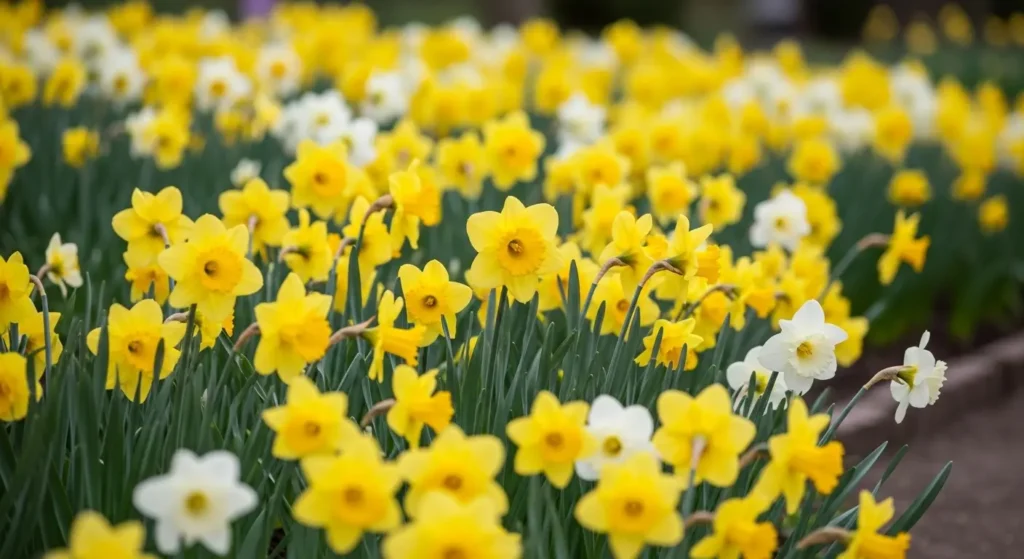
Daffodils are the most reliable spring bulb in the garden. Unlike tulips they are rodent-proof, disease-resistant, and naturalise freely — meaning they multiply and produce more flowers every year without any intervention. A daffodil planting gets better every single spring for years.
Plant depth: 6 inches deep. Spacing: 4 to 6 inches apart. Planting time: September to November. Daffodils tolerate a wider planting window than tulips and can go in as early as September when soil temperatures drop. Plant in irregular drifts rather than straight lines for the most natural and beautiful result. Leave foliage to die back naturally after flowering — the yellowing leaves are feeding next year’s bulbs and removing them early significantly weakens future flowering.
3. Hyacinths — The Most Fragrant Spring Bulb for Pots and Borders
✦ Hyacinths
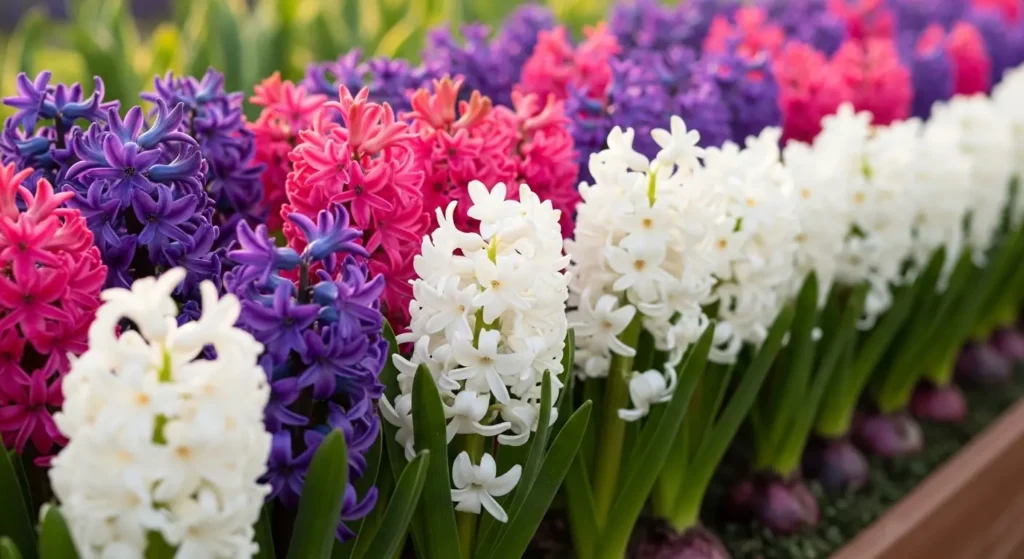
Hyacinths provide the most intense fragrance of any spring bulb. A single hyacinth in a pot on a windowsill or beside a front door perfumes the immediate area completely. A row of hyacinths along a garden path or in a border creates a fragrance corridor that stops every visitor in their tracks.
Plant depth: 4 inches deep. Spacing: 3 inches apart in containers, 6 inches in borders. Planting time: September to October. Hyacinths are particularly well-suited to container growing — their compact form, strong stems, and intense fragrance make them perfect front porch or patio pot subjects. The Quarut large planter pots planted with a dense row of matching hyacinths in a single color creates one of the most impactful spring container displays available. Find them linked on Amazon.
PRO TIP: Wear gloves when handling hyacinth bulbs. The outer skin of the bulb contains calcium oxalate crystals that cause skin irritation in sensitive individuals. This is particularly relevant when planting large quantities.
4. Crocuses — The First Spring Color That Appears While Snow Still Falls
✦ Crocuses
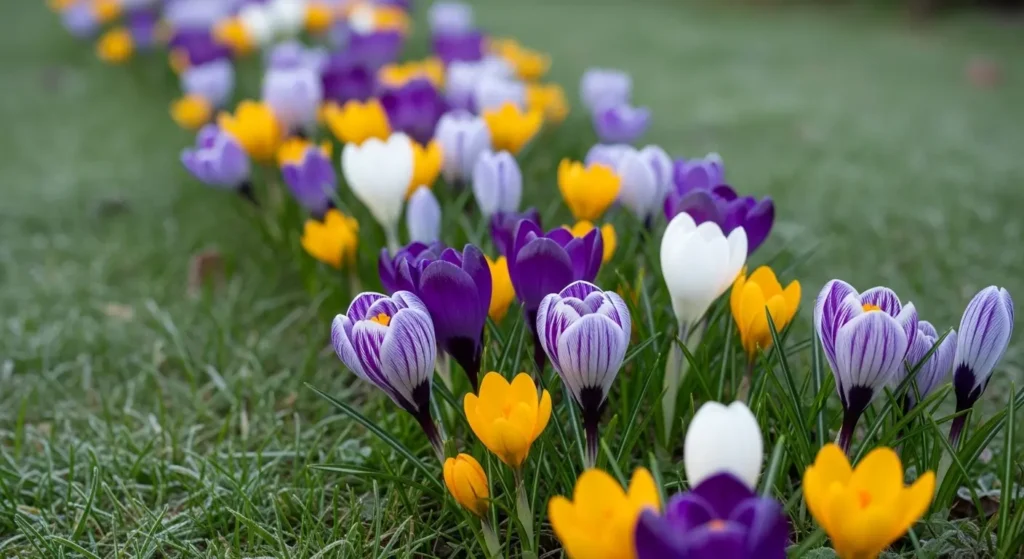
Crocuses are the earliest spring bulbs and the first to push through bare winter soil, often flowering while temperatures are still near freezing. Their arrival in February or March marks the genuine turning point of the season more decisively than any other plant. A lawn naturalised with crocuses is one of the most beautiful garden sights available.
Plant depth: 3 to 4 inches deep. Spacing: 2 to 3 inches apart. Planting time: September to October. Crocuses naturalise freely in lawns — scatter bulbs randomly and plant where they fall for the most natural distribution. Do not mow the lawn until the crocus foliage has yellowed and died back after flowering. Choose a mix of purple, yellow, white, and striped varieties for the richest lawn naturalising effect.
For how naturalised crocuses work alongside other lawn and meadow planting see our wildflower and native plant front garden guide which covers the management approach for mixed meadow areas.
5. Alliums — Dramatic Architectural Spheres for Late Spring Gardens
✦ Alliums
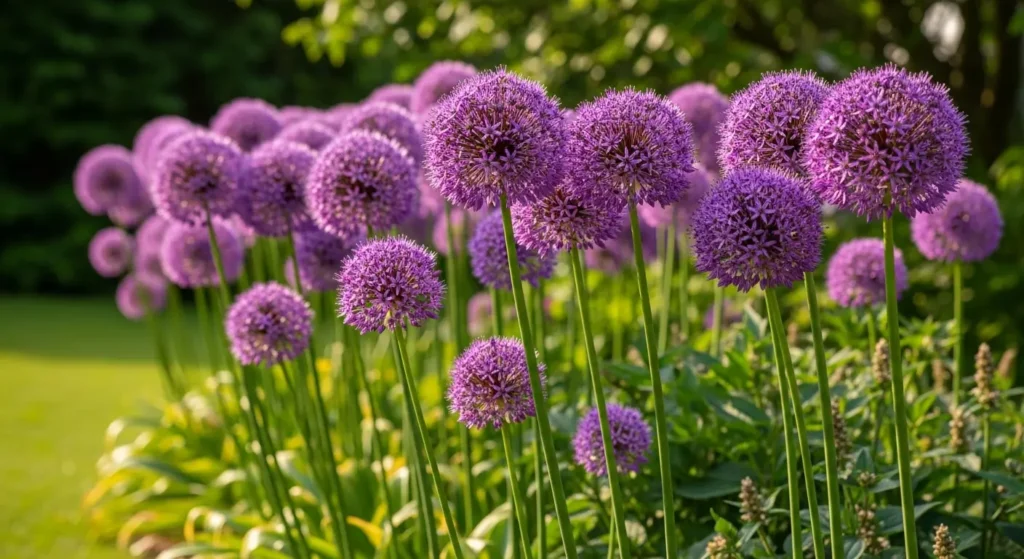
Alliums are the most architecturally dramatic spring bulbs available. Their large perfect spheres of tiny flowers on tall straight stems create a display that is completely unlike any other spring plant. Alliums bridge the gap between spring and summer, flowering in May and June when many earlier spring bulbs have finished.
Plant depth: 4 inches deep for small varieties, up to 8 inches for large Allium giganteum. Spacing: 6 to 12 inches depending on variety size. Planting time: October to November. Choose large-flowered varieties like Allium giganteum, Allium Purple Sensation, or Allium christophii for the most dramatic display. Plant in groups of five or more — single allium stems look sparse. Alliums are deer and rodent resistant making them ideal for gardens with wildlife pressure.
PRO TIP: Plant alliums between perennial plants that will fill in around their lower stems as they grow. Allium foliage yellows and looks untidy by the time the flowers are at their best. The surrounding perennials hide the dying foliage and make the architectural flower spheres look as though they are floating above a lush green sea.
6. Irises — Elegant Early Spring Color in Unexpected Shades
✦ Irises
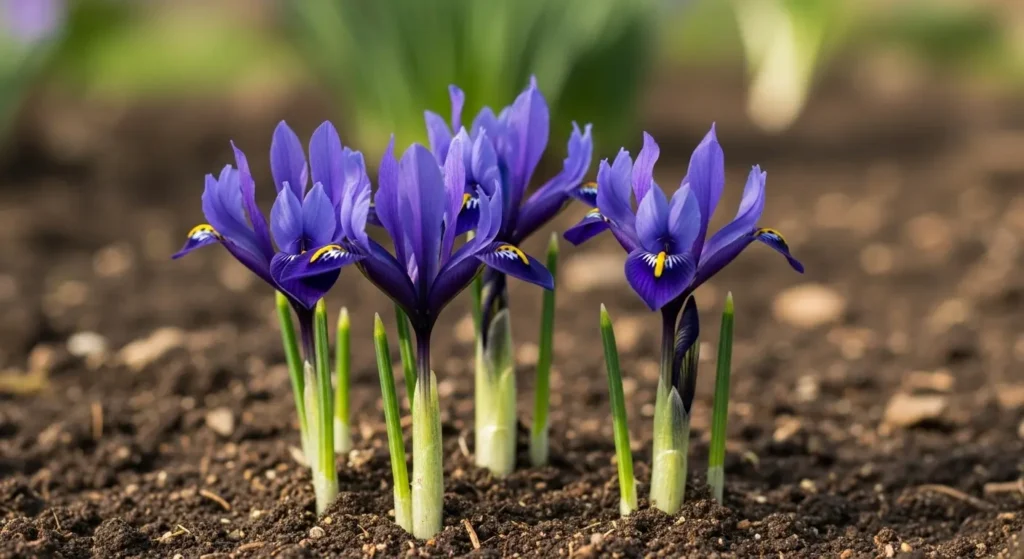
Iris reticulata is the spring bulb iris that flowers incredibly early — February and March — at just 4 to 6 inches tall. The flowers have the intricate beauty of full-sized irises compressed into a tiny jewel-like form. The deep purple, blue, and violet colorways of most varieties are rare among early spring bulbs and immediately distinctive.
Plant depth: 3 to 4 inches deep. Spacing: 3 inches apart. Planting time: September to October. Iris reticulata performs best in very well-drained soil and full sun. In heavier soils plant in raised beds or containers with added grit for drainage. After flowering the foliage elongates significantly — this is normal and not a problem. Allow it to die back naturally before removing.
7. Snowdrops — The Most Hopeful Flowers of the Entire Year
✦ Snowdrops
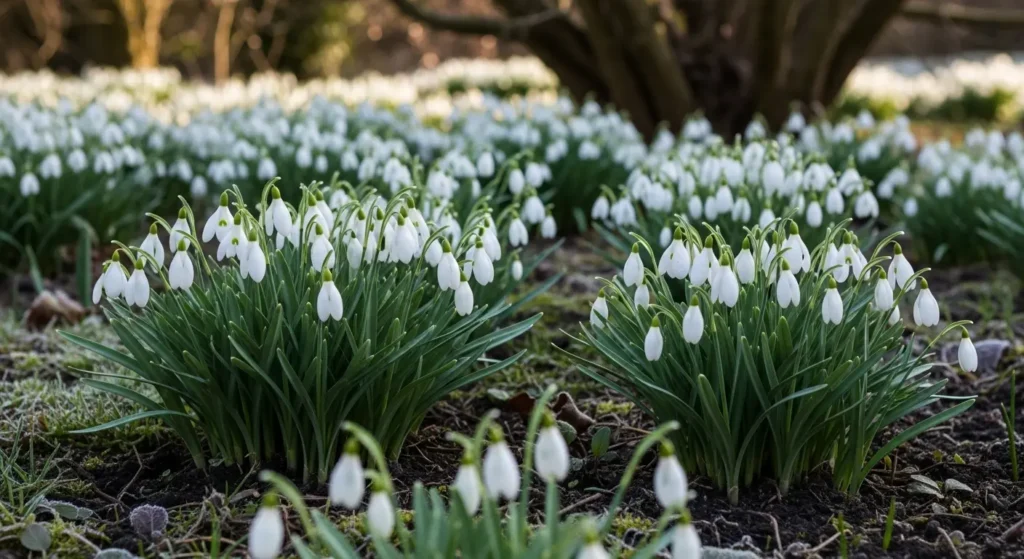
The first snowdrop of January is the moment I find most reliably affecting in a garden year. Not the tulips in April — those are expected. The snowdrop pushing through bare soil in January, often through snow, when nothing else is alive, creates a feeling that no other plant in the spring bulbs to plant in fall list can replicate.
Small, white, perfectly formed. They naturalise freely and spread slowly into carpets that take years to establish and look more beautiful with every passing winter.
PRO TIP: Divide established snowdrop clumps every three to four years immediately after flowering while still in leaf. Lift the clump, separate gently into individual bulbs or small groups, and replant at the same depth. Division speeds up the naturalising process dramatically and doubles or triples the number of flowers within two seasons.
8. Grape Hyacinths — The Most Reliable Blue Spring Bulb Available
✦ Grape Hyacinths
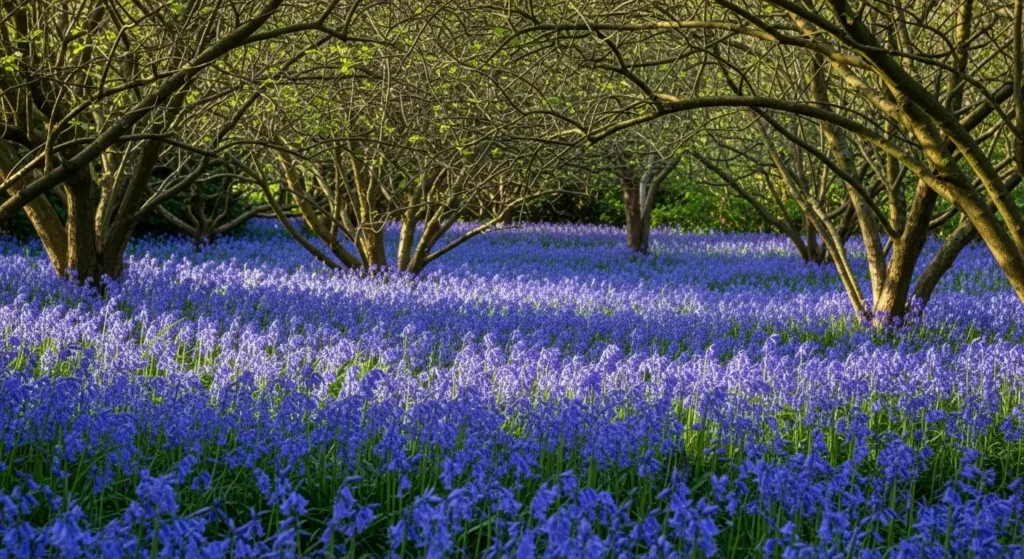
Grape hyacinths produce the most vivid true blue color of any spring bulb. The intensity of Muscari armeniacum blue is completely unlike any other spring plant and creates a startling visual effect whether planted in mass sweeps in a border or grouped in a container alongside yellow narcissus for maximum color contrast.
Plant depth: 3 inches deep. Spacing: 2 to 3 inches apart. Planting time: September to October. Grape hyacinths naturalise freely and increase rapidly — a small initial planting becomes a dense carpet within two to three seasons. They are among the most vigorous and easy spring bulbs available. Plant beside yellow daffodils or pale narcissus for the classic blue and yellow spring color combination that photographs beautifully.
9. Bluebells — A Haze of Blue That Transforms a Shaded Garden
✦ Bluebells
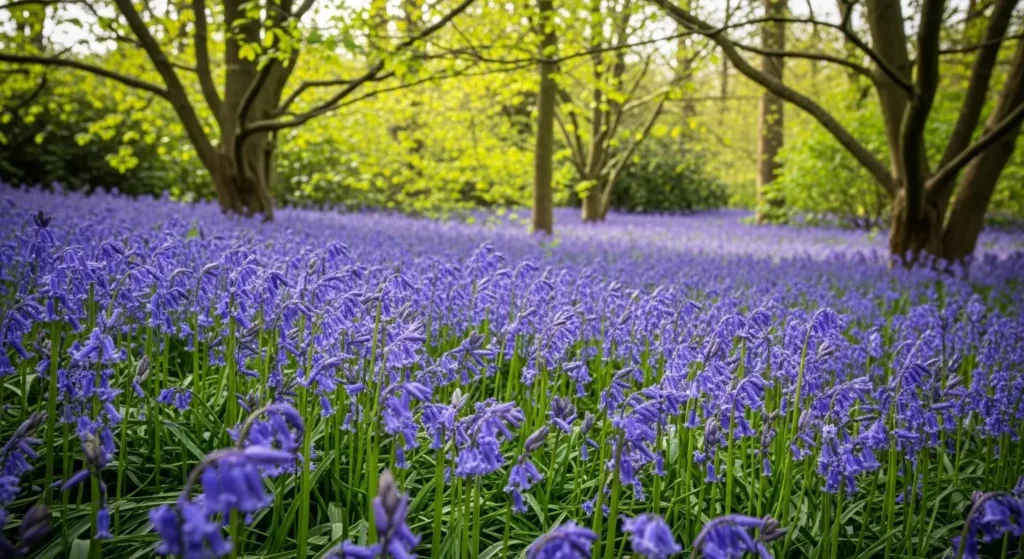
Bluebells create one of the most magical of all spring garden effects when naturalised under deciduous trees. The nodding blue flower spikes massed together beneath bare branches in April create a haze of color and fragrance that feels completely wild and ancient regardless of how recently they were planted.
Plant depth: 3 to 4 inches deep. Spacing: 4 inches apart. Planting time: September to November. Plant native English bluebells rather than Spanish bluebells if possible — the native species has a more graceful nodding habit and a stronger fragrance. Position in dappled shade under deciduous trees where they receive moisture from autumn through spring then dry conditions in summer when dormant. Leave to naturalise undisturbed for the most spectacular long-term display.
PRO TIP: When planting bluebells in an existing lawn area do not cut the grass in that zone from February until the bluebell foliage has fully yellowed in June. The foliage feeds next year’s bulbs and cutting it early progressively weakens the planting until it fails entirely.
10. Anemones — Jewel-Bright Daisy Flowers That Last for Weeks
✦ Anemones
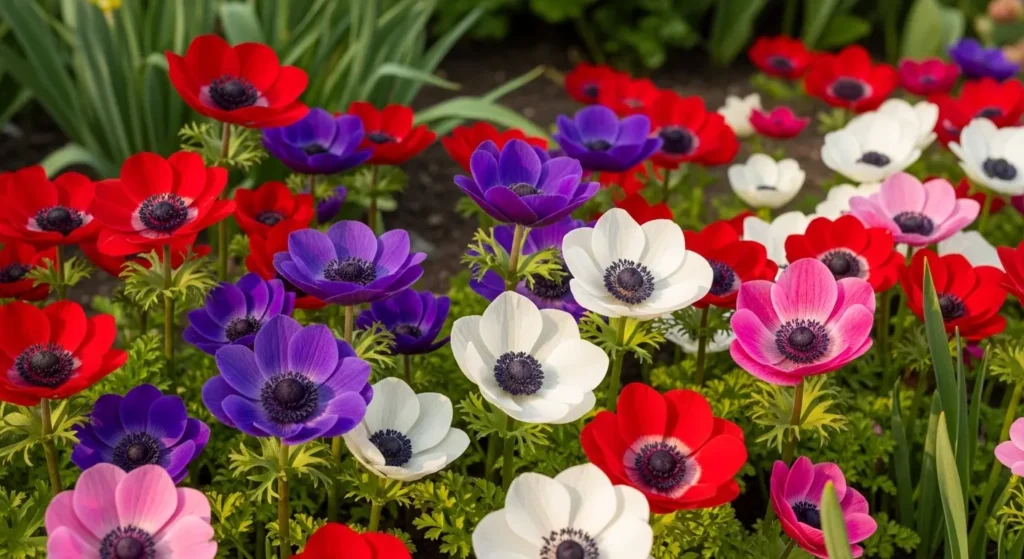
Anemone coronaria produces the most jewel-bright flowers of any spring bulb. The vivid red, purple, deep pink, and white petals surrounding the distinctive dark center create a flower that looks completely different from every other spring bulb. Anemones also have an exceptionally long vase life making them one of the best spring cutting flowers available.
Plant depth: 2 to 3 inches deep. Spacing: 4 to 6 inches apart. Planting time: October to November. Soak the dry corms in water for several hours before planting to rehydrate them before going into the soil. Plant the knobbly side down and the flatter side up. In colder climates plant in a sheltered sunny position or in containers that can be moved under cover during hard frosts.
11. Crown Imperials — The Most Dramatic Statement Bulb in Any Garden
✦ Crown Imperials
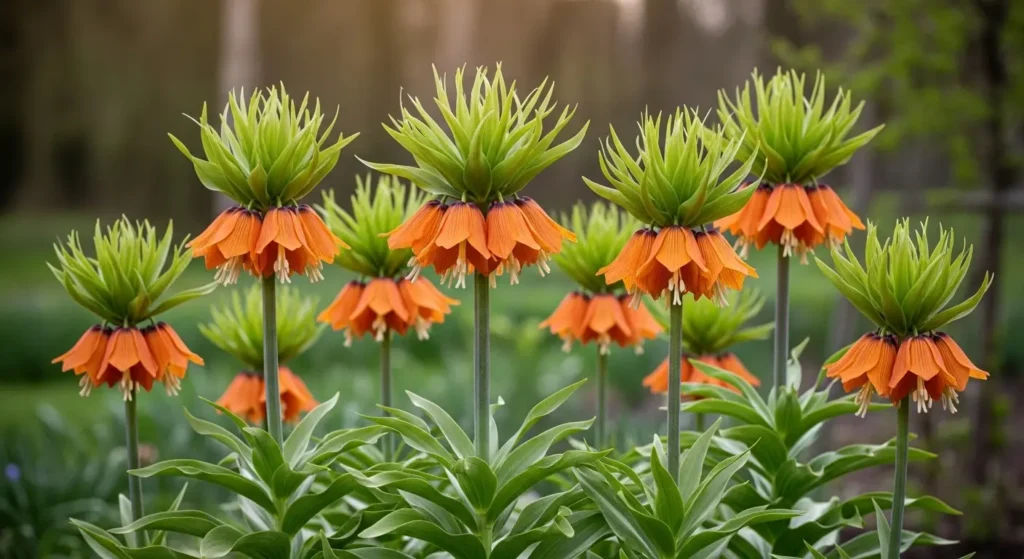
Crown imperials are the spring bulbs to plant in fall that most surprise people when they emerge. Three to four feet tall, vivid orange or yellow pendant bells beneath a crown of upright leaves. Nothing else in a spring garden looks remotely like them.
I have watched guests in a garden notice them mid-conversation and lose their thread. That particular quality of stopping someone — making them look twice and then look again — is what distinguishes crown imperials from every other spring bulb.
PRO TIP: Crown imperials are toxic to mice, voles, and squirrels who will actively avoid areas where they are planted. Position them at the edges of tulip or other bulb planting areas to act as a natural deterrent to the rodents that commonly dig up and eat other spring bulbs.
12. Fritillarias — Unusual Nodding Bells That Add Personality to Any Garden
✦ Fritillarias
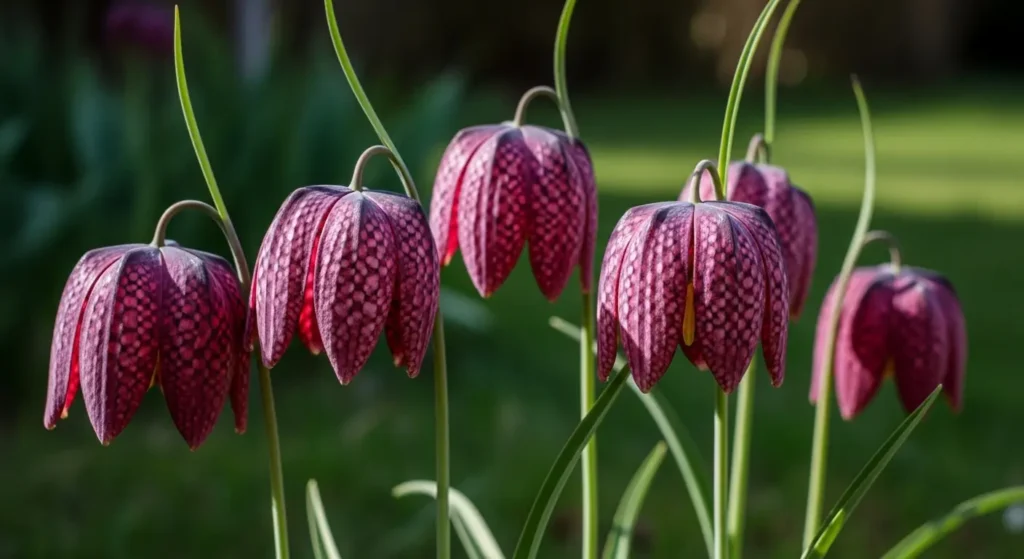
Fritillaria meleagris, the snake’s head fritillary, is the most unusual and most characterful spring bulb available. The nodding checkered bell flowers in purple-pink and white markings look like nothing else in the spring garden. They naturalise beautifully in damp meadow grass and create a display that makes anyone who sees them stop and look more closely.
Plant depth: 3 to 4 inches deep. Spacing: 3 to 4 inches apart. Planting time: September to October. Snake’s head fritillaries prefer moist conditions and naturalise best in grass that is not too dry or well-drained. Plant in irregular drifts in meadow grass or a damp border for the most natural effect. Handle the small bulbs gently as they bruise easily and damaged bulbs are slow to establish.
PRO TIP: Mix white and purple-pink fritillaria varieties in the same naturalised drift. The two color forms look beautiful together and the variation within the planting creates a more natural meadow effect than a single-color planting.
5 Fall Bulb Planting Mistakes Worth Avoiding
These mistakes are the most common causes of spring bulb disappointment:
Mistake 1 — Planting too late in the season
Spring bulbs need a period of cold winter temperatures to trigger flowering. Planting in December or January in mild climates may not provide sufficient cold period for reliable spring flowering. Aim to have all spring bulbs in the ground by the end of November at the latest.
Mistake 2 — Planting in waterlogged soil
Bulbs in waterlogged conditions rot within weeks of planting. Check drainage before planting by digging a hole and filling with water. If water remains after one hour the drainage is insufficient for most spring bulbs without soil improvement.
Mistake 3 — Planting soft or damaged bulbs
Always check bulbs before planting. Firm, solid bulbs with no soft spots or obvious mold are the only ones worth planting. Soft or damaged bulbs rarely flower and often introduce disease to the planting area. Discard any that feel spongy or show visible mold growth.
Mistake 4 — Removing foliage too early
The dying foliage after flowering is the bulb’s food factory for next year. Removing it before it has fully yellowed and collapsed is the most common reason spring bulbs fail to flower in subsequent years. Wait for full yellowing and collapse before removing any foliage.
Mistake 5 — Planting too few bulbs
Five tulips in a border look sparse and accidental. Fifty tulips in the same border look spectacular and intentional. Spring bulbs are inexpensive individually and the visual impact scales dramatically with quantity. Always plant more than feels necessary at planting time.
📌 More spring ideas → 7 Easy Drawer Planter Ideas That Look Amazing
Frequently Asked Questions
When should I plant spring bulbs in fall?
The ideal planting window for most spring bulbs in fall is when soil temperatures drop below 50 degrees Fahrenheit but before the ground freezes hard. In most of the continental United States this is September through November. Tulips benefit from being planted last in the fall window after a period of cold has developed. Daffodils, crocuses, and snowdrops can go in earlier from September onward. According to the American Bulb Society fall planting in cool soil significantly reduces the risk of fungal diseases that affect bulbs planted in warm autumn soil.
How deep should I plant spring bulbs?
The general rule is three times the bulb’s own diameter — large tulip and daffodil bulbs at 6 to 8 inches, medium hyacinth and allium bulbs at 4 to 6 inches, small crocus and grape hyacinth bulbs at 3 to 4 inches. Deeper planting is safer than too shallow in most situations.
Which spring bulbs come back every year?
Daffodils, alliums, crocuses, grape hyacinths, snowdrops, bluebells, and fritillaries all naturalize freely and increase in number annually without intervention. Tulips and hyacinths are technically perennial but often decline after two to three years and are frequently replanted annually for the best display.
Can I plant spring bulbs in containers in fall?
Yes, containers allow the double-layer planting technique that maximizes flower abundance, and containers in very cold climates can be moved to a sheltered position during hard frosts. Use quality free-draining potting compost with added grit and ensure adequate drainage holes.
The Best Time to Plant Is Right Now
Spring bulbs are the closest thing to guaranteed beauty that gardening offers. You plant them in fall, forget about them for five months, and in February the garden starts rewarding you for something you did last October. Every bulb in the ground is a promise that spring will look extraordinary.
Start with tulips and daffodils if this is your first fall planting. Add crocuses for early color and alliums for late drama. The spring garden you create this fall will be the one you want to photograph every year.
All the products mentioned in this article are linked on Amazon. Every recommendation is something we genuinely believe in.
More Spring and Garden Ideas
→ 7 Budget-Friendly Spring Decorating Ideas
→ 12 Dog-Friendly Backyard Ideas For Active Pets
→ 12 Cute Mini Garden Ideas For Small Spaces
→ 7 Rental-Friendly Backyard Ideas on a Budget
Those hundred tulips I mentioned — the forty-minute October afternoon, the April border that looked like a photograph. The investment was forty minutes and about $30 in bulbs.
Spring bulbs to plant in fall have the best return-on-effort ratio of anything in gardening. Plant in October. Do nothing. Collect the reward from February through May.
Start with tulips and daffodils if this is the first fall planting. Add crocuses for February color. Add alliums for May drama. The spring garden builds itself from there.

Sheikh Hassaan is a digital architect for small businesses and the founder of The Glow Up System. He writes about home decor, garden design, and outdoor living for real American homes – practical ideas that work in actual spaces without oversized budgets.