
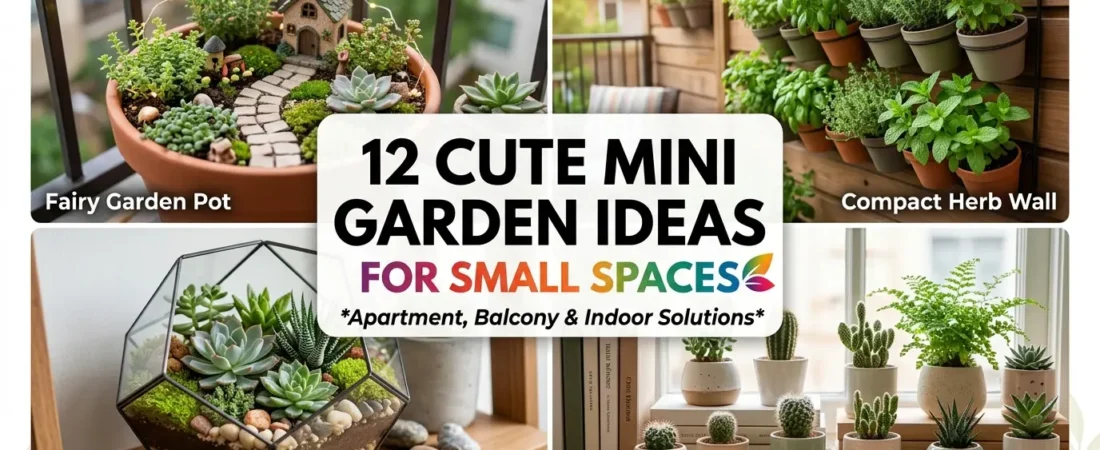
My most visited plant arrangement is a glass terrarium on my desk that cost $23 to build. Three succulents, a layer of white sand, two smooth river stones, a piece of driftwood. People who have never shown any interest in plants stop and look at it for thirty seconds without being asked.
That is what a well-designed mini garden does. It creates a small world that invites attention. The constraint of the small scale is not a limitation — it is the reason the arrangement has to be intentional, and the intentionality is what makes it beautiful.
These 12 ideas cover every surface and every style. Most cost under $30. All of them can be built in an afternoon.
Table of Contents
1. Create a Vertical Wall Garden for Maximum Green in Minimum Space
✦ Vertical Wall Garden
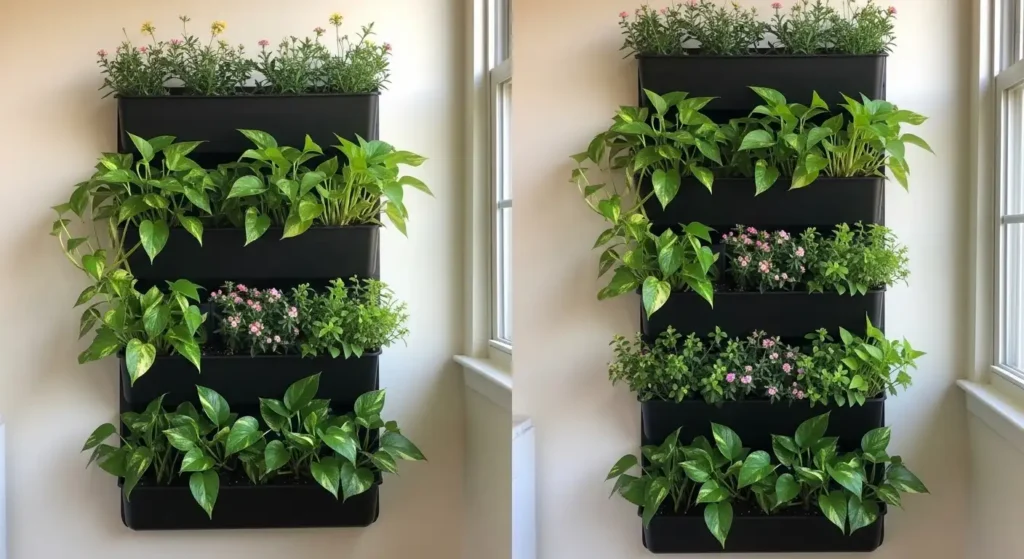
A vertical wall garden is the most space-efficient mini garden approach available. By growing upward rather than outward you can create a lush green display that uses zero floor space. A wall that was previously bare becomes a living feature that adds color, texture, and life to any small space.
Wall-mounted tiered planters, vertical pocket planters, and magnetic planters on metal surfaces all create vertical mini gardens without a single inch of floor space. Choose trailing plants for the most dramatic cascading effect — trailing Pothos, String of Pearls, and Bacopa all spill beautifully downward from wall-mounted containers. The self-watering hanging planters with macrame rope hangers create beautiful vertical displays on both indoor and outdoor walls. Find them linked on Amazon.
The vertical wall garden is the mini garden approach I recommend most to people who tell me they have no space for plants. Zero floor space required. The wall is the garden.
PRO TIP: Position your vertical wall garden near a natural light source rather than on an interior wall. Even shade-tolerant plants need some indirect light to thrive. A wall beside a window or on a light-colored outdoor fence catches reflected light that plants use for photosynthesis.
2. Grow a Windowsill Herb Garden for Fresh Flavors at Your Fingertips
✦ Windowsill Herb Garden
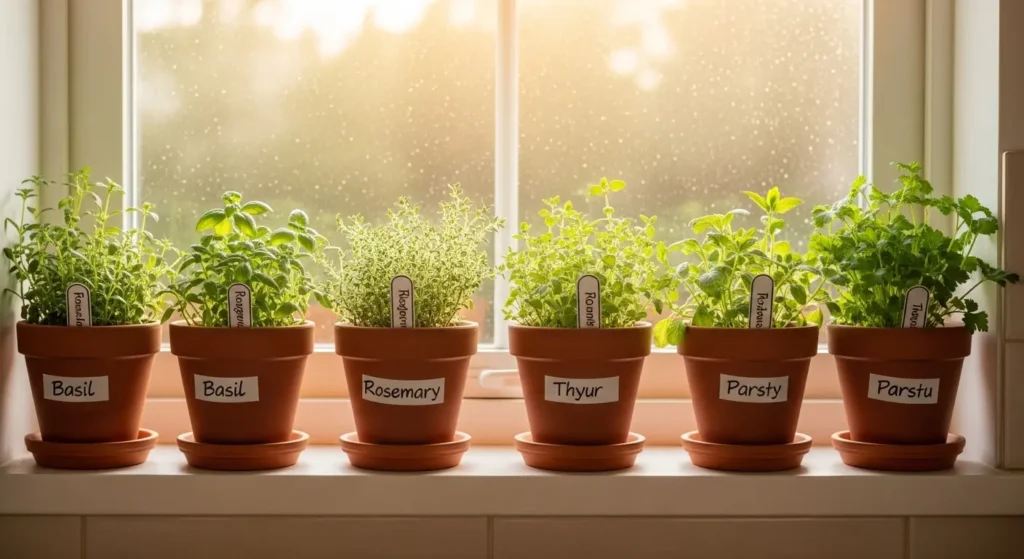
A windowsill herb garden is the most practical mini garden you can create — it produces fresh ingredients for cooking year-round while adding genuine beauty to the most used room in the home. A kitchen windowsill with a row of small herb pots transforms both the look of the window and the quality of every meal cooked in that kitchen.
Plant one herb per small pot and line them along your sunniest windowsill. Basil, rosemary, thyme, mint, parsley, and chives all grow well in small containers with adequate light. The 5-Pack Heirloom Herb Seeds gives you a full range of culinary varieties to grow from seed directly on your windowsill. Find them linked on Amazon. Use matching pots for a cohesive display — identical small terracotta pots or matching white ceramic containers make a windowsill herb garden look deliberately designed rather than random.
For the specific herb varieties that perform best in small windowsill containers see our container garden plants for shade guide which covers the compact food-growing varieties that suit limited indoor growing conditions.
3. Build a Miniature Fairy Garden as a Magical Table Centerpiece
✦ Mini Fairy Garden Setup
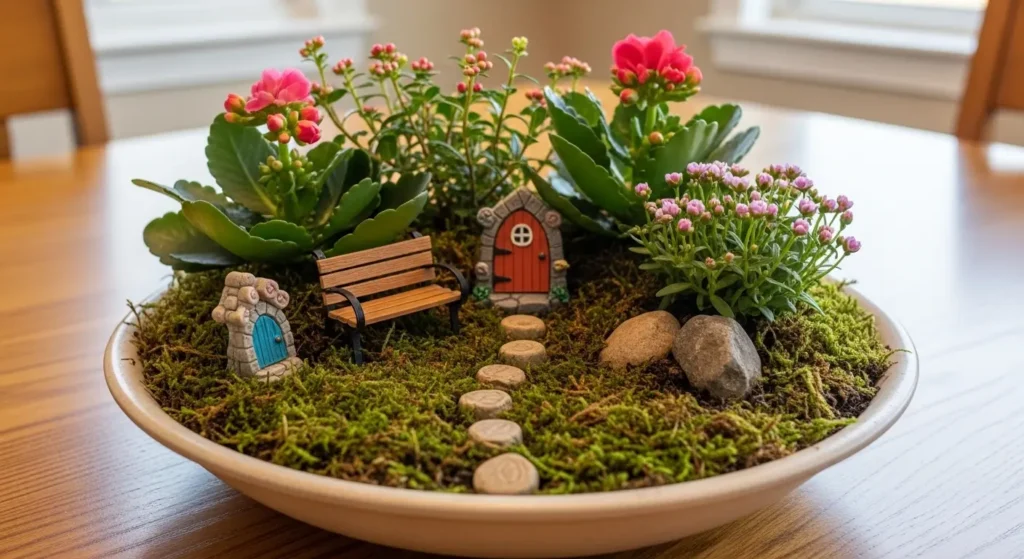
The fairy garden is the mini garden idea I find most reliably stops people in their tracks. Not just children — adults who would not normally comment on a plant arrangement stand in front of a fairy garden and look.
Something about the miniature scale creates a different kind of attention. The bowl is small enough to hold in two hands. The world inside it is complete.
Use a wide shallow ceramic bowl at least 8 inches across as your base. Create a miniature landscape with potting mix shaped into hills and flat areas. Plant tiny flowering plants like miniature violas, baby tears, or small daisies. Add fairy garden accessories — a miniature bench, a tiny door leaning against a stone, small stepping stones. Tuck pieces of living or preserved moss around everything as ground cover. The XXXFLOWER glass terrarium creates a beautiful enclosed fairy garden atmosphere. Find it linked on Amazon.
4. Arrange a Small Pot Cluster for a Styled Garden Corner
✦ Small Pot Cluster Design
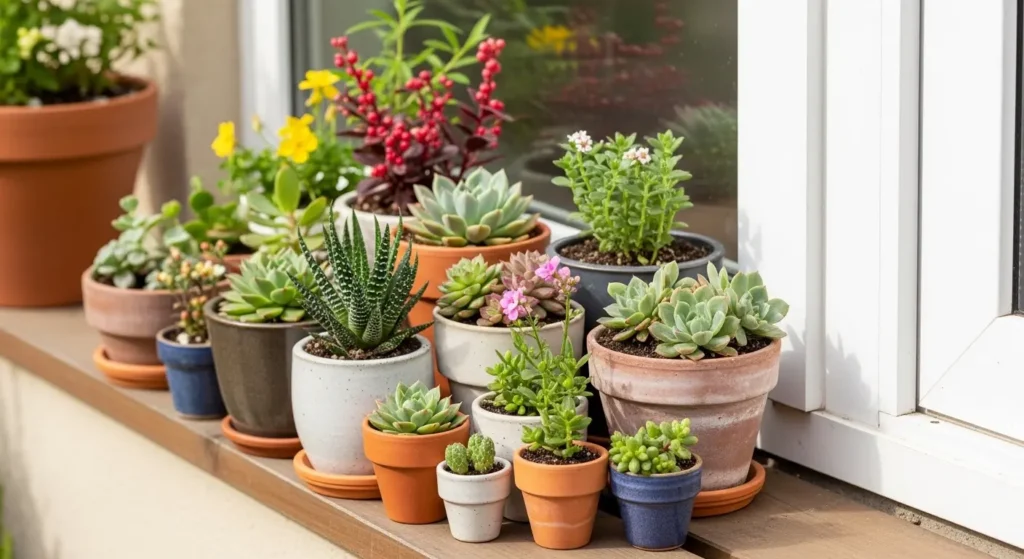
The pot cluster is the mini garden arrangement I find most consistently underrated. People place plants individually around a room and wonder why it does not feel like a garden. Group the same plants together in odd numbers and the room feels different immediately.
Group your pots in odd numbers — three, five, or seven — for the most naturally balanced arrangement. Vary the pot heights significantly by placing some on small risers or upturned pots. Choose a consistent color palette for the pot containers — all terracotta, all white ceramic, or all dark matte — to create cohesion. Place the tallest pot at the back and the smallest at the front for the most designed cluster arrangement.
PRO TIP: Add one empty decorative pot to any cluster display. An attractive pot with no plant in it — perhaps holding small river stones or simply left empty — creates visual breathing room in the cluster and makes the whole arrangement look more styled and less crowded.
5. Create a Hanging Planter Corner for Lush Cascading Greenery
✦ Hanging Planter Corner
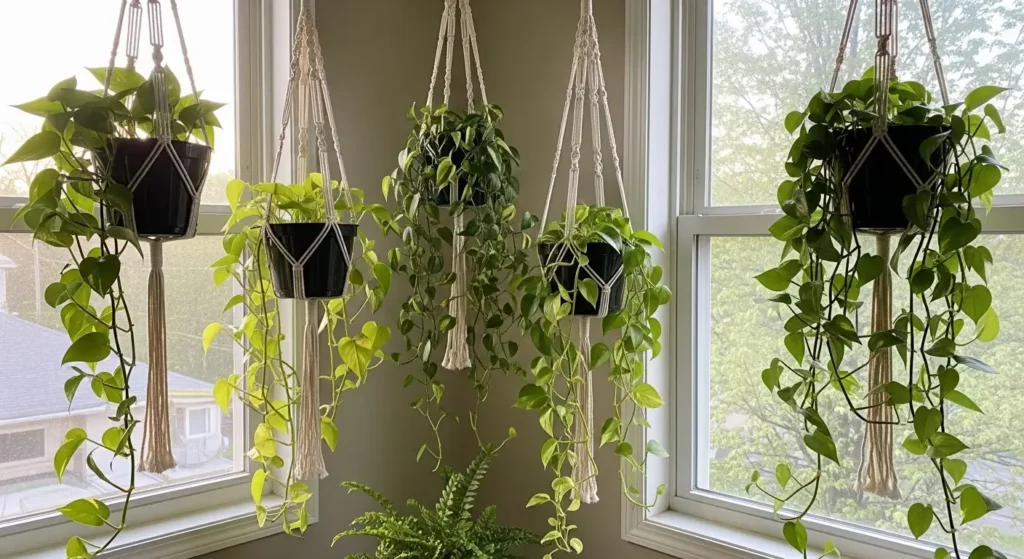
Three hanging planters at different heights in a corner create a lush green display that fills vertical space beautifully without using any floor area. The cascading habit of trailing plants from hanging planters creates exactly the kind of abundant organic greenery that looks effortless but is actually completely intentional.
Hang planters at three significantly different heights — one at ceiling height, one at eye level, one between them. The height variation creates the most natural and dynamic display. Choose trailing plants for maximum cascading effect — Pothos, String of Hearts, Tradescantia, and trailing Ficus pumila all create beautiful cascades from hanging planters. The self-watering hanging planters with macrame rope hangers are designed for exactly this kind of hanging corner display. Find them linked on Amazon.
6. Build a Glass Terrarium Garden as a Living Sculptural Display
✦ Glass Terrarium Garden
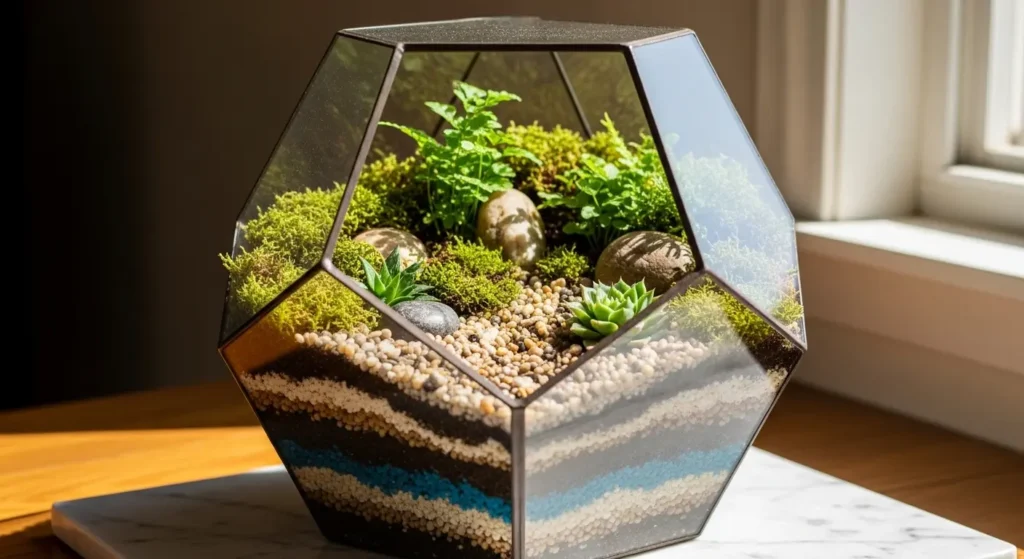
The glass terrarium is the mini garden format where the container is as important as the plants. The geometric frame catches light. The layered growing medium visible through the sides shows the construction. The arrangement inside becomes a small composition you look at differently each time.
I think of it less as a plant display and more as a small object worth owning. The plants are inside it. The object itself is the reason it sits on the desk.
The XXXFLOWER glass geometric terrarium provides the ideal structure for a mini garden display. Layer the interior with visible contrasting materials — gravel at the base, then horticultural charcoal, then potting mix. Plant small succulents or moss and tiny ferns in the top layer. Add small natural accessories — smooth river stones, a piece of driftwood, a small crystal. The visible stratigraphy through the glass sides is part of the aesthetic. Find it linked on Amazon.
PRO TIP: Open terrariums suit succulents and cacti which prefer dry conditions. Closed terrariums suit moisture-loving plants like ferns and moss which benefit from the humidity that builds inside a sealed glass environment. Never mix moisture-loving and drought-tolerant plants in the same terrarium.
7. Transform a Small Balcony Into a Complete Mini Garden
✦ Balcony Mini Garden
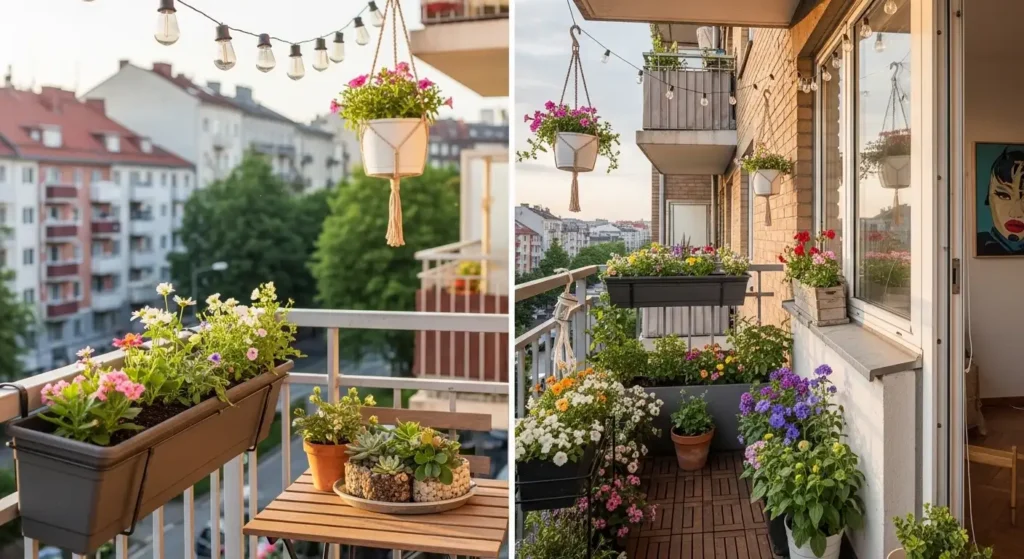
A small apartment balcony transformed into a mini garden becomes one of the most valuable rooms in the home — an outdoor space that feels genuinely green and alive regardless of how urban the surrounding environment is. The key is using every available surface and vertical position rather than relying solely on floor space.
Use railing planters that clip directly to the balcony rail for flowering plants. Mount hanging planters on the walls or overhead structure. Position one or two container plants on the floor in the corners. Place a small table with a succulent arrangement as a focal surface. Add solar string lights overhead for evening atmosphere. The combination of railing, wall, hanging, and floor positions creates the maximum green impact from a minimal footprint balcony.
For a complete guide to transforming a small balcony into a genuine outdoor garden space see our balcony garden ideas for small spaces guide which covers the railing, wall, and floor planting approach in detail.
8. Use a Tiered Plant Stand to Display Multiple Plants in One Spot
✦ Tiered Plant Stand Idea
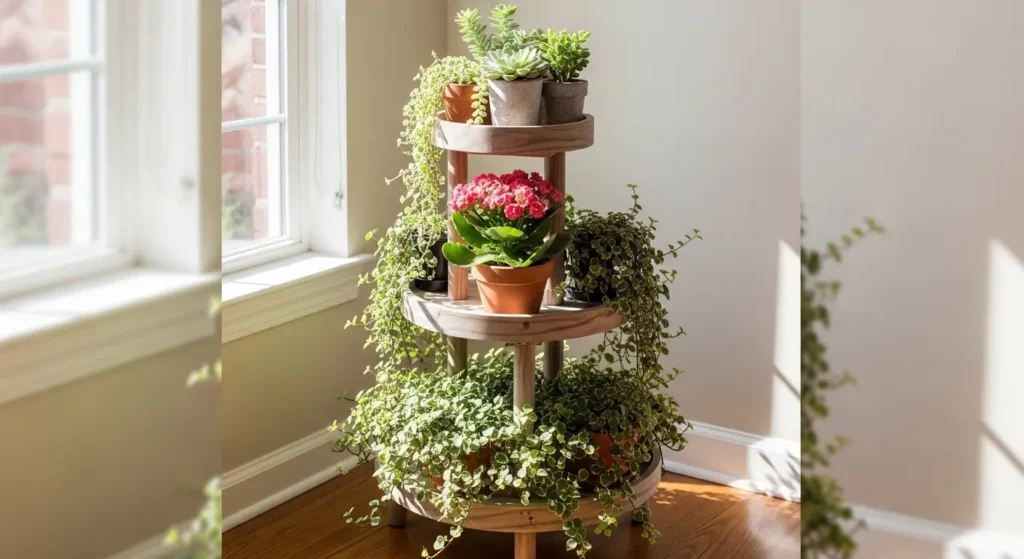
A tiered plant stand is the most space-efficient way to display multiple plants in a single floor footprint. Three levels of plants where one pot would otherwise stand — the vertical stacking multiplies the planting capacity without expanding the floor area. A well-styled tiered plant stand becomes the focal point of any small room or outdoor corner.
Style your tiered plant stand deliberately from top to bottom. Top level — a small architectural plant like a succulent or air plant. Middle level — a medium flowering or foliage plant as the visual anchor. Bottom level — a trailing plant that spills over the edges and connects the stand to the floor visually. This top-to-bottom styling sequence creates the most natural and designed tiered display.
PRO TIP: Rotate your plants a quarter turn each week on a tiered stand near a window. Plants always grow toward the light source and unrotated plants become lopsided over time. Regular rotation keeps all plants growing evenly and maintains the balanced appearance of the whole display.
9. Arrange a Succulent Bowl as a Low-Maintenance Living Centerpiece
✦ Succulent Bowl Arrangement
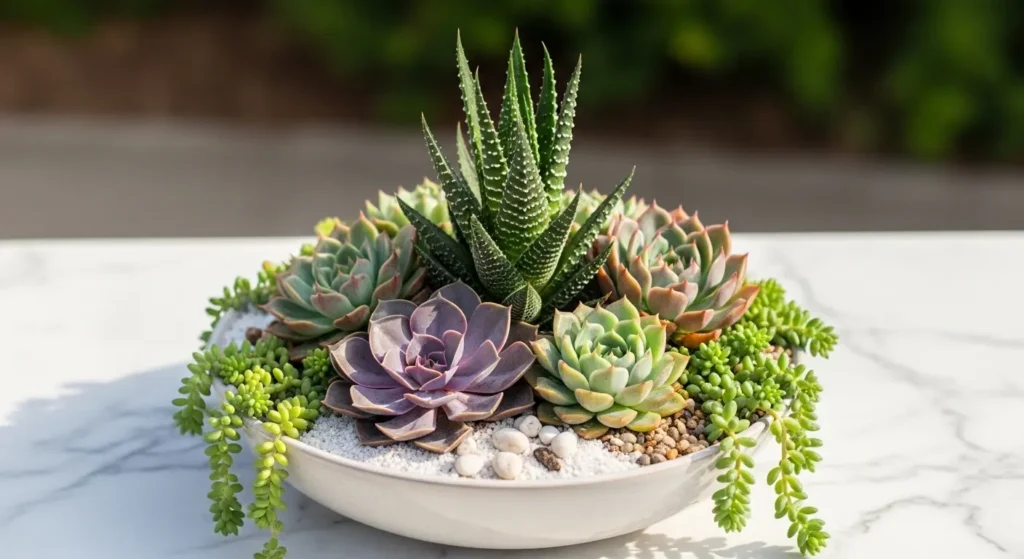
A succulent bowl arrangement is the most elegant and lowest-maintenance mini garden centerpiece available. A well-designed succulent display in a beautiful shallow bowl becomes a living sculpture that looks beautiful year-round, requires watering only every two to three weeks, and never needs deadheading or seasonal replanting.
For the specific succulent varieties that create the most beautiful low-maintenance bowl arrangements see our drought tolerant plants succulents guide which covers nine options that thrive on minimal attention.
10. Style a Compact Tabletop Garden as an Everyday Green Display
✦ Compact Tabletop Garden
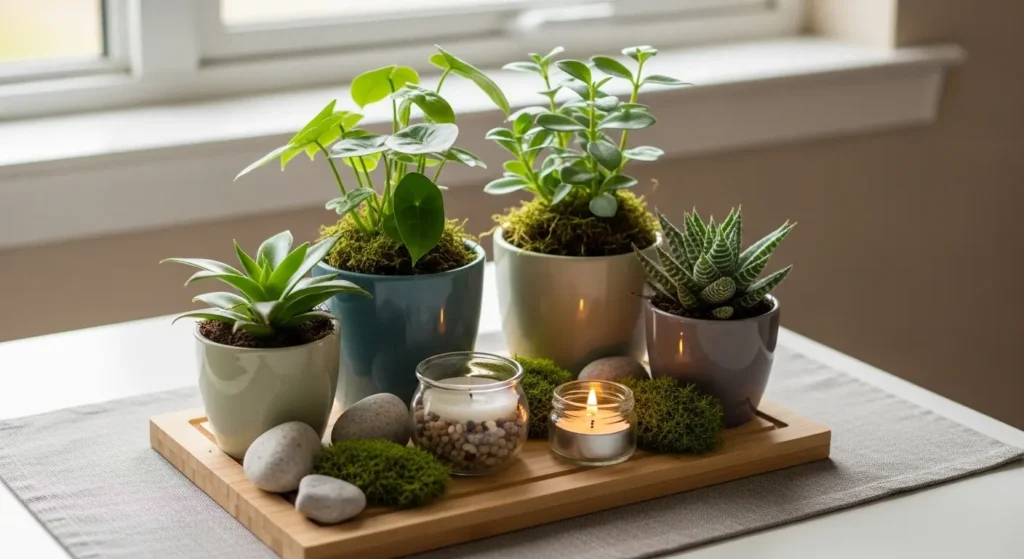
A compact tabletop garden uses a tray, board, or shallow container to group small plants and accessories into a single contained display that can be moved, restyled, and refreshed easily. The tray defines the display boundaries and makes the collection of objects feel like a complete arrangement rather than a random group of items.
Use a small wooden tray, a slate board, or a shallow ceramic dish as your display base. Arrange two or three small plants in complementary pots on the tray. Add decorative accessories — a small candle, a few river stones, a piece of driftwood, a small figurine. The tray corrals everything into a cohesive display that looks styled and intentional on any table or shelf surface.
11. Create a Tiny Zen Garden for a Calm and Meditative Display
✦ Tiny Zen Garden Style
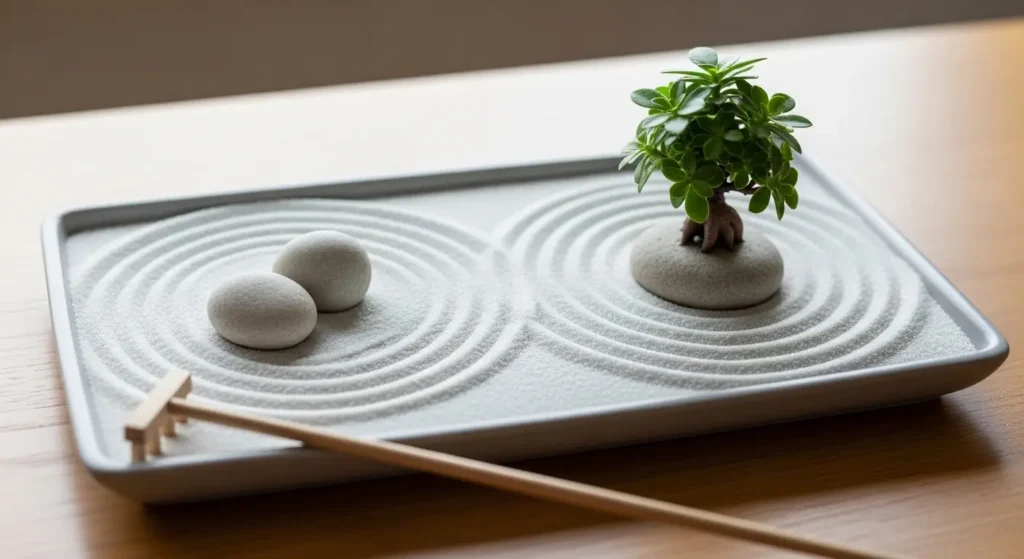
The tiny zen garden is the mini garden project I find most useful on a work desk specifically. Not as decoration — as a tool. Raking the sand for thirty seconds between tasks is a genuine mental reset in a way that checking a phone is not.
Use a shallow rectangular tray at least 2 inches deep as your zen garden base. Fill with fine white or natural sand. Place three smooth river stones of different sizes at one focal point. Add one small slow-growing plant at the opposite end — a mini bonsai, a compact haworthia, or a single moss clump. A small wooden mini rake completes the display and allows you to change the sand patterns whenever you want a moment of quiet focus.
PRO TIP: Keep your zen garden on your work desk rather than a display shelf. The most useful zen garden is one you interact with daily — raking the sand during a pause between tasks takes 30 seconds and provides a genuine mental reset that no screen break can match.
12. Repurpose Glass Bottles as Unique DIY Mini Planters
✦ DIY Bottle Planters
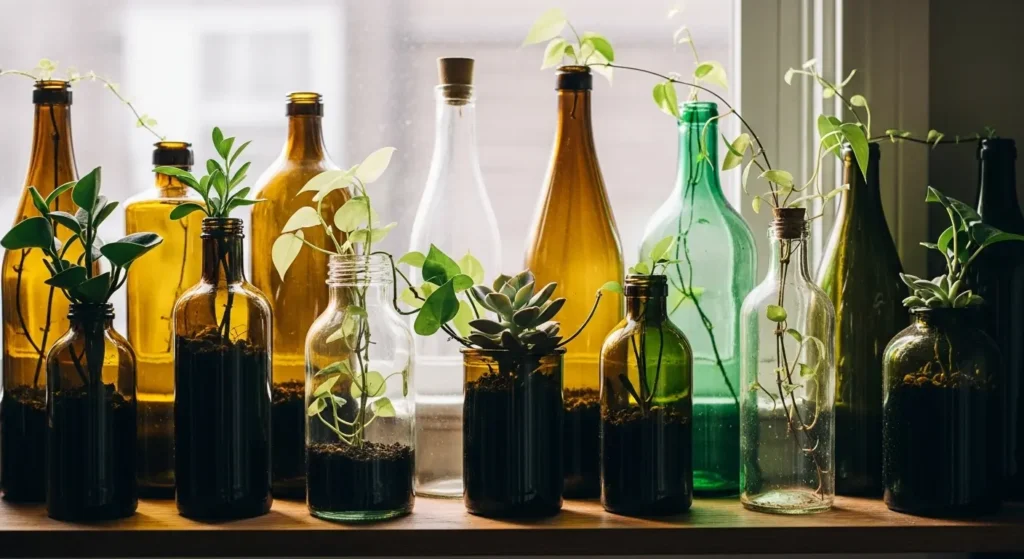
Repurposed glass bottles make some of the most beautiful and unique mini planters available — and they cost nothing beyond the plants. Wine bottles, olive oil bottles, gin bottles, and any glass vessel with a narrow neck becomes a distinctive planter that no store-bought pot can replicate. The glass shows the root system as the plant grows — an added visual element that makes bottle planters genuinely fascinating to watch.
Clean bottles thoroughly and fill with a small amount of water for water-propagated plants like Pothos, Tradescantia, and sweet potato vine. For soil-growing plants fill the bottle with a narrow-neck funnel using a mix of fine grit and potting compost. Group five to seven bottles of different sizes and glass colors on a shelf in front of a window — the light through the different glass colors creates a beautiful display that changes throughout the day.
5 Principles for Thriving Mini Gardens
These principles apply to every mini garden regardless of style:
1. Light is the most important factor
No amount of good potting mix, quality containers, or careful watering compensates for insufficient light. Match your plant choices to your actual available light — bright direct sun, bright indirect, or low light — before buying anything.
2. Drainage prevents most failures
The majority of mini garden plant deaths are caused by overwatering in containers without drainage. Always use containers with drainage holes for most plants. For sealed containers use the charcoal layer method and water very sparingly.
3. Right plant right place
Group plants with identical water and light requirements. Never mix succulents that need dry conditions with ferns that need consistent moisture in the same container. The most common mini garden mistake is planting for aesthetics without checking compatibility.
4. Small containers need more frequent watering
Mini garden containers dry out faster than large containers because they hold less growing medium. Check soil moisture more frequently than you think necessary — especially in summer and in heated indoor spaces — and adjust your watering schedule seasonally.
5. Edit ruthlessly
Mini gardens look best with fewer elements chosen well rather than many elements crowded together. Resist the urge to add more plants to an already complete display. When in doubt remove rather than add.
5 Mini Garden Mistakes Worth Avoiding
These mistakes are the most common across all mini garden styles:
Mistake 1 — Overwatering small containers
Small pots look dry on the surface long before they are dry at root level. Always check soil moisture with a finger before watering. If the soil is still moist 2 inches down wait another day or two regardless of how dry the surface looks.
Mistake 2 — Too many plants in one container
An over-planted mini garden looks lush for a week and then becomes a root-bound struggling mess as plants compete for space. Leave adequate room for each plant to reach its natural size. A slightly sparse planting at the start looks perfect within a few weeks of growth.
Mistake 3 — Wrong potting mix
Standard multipurpose potting mix retains too much moisture for succulents and cacti and too little for moisture-loving tropical plants. Always use the specific potting mix type recommended for your plant group.
Mistake 4 — Placing in unsuitable light
Sun-loving succulents in a dark corner and shade-loving ferns in a south-facing window both struggle and eventually fail. The most attractive mini garden display in the world becomes unattractive quickly when the plants inside it are declining.
Mistake 5 — Buying plants purely for appearance
A beautiful plant that needs conditions different from what your space provides will decline regardless of how attractive it looked in the store. Always check light, water, and temperature requirements before purchasing any plant for a mini garden.
📌 More garden ideas → 10 Mini Dish Garden Ideas You’ll Love
Frequently Asked Questions
What plants are best for mini gardens?
The best plants for mini gardens are slow-growing, compact varieties that stay proportional to their container over time. For sunny positions — succulents, cacti, miniature herbs, and compact flowering annuals. For indirect light — ferns, Pothos, Fittonia, and miniature prayer plants. For the lowest maintenance — succulents and cacti require the least intervention and look beautiful year-round. According to the Royal Horticultural Society compact varieties of herbs including miniature basil, thyme, and chive are among the most rewarding plants for small indoor gardens.
How do I make a mini garden in a small space?
Identify which surfaces are available — windowsills, walls, shelves, tabletops, and railing tops all offer mini garden positions that floor space cannot. Choose a style that suits your actual light conditions first, then select a container and compatible plants.
How do I keep a mini garden alive?
Correct light for the plant types inside, appropriate watering frequency for the container size, and adequate drainage so roots never sit in water are the three non-negotiable factors. Check plants weekly, water when the soil is dry at root level, and feed with diluted liquid fertilizer monthly during the growing season.
What container is best for a mini garden?
Wide shallow bowls for succulent arrangements and fairy gardens — glass terrariums for enclosed ecosystem displays — hanging planters for maximizing vertical space. Any container works as long as it has adequate drainage for the plant types inside or uses the horticultural charcoal layer method for sealed glass environments.
More Garden Ideas You Will Love
→ 12 Boho Garden Ideas You’ll Love
→ 8 Rooftop Garden Ideas Perfect For Summer
→ 7 Dream Backyard Ideas For Small Spaces
→ 8 Budget-Friendly Pallet Garden Ideas
The terrarium on my desk started as one container on a Saturday afternoon. Three weeks later a succulent bowl appeared on the windowsill. A month after that the hanging planters went up in the corner.
I did not plan a mini garden collection. One well-made arrangement made the next one feel obvious.
Start with one container this weekend. Find the position it suits. The rest follows.

Sheikh Hassaan is a digital architect for small businesses and the founder of The Glow Up System. He writes about home decor, garden design, and outdoor living for real American homes – practical ideas that work in actual spaces without oversized budgets.