
Garden planter ideas are the fastest way to transform any outdoor space because they work immediately. Unlike planting a border that takes a season to establish or building a structure that takes a weekend, a well-planted container produces its full effect the day it is finished. The container is the frame. The plant is the art. Get either choice right and the transformation is instant.
These 16 ideas cover the full range of what garden planters can do — from a single repurposed vintage container that becomes a conversation piece to a complete trellis planter setup that provides privacy, growing space, and architectural structure simultaneously.
Table of Contents
1. A Raised Wooden Planter Box Elevates Plants to Where They Are Actually Seen
✦ Raised Wooden Planter Box
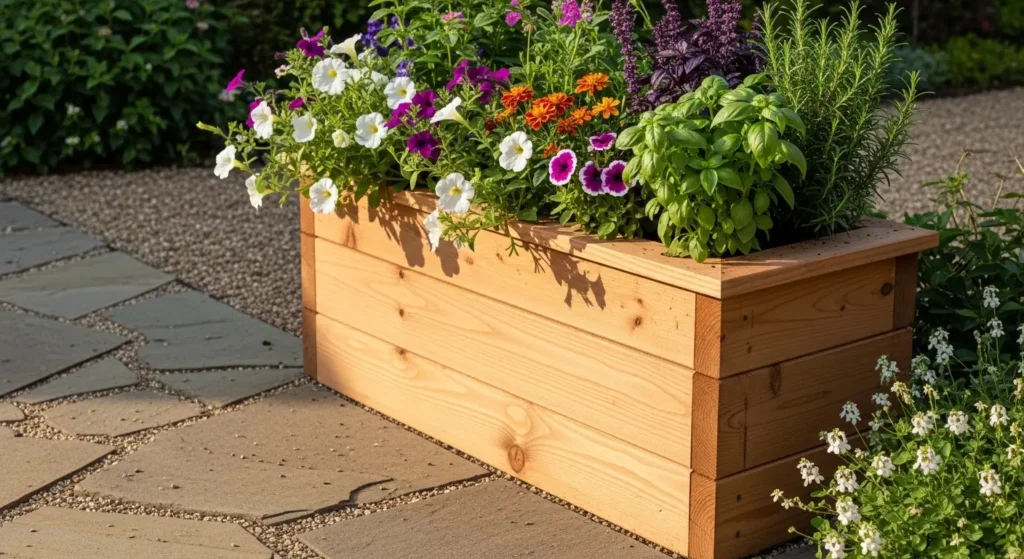
Most garden plants grow at ground level where they are looked down at rather than into. A raised wooden planter box at 18 to 24 inches height changes this relationship entirely — plants are now at the level where people naturally look and the visual impact increases proportionally.
The functional advantages compound the aesthetic ones. A raised planter drains freely in all conditions. The growing medium warms faster in spring and stays warmer longer into autumn. Back and knee strain from ground-level planting is eliminated. And the contained growing environment makes pest and disease management significantly more straightforward than ground planting.
Build from cedar, redwood, or pressure-treated timber at a minimum 12-inch depth for most ornamentals and 18 inches for vegetables. Line the interior with landscape fabric to retain compost while allowing drainage. The Domi Raised Garden Bed at 8 by 4 feet provides the most generous growing space in the most complete ready-to-use form. Find it linked on Amazon.
PRO TIP: Build raised planter boxes 24 inches wide maximum so you can reach the center from either side without stepping on the growing medium. Compacted soil in a raised planter defeats its drainage advantage within one season.
2. A Tiered Display Multiplies the Visual Impact of the Same Number of Plants
✦ Tiered Flower Display
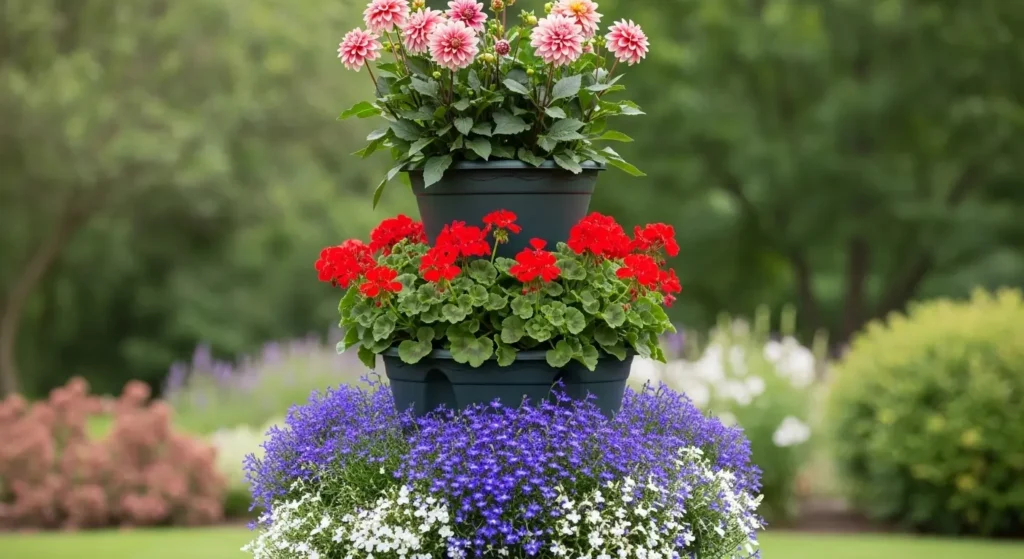
A tiered plant display achieves more visual impact than the same plants placed individually because the eye reads the vertical arrangement as a single composed display rather than a collection of separate pots. The height graduation creates the sense of abundance that single-level displays cannot achieve regardless of how many individual pots are used.
The formula that works consistently: tall structural plant at the highest tier, medium flowering plants at the middle tier, trailing plants at the lowest tier that cascade downward and visually connect the structure to the ground. This three-layer approach creates the same visual principle as a professional flower arrangement — height, mass, and trail.
For outdoor tiered displays choose weather-resistant stand materials. Powder-coated metal and hardwood both handle outdoor conditions reliably. Position the tallest tier against a wall or fence so the graduated height reads from front to back rather than simply front to air.
3. Half-Barrel Planters Produce Abundance That Standard Pots Cannot Match
✦ Rustic Barrel Planter
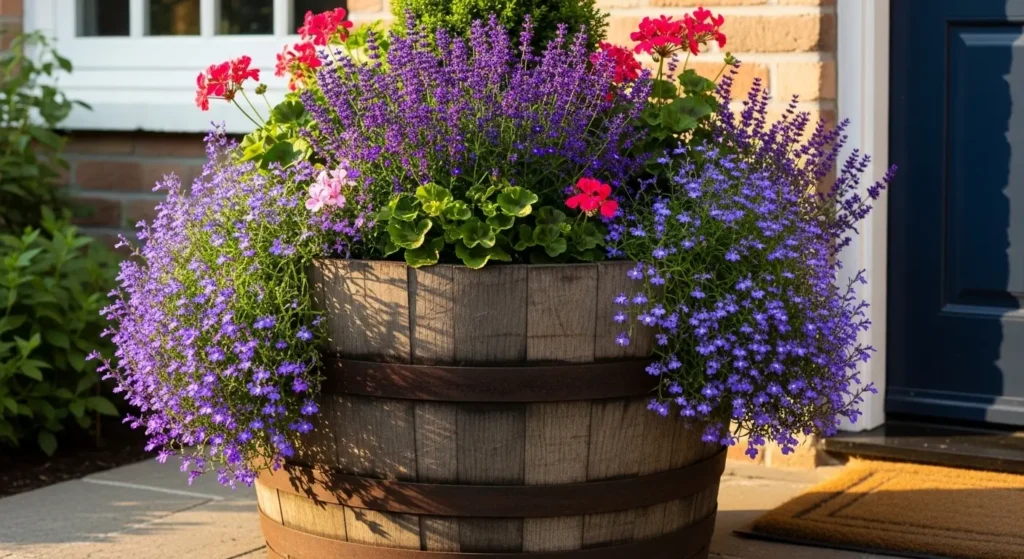
Half-barrel planters produce display quality that standard pots cannot match because of one factor: depth. A genuine half-barrel is 12 to 14 inches deep with a 24-inch diameter — four times the root volume of a standard 10-inch pot. That volume supports a planting density and plant vigor that creates the abundant overflowing display that smaller containers struggle to sustain through a full summer.
The rustic patina of aged oak barrel staves creates a planting backdrop that no manufactured container replicates. The warm brown tones of weathered wood make any planting color look richer — particularly lavenders, pinks, and oranges that read as warm and romantic against the dark timber.
The Quarut Whiskey Barrel Planters provide the aesthetic of genuine barrel planters with the practical advantages of weather-resistant resin construction — no warping, no rotting stave gaps, no water loss through barrel sides. The visual result is identical to genuine oak at a fraction of the maintenance requirement. Find them linked on Amazon.
PRO TIP: Line barrel planter bases with a 2-inch layer of coarse gravel before adding compost. The gravel layer prevents the drainage holes from clogging with fine compost particles over time — a common cause of waterlogging that kills barrel planter displays despite adequate drainage holes.
4. Concrete Containers Create Architectural Weight That Softens Against Plants
✦ Modern Concrete Container
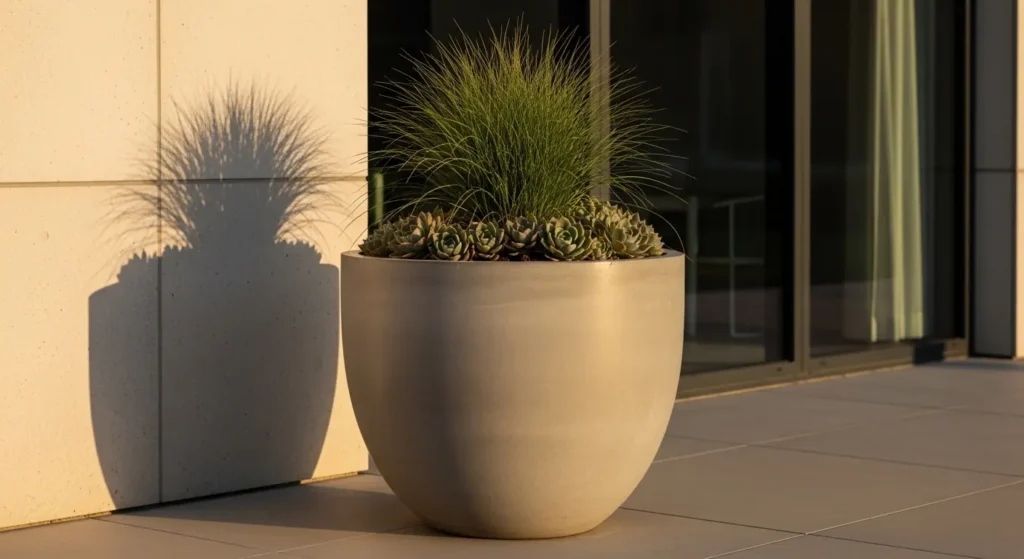
Concrete containers create an architectural quality in outdoor spaces that no other planter material achieves. Their weight, their surface texture, and their grey tones all communicate permanence and solidity in a way that terracotta, resin, or metal cannot replicate. Against the organic growth of plants the contrast between hard dense concrete and soft living foliage is one of the most compelling material combinations in landscape design.
The planting choice in a concrete container matters more than in any other vessel because the container is a strong aesthetic statement that plants must complement rather than overwhelm. Architectural specimens — a single large ornamental grass, a collection of structural succulents, one specimen agave — all respect the container’s presence and create a complete display where both container and plant are equally appreciated.
For the concrete planter aesthetic without the concrete weight and handling challenges, the Quarut Large Planter Pots in grey deliver the visual result with practical portability. Find them linked on Amazon.
5. A Vertical Planter Wall Creates a Garden Where There Is No Garden
✦ Vertical Garden Wall
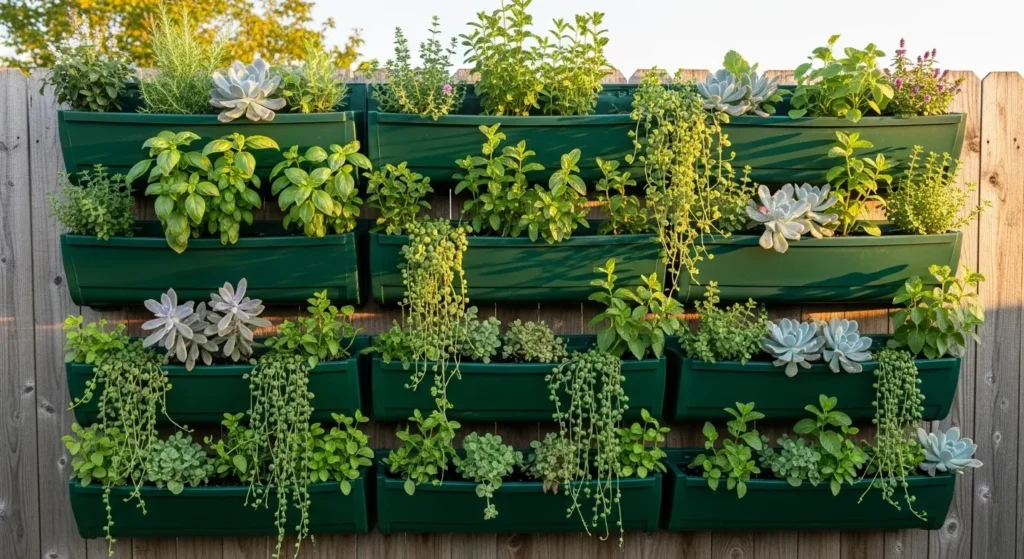
A vertical planter wall is the solution to two problems simultaneously: no floor space for planting, and a bare wall that makes an outdoor space feel exposed and unfinished. Wall-mounted pocket planters, modular planting frames, and reclaimed pallet planting structures all create vertical growing surfaces that use only wall area rather than floor area.
The plant selection for a vertical wall determines the maintenance level the display demands. Succulents on a vertical wall require watering once every two to three weeks. Herbs require twice-weekly watering in summer. Trailing flowering annuals need daily watering in hot weather but produce the most spectacular cascading display of all vertical planting options.
The critical installation requirement for any vertical planter wall: ensure the mounting structure is rated for the combined weight of planter, compost, water, and plants at full saturation. Wet compost is significantly heavier than dry — a vertical planter that is secure when dry may pull away from the wall after the first heavy rain if mounting hardware is inadequate.
PRO TIP: Group plants with identical water requirements on the same vertical planter rather than mixing drought-tolerant and moisture-loving varieties on the same structure. A mixed-requirement vertical planter inevitably means either the drought-tolerant plants are overwatered or the moisture-lovers are underwatered.
6. Hanging Baskets Add Color at the Height Where Approaching Visitors Look First
✦ Hanging Basket Arrangement
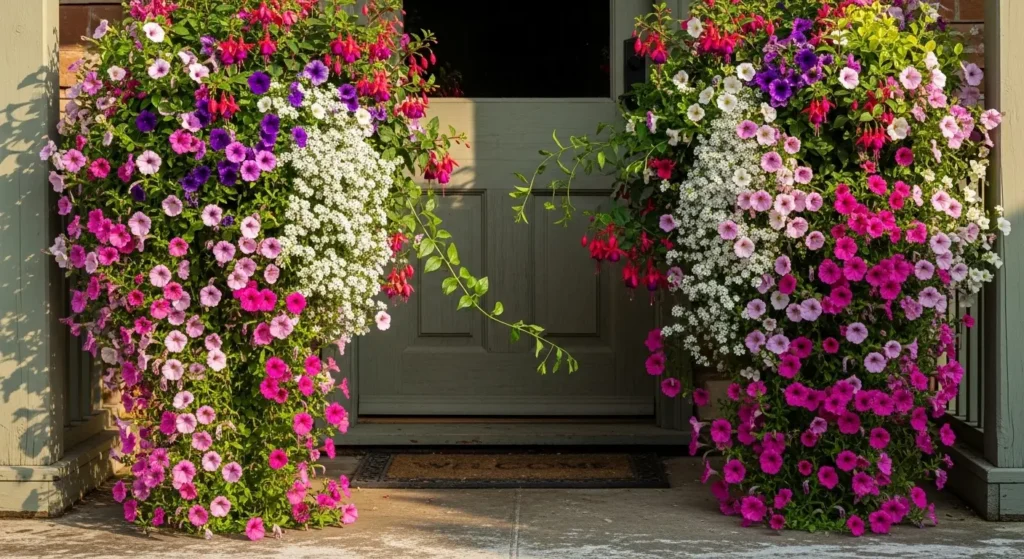
Hanging baskets occupy the vertical zone between ground level and ceiling height — the zone where arriving visitors naturally look first. A well-planted hanging basket at door frame height creates more immediate visual impact than a floor-level planter because it is positioned in the primary sightline of anyone approaching.
The secret to hanging baskets that look spectacular rather than sparse: plant density and trailing variety selection. A 14-inch basket needs at least seven plants to achieve the overflowing quality that makes hanging baskets so impressive. The trailing varieties must be chosen specifically for their cascading habit — trailing Lobelia, Bacopa, Calibrachoa, and trailing Petunia all produce the downward cascade that creates the abundant effect.
The self-watering hanging planters with macrame rope hangers solve the most common hanging basket problem — the twice-daily watering requirement in full summer sun. The built-in reservoir extends the watering interval to every two to three days and eliminates the wilting between waterings that undermines displays in exposed positions. Find them linked on Amazon.
PRO TIP: Position hanging baskets so they receive morning sun and afternoon shade in hot climates. Morning sun provides the light flowering plants need to produce abundantly. Afternoon shade prevents the rapid moisture loss and heat stress that causes wilting and reduces flowering in exposed full-sun positions.
7. A Dedicated Herb Planter Near the Kitchen Door Changes How You Cook
✦ Herb Garden Planter
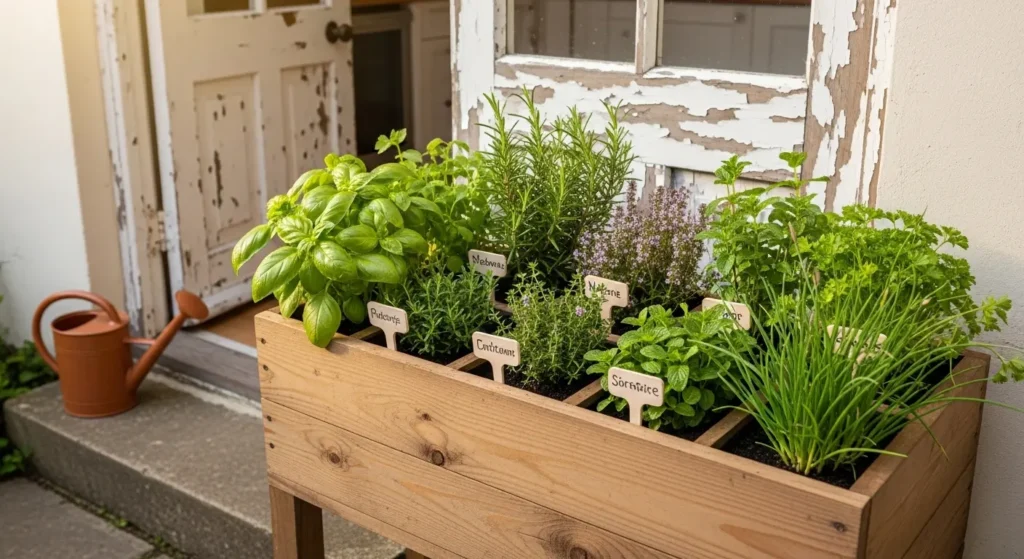
A herb planter positioned within arm’s reach of the kitchen door changes cooking behavior fundamentally. When fresh herbs require a twenty-second trip outside rather than a car journey to the supermarket they get used in every meal rather than as an occasional addition. The proximity of the herb planter is the design decision that makes it a genuine kitchen resource rather than a decorative statement.
The ideal herb planter configuration: a divided rectangular box with one section per herb variety, positioned at counter height beside the back door. Individual sections prevent aggressive spreaders — mint particularly — from colonizing the entire planter and eliminating other herbs within a season. A minimum of 6-inch depth per section ensures adequate root space for culinary yields.
The 5-Pack Heirloom Herb Seeds provides the complete culinary selection to plant directly from seed into your herb planter — basil, chives, parsley, dill, and cilantro covering the primary kitchen herb requirements from a single purchase. Find them linked on Amazon.
PRO TIP: Plant mint in a completely separate container rather than in a divided section of a shared herb planter. Mint root systems are invasive enough to break through dividers and root barriers within a single growing season. A mint plant in its own container is productive and contained. Mint in a shared planter takes over everything adjacent within six weeks.
8. A Single Large Container Planted for Maximum Color Outperforms Any Border Section
✦ Colorful Bloom Container
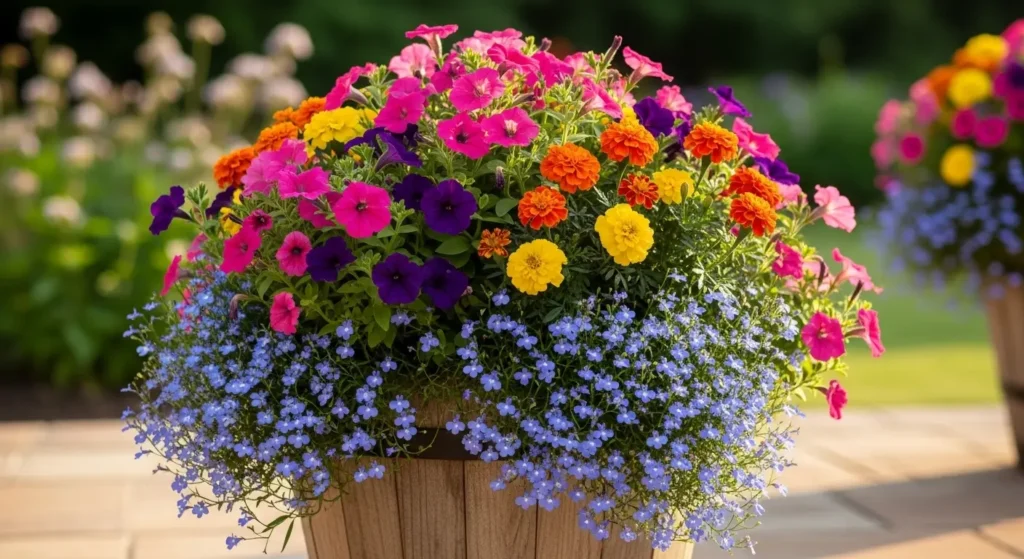
A single large container planted for maximum color creates more concentrated visual impact than a border planting of equivalent area because everything within the container is at its best simultaneously. A border has gaps between plants, areas where one variety has finished and another has not yet started, and the visual inconsistency of different growth habits at ground level. A well-planted container has none of these — it reads as a unified composition.
The maximum color formula: one upright structural plant at the center or back for height. Three to four mid-height flowering plants as the main color mass. Two trailing varieties at the edges to spill over the container rim and cascade downward. Choose colors within a defined palette rather than every available color — two to three complementary tones create more impact than six competing ones.
Feed weekly with a high-potassium liquid fertilizer from June through September. Container plants exhaust available nutrients within four to six weeks of planting and unfed containers produce progressively fewer flowers through the second half of summer regardless of initial planting quality.
9. A Succulent Feature Planter Is the Display That Looks Spectacular Doing Almost Nothing
✦ Succulent Feature Planter
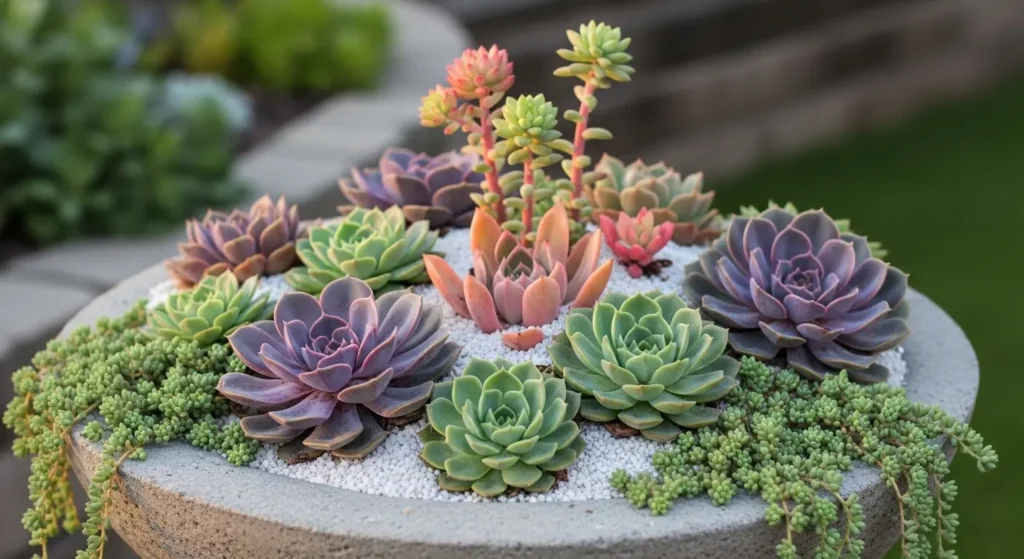
Succulent planters are the only garden display that looks better in late summer than in June. While annual summer bedding is declining and demanding constant deadheading a well-planted succulent container is at its fullest and most established by August — the plants having grown to fill their spaces exactly while requiring almost no intervention.
The design principle for succulent planters: treat the container as a miniature landscape rather than a plant collection. Use one tall or upright type as the focal point. Rosette forms as the primary display. Trailing types at the edges to cascade over the rim. Fine sand or grit between plants as the ground surface. The sand serves two functions — it prevents compost splash during watering and creates the desert aesthetic that makes succulent displays look deliberately designed rather than simply planted.
The XXXFLOWER Glass Terrarium creates the most distinctive succulent display format — an enclosed glass geometric structure that doubles as sculpture and planting vessel simultaneously. The glass sides show the layered growing medium as part of the aesthetic. Find it linked on Amazon.
PRO TIP: Water succulent planters from the base rather than overhead whenever possible. Place the container in a saucer of water for 20 minutes then remove. Base watering encourages deep root growth, prevents the crown rot that overhead watering causes in tight rosette varieties, and keeps the sand surface dry and clean.
10. Cottage Garden Planters Work Because They Deliberately Reject Formality
✦ Cottage Garden Charm
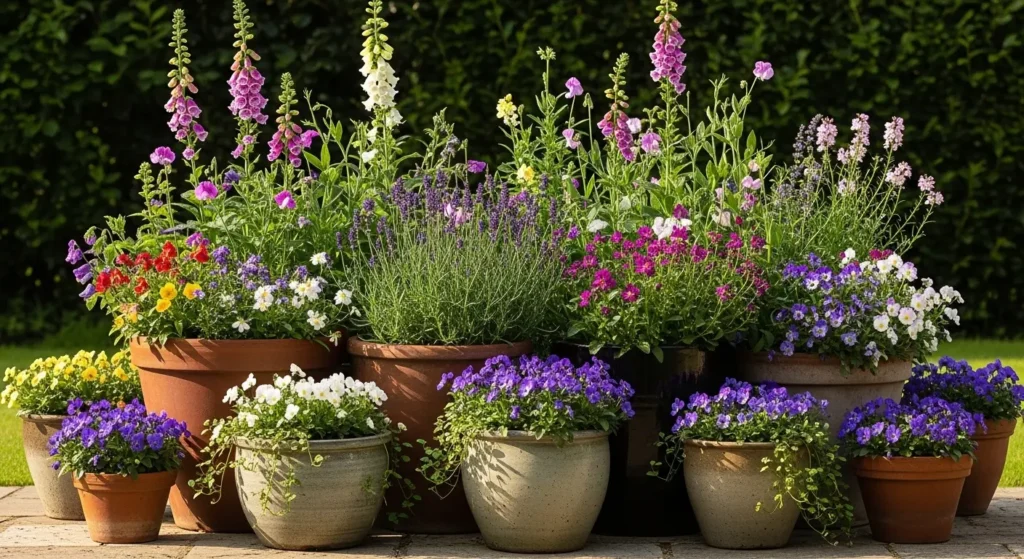
Cottage garden planter style is defined by what it deliberately avoids: matching containers, uniform plant heights, symmetrical arrangements, and formal color schemes. The cottage aesthetic requires that everything look as though it has been collected and planted over time rather than purchased and installed simultaneously.
The practical approach to cottage garden planter collections: source containers from different places at different times — charity shops, garden centers, markets, and your own shed. The variation in pot ages, sizes, and materials creates the collected quality that no single shopping trip can produce. Mismatched containers in terracotta, ceramic, stone, and aged timber all contribute to the aesthetic when grouped together.
Plant selection for cottage containers should include: at least one tall element — foxgloves, sweet peas on a cane, or tall dahlias. Several mid-height cottage favorites — lavender, wallflowers, primroses, violas. One trailing variety at the edge of each pot to soften the container rim. The variation across different pots in the collection creates the casual abundance that makes cottage garden planting immediately recognizable.
PRO TIP: Age new terracotta pots instantly using the yogurt method: paint the outside of new pots with natural yogurt thinned with water and leave in a shaded damp position for two to three weeks. The yogurt encourages moss and algae growth that creates convincing aged patina — making new pots look like they have been in the garden for decades.
11. The Container That Stops Every Visitor and Starts Every Conversation
✦ Repurposed Vintage Container
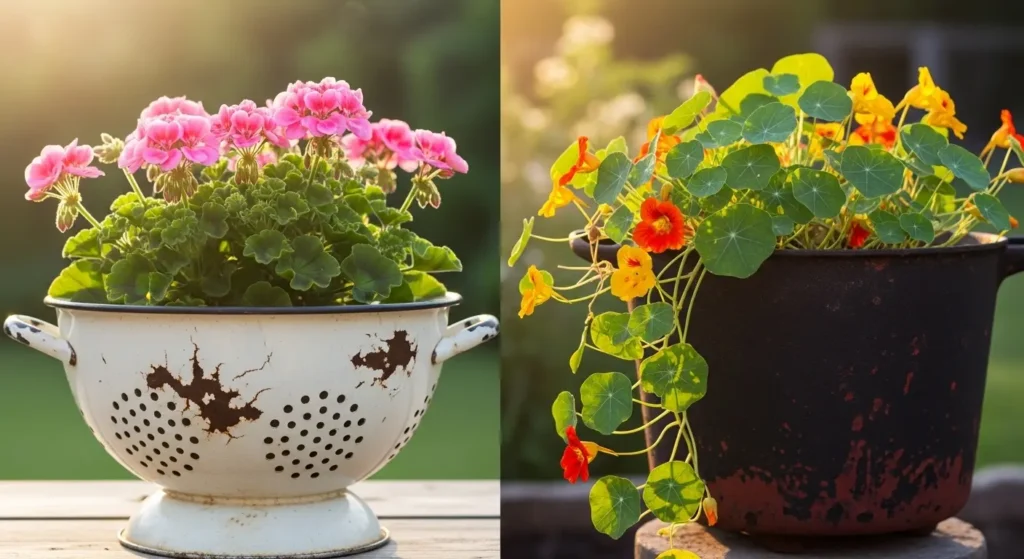
A repurposed vintage container does something no purchased planter achieves: it gives a garden a story. An enamel colander, a cast iron cauldron, a worn wooden wheelbarrow, a vintage tin bath — these objects have histories that purchased planters do not. When planted with beautiful flowers they create a display that combines the charm of age with the beauty of living plants in a way that is completely personal and completely irreproducible.
The most effective repurposed containers for garden planting share two qualities: interesting visual texture or patina that improves rather than deteriorates with outdoor exposure, and sufficient volume to support plant root systems through a full growing season. Cast iron, enamelware, galvanized metal, and weathered hardwood all meet both criteria.
Source repurposed containers from estate sales, antique fairs, Facebook Marketplace free listings, and your own home before anything else is discarded. The objects that have already lived a long life make the most beautiful planters — the wear and patina is part of the aesthetic that new objects cannot replicate.
PRO TIP: Drill drainage holes in any repurposed container before planting — a task that is obvious in principle and consistently forgotten in practice. An enamel colander already has drainage through the holes. A cast iron pot, a tin bath, or a wooden crate does not. Planting without drainage kills plants within weeks through root rot.
12. Small Space Planter Strategy: Maximum Green From Minimum Floor Area
✦ Small Space Planter Setup
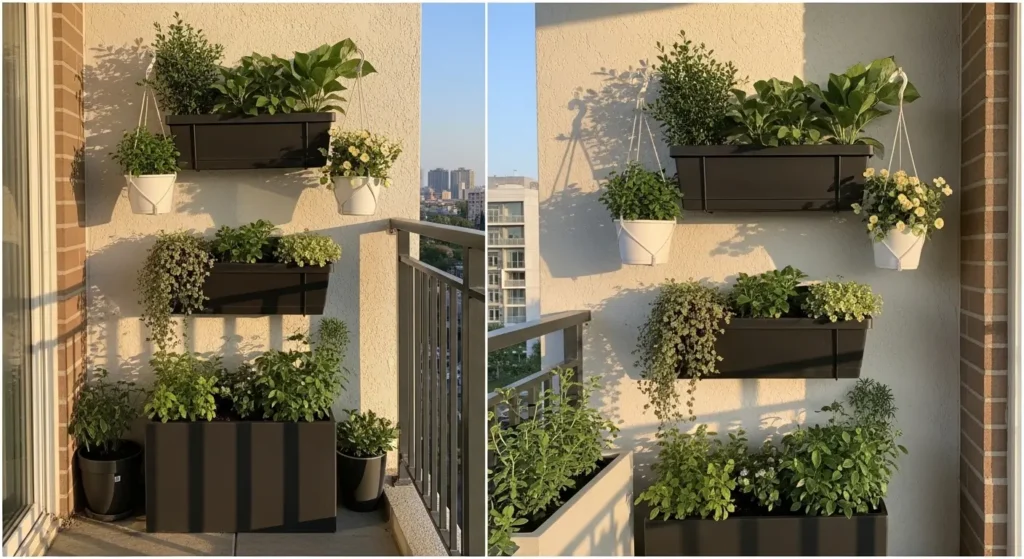
Small outdoor spaces require a completely different planter strategy from large ones. The goal is vertical coverage rather than horizontal spread — three planters at three different heights in a 4 square foot floor area creates more visual plant presence than the same three planters placed side by side at ground level.
The small space planter formula: one floor-level planter with an upright plant to establish height. One wall-mounted planter at mid-height with trailing plants that cascade downward. One hanging planter at near-ceiling height with a full trailing variety that creates the overhead canopy effect. The three positions create a complete vertical garden presence that covers ground, eye level, and overhead simultaneously.
Choose plant varieties specifically for their vertical habit in a small space context. Upright grasses, columnar evergreens, and tall structural plants create height without spreading outward. Trailing varieties at mid and high positions cascade downward rather than requiring horizontal space. The plant choices are as important as the planter positions in creating small space planting that feels abundant rather than cramped.
13. A Trellis Planter Is the Single Purchase That Does Five Garden Jobs Simultaneously
✦ Trellis Planter Combo
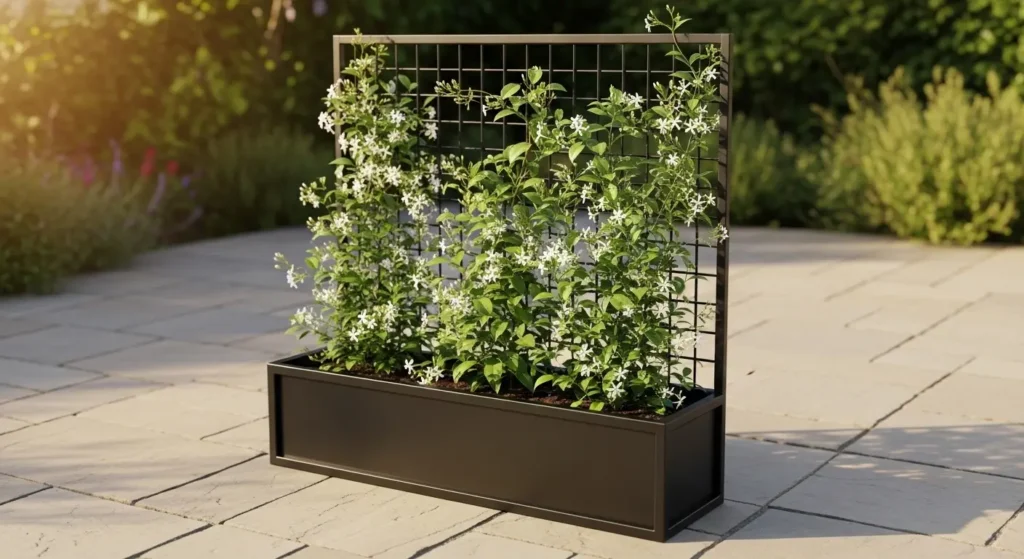
A trellis planter combines raised garden bed, climbing plant support, privacy screen, and architectural structure into one moveable unit. It is the garden product with the highest functional return per floor footprint of anything available — particularly on patios and balconies where floor space is limited and multiple functional needs compete for the same square footage.
The key distinction between trellis planters: those with deep root zones that support vigorous climbing plants through a full season versus those with shallow beds that limit plant performance. A trellis planter with less than 8 inches of growing depth will not sustain climbing roses, jasmine, or clematis past midsummer. A trellis planter with 12 or more inches of depth supports these plants through a full season and into subsequent years.
For climbing plant selection matched to trellis planter depth: shallow planters suit annual climbers — sweet peas, nasturtium, morning glory. Deep planters accommodate perennial climbers — jasmine, clematis, climbing roses — that return and improve every year. The FOLLOOK Planter Box with Trellis and Self-Watering base handles perennial climbers through full seasons with minimal watering intervention. Find it linked on Amazon.
PRO TIP: Train climbing plants horizontally along the bottom trellis wires before directing them upward. Horizontal training stimulates the production of more lateral shoots along the entire stem length rather than all energy going to one vertical shoot. A horizontally trained climbing plant produces three to four times more flowers than an identically planted vertically trained one.
14. Two Matching Planters Flank a Front Door and Change Everything About Curb Appeal
✦ Statement Entryway Display
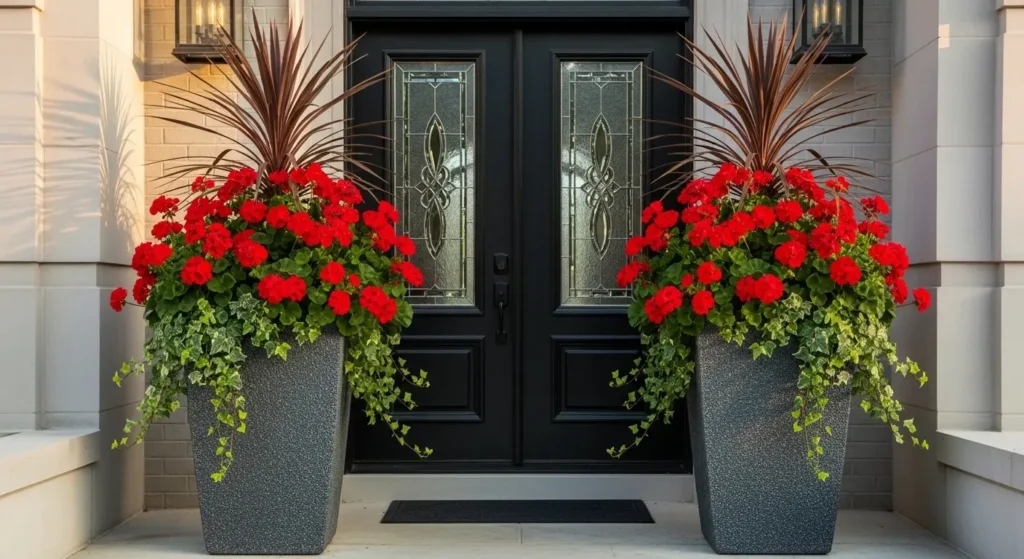
A symmetrical pair of planters flanking a front door creates the most impactful single curb appeal upgrade available. The matching pair communicates design intention immediately — asymmetric scattered planters look accumulated over time, but a matched pair positioned with equal precision on each side of the door looks deliberately chosen and deliberately placed.
Container scale is the most common entryway planter mistake. Pots that look generous in a garden center look small beside a front door seen from the street. For a standard residential front door the minimum effective planter diameter is 14 inches. For a double door or a property with a wide front step 18 to 20 inches reads more proportionally from street distance.
The Quarut Large Planter Pots provide the scale, material quality, and matched pair format that front door planting requires. The grey tone works with any brick, render, or timber facade. Find them linked on Amazon.
PRO TIP: Plant entryway pots slightly differently on each side rather than with identical plants at identical positions. Identical containers with slightly varied planting — same colors, same height structure, different plant varieties — looks curated. Completely identical planting looks like a retail display.
15. One Perfect Plant in One Perfect Container Outperforms Ten Ordinary Arrangements
✦ Minimal Modern Arrangement
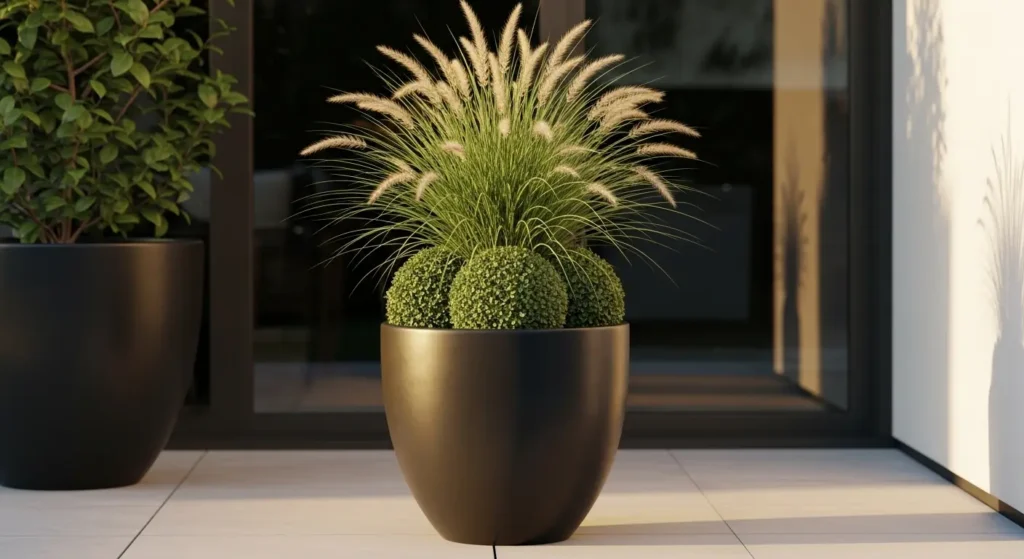
The minimal modern planter approach is the most misunderstood concept in outdoor styling because it appears simple. One planter. One plant. How hard can it be. The answer is that the simplicity requires significantly better individual decisions than a complex arrangement where individual weaknesses are hidden by surrounding elements.
In a minimal modern planter display the container choice must be correct because there is nothing else to look at. The plant choice must be correct because it is the only plant. The position must be correct because isolated objects are viewed from all angles simultaneously. There are no surrounding elements to provide context, correction, or distraction.
The minimal modern formula: choose the best quality container you can source in a matte dark finish — dark grey, matte black, or dark charcoal. Choose a specimen plant with genuine architectural confidence — an ornamental grass with strong form, a perfectly shaped topiary, a large-leaved tropical specimen. Position in the most prominent location visible from the main seating position. Leave clear space around it. The space is part of the display.
16. A Glass Terrarium Planter Turns Any Plant into a Living Sculpture
✦ Succulent Bowl and Glass Terrarium
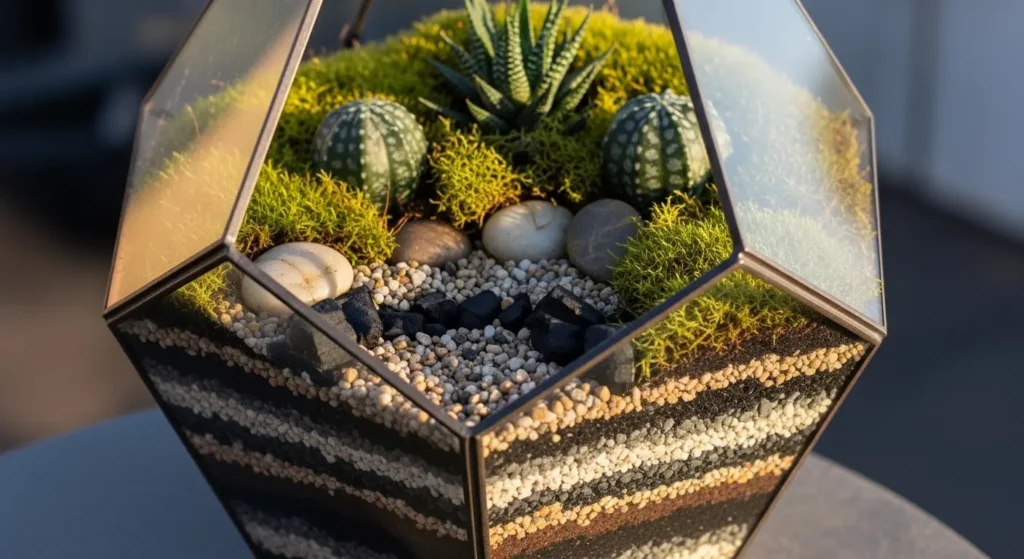
A glass geometric terrarium is the only planting vessel that makes the growing medium itself part of the aesthetic. Through the clear glass sides the layered structure of gravel, charcoal, and compost is visible — the growing medium becomes a display element rather than a hidden functional requirement. This layered stratigraphy, visible through geometric glass panels, creates a display quality that no opaque container can achieve.
The terrarium planting approach differs from standard container planting in one key way: every layer must be chosen for visual quality as well as horticultural function. The gravel base layer in a contrasting color to the compost above it. The charcoal layer visible as a thin dark band between gravel and growing medium. The surface layer finished with fine sand, pebbles, or moss that creates a complete miniature landscape rather than a surface of bare compost.
The XXXFLOWER Glass Terrarium provides the geometric structure that makes the planted arrangement look like a sculptural object rather than a container with plants in it. Position in a prominent indoor or sheltered outdoor location where the geometric glass catches changing light throughout the day. Find it linked on Amazon.
PRO TIP: Clean glass terrarium panels from the inside with a long-handled cotton swab before planting is complete. Once plants establish it becomes impossible to clean the interior glass effectively. Ten minutes of cleaning before the final plant layer goes in produces a display that stays clear and beautiful indefinitely.
The Container Selection Guide
The most common planter selection mistake is choosing a container for how it looks empty. A container that looks beautiful in a garden center often looks wrong once planted — either dwarfed by vigorous plants or overwhelmed by the scale of the planting. The container should be chosen after the plant, not before it.
Match container volume to root requirement.
Annual bedding plants need 6 to 8 inch depth. Perennials need 10 to 12 inches. Large shrubs and climbers need 14 to 18 inches minimum. Vegetables need 12 to 18 inches depending on variety.
Match container material to exposure.
Frost-resistant ceramic, fibreglass, and weatherproof resin handle full outdoor exposure in all climates. Standard terracotta requires frost protection in climates below -5 Celsius. Genuine timber planters need annual treatment. Resin planters need no treatment but benefit from UV-resistant specifications in full sun positions.
Match container color to context.
Warm terracotta tones suit traditional brick and stone buildings and cottage gardens. Grey and dark tones suit contemporary architecture and minimal modern outdoor spaces. Natural timber tones suit rustic, farmhouse, and boho aesthetics. White and cream suit coastal, Mediterranean, and formal garden contexts.
📌 More garden and planting ideas → 12 Best Trellis Planters for a Beautiful Patio and Garden
Frequently Asked Questions
What plants look best in garden planters?
The plants that look best in garden planters are those chosen to suit the container size, the available light, and the desired maintenance level. For sunny positions and maximum color impact: petunias, geraniums, marigolds, and trailing lobelia. For architectural presence with minimal maintenance: ornamental grasses, succulents, and topiary forms. For cottage charm: lavender, sweet peas, violas, and wallflowers. For edible gardens: herbs, cherry tomatoes, and salad greens. According to the Royal Horticultural Society the most consistently successful container planting uses a combination of a thriller (tall structural plant), filler (medium flowering plant), and spiller (trailing plant) in every container.
How do I keep garden planters looking good all summer?
The three practices that keep garden planters looking their best through an entire summer are: weekly feeding with a high-potassium liquid fertilizer from mid-June onward, regular deadheading to redirect energy from seed production back into flower production, and consistent watering rather than infrequent deep watering. Container plants dry out faster than border plants and benefit from daily checking in hot weather. Self-watering planters with built-in reservoirs significantly reduce the watering burden while maintaining the consistent moisture that peak performance requires.
What size planter should I use?
Choose a planter size based primarily on the mature root requirement of the plants you intend to grow rather than on the available space. A planter that is too small for its plants limits performance regardless of how good the compost or how consistent the watering. As a practical guide: small annuals and herbs need a minimum 8-inch diameter and 6-inch depth. Standard perennials and large annuals need 12 to 14-inch diameter and 10-inch depth. Large shrubs, climbers, and specimen plants need 16 to 20-inch diameter and 14 to 18-inch depth.
A Great Planter Does Not Need a Great Garden Around It
The garden planter ideas in this guide work independently of the garden they inhabit. A statement barrel planter transforms a bare concrete patio as effectively as it transforms a mature garden. A glass terrarium on a windowsill creates as much impact as one placed in a landscaped border. A tiered display on a balcony produces the same visual abundance as the same display in an acre of garden.
The planter is a complete unit. Plant it well, position it thoughtfully, and maintain it consistently. The transformation happens at the scale of the pot and radiates outward from there.
All the products mentioned in this article are linked on Amazon. Every recommendation is something we genuinely believe in.
More Planting and Garden Ideas
→ 7 Full Sun Planter Ideas For Hot Summer
→ 12 Cute Mini Garden Ideas For Small Spaces
→ 10 Mini Dish Garden Ideas You’ll Love
→ 12 Lovely Front Yard Garden Ideas
The planter is a complete unit. Plant it well, position it thoughtfully, and maintain it consistently. The transformation happens at the scale of the pot and radiates outward from there.

Sheikh Hassaan is a digital architect for small businesses and the founder of The Glow Up System. He writes about home decor, garden design, and outdoor living for real American homes – practical ideas that work in actual spaces without oversized budgets.