
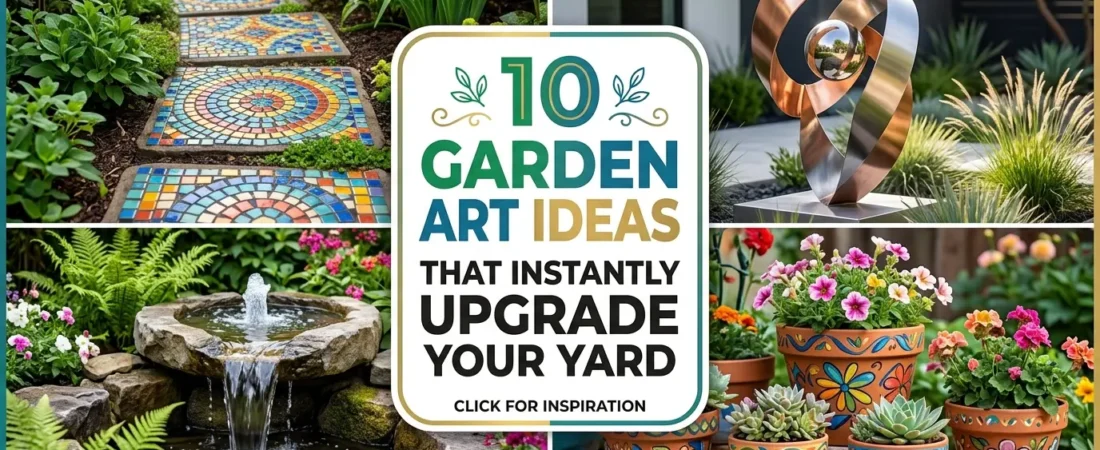
Garden art ideas do something that plants and furniture cannot: they give a garden a point of view. A well-chosen piece of garden art communicates something about the person who placed it — their sense of humor, their aesthetic sensibility, their willingness to make a decision rather than default to the safe and generic. The gardens remembered longest are never the ones with the most plants or the largest patio. They are the ones with something in them that nobody else has.
These 10 garden art ideas range from a mosaic stepping stone that takes one afternoon to make to a complete garden mirror installation that changes the perceived size of the entire yard. Each includes the specific materials, placement principles, and finishing details that determine whether garden art looks intentional or improvised.
Table of Contents
1. A Mosaic Garden Stone Is the Handmade Art Piece That Visitors Always Stop at First
✦ Mosaic Garden Stone Art
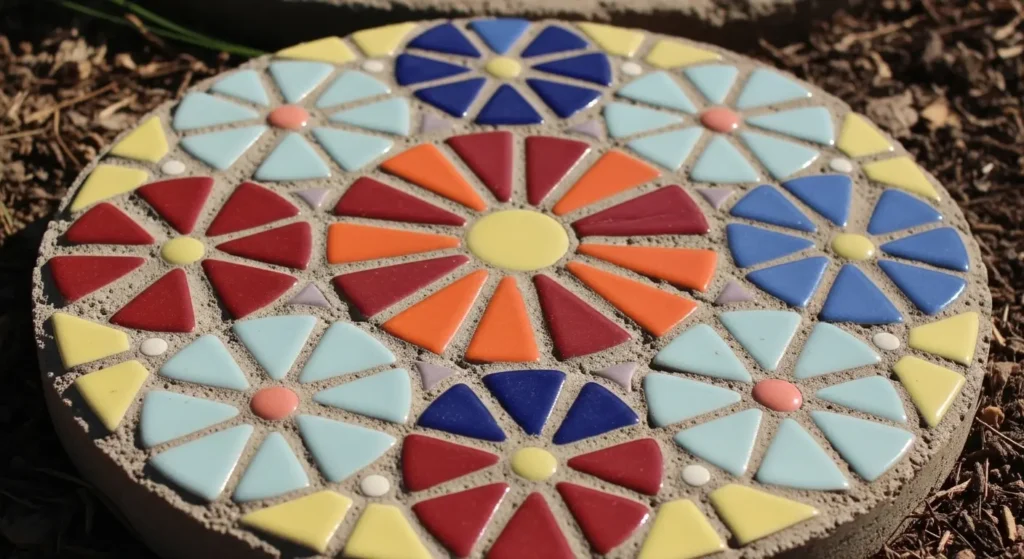
A mosaic garden stone is the garden art project with the lowest materials cost and the highest perceived value result. A stepping stone built from reclaimed ceramic tile pieces set in concrete costs under $15 in materials and produces a permanent outdoor art piece that looks handcrafted and completely individual — because it is.
The materials: a circular or square mold (a plastic plant saucer of 14 to 18 inches diameter works perfectly). Ready-mixed concrete or mortar. Ceramic tile pieces sourced from broken tiles, thrift shop crockery broken intentionally, or tile offcuts from renovation projects. Tile adhesive grout in a color that complements the tile palette.
The process: pour concrete to 2-inch depth in the mold. Press tile pieces into the wet concrete surface in your chosen pattern before the concrete sets. Allow to cure for 48 hours. Remove from mold. Apply grout between the tile pieces with a sponge, wiping the tile faces clean before the grout sets. The DASTOLL Stained Glass Sun Catcher broken carefully produces the jewel-tone glass pieces that create the most luminous and most beautiful mosaic garden stones — glass pieces catch light in a way ceramic cannot. Find it linked on Amazon.
PRO TIP: Press tile pieces into the concrete to a depth of at least half their thickness rather than resting them on the surface. Tiles pressed in deeply are locked into the concrete matrix and are permanent. Tiles resting on the surface work loose within one winter freeze-thaw cycle. The difference in embedding depth is the difference between a mosaic that lasts decades and one that deteriorates in months.
2. A Painted Rock Trail Transforms a Garden Path Into a Discovery Experience
✦ Painted Rock Garden Trail

A painted rock trail uses the most freely available garden material — rocks and stones — as a canvas for a connected series of painted designs that create a discovery element along a garden path. Where a single painted rock is a decoration a trail of 8 to 12 progressively revealed rocks creates an experience — visitors slow down and look for each next rock as they walk the path.
The paint specification for outdoor painted rocks is the detail that determines longevity. Acrylic craft paint applied directly to stone weathers within one outdoor season. The correct approach: clean and dry stone surface, two coats of white spray primer as the base, detailed painting with acrylic paints, sealed with two to three coats of outdoor-rated polyurethane varnish. The sealed and primed rock painting survives three to four outdoor seasons before requiring touch-up.
The trail concept works best when the rocks tell a connected story or use a consistent visual theme rather than completely random designs. A flower theme with each rock showing a different species. An alphabet trail with one letter per rock that spells a word or message when read in sequence. A botanical trail with painted representations of plants growing in the garden borders beside the path.
3. A Metal Garden Sculpture Creates a Focal Point That Every Sightline Can Return To
✦ Metal Sculpture Accent Piece
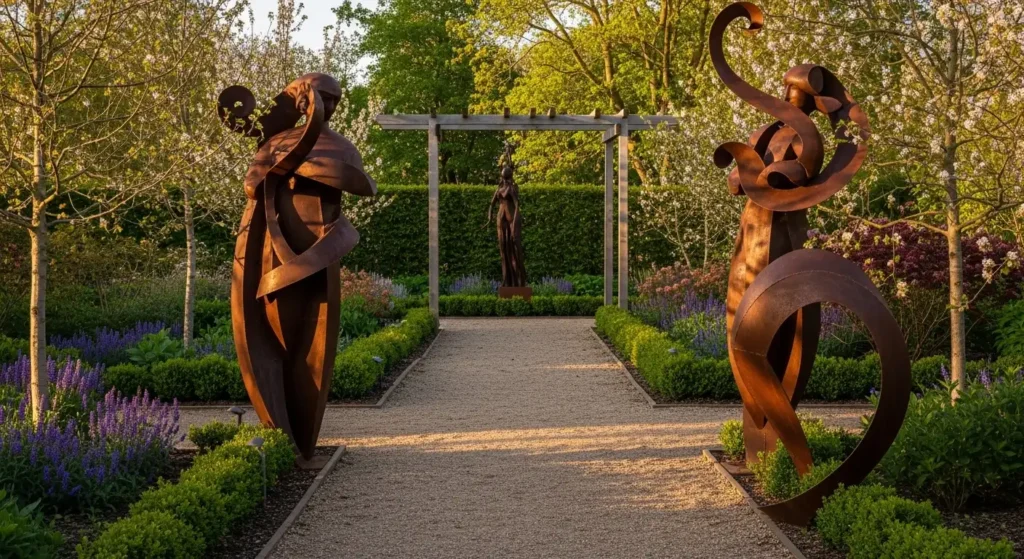
A metal garden sculpture is the one garden art piece that creates a focal point at viewing distances where other art forms become invisible. A mosaic stepping stone is beautiful at close range. A painted rock requires proximity. A metal sculpture reads from 40 feet away and anchors the entire garden composition from every viewing angle simultaneously.
The positioning principle for metal garden sculpture: place at the termination point of the garden’s primary sightline — the point where the eye naturally travels when standing at the main seating position or at the back door looking out. A sculpture positioned at a sightline termination becomes the end point of every visual journey through the garden and creates the sense of a designed garden composition rather than a planted space.
Material choice determines the maintenance requirement and the aging quality. Corten weathering steel develops its own protective rust patina and requires no maintenance — it improves in character with every year outdoors. Stainless steel maintains its bright reflective quality indefinitely with no treatment. Powder-coated mild steel requires repainting every 5 to 8 years as the coating eventually deteriorates.
PRO TIP: Position a metal garden sculpture slightly off-center from the direct sightline axis rather than exactly on it. A sculpture positioned exactly on axis looks like a target. Positioned 6 to 12 inches off the direct centerline it creates a more natural focal point that the eye approaches from a slight angle — producing a more dynamic and more interesting visual relationship between viewer and sculpture.
4. Hanging Glass Garden Orbs Create Light Effects That Change With Every Hour of the Day
✦ Hanging Glass Garden Orbs
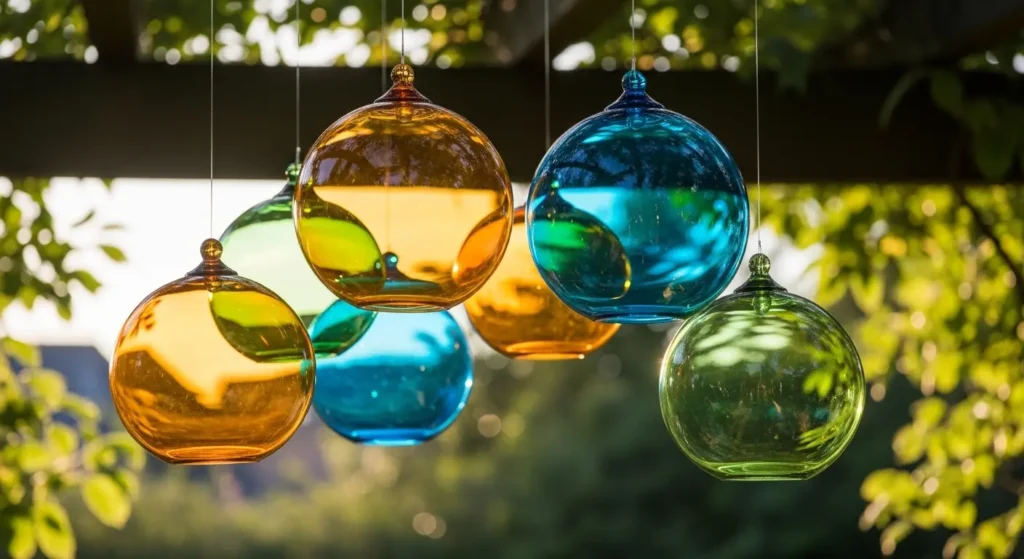
Hanging glass garden orbs are the one garden art form that creates a different display at every hour of the day because the light refraction through each glass sphere changes continuously as the sun angle changes. The colored light pools cast on surrounding surfaces in morning are completely different from those at midday and again at afternoon — making the installation genuinely dynamic rather than static.
The DASTOLL Stained Glass Sun Catcher creates exactly this light-refracting quality in a garden hanging format — the geometric stained glass panels cast jewel-toned light patterns on surrounding fence panels and planting that shift throughout the day as the sun angle changes. Multiple units hung at different heights from a single tree branch or pergola beam create a complete glass light installation. Find them linked on Amazon.
Positioning principle: hang glass garden orbs and light-refracting pieces on the south or southwest side of a tree or structure where they receive the most hours of direct sun. East-facing positions catch morning light only. South-facing positions maximize the daily light-refracting period and produce the most hours of colored light effects on surrounding surfaces.
PRO TIP: Space hanging glass orbs at different distances from the primary light source as well as at different heights. Orbs positioned 12 inches from the fence catch light at a different angle than orbs positioned 36 inches from the same fence — the variation in distance creates overlapping colored light pools rather than identical patches at the same angle. Variety in depth creates a more complex and more beautiful light installation.
5. An Upcycled Bottle Garden Display Turns Glass Waste Into a Translucent Light Feature
✦ Upcycled Bottle Garden Display
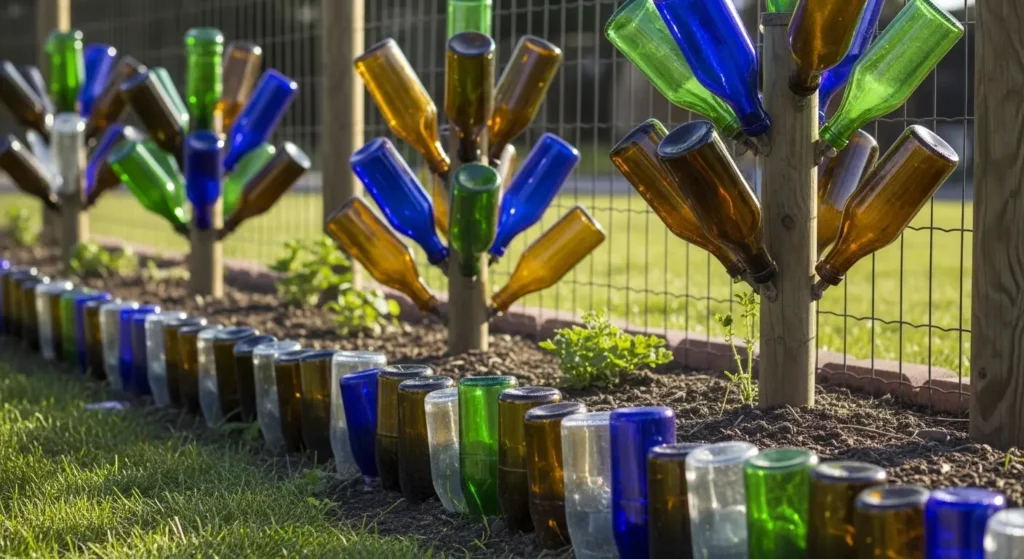
Upcycled bottle garden art uses the most consistently available and completely free garden material — glass bottles — to create light-refracting garden features that have genuine visual sophistication when installed with intention rather than randomness.
Three approaches to bottle garden art. The bottle border: bottles buried neck-down at regular intervals along a garden path or border edge, the round bases protruding 3 to 4 inches above ground creating a continuous glass-studded border. The bottle tree: a dead tree trunk or central stake with bottles placed over the branches or nails driven at intervals, the bottles catching light at multiple heights. The bottle wall panel: bottles mortared between timber batten rails to create a translucent fence panel section that glows warmly when backlit by afternoon sun.
Color consistency within each approach is the design decision that separates bottle art that looks deliberate from bottle art that looks collected. An all-amber bottle border reads as a design decision. A mixed-color bottle border reads as accumulated at random. Collect bottles of one color family over time before installation rather than installing whatever bottles are available at the moment.
PRO TIP: Clean glass bottles with a mixture of rice and white vinegar shaken vigorously inside the bottle before use in garden art. The rice acts as an abrasive that removes the mineral deposits and residues that cloud glass from the inside. Clear glass refracts and transmits light significantly more effectively than clouded glass — the cleaning step makes the difference between a garden feature that glows and one that simply reflects.
6. A Garden Mirror Doubles the Perceived Size of Any Outdoor Space
✦ Garden Mirror Illusion Wall
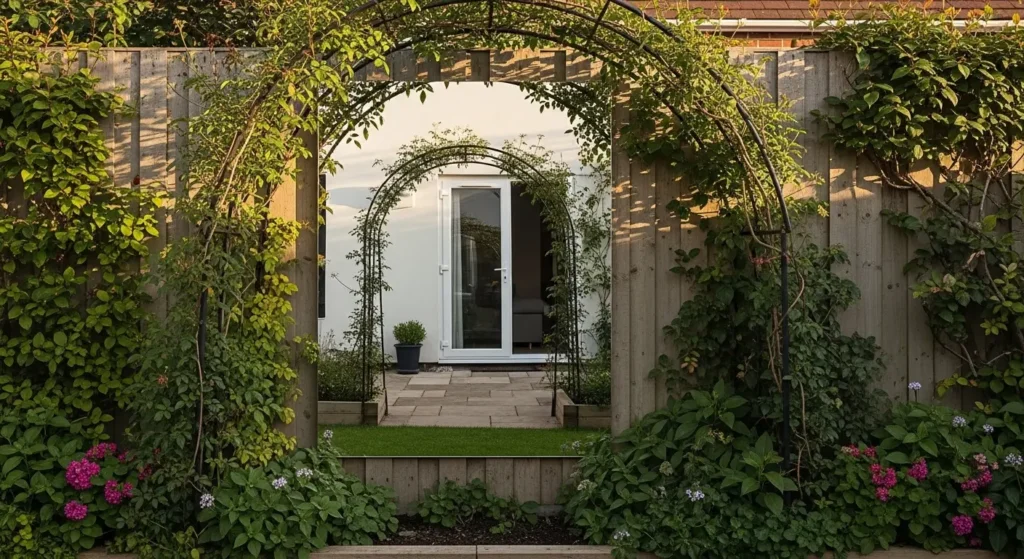
A garden mirror is the one art piece that physically changes the perceived size of an outdoor space. Mounted on the darkest fence section and framed by climbing plants it creates the illusion of a garden archway or window looking through to additional garden space beyond — an effect that makes even the smallest urban yard feel significantly more generous.
The framing is the detail that makes a garden mirror read as an art installation rather than a mirror leaned against a fence. Climbing plants trained around the mirror perimeter — ivy, climbing roses, or jasmine — create a living frame that blurs the boundary between the real garden and the reflected garden. The closer the planting frame to the mirror edge the more convincingly the reflection reads as additional garden space rather than a reflected view of the existing space.
Safety consideration: outdoor mirrors must be acrylic or specifically manufactured for outdoor use rather than household glass mirrors. Glass mirrors in gardens create focused sun reflection that can ignite dry plant material and create genuine fire risk when sun angles align. Acrylic outdoor mirrors eliminate this risk while producing identical visual results.
PRO TIP: Mount a garden mirror at eye height when seated rather than when standing. A mirror positioned for standing-height viewing reflects primarily sky and upper fence when you are seated in the patio’s main seating position. A mirror positioned at seated eye height — approximately 48 inches from the ground to the mirror center — reflects the garden planting and living space at the level that creates the most convincing garden depth illusion.
7. A Garden Wind Spinner Adds the Dimension of Movement That Static Art Cannot Provide
✦ Wind Spinner Garden Feature
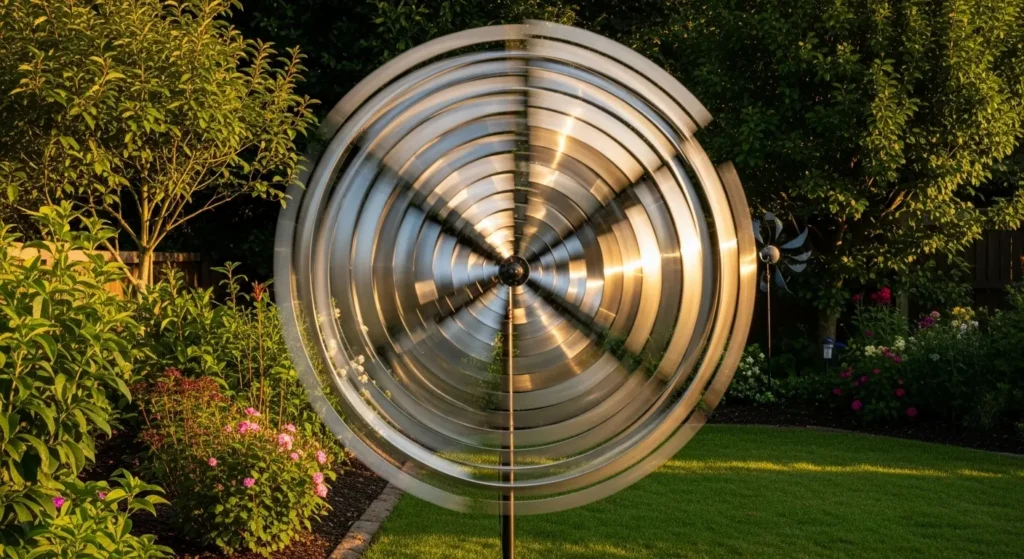
A garden wind spinner introduces the one element that all other garden art forms lack: genuine movement. A static sculpture creates a focal point. A wind spinner creates a focal point that changes continuously in response to wind speed and direction — never identical from one moment to the next and never still on any day with any air movement.
The movement quality of a wind spinner is determined by the bearing quality at the rotation point. Cheap spinners use plastic or low-grade metal bearings that create friction, stop at low wind speeds, and develop noise as they wear. Quality spinners use sealed ball bearings that rotate freely in the lightest breeze and remain silent through decades of use. The bearing specification is the quality difference that separates a spinner that spins freely and beautifully from one that moves reluctantly and noisily.
Positioning principle: site wind spinners in the most open position available in the garden — away from buildings, fences, and large shrubs that create wind shadows and turbulence. A spinner in a wind shadow spins intermittently at best. The same spinner in an open position spins continuously in conditions that would not move a leaf in a sheltered position.
8. A Rustic Birdhouse Collection Makes the Garden Genuinely Alive With Activity
✦ Rustic Birdhouse Collection
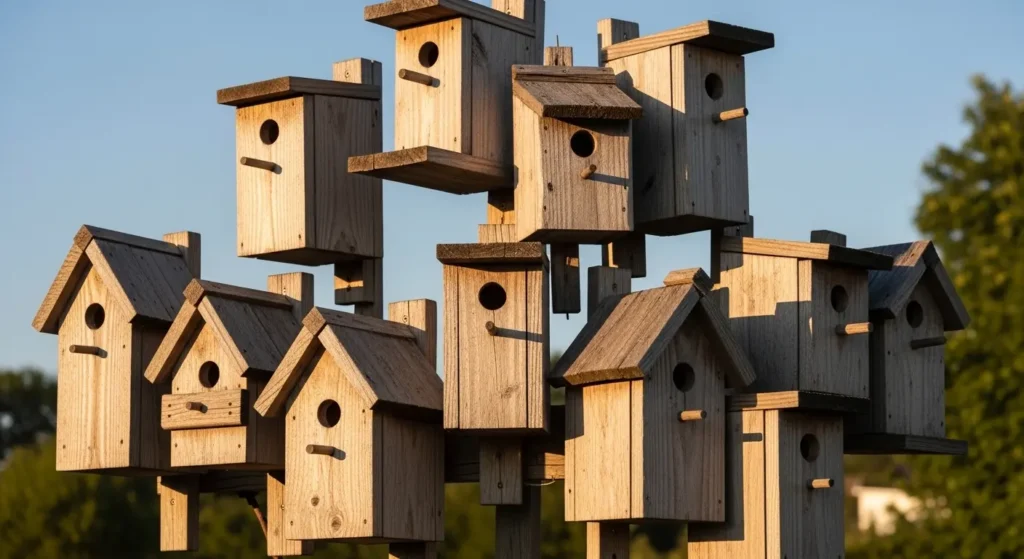
A birdhouse collection is the garden art installation that pays the most unexpected dividend: it attracts actual birds. Unlike purely decorative garden art a well-positioned birdhouse collection creates bird activity — nesting in spring, fledglings in early summer, territorial songbird behavior throughout the season — that makes the garden genuinely alive in a way that no amount of inanimate decoration achieves.
The design principle for birdhouse collections as art: consistent material with varied form. All timber birdhouses of different shapes — round entrance, square entrance, log-section, peak-roofed, flat-roofed — create visual variety within a material unity that reads as a deliberate collection rather than random accumulation. Mixed materials — timber beside metal beside ceramic beside wicker — read as disorganized.
For genuine bird use rather than purely decorative installation: entrance hole diameter determines which species can enter. A 25mm (1-inch) entrance hole admits blue tits exclusively. A 28mm hole admits great tits. A 32mm hole admits tree sparrows and nuthatches. Mount birdhouses between 1.5 and 5 meters from the ground facing between north and east to avoid direct afternoon sun heating the box interior to temperatures that can harm eggs and chicks.
PRO TIP: Space birdhouses in a collection at least 3 meters apart horizontally if you want multiple boxes to be actively used simultaneously. Most cavity-nesting birds are territorial and will not nest within sight of another occupied box of the same species. Boxes positioned closer together will attract residents to only one or two boxes in the collection regardless of how many are available.
9. DIY Ceramic Pot Art Turns Broken Garden Containers Into Permanent Outdoor Sculpture
✦ DIY Ceramic Pot Art
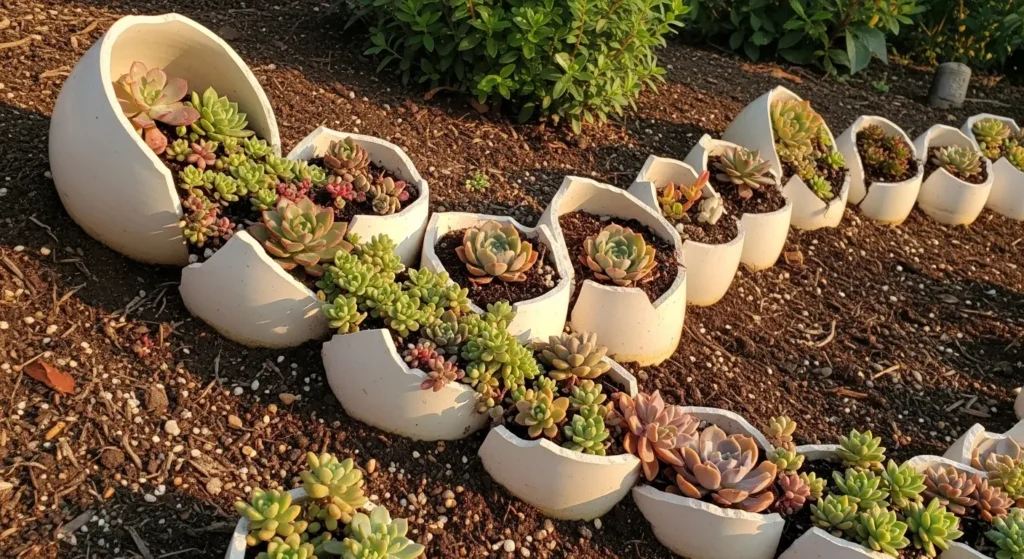
Broken ceramic pot art is one of the most clever garden art ideas because it turns a frustration — a cracked or broken container — into an opportunity. The cascading broken pot technique places a whole pot on its side, positions the broken sections in front of it as though the contents are spilling out, and plants the whole arrangement so small plants appear to pour from the broken pot down a slope of exposed soil.
The cascading pot installation: bury a whole intact pot on its side in a border so the opening faces downward the slope. Place broken pot sections in descending order in front of the opening. Plant small plants — succulents, thyme, or miniature violas — in the soil between each broken section and at the opening of the intact pot. The arrangement reads as a pot that has tumbled and spilled its contents down the slope — a trompe l’oeil effect that makes visitors look twice at what they initially perceive as an accident.
The technique works with terracotta, glazed ceramic, and concrete containers of any size. The larger the original pot the more dramatic the cascading effect. A 14 to 16-inch terracotta pot broken and arranged on a border slope creates a feature visible from the main seating position and identifiable from 20 feet as something worth approaching for closer inspection.
PRO TIP: Use a hammer and cold chisel rather than a random breaking technique to create pot sections of useful sizes for cascading pot art. Random breakage creates unpredictable fragment sizes. A cold chisel allows you to break the pot into three to five usable sections that create a progressive cascade rather than a collection of small shards that are difficult to arrange meaningfully.
10. A Fairy Light Garden Art Installation Creates Magic After Dark That No Other Art Achieves
✦ Fairy Light Art Installation
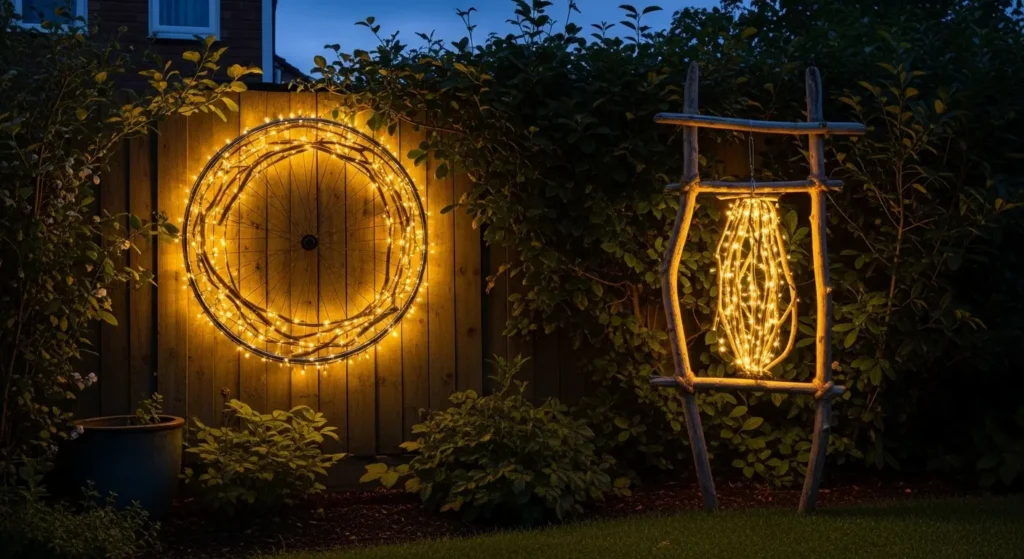
A fairy light garden art installation creates the only garden art form that exists exclusively after dark — a feature invisible or unremarkable in daylight that becomes the most magical element in the outdoor space once the sun sets. The Brightown Solar Mushroom Lights create a ground-level fairy light art installation that requires no structure, no wiring, and no manual activation — scattered through a garden border they create a magical low-level illuminated display that appears automatically at dusk. Find them linked on Amazon.
For structured fairy light art: weave micro LED fairy lights through natural forms — a weathered driftwood branch frame, an old bicycle wheel hung on the fence, or a willow twig sphere — to create illuminated sculptures that generate light patterns rather than simply providing general illumination. The structure determines the light pattern. A circular frame produces a circular mandala of light. A branching frame produces an organic constellation effect.
Solar-powered micro LED fairy lights eliminate the installation complexity of wired systems for outdoor garden art. A full day of sun charges the battery for 6 to 8 hours of illumination — enough for a complete summer evening. Choose warm white rather than cool white LEDs for the most atmospheric garden art effect. Cool white fairy lights create a clinical quality that warm amber entirely avoids.
PRO TIP: Create a contrast between the daytime and nighttime identity of a fairy light garden art installation. A driftwood branch frame looks interesting in daylight as a sculptural object. With fairy lights threaded through it after dark it becomes completely different. The daytime form and the nighttime form can serve entirely different aesthetic purposes from the same structure — making the installation twice as valuable as any piece that works only in one light condition.
Where to Place Garden Art for Maximum Impact
The placement of garden art determines its impact more than the art itself. The same sculpture placed incorrectly disappears. Placed correctly it anchors the whole garden. These placement principles apply to every garden art idea:
Sightline termination:
Place the most significant piece at the point where the garden’s primary sightline ends. From the main seating position or the back door the eye travels forward and stops. That stopping point is where the anchor art piece belongs.
Path junctions:
Path junctions are natural pause points where visitors slow down and look around. Garden art at a path junction is seen by everyone who passes it and creates the sense of discovery that makes gardens feel more extensive than their actual size.
Dark or neglected corners:
A dark corner with an interesting piece of art in it becomes a destination. The same corner without art is simply a dark corner that the eye avoids. Art in neglected positions creates the impression that every corner of the garden has been considered.
📌 More garden inspiration → 20 Creative Garden Rock Art Ideas
Frequently Asked Questions
What is garden art?
Garden art encompasses any object placed in an outdoor space for aesthetic, expressive, or focal purposes rather than purely functional ones. It includes sculpture, decorative objects, light installations, repurposed items, mosaic work, painted surfaces, and living art forms like topiary. According to the American Society of Landscape Architects the intentional inclusion of art pieces in garden design consistently increases both the perceived quality and the personal meaning of outdoor spaces — gardens with considered art installations are rated as significantly more memorable and more personally resonant than equally well-planted gardens without art.
How do I make garden art last outdoors?
The durability of outdoor garden art depends on material and finish protection. Natural stone, corten steel, and galvanized metal all weather beautifully without treatment. Painted surfaces require sealing with outdoor-rated polyurethane or exterior varnish applied in two to three coats after painting. Ceramic and mosaic pieces benefit from a coat of outdoor tile grout sealer that prevents moisture ingress into grout joints. Wood requires annual application of exterior wood oil or preservative. Glass and acrylic pieces are inherently weatherproof and require no treatment.
How much does garden art cost?
Garden art costs range from zero (painted rocks, bottle art, repurposed items, DIY mosaic from broken ceramics) to hundreds of dollars for commissioned metal sculpture. The ideas in this guide that produce the most visual impact relative to cost are: the garden mirror which transforms perceived garden size for $30 to $80 for an outdoor-rated acrylic mirror. The mosaic stepping stone which costs under $15 in materials. The fairy light art installation using solar micro LEDs which costs under $20. The painted rock trail which costs only the price of outdoor sealant. High visual impact in a garden does not correlate with high cost.
A Garden With Art Is a Garden With a Point of View
The gardens that stay in memory longest are never the ones with the most plants or the most expensive features. They are the ones where someone made a decision — placed something unexpected, made something by hand, positioned something with intention. Any of the 10 garden art ideas in this guide creates that quality.
Start with the one that requires the least investment and the most personal expression. A painted rock you made yourself communicates more about the garden than any purchased sculpture. The handmade quality is the point.
All the products mentioned in this article are linked on Amazon. Every recommendation is something we genuinely believe in.
More Garden and Outdoor Ideas
→ How To Turn Old Junk Into Garden Decor
→ 12 Rustic Planter Ideas That Look Beautiful Naturally
→ 25 Simple But Stunning Garden Lighting Ideas
→ 7 Easy Drawer Planter Ideas That Look Amazing
A painted rock you made yourself communicates more about the garden than any purchased sculpture. The handmade quality is the point.

Sheikh Hassaan is a digital architect for small businesses and the founder of The Glow Up System. He writes about home decor, garden design, and outdoor living for real American homes – practical ideas that work in actual spaces without oversized budgets.