
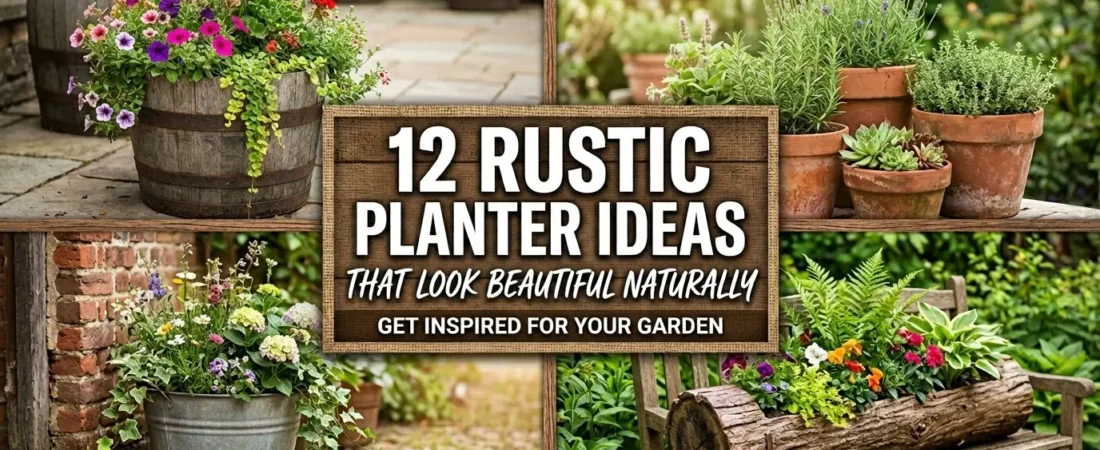
Rustic planter ideas have a quality that no purchased garden container can replicate: the appearance of time. A weathered wooden box, a galvanized metal trough, an antique barrel, or a worn terracotta pot all carry the visual evidence of previous life that makes a garden feel genuinely established rather than recently assembled. The best rustic planters are not bought — they are found, repurposed, and planted with the same instinct that created them: an appreciation for things that improve rather than deteriorate with age.
These 12 rustic planter ideas each identify the material, the sourcing approach, the essential preparation, and the planting that makes each one genuinely beautiful rather than simply weathered.
Table of Contents
1. A Weathered Wooden Box Planter Gets Better Every Season It Spends Outdoors
✦ Weathered Wooden Box Planter
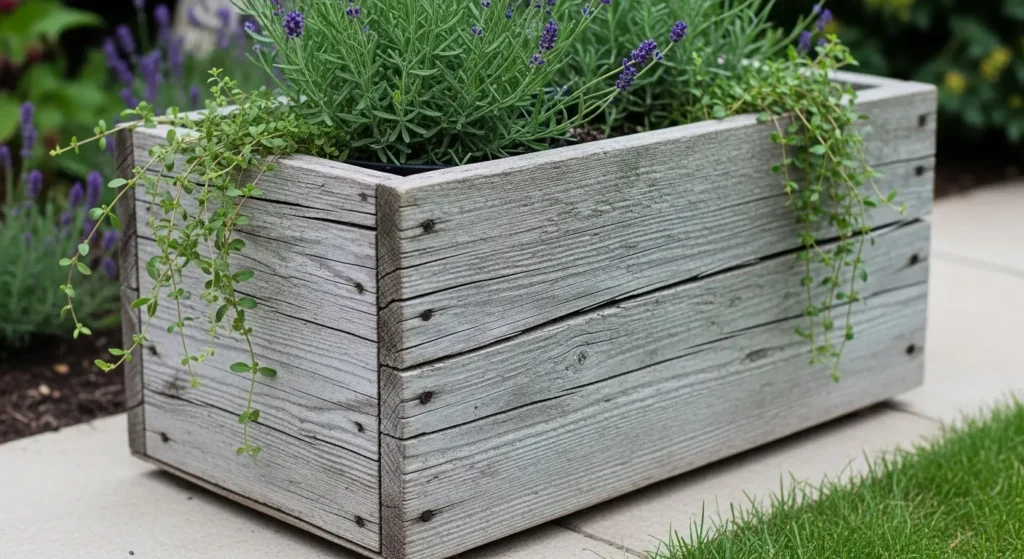
A weathered wooden box planter is distinct from an old wooden box planter in one specific quality: the weathering is even and the timber is still structurally sound. Genuine weathering on timber produces a beautiful silver-grey patina through the action of UV light and moisture on the wood surface. Rot produces soft, crumbling, structurally compromised timber that stains soil and fails within one season.
The visual test that distinguishes weathered from rotting timber: press firmly with a thumbnail. Weathered sound timber resists the pressure. Rotting timber yields and leaves an indentation. Build and source rustic wooden box planters only from timber that passes this test — no amount of beautiful patina compensates for a planter that fails mid-season.
To accelerate the weathering of new timber without rot: leave unsealed timber outdoors through a full winter before planting. The freeze-thaw cycle and winter rain create genuine weathering within one season. For faster artificial weathering apply a diluted solution of white vinegar and steel wool left to steep for 24 hours — brush onto the timber surface and the tannin reaction creates authentic grey weathering within hours.
PRO TIP: Seal the interior surfaces of a weathered wooden box planter with a coat of exterior wood preservative before lining with landscape fabric. The interior never receives the same UV weathering as the exterior and stays more vulnerable to moisture-driven rot from direct compost contact. The exterior weathers beautifully. The interior is protected. The planter lasts decades.
2. A Galvanized Metal Trough Carries the Visual History of Working Farms Into the Garden
✦ Galvanized Metal Trough Planter
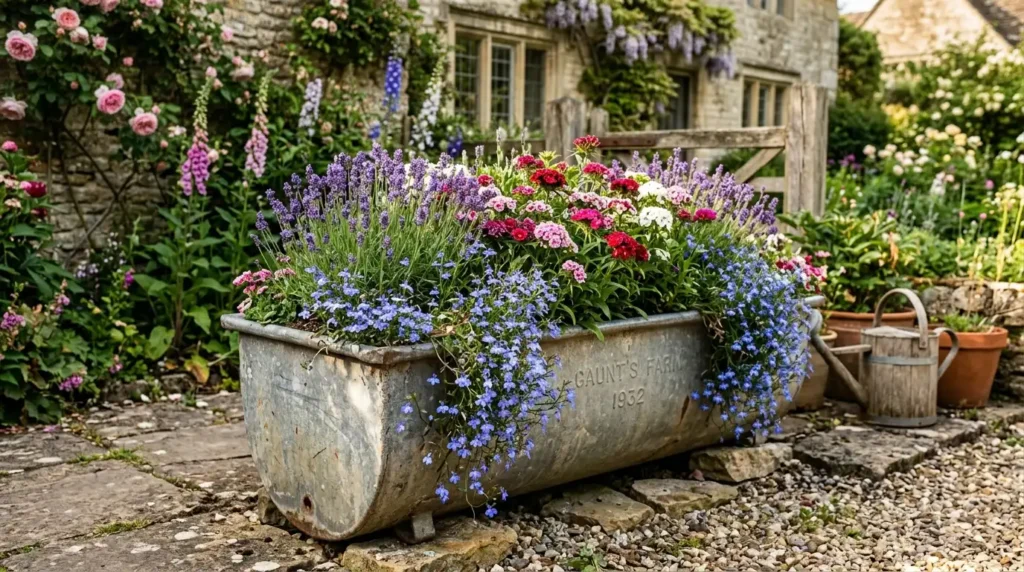
Galvanized metal animal troughs are among the most versatile and most genuinely agricultural rustic planters available. Originally manufactured for livestock water and feed they have the scale, the depth, and the material quality to function as exceptional large-format garden planters — and the worn galvanized surface develops its own character with every year of outdoor use.
The sourcing options for galvanized troughs: agricultural supply stores and farm equipment auctions supply genuine used troughs at minimal cost. New galvanized troughs are available from agricultural suppliers and garden retailers — new galvanized metal weathers to the same attractive patina as aged troughs within two to three outdoor seasons. Avoid heavily rusted troughs where the galvanized coating has failed completely — rust leaches into the growing medium and creates pH problems for most plants.
Drainage is the critical preparation step for metal troughs used as planters. Most agricultural troughs have no drainage holes — drill 8 to 12 holes of 12mm diameter in the base before adding compost. The hole count that sounds excessive is the correct specification — metal trough bases are large and require proportionally more drainage than timber or ceramic planters of equivalent volume.
PRO TIP: Fill the bottom quarter of a galvanized trough planter with a layer of gravel or broken crockery before adding compost. The large base area of a trough creates a significant water table zone at the base that slows drainage and causes root problems in moisture-sensitive plants. The gravel layer raises the effective drainage point and improves root zone conditions throughout the growing medium above.
3. An Antique Barrel Planter Has the Root Volume to Support Plants of Genuine Scale
✦ Antique Barrel Garden Planter
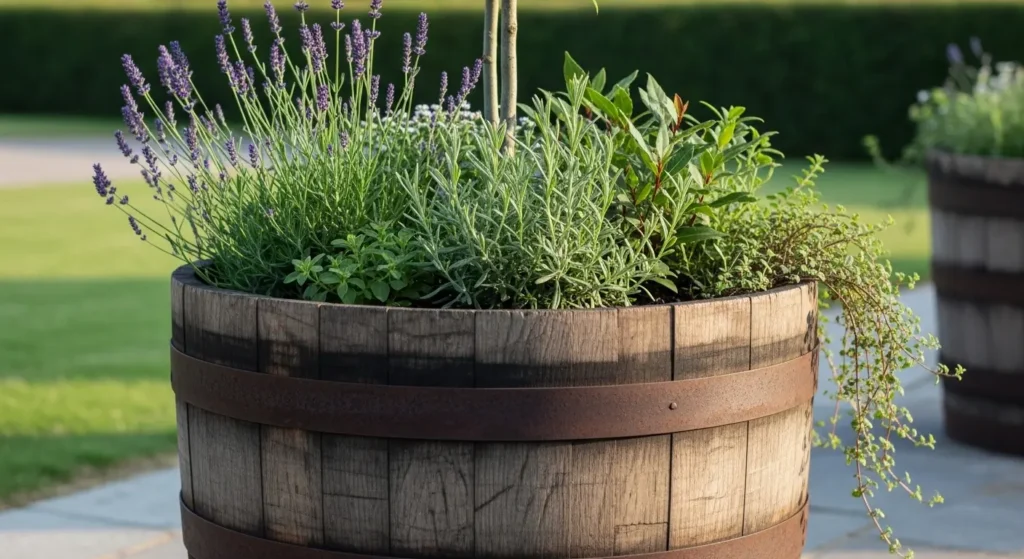
A genuine oak barrel cut in half provides the most generous root volume of any rustic planter — typically 14 inches deep and 24 inches in diameter with a 35 to 40 gallon soil volume. This volume supports shrub-scale planting, mature perennial clumps, and climbing plants on a central stake in a way that smaller rustic containers cannot sustain through a full season.
Authentic wine and whiskey barrels from cooperages and winery suppliers are the best source for quality barrel planters. The residual tannins in genuine oak barrels leach slowly into the growing medium and create a mildly acidic environment that suits acid-preferring plants including blueberries, azaleas, and Pieris. Standard ornamental planting is unaffected by the mild tannin presence.
The Quarut Whiskey Barrel Planters provide the aesthetic of genuine barrel planters — the stave profile, the iron hoop detail, and the warm dark oak tones — in weather-resistant resin that handles outdoor conditions without the warping, stave gap development, and moisture loss that genuine old oak barrels develop over time. Find them linked on Amazon.
PRO TIP: Position barrel planters on purpose-built wooden feet or brick pavers to elevate the base off the ground surface. Even weather-resistant barrel planters in direct ground contact develop base rot or staining over multiple seasons. Elevation allows air circulation beneath the base and prevents the persistent moisture contact that deteriorates any material given enough time.
4. A Reclaimed Wood Crate Planter Costs Nothing and Looks Like It Was Designed Specifically for the Space
✦ Reclaimed Wood Crate Planter
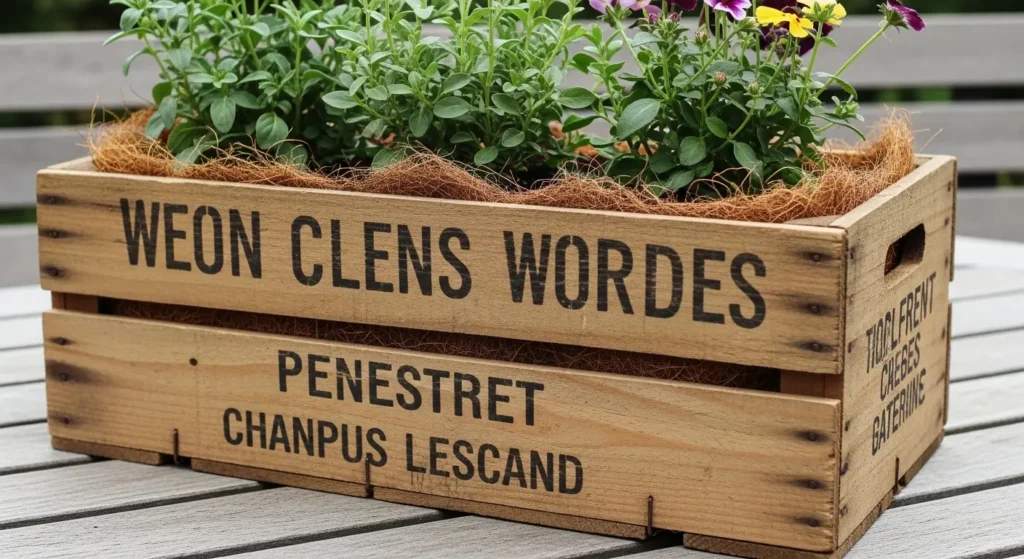
Reclaimed wooden crates bring two qualities to rustic planting that purpose-built planters cannot replicate: original printed text that adds provenance and character, and the specific worn timber quality of objects that served a functional purpose before being repurposed. A fruit crate with faded orchard printing, a wine crate with vineyard labeling, or a market crate with vendor stenciling all carry a visual history that makes them immediately interesting as garden features.
Sourcing reclaimed crates: wine merchants discard wooden wine crates regularly and give them away on request. Fruit markets and greengrocers use wooden produce crates that become available at end of trading day. Facebook Marketplace and freecycle consistently list wooden crates that people want to remove from their homes.
The preparation that determines whether a reclaimed crate planter lasts one season or five: internal landscape fabric lining stapled to all interior surfaces before compost is added, and exterior treatment with decking oil or exterior wood preservative on all visible surfaces. The lining prevents direct compost contact with the timber. The exterior treatment slows UV and moisture degradation without obscuring the original print and patina that makes the crate beautiful.
PRO TIP: Stack two identical reclaimed crates to create a deep double-height planter for vegetables or large plants that require root depth that a single crate cannot provide. Secure the two crates together with two exterior screws on each long side before lining and filling. The double-height crate planter provides 10 to 12 inches of root depth — sufficient for most productive vegetables and generous perennials.
5. A Terracotta Pot Cluster Improves Continuously as the Pots Age and Accumulate Character
✦ Terracotta Pot Cluster Display
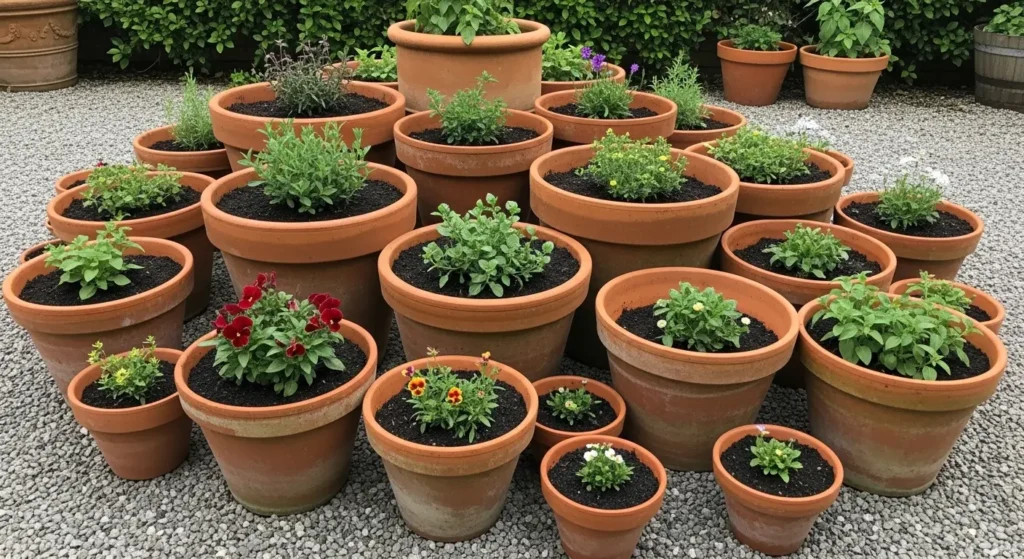
A terracotta pot cluster is the rustic planter collection that genuinely improves with age because terracotta weathers in exactly the right direction — the orange surface progressively acquires white mineral salt deposits, green algae, and grey-green moss that collectively create the aged cottage garden aesthetic that fresh orange terracotta lacks entirely.
The weathering timeline for terracotta: mineral salt deposits (white chalky marks on the exterior) appear within one summer season from watering. Algae begins within 6 to 12 months in damp positions. Moss colonizes fully aged pots within 2 to 3 years in humid shaded positions. A terracotta pot cluster that contains pots of different ages therefore creates a natural variation within the collection — some pots fresh, some partially weathered, some fully aged — that looks assembled over time rather than purchased together.
The clustered arrangement of terracotta pots works on the same design principle as any grouped planting — five pots together create five times more visual impact than the same five pots placed individually around the garden. Group by height rather than by size: tallest pot at the back, progressively shorter toward the viewing position.
PRO TIP: Accelerate moss growth on new terracotta pots using the yogurt method: brush natural live yogurt onto the exterior surface of clean terracotta and position in a shaded damp location. The live yogurt cultures introduce the moss and algae spores that create genuine aging. Within 3 to 6 weeks in suitable conditions the pots develop authentic green-grey patina that takes years to appear naturally.
6. A Vintage Wheelbarrow Planter Is the Rustic Feature That Defines the Whole Garden
✦ Vintage Wheelbarrow Planter
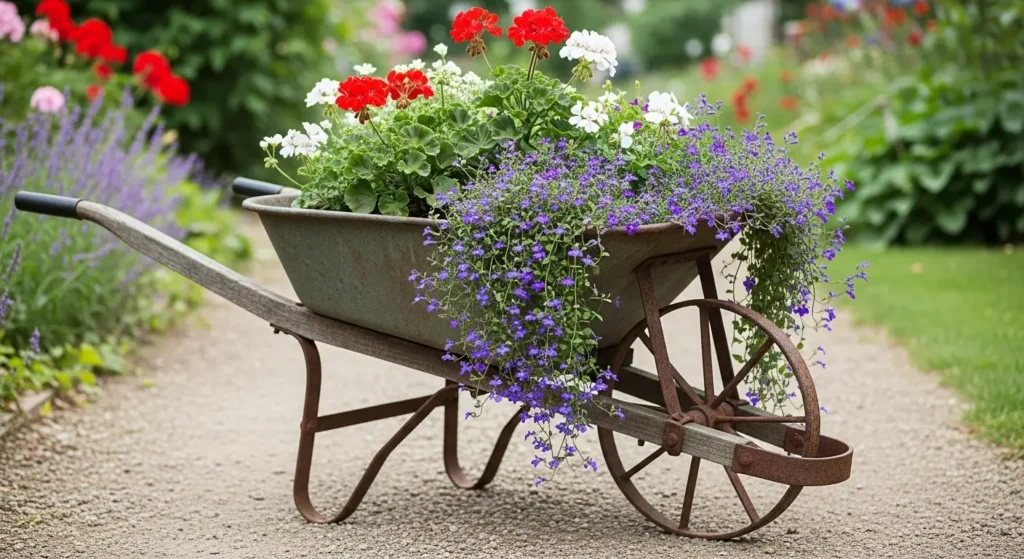
A vintage wheelbarrow planter creates the most recognizable and most consistently saved rustic garden feature on Pinterest. The familiar profile — handles, wheel, and generous bed — is immediately legible as both garden tool and planting vessel simultaneously, creating the repurposed quality that makes rustic planting so appealing.
Sourcing: estate sales, antique markets, farm clearances, and Facebook Marketplace all supply vintage wheelbarrows regularly. A wheelbarrow with a flat or missing tire still functions perfectly as a planter — the wheel is visual rather than functional in a planted wheelbarrow display. Genuine wooden-bodied antique wheelbarrows are the most visually distinctive but require interior lining to survive as planters. Metal-bodied vintage wheelbarrows are more durable as planters but require drainage holes if none are present.
The planting approach that makes wheelbarrow planters look most effective: plant the central bed area densely with the primary display plants, then trail one or two varieties over the sides so they cascade down the wheelbarrow body. The trailing plants connect the elevated planting to the ground and create the abundant overflowing quality that makes wheelbarrow planters so visually compelling.
7. A Stone Trough Planter Is the Rustic Container That Outlasts Every Other Option
✦ Stone Mason Garden Planter
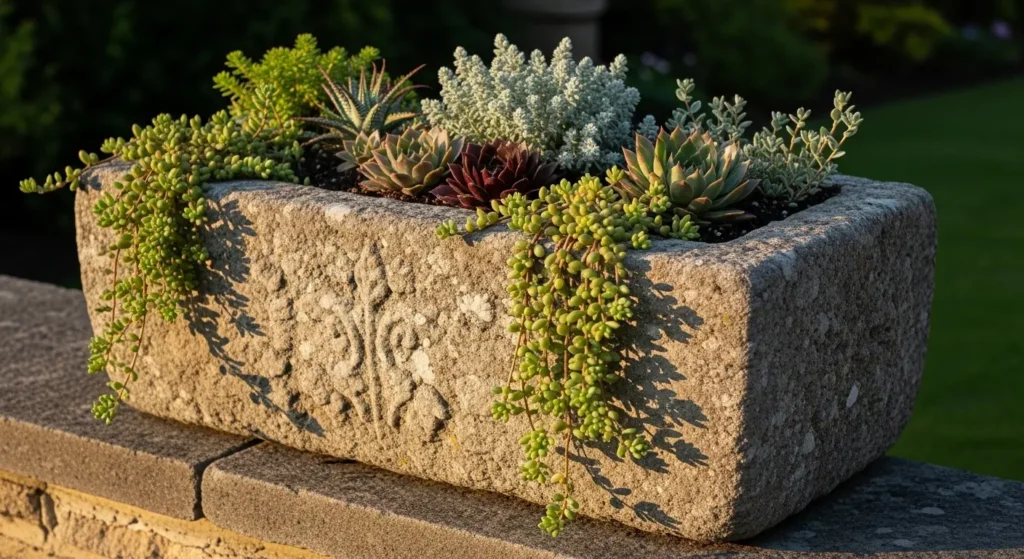
A genuine stone trough is the most permanent and most aesthetically elevated rustic planter available. Original Victorian and Edwardian stone water troughs salvaged from farmyards carry decades of weathering, lichen colonization, and mineral deposit that creates a surface quality impossible to replicate artificially — each one is unique and increasingly rare.
The gardening use that suits stone troughs best: alpine and rock garden planting. The shallow depth of most stone troughs (typically 6 to 8 inches) suits the compact root systems of alpine plants which in deeper containers become waterlogged below the plant root zone. A stone trough planted with a collection of compact alpine plants — Sempervivum, Saxifraga, Dianthus, and miniature bulbs — creates a complete miniature landscape that requires almost no maintenance and improves in visual quality every year as the plants establish and colonize the trough.
Hypertufa is the accessible alternative to genuine stone troughs — a mixture of Portland cement, peat moss, and perlite cast in any desired form creates lightweight artificial stone troughs that weather convincingly within 2 to 3 years. The material cost is minimal and the result is indistinguishable from genuine stone at conversational distance.
PRO TIP: Age a new hypertufa or cast stone trough rapidly by painting all external surfaces with a slurry of live yogurt, water, and a handful of garden soil blended together. The combined biological material in yogurt and soil introduces the range of organisms — algae, moss, lichen — that create authentic stone weathering. Keep the treated trough moist for the first two weeks to maintain the conditions the organisms need to establish.
8. A Rustic Ladder Plant Stand Displays Multiple Pots Without a Single Wall Fixing
✦ Rustic Ladder Plant Stand
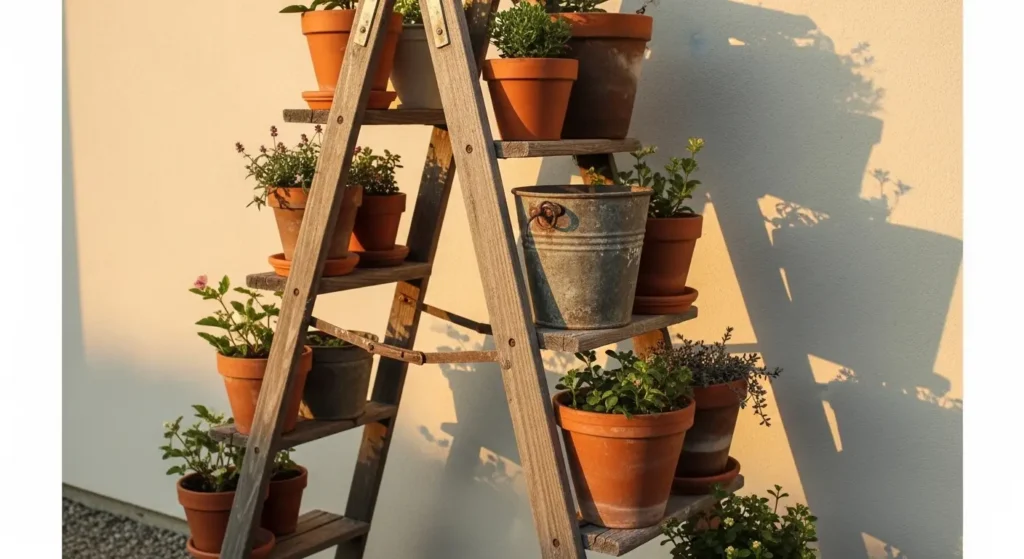
A rustic ladder plant stand repurposes an old stepladder or leaning ladder as a free-standing tiered display surface that requires no wall fixings, no construction, and no modification to the space it inhabits. The stepped profile creates natural height variation for pots placed on each rung and the leaning or standing ladder form creates an immediate visual statement that a flat shelf or standard plant stand cannot produce.
The most effective ladder displays use pots at every rung level with consistent visual logic rather than random placement. Work from top to bottom: smallest and lightest pots at the top rungs where the structural load on the rung is least. Medium pots at mid-height. Largest pots at the base rungs where they provide visual weight and stability. Trailing plants at mid and upper rungs with their trails cascading downward connect the vertical levels.
Sourcing rustic ladders: old wooden stepladders appear regularly in charity shops, house clearances, and Facebook Marketplace free listings. New wooden stepladders can be artificially aged using the vinegar-steel wool technique described in idea 1 to create the grey weathered appearance within hours. Avoid using ladders with structurally compromised rungs — even as display stands loaded with pot weight the rungs must be reliable.
PRO TIP: Secure pots on ladder rungs using a small piece of non-slip mat cut to rung width and placed beneath each pot. On rounded or narrow rungs pots move in wind and occasionally fall. The non-slip mat costs under $2 for enough material to secure an entire ladder display and prevents the pot loss and plant damage that wind causes on unsecured ladder rung displays.
9. Burlap Wrapping Transforms Any Plastic Pot Into a Rustic Display Piece in 10 Minutes
✦ Burlap Wrapped Planter Pot
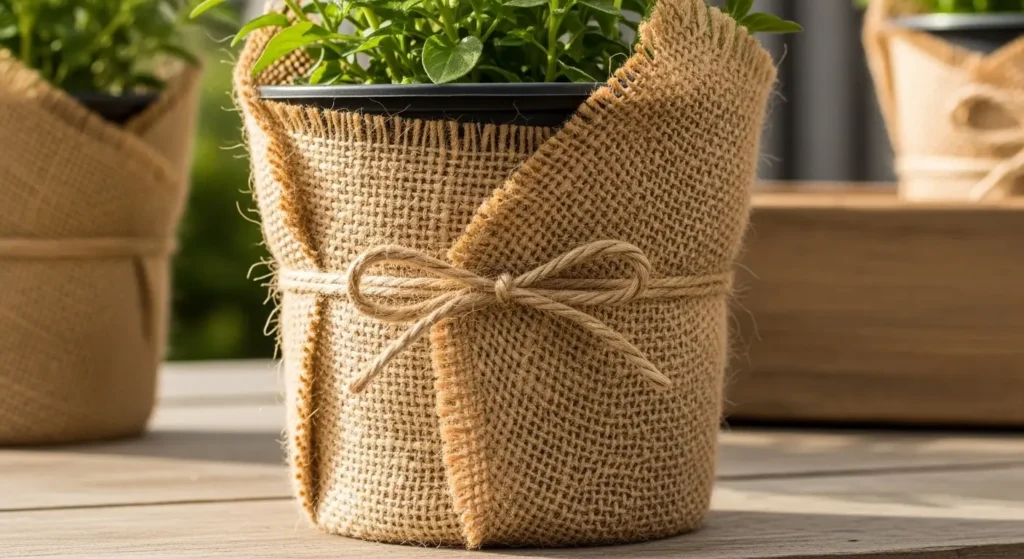
Burlap wrapping is the fastest and cheapest rustic planter transformation available. A standard black plastic nursery pot — the most visually unattractive of all garden containers — becomes a warm, tactile, genuinely rustic display piece in 10 minutes with a piece of burlap hessian and a length of natural twine.
The wrapping technique: cut a rectangle of burlap large enough to wrap around the pot with 2 inches of overlap at the join. Wrap around the pot exterior with the lower edge folded under the base. Secure the overlap with a hot glue gun or double-sided tape. Tie a length of natural jute twine around the middle at one third height from the top for the finishing detail. The entire process takes 10 minutes and costs under $1 per pot in materials.
Burlap-wrapped pots are not weatherproof indefinitely — the hessian weave degrades in persistent wet conditions over one to two seasons. For outdoor use in wet climates add a coat of exterior waterproofing spray to the finished burlap surface. For indoor or covered outdoor use no additional treatment is needed.
10. An Old Milk Can Planter Brings Genuine Agricultural Heritage Into the Garden
✦ Farmhouse Milk Can Planter
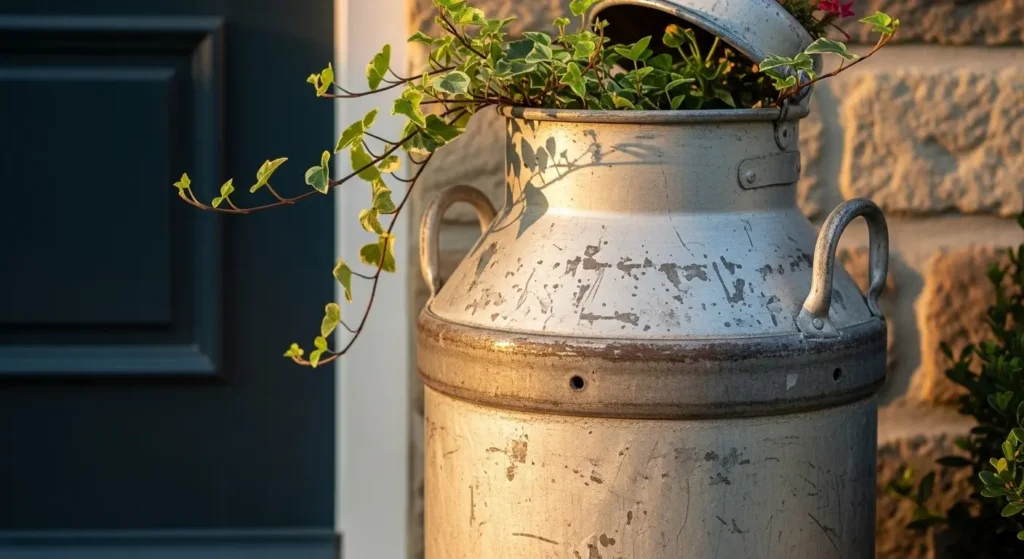
Old milk churns and milk cans are among the most characterful rustic planters available because they carry the specific agricultural heritage of dairy farming in a form that is immediately recognizable and deeply connected to rural landscape traditions. The worn painted surface, the dented metal body, and the rounded profile all create a rustic presence that modern reproductions approximate but never fully replicate.
Sourcing genuine milk churns: agricultural auctions, farm clearances, antique dealers specializing in rural and agricultural items, and Facebook Marketplace all supply genuine churns and cans at prices from $15 to $80 depending on condition and size. Reproduction milk churns from garden retailers lack the authentic aging and dent patterns of genuine old agricultural pieces — identifiable at close range by their uniformity.
The planting approach for milk can planters: trail plants over the rim and down the sides of the can for the most dramatic display. Trailing Tradescantia, trailing nasturtium, and cascading ivy all emerge from the narrow opening and cascade down the can body creating a living sculpture rather than a pot with plants in it.
PRO TIP: Drill drainage holes in milk can and churn planters using a metal drill bit. Most milk cans have no drainage holes and without modification become waterlogged in the sealed base within days of planting. Five to six 10mm holes drilled in the base provide adequate drainage for most planting. Support the can above the ground surface on pot feet so the drainage holes are not blocked by direct contact with the paving or soil surface.
11. A Log Slice Plant Base Adds Natural Forest Character to Any Container Display
✦ Log Slice Plant Base
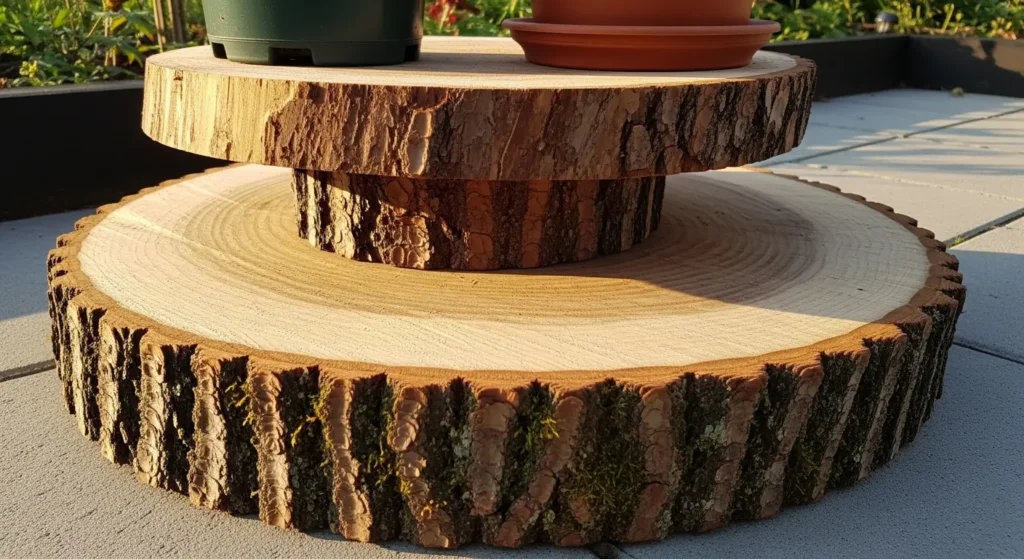
A log slice used as a plant base elevates containers from the ground surface and adds the natural forest material quality that processed and manufactured garden surfaces cannot provide. The cross-section view of a log — showing growth rings, grain patterns, and the living structure of the tree — creates a display surface with inherent visual interest that no manufactured plinth or plant stand replicates.
Log slices are cut from the trunk cross-section of any felled garden or woodland tree. A chainsaw cut at 4 to 6 inches thickness creates a stable base with adequate weight to support multiple pot sizes without tipping. The bark edge should be left intact — the contrast between rough bark edge and clean sawn face creates the natural-meets-crafted quality that makes log slices so effective as display bases.
Treatment for outdoor log slice plant bases: apply boiled linseed oil to the sawn face to slow moisture absorption and checking (cracking along the grain). The bark edge requires no treatment — it weathers and develops moss naturally. A treated log slice base lasts 3 to 5 outdoor seasons before the sawn face begins to deteriorate significantly.
12. A Wildflower Rustic Planter Looks Like the Garden Planted Itself
✦ Wildflower Rustic Arrangement
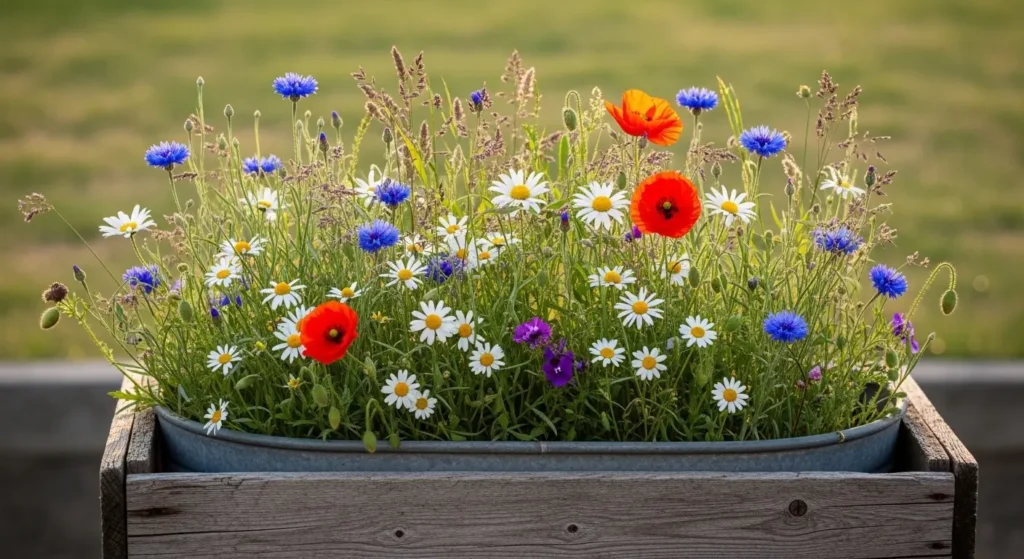
A wildflower rustic planter achieves the most deceptively artless planting effect available — a display that looks completely spontaneous and self-sown while requiring specific sowing choices and container management to produce the naturalistic quality that appears effortless.
The annual wildflower combination that produces the most reliably beautiful rustic container display: cornflowers for blue-purple vertical accent. Field poppies for scarlet horizontal spread. Ox-eye daisies for white structural anchoring. Annual grasses for movement and fine texture between the broader-leaved flowers. This four-component combination is sown directly into the container in spring and requires no transplanting or spacing management — the natural competition between species creates exactly the informal self-seeded quality that distinguishes wildflower plantings from bedding plant arrangements.
The rustic container is not incidental to the wildflower planting effect — it is essential to it. Wildflowers in a formal architectural container look incongruous. The same flowers in a weathered wooden trough, a galvanized metal container, or a terracotta collection look as though they have been growing there since the container was first filled. The material harmony between aged container and naturalistic planting is the design insight that makes rustic wildflower planters so consistently saved on Pinterest.
PRO TIP: Sow wildflower seeds directly onto a thin layer of sharp sand scattered on the compost surface rather than into the compost itself. Wildflower seeds germinate best on a minerally poor surface that replicates the disturbed ground conditions where they naturally colonize. Sowing directly into rich compost produces lush leafy growth with reduced flowering as the plants respond to nutrient abundance by producing foliage rather than flowers.
The Principle Behind Every Rustic Planter That Works
Every rustic planter that looks genuinely beautiful shares one quality: the plant and the container have a material relationship. Wildflowers in a galvanized trough. Herbs in a reclaimed crate. Cottage flowers in a weathered wooden box. Alpines in a stone trough. The planting suits the container not just aesthetically but culturally — the plant references the same tradition as the container.
Rustic planters with plants that contradict their material character — formal topiary in a galvanized trough, tropical hibiscus in a weathered wooden box — look confused rather than eclectic. The material harmony between aged container and appropriate planting is the single design decision that determines whether a rustic planter looks beautiful naturally or simply looks old.
📌 More planter and garden ideas → 16 Garden Planter Ideas That Transform Outdoor Spaces
Frequently Asked Questions
How do I make a planter look rustic?
The fastest methods for creating a rustic planter appearance are: the vinegar and steel wool technique which creates grey timber weathering within hours on new wood. The yogurt method which grows moss and algae on terracotta and stone surfaces within weeks. Burlap wrapping which transforms plastic nursery pots into rustic display pieces in 10 minutes. And deliberate material selection — sourcing genuinely aged containers from agricultural suppliers, estate sales, and recycled material sources rather than purchasing new containers and attempting to age them. Genuine aged materials always look more convincingly rustic than artificially aged alternatives regardless of the technique used.
What plants look best in rustic planters?
Plants that look best in rustic planters share the informal, natural quality of the containers themselves. Cottage garden plants — lavender, geraniums, sweet williams, pansies, and trailing lobelia — suit wooden and terracotta rustic containers. Herbs suit galvanized metal and reclaimed crate planters. Wildflower mixes suit any rustic container. Alpine plants suit stone and hypertufa troughs. According to the RHS the most successful cottage and rustic garden planting uses plants that have a natural informal growth habit rather than plants that require training, staking, or formal maintenance to look their best.
Where can I find rustic planters?
The best sources for genuine rustic planters are estate sales and house clearances for aged terracotta, stone troughs, and vintage metal containers. Agricultural auctions and farm clearances for galvanized troughs and milk churns. Facebook Marketplace and Freecycle for wooden crates, old wheelbarrows, and salvaged timber. Antique markets and salvage yards for genuine stone troughs, old farm implements, and architectural salvage. Garden centers and retailers supply reproduction rustic planters that are more predictable in quality but lack the provenance and individual character of genuinely salvaged materials.
Rustic Planters Belong to a Different Category Than Garden Decoration
A purchased garden ornament is a decoration. A salvaged milk churn planted with trailing ivy is a story. The difference is what makes rustic planting so enduringly popular — in a world of manufactured perfection a planter that carries the marks of previous life and previous purpose creates the kind of authentic garden character that no catalog can supply.
Choose the rustic planter idea from this guide that suits your garden character and your sourcing patience. Some of the best rustic planters take time to find. They are worth waiting for.
All the products mentioned in this article are linked on Amazon. Every recommendation is something we genuinely believe in.
More Planter and Garden Ideas
→ 12 Genius Garden Planter Box Ideas
→ How To Turn Old Junk Into Garden Decor
→ 7 Fabulous Front Door Planter Ideas
→ 12 Boho Garden Ideas You’ll Love
Some of the best rustic planters take time to find. They are worth waiting for.

Sheikh Hassaan is a digital architect for small businesses and the founder of The Glow Up System. He writes about home decor, garden design, and outdoor living for real American homes – practical ideas that work in actual spaces without oversized budgets.