
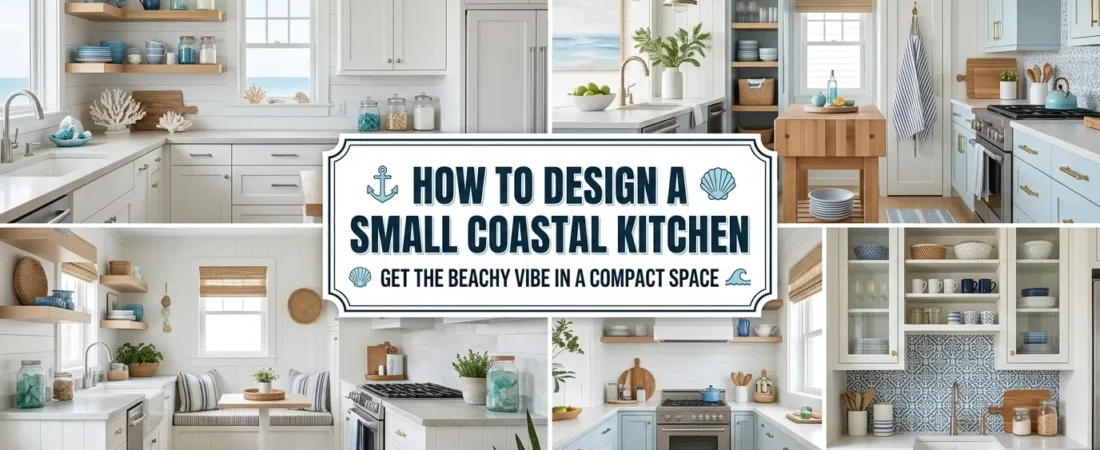
Designing a kitchen around the coastal aesthetic is one of the most rewarding home projects available — the result is a room that feels permanently fresh, permanently light, and permanently relaxed regardless of the weather outside. A small coastal kitchen achieves this through the same principles that make the coastal style work everywhere: maximum light, natural materials, a restricted palette, and the specific restraint that prevents the style from tipping into nautical theme territory.
This guide covers every design decision in a small coastal kitchen — from cabinet color and countertop material to hardware, lighting, open shelving, and the finishing details that make a kitchen feel genuinely coastal rather than decorated with coastal objects.
Table of Contents
The Four Design Principles of a Small Coastal Kitchen
Light over everything:
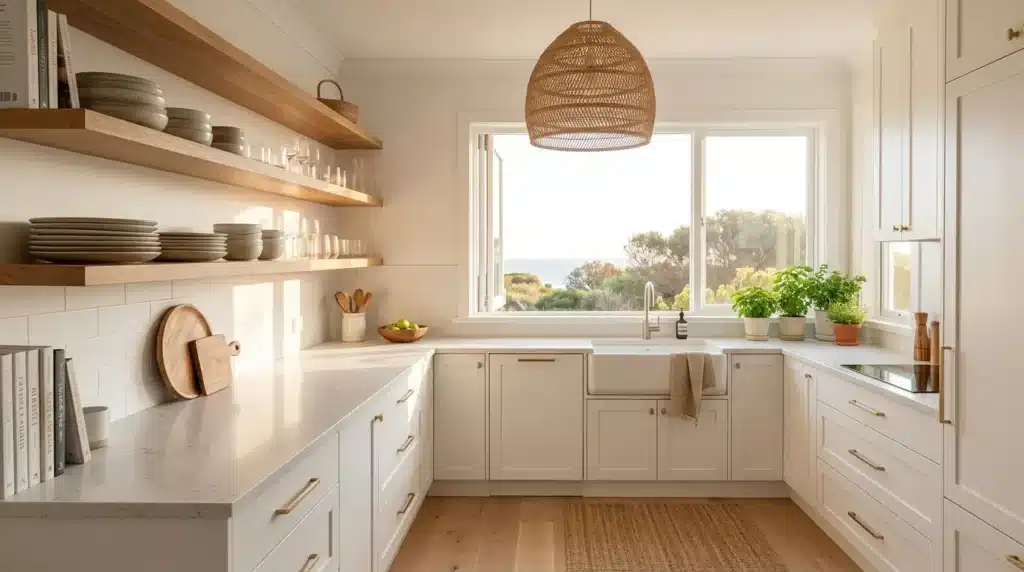
Every small coastal kitchen decision should be evaluated by how it affects light. White cabinets reflect more light than any other color. Open shelving creates more perceived depth than closed cabinets. Removing window coverings maximizes natural light. Gloss or satin finishes on surfaces bounce light further. In a small kitchen light creates the perception of space that no structural change can achieve.
Natural materials over synthetic:
Timber, stone, rattan, linen, and ceramic create the organic warmth that synthetic materials cannot replicate. In a small kitchen every surface is visible and the material quality is immediately apparent. Natural materials create warmth that makes a small space feel comfortable rather than cramped.
Restraint in decoration:
A small coastal kitchen with too many decorative objects feels cluttered rather than coastal. Every decorative element must earn its place — if it does not contribute to the coastal palette or the natural material quality it should not be there.
Vertical emphasis:
In a small kitchen vertical design elements — tall cabinets, vertical tile patterns, high pendant lights — draw the eye upward and create the perception of greater ceiling height. Horizontal emphasis makes small spaces feel lower and more compressed.
Cabinet Color and Style for a Small Coastal Kitchen
The Best Cabinet Colors for Small Coastal Kitchens
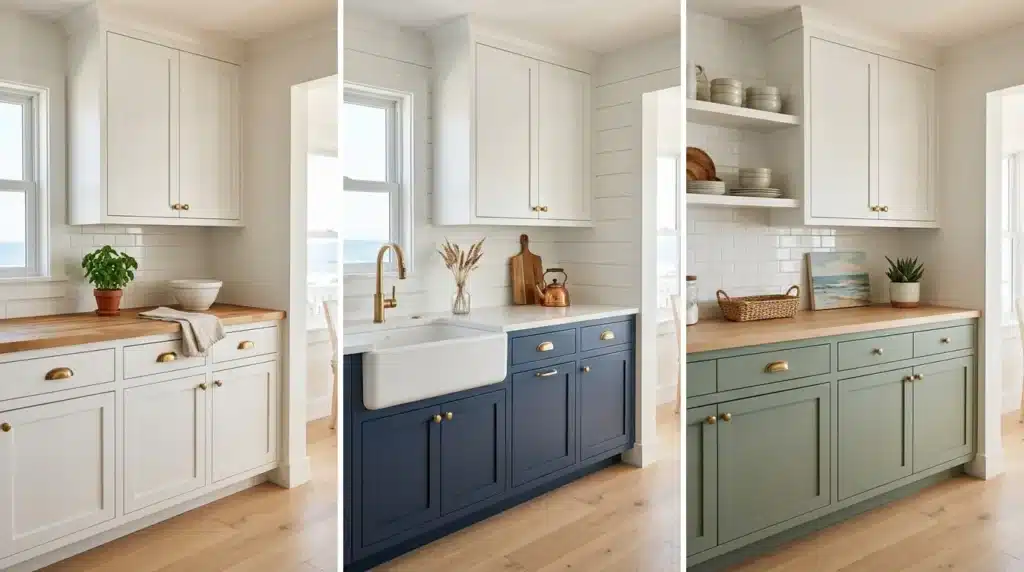
All-white shaker cabinets:
The classic small coastal kitchen choice. White reflects maximum light, creates the clean canvas that the coastal palette requires, and suits every countertop and hardware combination. Use a warm white rather than a cool white — Benjamin Moore Simply White or Sherwin-Williams Pure White both have the warm undertone that prevents small kitchens from feeling clinical.
White upper and navy lower cabinets:
The two-tone approach uses navy on the lower cabinets as a grounding color while keeping white uppers for maximum light reflection. In a small coastal kitchen the navy lower cabinets create visual weight at counter level that makes the upper half of the room feel airier by contrast. The navy quantity is naturally limited to the lower cabinet zone — preventing the too-much-blue mistake that turns coastal into nautical.
Sage green lower cabinets:
Soft sage or seafoam green is the contemporary coastal kitchen alternative that references the color of shallow coastal water without the directness of navy. Sage green lower cabinets with white uppers and natural timber open shelving creates the most current and most distinctive small coastal kitchen aesthetic.
Cabinet Profile and Hardware
The shaker cabinet profile — a flat recessed panel within a simple frame — is the correct cabinet style for a small coastal kitchen. It has enough detail to create visual interest without the ornate complexity of traditional styles that add visual weight to a small space. Flat-front slab doors are the modern coastal alternative that suits more contemporary kitchens.
Hardware in brushed brass or aged brass creates the warm coastal quality that chrome and stainless cannot achieve. Brass hardware against white shaker cabinets is the most consistently photographed small coastal kitchen combination. Matte black hardware against sage or navy cabinets suits the more contemporary coastal kitchen direction.
Countertops for a Small Coastal Kitchen
White marble or marble-effect quartz:
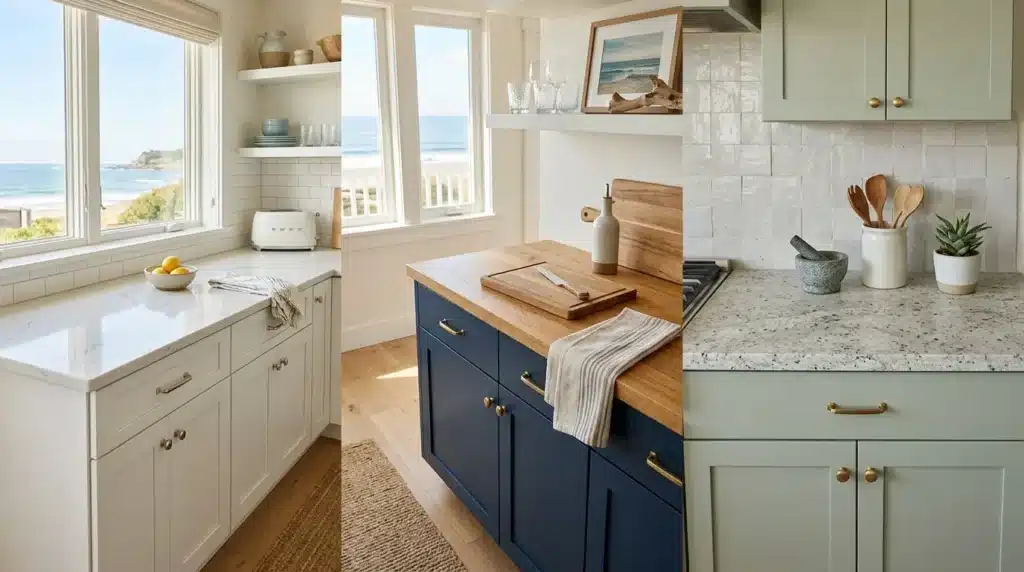
The most light-reflective countertop option and the one most associated with the coastal aesthetic. White marble with subtle grey veining suits traditional coastal kitchens. White quartz with minimal veining suits modern coastal kitchens. Quartz is the practical choice — it is non-porous, requires no sealing, and handles kitchen use without the staining vulnerability of genuine marble.
Butcher block timber:
The warmest and most natural countertop material for a coastal kitchen. Butcher block on navy or sage lower cabinets creates the highest contrast between the warm timber and the cool painted cabinet color — a combination that consistently produces the most beautiful small coastal kitchen results. Requires monthly oiling but improves in character with use.
Honed stone in white or light grey:
Honed rather than polished stone has the matte surface that suits the coastal aesthetic better than the high-gloss finish of polished stone. Honed white granite or honed limestone creates the natural stone quality with the soft matte finish that the organic coastal material palette requires.
Open Shelving in a Small Coastal Kitchen
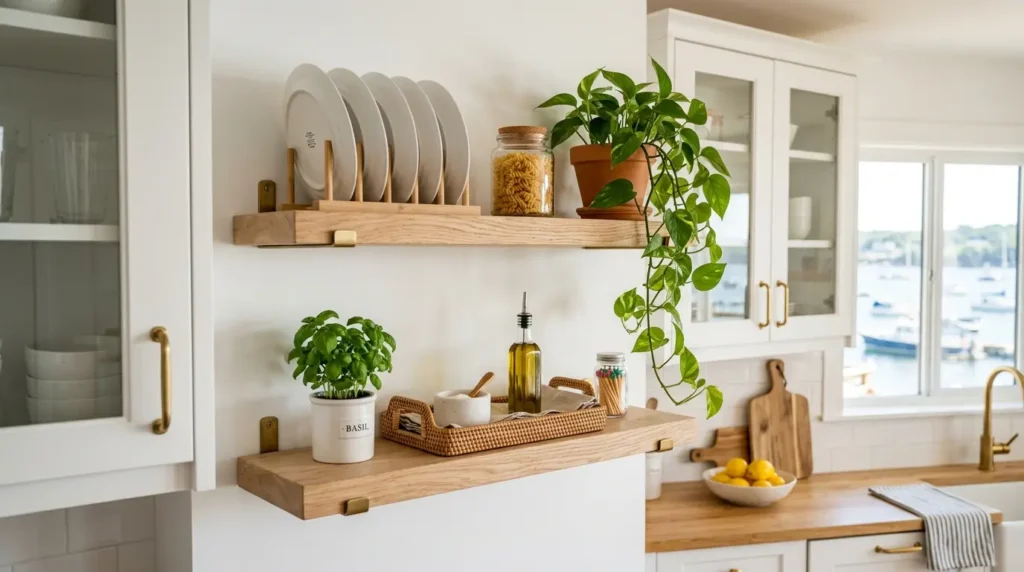
Open shelving in a small coastal kitchen serves two purposes simultaneously — creating storage and creating the visual depth that closed cabinets prevent. Where closed upper cabinets create a visual wall that ends at the cabinet face, open shelves allow the eye to travel deeper into the kitchen and create the perception of greater width and depth.
Replace one or two sections of upper cabinets with open timber floating shelves — pale oak, whitewashed pine, or driftwood-finished timber all suit the coastal aesthetic. The open shelf sections create the display zones that give the coastal kitchen its character while the remaining closed cabinets maintain the practical storage the kitchen requires.
The coastal open shelf styling formula: white ceramic plates standing upright at the back. One small potted herb or trailing plant for living color. Glass jars of dry goods for the decanted storage aesthetic. One rattan or woven basket for concealing less attractive items. Everything in the white-sand-natural palette — no commercial packaging visible on the open shelves.
Backsplash and Tile for a Small Coastal Kitchen
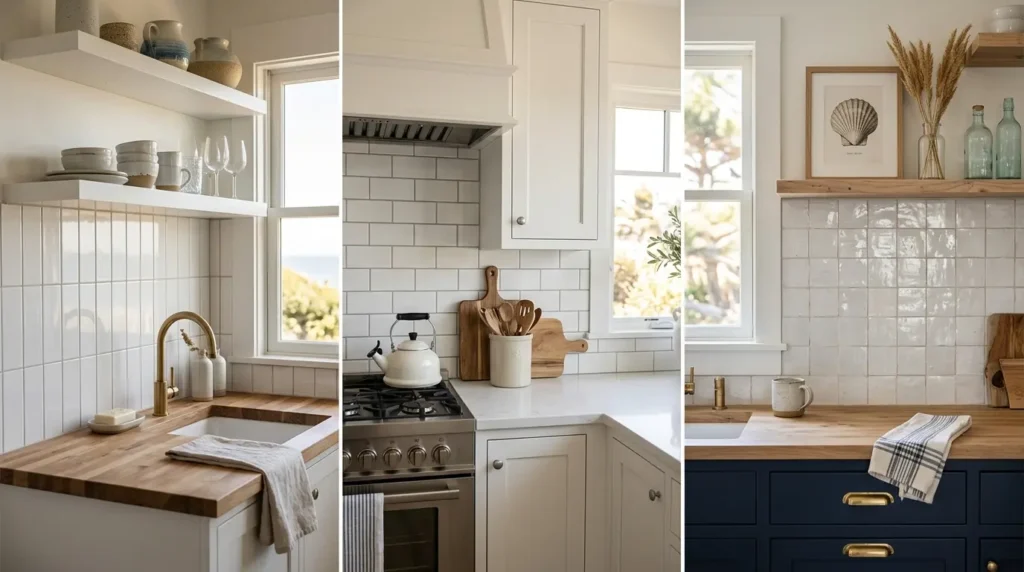
White subway tile in vertical stack bond:
The most space-enhancing backsplash treatment for a small coastal kitchen. Vertical stack bond — tiles aligned vertically rather than in the traditional brick pattern — draws the eye upward and increases the perceived height of the kitchen. White grout rather than contrasting grout maintains the clean coastal aesthetic.
Handmade white ceramic tile:
Zellige or handmade ceramic tiles in white or pale grey have a subtle surface variation from the hand-making process that creates a living quality that machine-made tiles cannot produce. The slight irregularity in the glaze surface catches light differently across the backsplash at different times of day — creating the animated wall surface that suits a coastal kitchen beautifully.
Pale blue or sea green tile accent:
A section of pale blue, sea glass green, or aqua tile as a backsplash accent behind the hob or as a single wall tile section creates the coastal color reference in the hardest-wearing surface of the kitchen. Keep the accent tile restricted to one defined zone — the coastal color accent principle applies to tiles as much as to textiles.
Lighting for a Small Coastal Kitchen
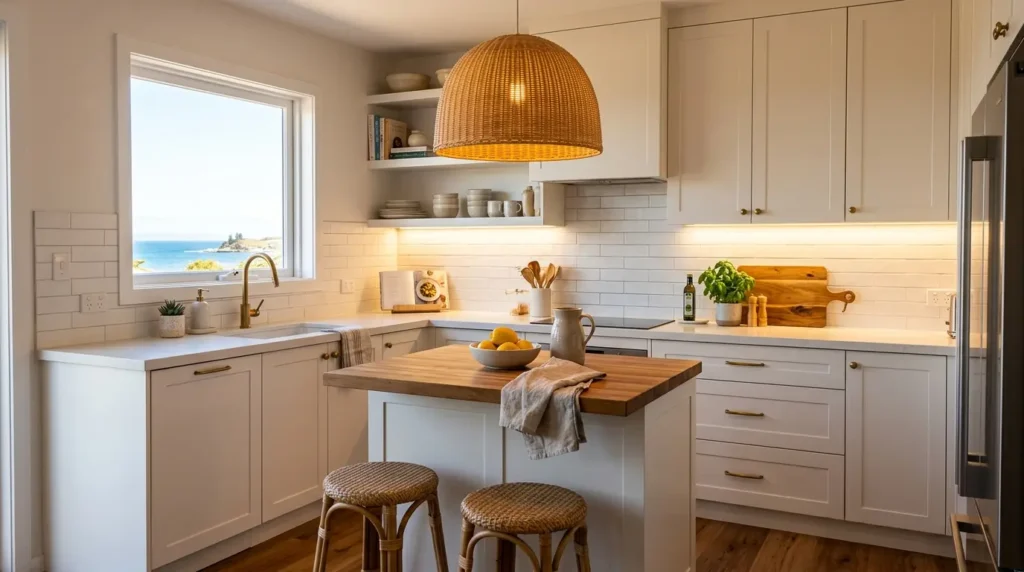
A small coastal kitchen needs three light layers: natural light from an unobstructed window as the primary source, task lighting under the upper cabinets for the work surface, and a decorative pendant light as the design anchor.
A rattan dome pendant above a small kitchen table or island is the coastal kitchen light fixture that does the most design work in one installation. The warm amber light through the woven rattan creates the specific dappled coastal light quality that no other fixture produces. Position the pendant at 70 to 75cm above the table surface for the correct hanging height — low enough for intimate task illumination, high enough to see across the table.
Under-cabinet LED strip lighting in a warm white temperature (2700K to 3000K) illuminates the countertop work surface and creates the ambient glow at counter level that makes a small kitchen feel significantly more spacious after dark. Avoid cool white LED strips which create a harsh quality that contradicts the coastal warmth the rest of the kitchen creates.
Small Space Specific Decisions That Make a Big Difference
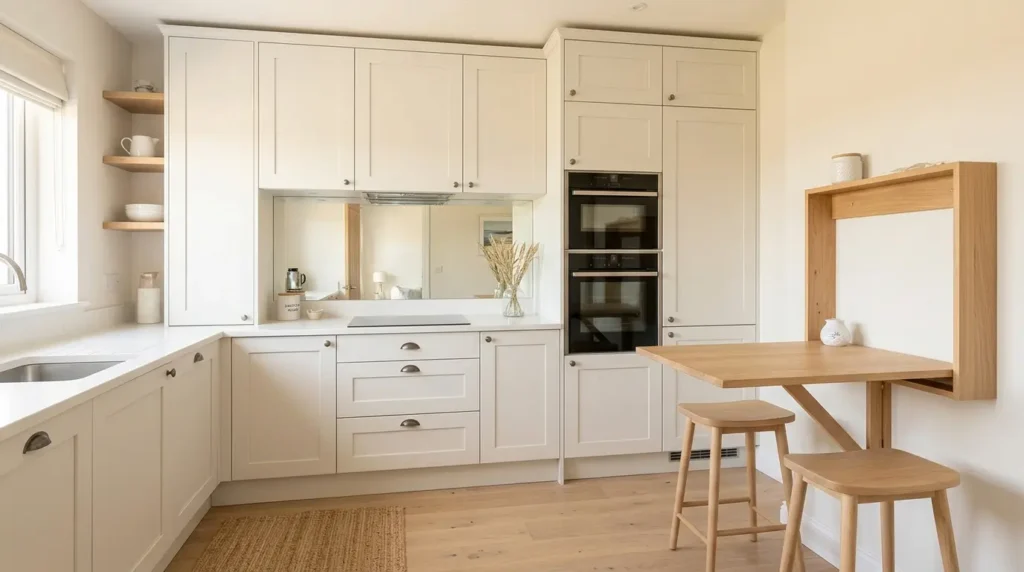
Take cabinets to ceiling height
The gap between the top of standard upper cabinets and the ceiling is the most space-wasting element in any small kitchen. Ceiling-height cabinetry eliminates the visual interruption, provides additional storage, and draws the eye upward to increase the perceived height of the room. In a small coastal kitchen ceiling-height white cabinets create the tall clean wall surface that makes the kitchen feel genuinely generous.
Integrate appliances behind cabinet faces
Integrated appliances — fridge, dishwasher, and oven behind matching cabinet door faces — eliminate the visual interruption of appliance surfaces in different colors and finishes. In a small coastal kitchen the visual continuity of an integrated appliance line makes the kitchen feel significantly more cohesive and more spacious than the same kitchen with freestanding appliances.
Add a mirrored or glass splashback section
A mirror or clear glass panel behind the hob or in a tight corner reflects light and the kitchen view and creates the perception of greater depth. In a small coastal kitchen a mirror splashback panel makes the narrow kitchen feel significantly wider by creating the illusion of a second kitchen behind the glass surface.
Use a fold-down breakfast bar
A wall-mounted fold-down breakfast bar provides occasional seating and a secondary work surface without occupying permanent floor space when not in use. In a small coastal kitchen the fold-down bar is the space-efficient alternative to a fixed island or table that would compromise the circulation clearance the kitchen requires.
📌 More home decor ideas: How To Decorate a Coastal Living Room on a Budget
Frequently Asked Questions
What color cabinets are best for a small coastal kitchen?
White or warm white cabinets are the best choice for a small coastal kitchen because they reflect the maximum amount of natural and artificial light — making the kitchen feel significantly larger and airier than any other cabinet color. The two-tone approach of white upper cabinets and navy or sage green lower cabinets is the most popular small coastal kitchen combination because it introduces the coastal color palette while keeping the upper half of the room as light as possible. According to House Beautiful white remains the most specified cabinet color for small kitchens across all design styles because its light-reflective quality has no equal in creating the perception of space.
What makes a kitchen look coastal?
A kitchen looks coastal through four specific design elements: a palette of white, sand, and natural neutrals with one coastal accent color in navy or sea glass green. Natural materials including timber countertops or shelving, rattan lighting, and ceramic or stone surfaces. Maximum natural light through unobstructed windows and light-reflective surfaces. And restraint in decoration — fewer objects of higher quality in the natural coastal palette rather than an abundance of nautical themed objects.
How do you make a small kitchen feel bigger with coastal design?
The most effective ways to make a small coastal kitchen feel bigger are: take cabinets to ceiling height to eliminate the top gap, replace some upper cabinets with open floating shelves to create visual depth, use a vertical tile pattern on the backsplash to draw the eye upward, install a mirror or glass splashback panel to reflect depth, and keep all surfaces in a light coastal palette that maximizes light reflection. Each change individually improves the sense of space. Applied together they produce a genuinely dramatic effect on how large the kitchen feels.
What countertop works best in a small coastal kitchen?
White marble-effect quartz is the most practical and most light-reflective countertop for a small coastal kitchen. It requires no sealing, handles kitchen use without staining, and its white surface reflects light at counter level in a way that darker countertops cannot. Butcher block timber countertops are the warmer and more characterful alternative that suits the natural material coastal aesthetic particularly well when paired with navy or sage green cabinets — the warm timber against the cool painted cabinet creates the highest contrast and most beautiful small coastal kitchen result.
More Home Decor Ideas
→ 10 Modern Coastal Living Room Ideas
→ Farmhouse Kitchen Island Features Worth Adding
→ How To Decorate a Farmhouse Laundry Room
Start with the cabinet color — every other decision in the kitchen follows from that one choice. Get the white right, the rest of the small coastal kitchen falls into place.

Sheikh Hassaan is a digital architect for small businesses and the founder of The Glow Up System. He writes about home decor, garden design, and outdoor living for real American homes – practical ideas that work in actual spaces without oversized budgets.