
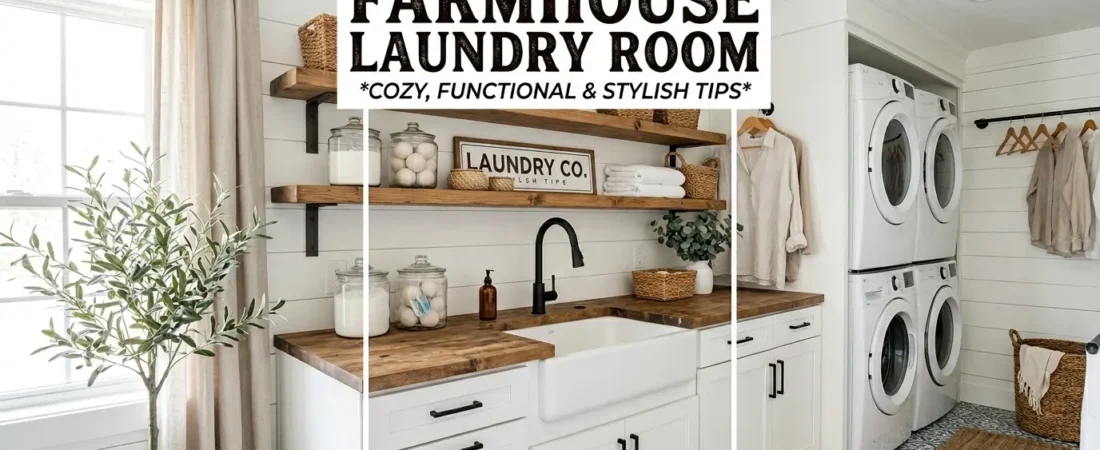
A farmhouse laundry room turns the most utilitarian space in the house into one of its most charming. The farmhouse aesthetic is particularly well-suited to laundry rooms because its core elements — open shelving, natural textures, vintage-inspired fixtures, and hand-lettered signage — are both practical and beautiful simultaneously. A farmhouse laundry room does not hide its function. It celebrates it.
This guide covers the complete farmhouse laundry room transformation — from the wall color and cabinet treatment that establish the aesthetic to the small finishing details that make the room feel genuinely designed rather than simply decorated. Every element addresses both function and visual character.
Table of Contents
What the Farmhouse Laundry Room Aesthetic Actually Means
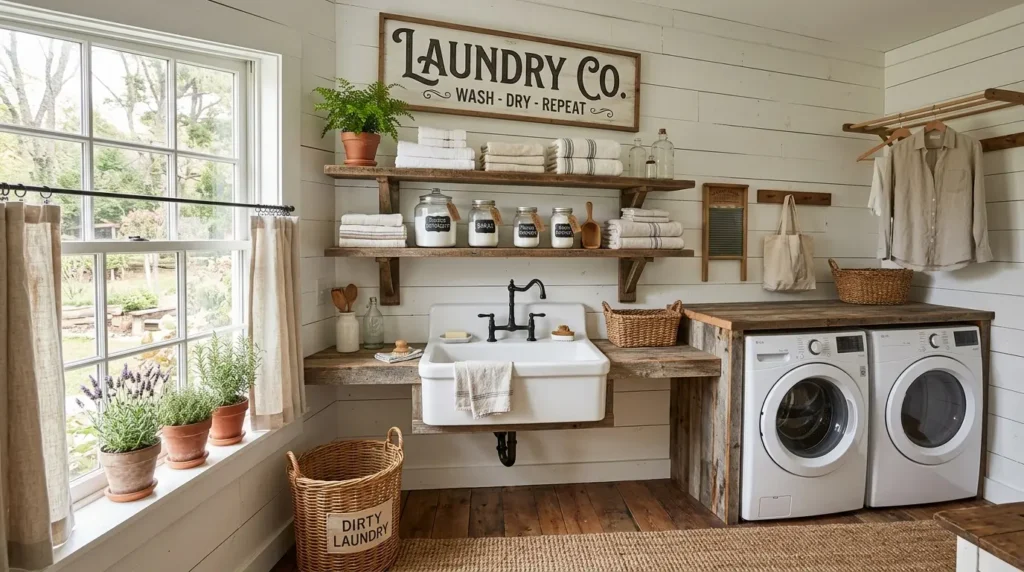
The farmhouse aesthetic in a laundry room rests on four visual principles that distinguish it from other design styles. First: exposed rather than concealed storage — open shelving with neatly arranged supplies is preferred over closed cabinets that hide everything. Second: natural materials — timber, wicker, linen, and aged metal create warmth that synthetic materials cannot. Third: hand-crafted quality — hand-lettered signs, hand-thrown ceramic vessels, and woven baskets communicate human making time that machine-manufactured alternatives lack. Fourth: purposeful imperfection — the farmhouse aesthetic embraces the slightly uneven shelf, the aged finish, and the worn timber that more polished styles avoid.
The laundry room is an ideal space for this aesthetic because its function provides the authentic context that makes farmhouse design convincing. A farmhouse kitchen in a penthouse apartment requires some imaginative suspension of disbelief. A farmhouse laundry room in any home makes complete contextual sense — the practical nature of the space perfectly suits a practical aesthetic.
Walls and Floors: The Foundation of the Farmhouse Look
Wall Treatment
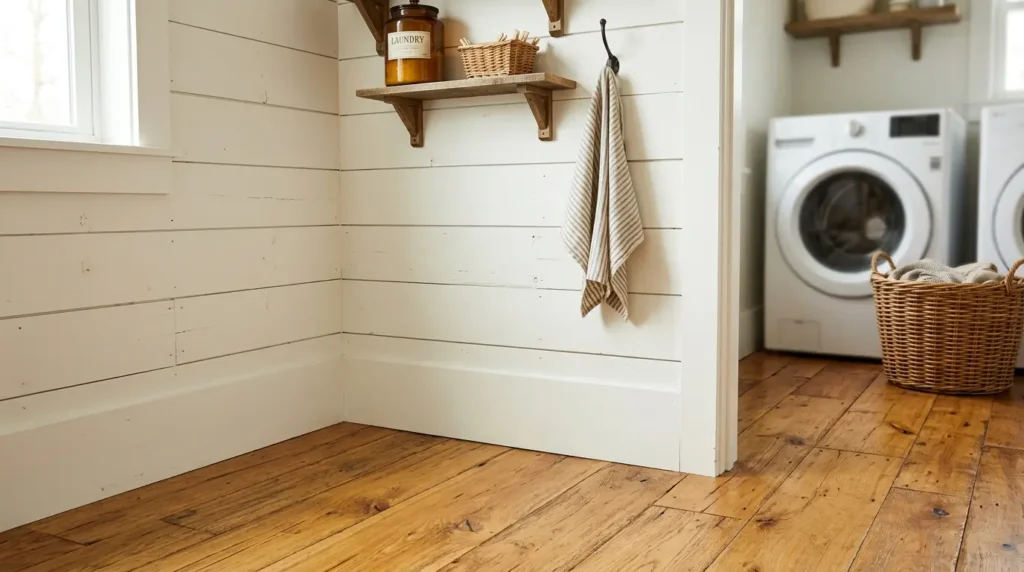
Shiplap paneling
The signature farmhouse wall treatment. Real shiplap uses overlapping horizontal boards. Shiplap-effect boards available from lumber yards achieve the identical visual result at lower cost and easier installation. Paint in warm white — Benjamin Moore White Dove or Sherwin-Williams Alabaster are the two most recommended farmhouse white tones — for the classic farmhouse look. Soft sage green or warm grey are the contemporary farmhouse alternatives that feel less expected.
Beadboard paneling
Vertical groove paneling installed as wainscoting on the lower half of the wall with smooth painted plaster above. The half-and-half treatment suits smaller laundry rooms where full-height shiplap can feel heavy. Paint the beadboard in the same white tone as the upper wall for a seamless look, or in a contrasting color for the two-tone effect that defines modern farmhouse design.
Simple painted walls
If paneling installation is not possible the farmhouse aesthetic is achieved entirely through accessories and color. A warm white or soft sage paint color on smooth walls with well-chosen open shelving, vintage fixtures, and hand-lettered signage creates a convincing farmhouse laundry room without any structural wall treatment.
Floor Treatment
Farmhouse laundry room floors use three materials that suit the aesthetic: plank-style luxury vinyl tile in a wood-effect finish for practical water resistance with the visual warmth of timber. Large format ceramic tile in a warm white or light grey for the clean practical farmhouse floor. Or original or reclaimed timber boards sealed with exterior-grade polyurethane for authenticity in older homes where original boards exist.
A small washable rug in front of the machines in a stripe, check, or grain sack pattern adds textile warmth to any floor surface and introduces the pattern element that makes the floor level feel finished rather than functional-only.
Storage: Open Shelving Done the Farmhouse Way
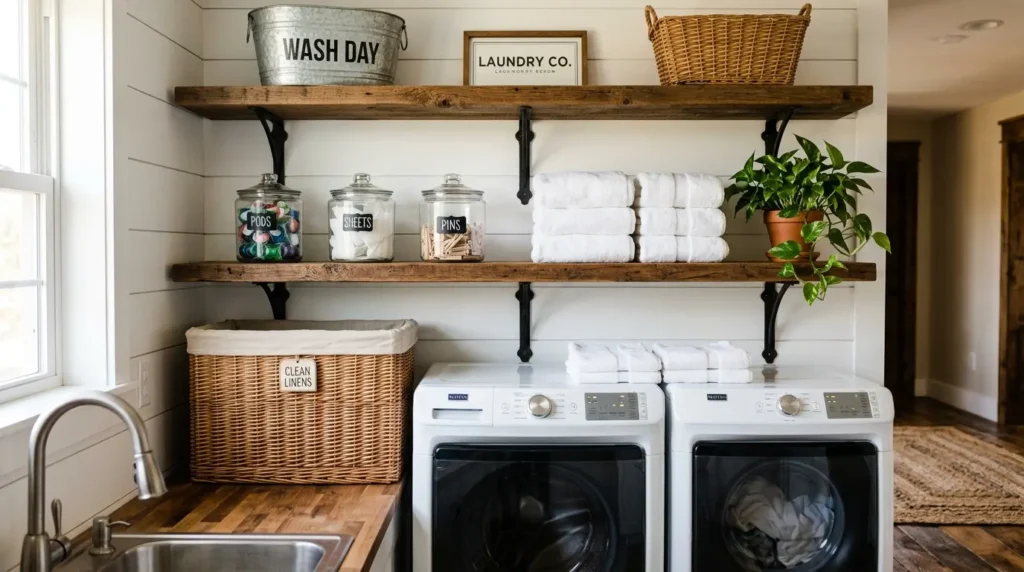
Open shelving is the most important single element of the farmhouse laundry room because it simultaneously provides storage and creates the visual display that gives the room its character. The difference between a farmhouse laundry room and an ordinary one is largely the difference between open shelves styled with intention and closed cabinets that reveal nothing.
Shelf Construction and Mounting
Reclaimed timber shelf boards on black iron pipe brackets are the defining farmhouse storage element. The contrast between warm aged wood and matte black iron is the visual signature of the style. The boards should be a minimum of 10 inches deep for practical storage capacity and 1.5 to 2 inches thick for the substantial look that thin shelves cannot achieve.
Install shelves above the washer and dryer at 18 inches clearance above the machine top — enough to remove laundry baskets without obstruction. A second shelf 12 inches above the first creates the two-level storage that accommodates both tall bottles and smaller items without wasting wall height.
How to Style Open Laundry Shelves
The farmhouse shelf styling formula: decant all laundry products from their original commercial packaging into glass jars and ceramic vessels. A glass jar of detergent pods, a ceramic dispenser of liquid detergent, and a small glass bowl of dryer sheets immediately transform the functional shelf into a styled display. Commercial packaging in its original form is the single element most at odds with the farmhouse aesthetic — decanting eliminates it entirely.
Add neatly folded white or cream hand towels at one end of the shelf. Add a small potted plant — a trailing pothos or a compact succulent — for living color. Add one hand-lettered label on each jar or vessel identifying its contents. The combination of practical items styled with intention creates the farmhouse shelf that looks beautiful in photographs and functions perfectly in daily use.
Wicker and rattan baskets on the lower shelf hold items that are less visually appealing in glass — dryer balls, cleaning cloths, spare pegs — while maintaining the natural material quality of the farmhouse aesthetic.
Fixtures and Fittings: The Details That Define the Style
Sink
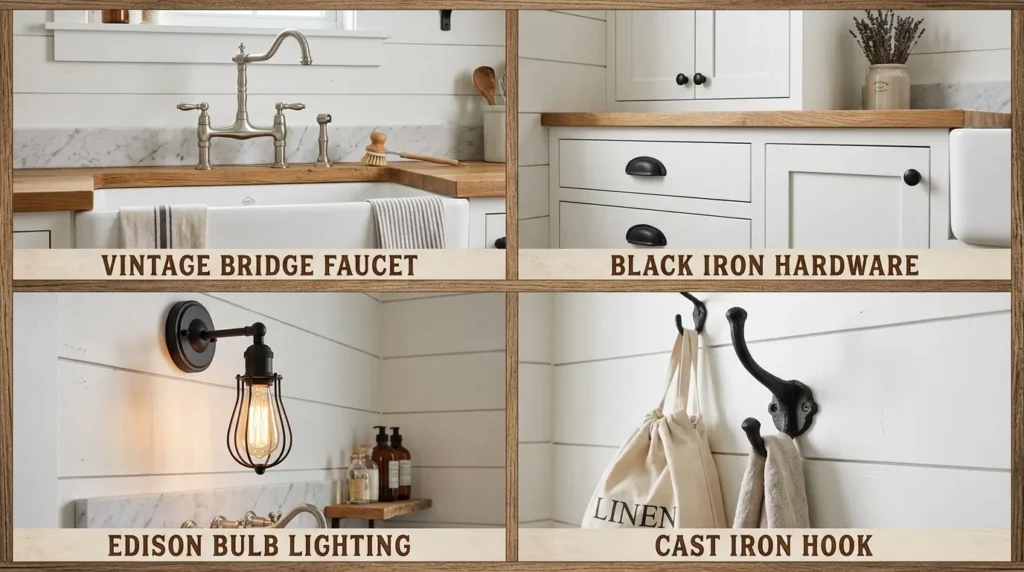
The apron-front farmhouse sink is the signature plumbing fixture of the style. The deep exposed front panel — traditionally white ceramic — creates the utilitarian farmhouse aesthetic that a standard undermount or drop-in sink cannot. If a full apron-front sink replacement is not in the budget a vintage-style bridge faucet in brushed nickel or matte black upgrades any standard sink toward the farmhouse aesthetic at a fraction of the cost.
Hardware and Fittings
Matte black is the hardware finish that most strongly communicates the farmhouse aesthetic in a laundry room. Matte black cabinet pulls, door hooks, curtain rod brackets, and shelf brackets create a consistent metal tone throughout the space. The matte rather than polished finish is the specific quality — polished chrome and brushed nickel suit contemporary and traditional styles. Matte black suits farmhouse and industrial-farmhouse aesthetics exclusively.
Lighting
An exposed Edison bulb pendant or cage-style pendant in matte black replaces the recessed or fluorescent overhead lighting of a standard laundry room and immediately establishes the industrial-farmhouse character. A single pendant above the sink or work surface creates both task lighting and design character. If ceiling pendant installation is not possible a wall-mounted sconce with an Edison bulb on each side of any mirror or above the sink creates the same vintage lighting quality.
Decorative Elements: The Character Details
Signage
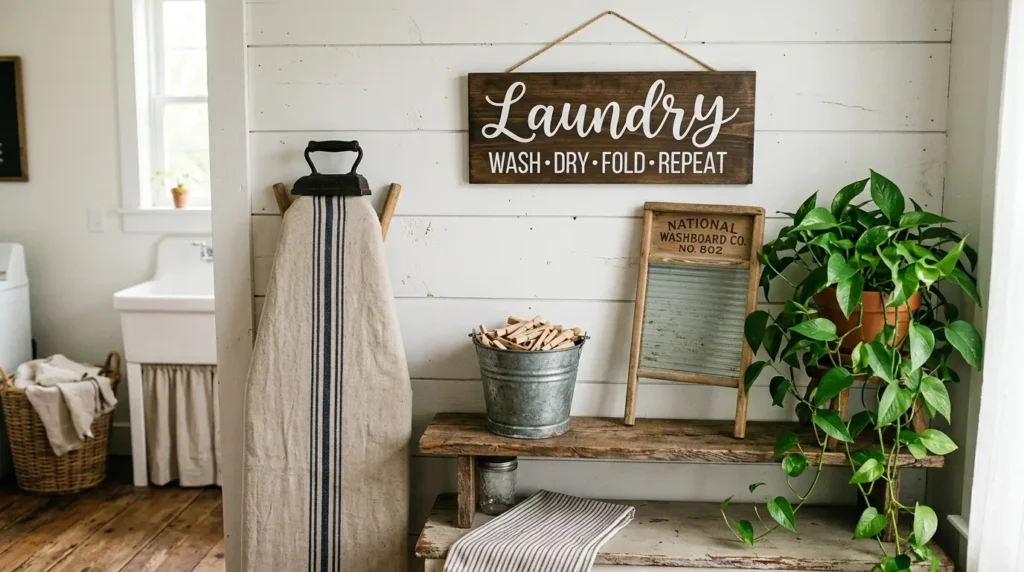
Hand-lettered laundry room signs are the most consistent decorative element in farmhouse laundry rooms because they combine function (labeling the space) with character (the handcrafted quality of lettering on timber or metal). Classic laundry room sign texts: ‘Wash. Dry. Fold. Repeat.’ ‘Laundry Room’ with a vintage font on a shiplap-effect timber board. ‘Drop Off. Pick Up.’ on a chalkboard frame. The sign should suit the wall treatment — a timber sign suits a shiplap wall, a chalkboard sign suits a painted plaster wall.
Vintage and Repurposed Objects
Farmhouse laundry room character comes from objects that reference the history of laundry as domestic work. A vintage washboard leaned against the wall beside the sink. A galvanized metal bucket or enamel basin used as a storage vessel for wooden pegs. An antique iron used as a doorstop or shelf decoration. A wire egg basket repurposed as a peg holder. These objects are authentic to the farmhouse aesthetic because they were genuinely used in farmhouse laundry practice — their decorative presence in a modern laundry room is contextually correct rather than nostalgic affectation.
Plants
A single plant in a farmhouse laundry room has a disproportionate impact on the warmth of the space because laundry rooms are typically windowless or low-light environments where living green is unexpected. Trailing pothos is the most practical choice — it tolerates low light, handles the humidity of a laundry room environment, and trails beautifully from shelf edges. A small Spider Plant provides similar low-maintenance performance with the bonus of air-purifying properties in an enclosed space.
The Farmhouse Laundry Room in a Small Space or Closet
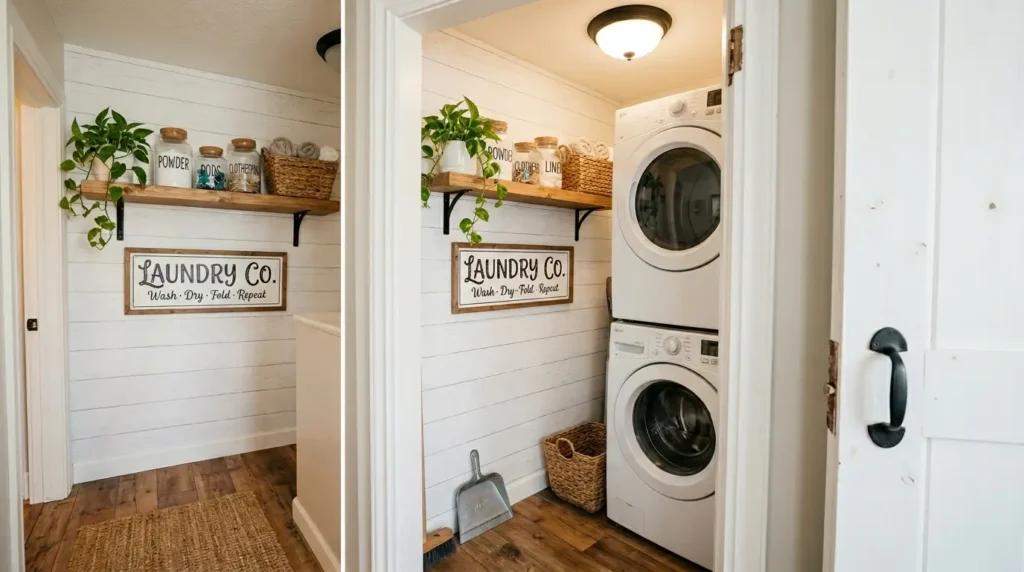
A farmhouse laundry closet or compact stacked-machine space applies the same principles at a smaller scale. The most impactful changes in a small laundry space are: shiplap-effect wallpaper on the back wall of the closet (no installation required — peel-and-stick shiplap wallpaper achieves the identical visual result). One floating shelf above the machines for styled storage. Matte black hardware on the door and any cabinet. One small sign. One small plant.
A compact laundry space that receives genuine styling attention looks more considered and more intentional than a large laundry room that is treated as purely functional. The farmhouse aesthetic rewards small spaces particularly well because its defining elements — handcrafted objects, natural materials, warm whites — create warmth through quality rather than scale.
📌 More home decor ideas: 10 Cozy Christmas Living Room Ideas
Frequently Asked Questions
What makes a laundry room look farmhouse?
The four elements that most immediately create a farmhouse laundry room aesthetic are: open timber shelving on black iron brackets with styled glass jar storage, shiplap or beadboard wall paneling in warm white, matte black hardware throughout, and a hand-lettered laundry sign. According to House Beautiful the farmhouse laundry room trend consistently centers on the combination of natural materials, open storage, and vintage-inspired fixtures that make the practical space feel genuinely designed. Any one of these four elements begins the farmhouse transformation — all four together create a complete and cohesive result.
What color should I paint a farmhouse laundry room?
Warm white is the classic farmhouse laundry room color — Benjamin Moore White Dove and Sherwin-Williams Alabaster are the two most recommended specific tones because their warm undertones work with natural timber and aged metal better than pure cool whites. Soft sage green is the contemporary farmhouse alternative that creates a calmer more subdued atmosphere. Soft warm grey suits industrial-farmhouse aesthetics. Whatever color is chosen it should have a warm undertone — blue-grey and cool white tones read as contemporary rather than farmhouse.
How do I organize a farmhouse laundry room?
Farmhouse laundry room organization prioritizes visible open storage over concealed closed storage. Decant all laundry products from commercial packaging into glass jars and ceramic dispensers labeled with hand-lettered tags. Store clean folded laundry in wicker baskets on open shelves. Keep dirty laundry in canvas or wicker hampers rather than plastic bins. Hang a wooden peg rail for hanging items to dry and for storing reusable bags. The organization system should look as good as it functions — everything visible should be worth looking at.
How do I decorate a small farmhouse laundry room?
Small farmhouse laundry rooms benefit most from peel-and-stick shiplap wallpaper on the back wall, one floating shelf above the machines, matte black hardware on any doors or cabinets, and one hand-lettered sign. These four changes cost under $100 combined and create a complete farmhouse aesthetic in a closet-sized space. Keep the color palette simple — warm white walls, natural timber shelf, black hardware — and the small space reads as deliberately styled rather than cramped.
A Farmhouse Laundry Room Makes the Most Overlooked Room Worth Noticing
The laundry room is the most visited and least considered room in most homes. It is used multiple times a week by every member of the household and almost never styled with the same intention given to kitchens, living rooms, and bedrooms. The farmhouse aesthetic is particularly rewarding in this space precisely because the expectation is so low — the contrast between what a laundry room usually looks like and what it looks like with shiplap walls, open styled shelving, and vintage fixtures creates a genuine surprise.
Start with the open shelving and the decanted storage jars. These two changes alone transform the visual quality of any laundry room and cost under $50. Add the wall treatment, the matte black hardware, and the vintage decorative objects over time. The room improves with every addition.
All the products mentioned in this article are linked on Amazon. Every recommendation is something we genuinely believe in.
More Home Decor Ideas
→ 7 Eye-Catching Backyard Ideas Full Of Color
→ 12 Front Porch Ideas That Instantly Wow
→ How To Make Fake Christmas Porch Candle Decorations
The room improves with every addition.

Sheikh Hassaan is a digital architect for small businesses and the founder of The Glow Up System. He writes about home decor, garden design, and outdoor living for real American homes – practical ideas that work in actual spaces without oversized budgets.