

Decorating a coastal living room on a budget starts with understanding what the aesthetic actually requires, white walls, natural linen, a jute rug, and maximum light. Every one of these building blocks is affordable. Here is how to do it right. The coastal look requires fewer objects, simpler surfaces, and a more edited palette than most other interior styles — which means the budget goes further because you are buying less, not compromising on quality. The challenge is knowing which specific changes create the coastal atmosphere and which are unnecessary purchases that dilute rather than strengthen the look.
This guide covers the complete coastal living room transformation organized by impact and cost — starting with the free changes that produce the most immediate results and moving through the low-cost purchases that complete the look. Every recommendation includes a realistic cost estimate.
Table of Contents
What Coastal Living Room Decor Actually Means
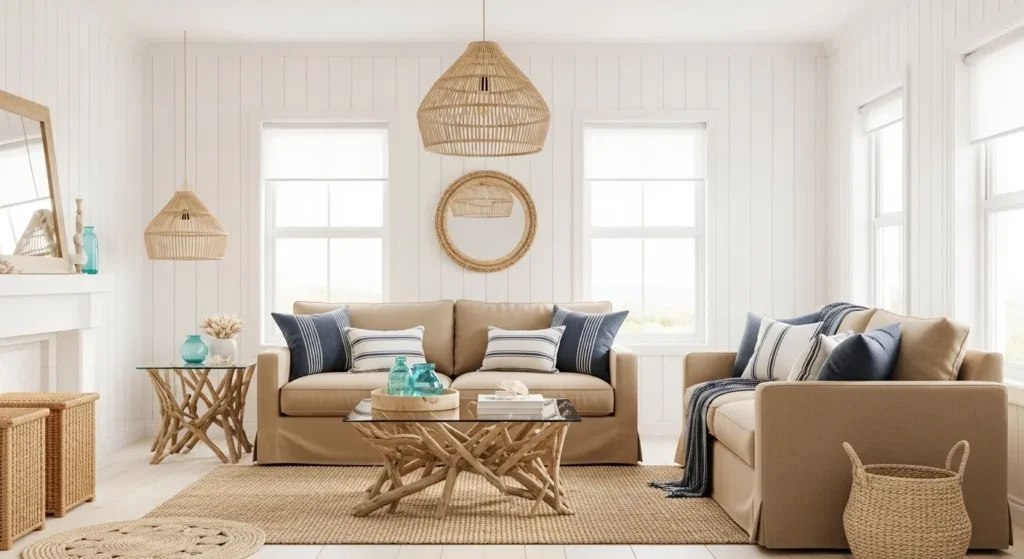
Coastal living room decor is frequently misunderstood as a beach-themed style full of anchors, novelty shells, and nautical rope. This is the tourist-shop version of coastal decor. The genuine coastal living room aesthetic is about light, natural materials, a restricted palette of whites, sandy neutrals, and ocean blues, and the specific quality of air and space that a room feels when it references the coast rather than decorates itself with coastal objects.
The three principles that define genuinely coastal living room decor: maximum natural light — coastal rooms are flooded with the bright diffuse light of proximity to water. Natural materials — linen, cotton, jute, rattan, driftwood, and sea glass all reference the natural material palette of the coastline. A restricted color palette — white, sand, warm grey, and one or two accent blues or greens create the specific color quality of coastal light without requiring any literal coastal objects.
The budget advantage of this aesthetic: because the coastal look is built on restraint, empty space, natural light, and simple materials rather than abundant decoration, the budget transformation focuses on removing things and replacing them with simpler alternatives rather than adding more. Less is genuinely more in a coastal living room.
Start Here: The Free Changes That Make the Biggest Difference
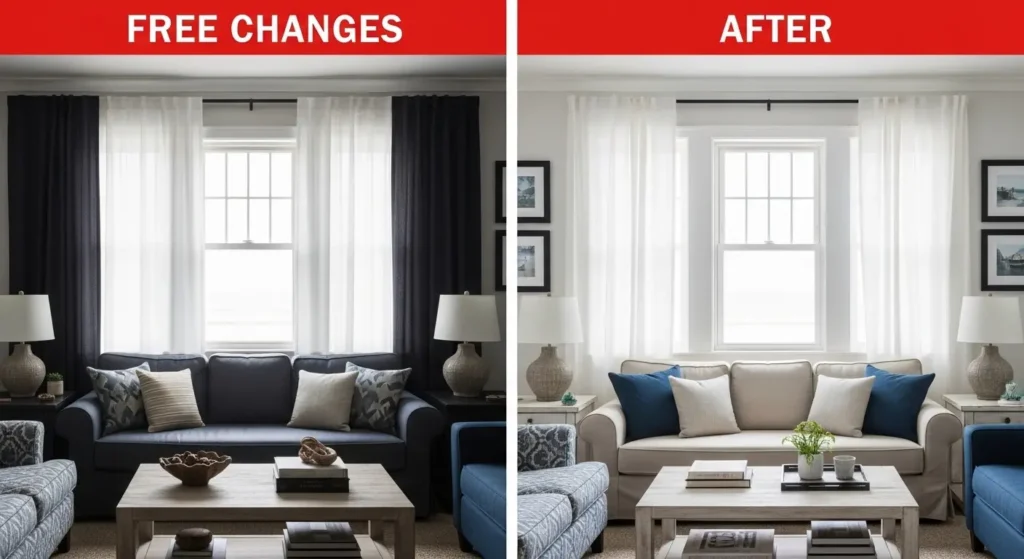
Maximize Natural Light — Free
Remove or pull back heavy curtains and replace them with nothing or with sheer white panels. The single most impactful free change in any living room coastal transformation is allowing maximum natural light into the space. Heavy curtains that block light are the most anti-coastal element in any room regardless of what else is decorated around them. If the windows need covering for privacy use sheer white or cream linen panels that diffuse light without blocking it.
Edit the Room Ruthlessly — Free
Remove every object from every surface and shelf. Put them all in a box. Now only return items that are natural materials (wood, linen, ceramic, glass, wicker) in the coastal color palette (white, sand, grey, blue, green). Leave everything else in the box. The edited room with 30% fewer objects will feel more coastal and more spacious immediately — before any purchases are made.
Rearrange Furniture for Air and Space — Free
Move furniture away from walls rather than pushed against them. Coastal rooms feel airy because furniture floats in the space rather than lining the perimeter. Pull the sofa 18 inches from the wall. Move any occasional furniture slightly away from its current wall position. The increased air around furniture creates the open spatial quality that the coastal aesthetic requires.
Color: The Coastal Palette That Works in Any Room
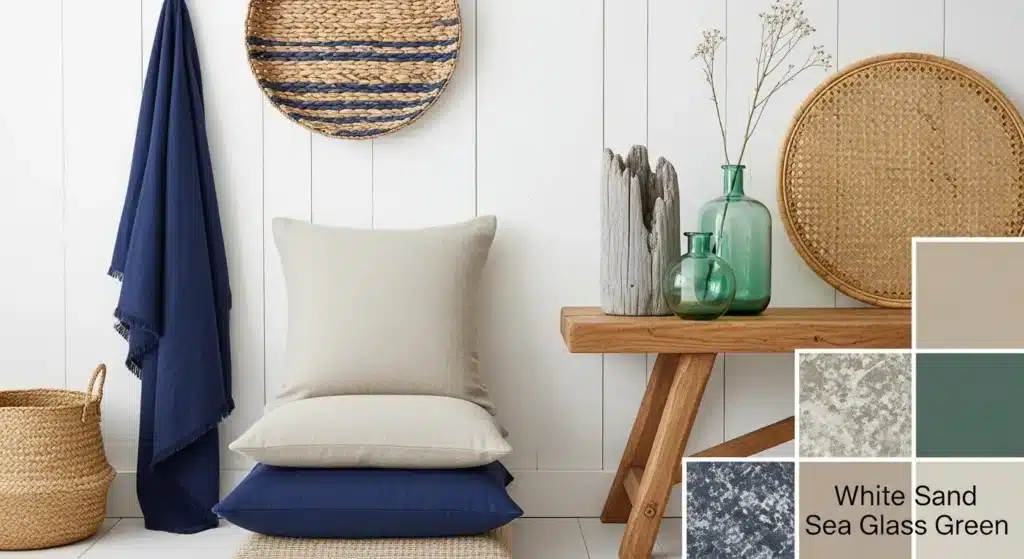
The coastal color palette has five components that work together as a complete system. Understanding all five and their proportional relationship produces a room that reads as genuinely coastal rather than simply blue and white.
White — 50% of the room:
Walls, ceiling, and large furniture pieces in white or near-white create the light-flooded base. Use a warm white rather than a cold white — Benjamin Moore Sea Salt or Sherwin-Williams Alabaster have the warm undertone that suits coastal interiors without the clinical quality of pure brilliant white.
Sand and warm neutral — 30% of the room:
Natural linen, jute rugs, rattan, and unfinished wood in sandy warm neutral tones create the beach texture layer that prevents the white base from feeling clinical. This is the material layer rather than the color layer — the sand tone comes from the natural color of the materials rather than from paint.
Driftwood grey — structural accents:
Weathered grey in furniture pieces, decorative objects, and worn timber creates the aged coastal quality that the sand and white palette alone cannot achieve. This is the tone of bleached driftwood, of weathered boardwalks, of sun-faded coastal architecture.
Navy or deep ocean blue — 10 to 15%:
Cushions, throws, a single accent wall, or decorative objects in deep navy or ocean blue provide the direct coastal color reference without dominating the palette. Use sparingly — the coastal palette fails when blue becomes the dominant color rather than the accent.
Sea glass green — optional accent:
Muted sage-green or sea glass green in one or two decorative objects references the color of shallow coastal water. This optional fifth color adds depth to the blue-and-white palette and prevents it from feeling two-dimensional.
The Budget Purchases That Complete the Coastal Look
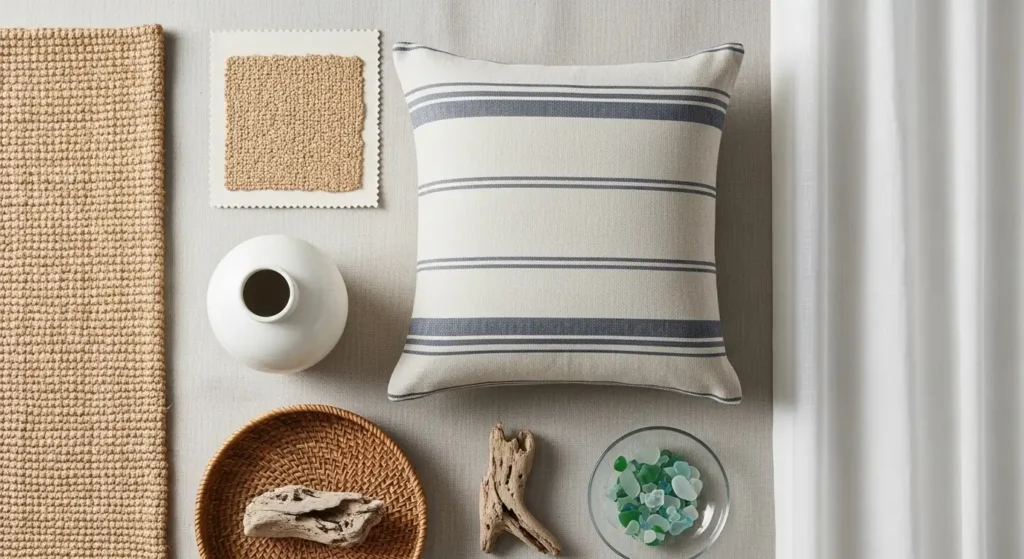
A Jute or Sisal Rug — $30 to $80
A natural fiber rug is the single most impactful budget purchase for a coastal living room because it introduces the texture, warmth, and natural material quality that defines the coastal floor level in one piece. Jute creates the warmest and most organic coastal effect. Sisal is more durable and more practical for high-traffic positions. Both suit the coastal aesthetic perfectly and both are available at accessible prices in standard living room sizes.
Linen Cushion Covers — $15 to $30
Replace existing cushion covers with natural linen covers in the coastal palette — white, sand, navy stripe, and soft blue. Cushion covers rather than complete cushions are the budget approach — the existing cushion inserts are reused with new covers at a fraction of the cost of new cushions. Three to four linen cushion covers in coordinating coastal tones transform the sofa and introduce the natural textile quality of the coastal aesthetic at minimal cost.
White Ceramic or Rattan Pendant Light — $20 to $50
Replacing a standard pendant light shade with a rattan dome pendant or a simple white ceramic pendant immediately introduces the coastal material quality to the most visible fixture in the room. Rattan pendant shades in particular are strongly associated with the coastal and tropical aesthetic — the warm amber light filtered through woven rattan creates the specific warm-tone coastal lighting quality that no standard shade produces.
Sheer White Curtain Panels — $15 to $40
Sheer white linen or cotton curtain panels replace heavy curtains and allow maximum light into the room while providing privacy when needed. The movement of sheer curtains in a light breeze from an open window creates the specific quality of airy coastal living that heavy curtains permanently prevent. Hang sheer panels as high as possible — at ceiling height if the ceiling height allows — to create the tall-windowed quality of genuine coastal architecture.
Natural Decorative Objects — $5 to $25
The decorative objects that complete a coastal living room are available free or at minimal cost. Driftwood collected from a beach or river bank becomes a sculptural shelf or coffee table object. A glass bowl of sea glass collected over time. A simple white ceramic vase with dried pampas grass or dried eucalyptus. A woven rattan tray on the coffee table as an organizing base. These objects reference the coastal material palette through their natural origins rather than through literal coastal imagery.
A Silk Pillowcase in Coastal Tones — $25 to $40
The Blissy Silk Pillowcase in a champagne or soft blue tone introduces genuine luxury textile quality to the coastal living room at an accessible price point — the smooth lustrous surface of silk reflects light in the way that coastal interiors require and adds the premium material quality that lifts the whole room above a purely budget aesthetic. Find it linked on Amazon.
Wall Treatment: The Paint Change That Transforms Everything
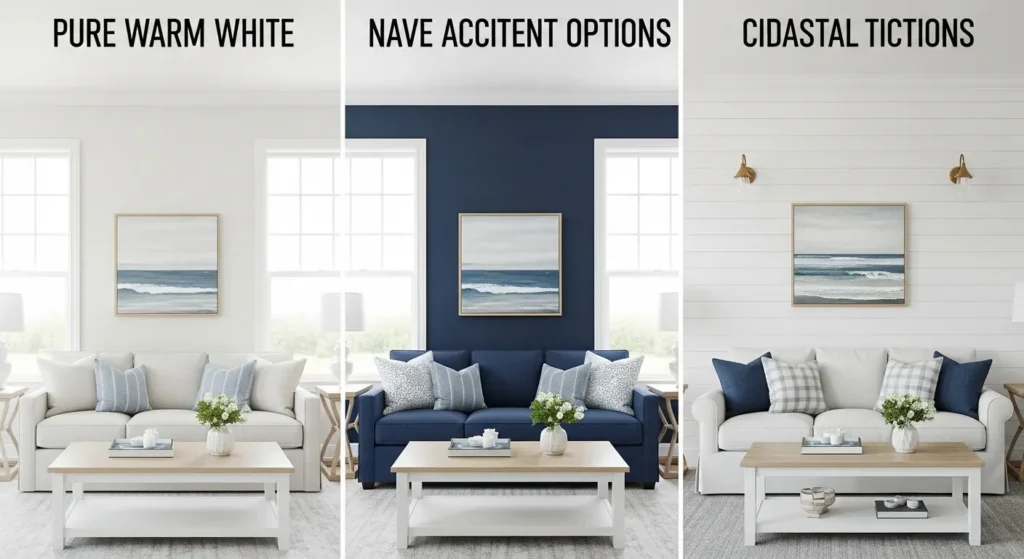
Paint is the highest-impact budget change in any room and the coastal living room is no exception. The correct paint approach for a coastal living room depends on the current wall color and the specific coastal atmosphere you want to achieve.
All walls in warm white:
The classic coastal approach. Creates maximum light reflection and the cleanest coastal atmosphere. Suits rooms with good natural light. Recommended paint tones: Farrow and Ball All White, Benjamin Moore Chantilly Lace, Dulux Timeless.
Three walls white, one accent wall in deep navy:
The navy accent wall behind the sofa creates a strong coastal color statement that references the deep ocean. The contrast between white walls and the deep navy accent creates the high-contrast coastal quality of whitewashed walls against a deep blue sea.
Shiplap effect on one wall:
Peel-and-stick shiplap wallpaper on one wall in white creates the coastal architectural texture of a New England beach house without any structural work. The horizontal board lines add depth and character to a white wall that plain paint alone cannot achieve.
What to Avoid: The Coastal Decor Mistakes That Make a Room Look Like a Gift Shop
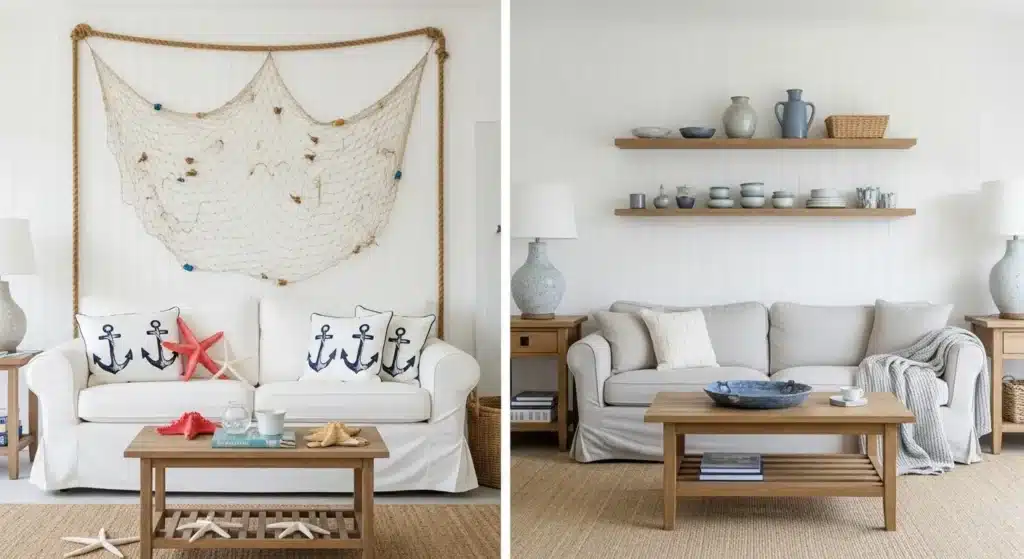
Avoid literal nautical novelty objects
Anchor motifs, novelty shells, fishing nets, ship wheels, and lighthouse ornaments are coastal themed rather than coastal in character. They reference the coast explicitly rather than referencing it through material and atmosphere. A room full of anchor cushions communicates beach holiday souvenir shop. A room with white linen, jute, and driftwood communicates coastal living. The distinction is between decoration that explains itself and decoration that simply is itself.
Avoid cool blue as the dominant color
A living room dominated by blue — walls, sofa, and cushions all in blue tones — reads as a color scheme rather than a coastal atmosphere. Blue as an accent against white and sand creates the coastal color quality. Blue as the dominant tone creates a cold overpowering room that has more in common with a corporate office than a coastal home.
Avoid synthetic materials
Polyester cushions, plastic accessories, and synthetic rugs undermine the coastal aesthetic regardless of their color because the coastal look is fundamentally about natural materials. A white polyester cushion reads differently from a white linen cushion even at the same price point — the material quality communicates authenticity or its absence immediately.
📌 More home decor ideas: 10 Cozy Christmas Living Room Ideas
Frequently Asked Questions
How do I make my living room look coastal on a budget?
The highest-impact budget coastal living room changes are: remove heavy curtains and maximize natural light (free), edit surfaces down to natural material objects only (free), add a jute or sisal rug ($30 to $80), replace cushion covers with natural linen in coastal tones ($15 to $30), and paint walls in warm white ($30 to $60 for a standard living room). These five changes together cost under $200 and produce a dramatic coastal atmosphere transformation. According to House Beautiful the coastal interior trend remains one of the most consistently popular home decorating styles precisely because its core elements — natural light, natural materials, and a restricted palette — are achievable at any budget.
What colors make a coastal living room?
The coastal living room palette uses five colors in specific proportions: warm white as the dominant base color (50% of the room), sandy neutral tones from natural materials (30%), driftwood grey as a structural accent, deep navy or ocean blue as the primary color accent (10 to 15%), and optional sea glass green as a secondary accent. The proportional relationship between these colors is as important as the colors themselves — a room where navy dominates over white reads as a nautical theme rather than a coastal atmosphere.
What furniture suits a coastal living room?
Coastal living room furniture suits the aesthetic when it is light in tone, natural in material, and simple in form. A white or natural linen slipcovered sofa. A driftwood, reclaimed timber, or woven rattan coffee table. Rattan or wicker accent chairs. A whitewashed or natural timber bookcase. Avoid dark wood furniture, heavily upholstered pieces in deep colors, and ornate furniture styles — all three work against the light airy spatial quality that defines genuine coastal interior atmosphere.
A Coastal Living Room Is Built on What You Remove as Much as What You Add
The coastal living room on a budget starts with the editing process — removing the heavy curtains, the dark accessories, the cluttered surfaces, and the synthetic materials that prevent the coastal atmosphere from emerging. What remains after the edit is often closer to a coastal living room than you might expect. The budget purchases complete what the editing reveals.
Start this weekend with the free changes. Empty the surfaces, maximize the light, move the furniture away from the walls. The coastal living room you want is already partly there — it just needs the things that are preventing it from showing.
All the products mentioned in this article are linked on Amazon. Every recommendation is something we genuinely believe in.
More Home Decor Ideas
→ How To Decorate a Farmhouse Laundry Room
→ Farmhouse Kitchen Island Features Worth Adding
→ Antique Garden Decor Ideas: How To Use Vintage Pieces in Your Garden
The coastal living room you want is already partly there — it just needs the things that are preventing it from showing.

Sheikh Hassaan is a digital architect for small businesses and the founder of The Glow Up System. He writes about home decor, garden design, and outdoor living for real American homes – practical ideas that work in actual spaces without oversized budgets.