
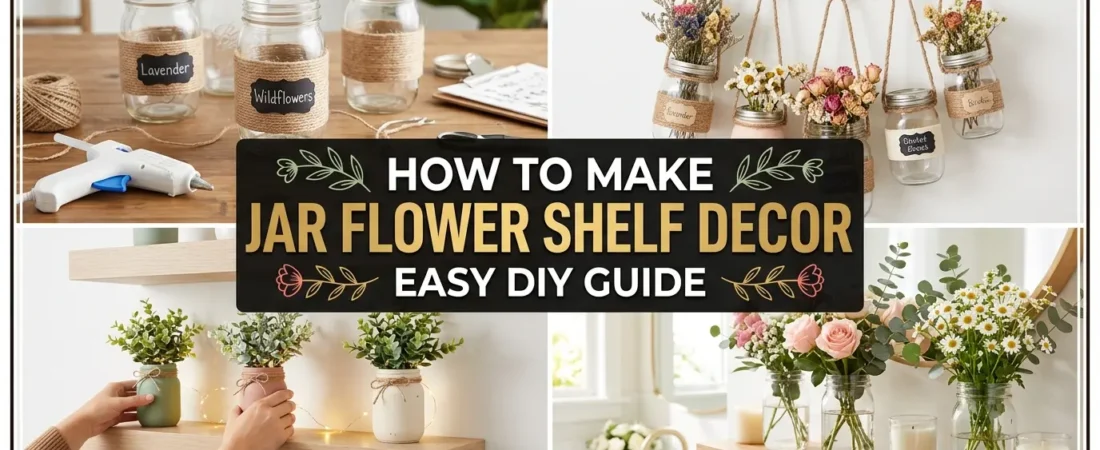
Making shelf decor from jars and flowers is one of the most rewarding home crafts because the materials are free or nearly free and the result looks like something from a boutique interiors shop. Jar flower shelf decor uses glass jars — mason jars, upcycled food jars, or vintage bottles — as vases, plant holders, and decorative vessels arranged on a shelf with dried or fresh flowers and botanical elements to create a complete styled display.
This guide covers five distinct jar flower shelf decor approaches — from a simple three-jar fresh flower arrangement to a complete wall-mounted jar botanical shelf — with the specific jar preparation, flower choices, and styling rules that produce genuinely beautiful results rather than craft projects that look handmade in the wrong way.
Table of Contents
Jars, Bottles, and Vessels: What Works and Why
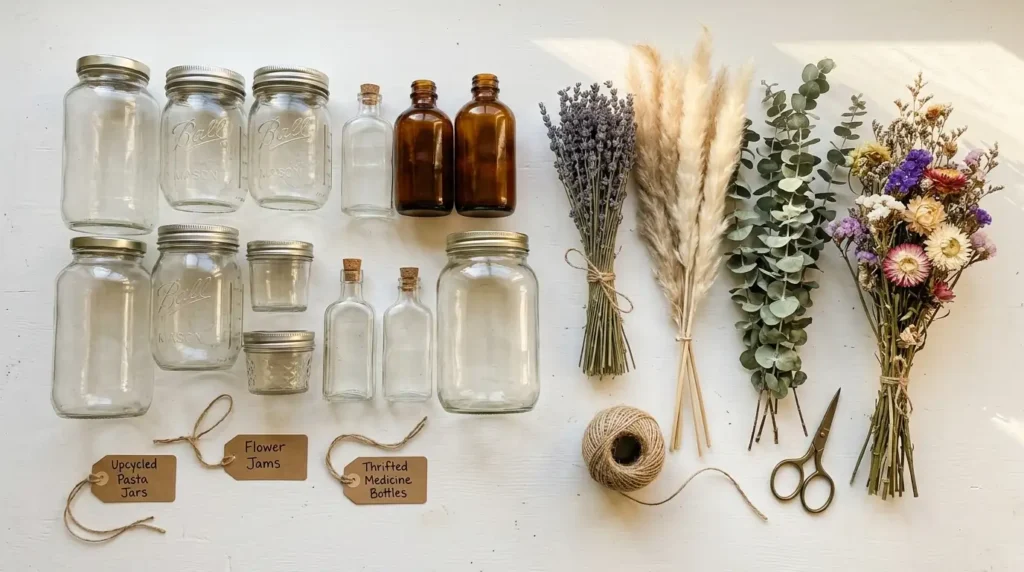
The Best Jars for Shelf Flower Decor
Clear glass jars — the most versatile:
Standard glass food jars in varied sizes create the most cohesive shelf display when used in a group. Pasta sauce jars at 4 to 5 inches tall, jam jars at 3 inches tall, and pickle jars at 6 inches tall provide the height variation that makes a shelf arrangement visually interesting. Remove labels completely and wash in hot soapy water — any remaining label adhesive removes cleanly with cooking oil rubbed on and left for 5 minutes.
Amber and green glass bottles:
Vintage-style amber medicine bottles and green wine bottles create the most beautiful light effects on a sunny shelf — the colored glass refracts light into warm amber and green pools on the shelf surface. A single stem of dried grass or one flower in a narrow-necked amber bottle is one of the simplest and most effective shelf decor arrangements available.
Mason jars:
Mason jars in regular and wide-mouth varieties are the most recognizable jar decor vessel and suit farmhouse, cottage, and boho shelf aesthetics particularly well. The wide mouth accommodates fuller flower arrangements than narrow-necked bottles. Use without decoration for the cleanest look or wrapped in twine, lace, or fabric for additional texture.
Flower and Botanical Choices for Jar Shelf Decor
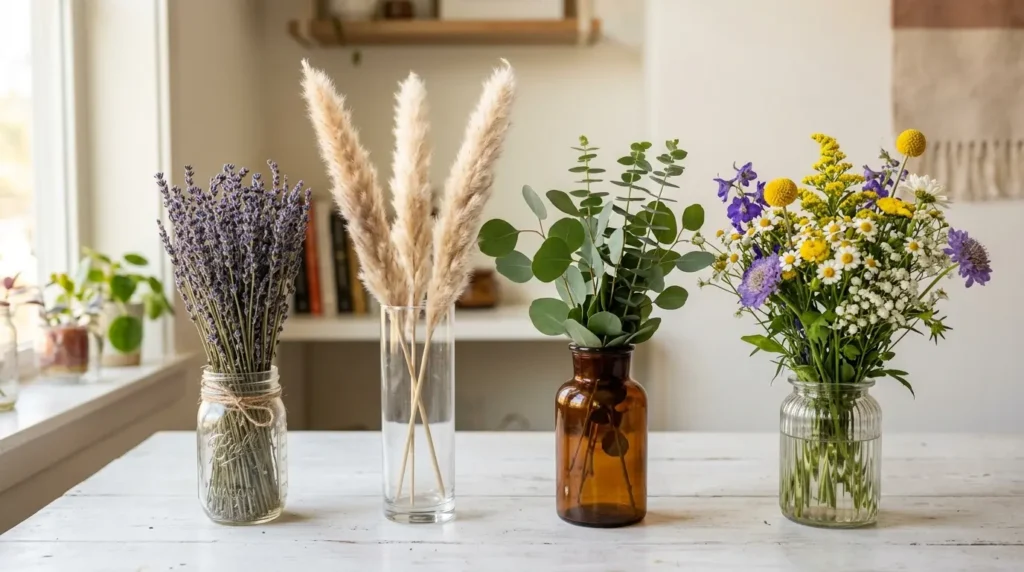
Dried Botanicals — the Low-Maintenance Choice
Dried botanicals are the best choice for permanent shelf decor because they last months to years without any maintenance, change minimally with seasons, and photograph beautifully in the warm neutral tones that suit most home interiors.
Dried pampas grass:
The most popular dried botanical for jar shelf decor. The feathery plumes in warm cream and buff tones suit every interior style from boho to contemporary coastal. One large pampas stem in a tall clear jar is a complete shelf decor statement on its own.
Dried lavender:
A bundle of dried lavender in a mason jar or clear glass jar adds both visual and fragrant quality to a shelf — dried lavender retains its scent for 6 to 12 months and releases fragrance gently when disturbed. The purple-grey tone suits cottage, farmhouse, and Provence-inspired shelf aesthetics.
Dried eucalyptus:
Dried eucalyptus branches in silver-dollar or seeded varieties create the most versatile dried botanical for shelf decor — the grey-green tone suits warm and cool palettes equally, the branching form adds natural structure, and the dried stems maintain their shape without support in any jar.
Dried wildflower bunches:
Mixed dried wildflower bunches in warm cream, dusty pink, and golden tones create the most abundant and most cottage-style shelf display. Available dried from florists and craft stores or made by drying fresh wildflowers hanging upside down for two to three weeks.
Fresh Flowers — the Seasonal Choice
Fresh flowers in jars create the most beautiful and most changing shelf displays but require weekly replacement. The jar format suits simple single-stem or small bunch arrangements rather than elaborate florist arrangements — the charm of jar flower decor is its casual quality rather than its complexity. Garden-cut stems, supermarket flower bunches split into individual jars, and foraged wildflowers all work beautifully in glass jar arrangements.
Five Jar Flower Shelf Decor Arrangements
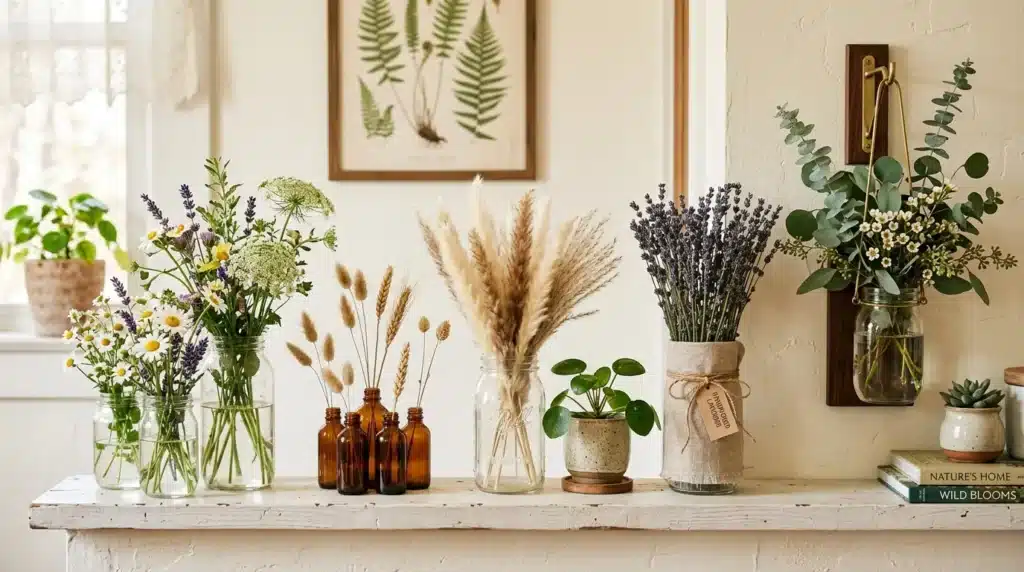
Arrangement 1: The Three-Jar Fresh Flower Group
Materials: Three clear glass jars in graduated heights — tall pasta jar, medium jam jar, small sauce jar. One bunch of supermarket flowers or garden-cut stems. Water.
Split the flower bunch into three groups by color or type rather than distributing randomly. Place the tallest stems in the tallest jar, medium stems in the medium jar, and shortest or most open flowers in the smallest jar. Position the tallest jar at the back of the group, medium jar to the front-right, smallest jar to the front-left. The triangular arrangement creates visual depth on a flat shelf surface.
Trim all stems at a 45-degree angle before placing in water — the angled cut exposes more stem surface for water absorption and extends the life of cut flowers by two to three days. Change the water every two days and re-trim the stem ends to prevent bacterial buildup that blocks water uptake.
Arrangement 2: The Amber Bottle Single-Stem Display
Materials: Five to seven amber or colored glass bottles in slightly varied heights. Single dried stems — one per bottle. Dried grasses, dried seed heads, dried wildflower stems, or dried lavender single stems.
The single-stem-per-bottle display works because it creates visual rhythm through repetition while the individual bottle shapes and heights create variation within that rhythm. Arrange the bottles in a loose cluster rather than a straight line — some slightly forward, some slightly back, a taller bottle between two shorter ones.
The dried stems in colored glass bottles create the best light effects on a south or west-facing shelf where afternoon sunlight shines through the bottles — the colored glass throws amber, green, or blue light onto the shelf surface and the wall behind it in a way that clear glass cannot produce.
Arrangement 3: The Pampas and Plant Mason Jar Display
Materials: One large wide-mouth mason jar. Two to three dried pampas grass stems. One small trailing plant in a smaller jar or ceramic pot beside it — a small pothos cutting or trailing string of pearls.
Trim the pampas stems to three different heights before placing in the dry mason jar — the tallest at approximately 12 inches above the jar rim, the medium at 8 inches, and the shortest at 5 inches. Fan the plumes slightly rather than leaving them compressed together. The height variation within one jar creates more movement and visual interest than three equal-height stems.
Position the small plant beside rather than in the mason jar — the living plant beside the dried botanical creates the combination of dried and fresh that makes this arrangement more interesting than either element alone. The trailing plant cascading over the shelf edge in front of the mason jar connects the arrangement to the shelf below.
Arrangement 4: The Wrapped Jar Farmhouse Bundle
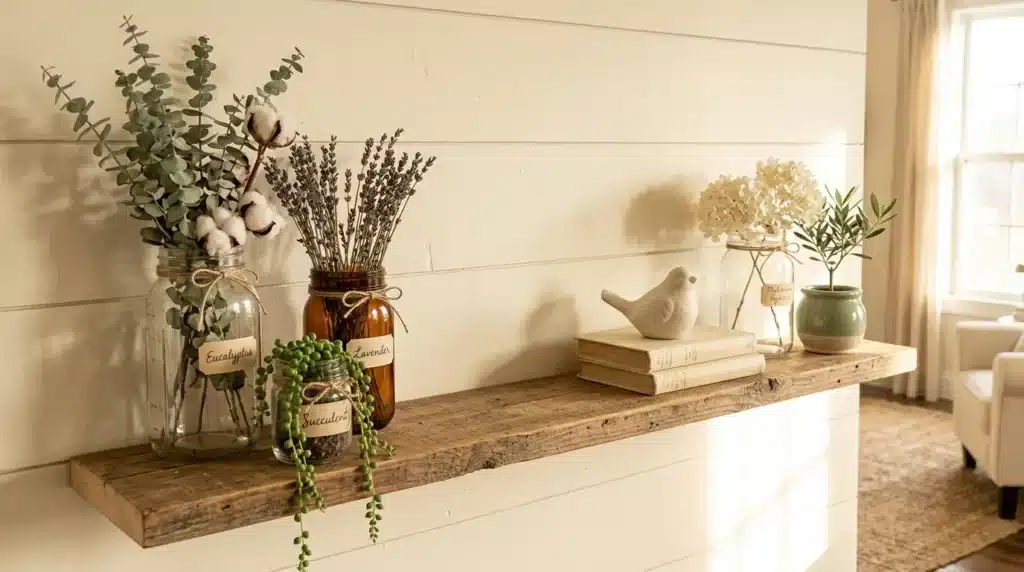
Materials: Two to three mason jars. Burlap fabric or hessian cut into strips. Natural jute twine. Dried lavender or dried herb bundles.
Wrap each mason jar with a strip of burlap secured with a length of jute twine tied in a simple knot or bow at the front. The burlap wrapping transforms the clear glass jar into a warm textured farmhouse vessel in 5 minutes. Insert a bundle of dried lavender, dried rosemary, or dried thyme into the wrapped jar — no water needed for dried herbs.
Write a simple label on a small piece of kraft card tied to the jute twine — the herb name, a simple botanical illustration, or a word. The label adds the hand-written farmhouse character detail that makes the arrangement feel personal rather than generic.
Arrangement 5: The Wall-Mounted Jar Botanical Shelf
Materials: A timber board or driftwood piece 18 to 24 inches long. Three to four metal hose clamps or purpose-made jar clips. Screws. Mason jars or small glass jars to fit the clips. Dried eucalyptus or fresh herb cuttings.
Attach the jar clips to the timber board at even spacing with screws — position them at varying heights if the board is tall enough or at the same height for a clean linear arrangement. Mount the board on the wall with two screws into wall studs or appropriate wall anchors. Clip the jars into the holders. Add dried botanicals or fresh herbs to each jar.
The wall-mounted jar botanical shelf is the most permanent and most impactful of the five jar flower arrangements — it creates a complete wall feature from low-cost materials. Suit it to a kitchen wall for an herb display, a bathroom wall for dried flowers, or a living room wall as a botanical art installation. The GIGALUMI Mason Jar Solar Lanterns hung at different heights beside the wall-mounted jar display create the warm evening light that completes the botanical wall feature after dark. Find them linked on Amazon.
The Shelf Styling Rules That Make Jar Flower Decor Look Designed
Use odd numbers
Three jars, five jars, or seven jars always look more naturally composed than two, four, or six. Even numbers create symmetry that looks formal and purchased. Odd numbers create the natural compositional tension that looks curated and considered. This applies to jars, to stems within a jar, and to the number of shelf elements overall.
Vary the heights significantly
The minimum height difference between the tallest and shortest element in a jar flower shelf arrangement should be at least 50% — if the tallest jar with stems reaches 12 inches the shortest should be no more than 8 inches. Small height variations create visual flatness. Large height variations create the visual rhythm that makes arrangements look professionally styled.
Leave negative space
The empty shelf space between and around jar groupings is as important as the jars themselves. Crowded jars with no breathing room look cluttered. Jars with 3 to 4 inches of clear shelf visible between groupings look curated. The negative space frames each element and gives the eye somewhere to rest between the focal points.
Keep a consistent color palette
Choose two or three botanical colors and stick to them across the entire shelf arrangement. Cream and sage green with amber glass. White and dusty pink with clear glass. All warm natural tones with no added color. A consistent palette makes a multi-jar arrangement read as a designed display. Mixed colors with no palette relationship look like collected objects rather than shelf decor.
📌 More craft and home decor ideas: How To Create Realistic Felt Flower Decorations
Frequently Asked Questions
What flowers look best in glass jars?
The flowers that look best in glass jars for shelf decor are those with simple natural forms that suit the informal jar vessel — wildflowers, garden-cut stems, and simple bunches rather than elaborate florist arrangements. Fresh flowers that work particularly well in jars: sweet peas for their delicate form and fragrance, cosmos for their airy movement, sunflowers for bold color, and lavender for fragrance and shelf longevity. For dried jar flower shelf decor pampas grass, dried eucalyptus, dried wildflower bunches, and dried lavender all produce consistently beautiful results in clear or colored glass jars.
How do you make a jar flower shelf display?
To make a jar flower shelf display collect three to seven glass jars in varied heights and clean them thoroughly. Choose a botanical color palette of two to three tones. Place dried or fresh botanical stems in each jar — taller stems in taller jars, shorter stems in smaller jars. Arrange the jars on the shelf in an odd-numbered group with the tallest at the back and smaller jars in front, leaving visible shelf space between groupings. Add one non-jar element — a small plant, a candle, or a decorative object — to vary the material within the display. The complete arrangement takes 15 to 20 minutes and costs almost nothing in materials.
How long do dried flowers last in jars?
Dried flowers in glass jars last 6 months to several years depending on the botanical and the storage conditions. Dried pampas grass lasts 1 to 3 years before the plumes begin to break down. Dried lavender retains its color and fragrance for 6 to 12 months. Dried eucalyptus maintains its form for 1 to 2 years. All dried botanicals last longer when kept out of direct sunlight which fades colors, and away from high humidity which promotes mold. Replace dried botanical shelf displays when they lose their color vibrancy rather than on a set timeline.
More Craft and Home Decor Ideas
→ How To Decorate a Farmhouse Laundry Room
→ 10 Cozy Christmas Living Room Ideas
→ How To Make a Cotton Cloud and Star Mobile
Start with three jars from your kitchen cupboard and three stems from your garden or a supermarket bunch. The first arrangement takes 15 minutes. By the third you will know exactly which jars and which botanicals produce the shelf display your home deserves.

Sheikh Hassaan is a digital architect for small businesses and the founder of The Glow Up System. He writes about home decor, garden design, and outdoor living for real American homes – practical ideas that work in actual spaces without oversized budgets.