

Adding coastal character to a traditional living room is one of the most satisfying home decor projects because the two aesthetics complement each other in ways that most people do not expect. A coastal traditional living room combines the warmth, pattern richness, and architectural detail of traditional interior design with the light palette, natural materials, and relaxed atmosphere of coastal style — producing a room that feels both genuinely comfortable and genuinely beautiful.
This guide covers exactly what to add to a coastal traditional living room at every level — from the foundational color and fabric decisions through the specific furniture pieces, textiles, wall treatments, and accessories that create the coastal traditional atmosphere without losing the warmth and character of the traditional base.
Table of Contents
How Coastal and Traditional Styles Work Together
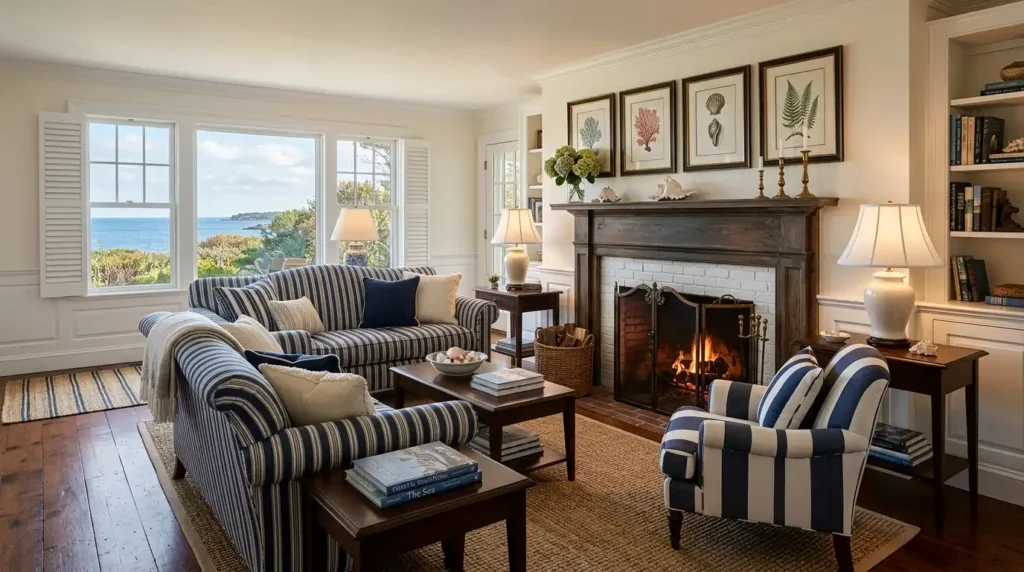
Traditional living rooms have the qualities that coastal design needs as a foundation — architectural detail, warm wood tones, layered textiles, and the comfortable furniture proportions that make a room genuinely inviting. What traditional living rooms often lack is the light quality, the natural material freshness, and the relaxed atmosphere that coastal design provides.
The combination works because the two styles share fundamental values — both prioritize comfort over minimalism, both use pattern and texture rather than stark simplicity, and both create rooms that feel genuinely lived-in rather than showroom-styled. The coastal additions lighten and freshen the traditional base without removing the warmth and character that makes traditional rooms feel so hospitable.
The design principle that governs successful coastal traditional combinations: keep the traditional architecture and furniture forms intact and add the coastal character through palette, textiles, and natural materials rather than replacing traditional elements with coastal ones. A traditional room with coastal colors and natural materials is a coastal traditional room. A traditional room with nautical objects added is a themed room.
The Coastal Traditional Color Palette
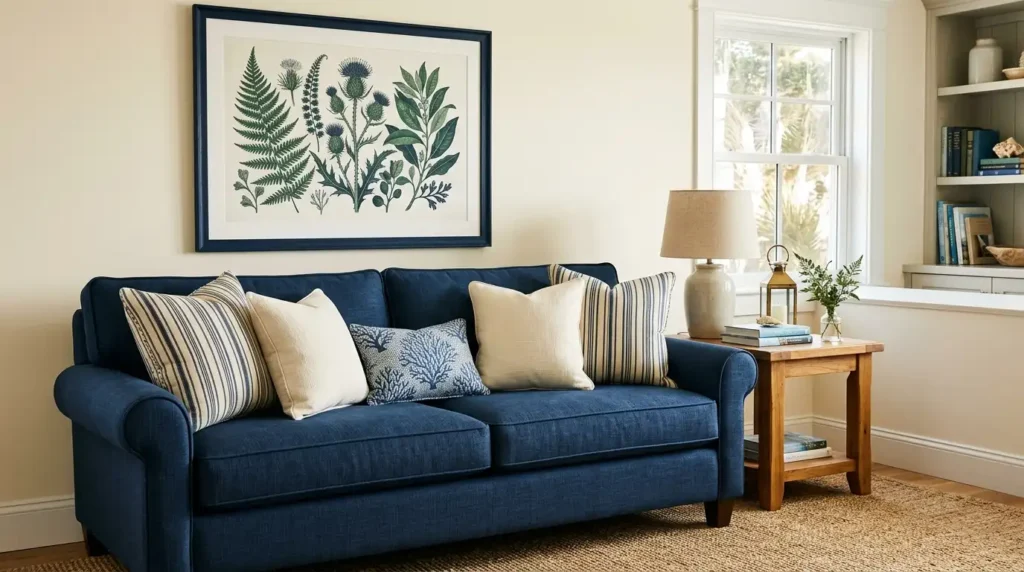
The coastal traditional palette differs from other coastal palettes in its use of richer and deeper tones. Where contemporary coastal uses pale greige and muted accents, coastal traditional uses deeper navy, warmer cream, richer natural timber tones, and botanical greens — colors that have the depth and warmth to suit traditional furniture forms and architectural details.
Navy blue — the primary coastal accent:
Deep navy used at 20 to 30% of the room creates the strong coastal color statement that suits the weight and scale of traditional furniture. Navy on a sofa, in drapery panels, or on accent chairs creates a coastal anchor that lighter coastal colors cannot achieve in a room with heavy traditional furniture proportions.
Warm cream and ivory — the traditional base:
Warm cream on walls, in upholstery, and in curtains creates the warm coastal light base that suits the traditional aesthetic better than the cooler pure white of contemporary coastal. Cream has the warmth that reads as genuinely traditional while providing the light-reflective base that the coastal palette requires.
Honey and dark timber tones — the traditional warmth layer:
Traditional dark timber furniture — mahogany side tables, dark oak bookshelves, walnut coffee tables — stays in a coastal traditional room. The dark timber creates the warmth and substance that distinguishes coastal traditional from other coastal styles and prevents the navy and cream palette from feeling cold or clinical.
Botanical green — the living accent:
Deep botanical green in cushions, in botanical artwork, and in actual plants creates the natural living color element that completes the coastal traditional palette. Botanical green has the richness and depth that suits the weight of traditional furniture and the warmth of navy and cream together.
Textiles to Add to a Coastal Traditional Living Room
Add a Navy and White Stripe to the Sofa
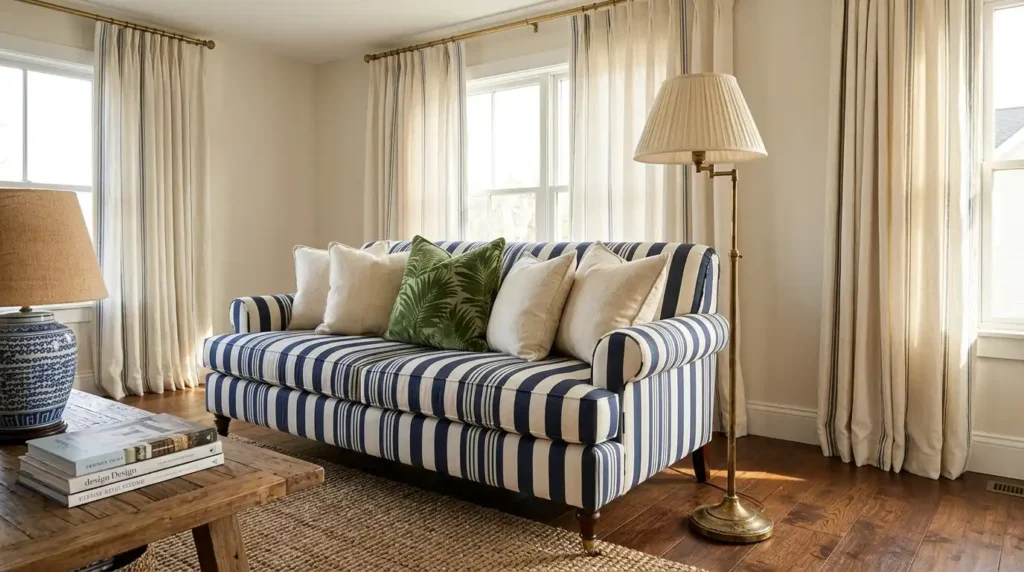
The navy and white stripe is the defining textile of the coastal traditional living room — it is the pattern that most immediately communicates coastal character within a traditional furniture form. Applied as a sofa slipcover, as reupholstery on accent chairs, or as throw cushion covers it creates the coastal textile anchor without requiring any furniture replacement. The stripe width determines the character — wide stripes of 2 to 3 inches read as bold American coastal. Thin stripes of half an inch read as more refined French coastal. Both work in different traditional settings.
Add a Natural Sisal or Jute Rug Over Existing Flooring
A large natural sisal or jute rug layered over existing traditional hardwood or carpet flooring introduces the coastal natural fiber material at the room’s ground level. In a traditional room the natural fiber rug softens the formality of the existing floor while adding the organic coastal texture that polished timber or patterned carpet cannot provide alone. Size the rug generously — all furniture front legs on the rug creates the defined seating zone that the coastal traditional room requires.
Add Linen Curtains at Ceiling Height
Replace heavy traditional drapes with floor-length linen panels in ivory or cream hung from ceiling height. The linen material introduces the natural coastal textile quality while the ivory or cream tone maintains the warmth of the traditional palette. Ceiling-height hanging dramatically increases the perceived ceiling height and introduces the light airy quality that the coastal addition to a traditional room is designed to provide.
Add Layered Cushions in the Coastal Traditional Palette
Cushion layering in the coastal traditional style uses three to five cushions per sofa in a combination of navy stripe, cream linen, and botanical green velvet. The stripe provides the coastal reference, the cream linen provides the traditional warmth, and the botanical green provides the living accent. The velvet texture on the botanical green cushion suits the traditional aesthetic better than the same green in a flat woven fabric. The Blissy Silk Pillowcase in soft ivory adds the premium textile quality at the most touched surface. Find it linked on Amazon.
Furniture Pieces to Add to a Coastal Traditional Living Room
Add a rattan or wicker accent chair
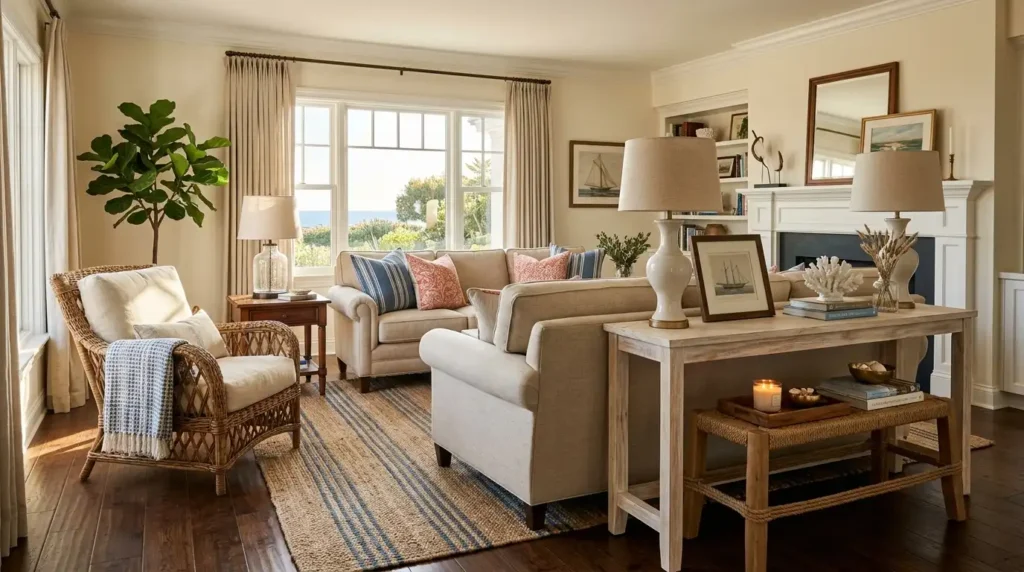
One rattan or wicker accent chair in a traditional room creates the most immediate contrast between coastal natural material and traditional upholstered form — the organic woven texture beside the formal upholstered sofa creates a deliberate tension that signals the coastal traditional combination rather than an accidental mixing of styles. Choose a rattan chair with a cushioned seat pad in the coastal traditional palette — navy stripe or cream linen.
Add a whitewashed or bleached timber console
A whitewashed or limed oak console table positioned behind the sofa introduces the lighter timber tone that coastal style requires alongside the darker traditional timber furniture. The contrast between a whitewashed console and dark mahogany side tables creates the two-timber-tone combination that is specific to coastal traditional rooms — darker warm timber for the primary furniture and lighter weathered timber for the accent pieces.
Add a natural timber and rope occasional piece
A small natural timber stool with rope wrapped legs, a driftwood side table, or a weathered timber tray table introduces the coastal craft material — rope and reclaimed wood — in a piece that can be used as a coffee table alternative, a plant stand, or an accent side table. This occasional piece type is where the most direct coastal reference is appropriate in a coastal traditional room — the small scale and casual function of occasional furniture allows more obvious coastal material references than primary furniture pieces.
Wall Treatments and Artwork to Add
Add Coastal Botanical Artwork in Traditional Frames
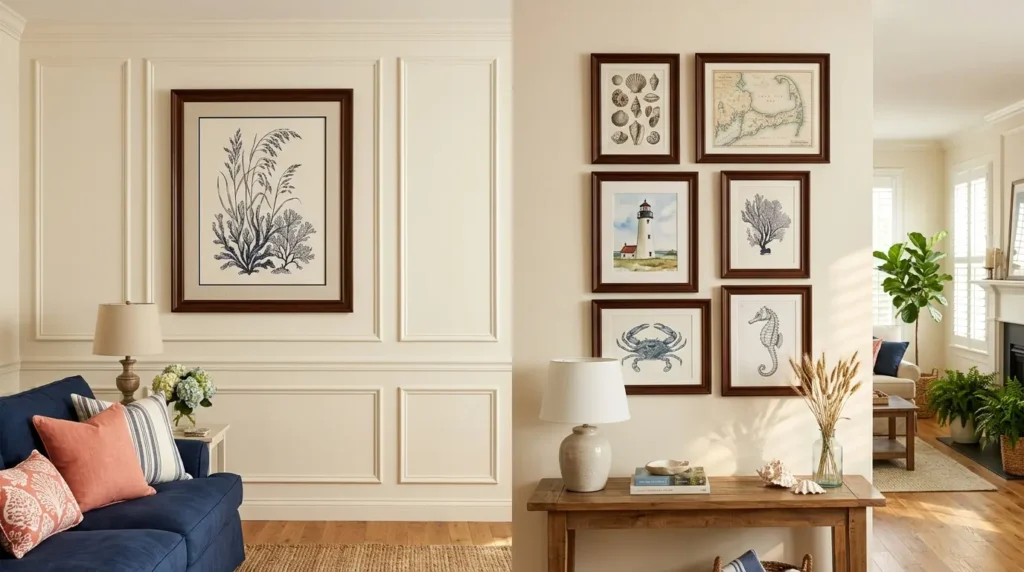
Botanical coastal illustrations — seaweed prints, shell studies, coastal flora illustrations — in classic dark timber or gilded frames create the coastal traditional wall display that suits the architectural quality of traditional rooms perfectly. The traditional frame style maintains the room’s formality while the coastal botanical content provides the natural organic character. Group three to five botanical prints in matching frames as a gallery arrangement using traditional symmetrical hanging rather than the asymmetric arrangements of contemporary coastal rooms.
Add a Coastal Map as a Statement Piece
A large framed antique-style coastal or nautical map is the single wall piece most associated with the coastal traditional aesthetic — it references the sea through geography and history rather than through literal coastal imagery and suits the intellectual character of traditional rooms that nautical decorative objects do not. A vintage hydrographic chart, an antique coastal survey map, or a reproduction historical map of a significant coastline in a large classical frame creates the statement wall piece that the coastal traditional living room requires.
Paint Paneling or Walls in Coastal Traditional Colors
Traditional rooms often have paneled walls or architectural molding that creates the perfect framework for coastal traditional color. Painting existing wall paneling in deep navy with cream trim creates the most dramatic and most distinctly coastal traditional wall treatment. Alternatively painting the primary wall in warm cream with the architectural molding picked out in a slightly deeper cream creates a tonal coastal traditional wall that adds depth without color contrast. Both approaches maintain the traditional architectural character while introducing the coastal palette.
Accessories That Complete the Coastal Traditional Look
Add natural coastal objects alongside traditional pieces
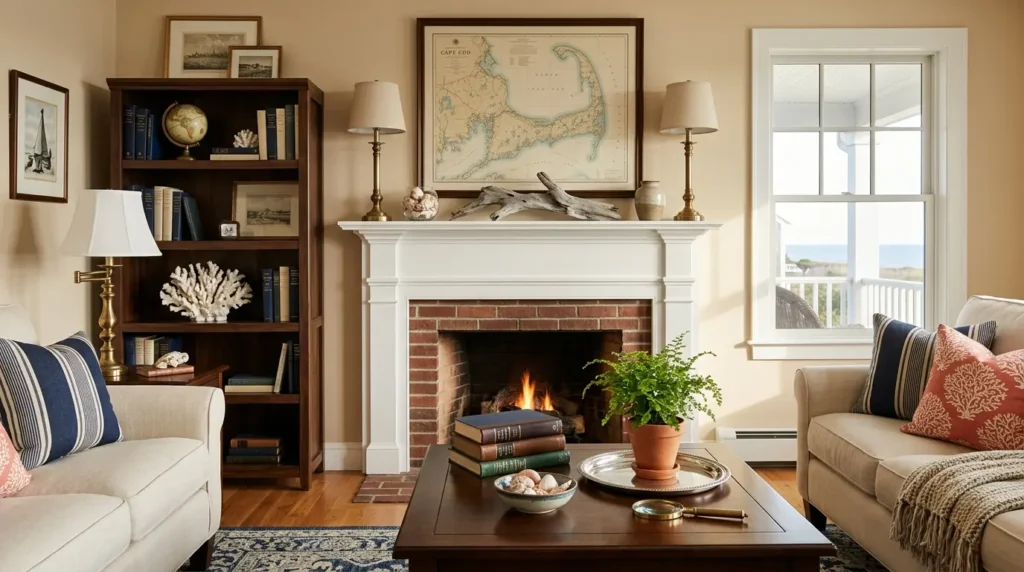
The accessory approach in a coastal traditional room mixes natural coastal objects — a piece of coral, a smooth stone, a small piece of driftwood — directly alongside traditional objects — a silver-framed photograph, a classic candlestick, a leather-bound book. The combination of traditional and natural coastal objects on the same surface creates the specific coastal traditional character without requiring either set of objects to dominate.
Add traditional-style lamps with white shades
Traditional table lamps with dark timber, ceramic, or brass bases and clean white drum or empire shades introduce the coastal light quality to traditional lamp forms. The white shade is the coastal element — it creates the bright diffuse light that coastal rooms require and prevents the warm amber glow of traditional cream or parchment shades from making the room feel heavy.
Add substantial plants in classic containers
Traditional rooms suit substantial plants in classic containers — a large fiddle leaf fig in a navy or dark green ceramic pot, a large monstera in a classic brass planter, or a bay tree in a traditional Versailles planter box. The plant scale must match the traditional room scale — small plants look lost in traditional rooms where the furniture proportions are generous. One large plant in a quality container contributes more coastal natural character than several small plants in casual containers.
📌 More coastal home decor ideas: 10 Modern Coastal Living Room Ideas
Frequently Asked Questions
What is a coastal traditional living room?
A coastal traditional living room combines the warmth, architectural detail, and furniture weight of traditional interior design with the light palette, natural materials, and relaxed atmosphere of coastal style. It uses traditional furniture forms — rolled-arm sofas, classic armchairs, dark timber side tables, traditional lamps — and adds coastal character through palette choices (navy, cream, botanical green), natural fiber textiles (sisal rugs, linen curtains, stripe upholstery), coastal botanical artwork in classic frames, and natural coastal objects alongside traditional accessories. According to House Beautiful the coastal traditional style is one of the most consistently popular living room aesthetics because it suits older homes with traditional architecture while providing the fresh quality that purely traditional interiors can lack.
What colors work in a coastal traditional living room?
The coastal traditional living room palette uses four colors in a specific relationship: deep navy as the primary coastal accent color at 20 to 30% of the room, warm cream as the traditional base color at 50 to 60%, honey and dark timber tones from natural wood furniture as the warmth layer, and botanical green as the living accent in cushions, plants, and artwork. This palette is richer and deeper than contemporary coastal palettes because the traditional furniture forms require colors with sufficient visual weight to suit their scale and proportions.
What is the difference between coastal traditional and coastal chic?
Coastal traditional uses traditional furniture forms, richer colors, pattern and texture abundance, and a warmer palette that suits homes with traditional architectural character. Coastal chic uses contemporary clean-lined furniture, a more restrained and precise palette, fewer objects of higher individual quality, and a lighter atmosphere that suits modern and open-plan spaces. Coastal traditional feels comfortable and abundantly decorated. Coastal chic feels precisely edited and architecturally considered. Both are genuinely coastal in character but they suit very different room types and personal styles.
What patterns work in a coastal traditional living room?
The patterns that suit coastal traditional living rooms use the navy and cream palette in traditional pattern forms rather than contemporary minimalist designs. The navy and white stripe is the primary coastal traditional pattern — applied in upholstery, cushions, and accessories it creates the coastal reference within a traditional context. Botanical and toile prints in navy and cream suit the walls and secondary cushions. Geometric patterns in traditional form — Greek key, lattice, and trellis — in navy and cream add pattern variety without losing the coastal or traditional character. Avoid contemporary abstract patterns which sit awkwardly against traditional furniture forms.
More Coastal Home Decor Ideas
→ How To Style a Coastal Chic Living Room Like a Designer
→ How To Design a Contemporary Coastal Living Room
→ How To Decorate a Coastal Living Room on a Budget
Start with the stripe — one navy and white stripe cushion cover on each sofa cushion costs under $30 and immediately signals the coastal traditional direction that every other addition will follow.

Sheikh Hassaan is a digital architect for small businesses and the founder of The Glow Up System. He writes about home decor, garden design, and outdoor living for real American homes – practical ideas that work in actual spaces without oversized budgets.