
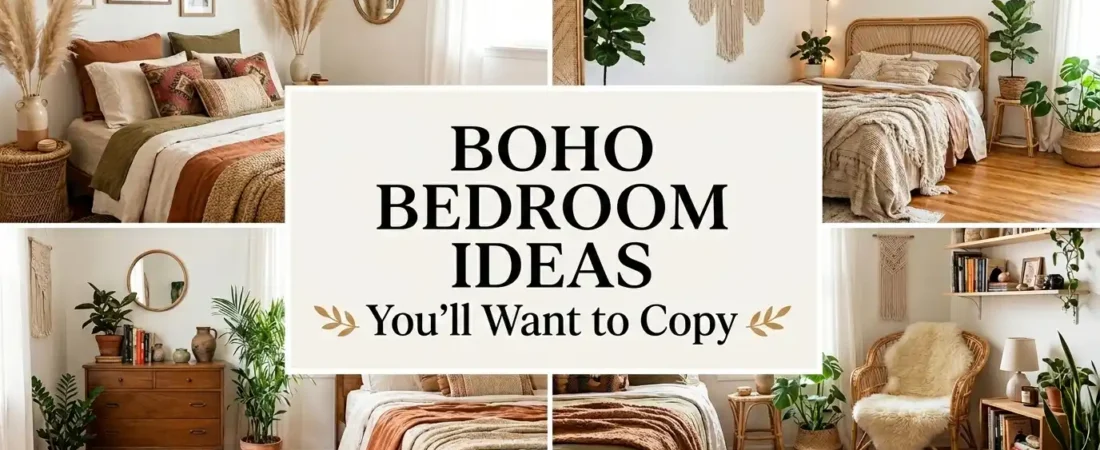
The best boho bedrooms do not look like they were designed, they look like they grew. Boho bedroom ideas that actually work draw on a specific visual language of layered natural materials, collected objects from different sources and periods, abundant plant life, and warm earth tones that create the impression of a room assembled over years rather than purchased in a single afternoon.
This guide covers boho bedroom ideas organized by the specific design decisions that create genuine bohemian character — from the foundational choices of bed style and wall treatment through the layering of textiles, plants, and collected objects that separate a boho bedroom that feels authentically lived-in from one that simply uses boho-adjacent products.
Table of Contents
What Separates a Genuine Boho Bedroom From a Decorated One
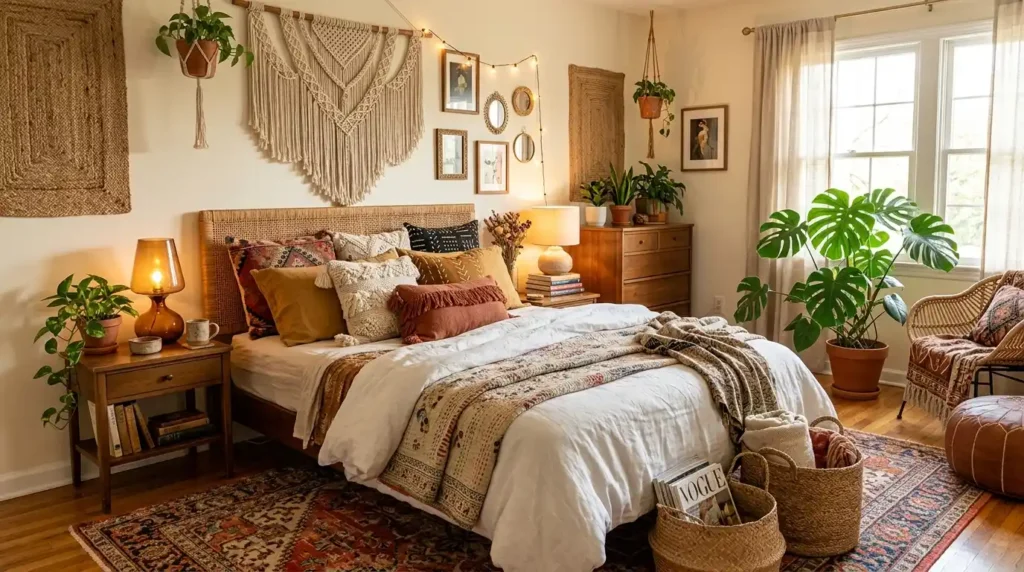
A boho bedroom that looks genuinely bohemian and one that looks like a boho-themed room are distinguished by a single quality — whether the objects and materials in the room appear to have their own histories or whether they appear to have been purchased together. A genuine boho bedroom contains things that arrived from different places at different times: a rug found at a flea market, a wall hanging made by hand or bought from a craft market, a plant that has been repotted three times as it outgrew its previous containers, books that have been read rather than arranged for display.
The practical design principle that creates this quality without requiring years of actual collecting: vary the source and apparent age of objects in the room. Mix new purchases with secondhand finds, handmade elements with manufactured ones, inherited pieces with recently acquired ones. The visual variety that comes from different material ages and origins is what creates the collected quality that boho bedroom design requires — and it is achievable regardless of how long you have actually been accumulating objects.
The color palette is the organizing principle that holds the variety together without letting it become chaotic. Warm earth tones throughout — terracotta, burnt orange, warm cream, dusty rose, ochre, and natural timber — in muted rather than saturated versions create the cohesive warmth that allows different objects from different sources to coexist in the same room without competing. A boho bedroom with a consistent warm earth tone palette reads as curated even when its individual elements are highly varied.
1. Rattan and Natural Material Furniture as the Boho Foundation
✦ Best for: establishing the warm organic material quality that makes everything else in a boho bedroom work
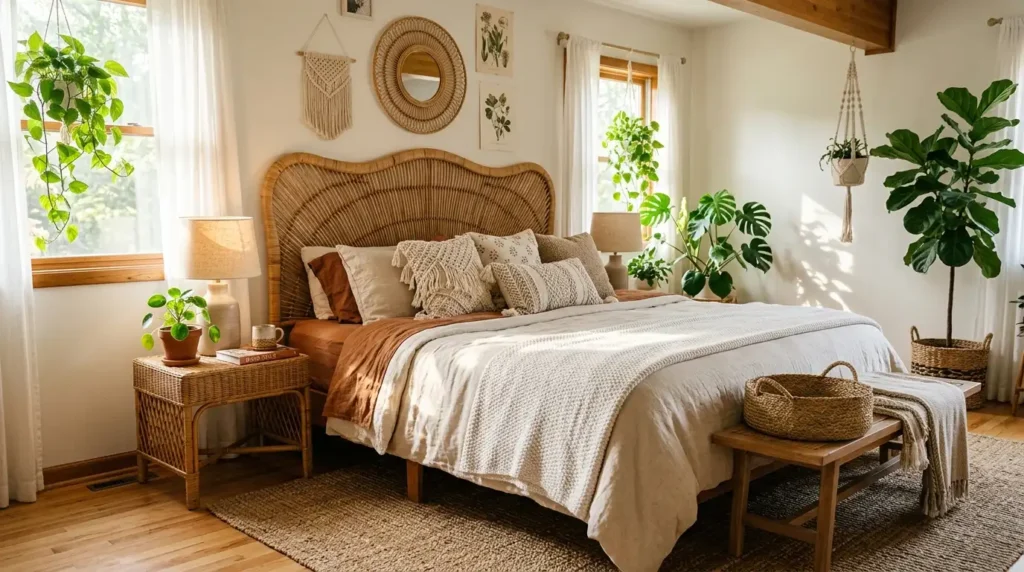
Rattan, wicker, bamboo, and raw timber are the furniture materials most directly associated with the boho aesthetic because they are genuinely natural, visibly handcrafted, and carry the specific warmth of organic material that manufactured furniture lacks. A rattan headboard is the single most impactful furniture choice in a boho bedroom — it immediately communicates the aesthetic’s material language and creates a backdrop that every other element in the room responds to naturally.
A large round rattan headboard — the circular or arched form rather than a rectangular panel — suits the boho aesthetic most directly because its organic curved form references natural shapes rather than manufactured geometry. Positioned on the primary wall behind a bed dressed in warm linen or cotton it creates the defining visual moment of a boho bedroom that no other single element achieves as immediately.
Beyond the headboard: rattan side tables at each bedside instead of conventional wooden nightstands. A bamboo or rattan floor lamp rather than a ceramic or metal base. A wicker storage basket at the foot of the bed for extra blankets. Each additional rattan or natural wicker element reinforces the room’s material story without requiring any specific arrangement or styling to read as intentional.
The styling principle for natural material furniture in a boho bedroom: allow the material itself to be the visual element rather than styling the furniture with additional objects. A beautiful rattan headboard does not need art above it or objects arranged symmetrically beside it — the material is the design. Resist the urge to compensate for the organic irregularity of rattan furniture with additional decorative elements that compete with rather than complement it.
2. Macrame and Woven Wall Hangings as Boho Textile Art
✦ Best for: the wall above or beside the bed where textile art creates the three-dimensional warmth that framed art cannot
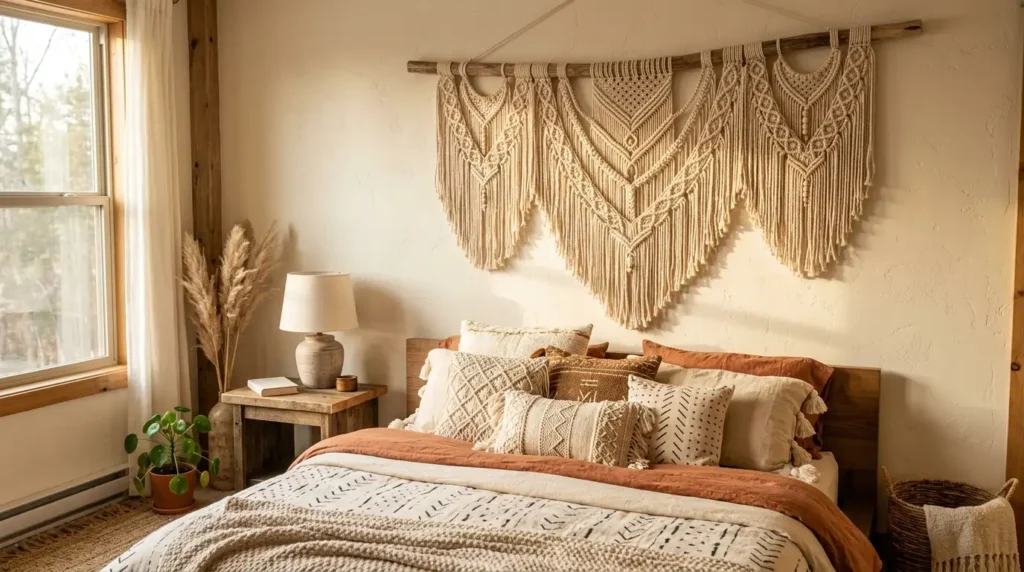
A large macrame or woven wall hanging introduces the one quality to a boho bedroom wall that framed art cannot provide — three-dimensional textile texture that moves slightly in air currents, catches light differently at different times of day, and reads as genuinely handcrafted regardless of whether it was hand-knotted by the owner or purchased from a maker. The handcrafted quality of macrame is inherent to the material and process rather than to the specific item, which makes it one of the most reliable ways to introduce authentic boho character into a bedroom.
Scale is the decision that most commonly goes wrong with macrame in a boho bedroom — most people purchase a hanging that is too small for the wall and too narrow for the bed below it, which reads as a decorative accent rather than a design feature. A macrame hanging above a queen or king bed should span at least two-thirds of the bed width — for a king bed that means a minimum of 50 inches wide. A hanging of this scale reads as a genuine focal point rather than an object placed on the wall.
Natural undyed cotton or jute in its raw cream or oatmeal tone is the material most suited to a boho bedroom because it reads as genuinely natural rather than as a color choice — the material warmth comes from the fiber itself rather than from any dye or finish. Colored macrame in terracotta or rust can work in a boho bedroom but requires more careful coordination with the surrounding palette to avoid reading as a color statement that competes with the room’s other warm earth tones.
3. Layered Boho Bedding That Looks Rich Without Trying
✦ Best for: the bed itself where multiple textile layers create the abundant warmth that defines the boho sleeping environment
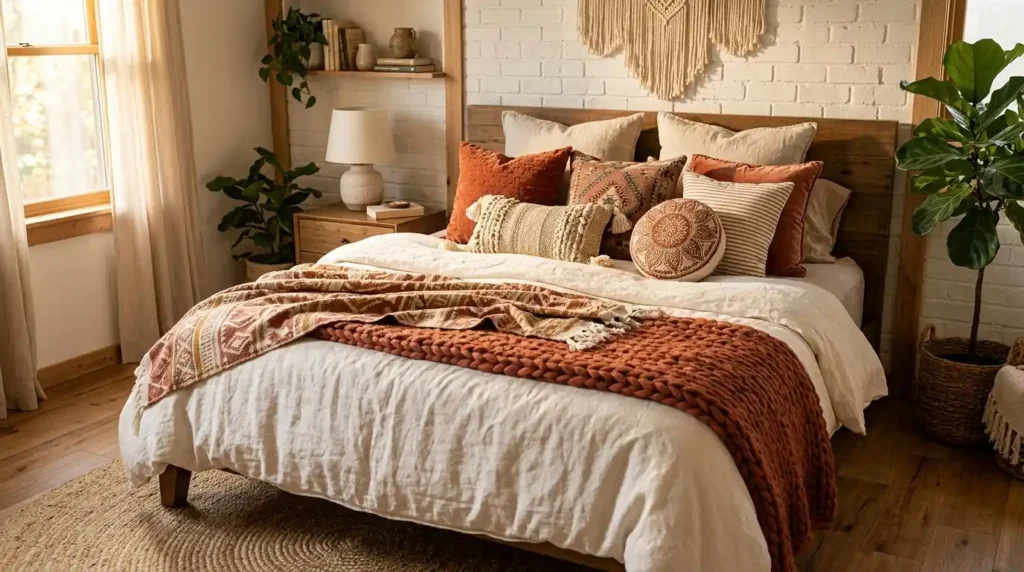
Boho bedding is layered rather than matched — the visual richness of a boho bed comes from multiple textile layers in complementary but not identical patterns and textures rather than from a coordinated bedding set. A matched bedding set in boho prints looks like a themed product purchase rather than a genuine accumulation of textiles, which is the opposite of what the aesthetic requires.
The layering sequence that works consistently: a plain linen or cotton duvet in warm white or oatmeal as the base layer — the neutral foundation that everything else sits against. A woven blanket in a geometric or stripe pattern in warm earth tones draped casually across the middle third of the bed rather than folded precisely. A chunky knit or crochet throw at the foot. Three to five cushions in different textures — velvet, printed cotton, woven, embroidered — in colors that all share the warm earth tone palette.
The Blissy Silk Pillowcase in champagne or ivory introduces a premium sleeping surface within the layered boho bedding arrangement — silk against the sleeping surface is a tactile luxury that complements the visual richness of the surrounding textile layers while being genuinely practical as a hair and skin-friendly sleeping material. Find it linked on Amazon.
The arrangement principle for boho bedding layers: arranged casually rather than precisely. A woven blanket draped at a slight diagonal across the bed reads as lived-in. The same blanket folded in a precise rectangle at the foot reads as hotel. Slight imprecision in the textile arrangement is what communicates the genuine inhabitation that makes boho bedding feel authentic rather than staged.
4. Abundant Plants at Every Height for a Living Boho Bedroom
✦ Best for: adding the living organic element that makes a boho bedroom feel genuinely inhabited rather than simply styled
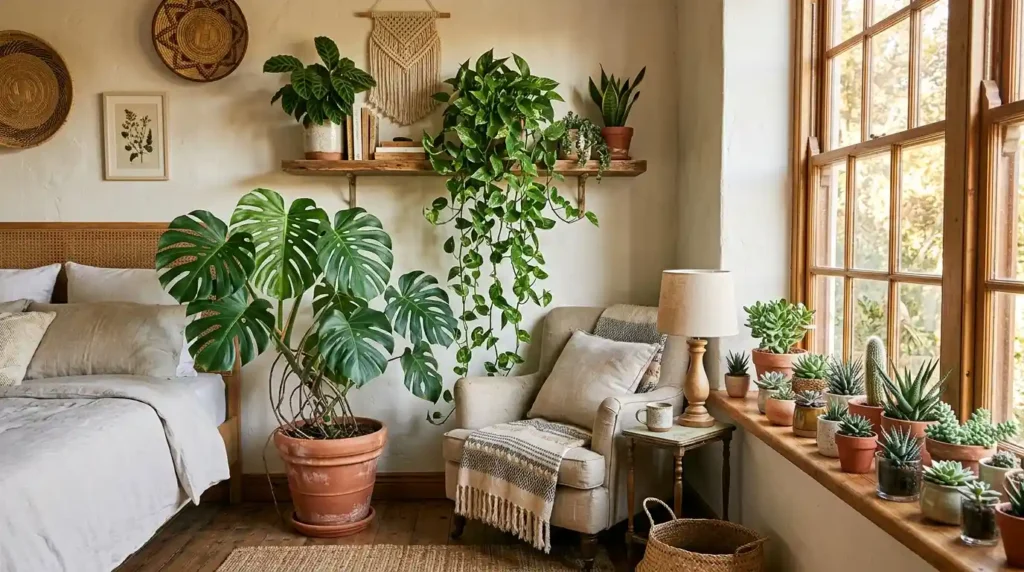
Plants in a boho bedroom are not optional accessories — they are the element that most directly creates the quality of genuine inhabitation that the aesthetic requires. A boho bedroom without plants looks like it is trying to be boho. A boho bedroom with abundant plants at multiple heights looks like someone genuinely lives in it and genuinely cares about the living things in their space — which is the specific quality that makes the entire aesthetic feel authentic.
The vertical stratification of plants through the full room height is what creates a genuinely lush boho bedroom rather than a room with a plant in it. Floor level: a large statement plant in a terracotta or woven basket pot — monstera, fiddle leaf fig, or rubber plant — that reaches mid-height or higher. Shelf level: trailing plants positioned to spill downward — pothos, string of pearls, or heartleaf philodendron. Window level: a small succulent or cactus collection that enjoys the direct light. Ceiling level if possible: a hanging plant in a macrame hanger that adds the highest vertical layer.
Plant pot selection in a boho bedroom should follow the same material principle as the furniture — natural, organic, varied. Terracotta in multiple sizes is the most versatile boho plant pot material because it is genuinely natural, improves with age as it develops mineral deposits and weathering, and complements every warm earth tone palette. Woven seagrass or jute basket covers over plastic nursery pots create the organic texture of a handmade container without requiring the drainage management of planting directly into a basket.
5. A Vintage or Persian-Style Rug as the Room’s Color Anchor
✦ Best for: grounding the boho bedroom at floor level with the pattern and color that the ceiling and walls cannot provide
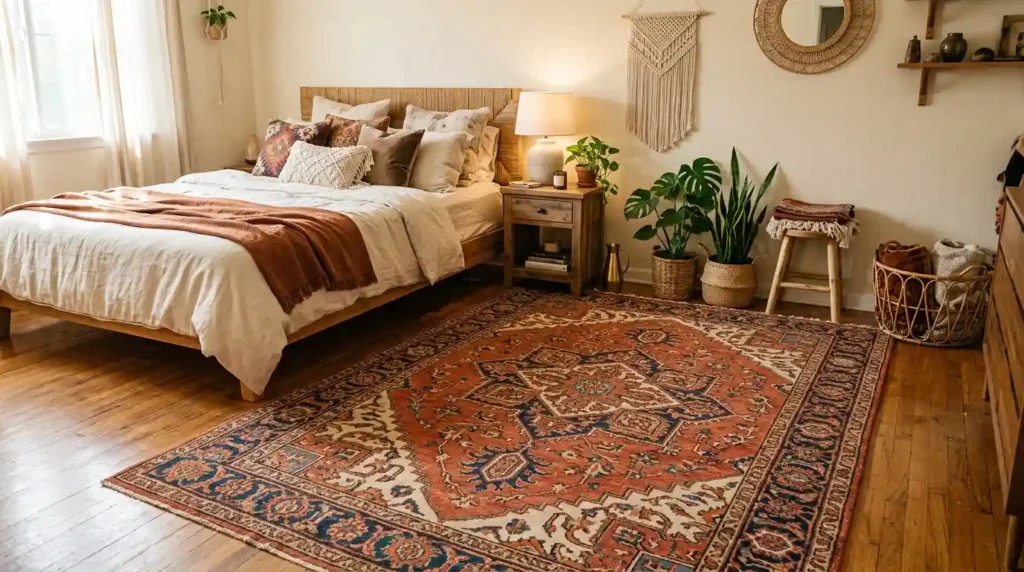
A vintage or vintage-style Persian rug is the single most impactful purchase available for a boho bedroom because it simultaneously provides the room’s primary pattern element, its richest color source, and its strongest signal of the collected-over-time quality that the boho aesthetic requires. A genuine vintage rug that has been used and washed repeatedly develops a patina and color softening that new rugs do not achieve — and this aged quality is precisely what makes vintage rugs look more expensive and more beautiful in a boho bedroom than new rugs at any price point.
The rug colors that work best in a boho bedroom palette: warm reds and terracottas that read as genuinely aged rather than as bright primary red. Soft navy or indigo that has faded to a dusty muted blue. Warm cream and ivory field colors with pattern in earth tones. Any of these in a traditional Persian, Moroccan, or Turkish pattern create the visual richness at floor level that anchors all the lighter elements above it.
Rug layering is the boho floor treatment that creates the most visual richness: a large natural fiber jute or sisal rug as the base layer covering most of the floor, with a smaller vintage or patterned rug layered on top and positioned so the natural fiber base is visible around its edges. The layered rug approach creates depth and texture at floor level that a single rug cannot achieve and is specifically associated with the boho aesthetic in interior design photography.
6. Warm Layered Boho Lighting for the Perfect Evening Atmosphere
✦ Best for: creating the warm amber evening atmosphere that makes a boho bedroom feel genuinely magical after dark
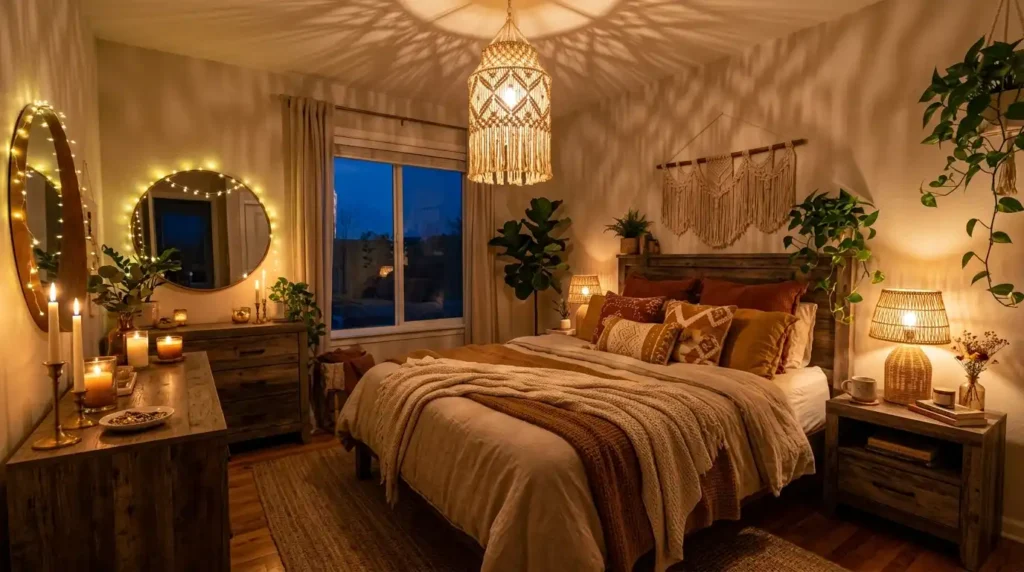
Boho bedroom lighting leans more heavily on multiple small warm sources than any other bedroom aesthetic — the layered amber glow created by multiple lamps, candles, and fairy lights simultaneously is the specific lighting quality most associated with boho interior photography and most responsible for the warm atmospheric quality that makes boho bedrooms feel so inviting in evening images.
The specific lighting elements that create authentic boho bedroom atmosphere: a macrame or rattan pendant lamp as the overhead fixture — the woven material casts patterned shadows on the ceiling and walls that a plain shade cannot achieve. Woven rattan or ceramic bedside lamps at each nightstand. Fairy lights or Edison bulb string lights draped around a mirror, a headboard, or along a shelf — the multiple small warm light points create a quality of sparkle that suits the boho aesthetic more than any single larger fixture.
Candles in terracotta holders or on a wooden tray add the final flame element to a boho bedroom lighting scheme — the movement of real flame creates a quality that no electric light source replicates, and the fragrance of quality candles in warm scent families like sandalwood, amber, or patchouli contributes to the room’s atmosphere in a way that visual elements alone cannot. In a boho bedroom more than any other aesthetic the sensory experience extends beyond the visual to include scent and the quality of light movement.
7. The Boho Gallery Wall That Looks Collected Over Years
✦ Best for: a wall that needs visual richness and personal narrative without a single dominant art piece
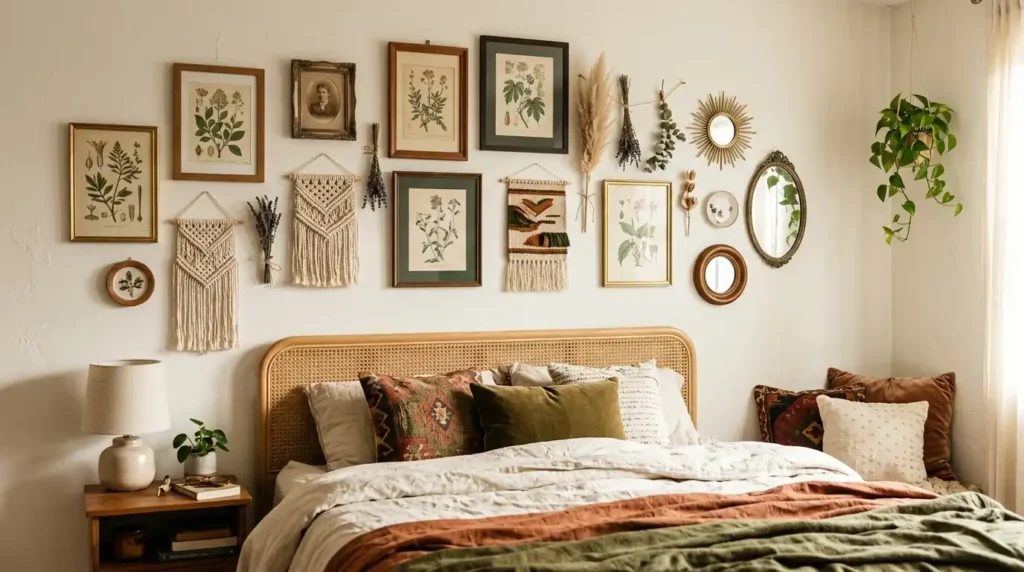
A boho gallery wall is distinct from a standard gallery wall in one critical way — it mixes media and objects rather than limiting itself to framed prints in matching frames. A boho gallery wall might include framed botanical or vintage prints alongside a small woven textile piece, a dried botanical bundle pinned directly to the wall, a small mirror with a rattan or driftwood frame, and a postcard or photograph clipped to a small piece of driftwood. The mix of frame styles, media types, and object categories is what creates the collected-over-time quality.
The arrangement principle for a boho gallery wall: start with the largest piece at the visual center and build outward organically rather than pre-planning the exact position of each piece. Allow the arrangement to grow over time — a gallery wall that has pieces added gradually over months looks more genuinely collected than one installed completely in a single session. Leave intentional gaps in the arrangement that can be filled as new pieces are acquired.
The content that works best on a boho gallery wall: vintage botanical prints in warm sepia or hand-colored tones. Film photography or polaroid prints in warm tones. Small woven textile pieces or tapestry fragments. Pressed and framed botanical specimens. Vintage postcards or travel ephemera. Moon phase or celestial prints. Handwritten quotes in brush lettering. Each category references the natural world, travel, or personal expression — the three content themes most directly associated with the boho visual language.
The Boho Bedroom Color Palette That Works in Any Space
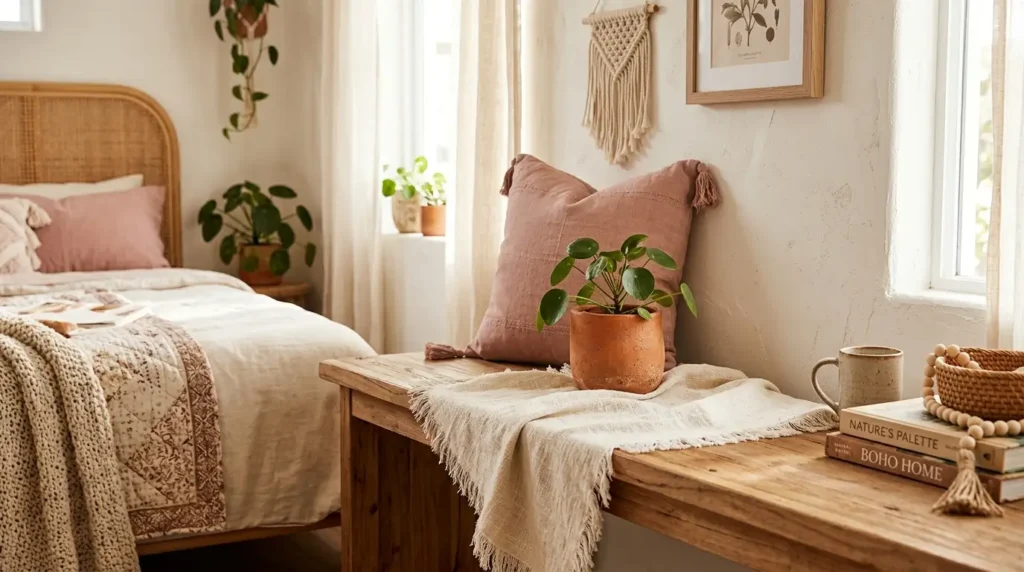
The boho bedroom palette that works across the widest range of room sizes, furniture styles, and natural light conditions: warm white or off-white for the walls as the neutral foundation. Terracotta and warm clay as the primary earth tone accent present in ceramics, cushions, or a throw. Natural timber in a warm medium tone for any wooden furniture surfaces. Warm cream or oatmeal in the primary bedding and largest textile. One muted jewel tone accent — dusty rose, sage green, or dusty teal — in one or two smaller cushions or a plant pot.
The palette mistake that makes boho bedrooms look chaotic rather than collected: introducing too many accent colors. Terracotta and dusty rose and sage green and mustard and indigo all in the same room creates color noise that prevents the eye from reading the individual textures and materials that the boho aesthetic relies on for its character. Choose one or two accent colors and allow them to appear across multiple elements rather than introducing a new accent color with every new object.
The wall color decision in a boho bedroom: warm white is the most versatile choice because it creates the maximum contrast with the warm earth tones and natural materials that fill the room, allowing each element to read clearly against the neutral background. A deeper wall color — warm terracotta, sage green, or warm greige — creates a more enveloping atmosphere but requires more careful calibration of the lighting to prevent the warm tones from reading as muddy when multiple warm-toned elements are combined.
📌 More bedroom and home decor ideas: Master Bedroom Ideas That Make You Never Want to Leave
Frequently Asked Questions
What is a boho bedroom?
A boho bedroom is a bedroom designed around the bohemian aesthetic — a style that draws on natural organic materials, collected objects from different sources and periods, abundant plant life, layered warm textiles, and a warm earth tone palette to create a space that feels genuinely personal and lived-in rather than decorated or styled. The defining quality of a genuine boho bedroom is that it appears to have been assembled over time from meaningful objects rather than purchased as a coordinated set. According to House Beautiful, the bohemian aesthetic has remained one of the most consistently popular bedroom design directions for a decade because it rewards personal expression and accumulated objects rather than requiring a specific budget or furniture investment.
What colors are used in a boho bedroom?
The boho bedroom palette centers on warm earth tones in muted rather than saturated versions: terracotta, burnt orange, warm cream and oatmeal, dusty rose, ochre, and natural timber tones for the primary palette. One or two muted jewel tone accents — dusty teal, sage green, or dusty indigo — in smaller elements like cushions or plant pots. Warm white or off-white walls as the neutral foundation. The key is muted rather than saturated versions of each color — bright saturated colors in a boho bedroom read as festive rather than warmly collected.
How do I make my bedroom look boho on a budget?
The highest-impact boho bedroom changes on a budget: add plants at multiple heights — a large monstera or pothos cutting costs very little and immediately creates the living organic quality that defines the boho aesthetic. Layer the existing bedding with a woven or ethnic print throw from a thrift store or market rather than replacing the bedding entirely. Hang a macrame wall hanging above the bed — purchasable online for $20 to $60 in sizes large enough to create genuine impact. Add fairy lights or string lights around a mirror. Visit a flea market or estate sale for one vintage rug or textile piece that introduces the collected quality that new purchases cannot replicate.
What plants work best in a boho bedroom?
The plants that work best in a boho bedroom combine visual impact with relatively easy care: monstera deliciosa for its large dramatic leaves and fast growth that creates immediate visual presence. Pothos in any variety for its trailing quality that spills from shelves and bookshelves in the way that defines boho plant styling. Rubber plant (Ficus elastica) for its large glossy leaves in dark green or burgundy that suit the warm earth tone palette. String of pearls for its unusual cascading form that adds an unexpected textural element to a shelf or hanging planter. Snake plant for its architectural vertical form and genuinely minimal care requirements in a bedroom with variable light.
More Bedroom and Home Decor Ideas
→ Witchy Bedroom Decor Ideas That Create Instant Moonlit Vibes
→ Bedroom Wall Decor Stickers That Make Small Rooms Feel Bigger
→ Maximalist Decor Ideas You’ll Wish You Tried Sooner
Add the plants first. A boho bedroom without plants looks like it is trying to be boho. A boho bedroom with abundant plants at every height looks like someone genuinely lives there.

Sheikh Hassaan is a digital architect for small businesses and the founder of The Glow Up System. He writes about home decor, garden design, and outdoor living for real American homes – practical ideas that work in actual spaces without oversized budgets.