
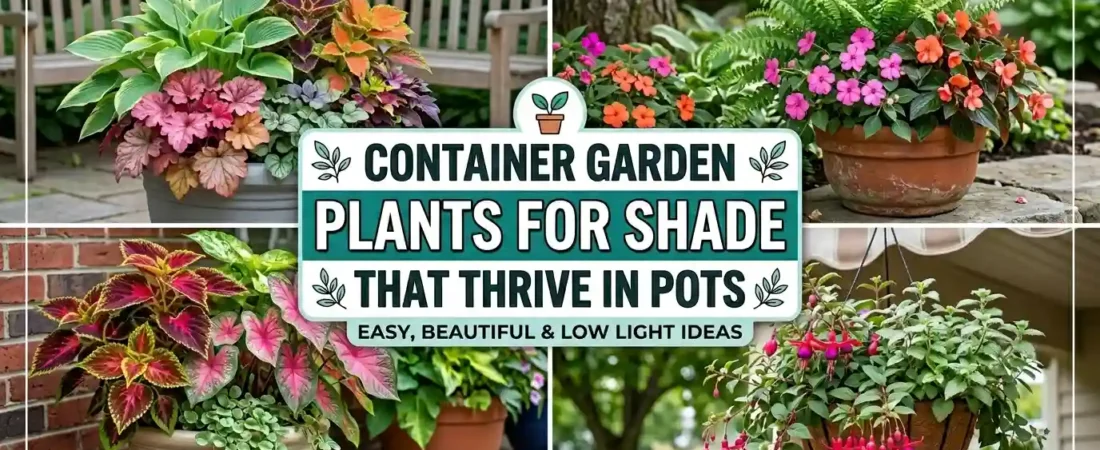
Every garden has them. That dark corner under the porch overhang. The narrow strip along the north side of the house. The spot where a fence casts shadow all afternoon. Most people give up on these areas. They leave them empty or fill them with boring greenery that never quite looks right. But those shady spots do not have to be dead zones. With the right plants in containers, they can be some of the most interesting and colorful parts of your garden.
That is what makes container garden plants for shade so valuable for American homes, turning dim, forgotten corners into vibrant displays of foliage and flowers that thrive without direct sunlight.
This article covers ten container garden plants for shade that work for real American gardens, from urban patios to suburban porches. Every suggestion includes specific varieties, actual light requirements, and practical growing tips. No vague recommendations. No unrealistic expectations. Just beautiful plants that thrive in pots where the sun barely reaches.
Table of Contents
Why Container Gardening in Shade Is Easier Than You Think
Most gardeners worry about shade. They assume it means dull, dark spaces where nothing grows well. But shade container gardening actually comes with some surprising advantages. Plants in shade containers tend to last longer than those in sunny spots. They need less watering and deadheading because they are not sunbaked. And they provide a cool refuge from the heat for pollinators .
There is also the matter of maintenance. Shade containers may require less water because they are not exposed to direct sun, but they are also often protected from rain . The key is checking the soil moisture regularly. Allow the top inch or two of soil to dry before watering again .
Another advantage is growth rate. You may notice that shade plants do not grow at the same speed as plants in sunnier locations. While this might seem like a downside, it actually lets you create a lush container at the beginning of the season that will not easily become overgrown. Individual plants tend to share the space more easily without trying to outcompete each other .
When selecting plants for shade containers, remember that low light does not mean no light. Even shade-loving plants need some light. Good locations include spots that get dappled light, bright indirect light, or one to three hours of direct sun per day .
1. Hostas: The Shade Garden Royalty
✦ Best for: Adding bold, textured foliage in a range of colors from blue-green to variegated gold and cream
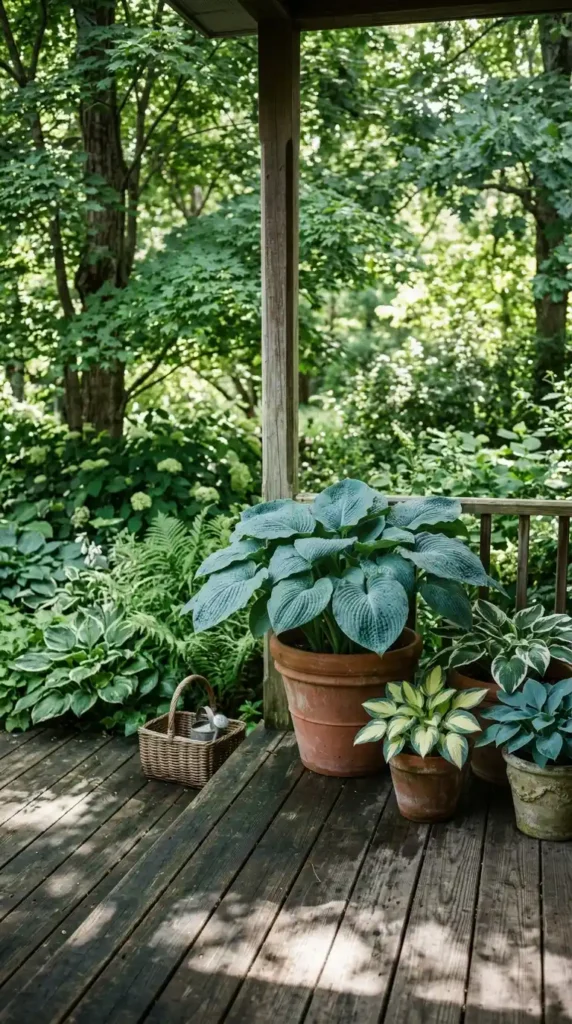
Hostas are the undisputed kings of the shade garden . They come in dozens of sizes and colors, from chartreuse to blue-green to variegated white and yellow, and they look stunning in large containers . Their heart-shaped leaves and delicate flower spikes in mauve or white in late summer make them a fabulous addition to any container garden .
For pots, choose compact varieties like ‘Halcyon’ with its blue-green foliage, ‘Patriot’ with its crisp white edges, or the adorable ‘Blue Mouse Ears’ which reaches only eight inches tall and twelve inches wide . Hostas are perennials in zones 3 to 9, so you can overwinter the containers in a garage and reuse them next year . They thrive in moist, well-draining soil and can tolerate some sun, but they truly flourish in partial to full shade .
Hostas are known for their long-lasting beauty, featuring striking foliage throughout the growing season, complemented by charming flowers in summer. They require minimum upkeep, propagate well by division, and do exceptionally well when grown in containers . The only downside is that slugs and snails love them, so consider copper tape around pots or other slug control methods if you are growing hostas in containers .
2. Ferns: Timeless Texture and Movement
✦ Best for: Adding soft, feathery texture and graceful movement to shaded container displays
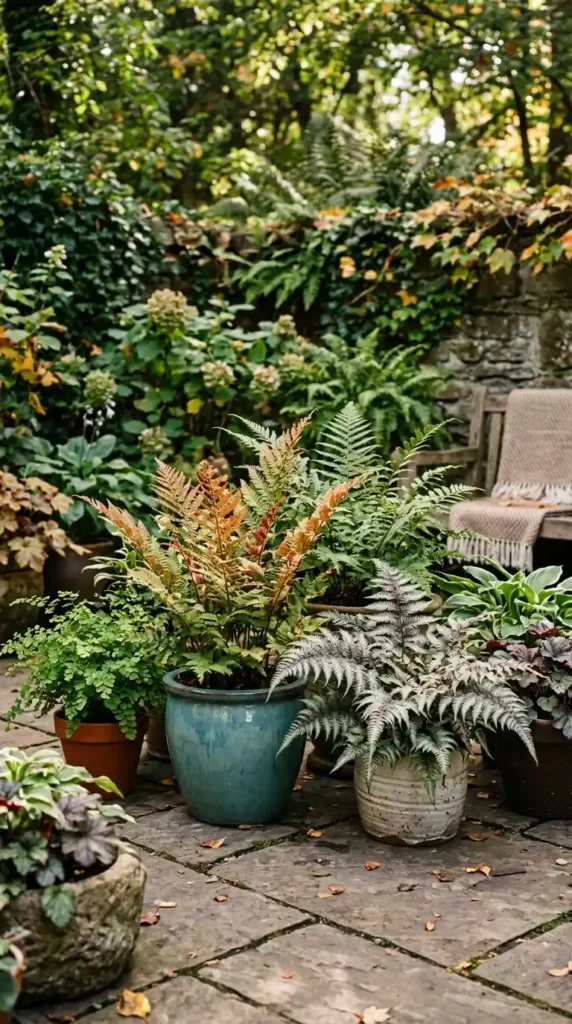
Ferns are a staple of any shade container. They deliver incredible texture and movement, and their delicate fronds require zero maintenance beyond watering . Growing in the wild under the shaded canopy of forest trees makes them perfect for the shadiest corners of any garden .
For containers, choose autumn fern (Dryopteris erythrosora), which emerges a coppery-red in spring before maturing to glossy green . The ‘Brilliance’ variety produces new fronds with coppery tones that turn dark green for summer . Japanese painted fern (Athyrium niponicum) offers silver and burgundy markings that look almost metallic, with the ‘Crested Surf’ variety featuring uniquely frilled frond tips .
Ferns naturally grow in woodlands, hence their preference for shade, damp conditions, and soils with low nutrients . They are easy to grow and some varieties, like the lemon button fern, are evergreen and offer year-round structure . Pair them with broader-leaved plants like hostas or colorful caladiums for a stunning mixed container display.
3. Coleus: Living Paint for Shade
✦ Best for: Adding instant, vibrant foliage color in an incredible range of patterns and shades
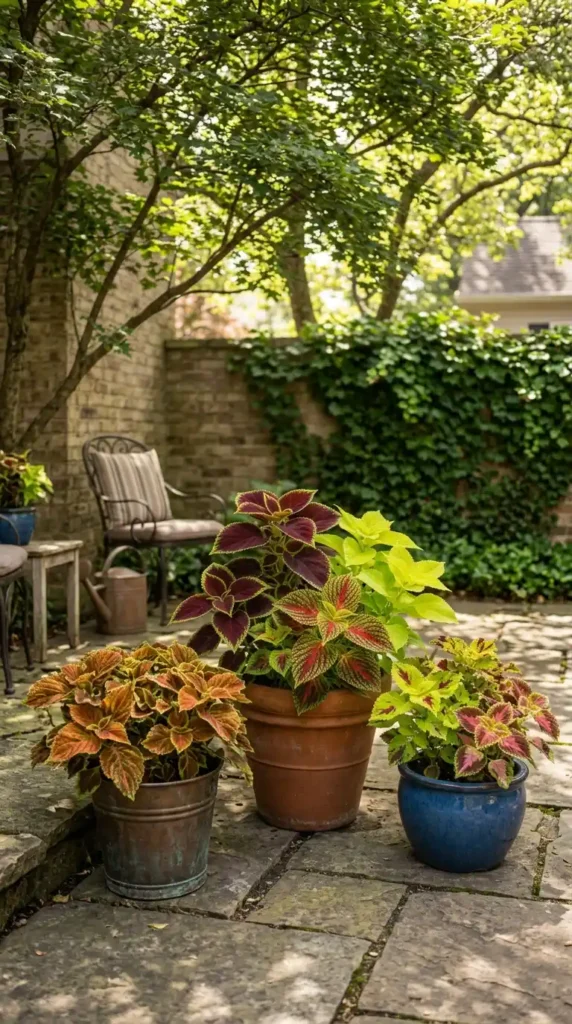
Few annuals pack more color punch per square inch than coleus. Modern varieties hold their vivid red, orange, and yellow tones even in low light without fading . They grow fast, fill containers quickly, and look stunning as a thriller plant in the center of a mixed pot .
Coleus comes in an endless array of foliage colors, patterns, and shapes. Try ‘Glory of Luxembourg’ with its red leaves and green zigzags, ‘Pineapplette’ with yellow leaves and mottled red flecks, or ‘Wizard Rose’ with green foliage that fades to cream and red towards the center . ColorBlaze® Chocolate Drop has deep crimson and green foliage with a mounded trailing habit suitable for window boxes and hanging baskets .
Most varieties prefer part shade, especially in warmer climates where they can suffer from leaf scorch in intense afternoon sun . Coleus can be cut back for winter and overwintered indoors or enjoyed as perennials in warmer climates (zones 10 and 11) . They are prone to breakage, so avoid windy locations .
4. Caladiums: Tropical Drama in a Pot
✦ Best for: Making a bold statement with large, heart-shaped leaves in stunning color combinations
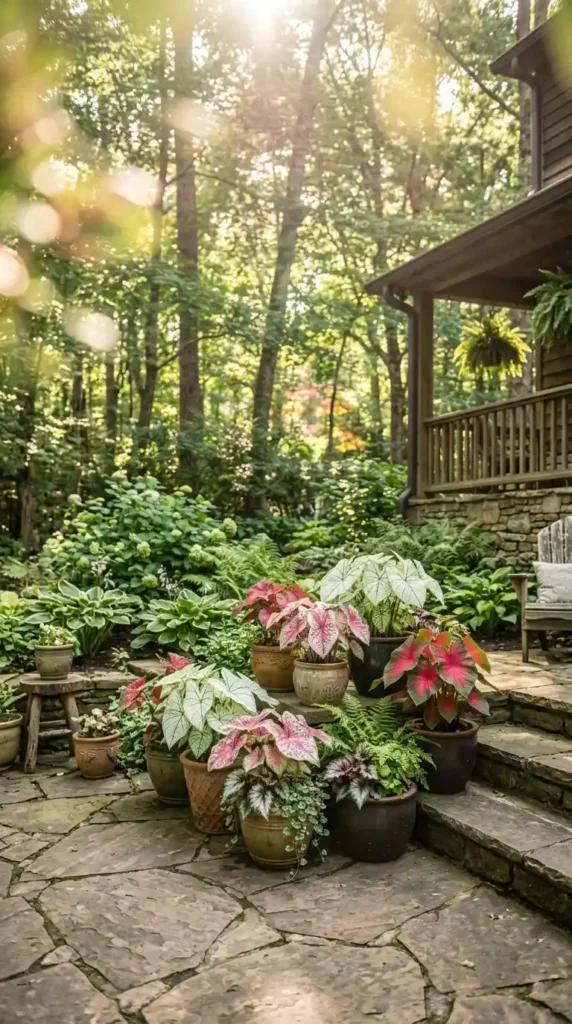
If you want drama, plant caladiums. Their large heart-shaped leaves come in combinations of white, pink, red, and green, some almost translucent . They love humidity and indirect light, making them perfect for shaded patios . Their bold, heart-shaped leaves appear even more intense in low light than in sun .
Try ‘Celebration’ and ‘Florida Sweetheart’ for vibrant color, or Heart to Heart® ‘White Wonder’ with its white leaves, slender green edges, and pink spot where the stem attaches . ‘Pink Symphony,’ ‘Iceberg,’ ‘Miss Muffet,’ and ‘Candyland’ are other excellent choices for a lovely grouping .
Caladiums can grow in a variety of containers, from hanging baskets to pots large and small . They are dormant in fall and winter, and their tubers can be lifted, stored, and replanted year after year, making them a cost-effective choice . All parts of the caladium plant are toxic if chewed or swallowed, so keep them away from pets and children .
5. Impatiens: Non-Stop Color for Deep Shade
✦ Best for: Reliable, continuous blooms from spring until frost in even the deepest shade
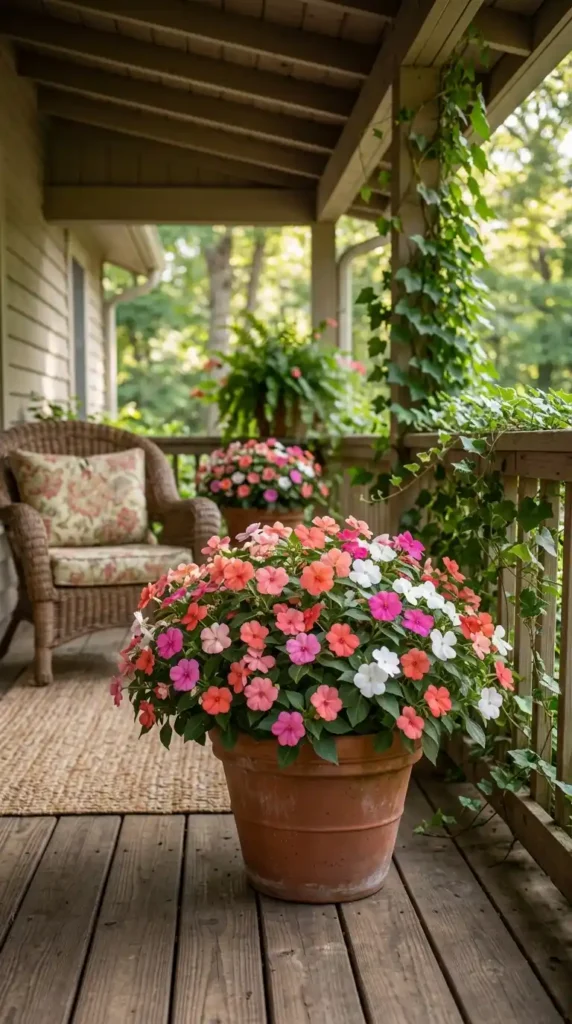
For non-stop color in deep shade, nothing beats impatiens. They bloom from late spring until frost in shades of red, pink, coral, white, and lavender . Traditional varieties offer a rainbow of color choices and are inexpensive and prolific .
The two main groups are Impatiens walleriana (traditional) and New Guinea impatiens. Traditional impatiens are best for true deep shade, while New Guinea impatiens have larger foliage and can tolerate more sunlight . After concerns about downy mildew affected traditional impatiens, new resistant varieties like the Bounce series have become popular alternatives .
6. Begonias: Flowers and Foliage in One
✦ Best for: Versatile plants that offer both gorgeous blooms and attractive foliage for shady spots
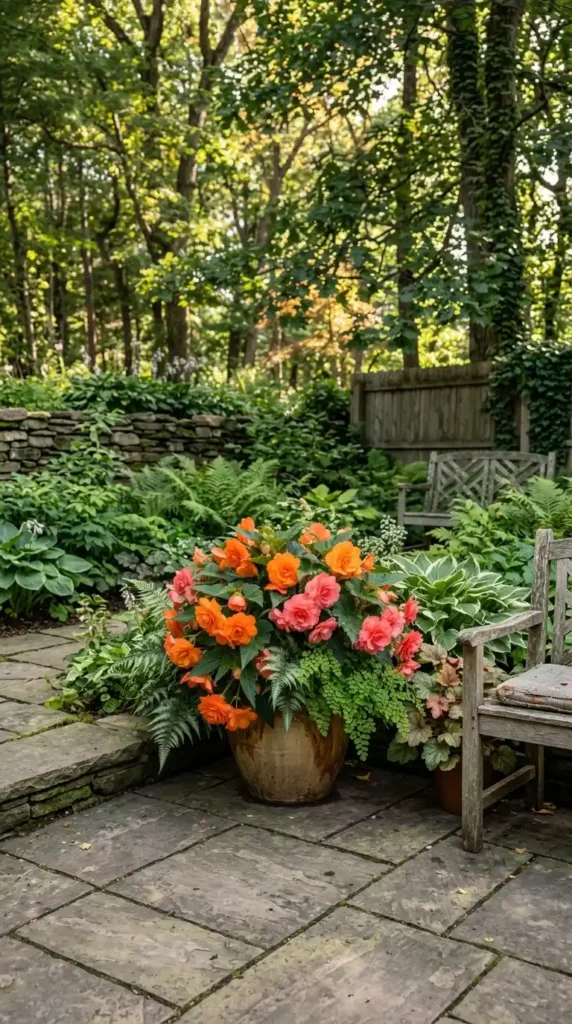
There are more than 2,000 species of begonias, making them one of the most versatile shade plants for containers . Tuberous begonias are among the very best choices for containers in shade because they truly thrive in low light while delivering nonstop color . They bloom all season long and are especially adaptable to changing light conditions .
Wax begonias handle shade and produce constant color. Rex begonias are grown primarily for foliage, with swirling patterns in silver, burgundy, and green that look almost painted .
Begonias have fleshy leaves and stems that store moisture, meaning they do not require daily watering . Let the top two inches of soil dry out to avoid overwatering and root rot . They are perennial plants that can live for many years but are frost tender and will not survive freezing temperatures if left outside . Begonias are toxic to humans and pets if chewed or swallowed .
7. Heuchera (Coral Bells): Year-Round Foliage Color
✦ Best for: Adding bold, colorful foliage in shades from lime green to deep burgundy and near-black
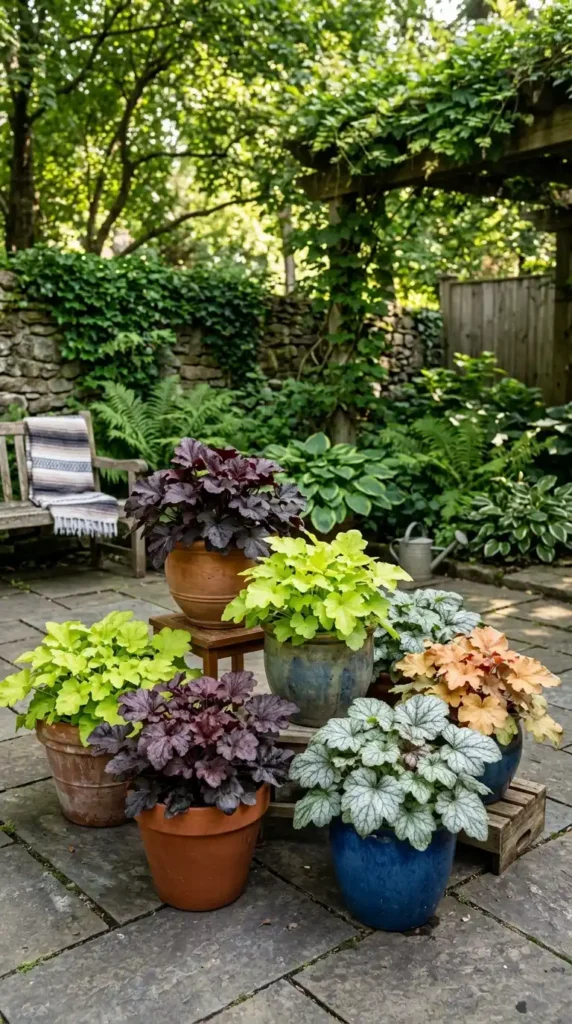
Heuchera is arguably the most versatile foliage plant for shade containers. Varieties range from lime green to deep burgundy to near-black, with ruffled or smooth leaves . They are evergreen in mild climates, tolerate both shade and drought once established, and look great all season long .
Primo® ‘Black Pearl’ has stunning black, evergreen to semi-evergreen foliage with a shiny sheen, scalloped edges, and rosy-purple undersides . ‘Key Lime Pie’ offers bright chartreuse foliage that brightens dark corners. Heucheras produce delicate flower stalks in spring and summer that hummingbirds love .
Heucheras need well-draining soil but are not fussy about fertility, making them perfect low-maintenance options for busy gardeners . For something dramatic, try Heuchera ‘Black Sea’ with dark, almost black foliage and contrasting white flowers .
8. Astilbe: Feathery Plumes for Shady Spots
✦ Best for: Adding vertical interest and feathery flower plumes to shaded container displays
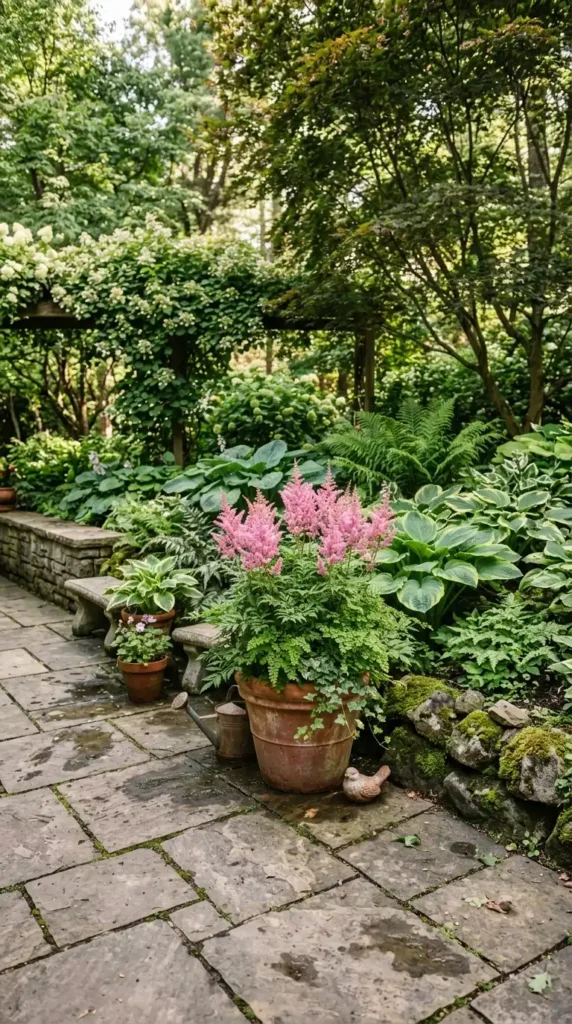
Astilbe brings feathery plumes of pink, red, or white that rise above ferny foliage, an unusual combination of texture and flower power for shade . It is a perennial (zones 4 to 9) that does surprisingly well in containers as long as moisture stays consistent . It makes a great tall centerpiece plant in mixed containers.
The fern-like foliage looks attractive even when the plant is not blooming . Astilbes prefer consistently moist soil and perform beautifully in areas too wet for many other plants . Group different varieties together for a stunning display of plumes at different heights and colors throughout summer .
9. Wishbone Flower (Torenia): The Impatiens Alternative
✦ Best for: Adding trumpet-shaped blooms in purple, pink, and white to containers in dense shade
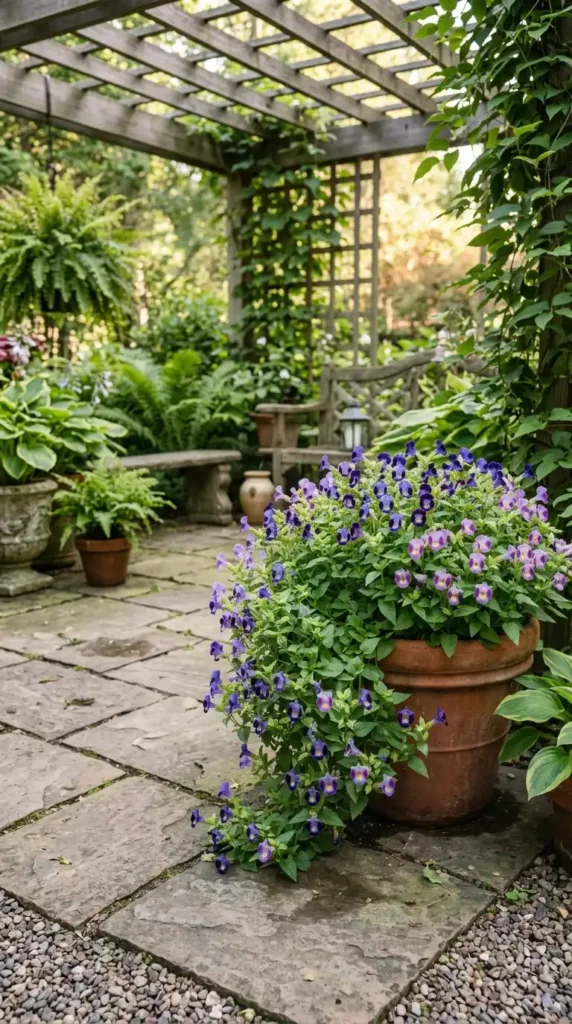
Often called the “impatiens of the new generation,” torenia produces trumpet-shaped blooms in purple, pink, and white even in dense shade . It is a heat-tolerant annual that trails slightly, making it perfect for the edges of mixed containers or hanging baskets in shady spots .
Catalina® Midnight Blue has vivid blue flowers punctuated with a yellow throat for eye-catching contrast . Wishbone flowers are virtually maintenance-free with self-cleaning flowers, and they are heat and shade tolerant .
10. Golden Creeping Jenny: The Perfect Spiller
✦ Best for: Adding bright chartreuse color and cascading movement to container edges
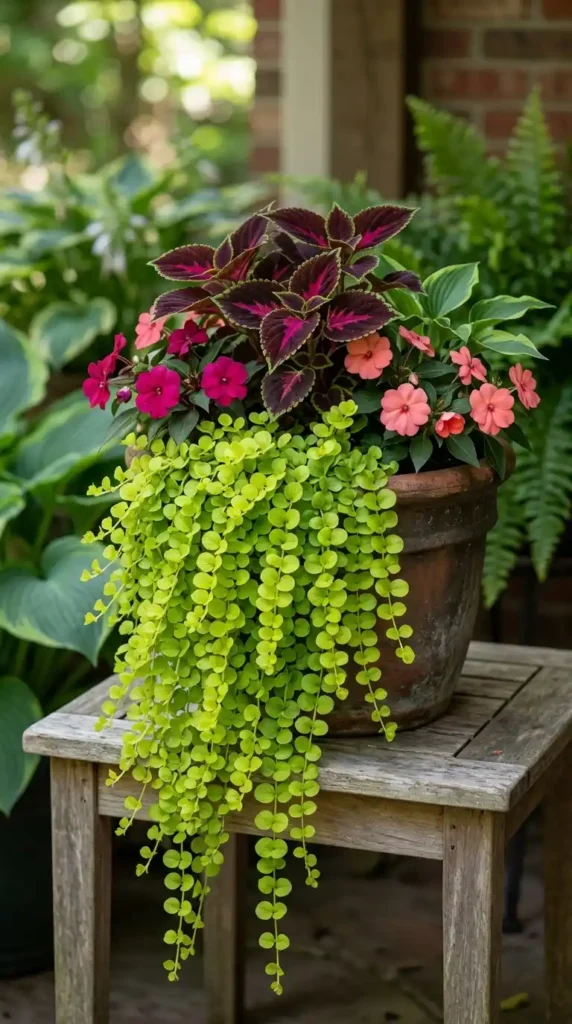
Golden creeping Jenny (Lysimachia nummularia ‘Aurea’) is a beautiful plant that forms a mat of vibrant yellow-green foliage and cascades over the edges of containers . The yellow color stays year-round, keeping this plant visually interesting and engaging in all seasons . It is considered one of the best shade plants for containers .
‘Goldilocks’ makes a great spiller plant for upright containers, hanging baskets, and window boxes . Combine it with hostas, lobelia, begonias, and coleus in pots for partially shaded porches and patios . It thrives in part shade and moist but well-drained soil .
Frequently Asked Questions About Container Garden Plants for Shade
What are the best container garden plants for shade?
The best container garden plants for shade include hostas for bold foliage, ferns for texture, coleus and caladiums for dramatic color, impatiens and begonias for non-stop blooms, and heucheras for year-round foliage interest. These plants thrive in low-light conditions and perform beautifully in pots .
How often should I water shade container plants?
Shade containers typically dry out more slowly than containers in full sun. Check the soil moisture regularly and allow the top inch or two of soil to dry before watering . Plants like begonias store moisture in their fleshy leaves and stems, so they do not require daily watering . Just remember that containers protected from the sun are also often protected from rain .
Can I grow flowering plants in shade containers?
Yes! Impatiens bloom non-stop from spring until frost in even the deepest shade . Tuberous begonias deliver nonstop color in low light . Astilbes produce feathery plumes of pink, red, or white in partial shade . Wishbone flowers (torenia) bloom in purple, pink, and white in dense shade .
What is the difference between part shade and full shade for container plants?
Part shade means the area receives 3 to 6 hours of direct sun per day, preferably in the morning. Full shade means less than 3 hours of direct sun or dappled light throughout the day . Even plants that thrive in the shade still need some light, so choose plants that match your light conditions .
How do I keep my shade containers looking good all season?
Start with a quality potting mix and pots with drainage holes . Choose plants suited to your light level . Water when the top inch of soil is dry . Trim leggy growth to encourage bushier plants . And remember that shade plants grow more slowly than sun plants, so your container will stay in shape longer without needing constant maintenance .
Related Articles
Garden Plants for Shade That Thrive Without Direct Sunlight
21 Koi Pond Design Ideas for Small Gardens That Look Stunning
8 Rooftop Garden Ideas Perfect For Summer
10 Budget-Friendly Summer Landscaping Ideas
Shade is not a limitation. It is an invitation to grow the most beautiful, textural plants in the garden. Embrace the shadows and discover a world of lush, colorful container possibilities.

Sheikh Hassaan is a digital architect for small businesses and the founder of The Glow Up System. He writes about home decor, garden design, and outdoor living for real American homes – practical ideas that work in actual spaces without oversized budgets.