
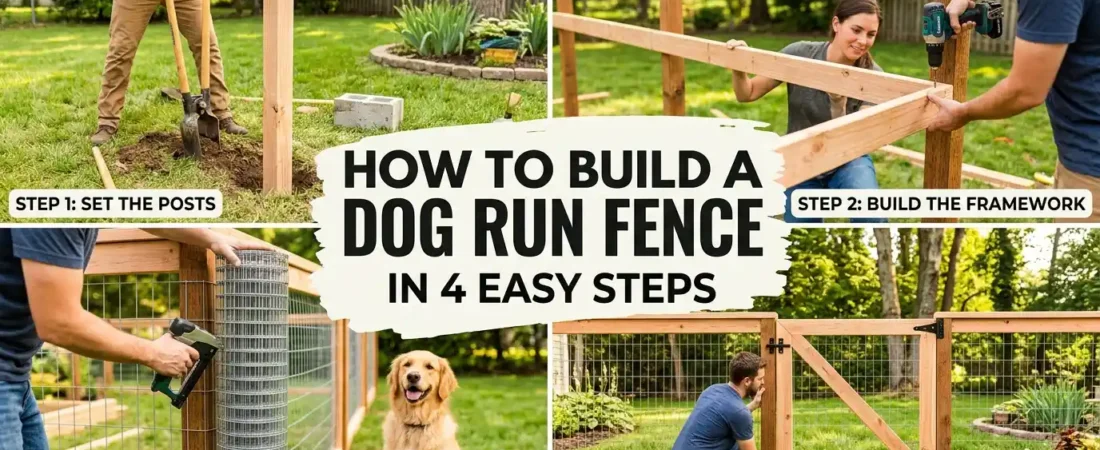
A dog run fence gives your dog a safe, designated outdoor space where they can run, play, and enjoy fresh air without wandering off. It protects them from traffic and other animals while giving you peace of mind. And it is surprisingly simple to build yourself with basic tools and materials.
This DIY guide walks you through building a dog run fence in four easy steps, from planning and measuring to installing posts, attaching fencing, and adding a gate.
Table of Contents
What You’ll Need
Tools
- Tape measure
- Post hole digger or auger
- Level
- Shovel
- Hammer or mallet
- Screwdriver or drill
- Wire cutters
- Staple gun or fencing staples
- String line
- Gloves
Materials
| Item | Purpose |
|---|---|
| Wooden or metal posts | Support structure |
| Concrete mix | For setting posts |
| Gravel | For drainage |
| Fencing material | Chain-link, welded wire, or wood |
| Gate hardware | Hinges, latch, handle |
| Galvanized screws or nails | For securing fencing |
| Post caps | Protects post tops from weather |
Optional
- Weed barrier fabric
- Roof or shade cover
- Drainage pipe
- Locking gate latch for security
Step 1: Plan and Measure
A solid plan saves time, money, and frustration. Before you start building, take time to think through your design.
Choose the Location
Walk your yard and decide where the dog run will go. Consider these factors:
- Flat ground: A level area makes installation easier.
- Access to the house: A spot near a door makes letting the dog in and out convenient.
- Shade: Some shade keeps the run cooler in summer.
- Drainage: Avoid low spots that collect water.
- Visibility: Place the run where you can see it from the house.
Determine the Size
The size of your dog run depends on your dog’s size and energy level.
| Dog Size | Minimum Run Size |
|---|---|
| Small (under 25 lbs) | 10×10 feet |
| Medium (25-50 lbs) | 12×15 feet |
| Large (50-75 lbs) | 15×20 feet |
| Extra large (75+ lbs) | 20×25 feet |
Consider the space you have available and how much time your dog will spend in the run. Bigger is always better.
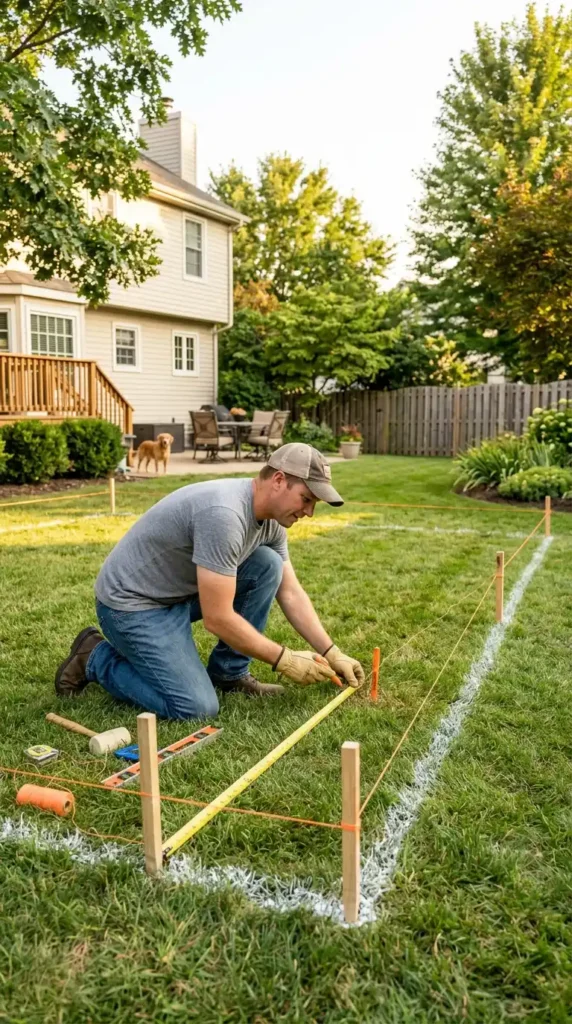
Mark the Perimeter
Mark the corners and shape of the run with stakes and string. Walk around the marked area to make sure the size feels right.
Check Local Regulations
Check your local zoning and HOA guidelines before you build. Some areas have rules about fence height, placement, and materials.
Step 2: Install Posts
Posts are the backbone of your fence. Proper installation ensures a secure, long-lasting structure.
Dig the Post Holes
Space posts 6 to 8 feet apart. This spacing works for most fencing materials.
- Post hole depth: Dig holes at least 2 feet deep, or below the frost line in colder climates.
- Hole width: Make holes 3 times the post width.
Tip: Mark post positions with spray paint so you know exactly where to dig.
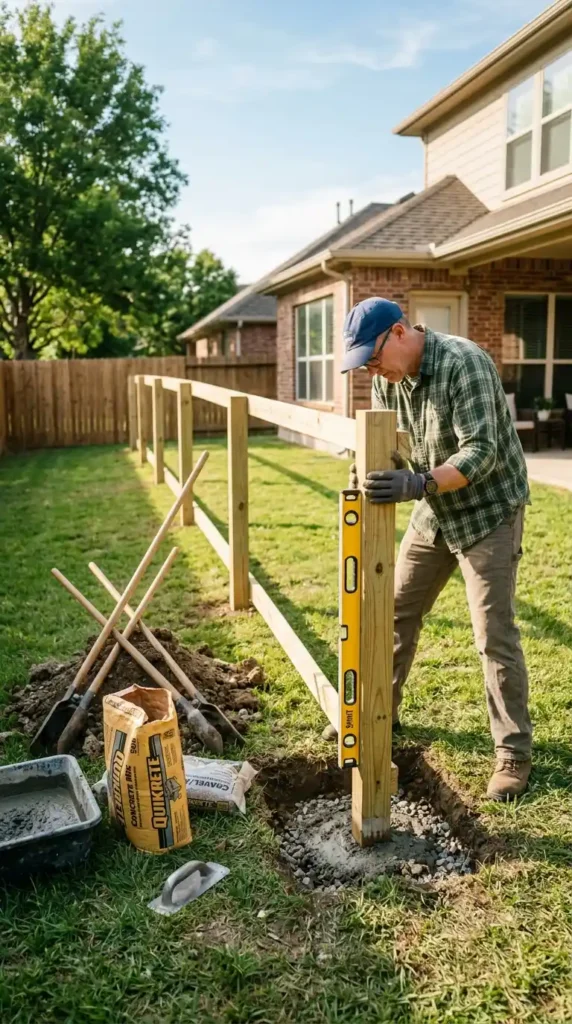
Set the Posts
- Place the post in the hole.
- Use a level to make sure it is perfectly straight.
- Add a few inches of gravel at the bottom for drainage.
- Pour dry concrete mix into the hole.
- Add water according to the concrete package instructions.
- Check the level one more time and adjust if needed.
- Let the concrete set for 24-48 hours.
Tip: For corner and gate posts, use larger posts (4×4 or 4×6) for added strength.
Step 3: Attach Fencing
Now it is time to attach the fencing material to the posts. The technique varies depending on the material you choose.
Chain-Link Fencing
- Unroll the chain-link material along the fence line.
- Attach it to the posts with ties or wire.
- Pull it tight as you go.
- Trim excess with wire cutters.
Wood Fencing
- Attach horizontal rails to the posts (2-3 rails per section).
- Nail or screw the pickets to the rails.
- Space pickets evenly (1-4 inches apart depending on your needs).
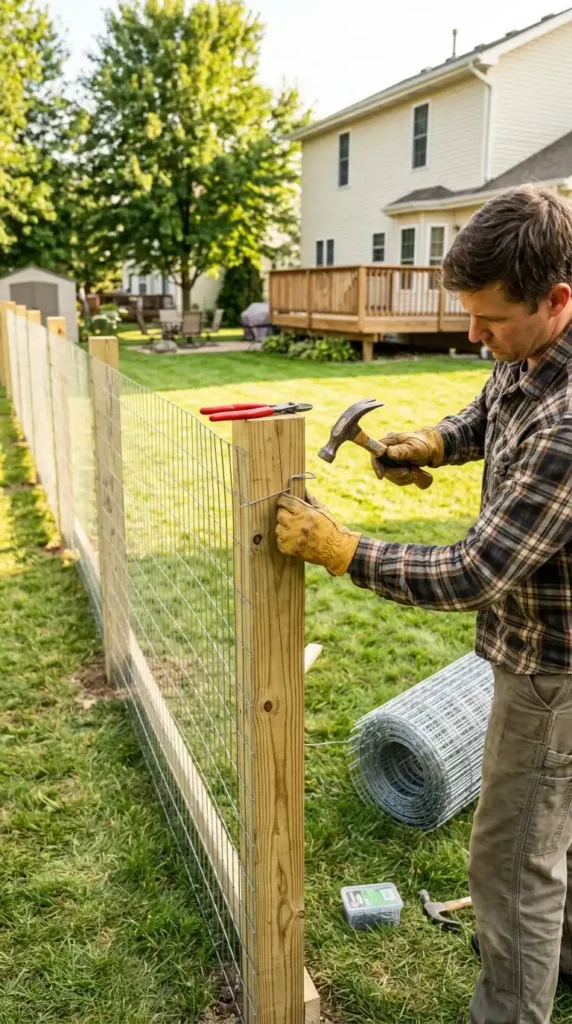
Welded Wire or Mesh
- Unroll the wire along the fence line.
- Attach it to the posts with staples or ties.
- Pull it tight to prevent sagging.
- Trim excess with wire cutters.
Height Considerations
- Small dogs: 3-4 feet tall
- Medium dogs: 4-5 feet tall
- Large dogs: 5-6 feet tall
- Very active or jumping dogs: 6+ feet tall
Tip: If your dog is a digger, extend the fence 6-12 inches below ground or use gravel along the base to deter digging.
Step 4: Add Gate and Safety Checks
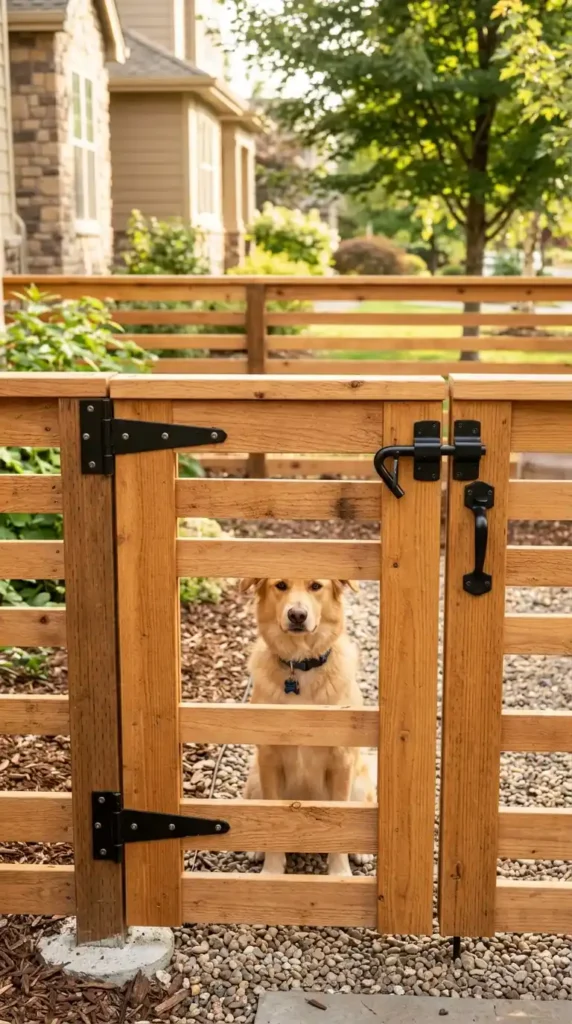
The gate is an essential feature of your dog run. It provides access for you and your dog.
Install the Gate
- Attach the hinges to the gate frame.
- Attach the gate to the post.
- Install the latch handle.
- Check that the gate swings freely.
- Adjust if it does not close properly.
Gate tips:
- Use heavy-duty hinges for a gate.
- Install a self-closing mechanism if you want extra security.
- Add a lock if you want to prevent unauthorized access.
- Position the gate where you can see it from the house.
Safety Checks
Walk through the entire fence and check every part:
- Post stability: Push on each post to make sure it is secure.
- Fencing integrity: Look for gaps, loose sections, or sharp edges.
- Gate function: Test the latch and hinges several times.
- Bottom gap: Make sure your dog cannot dig under or squeeze through.
- Top edge: Check for sharp edges that could harm your dog.
Add the Final Touches
- Gravel floor: Add gravel to the run for drainage and cleanliness.
- Shade cover: Install a shade cloth or roof for hot weather.
- Water station: Place a water bowl in a shaded spot.
- Dog house: Add a dog house if your dog spends extended time in the run.
Safety Tips
- Use galvanized hardware: Rust-proof screws, nails, and fittings last longer.
- Check for sharp edges: File or cover any sharp points that could hurt your dog.
- Avoid toxic materials: Choose dog-safe wood and sealants.
- Provide shade: If the run gets direct sun, add shade.
- Secure the base: If your dog digs, extend the fence underground.
- Check regularly: Inspect the fence monthly for loose parts or damage.
Cost Estimate
Here is a rough cost estimate for building a dog run fence.
| Item | Cost Range |
|---|---|
| Posts (wood) | $5-$15 each |
| Fencing material (per linear foot) | $2-$10/ft |
| Concrete mix | $5-$10 per bag |
| Gate hardware | $20-$50 |
| Gravel (per ton) | $40-$80 |
| Total (for a 20×20 run) | $300-$800 |
Costs vary based on materials, size, and location.
Frequently Asked Questions
1. How tall should a dog run fence be?
The height depends on your dog’s size and jumping ability. Small dogs need 3-4 feet, medium dogs need 4-5 feet, and large or athletic dogs need 5-6 feet or more.
2. What is the best fencing material for a dog run?
Chain-link is durable and affordable. Welded wire is strong and easy to install. Wood offers privacy but costs more. Choose based on your budget and needs.
3. Can I build a dog run without digging holes?
Yes, you can use metal posts with auger-style bases that are driven into the ground. However, concrete-set posts are more secure for permanent installations.
4. How do I prevent my dog from digging under the fence?
Extend the fence 6-12 inches underground, bury a wire skirt along the base, or add gravel around the perimeter.
5. Do I need a permit for a dog run fence?
Check with your local building department. Some areas require permits for fences over a certain height.
6. How long does it take to build a dog run fence?
A simple dog run fence can be built in one weekend. Larger or more complex projects may take longer.
7. What flooring is best for a dog run?
Gravel is popular because it drains well and is easy to clean. Artificial turf is soft and comfortable. Sand is comfortable but can be messy.
A Safe Space for Your Dog
A dog run fence gives your dog a safe, secure space to enjoy the outdoors. With this 4-step guide, you can build one yourself in a weekend. The materials are affordable, the process is straightforward, and the result is a space your dog will love.
Take time to plan, choose quality materials, and follow the safety checks. Your dog will thank you for it.
Related Articles
DIY Dog-Friendly Backyard Makeover: Before and After
How to Design a Beautiful Backyard Pet Memorial Garden
7 Wood Dog Kennel Furniture Picks for Every Home
Non-Toxic Plants for Dogs: A Pet-Safe Indoor Garden Guide
A well-built dog run fence gives your dog freedom and you peace of mind. With some planning and basic tools, you can create a safe outdoor space that both you and your dog will enjoy.

Sheikh Hassaan is a digital architect for small businesses and the founder of The Glow Up System. He writes about home decor, garden design, and outdoor living for real American homes – practical ideas that work in actual spaces without oversized budgets.