

There is nothing quite like a house filled with lush greenery. But if you share your home with a curious dog who treats every leaf as a potential snack, plant shopping can feel like navigating a minefield. The good news is you do not have to choose between your plants and your pup. There is a wide variety of stunning, non-toxic plants that are perfectly safe for your furry friend .
That is what makes knowing which non-toxic plants for dogs are available so essential for American pet owners, allowing you to create a beautiful, green sanctuary without the worry of an emergency trip to the vet. This article covers 10 of the best dog-safe plants for your home and garden, along with a detailed list of what to avoid.
Table of Contents
Why Pet-Safe Plants Matter
Dogs are naturally curious creatures. They explore the world with their noses and mouths, and houseplants are often irresistible to them. What seems like harmless chewing can become a medical emergency if the plant is toxic . The most dangerous plants for dogs can cause anything from mild gastrointestinal upset to organ failure.
Choosing non-toxic plants eliminates this worry. While even safe plants can cause mild stomach upset if eaten in large quantities, they are not expected to cause life-threatening symptoms . This peace of mind is invaluable for pet owners.
Always check the ASPCA’s Toxic and Non-Toxic Plant List before bringing a new plant home . Here are some of the best dog-safe options.
1. Spider Plant: The Indestructible Favorite
✦ Best for: Any room where you want an easy-care, trailing plant that dogs can safely nibble
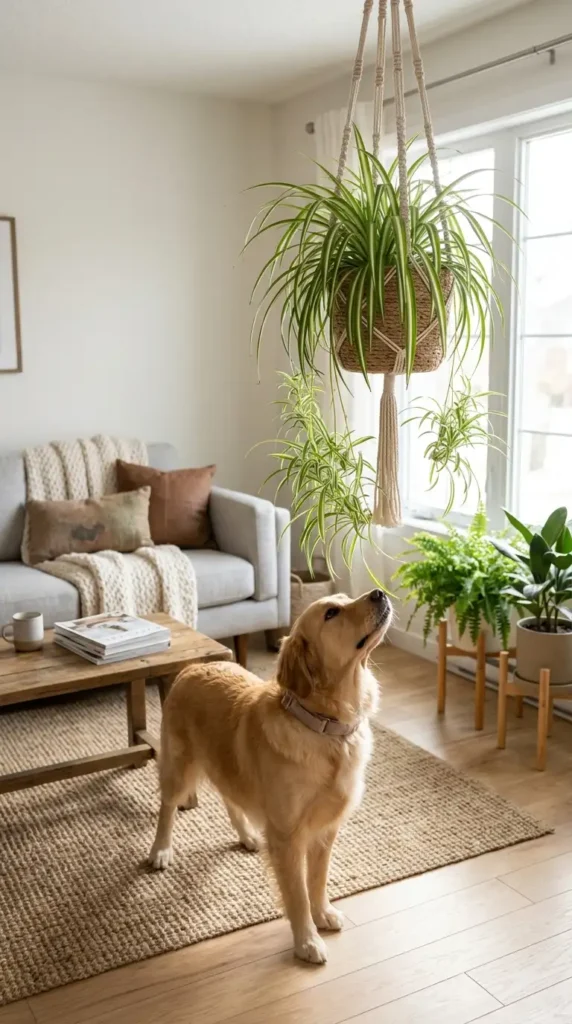
The spider plant is the undisputed champion of pet-safe houseplants. It is completely non-toxic to dogs and cats, and its resilient nature makes it perfect for beginners or forgetful plant parents . Even if your dog takes a little nibble, you can rest easy.
Spider plants feature long, arching green-and-white striped leaves and produce baby “spiderettes” that can be propagated. They thrive in bright, indirect light but tolerate low light and neglect . They are also air-purifying, making them a great choice for any room .
2. Boston Fern: The Humidity Lover
✦ Best for: Bathrooms, kitchens, and hanging baskets where you want lush, feathery foliage
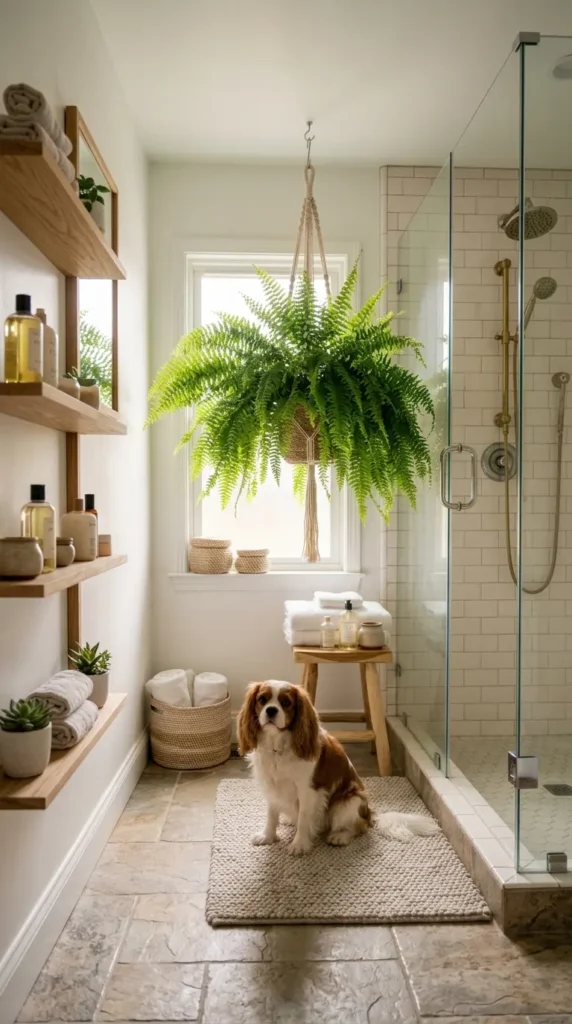
The Boston fern is a classic houseplant that is completely safe for dogs . Its lush, feathery fronds add a touch of elegance and thrive in humid environments, making them perfect for bathrooms .
Boston ferns prefer bright, indirect light and consistently moist soil. They are also excellent air purifiers, adding to their appeal . The ASPCA lists almost all true ferns as non-toxic, but beware of asparagus fern, which is not a true fern and is toxic .
3. Orchid (Phalaenopsis): The Elegant Bloomer
✦ Best for: Coffee tables, shelves, and anywhere you want long-lasting, elegant flowers
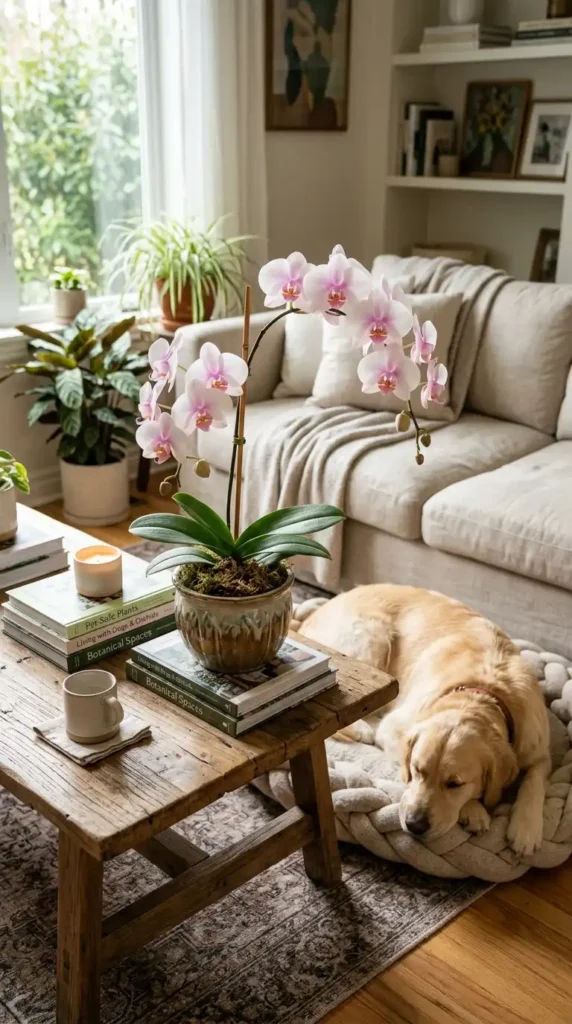
Orchids are one of the most popular and elegant houseplants, and they are completely safe for dogs . Phalaenopsis orchids are particularly common and add a touch of sophistication to any room .
Orchids prefer bright, indirect light and high humidity. They require less water than many other plants, making them a manageable choice for most plant parents . While they are safe, the flowers are delicate, so place them where they will not be knocked over.
4. Calathea: The Living Artwork
✦ Best for: Low-light areas where you want stunning, patterned leaves that are completely pet-safe
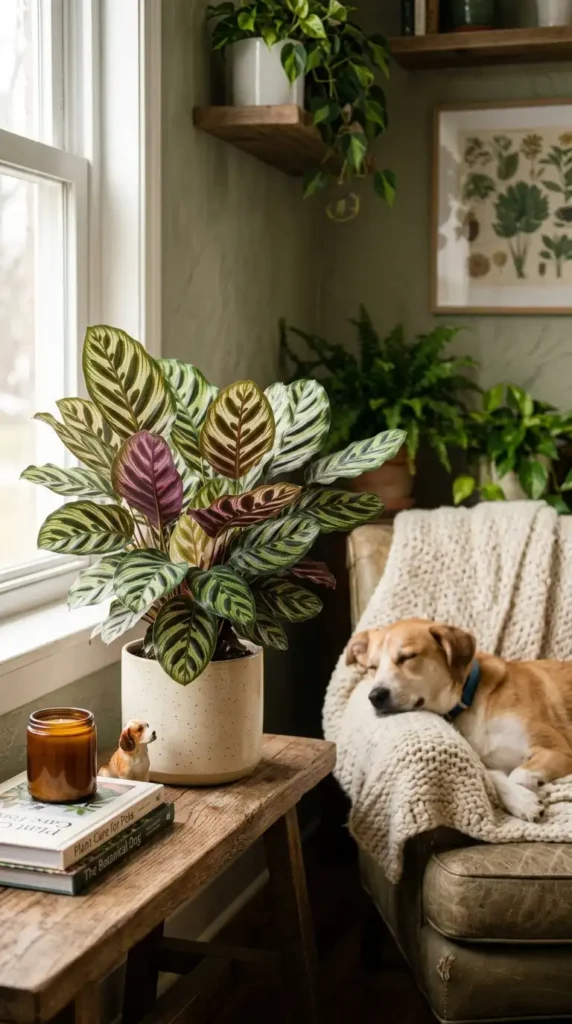
Calatheas are known for their striking, patterned leaves that look like living artwork. They are non-toxic to dogs and cats, making them a safe choice for pet owners who want something visually stunning .
Calatheas are also known as prayer plants because their leaves fold up at night. They thrive in low to medium indirect light and high humidity, making them perfect for bathrooms or terrariums . They prefer moist, well-drained soil and can be a bit fussy, but their beauty is worth the effort.
5. Parlor Palm: The Tropical Corner
✦ Best for: Corners, entryways, and anywhere you want a touch of tropical elegance
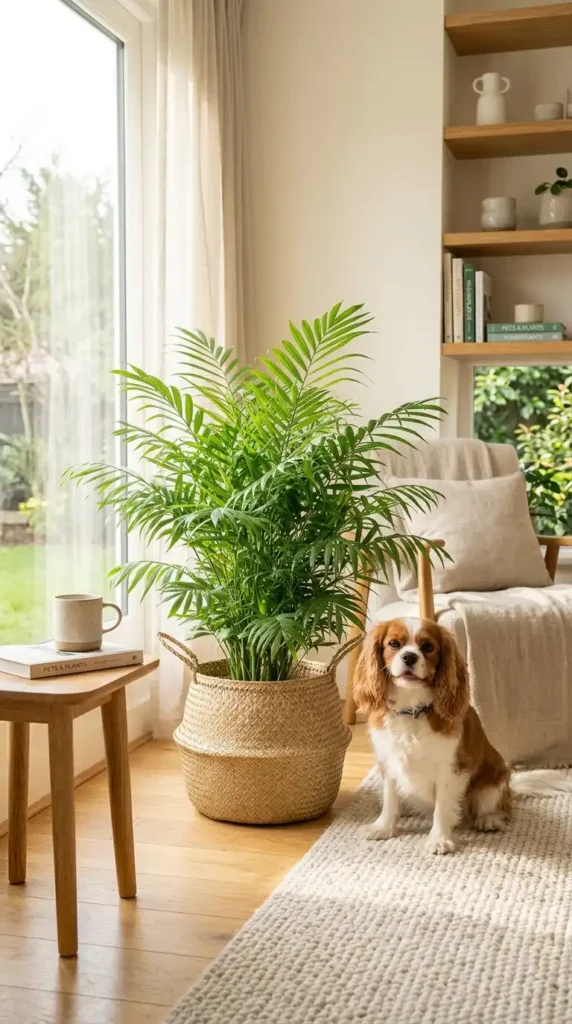
The parlor palm is a popular, low-maintenance houseplant that is non-toxic to dogs and cats . Its feathery fronds add a touch of tropical elegance to any room, and it is famously resilient .
Also known as the bamboo palm, it thrives in low to bright indirect light, making it perfect for darker corners . It is also an air-purifying plant, helping to clean the air in your home . It is a great choice for beginner plant parents .
6. Peperomia: The Colorful Compact
✦ Best for: Desks, shelves, and small spaces where you want colorful, easy-care foliage
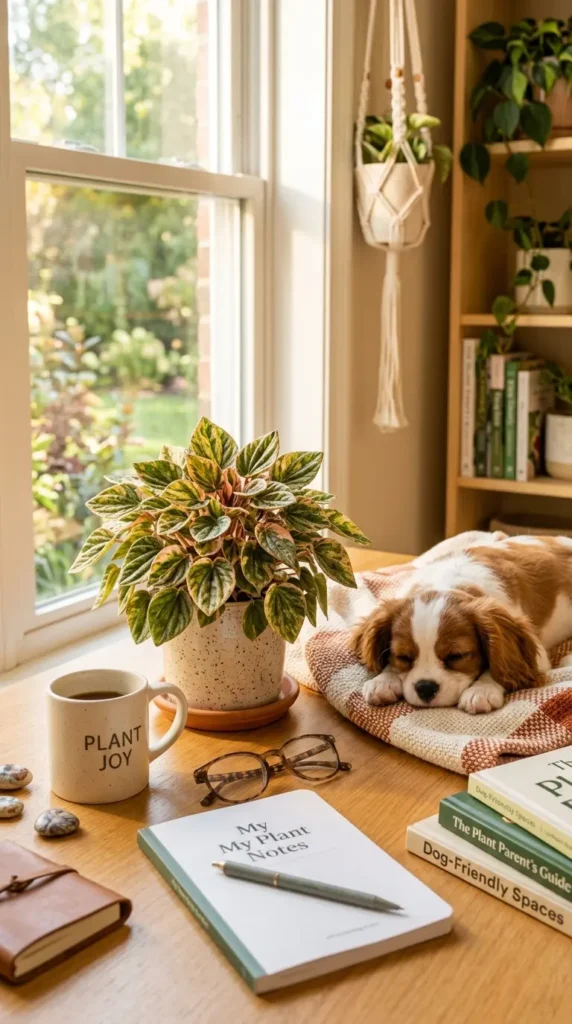
Peperomias are a diverse group of plants known for their colorful, textured leaves. They are non-toxic to dogs and cats, making them a safe choice for any room . They are perfect for desks, shelves, and small spaces .
Peperomias are easy to care for and thrive in low to bright indirect light with minimal watering . They are drought-tolerant and are an excellent choice for new plant parents .
7. African Violet: The Colorful Bloomer
✦ Best for: Windowsills and brightly lit spots where you want compact, colorful flowers
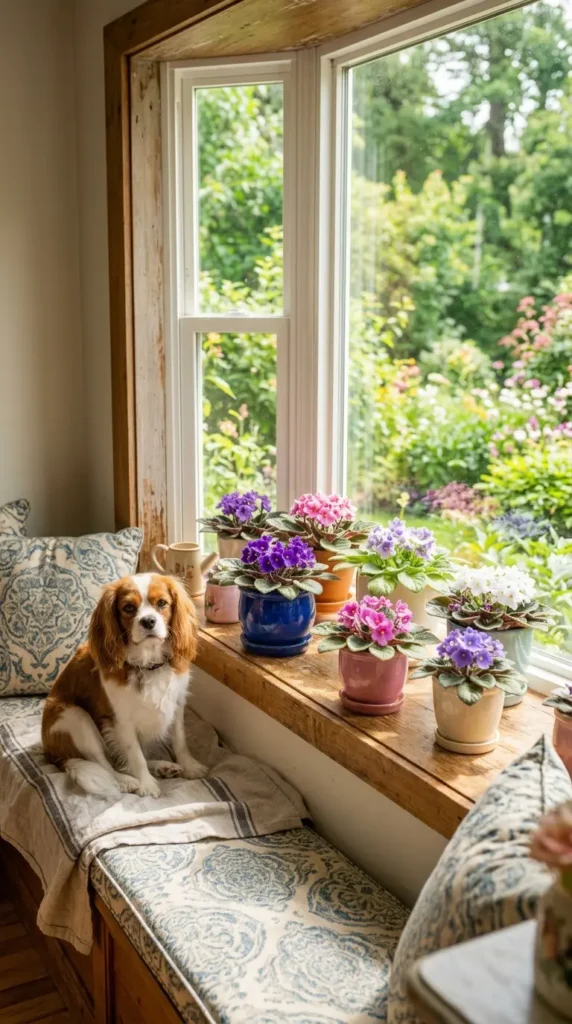
African violets are a favorite for their compact size and colorful, long-lasting flowers. They are non-toxic to dogs and cats, making them a safe way to add a pop of color .
African violets prefer bright, indirect light and bloom year-round with proper care . They prefer to be watered from the bottom to avoid getting water on their leaves. They are a classic choice for any pet-friendly home.
8. Sunflower: The Garden Favorite
✦ Best for: Gardens, cut flowers, and anywhere you want bright, cheerful blooms outdoors
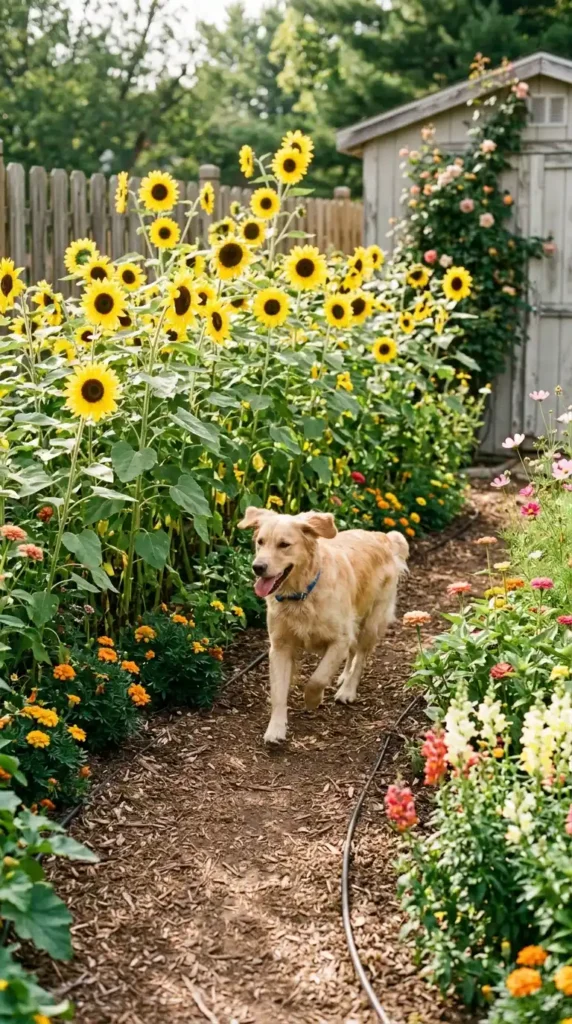
Sunflowers are a classic garden favorite that are non-toxic to dogs . Their bright, cheerful blooms add height and color to any outdoor space, and they are safe if your dog takes a curious nibble.
Sunflowers are low-maintenance and thrive in full sun with well-drained soil. They can grow quite tall, so stake them if needed. They are a perfect symbol of a sunny, pet-friendly garden.
9. Marigolds: The Pest-Repellent Annual
✦ Best for: Garden beds, borders, and containers where you want bright, pest-repellent flowers
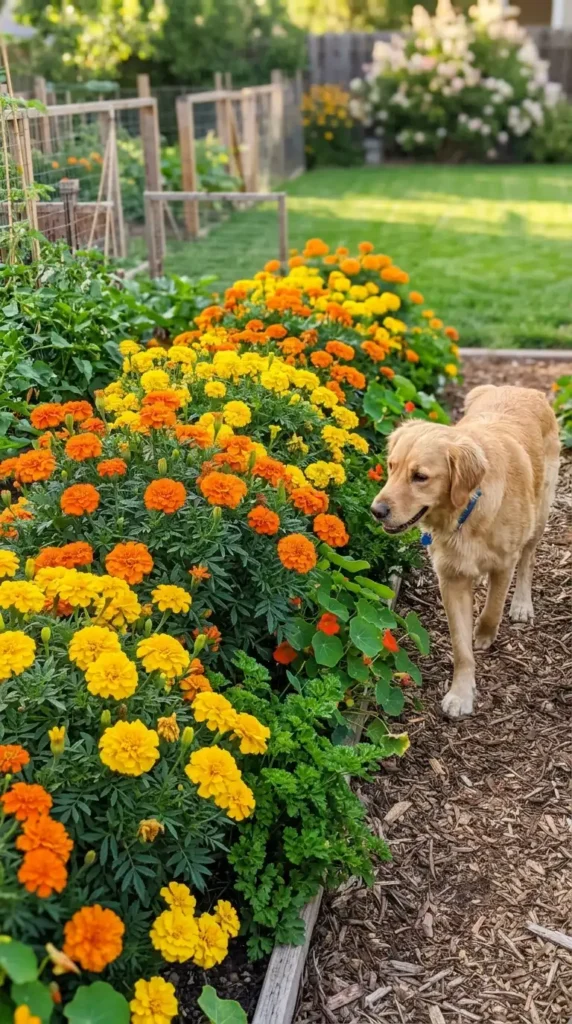
Marigolds are a cheerful, pest-repellent annual that is completely safe for dogs . Their vibrant yellow and orange flowers make a stunning addition to any garden bed or container.
Marigolds are easy to grow and thrive in full sun with well-drained soil. They are a great choice for vegetable gardens as they help repel certain pests. They are a classic, low-maintenance choice for pet-friendly gardens.
10. Roses: The Timeless Classic
✦ Best for: Gardens, bouquets, and anywhere you want classic, romantic blooms
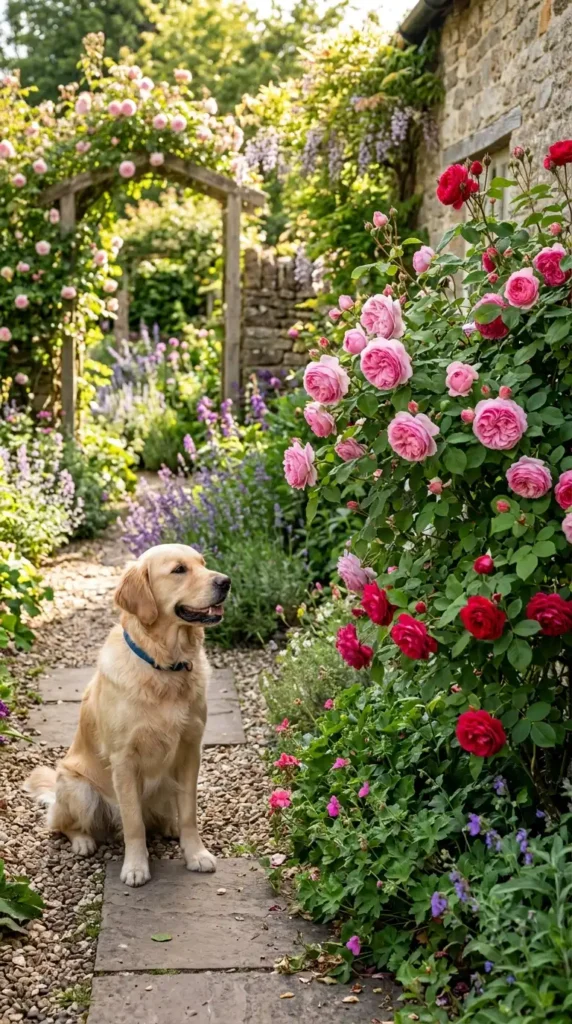
Roses are a timeless classic and are non-toxic to dogs . Their fragrant blooms make a beautiful addition to any garden or bouquet, and they are safe if your dog takes a curious nibble.
While roses are non-toxic, be cautious of the thorns. Keep an eye on your dog to ensure they do not get pricked . Otherwise, roses are a safe and romantic choice for any pet-friendly garden.
Common Toxic Plants to Avoid
While the plants above are safe, many common houseplants are toxic to dogs. Avoid the following plants :
Highly Toxic Plants
- Lilies (all varieties) – can cause kidney failure
- Sago Palm – can cause liver failure and death
- Oleander – highly toxic to multiple organs
- Azaleas/Rhododendrons – can cause coma and death
- Castor Bean – contains ricin
Moderately Toxic Plants
- Aloe Vera – mild to moderate toxicity
- Snake Plant – can cause nausea and vomiting
- Pothos (Devil’s Ivy) – causes oral irritation and burning
- Philodendrons – causes oral irritation and swelling
- Chrysanthemum – can cause vomiting and diarrhea
Causes Digestive Upset
- Dieffenbachia (Dumb Cane)
- English Ivy
- Jade Plant
- Peace Lily (toxic to cats only but causes mouth irritation in dogs)
Frequently Asked Questions About Non-Toxic Plants for Dogs
What are the best non-toxic plants for dogs?
The best non-toxic plants for dogs include spider plants, Boston ferns, orchids, calatheas, parlor palms, peperomias, African violets, sunflowers, marigolds, and roses. These plants are safe if your dog takes a curious nibble and are widely available at garden centers.
What houseplants are toxic to dogs?
Common toxic houseplants include lilies, sago palms, snake plants, aloe vera, pothos, philodendrons, rubber plants, and English ivy. The ASPCA maintains a comprehensive list of toxic and non-toxic plants that is an essential resource for pet owners .
Can I have succulents if I have a dog?
Yes, many succulents are safe for dogs, including Echeveria and Haworthia . However, aloe vera and jade plants are toxic, so choose carefully. Always check the specific variety before bringing it home.
What should I do if my dog eats a plant?
If your dog eats a plant, determine what plant they consumed. If it is a toxic plant, contact your veterinarian or the ASPCA Animal Poison Control Center immediately at (888) 426-4435 . If it is a non-toxic plant, monitor for signs of gastrointestinal upset.
Related Articles
Best Plants for Bathroom That Thrive in Humidity
15 Flowers That Start With C You’ll Love Growing
Best Indoor Plants for Low Light That Thrive in Dim Rooms
Flowers That Are Safe for Cats and Beautiful for You
A beautiful home and a healthy dog are not mutually exclusive. Choose non-toxic plants for dogs, and you can enjoy a green sanctuary without the worry.

Sheikh Hassaan is a digital architect for small businesses and the founder of The Glow Up System. He writes about home decor, garden design, and outdoor living for real American homes – practical ideas that work in actual spaces without oversized budgets.