
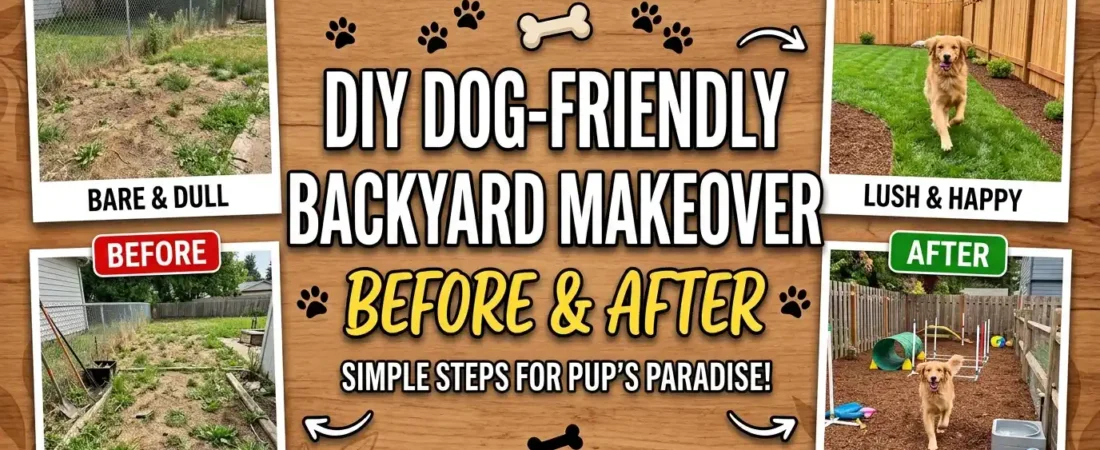
Every dog owner knows the struggle. You want a beautiful backyard where you can relax, but your dog sees it as a giant playground for digging, running, and rolling in mud. The result is often a patchy lawn, muddy paws, and a space that feels more like a dirt pit than a backyard oasis.
This case study follows a real backyard transformation from problem to solution. You will see the before problems, the planning process, the budget breakdown, and the step-by-step makeover that turned a muddy disaster into a beautiful, functional space for both dogs and humans.
Table of Contents
The Before Problems
The backyard was a classic case of dog damage. Two active dogs had turned a once-decent lawn into a mud pit.
The Issues
- Patchy grass: High-traffic areas were worn down to bare soil.
- Muddy paws: Every time it rained, the dogs tracked mud into the house.
- Digging holes: One dog loved to dig, creating craters throughout the yard.
- Uneven ground: The lawn was lumpy and unsafe for running.
- No defined zones: The space lacked clear areas for play, relaxation, and walking.
- Poor drainage: Water pooled in low spots, making the mud worse.
The Goals
- Create a durable, low-maintenance surface.
- Eliminate muddy paws.
- Provide a safe space for dogs to play.
- Add seating and defined areas for humans.
- Stay within a reasonable budget.
- Complete the work as a DIY project.
Planning Process
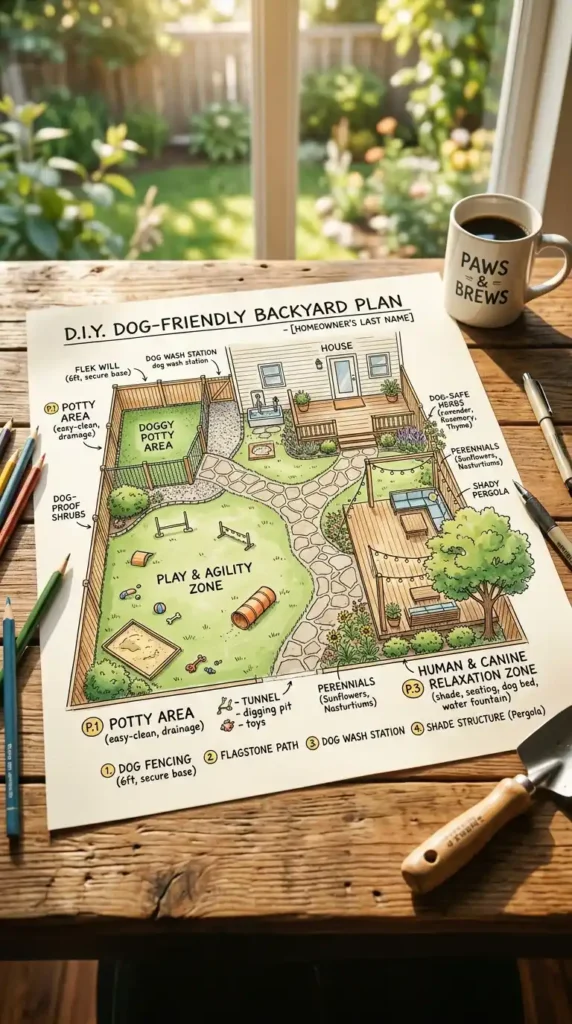
Before any work began, careful planning was essential. The goal was to create a space that worked for both dogs and humans.
Identifying Zones
The yard was divided into three main zones:
- Play Zone: A durable surface for running, chasing, and playing fetch.
- Potty Zone: A designated area for bathroom breaks (easy to clean).
- Relaxation Zone: A comfortable area with seating for humans.
Choosing Materials
The key to a successful dog-friendly yard is choosing the right materials. Here is what was selected:
| Area | Material | Why |
|---|---|---|
| High-traffic paths | Pea gravel | Good drainage, paw-friendly |
| Play area | Artificial turf | Durable, no mud, easy to clean |
| Potty area | Gravel with drainage | Easy to hose down |
| Seating area | Pavers | Stable surface for furniture |
| Planting beds | Mulch and plants | Adds beauty, dog-safe plants |
Measuring and Budgeting
The yard was about 40×30 feet. Materials and costs were calculated based on the layout.
Budget Breakdown
Here is a detailed breakdown of the costs for this DIY dog-friendly backyard makeover.
| Item | Quantity | Cost | Notes |
|---|---|---|---|
| Pea gravel | 3 tons | $240 | $80/ton delivered |
| Artificial turf | 300 sq ft | $600 | $2/sq ft, mid-grade |
| Landscaping fabric | 2 rolls | $60 | Prevents weeds |
| Paver stones | 50 pieces | $150 | For seating area |
| Timber edging | 6 pieces | $90 | For borders |
| Mulch | 2 yards | $80 | For planting beds |
| Dog-safe plants | 12 plants | $120 | Perennials and shrubs |
| Drainage pipe | 50 feet | $40 | For potty area |
| Landscape staples | 1 box | $15 | For securing fabric |
| Rentals (tamper) | 1 day | $45 | For compacting gravel |
| Total | $1,440 |
Step-by-Step Makeover
Step 1: Remove Old Sod and Level the Ground
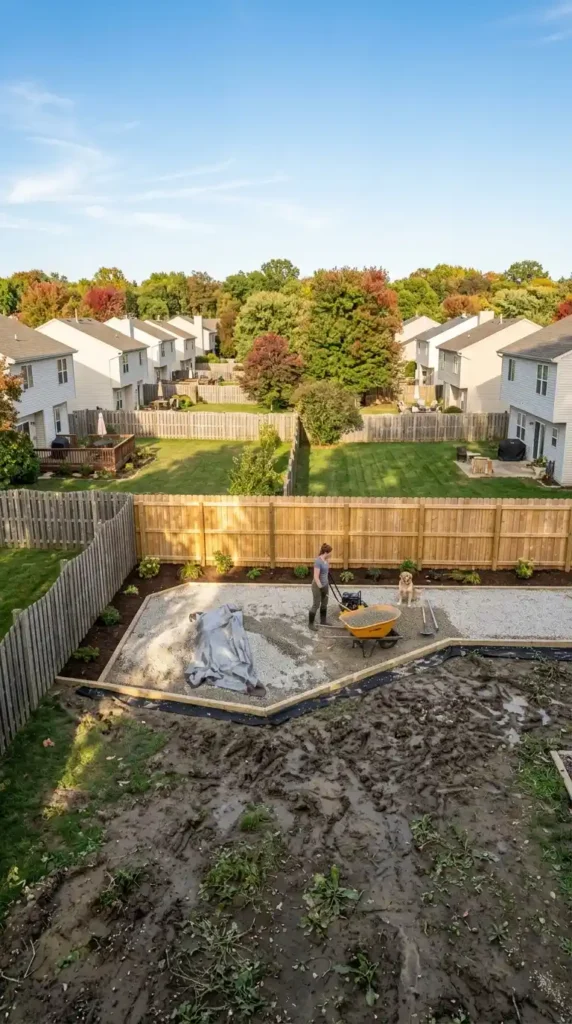
The first step was removing the damaged lawn. A rented sod cutter made quick work of the old grass. Then the ground was leveled and any large bumps or dips were smoothed out.
Tip: If the ground is uneven, fill low spots with topsoil and compact them firmly.
Step 2: Define the Zones
Timber edging was used to create clear boundaries between different zones. The potty zone was set away from the main play area. The seating area was positioned near the house.
Step 3: Lay Landscaping Fabric
Landscaping fabric was laid in all areas to prevent weeds. The fabric was overlapped and secured with landscape staples.
Tip: Cut X-shaped slits for plants you want to keep.
Step 4: Install Gravel Pathways and Potty Zone
Pea gravel was spread over the designated pathways and potty zone. A layer of 2-3 inches was used. The gravel was raked level and compacted with a hand tamper.
Why gravel works: It drains well, is easy to hose down, and does not get muddy. Pea gravel is comfortable for dog paws.
Step 5: Install Artificial Turf in the Play Zone
The play zone was the largest area. The process included:
- Lay a crushed stone base (about 2 inches deep).
- Compact the stone base.
- Lay the turf with seams facing away from the house.
- Secure the edges with landscape staples.
- Brush the turf to raise the blades.
Tip: Choose turf with good drainage. Some turf is designed specifically for pets.
Step 6: Create the Seating Area
Pavers were laid for a small seating area. A simple patio table and chairs were added. A shade umbrella provides relief from the sun.
Step 7: Add Dog-Safe Plants
Plants were added around the edges of the yard. The plants chosen were non-toxic and hardy. Lavender, ornamental grasses, and rosemary were selected.
Dog-safe plant options:
- Lavender
- Rosemary
- Sunflowers
- Snapdragons
- Marigolds
- Zinnias
Step 8: Add Finishing Touches
A few finishing touches made the space feel complete:
- A dog water station with a small bowl.
- A dog toy basket near the seating area.
- Solar lights along the pathways.
- A small fence to mark the potty zone.
The After Results
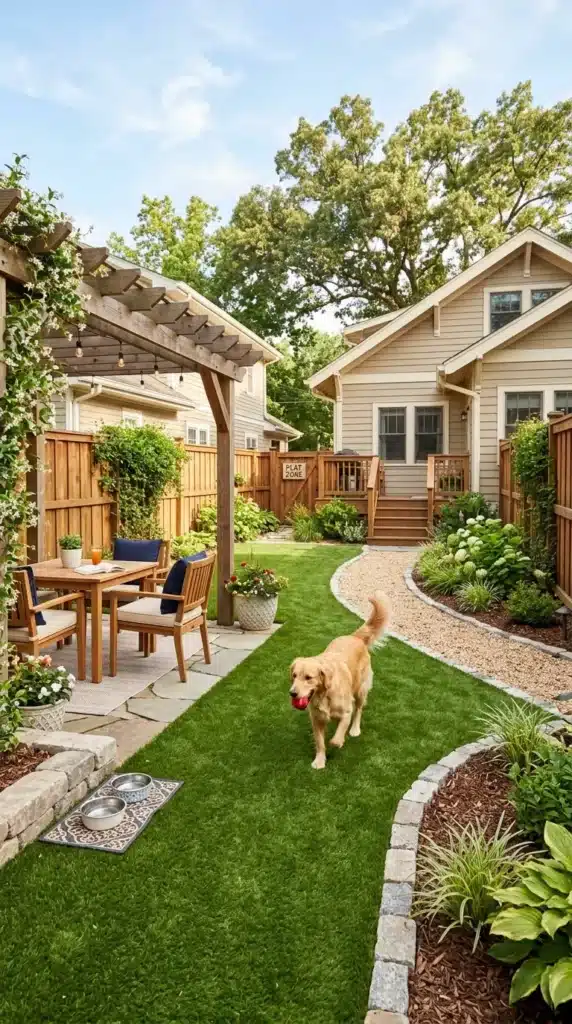
The transformation was dramatic. The muddy, patchy lawn was replaced with a clean, functional, and attractive space.
What Changed
- No more mud: The gravel and turf eliminated muddy paws.
- Easy cleaning: The potty zone is easily hosed down.
- Safe play: The turf provides a soft, even surface for dogs.
- Defined spaces: The yard now has clear zones for different activities.
- Added beauty: The plants and seating area make the yard enjoyable for humans.
The Dogs’ Reaction
The dogs adapted quickly to the new space. They loved the turf for running and rolling. The lack of mud meant fewer baths and cleaner floors.
Human Reaction
The homeowners finally enjoyed spending time in the yard. The seating area became a favorite spot for morning coffee and evening relaxation.
Lessons Learned
What Worked Well
- Zoning: Creating defined spaces was the key to success.
- Pea gravel: A great choice for pathways and potty areas.
- Artificial turf: Durable, easy to clean, and looks great.
- Planning: Having a clear plan saved time and money.
What Could Have Been Better
- Drainage: Adding more drainage in the potty zone would have helped during heavy rain.
- More shade: Additional shade would make the seating area more comfortable in summer.
Tips for Your Project
- Plan carefully: Sketch out the design before you start buying materials.
- Choose durable materials: Invest in quality materials that will last.
- Consider drainage: Good drainage is essential for any dog-friendly yard.
- Include the dogs: Watch how your dogs use the yard to plan the layout.
- Take your time: A rushed project leads to mistakes.
Frequently Asked Questions
1. Is artificial turf safe for dogs?
Yes, most artificial turf is safe for dogs. Look for turf with good drainage and non-toxic materials. Some turf is designed specifically for pets.
2. How do you clean artificial turf?
Regularly hose down the turf to remove debris. For odors, use a pet-friendly turf cleaner or a mixture of vinegar and water.
3. Is pea gravel comfortable for dogs?
Yes, pea gravel is comfortable for dog paws. It is smooth and rounded, unlike crushed stone which can be sharp.
4. How do you prevent dogs from digging in gravel?
If your dog likes to dig, create a designated digging area with sand or soft soil. Redirect them to that area when they start digging elsewhere.
5. How much did this makeover cost?
This project cost approximately $1,440. Costs vary depending on the size of the yard and material choices.
6. Can I do this myself?
Yes, this project is DIY-friendly. The most labor-intensive part is removing the old grass and laying the gravel. Renting equipment can make the work easier.
A Yard for Everyone
This DIY dog-friendly backyard makeover proves that it is possible to have a beautiful yard and happy dogs. With careful planning, the right materials, and a little hard work, you can transform your outdoor space into a place where everyone, including your furry family members, can enjoy spending time.
The key is to design for your dogs’ needs while also creating space for human relaxation. When you get the balance right, you will wonder why you didn’t make the change sooner.
Related Articles
How to Design a Beautiful Backyard Pet Memorial Garden
What Makes Great Pet Memorial Gifts for Garden?
How to Create a Pet Memorial Garden Stone That Lasts
A dog-friendly backyard is an investment in your dog’s happiness and your own peace of mind. With the right design, you can create a space that works for both you and your four-legged friends.

Sheikh Hassaan is a digital architect for small businesses and the founder of The Glow Up System. He writes about home decor, garden design, and outdoor living for real American homes – practical ideas that work in actual spaces without oversized budgets.