
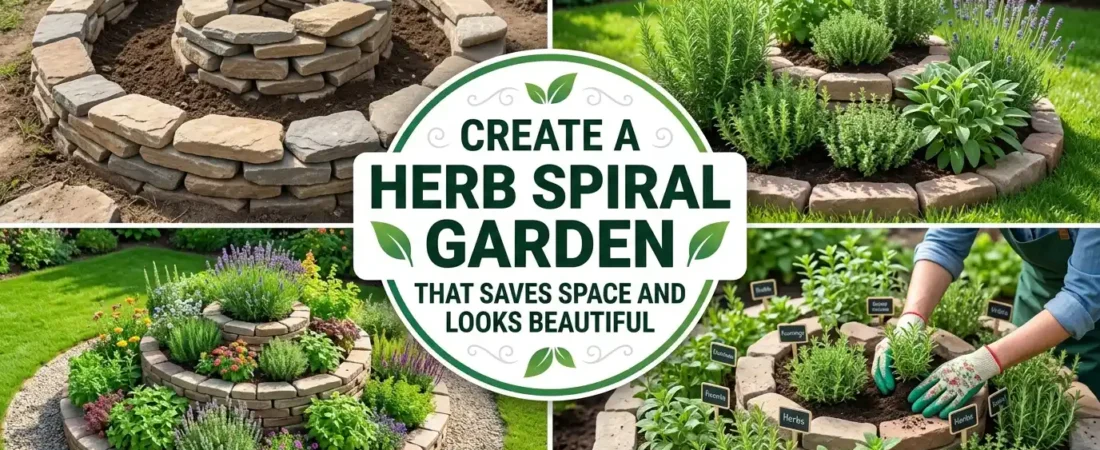
A herb spiral garden is a compact, spiral-shaped raised bed that stacks planting zones vertically to create multiple microclimates in a single structure. This design allows you to grow a variety of herbs with different needs, from drought-tolerant Mediterranean herbs to moisture-loving plants, all in a small footprint.
Table of Contents
What Is a Herb Spiral Garden?
A herb spiral garden is a pyramid or conical-shaped garden bed with the highest point at the center, gradually spiraling down to lower levels. This design creates multiple microclimates: dry at the top, wetter at the bottom, hot on the south and west sides, cooler on the north, and gentle morning sun on the east.
This means you can plant herbs where they will thrive based on their specific needs. The compact footprint makes it ideal for small yards, patios, and even balconies.
Why Build a Herb Spiral Garden?
Creates Multiple Microclimates: Different parts of the spiral have varying moisture and light conditions, allowing you to grow herbs with different needs in one structure.
Maximizes Space: The spiral shape concentrates planting area into a small footprint (typically 1-1.5 meters in diameter), delivering 20-50% more usable yield per square meter than a flat bed.
Natural Water Management: Water flows from the top down, so moisture-loving plants at the bottom benefit while drought-tolerant herbs at the top stay dry.
Aesthetic and Functional: It is an attractive garden feature that is easy to plant, tend, and harvest, and can pay for itself in its first season.
Materials You’ll Need
| Material | Purpose |
|---|---|
| Stones, bricks, or pavers | Building the spiral wall |
| Cardboard | Weed suppression |
| Weed barrier | Additional weed protection |
| Gravel | Drainage base |
| Topsoil and compost | Growing medium |
| Herbs | Plants for the garden |
| Mulch | Moisture retention and weed control |
Choose materials that match your home’s style: cinder and concrete blocks for modern homes, bricks and stonework for traditional homes.
Step-by-Step Instructions
Step 1: Choose the Right Location
Select a sunny spot that receives at least six hours of sunlight per day. Level ground makes building easier. Place the spiral close to your kitchen for convenient harvesting.
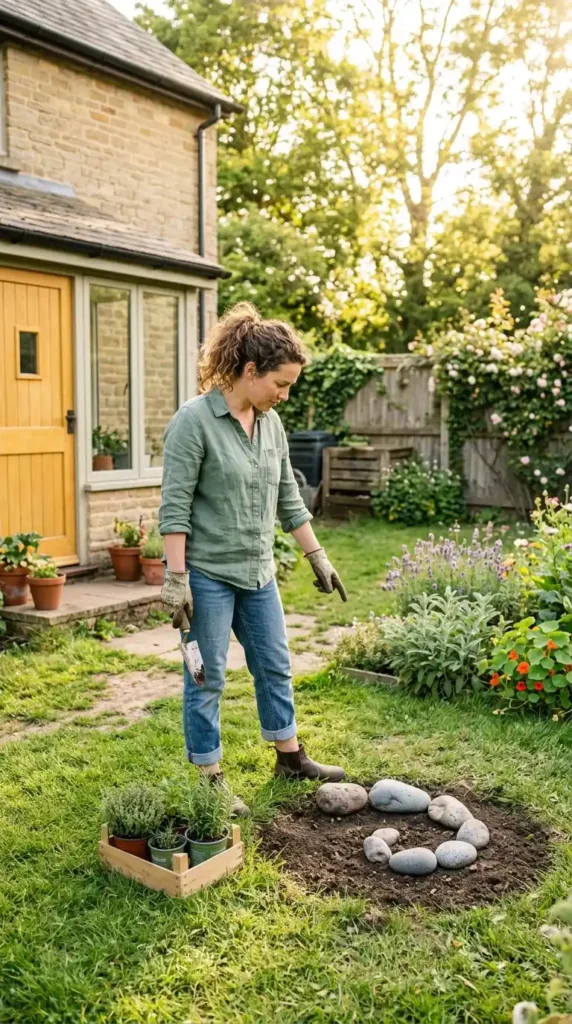
Step 2: Prepare the Ground
Lay down cardboard and weed barrier to suppress existing weeds. Add a layer of gravel for drainage. This prevents weeds and creates a stable base.
Step 3: Build the Spiral
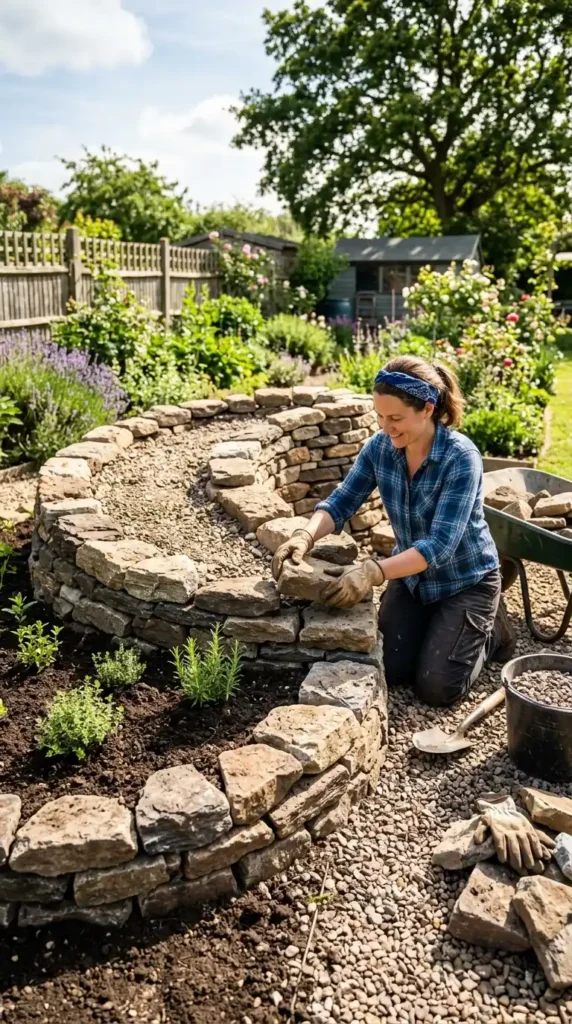
Start by drawing your spiral on the ground. Lay the first course of stones or bricks, then build up in a spiral pattern. The height should be tallest in the center, progressively shorter toward the outer edge.
Step 4: Fill with Soil and Compost
Fill the spiral with a mixture of topsoil and compost as you build the walls. Create different soil conditions for different sections:
- Top: Sandy, quick-draining soil for Mediterranean herbs
- Middle: Balanced soil with some compost
- Bottom: Rich, moisture-retaining soil
Step 5: Plant Your Herbs
Plant herbs based on their needs:
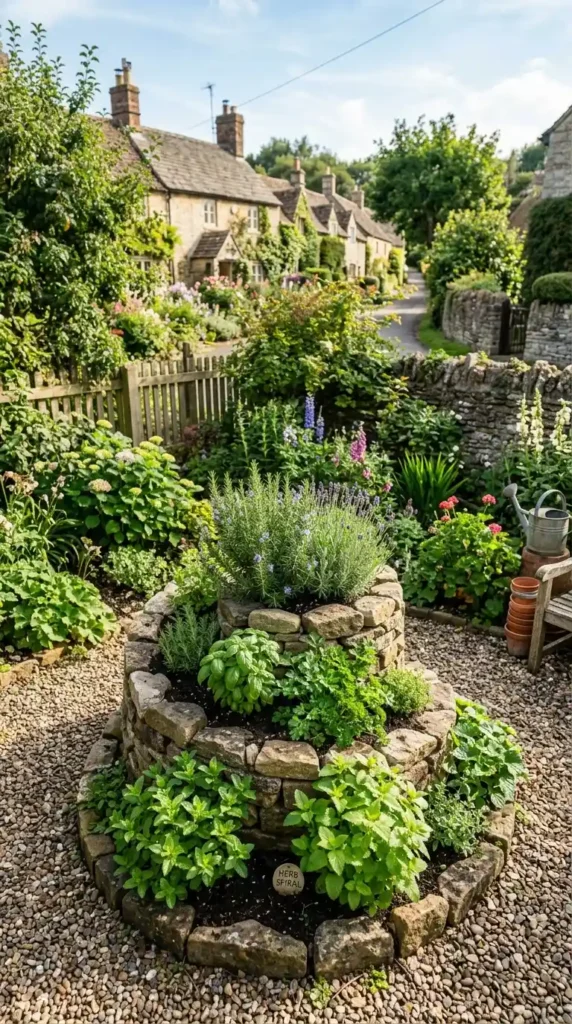
Top of Spiral (Dry, Sunny): Rosemary, thyme, oregano, lavender, sage
Middle of Spiral (Moderate Moisture): Basil, cilantro, chives, parsley
Bottom of Spiral (Moist, Shade): Mint, lemon balm, chervil, watercress
Consider the sides too: south side gets more sun, north side is shadier. Plants that need full sun go on the south side; plants that prefer shade go on the north side.
Step 6: Add Mulch
Top the soil with mulch to retain moisture, reduce weeds, and improve drainage.
Step 7: Maintain Your Spiral
Water regularly, preferably in the morning. Harvest often to encourage growth. Maintenance time drops after establishment: plan on 2-4 hours weekly during the first two months, then 30-90 minutes per week for routine harvests.
Plant Placement Guide
| Location | Conditions | Best Herbs |
|---|---|---|
| Top | Dry, sunny, quick drainage | Rosemary, thyme, oregano, lavender, sage |
| Middle | Moderate moisture, warm | Basil, cilantro, chives, parsley, dill |
| Bottom | Moist, shade-tolerant | Mint, lemon balm, chervil, watercress |
| South side | Sun-loving, heat-tolerant | Basil, savory, curry plant |
| North side | Shade-tolerant, cooler | Parsley, coriander, mint |
Frequently Asked Questions
1. How big should a herb spiral garden be?
The typical width is about 6 feet (1.8 meters) in diameter, and the height can vary but is usually around 3 feet (0.9 meters) tall at the center. This size provides enough space for a variety of herbs while remaining manageable.
2. Can I grow vegetables in a herb spiral?
Yes. Outer zones are good for leafy greens and shallow roots, middle tiers for medium-rooted vegetables, and the center can support sun-loving vegetables like peppers and eggplants. Some gardeners also plant tomatoes and lettuce in their spirals.
3. What is the best material for building a herb spiral?
Bricks, stone, and pavers are all good options. Natural stone works well because it stores heat and releases it to the plants at night. Use materials that match your home’s style.
4. How much water does a herb spiral garden need?
The spiral design uses gravity to naturally manage water flow, so it typically requires less water than a flat bed. Water the top section, and water will naturally flow down to nourish lower-level plants. Water regularly, especially during establishment.
5. Can I build a herb spiral garden on a patio or balcony?
Yes. You can use grow bags instead of stones and bricks for small-space gardening. The fabric material of grow bags allows for better drainage and aeration, promoting healthier root systems. A compact spiral can fit in a 1-1.5 meter diameter area.
Related Articles
7 Jacuzzi Outdoor Ideas That Feel Like a Luxury Spa
7 Freeform Pool Designs That Feel Like a Luxury Resort
Rectangle Pool with Spa — 7 Smart Ideas for Small American Backyards
A herb spiral garden is a smart, sustainable way to grow a wide variety of herbs in a small space. With the right design and plant placement, you can enjoy fresh herbs all season long.

Sheikh Hassaan is a digital architect for small businesses and the founder of The Glow Up System. He writes about home decor, garden design, and outdoor living for real American homes – practical ideas that work in actual spaces without oversized budgets.