
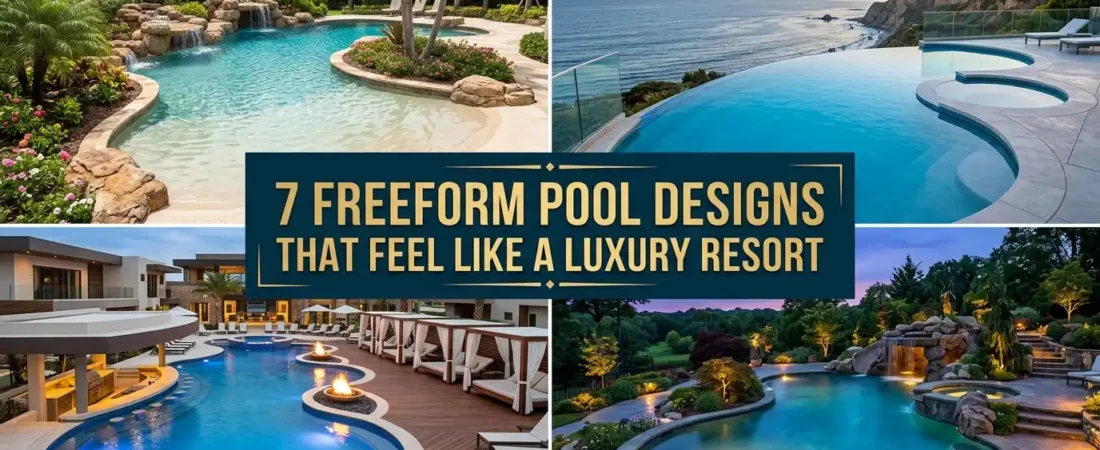
A freeform pool breaks away from rigid lines and symmetrical layouts. With curves inspired by nature, these pools flow with the landscape instead of fighting against it. The result is a backyard feature that feels organic, relaxed, and inviting.
Freeform pools work especially well in smaller yards or irregular spaces, where a traditional rectangular pool might not fit. They can curve around trees, follow property lines, or adapt to slopes. Here are seven freeform pool designs to inspire your own backyard retreat.
Table of Contents
1. Organic Curve Lagoon
✦ Best for: Creating a natural, resort-like feel with lush landscaping
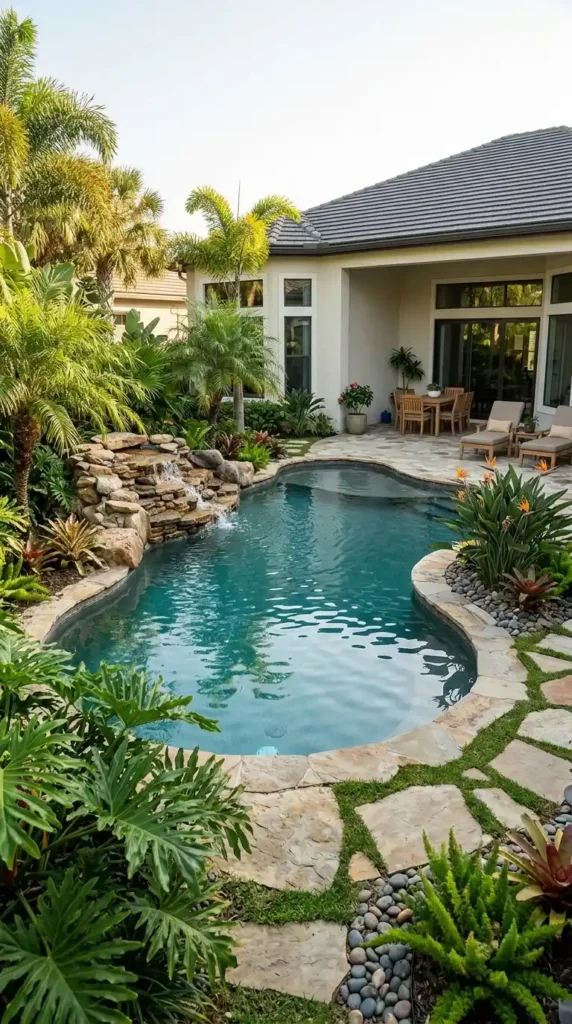
A lagoon-style freeform pool embraces the look of a natural swimming hole. The irregular shape is softened by lush plantings, and features like rock waterfalls or boulder edges make the pool feel like part of the landscape. This design is ideal for homeowners who want a resort-style escape in their own backyard.
How to do it: Use a freeform shape with flowing curves. Edge the pool with natural stone or boulders. Plant palms, ferns, and tropical flowers around the perimeter. Add a rock waterfall or cascading feature for movement and sound. A tanning ledge or beach entry enhances the natural feel.
2. Compact Fiberglass Freeform
✦ Best for: Small backyards where space is limited
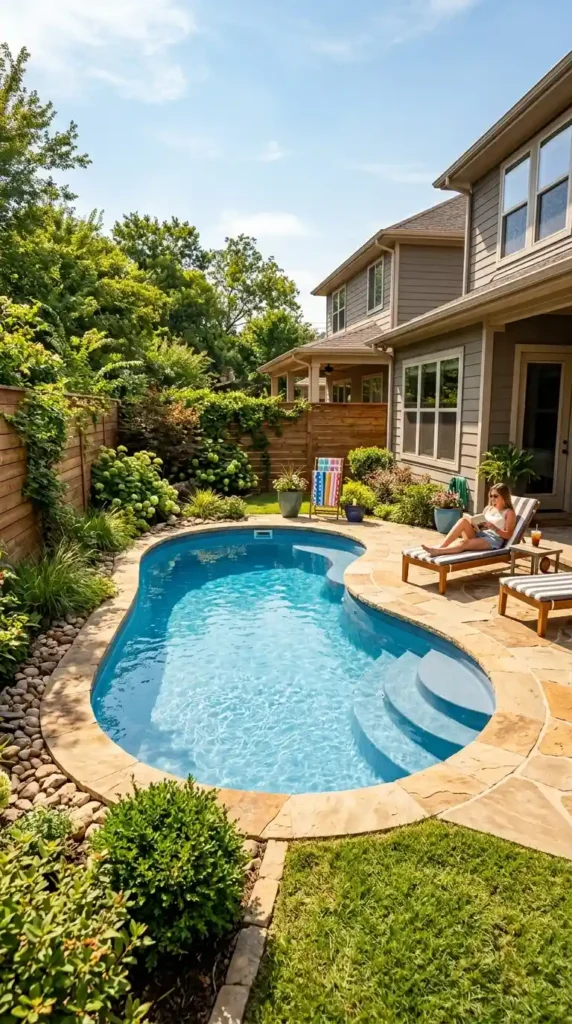
A compact freeform fiberglass pool is designed for tight spaces where a large pool simply won’t fit. The Ariella, for example, measures just 12 feet wide and 20 feet 9 inches long, taking up only 179 square feet. Despite its size, it includes features like a curved set of entry steps, a tanning ledge, and a shallow deep end of 4 feet 11 inches.
How to do it: Choose a fiberglass model that fits your yard’s dimensions. Look for features like a tanning ledge and built-in seating. The shallow deep end makes this design safer for families with children or guests.
3. Freeform Pool with Integrated Spa
✦ Best for: Combining swimming and relaxation in one cohesive design
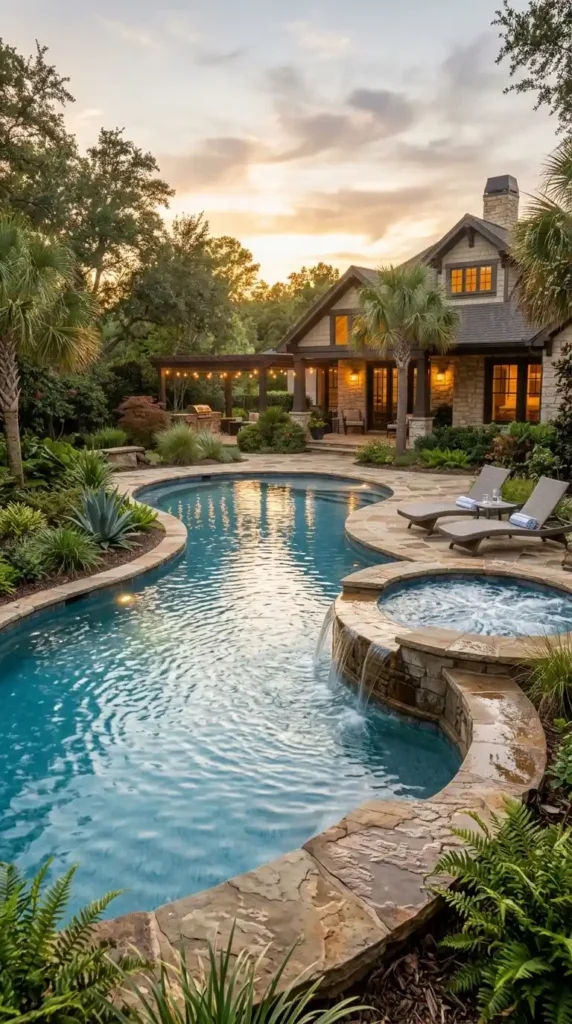
An integrated spa adds hydrotherapy to your freeform pool without taking up extra yard space. The spa is built directly into the pool structure, sharing plumbing and electrical systems. The Unity Deluxe, for example, is a 16′ x 35′ freeform design with a built-in spa, swim-up seating, and multiple points of entry. The Axiom 12 Deluxe offers a similar layout in a more compact 12′ x 26′ footprint.
How to do it: Choose a freeform model with an integrated spa. Look for swim-up seating for easy in-water relaxation. The spa can be elevated with a spillover edge that cascades into the pool for added visual appeal.
4. Boulder-Edged Natural Pool
✦ Best for: Blending the pool seamlessly into a rugged or wooded landscape
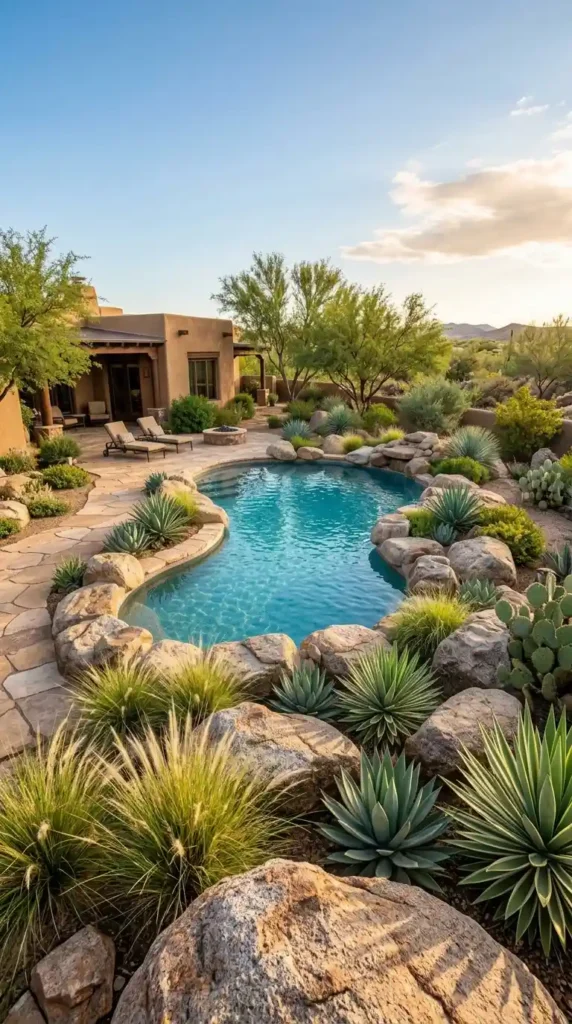
Large boulders around a freeform pool make the water look like part of the natural landscape. The rocks hide the hard lines of construction and let the shape flow right into the yard. This design works especially well on uneven ground or sloped lots.
How to do it: Use local rocks that match your area. Place boulders in clusters rather than in a straight line. Bury each rock at least one-third of its depth so they look settled. Leave gaps between stones for native plants like agave or ornamental grasses. This approach creates a rugged, naturalistic feel that blends the pool with the yard.
5. Stream-Fed Stone Pool Nook
✦ Best for: Wooded lots with natural water features
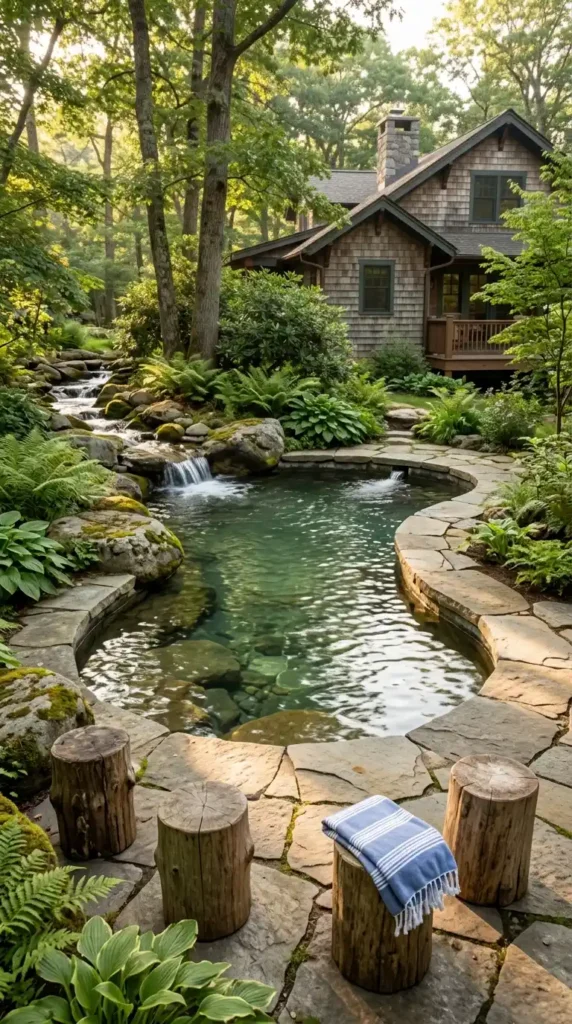
A stream-fed pool uses natural water flow to create a calming feature. The pool is shaped like a narrow garden stream, with water flowing in from one end and out the other. A simple wooden bridge can cross the narrow section, making the pool feel more like a landscape feature than a traditional swim spot.
How to do it: Shape the pool like a narrow stream that follows the natural contours of your yard. Line it with local stone. Let the stream do the work, skip liners or pumps if the natural flow is consistent. Add rough-cut log seats around the edge for a rustic touch. This design works best in shady, wooded lots.
6. Freeform Pool with Terraced Timber Decking
✦ Best for: Creating a warm, natural connection between pool and patio
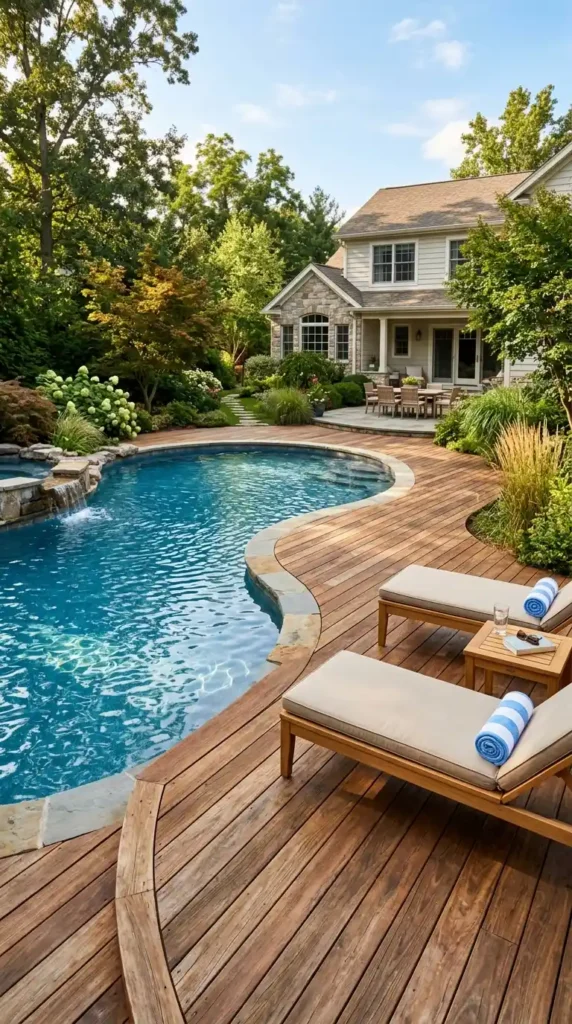
Timber decking that follows the curves of a freeform pool creates a seamless connection between the water and the patio. The warm wood tones add a natural feel and provide a slip-resistant surface for bare feet. This design works well in medium-sized backyards where you want flow between pool and seating.
How to do it: Use durable, treated timber that can handle moisture. Curve the decking to match the pool’s shape. Add simple lounge chairs for a relaxed seating area. Make sure the deck has good grip when wet. The wood will weather over time, adding character to the space.
7. Compact Curved Pool with Pebble Border
✦ Best for: Adding a natural edge to a small yard with minimal maintenance
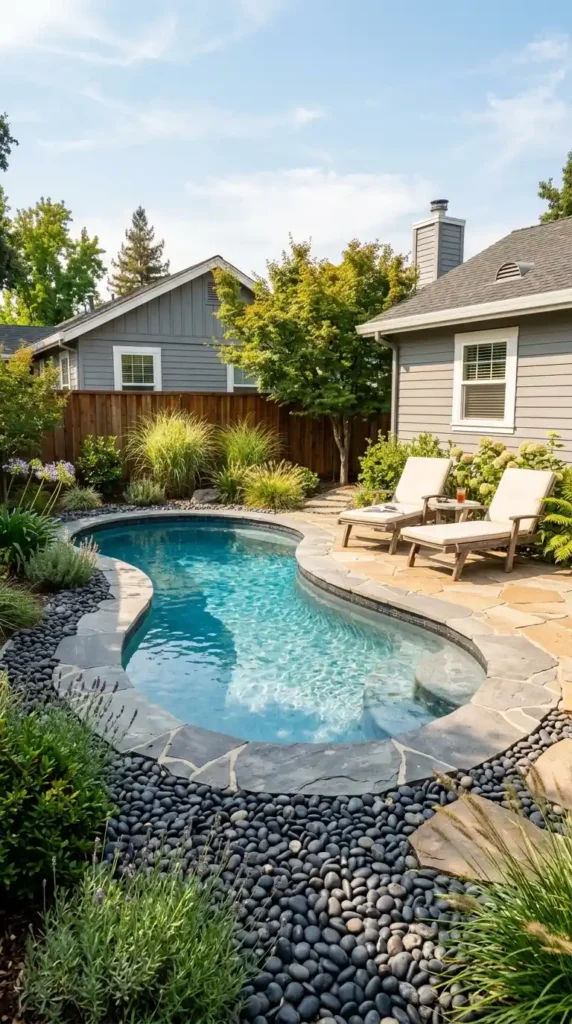
A border of smooth pebbles along the edge of a freeform pool softens the lines and adds a natural feel. The pebbles blend with the garden and require little upkeep. This design works well in yards with a relaxed aesthetic, especially where you want low maintenance.
How to do it: Run a border of smooth black pebbles or river rocks along the pool’s edge. Mix in flat slate stones for visual interest. Lay them over a gravel base next to the pool coping. Make sure the pebbles are contained so they don’t end up in the water. This simple layer softens the hard lines and pulls in the garden vibe.
Frequently Asked Questions
1. What is a freeform pool?
A freeform pool is a swimming pool that does not conform to any set shape or size guidelines. It can take on virtually any curvy outline, designed to blend with the natural landscape or the flow of the garden.
2. Are freeform pools good for small backyards?
Yes. Freeform pools are a great choice for small yards with irregular shapes. Their natural curves fit in tighter spaces and create a relaxed atmosphere. They can be custom-designed to flow with the landscape, making small spaces feel larger.
3. How much does a freeform pool cost?
Freeform pools can be more expensive than a simple rectangular design because the process of framing and finishing is typically more involved. Costs vary based on size, materials, and features.
4. What are the benefits of a freeform pool?
Freeform pools offer flexibility in design, a softer look that contrasts with straight lines, and a natural appearance that blends with the landscape. They can include features like tanning ledges, spas, waterfalls, and beach entries.
5. Can you swim laps in a freeform pool?
Freeform pools are ideal for relaxation and play but do not function well for swimming laps. If lap swimming is a priority, a rectangular or lap pool would be a better choice.
Related Articles
Rectangle Pool with Spa — 7 Smart Ideas for Small American Backyards
Infinity Pool Design — 7 Ideas for a Seamless Horizon Effect
Beach Pools Backyard — 7 Ideas for a Private Coastal Escape
7 Backyard Lazy River Pool Designs for a Resort-Style Retreat
A freeform pool is about letting the landscape lead. With soft curves, natural materials, and thoughtful landscaping, you can create a backyard escape that feels like it has always been there.

Sheikh Hassaan is a digital architect for small businesses and the founder of The Glow Up System. He writes about home decor, garden design, and outdoor living for real American homes – practical ideas that work in actual spaces without oversized budgets.