
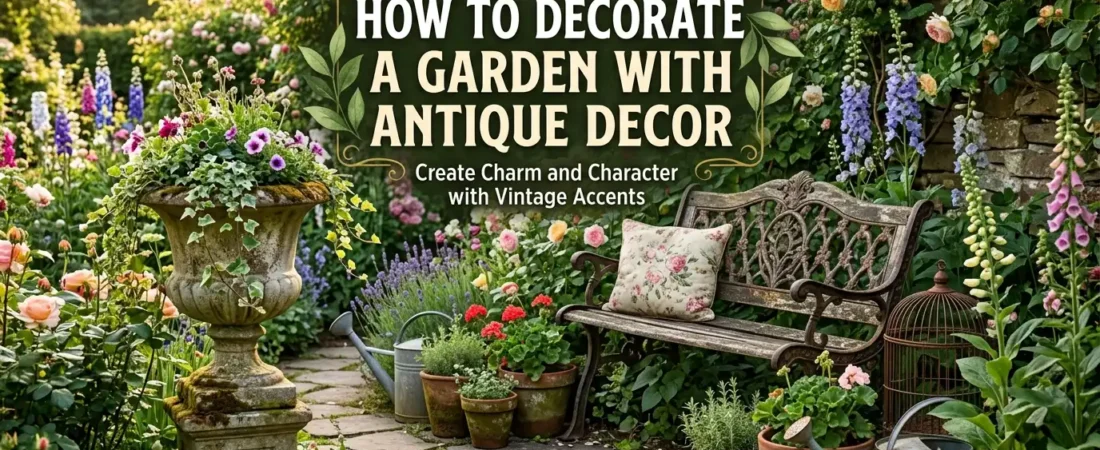
Antique garden decor ideas give a garden the one quality that new objects cannot provide: the appearance of time. A weathered stone urn, a cast iron bench with decades of patina, a salvaged gate leaning against a wall — these objects carry a visual history that makes the garden they inhabit feel genuinely established rather than recently assembled. The challenge is not finding antique garden pieces. It is placing them with the intention that makes the difference between a garden that looks curated and one that looks like a collection of old things.
This guide covers where to find genuine antique garden decor, how to assess what is worth using, how to position each type of antique object for maximum visual impact, and how to combine antique pieces with modern planting in a way that looks intentional rather than inconsistent.
Table of Contents
Why Antique Objects Work Better in Gardens Than Anywhere Else
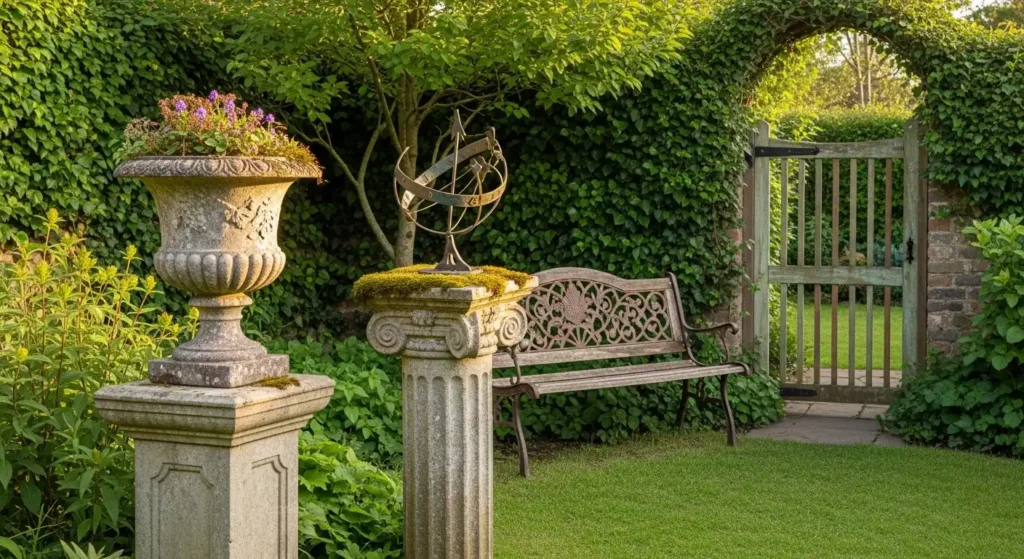
Antique objects work better in gardens than in almost any other setting because the outdoor environment provides the contextual authenticity they need. A stone urn in a modern living room looks like a design statement. The same urn in a garden border looks like it grew there — which is exactly the quality that makes antique garden decor so valuable.
Weathering accelerates rather than damages most antique garden materials outdoors. Cast iron develops deeper patina. Stone accumulates moss and lichen. Timber greys and grain-opens in a way that adds rather than subtracts visual quality. The garden is the correct environment for aged objects — it enhances their character rather than exposing their age as a problem.
The design principle that makes antique garden decor work: one well-placed antique object of genuine quality and provenance creates more character than twenty pieces of reproduction garden ornament. The restraint is the point. A garden with one genuine stone trough, properly positioned and planted, has more presence than a garden filled with resin reproductions.
Where to Find Genuine Antique Garden Decor
Architectural Salvage Yards
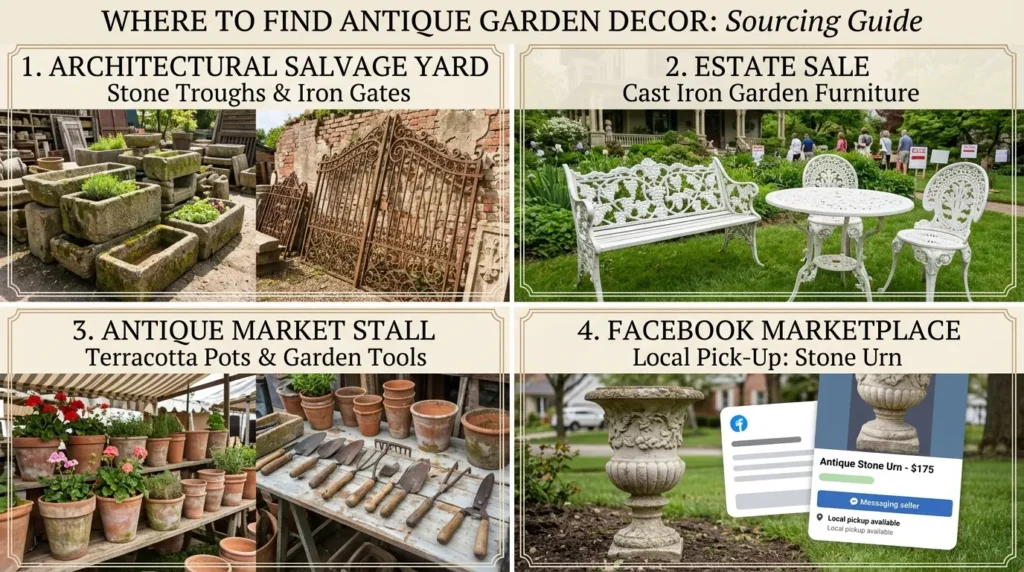
Architectural salvage yards are the primary source for the most significant antique garden pieces — stone troughs, cast iron gates and railings, stone paving, lead planters, and reclaimed garden statuary. Salvage yards source from house clearances, demolitions, and farm clearances and hold genuinely aged pieces at prices significantly below auction house levels. Visit in person rather than buying online — the weight, condition, and scale of significant antique garden pieces must be assessed directly.
Estate Sales and Farm Clearances
Estate sales and farm clearances produce the most characterful antique garden finds because the objects come directly from their original context. A terracotta pot from a farmhouse kitchen garden, a cast iron water pump from a farm yard, or a stone roller from a country estate carry the specific provenance that makes antique objects genuinely interesting rather than simply old.
Antique Markets and Boot Fairs
Antique markets and boot fairs produce the smaller-scale antique garden finds — aged terracotta pots, vintage garden tools for display, enamel signs, galvanized watering cans, and cast iron plant label holders. These smaller pieces are found regularly at accessible prices and provide the detail-level antique character that large statement pieces cannot alone create.
Facebook Marketplace and Online Classifieds
Facebook Marketplace and local classified listings consistently produce antique garden pieces from people clearing properties — stone pots, vintage garden furniture, old watering cans, and reclaimed building materials used in garden construction. Search terms that produce the best results: ‘stone trough’, ‘cast iron garden’, ‘antique garden’, ‘old terracotta’, ‘reclaimed garden’. Check listings daily in your local area as the best pieces sell within hours of listing.
How to Assess Antique Garden Pieces Before Buying
Stone Pieces
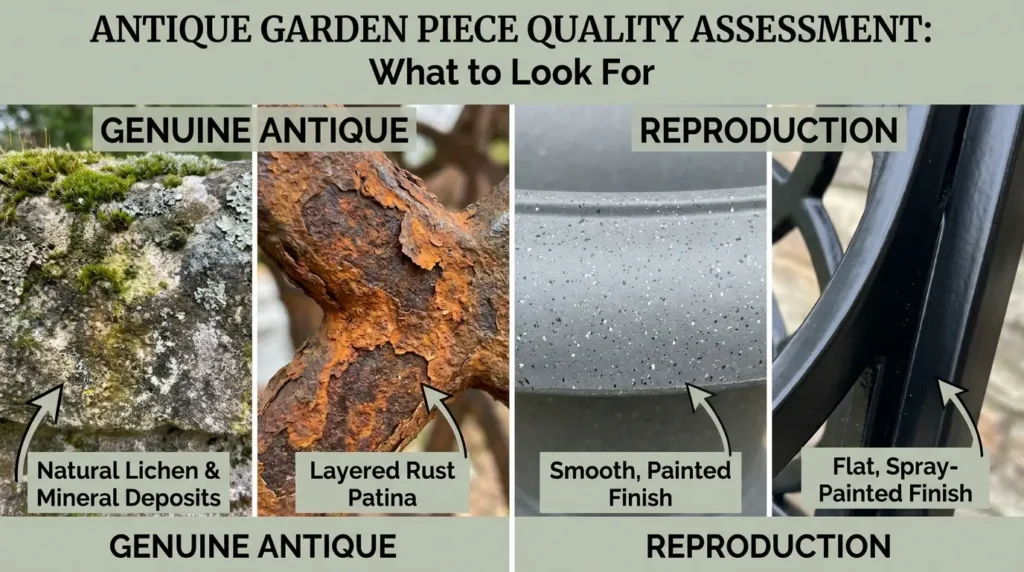
Genuine aged stone has lichen, algae, or mineral deposit growth on at least some surfaces — particularly on horizontal surfaces and in recessed details where moisture collects. The weight of genuine stone is significantly greater than resin reproductions — a genuine stone trough of 24 inches is almost immovable alone. Tap the surface: genuine stone produces a dense dull sound. Hollow resin produces a distinctly different resonance. The tool marks visible on hand-carved stone pieces are irregular — machine carving produces perfectly regular marks that identify reproduction pieces immediately.
Cast Iron Pieces
Genuine cast iron develops rust in layers — older cast iron has a deep reddish-brown rust that has integrated into the metal surface rather than sitting on top of it. New steel painted with rust-effect paint has an even artificial quality that genuine rust never produces. Check the casting detail on decorative elements — genuine old cast iron has slightly soft casting edges where the metal filled the mold imperfectly. Modern precision casting produces perfectly sharp edges that look too clean for genuine age.
Terracotta Pieces
Genuine aged terracotta has the white mineral salt deposits (efflorescence) on the exterior surface that develop from years of watering — the minerals in the soil water leach through the porous pot wall and crystallize on the outer surface. The base of a genuinely old terracotta pot has the specific wear pattern of years of being moved on stone or timber surfaces. Reproduction aged terracotta pots produced artificially by painting or acid treatment lack the base wear pattern that genuine use produces.
How to Position Antique Garden Objects for Maximum Impact
Sightline Terminations
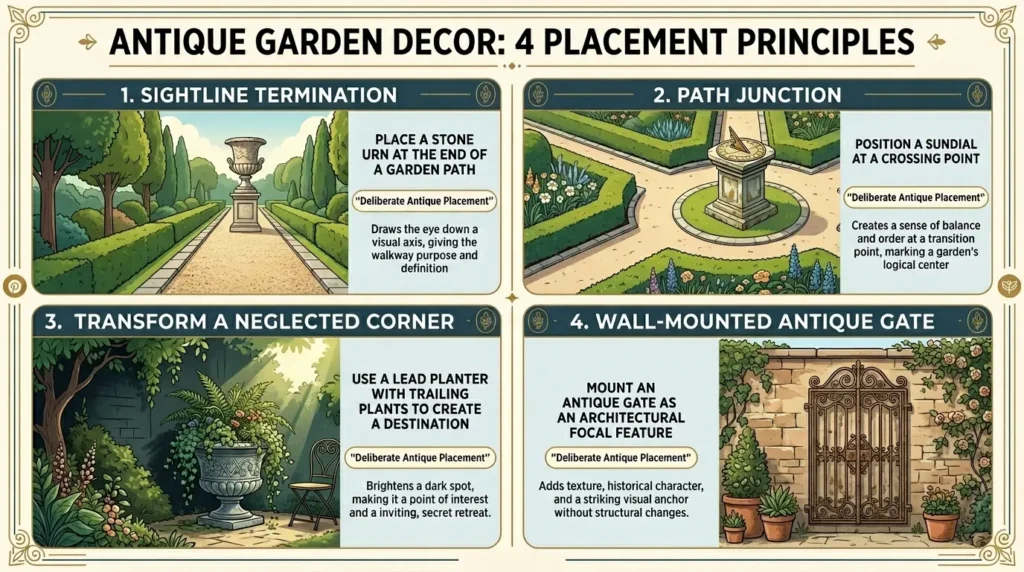
The most powerful position for a significant antique garden object is at the termination point of the garden’s primary sightline — the point where the eye naturally travels and stops when looking from the main seating position or the house. A stone urn, a statue, or a sundial at a sightline termination becomes the visual anchor of the entire garden composition. The antique object does not need to be large — it needs to be visible and worth looking at from the primary viewing position.
Path Junctions and Decision Points
Path junctions are natural pause points where visitors slow down and look around. An antique object at a path junction — a sundial where two paths cross, a terracotta pot cluster at a path corner, an antique bird bath beside a path junction — is seen by everyone who passes it and creates the sense of discovery that makes gardens feel more extensive than their actual size.
Dark and Neglected Corners
A dark corner with an interesting antique piece in it becomes a destination. A lead planter overflowing with shade-tolerant plants in a corner that was previously visually dead creates the impression that every corner of the garden has been considered. Antique pieces suit dark corners particularly well because their weathered surfaces catch whatever light is available and create visual interest at a level of light intensity where new objects look flat.
Against Walls and Structures
Antique objects positioned against a wall or fence read as deliberately placed rather than left there. The wall provides the background that frames the object and separates it visually from the surrounding planting. A salvaged gate mounted on a garden wall becomes architectural art. A stone trough positioned against a mellow brick wall with climbing plants behind it looks like it has been in that position for a century.
Combining Antique Objects With Modern Planting
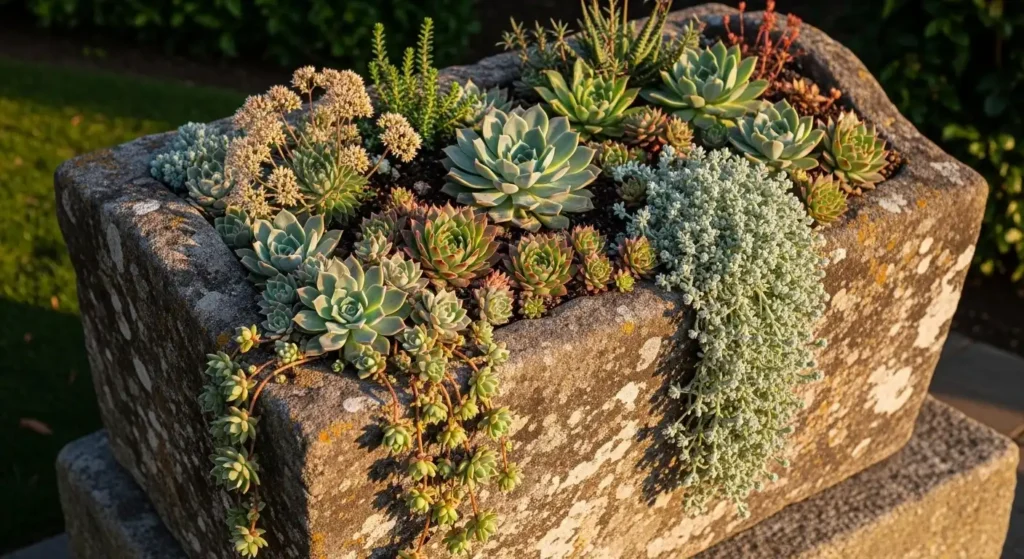
The most interesting antique garden displays combine old containers and structures with contemporary naturalistic planting rather than filling every antique vessel with traditional period-appropriate plants. A genuine Victorian stone trough planted with contemporary drought-tolerant alpines and sedums creates a combination that is both historically referenced and visually current — neither purely period nor purely modern.
The planting rule for antique containers: match the scale of the planting to the character of the container. A large stone urn requires planting with visual weight — a standard rose, an architectural grass, or a topiary ball that commands the urn rather than disappearing into it. A small antique terracotta pot suits compact plants — sempervivum, thyme, and miniature bulbs that fit the intimate scale of the container.
Allow plants beside antique objects to grow informally rather than maintaining them in tight formal shapes. Cottage plants self-seeding between the stones of an antique path, moss growing on the base of a stone urn, and ivy beginning to colonize a salvaged gate all add to the established quality rather than detracting from it. The controlled wildness around antique objects is part of the aesthetic — it makes them look found rather than placed.
The Best Types of Antique Garden Decor and How to Use Each One
Stone Troughs
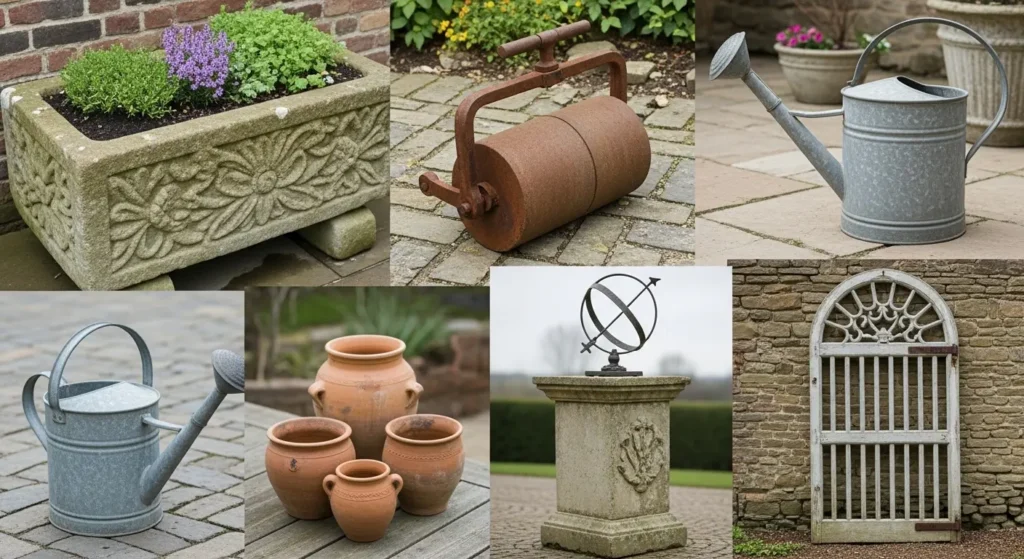
The most valuable and most versatile antique garden piece. Use as a statement planter for alpines and sempervivums, as a water feature with a small pump, or purely as a sculptural object on a plinth. Position elevated on two low piers or stone blocks — troughs at ground level lose visual impact and are harder to appreciate than those at knee height.
Cast Iron Garden Furniture
Cast iron benches and chairs with genuine patina are functional and beautiful simultaneously. Position in a garden nook or at a sightline termination where they invite sitting and create a destination. Wire brush loose rust annually but do not paint over established patina — the layered rust surface of genuinely old cast iron is its most valuable visual quality.
Garden Rollers and Implements
Vintage cast iron garden rollers, old lawn mowers, and antique garden implements positioned in a border corner or beside a garden shed create the agricultural heritage reference that gives a garden its sense of working history. These objects need no planting or embellishment — their form is the decoration.
Sundials and Birdbaths
Genuine antique sundials on original stone columns and genuinely aged stone birdbaths are the classic garden focal point pieces. Position centrally in a formal garden scheme as the primary axis point or asymmetrically in a cottage garden border as a discovered feature. The DASTOLL Stained Glass Sun Catcher hung near a sundial creates the same light-refracting quality in a contemporary companion piece. Find it linked on Amazon.
Salvaged Architectural Elements
Salvaged gates, door frames, window arches, and ironwork installed as garden features create the strongest sense of inherited history. A Victorian cast iron gate mounted in a garden wall as an entrance arch. A stone door surround incorporated into a garden boundary wall. An ornate ironwork panel used as a decorative fence section. These architectural fragments reference the buildings they came from and bring that history into the garden.
📌 More garden decor and design ideas: 12 Rustic Planter Ideas That Look Beautiful Naturally
Frequently Asked Questions
Where can I find antique garden decor?
The best sources for genuine antique garden decor are architectural salvage yards for significant stone and ironwork pieces, estate sales and farm clearances for pieces with original provenance, antique markets and boot fairs for smaller decorative pieces, and Facebook Marketplace and local classifieds for pieces being cleared from properties. According to the Antique Collectors Club the demand for genuine antique garden pieces has grown significantly as reproduction garden ornament has flooded the market — genuine aged pieces are increasingly distinguished by buyers who have learned to identify the difference between authentic patina and artificial aging.
How do I tell if garden decor is genuinely antique?
Genuine antique garden decor shows three qualities that reproduction pieces cannot replicate: authentic weathering from actual exposure rather than artificial aging treatment, weight consistent with the genuine material (genuine stone is significantly heavier than resin), and wear patterns consistent with actual use rather than the uniform aging that artificial treatment produces. Check the base and underside of any piece — these surfaces are the ones most likely to show genuine wear from years of being moved and repositioned on garden surfaces.
How do I maintain antique garden pieces?
Most antique garden pieces require minimal maintenance and benefit from being left to continue weathering naturally outdoors. Stone pieces need no treatment — allow lichen and moss to colonize surfaces naturally. Cast iron pieces benefit from an annual wire brush to remove loose rust and a light coat of linseed oil on any structural elements to slow further corrosion, but established patina should never be removed. Terracotta pieces handle frost better than modern thin-walled terracotta because the thick walls and dense clay of genuine old terracotta are more frost-resistant than contemporary production materials.
One Genuine Antique Piece Changes the Character of the Whole Garden
The difference between a garden decorated with antique objects and a garden decorated with reproduction antiques is not immediately obvious in photographs. It is immediately obvious in person. The weight of genuine stone, the specific quality of light on a century of patina, and the knowledge that the object in front of you was made and used by people who are gone — these qualities create a garden experience that no reproduction can replicate regardless of how accurately it copies the form.
Start with one piece. Find a genuine stone trough, a cast iron bench, or a terracotta pot cluster with real age and real character. Position it with intention. Plant it with plants that suit its scale and its character. Then wait — the garden will grow around it and the antique piece will look more at home with every passing season.
All the products mentioned in this article are linked on Amazon. Every recommendation is something we genuinely believe in.
More Garden Decor and Design Ideas
→ 10 Garden Art Ideas That Instantly Upgrade Your Yard
→ 7 Beautiful Fence Art Ideas You’ll Want To Copy
→ 10 Peaceful Garden Nook Ideas
The antique piece will look more at home with every passing season.

Sheikh Hassaan is a digital architect for small businesses and the founder of The Glow Up System. He writes about home decor, garden design, and outdoor living for real American homes – practical ideas that work in actual spaces without oversized budgets.