
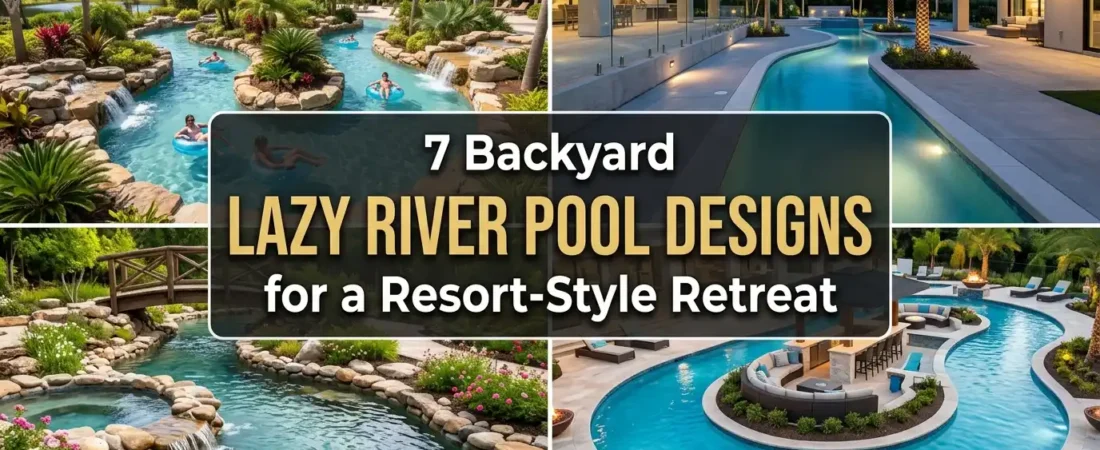
A lazy river in your backyard is the ultimate luxury, a winding waterway that lets you float, relax, and escape without leaving home. While these features are often associated with sprawling resorts, homeowners are increasingly bringing them into residential spaces, even in compact backyards. From naturalistic rock formations to modern geometric designs, here are seven inspiring ideas for backyard lazy river pools.
Table of Contents
1. The Perimeter Wraparound Lazy River
✦ Best for: Maximizing a mid-sized yard by integrating the river with the main swimming area
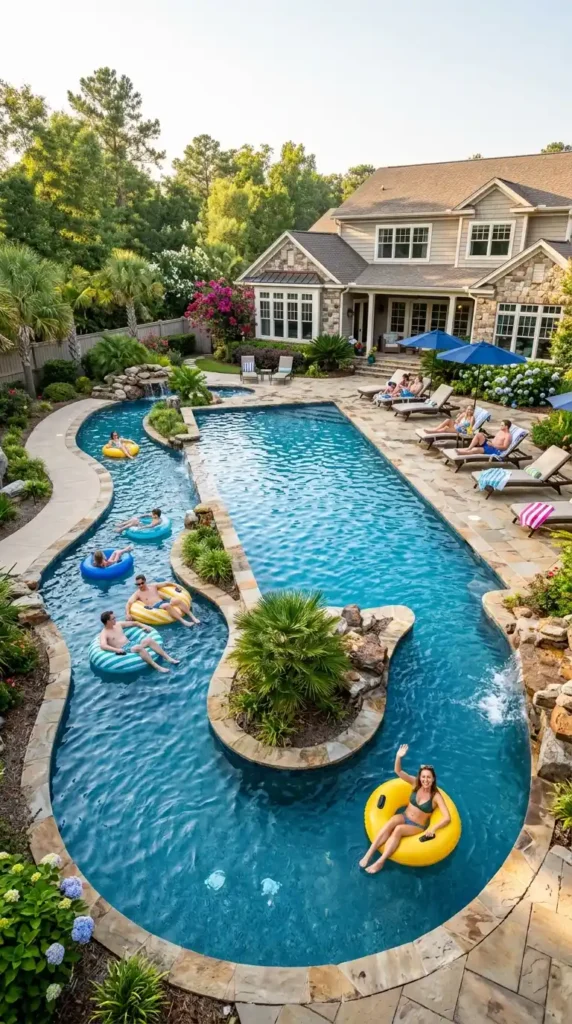
This classic layout features a channel-style river that winds around the perimeter of the main swimming pool, creating a defined loop you can float through again and again. The river and pool share the same space visually but serve two different moods. It gives the backyard a resort feel without needing massive square footage.
How to do it: Design the river to connect to the main pool at both ends, creating a continuous loop. Use a current system to keep the water moving in one direction. Include an island or central area for lounging and landscaping.
2. The Compact Loop for Smaller Yards
✦ Best for: Homeowners with limited space who still want the floating experience
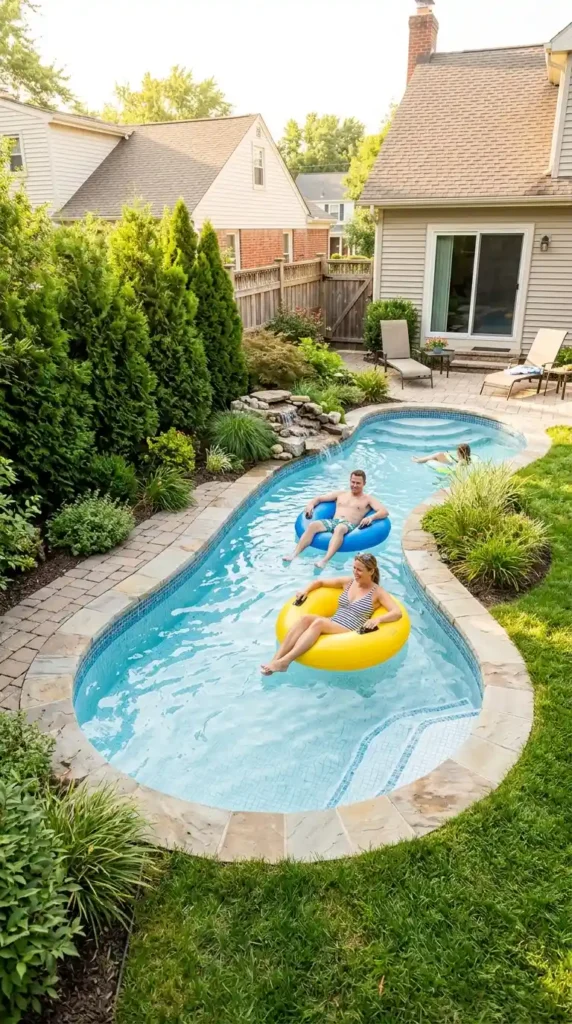
Not every lazy river needs an acre of land. Smaller kidney-shaped loops can fit into surprisingly tight spaces, think 30 to 40 feet in total length, and still deliver that floating experience. The trick is keeping the channel wide enough for a tube and designing the current so it actually moves you. This is a genuinely smart use of a compact yard that most people don’t think is possible.
How to do it: Work with a designer to create a meandering loop that fits your yard’s dimensions. Use a powerful current system to ensure smooth circulation. Incorporate a central planter or seating area to make the most of the space.
3. Naturalistic Rock Formations with Waterfalls
✦ Best for: Creating an immersive, mountain-stream experience with authentic rockwork
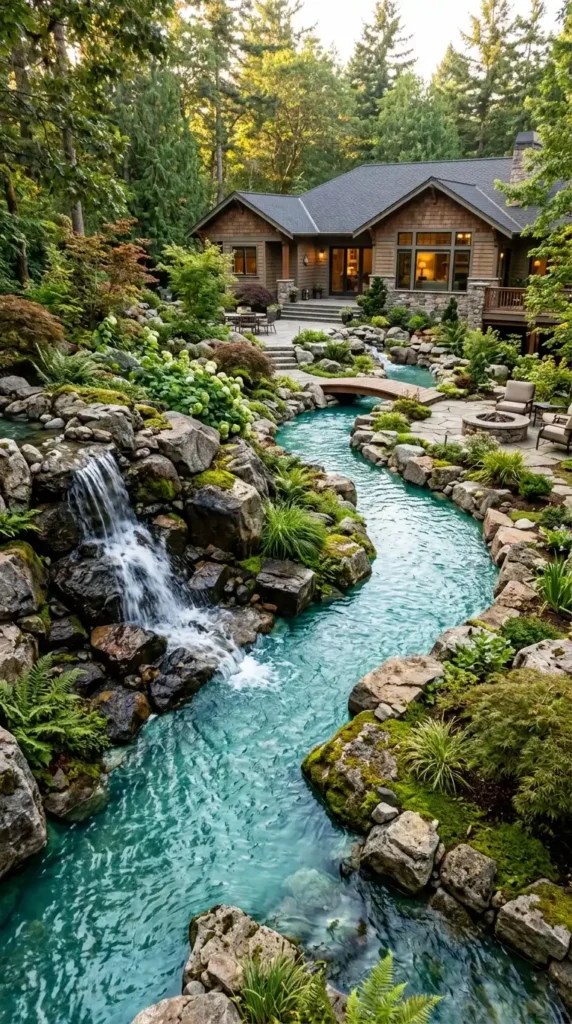
Natural rock formations built along the river edges change the whole vibe. Instead of clean tile walls, you are floating past boulders, mossy textures, and small waterfalls that trickle into the current. It looks like something carved out of a hillside rather than constructed in a suburban backyard. The water sound alone makes this worth it, genuinely calming in a way that smooth pool walls never quite achieve.
How to do it: Use natural stone or artificial rockwork to line the river channel. Add small waterfall features at strategic points. Plant ferns, moss, and shade-loving plants between the rocks for an established, natural look.
4. Lazy River with a Grotto Cave
✦ Best for: Adding drama and adventure with a cave that the river actually passes through
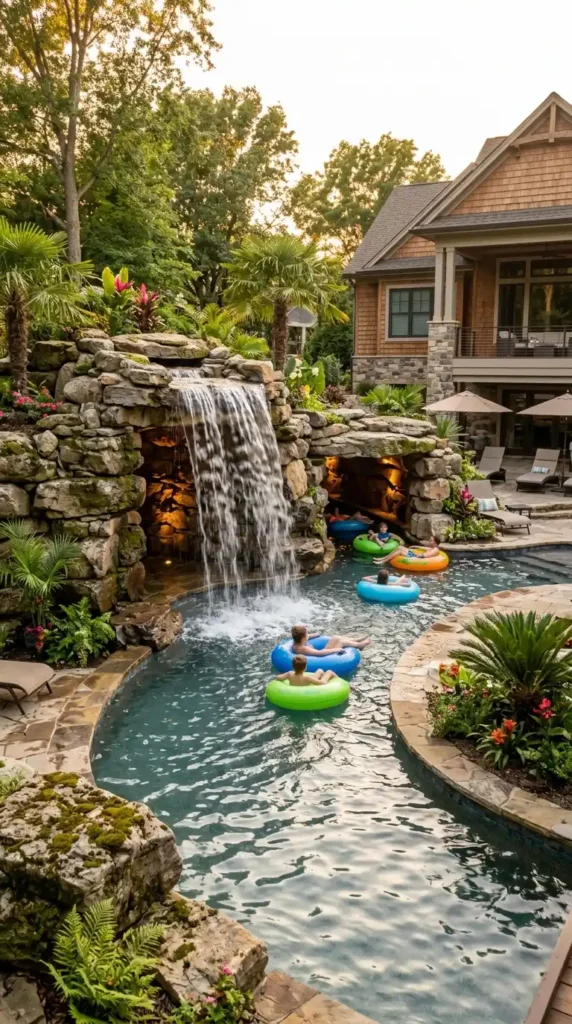
A rock grotto that the river actually passes through is the kind of feature that makes guests stop and stare. The cave portion of the river is usually darker, cooler, and dramatic in a way that open-air sections simply are not. Some builds even add a waterfall at the grotto entrance so you float through a curtain of falling water.
How to do it: Build a rock structure over a section of the river with an opening on both ends. Include a waterfall feature at the entrance. Use ambient lighting inside the cave for a magical effect. Add underwater speakers and a granite countertop bar for a truly luxurious experience.
5. The Island Spa and Dining Pavilion
✦ Best for: Creating a destination within the yard with a central island for entertaining
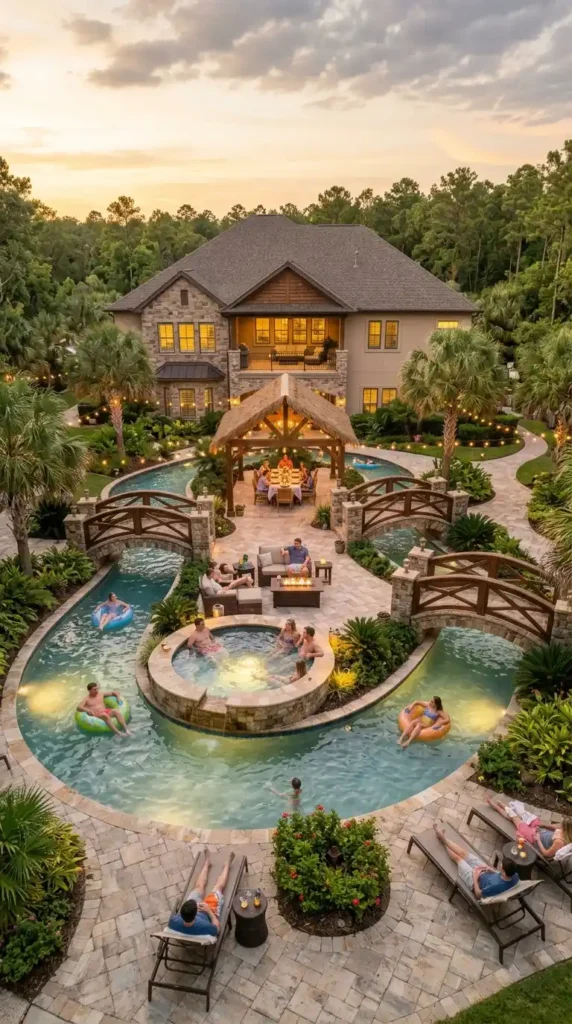
Creating an island in the center of your lazy river adds intrigue and a destination point. You cannot see the whole river from any one spot, creating the impression that there is always something more beyond your view. This segmentation makes the entire scene feel bigger than it actually is.
How to do it: Build a central island with a spa, lounging area, plantings, and a large stone structure. Add a waterfall on the island that cascades into the spa and then into the pool. Include an outdoor kitchen or dining area.
6. Tropical Landscaping and Shade Structures
✦ Best for: Creating a lush, immersive environment that feels like a faraway escape
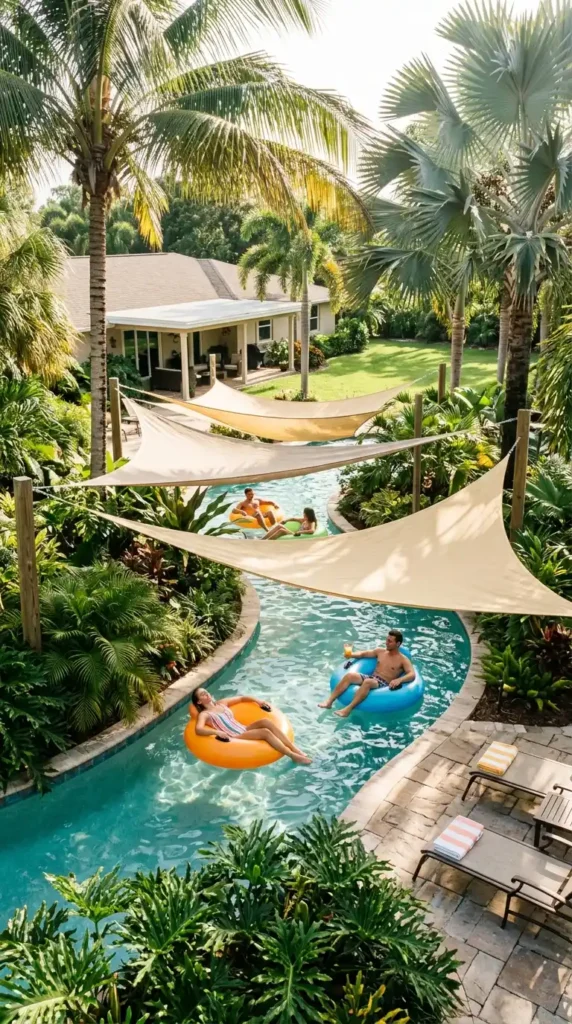
Tall palms, banana plants, and bird of paradise planted close enough to lean over the water create real shade and a lush atmosphere. A tropical lazy river design is less about the pool itself and more about everything surrounding it. The landscaping does the heavy lifting, making you feel like you have floated into somewhere far away.
How to do it: Plant tall palms and tropical foliage around the river edges. Add shade sails stretched across sections of the river for dappled light. Use thatched umbrellas or cabanas for rest stops. The planting creates texture, color, and privacy, turning your backyard into a secluded oasis.
7. Resort-Style Lazy River with Swim-Up Bar
✦ Best for: Entertaining guests with a social gathering spot built into the river
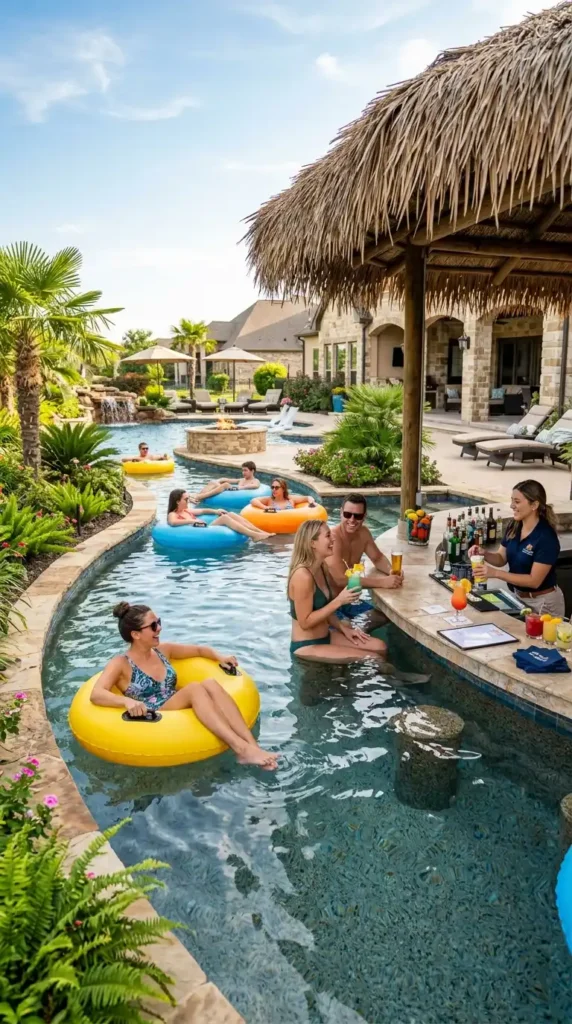
The river passes right by the bar, so you float up, grab your drink, and keep going without ever getting out of the water. Swim-up bars built into the lazy river route are one of those features that sounds like it belongs in a hotel but works incredibly well in private pools too. It becomes the natural gathering spot for the whole afternoon.
How to do it: Build a swim-up bar along a straight section of the river. Include underwater seating at the bar. Add shade structures and seating for guests who want to linger. The bar becomes a social hub that makes the lazy river feel like a true resort experience.
Cost and Planning Considerations
Budget Range: Lazy river pools represent a significant investment. Most custom lazy river pools start around $300,000 to $500,000 and can exceed $1 million when they include waterfalls, grottos, and full outdoor living areas. Some smaller or more modest designs can start around $120,000, but expect costs to rise quickly with added features.
Space Requirements: A functional lazy river typically needs at least 30 to 40 feet of length to allow for actual floating. The standard width is at least 6 feet, with depths starting at 3.5 feet. Longer channels of 60 to 100 feet give a more satisfying experience, but compact loops can work in smaller yards too.
Key Equipment: High-volume, low-head pumps are essential for creating the gentle current. Separate filtration systems are needed, as the river system is not efficient for daily circulation. Large-diameter pipes (10-12 inches) are often required for the river system.
Maintenance: Lazy rivers require more water volume, more pumps, and more filtration than a standard pool, which increases both upfront costs and ongoing maintenance. The systems are well-established and manageable with the right equipment.
Frequently Asked Questions
1. How much does a backyard lazy river cost?
Most custom lazy river pools start around $300,000 to $500,000 and can exceed $1 million. Smaller designs can start around $120,000.
2. What is the minimum size for a backyard lazy river?
A functional lazy river needs at least 30 to 40 feet of length and 6 feet of width. Depth should start at 3.5 feet.
3. Can a lazy river be added to an existing pool?
Yes, in many cases, it depends on the existing pool’s layout, available yard space, and local building codes. A pool contractor can assess what is possible.
4. How does the current work in a lazy river?
High-volume, low-head pumps push water in one direction through the channel. The current speed is typically 1 to 3 miles per hour.
5. Are lazy river pools hard to maintain?
They require more water volume, more pumps, and more filtration than a standard pool, but the systems are well-established and manageable with the right equipment.
Related Articles
Desert Pool Landscaping — 7 Ideas for a Water-Wise Oasis
7 Best Small Spanish Style Pool Ideas
How to Decorate a Mediterranean Pool — 7 Steps to a Resort-Style Escape
A backyard lazy river is the ultimate staycation feature, turning your home into a private resort. With thoughtful planning, the right design, and a bit of imagination, you can create a floating escape that brings joy and relaxation for years.

Sheikh Hassaan is a digital architect for small businesses and the founder of The Glow Up System. He writes about home decor, garden design, and outdoor living for real American homes – practical ideas that work in actual spaces without oversized budgets.