

Styling a living room to look genuinely beachy without tipping into themed territory is one of the most misunderstood challenges in coastal interior design. A beachy coastal living room captures the specific sensory quality of being at the beach — the light, the warmth, the casual abundance, and the feeling that the outdoors has come inside — without relying on nautical props or beach-souvenir decoration to communicate the reference.
This guide covers the designer techniques that create a beachy coastal living room with genuine character — from the palette and texture layering that produces the warm sandy quality of a beach house through the furniture choices, natural accessories, and the specific finishing details that make a room feel like it is perpetually close to the water.
Table of Contents
What Beachy Coastal Means and How Designers Approach It
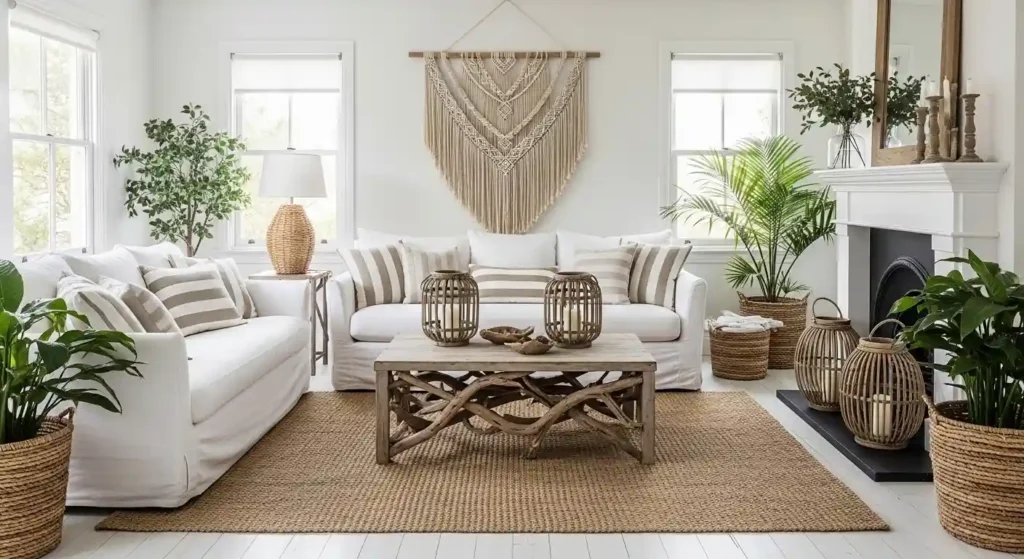
Beachy coastal is the most relaxed and most textural of all coastal interior styles. Where contemporary coastal is precise and edited, and where California coastal is generous and luxurious, beachy coastal is deliberately imperfect — layered, sun-faded, organically accumulated, and comfortable above everything else. It is the style of a house that has been lived in by people who spend most of their time outdoors and bring the beach inside with them.
The designer approach to beachy coastal avoids the most common mistake — using literal beach objects as decoration. Starfish, anchors, rope, and driftwood signs are themed rather than beachy. Genuine beachy coastal rooms create the beach atmosphere through texture, light quality, natural materials, and a palette of sun-bleached and salt-washed tones rather than through objects that depict the beach explicitly.
The three qualities that every genuinely beachy coastal living room shares: it feels worn-in and comfortable in a way that suggests years of beach living rather than recent decoration. It has layers of natural texture — woven, rough, smooth, soft — that create the sensory richness of a beach environment. And it feels genuinely bright and light as if the room itself is sun-soaked.
The Beachy Coastal Palette — Sun-Faded and Salt-Washed
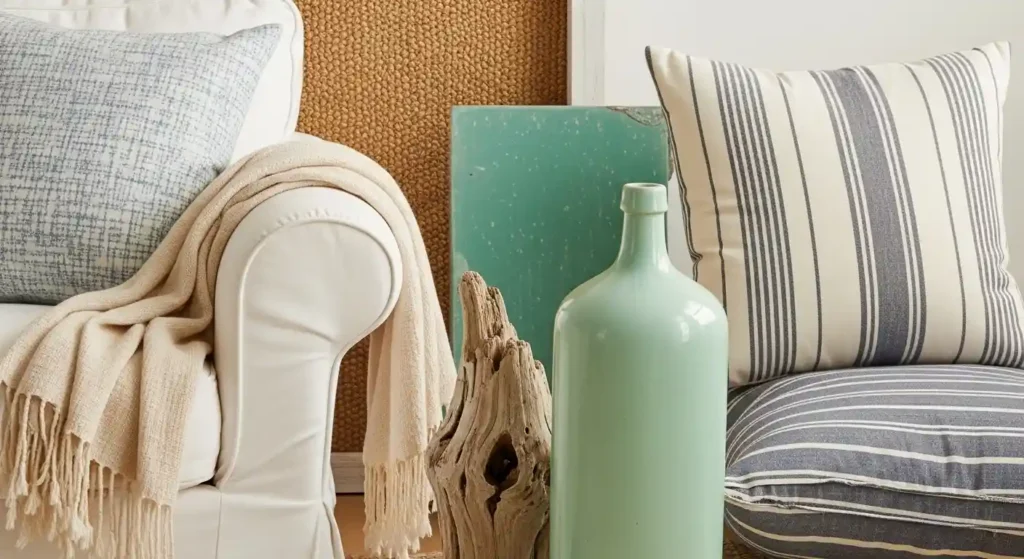
The beachy coastal palette is distinguished from other coastal palettes by its emphasis on faded and bleached tones rather than fresh clean ones. Every color in a beachy coastal room looks as if it has been in the sun for years — the white is not bright white but faded white, the navy is not deep navy but worn navy, the aqua is not saturated but sea-glass muted.
Faded white — the dominant base:
Not bright white — the specific quality of white that has been in coastal sun and salt air for years. Farrow and Ball Pointing, Benjamin Moore White Dove, or Sherwin-Williams Alabaster all have the warm slightly-aged quality that the beachy palette requires. The walls, ceiling, and slipcovered furniture all in this faded white creates the sun-bleached foundation.
Bleached sand — the natural material tone:
The warm honey-blonde of sun-dried beach sand comes from natural fiber rugs, undyed linen, and pale unfinished timber. This tone is warmer than the faded white but lighter than terracotta — it sits exactly at the warmth point that creates a sun-soaked rather than just light room quality.
Driftwood grey — the weathered timber tone:
The specific grey of sun and salt-bleached timber — not painted grey but the natural grey that wood develops from years of coastal exposure. Driftwood pieces, whitewashed or weathered timber furniture, and grey-washed floorboards all carry this specific tone that is the most authentically beachy material quality available.
Sea glass aqua and muted ocean tones:
Soft faded aqua, sea glass green, and muted turquoise in ceramic accessories, cushions, and occasional painted furniture pieces add the coastal color accent. These colors look as if they have been bleached by the sun — muted and imperfect rather than saturated and fresh.
Worn navy stripe:
The classic beach stripe in navy and white — but in the beachy coastal version the stripe looks slightly faded and worn rather than crisp and fresh. A well-washed navy stripe linen cushion or throw creates the beachy quality that a new crisp stripe cannot.
Texture Layering — The Most Important Beachy Coastal Technique
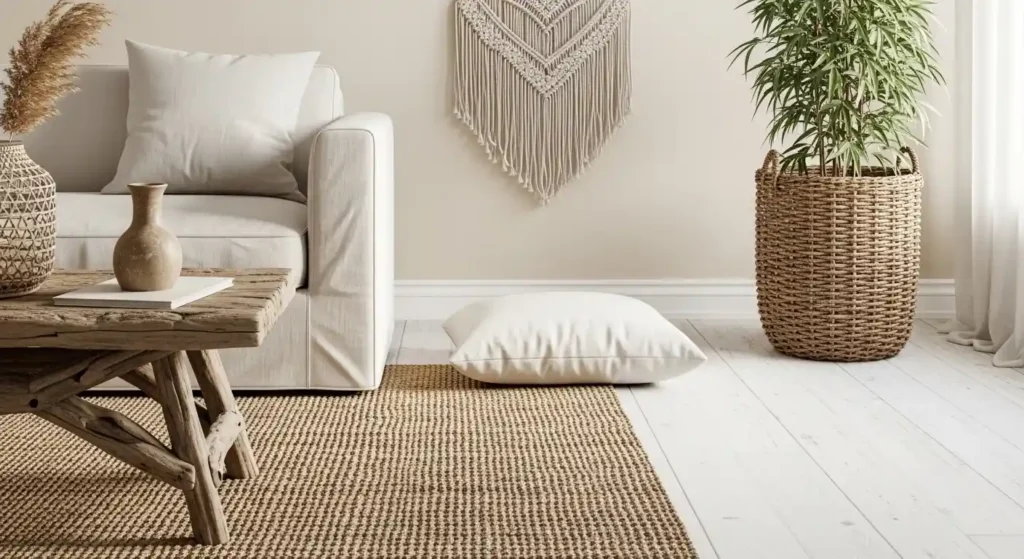
Texture layering is the technique that most distinguishes a genuinely beachy coastal room from a simply coastal-colored one. The beach environment is one of the most texturally rich environments available — rough sand, smooth shells, fibrous sea grass, weathered timber, rough rope, smooth stones, soft sea foam. A beachy coastal living room captures this textural richness through deliberately varied natural material surfaces.
The Six Textures a Beachy Coastal Room Needs
Rough woven — the primary texture:
A chunky jute or sisal rug with visible rough fiber weave. A woven seagrass basket. A macrame wall piece. These rough woven textures reference the most primal coastal materials — rope, netting, and sea grass.
Weathered timber — the structural texture:
Driftwood pieces, whitewashed timber furniture, and grey-washed floorboards provide the weathered timber texture that references coastal architecture and beach flotsam simultaneously.
Soft linen — the comfort texture:
Slipcover linen, linen cushion covers, and linen throws provide the soft fabric layer that makes the textured beachy room genuinely comfortable rather than simply interesting. Linen that has been washed many times has exactly the right slightly rumpled softness.
Smooth ceramic — the contrast texture:
Simple ceramic vessels in faded aqua, white, and sand tones provide the smooth surface contrast that makes the rough woven textures around them more visible. Without smooth contrast surfaces the room becomes texturally overwhelming.
Rattan and cane — the airy texture:
Rattan furniture, cane-backed chairs, and woven pendant lights provide a lighter and more refined woven texture that sits between the rough jute and the smooth ceramic — creating the textural hierarchy the room requires.
Living green — the organic texture:
Plants in woven baskets or terracotta pots provide the final living texture layer — the organic irregular surface of real plant foliage against all the other natural material textures completes the beachy coastal room with the one element that cannot be manufactured.
Furniture for a Beachy Coastal Living Room
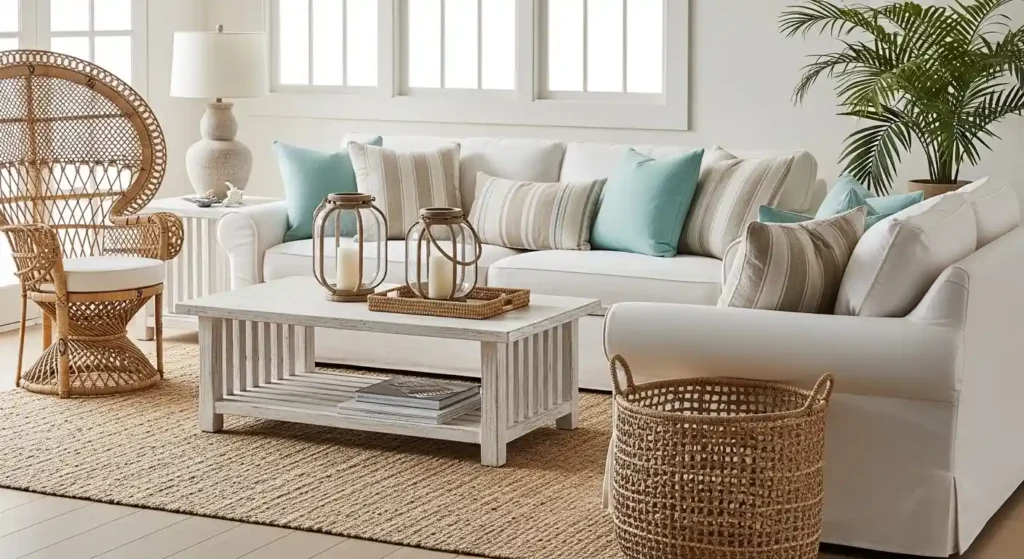
The Slipcovered Sofa — The Essential Beachy Coastal Piece
The slipcovered sofa is the defining furniture piece of the beachy coastal living room — more than any other single piece it communicates the casual, washable, beach-house quality of the style. A slipcover in faded white, natural linen, or cotton canvas covers any sofa form and can be washed when sandy feet and wet swimwear inevitably come inside. The slight rumple and softness of a well-washed slipcover is a feature not a fault — it is the visual evidence of a lived-in beach house.
Layer the slipcovered sofa with cushions in three textures — a chunky knit in natural, a linen stripe in faded navy and white, and a soft cotton in sea glass aqua. The three-cushion layering approach at varied sizes creates the abundant casual quality of a genuinely beachy room. Add a well-washed cotton or linen throw draped loosely over one arm.
Driftwood and Weathered Timber Tables
The coffee table in a beachy coastal room is the piece with the most direct beach reference — a genuine driftwood slab on simple timber legs, a whitewashed or grey-washed timber table with visible grain and texture, or a cluster of weathered timber stumps used as grouped occasional tables. The table surface should look as if it came from the beach rather than from a furniture showroom.
Rattan and Wicker Accent Pieces
A rattan peacock chair, wicker armchair, or cane-backed occasional chair in the beachy coastal room references the beach house furniture tradition of natural woven seating that suits both indoor and outdoor positions simultaneously. These chairs do not need cushions — their natural honey rattan tone and open woven form contribute the airy quality that the beachy coastal room requires alongside the softer slipcovered sofa.
Walls and Floors in a Beachy Coastal Living Room
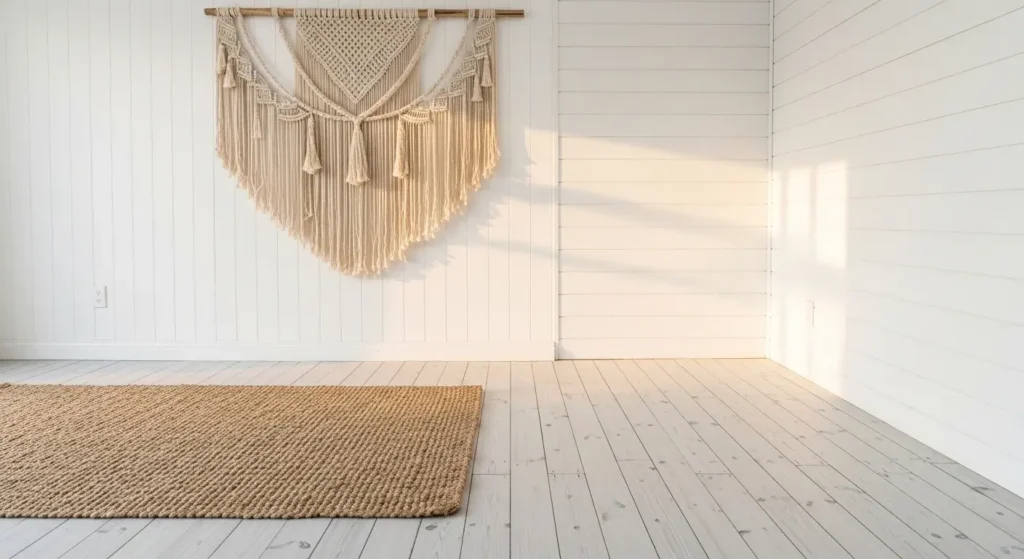
Whitewashed or grey-washed timber floors
The beachy coastal floor is whitewashed or grey-washed timber — the specific bleached quality of wood that has been treated to look like sun and salt have worked on it for years. This floor treatment is the single most impactful change for creating a beachy room character because it creates the beach house quality at the largest horizontal surface in the room. A large natural jute or sisal rug layered over the whitewashed floor adds the beach texture at the seating group center.
Shiplap or board-and-batten on one wall
Horizontal shiplap paneling painted in faded white on the primary wall creates the beach house architectural quality that the beachy coastal room requires — it references the wooden-sided beach cottages of every coastal region and adds the horizontal line that draws the eye outward toward the horizon. Peel-and-stick shiplap wallpaper provides the same visual effect without any structural work.
Macrame or woven wall piece as the primary wall feature
A large macrame wall hanging in natural undyed cotton is the wall feature most associated with the beachy coastal aesthetic — it adds the rough woven texture at wall height that no framed artwork provides and it has the handmade quality that suits the casual beach house character of the style. Position above the sofa as the primary wall feature instead of or alongside artwork.
Accessories That Create the Beachy Atmosphere Without the Souvenir Shop Look
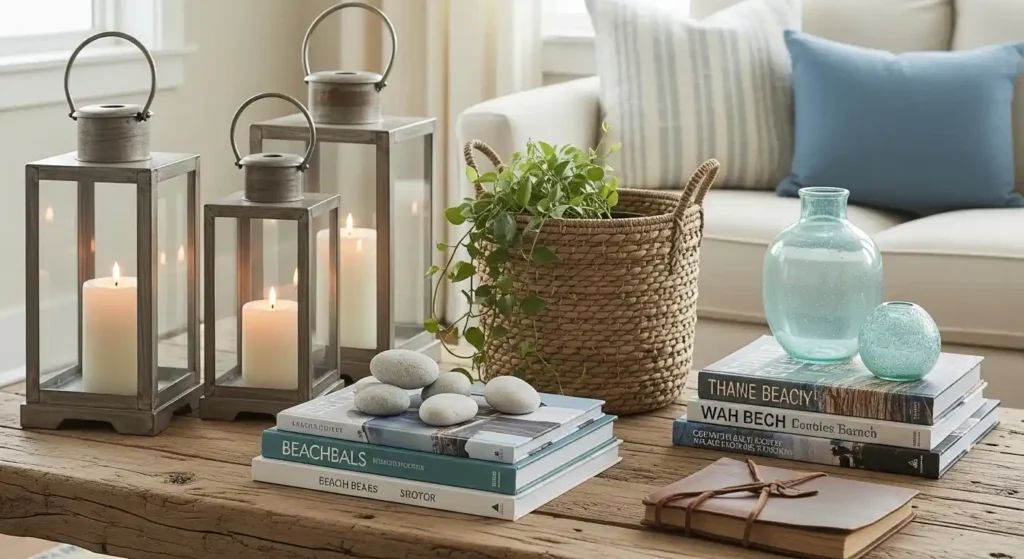
Hurricane lanterns and pillar candles:
Glass hurricane lanterns with thick white pillar candles are the most authentically beachy lighting accessory — they reference the lanterns used in genuine coastal buildings and create the warm amber candlelight that beach houses are associated with. Group two or three hurricane lanterns at different heights on the coffee table or mantel.
Smooth stones and natural objects:
A cluster of smooth river or beach stones on a coffee table, a piece of coral beside a lamp, or a large smooth stone used as a paperweight — these natural collected objects create the genuine beachy quality of items actually brought from the beach without the novelty souvenir appearance of decorative beach objects. Real natural objects always look more beachy than manufactured ones.
Woven baskets for plants and storage:
Seagrass and woven rattan baskets holding plants, storing throws, or functioning as side tables create the woven natural material abundance that is the most distinctly beachy accessory category. A large seagrass basket holding a trailing pothos beside the sofa. A smaller woven basket on the coffee table holding remotes and magazines. A tall woven basket in a corner holding rolled blankets.
Coastal coffee table books:
A stack of three coffee table books with coastal landscape photography covers — surf photography, coastal architecture, or ocean natural history — creates the intellectual beach reference that genuine beach house rooms have always maintained. The books communicate a relationship with the coast that goes beyond decoration.
The Designer Finishing Details That Make It Look Genuinely Beachy

Wash everything before it goes in the room
New linen cushions, new cotton throws, and new slipcovers should all be washed before use in a beachy coastal room. The washing process softens the fabric, creates slight natural rumpling, and removes the new-product stiffness that contradicts the worn-in beach house quality. A linen cushion that has been washed five times looks more genuinely beachy than the same cushion unwashed regardless of the color or pattern.
Let the natural light dominate
A genuinely beachy room has maximum natural light at all times during the day — no heavy curtains, no blocked windows, no dim corners. The specific quality of bright diffuse coastal daylight is what makes beach house rooms feel so immediately pleasant. Sheer white panels at ceiling height on any windows that need covering — never anything heavier in a beachy coastal room.
Add a sea salt or ocean fragrance
Scent is the sensory quality most powerfully associated with the beach — the specific smell of sea salt and coastal air is immediately evocative of the beachy quality regardless of what a room looks like. A sea salt and driftwood reed diffuser or a beeswax candle in a coastal scent creates the olfactory beach reference that completes the visual styling with a sensory layer that no decoration can replicate.
Use premium natural textiles at every touch point
The luxury in a beachy coastal room comes entirely from textile quality rather than from expensive furniture. Heavy washed linen, genuine cotton canvas, and silk at the cushion scale create the material quality that elevates a beachy room from casual to genuinely beautiful. The Blissy Silk Pillowcase in ivory or soft white on the primary sofa cushion position introduces the premium textile quality that completes the beachy coastal room at its most touched surface. Find it linked on Amazon.
📌 More coastal living room ideas: California Coastal Living Room Styling Tips for a Relaxed Luxury Look
Frequently Asked Questions
What is a beachy coastal living room?
A beachy coastal living room is a living space that captures the specific sensory quality of beach living — warmth, casual abundance, natural textures, and the sun-bleached quality of a house close to the water — through design choices rather than through beach-themed decoration. It differs from other coastal styles in its emphasis on worn-in comfort, layered natural textures, and the faded palette of colors that have been in sun and salt air for years. According to Better Homes and Gardens the beachy coastal aesthetic is the most popular coastal interior style because its emphasis on comfort and natural materials suits the widest range of homeowners and property types.
How do you make a room look beachy without being tacky?
A beachy room avoids the tacky quality by using natural materials and a sun-faded palette rather than literal beach objects. Replace nautical props with natural textures — rough jute, weathered timber, smooth ceramics, soft washed linen. Replace bright coastal colors with faded bleached versions of those colors. Replace decorative beach objects with genuine natural objects — smooth stones, real driftwood, actual collected pieces. The distinction between beachy and tacky is the difference between creating a beach atmosphere through material and sensory quality versus depicting the beach through decorative objects.
What furniture goes in a beachy coastal living room?
The essential beachy coastal living room furniture: a slipcovered sofa in faded white or natural linen cotton as the primary seating piece. A driftwood or whitewashed timber coffee table. A rattan peacock chair or wicker armchair as the accent seating. A large natural jute or sisal rug under the seating group. Woven seagrass baskets used as side tables and plant holders. The common quality across all beachy coastal furniture: every piece looks as if it has been in a beach house for years rather than recently purchased.
What colors make a room look beachy?
The colors that make a room look beachy are faded and bleached versions of coastal colors rather than fresh saturated versions. Faded white rather than bright white. Bleached sandy blonde from natural fiber rather than painted beige. Driftwood grey from weathered timber rather than painted grey. Muted sea glass aqua rather than saturated turquoise. Worn navy stripe rather than crisp new navy. The faded quality of every color in the beachy palette is what creates the specific sun-and-salt-washed beach house atmosphere rather than a simply coastal-colored room.
More Coastal Living Room Ideas
→ How To Style a Coastal Chic Living Room Like a Designer
→ 12 Best Furniture Pieces for a Neutral Coastal Living Room
→ How To Decorate a Coastal Living Room on a Budget
Start with the slipcover and wash it before it goes on the sofa. That single act of pre-washing shifts the room from newly decorated to genuinely lived-in — and lived-in is the entire point of a beachy coastal room.

Sheikh Hassaan is a digital architect for small businesses and the founder of The Glow Up System. He writes about home decor, garden design, and outdoor living for real American homes – practical ideas that work in actual spaces without oversized budgets.