
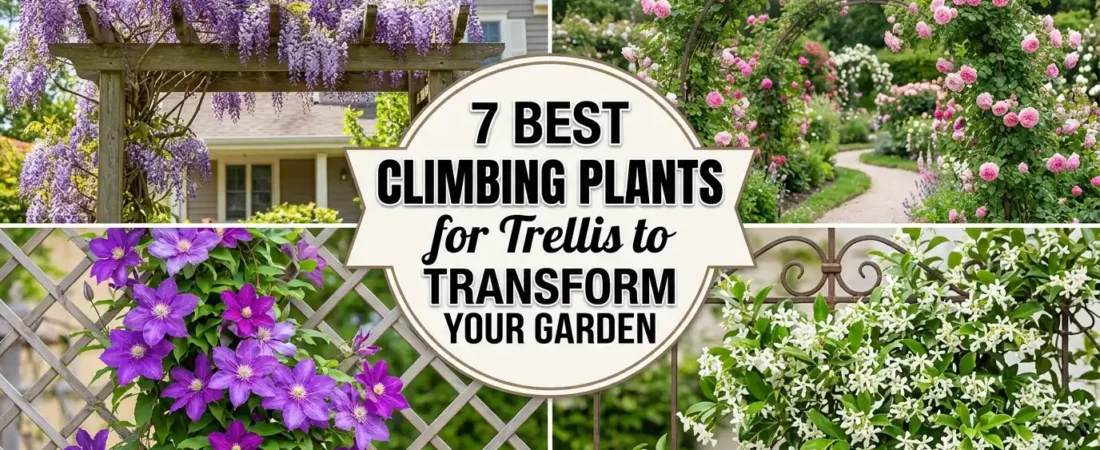
A trellis is one of the smartest investments you can make in your garden. It adds vertical interest, creates privacy, and maximizes growing space in even the smallest yards. But the real magic happens when you choose the right climbing plants to grow on it. The best climbers can turn a simple wooden frame into a living wall of color, fragrance, and beauty. They soften hardscapes, create shade, and attract pollinators .
That is what makes knowing the best climbing plants for trellis structures so valuable for American gardeners, letting you create stunning vertical gardens that save space while making a dramatic statement.
Table of Contents
Why Trellises and Climbers Work So Well Together
A trellis provides the perfect support structure for climbing plants to reach their full potential. Climbing plants use different methods to ascend: some have twining stems that wrap around supports, others use tendrils, and some cling with aerial roots or adhesive pads . Understanding these growth habits helps you choose the right plant for your trellis. Trellises help elevate plants off the ground, improving airflow and reducing disease risks . They also create natural privacy screens, turning your patio or garden into a secluded retreat.
Here are seven of the best climbing plants for trellis structures, each with its own unique personality and growing requirements.
1. Clematis: The Queen of Climbers
✦ Best for: Trellises, obelisks, and adding instant color to boring walls
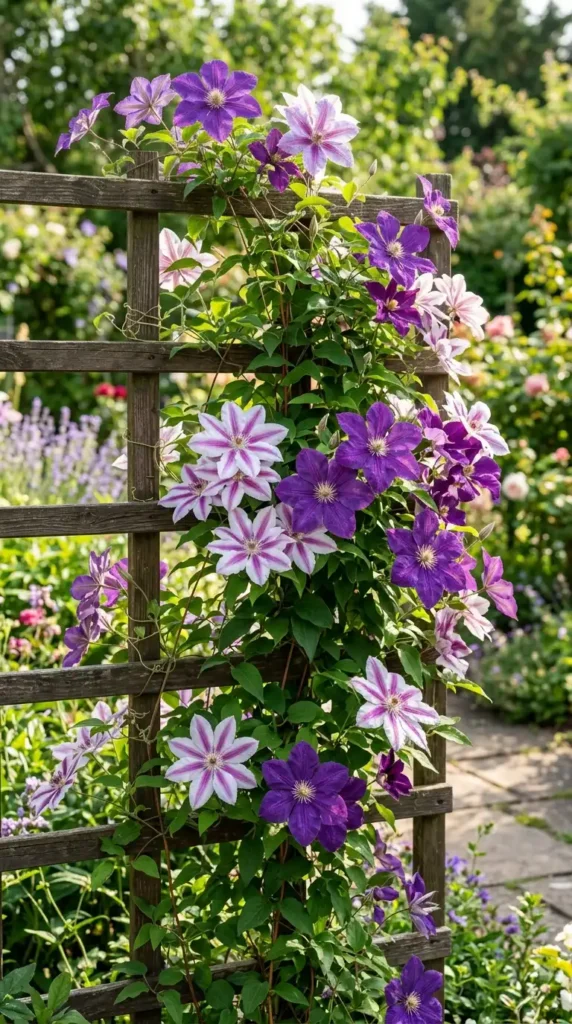
Clematis is the prima donna of climbing plants, delivering knockout blooms in virtually every color imaginable, from soft pastels to deep, brooding purples . These star-shaped flowers are pure garden gold, and despite their glamorous appearance, they’re surprisingly forgiving. Plant them with cool roots and sunny heads, then watch them steal the show .
Clematis can be fast growers, making them ideal if you’re looking to add shade quickly. They can also thrive in part-shade spots, though you’ll likely get more blooms in full sun . They climb by using delicate tendrils to hold onto the climbing surface, so for larger structures, add a grid or screen with thin wires they can climb .
Quick Tips: Plant in full sun to part shade . Keep roots cool with mulch or low-growing plants . Prune according to type for best blooming .
2. Climbing Roses: Romance in Full Bloom
✦ Best for: Pergolas, arches, and creating an instant English garden look
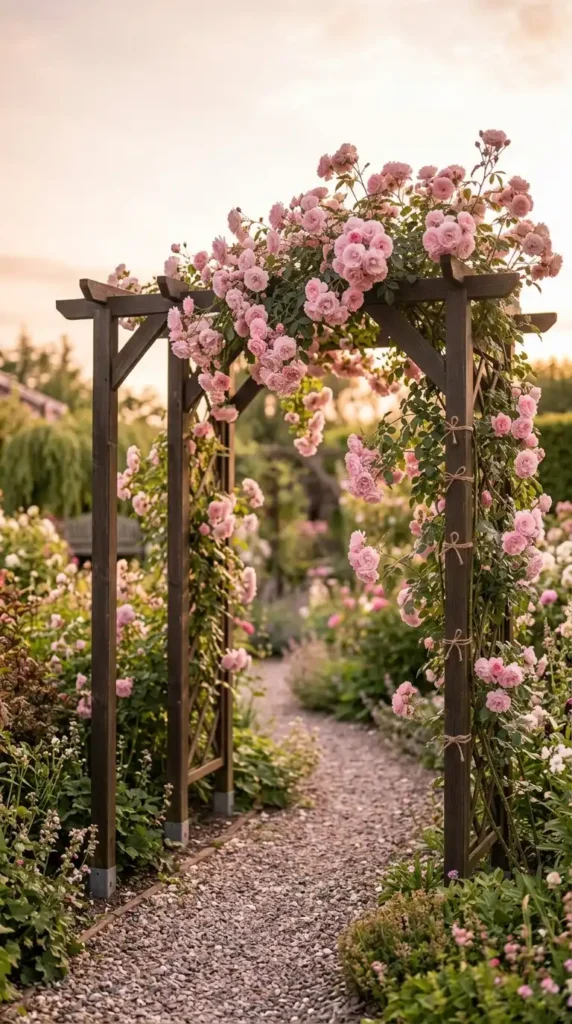
Nothing beats the romance of climbing roses tumbling over a garden arch . These timeless beauties offer months of fragrant blooms that make every morning feel like a fairy tale . Climbing roses like ‘New Dawn’, ‘Eden’, and ‘Gertrude Jekyll’ offer a range of colors from soft blush pink to deep crimson .
Yes, they need regular pruning, but choose disease-resistant varieties and you’ll avoid most maintenance headaches . You’ll need to bend and tether the canes of your rose plant to train it onto the structure you want it to climb . The payoff? Pure magic .
Quick Tips: Plant in full sun with well-drained soil . Prune in late winter or early spring. Train canes horizontally for more blooms.
3. Wisteria: The Dramatic Cascader
✦ Best for: Strong pergolas, mature trellises, and creating Instagram-worthy garden moments
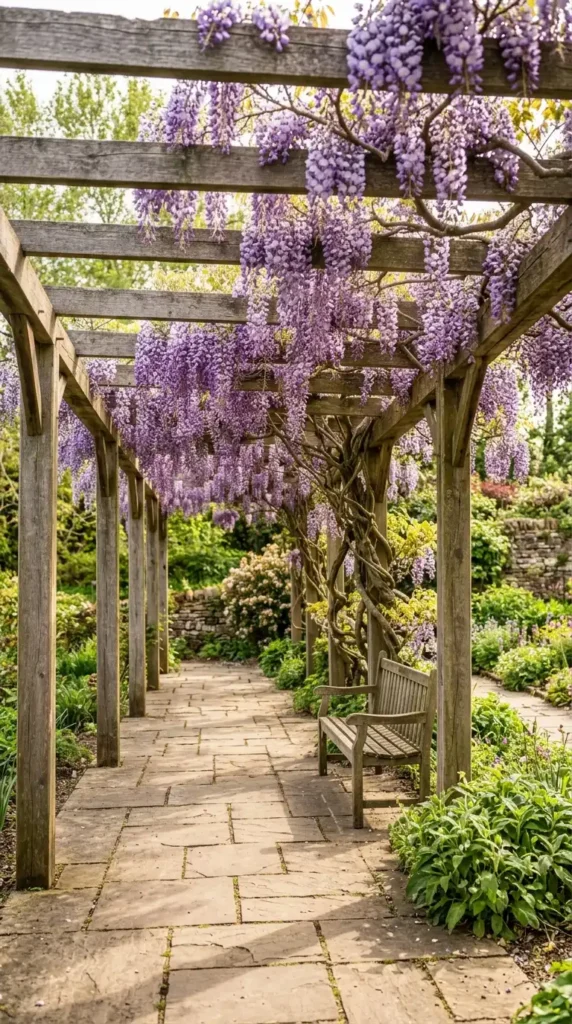
Wisteria is gorgeous and dramatic, but it will test your patience for three to five years before blooming . But those cascading purple or white flowers are absolutely worth the wait . Just make sure your support structure can handle its enthusiasm . This vigorous climber can grow up to 30 feet or more, making it perfect for large pergolas and strong trellises .
Wisteria is a strong vine that can quickly transform your garden into a breathtaking oasis . Once established, it requires regular pruning to keep it in check and encourage those famous floral displays .
Quick Tips: Plant in full sun with well-drained soil . Needs sturdy support. Prune twice yearly to control growth and encourage flowering.
4. Honeysuckle: Sweet and Inviting
✦ Best for: Trellises and arches near seating areas where fragrance can be enjoyed up close
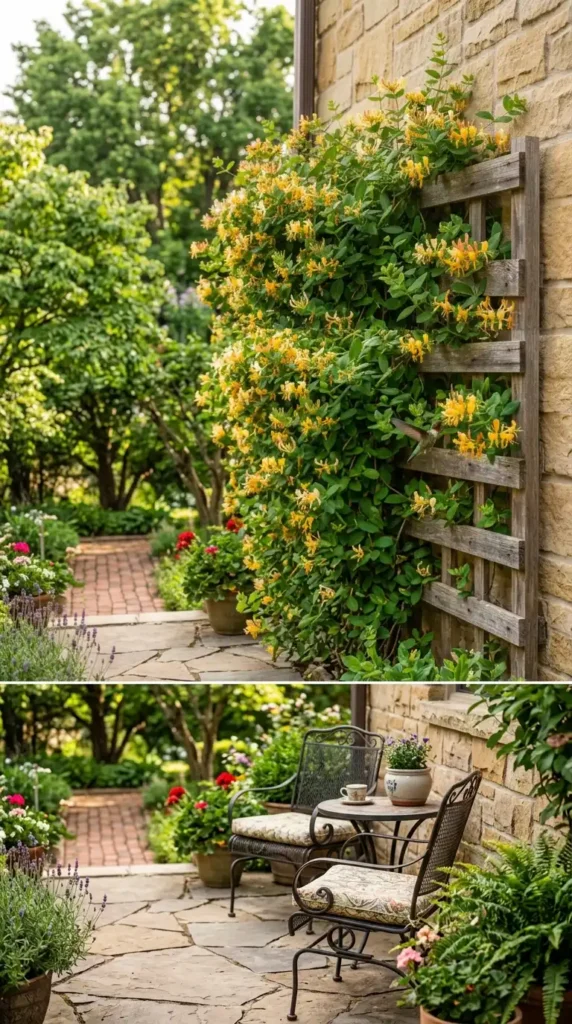
Honeysuckle brings a warm, inviting charm to trellises and arches . Its tubular flowers are not only beautiful but also attract hummingbirds and bees . The fragrance, especially in the evening, is sweet and nostalgic, making it a wonderful choice for seating areas .
Honeysuckle is prized for its sweet-smelling flowers that attract hummingbirds and bees . It grows vigorously and can cover large areas quickly . Varieties like Lonicera japonica ‘Halliana’ are evergreen in mild climates, providing year-round greenery .
Quick Tips: Plant in full sun to part shade . Prune after flowering to maintain shape . Choose non-invasive varieties where possible.
5. Jasmine: Nighttime Perfume
✦ Best for: Arches and trellises near outdoor dining areas where evening fragrance can be enjoyed
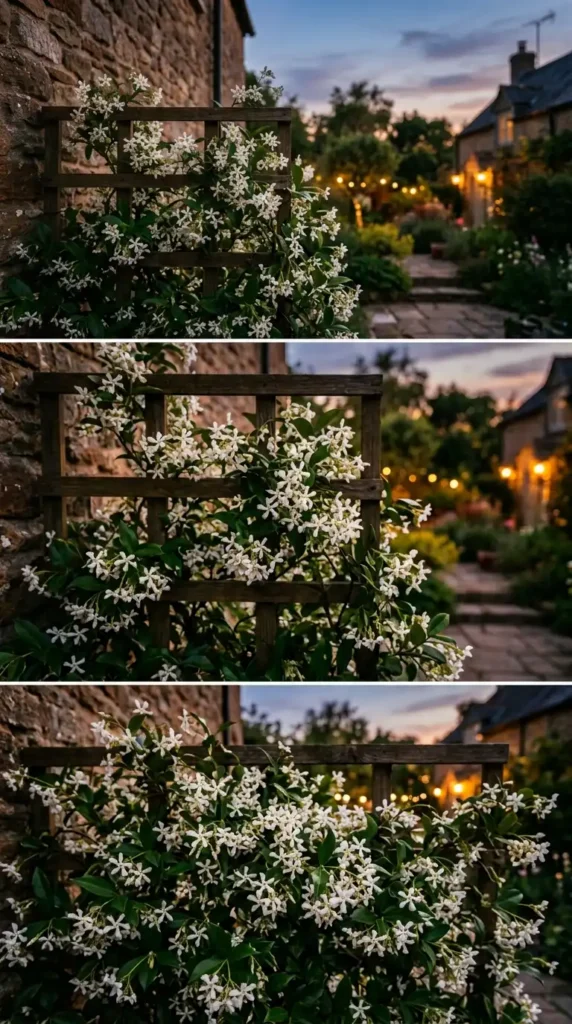
Jasmine is a climber beloved for its heavenly scent . Its star-shaped white flowers bloom profusely in summer, releasing a perfume that intensifies in the evening . It’s a natural choice for arches and trellises near outdoor dining areas, where its fragrance can be enjoyed during warm summer nights .
Jasmine is a fast-growing climber that can easily cover a trellis, filling your garden with its sweet scent . It’s ideal for a sunny or partially shaded area and adds a touch of elegance to any garden .
Quick Tips: Plant in full sun to partial shade . Needs well-drained soil. Thrives in USDA zones 7-10 .
6. Trumpet Vine: Bold and Bright
✦ Best for: Large, sturdy trellises where you want dramatic color and wildlife attraction
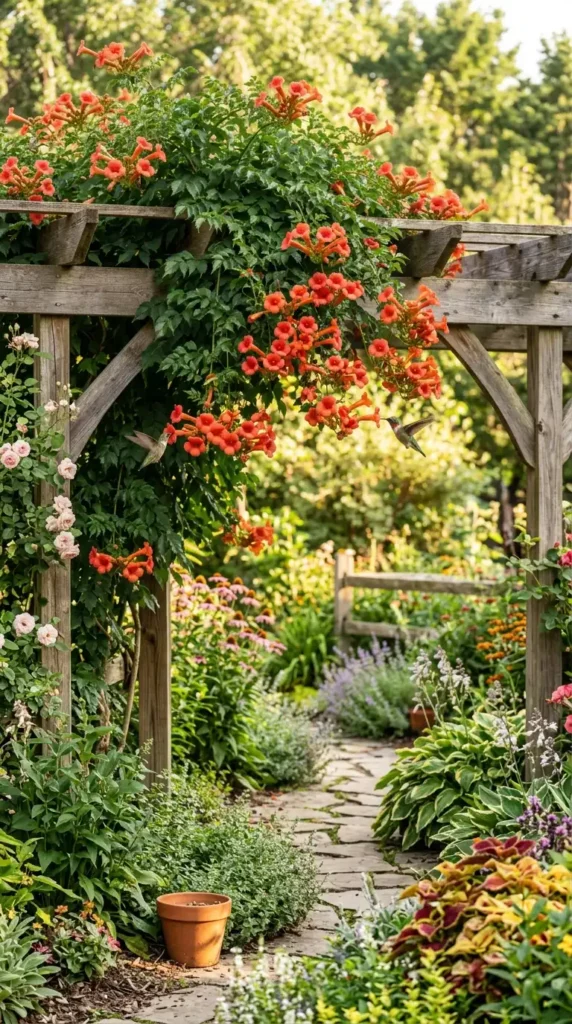
Want to turn your yard into a hummingbird paradise? Trumpet vine delivers with stunning orange-red trumpet blooms that birds can’t resist . This tough native thrives in hot, dry spots where other plants give up, making it perfect for challenging walls . Just keep pruning shears handy .
Trumpet vine is a stunner, growing up to 40 feet tall with gorgeous red-orange blooms . It thrives in full sun or part shade, but it’ll need regular pruning to help you keep it from overtaking your whole yard . It’s a vigorous grower, so it’s best suited for sturdy pergolas or trellises .
Quick Tips: Plant in full sun . Needs regular pruning to control growth . Attracts hummingbirds .
7. Climbing Hydrangea: The Shade-Lover
✦ Best for: North-facing walls and shady courtyards where most climbers struggle
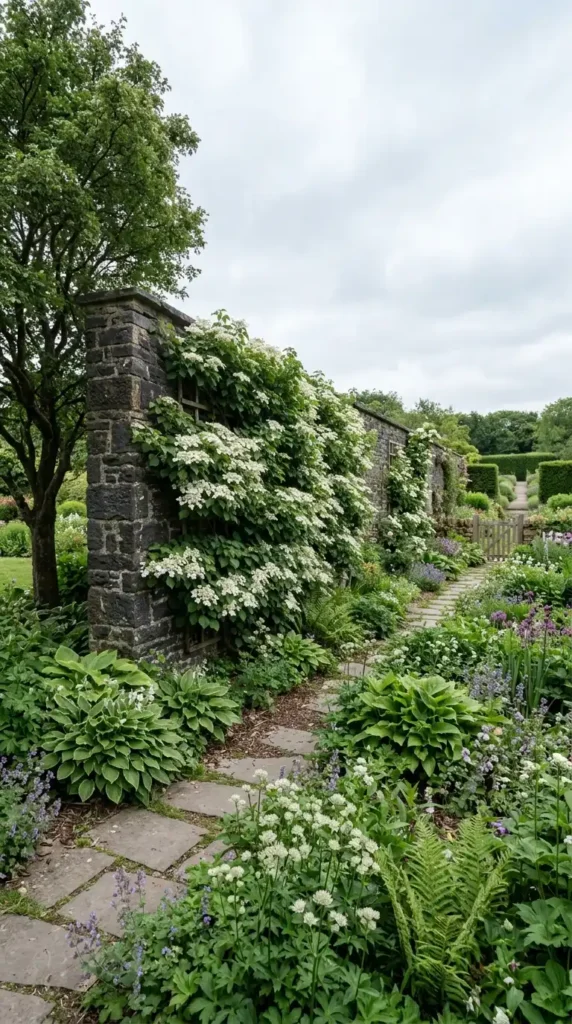
While most climbers require sun, the climbing hydrangea thrives in shade . Those elegant white blooms appear all summer, followed by stunning golden fall foliage . It’s self-clinging, meaning less work for you, but it is heavy when mature, so invest in solid support . Perfect for that tricky north-facing wall .
Climbing hydrangeas bloom white all summer, and its leaves turn a gorgeous golden yellow in the fall . It provides multiple seasons of interest, and in winter, once the foliage has died, the exfoliating bark offers a beautiful rich, brownish-red hue .
Quick Tips: Plant in part shade to full sun . Needs moist, well-drained, acidic soil . Self-clinging, so no tying required. Patience needed as it’s slow to establish but stunning once it does.
Frequently Asked Questions About Climbing Plants for Trellis
What are the best climbing plants for a trellis?
The best climbing plants for a trellis include clematis, climbing roses, wisteria, honeysuckle, jasmine, trumpet vine, and climbing hydrangea. These climbers offer a range of colors, fragrances, and growth habits suitable for various garden conditions . Choose based on your light conditions, space, and desired aesthetic.
What is the fastest growing climbing plant for a trellis?
Trumpet vine and Virginia creeper are among the fastest-growing climbers . Trumpet vine can reach up to 40 feet and fills in quickly, making it ideal for covering large structures . Morning glory is another fast-growing annual option that can reach 10-15 feet in a single season .
What climbing plants are good for shade?
Climbing hydrangea is the best climber for shade . It thrives on north-facing walls and in shady courtyards where other climbers struggle . Ivy is another versatile option that grows well in both sun and shade .
What climbing plant is best for a small trellis?
Sweet peas and clematis are excellent choices for smaller trellises . Sweet peas are annual climbers that reach 6-8 feet and offer fragrant, delicate flowers . Compact clematis varieties can also thrive on smaller structures without overwhelming them.
Related Articles
Flowers That Bloom in Winter and Brighten the Coldest Months
Flowers That Bush: 10 Stunning Shrubs for a Lush, Vibrant Garden
12 Black Trellis Planter Ideas That Transform Any Patio Instantly
12 Best Trellis Planters for a Beautiful Patio and Garden
A trellis without climbing plants is just a structure. Fill it with the right climbers, and you will create a living work of art that transforms your garden with color, fragrance, and vertical beauty.

Sheikh Hassaan is a digital architect for small businesses and the founder of The Glow Up System. He writes about home decor, garden design, and outdoor living for real American homes – practical ideas that work in actual spaces without oversized budgets.