
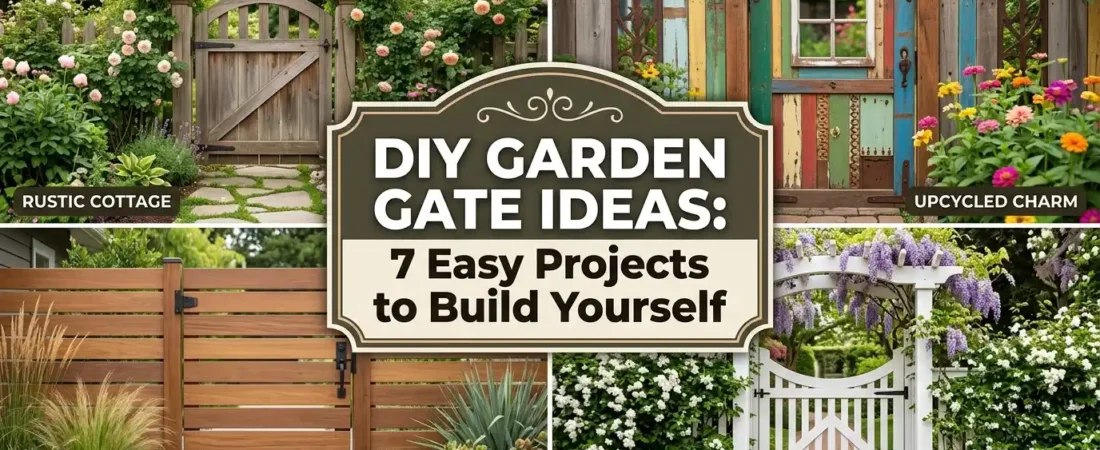
A garden gate does more than just mark an entrance. It adds charm, keeps pets out of your vegetable beds, and gives your garden a finished, inviting look. Store-bought gates can be expensive, but building one yourself is easier than you might think. With basic tools and some lumber, you can create a custom gate that fits your space and style without spending a fortune.
This guide covers seven DIY garden gate ideas for every skill level, from simple pallet gates to sturdy wooden frames and chicken wire designs. Every project includes practical instructions and budget tips to help you get started.
Table of Contents
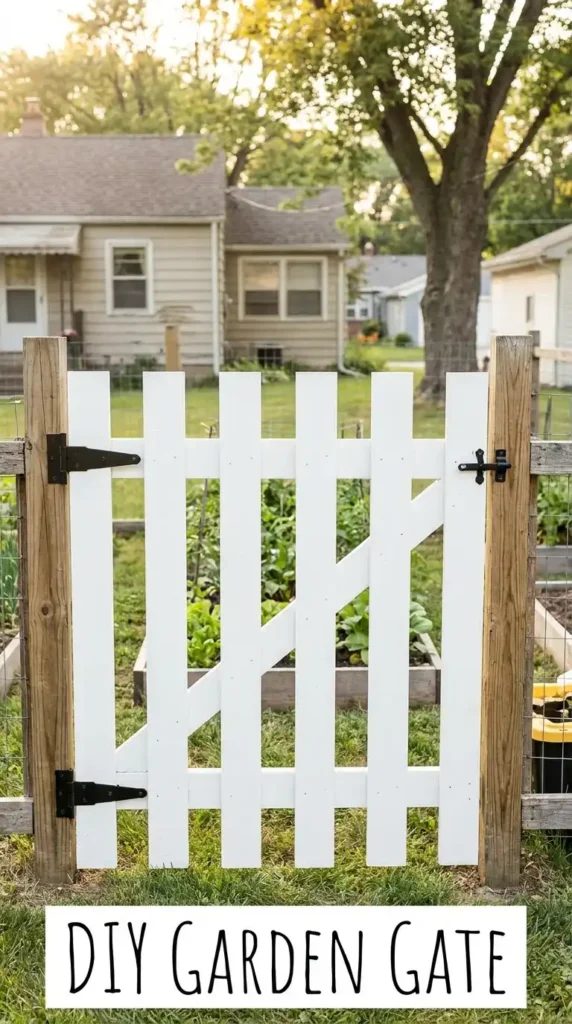
1. Simple Wooden Slat Gate
✦ Best for: Beginners looking for an easy, classic gate that matches any fence style
This is the most straightforward DIY garden gate. Using 2×4 lumber, you build a rectangular frame with a diagonal brace to prevent sagging, then attach vertical slats to complete the look. You can leave it natural, stain it, or paint it to match your fence.
How to build it: Measure your opening and subtract 1/2 inch on each side for clearance. Cut two vertical stiles to your desired gate height and two horizontal rails to the gate width. Assemble the rectangle, check that it is square by measuring diagonals, then add a diagonal brace running from the bottom hinge corner to the top latch corner. This brace is essential to keep the gate from sagging. Attach pickets or slats across the front with screws or nails.
Best for: Anyone who wants a classic, sturdy gate that is easy to customize.
2. Pallet Wood Garden Gate
✦ Best for: Budget-conscious gardeners who want a rustic, farmhouse look
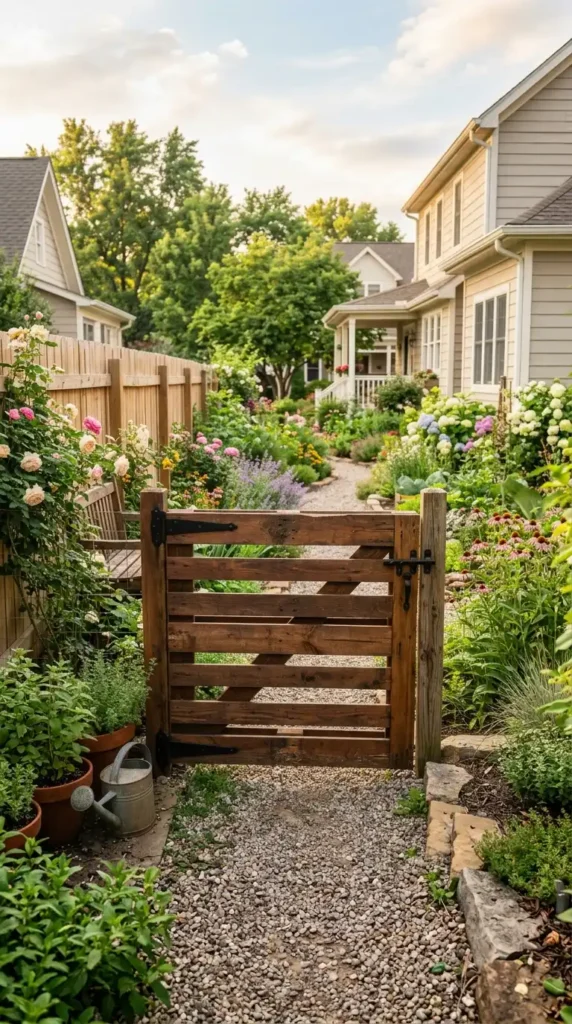
Reclaimed pallet wood is often free and perfect for a rustic garden gate. The key is choosing heat-treated pallets (marked with “HT”) rather than chemically treated ones. This project costs almost nothing and can be completed in an afternoon.
How to build it: Break down pallets and select the straightest boards. Lay them out on a flat surface to determine your gate width, then cut them to your desired height. Use two or three crosspieces of timber to hold the boards together, screwing them horizontally across the back of the gate. Add a diagonal piece for strength. For a decorative touch, trace an arch on the top and cut it out with a jigsaw. Sand rough edges and paint or stain as desired.
Best for: A quick, cheap, and character-filled gate.
3. Chicken Wire Garden Gate
✦ Best for: Vegetable gardens and keeping small animals out while letting pollinators in
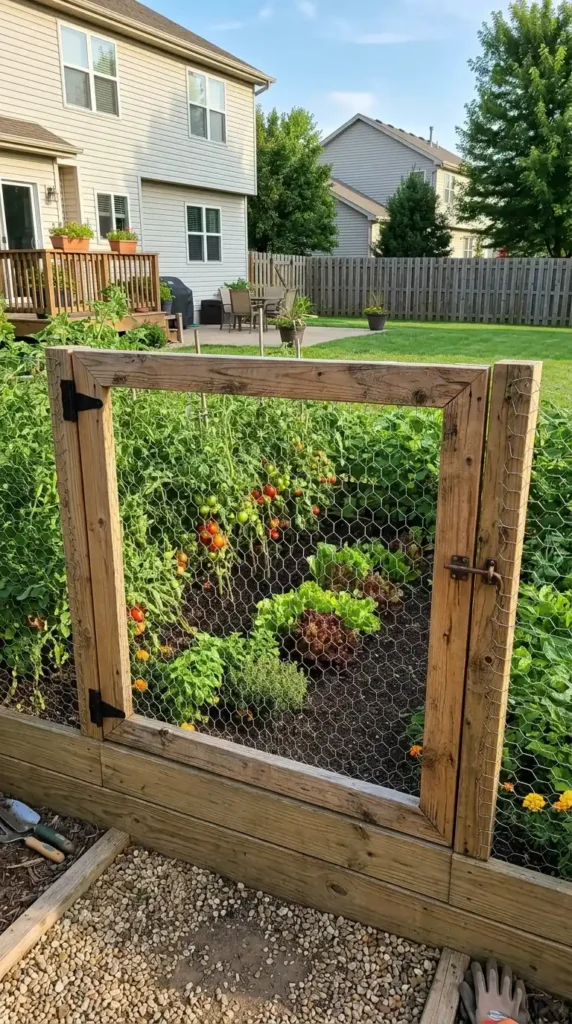
A chicken wire gate is lightweight, cheap, and perfect for protecting vegetable beds from rabbits and chickens. It uses a simple wooden frame with galvanized wire mesh stretched across the middle.
How to build it: Build a rectangular 2×4 frame to fit your opening. Unroll galvanized chicken wire and cut it slightly larger than the frame opening. Pull the wire tight across the frame and staple it in place with galvanized staples. Work from one side to the opposite, pulling out slack as you go. Trim excess wire with wire cutters and press down any sharp ends. Hang the gate with T-hinges and install a latch.
Best for: Keeping pets out of beds while maintaining visibility.
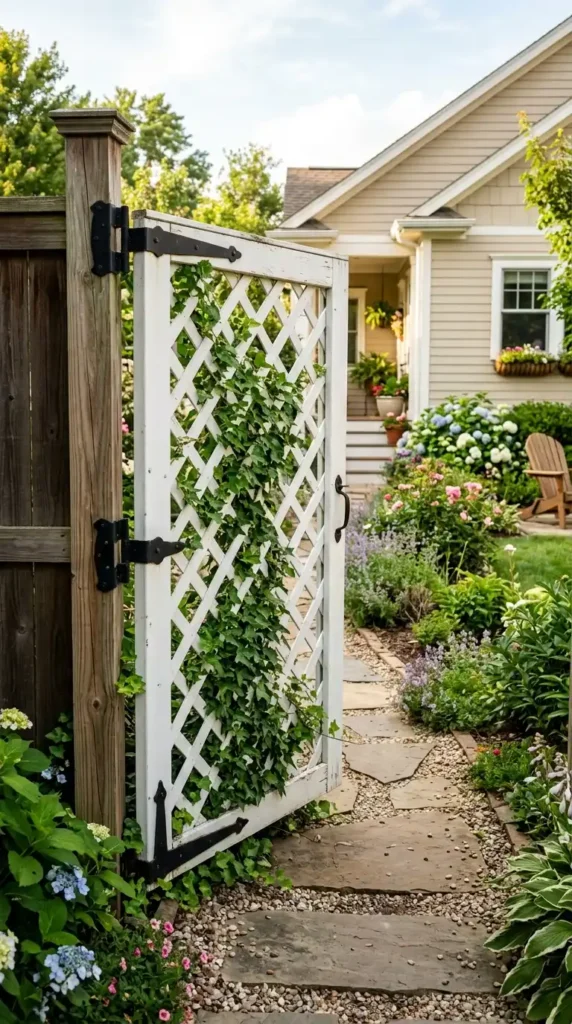
4. Lattice Garden Gate
✦ Best for: Adding elegance and supporting climbing plants
A lattice gate adds a touch of charm and provides the perfect structure for climbing roses or ivy. You can buy lattice panels at any home improvement store and build a frame around them.
How to build it: Build a sturdy wooden frame from 2x4s. Cut a sheet of lattice to fit inside the frame and attach it with screws or staples. For a more creative look, create a checkerboard pattern by spacing the lattice yourself. Paint or stain the finished gate to match your garden. You can also attach small planters to the gate for added color.
Best for: A decorative entrance that adds texture and plant support.
5. Arched Garden Gate
✦ Best for: Creating a grand, elegant entrance with a timeless look
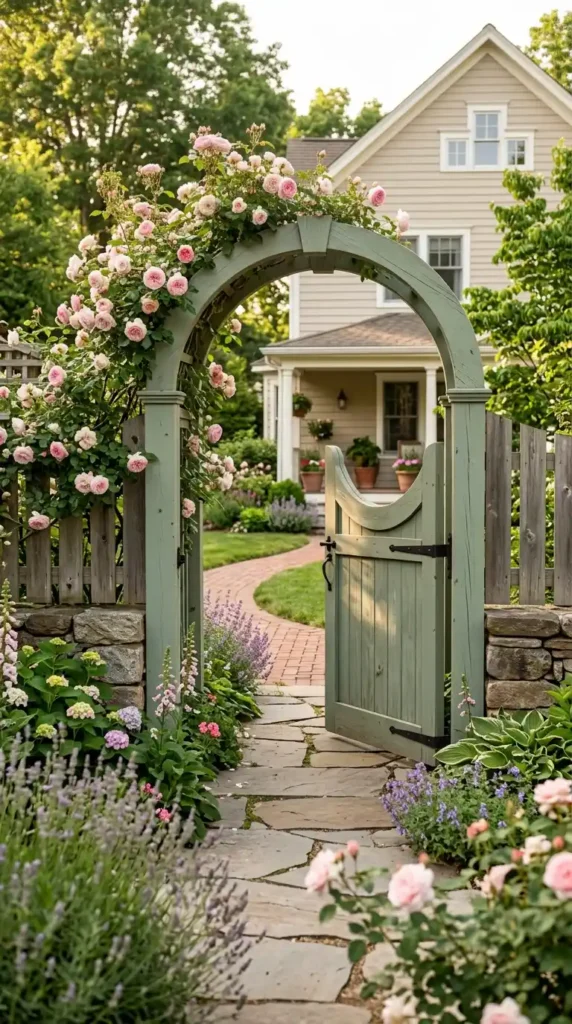
An arched gate adds elegance and a sense of welcome. It requires a bit more cutting skill but is still manageable for a weekend project.
How to build it: Build a standard rectangular frame. To create the arch, cut the top slats to an arched shape using a jigsaw. You can mark the curve by attaching a pencil to a piece of string, screwing it into the center of the gate, and drawing the arch. Attach the arched slats to the frame, then trim the frame to match the curve. Add a diagonal brace behind the slats to prevent sagging. The result is a beautiful, classic entrance.
Best for: A romantic, cottage-style garden entrance.
6. Repurposed Screen Door Gate
✦ Best for: A unique, vintage look with minimal effort
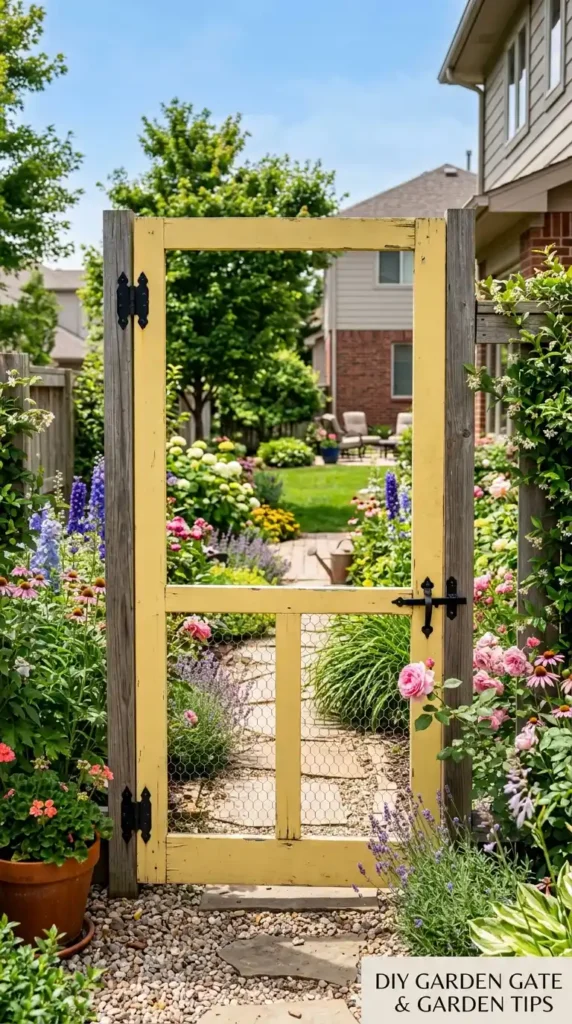
An old screen door can be repurposed into a beautiful garden gate with very little work. This is one of the easiest DIY options because the door is already built.
How to build it: Find an old wooden screen door at a salvage yard or flea market. Measure it against your gate opening to make sure it fits. Remove the screen and either replace it with chicken wire for a garden feel or leave it open for a decorative look. Add a fresh coat of exterior paint and install hinges and a latch. Add decorative elements like a wreath or plant hangers for extra charm.
Best for: Adding instant character with minimal building.
7. Diagonal Bracing: The Key to a Gate That Does Not Sag
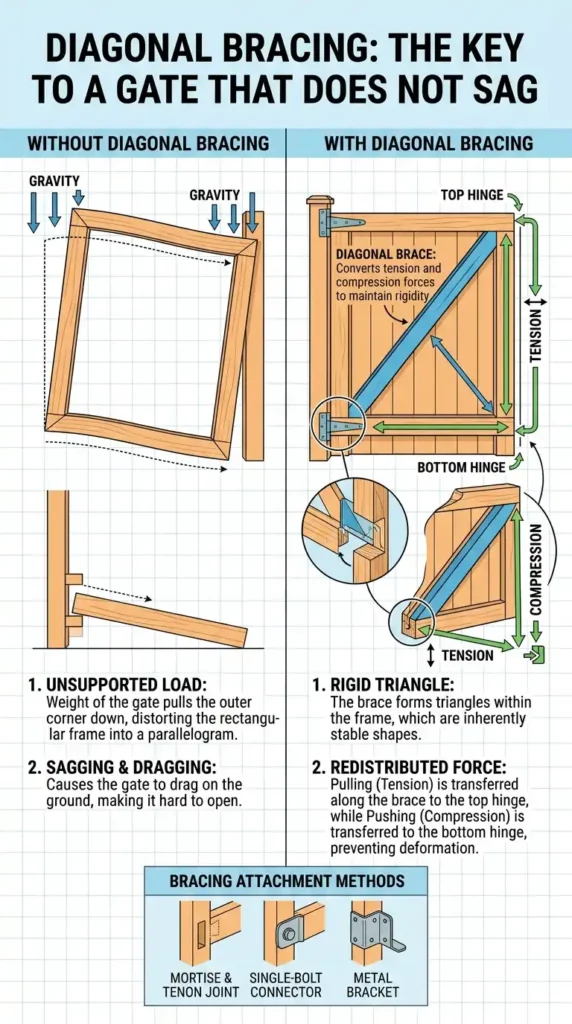
Regardless of which style you choose, the diagonal brace is the most important structural element of your gate. Without it, gravity will pull the latch corner down over time, causing the gate to drag on the ground and refuse to latch.
How to brace correctly: The brace must run from the bottom of the hinge side to the top of the latch side. Think of it as an arm propping up the far corner of the gate that wants to sag. Installing it in the opposite direction does nothing to prevent sagging and can actually make it worse. Cut the brace to fit snugly between the rails and stiles and secure it with screws at each crossing.
Frequently Asked Questions About DIY Garden Gates
1. How wide should a garden gate be?
A standard single garden gate is between 36 and 48 inches wide, which is enough room for a wheelbarrow or lawnmower to pass through. Measure your opening and subtract 1/2 inch on each side for clearance.
2. What is the best wood for a garden gate?
Western red cedar and pressure-treated pine are the most popular choices. Cedar resists rot naturally and is lightweight, while pressure-treated pine is cheaper and durable. Avoid untreated pine, which will rot within a few years.
3. How do I prevent my garden gate from sagging?
Use a diagonal brace running from the bottom hinge side to the top latch side. Use heavy-duty hinges and secure them with bolts or structural screws, not short wood screws. Also, make sure your gate posts are solid and set in concrete.
4. Can I build a garden gate with pallet wood?
Yes, pallet wood is a great budget-friendly option for a garden gate. Just make sure to use heat-treated pallets (marked “HT”) and avoid chemically treated ones. Sand the wood well and seal it to protect against the weather.
Related Articles
7 DIY Garden Signs: Easy Projects to Add Personality to Your Yard
DIY Garden Fence: 10 Budget-Friendly Ideas to Protect and Beautify Your Yard
DIY Koi Pond: Cost + Step-by-Step Guide
DIY Home Decor Ideas on a Budget: 7 Projects That Look Expensive
Building your own garden gate does not have to be complicated or expensive. With basic tools, a little creativity, and a solid diagonal brace, you can create a charming entrance that fits your garden perfectly.

Sheikh Hassaan is a digital architect for small businesses and the founder of The Glow Up System. He writes about home decor, garden design, and outdoor living for real American homes – practical ideas that work in actual spaces without oversized budgets.