
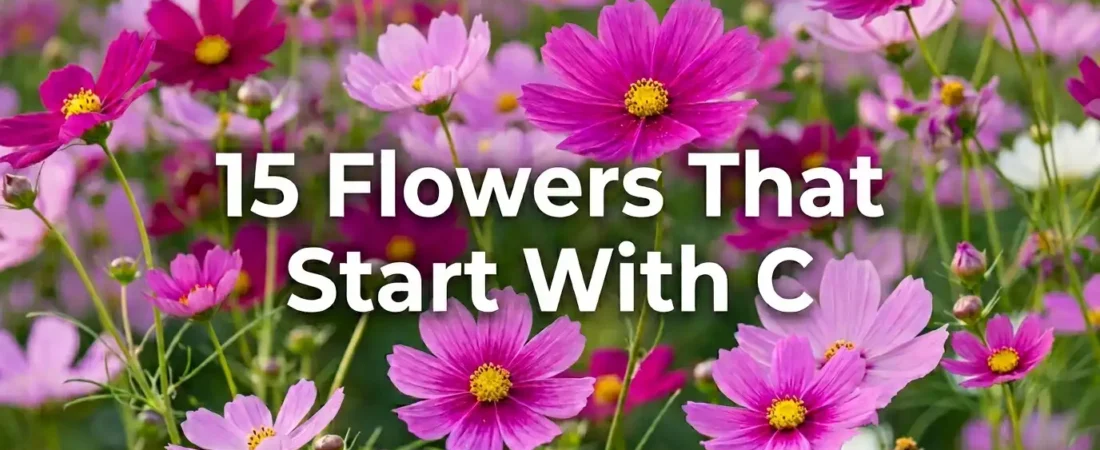
From the delicate petals of a camellia to the bold, tropical leaves of a canna lily, flowers that start with C are some of the most popular, versatile, and visually stunning plants you can grow. The letter C brings us garden classics, climbing vines, and even edible blooms, making it one of the most exciting letters in the botanical alphabet.
This article covers 15 beautiful flowers that start with C that work for American gardens of every size and style. Every suggestion includes growing zones, light requirements, and practical tips. No vague recommendations. No unrealistic expectations. Just reliable, stunning plants that bring color and life to your outdoor space.
Table of Contents
Why Flowers That Start With C Are Garden Favorites
Flowers beginning with the letter C include some of the most beloved plants in gardens worldwide. From the classic carnation, a staple in bouquets for centuries, to the elegant camellia, which has graced gardens for centuries and was a symbol of desire and passion in ancient China, these flowers offer incredible variety .
Many flowers that start with C are also incredibly practical. Calendula, for example, is not just beautiful but also has medicinal properties and edible petals that can be used in salads . Catmint is known for its eye-catching spikes of bluish-purple blossoms that attract hummingbirds, butterflies, moths, and bees from late spring to early fall .
This guide focuses on 15 of the most popular and garden-worthy flowers that start with C. Whether you need a climber like clematis, a shade-lover like camellia, or a cheerful annual like cosmos, there is a C-flower waiting for you.
1. Carnation: The Classic Cut Flower
✦ Best for: Bouquets, cutting gardens, and anywhere you want long-lasting, fragrant blooms
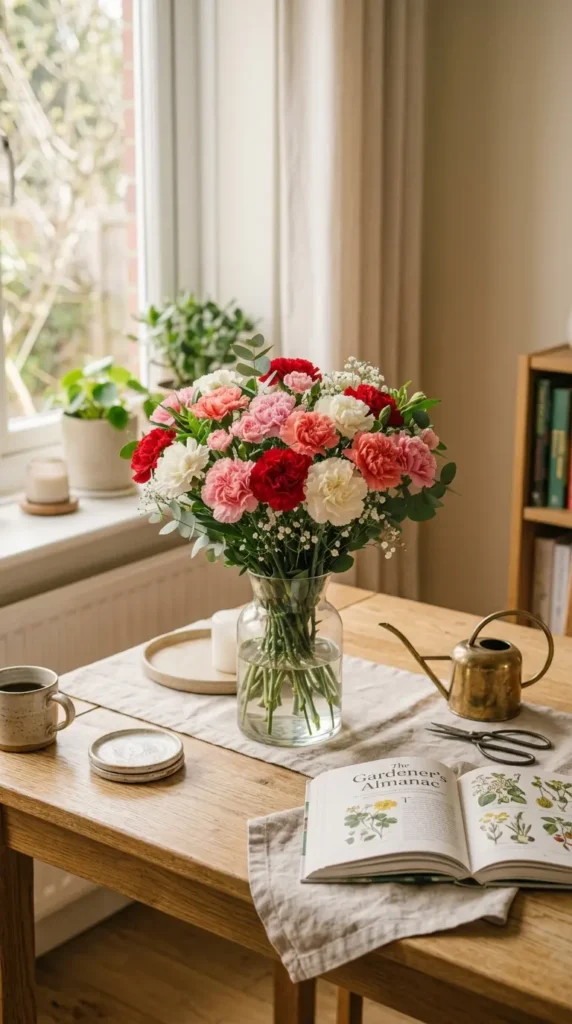
Carnations are one of the most popular flowers beginning with C, widely cultivated past their original Mediterranean range. With their frilled petals and sweet scent, they are versatile and full of character . Carnations tend to appear in a bright pinkish-purple color, but other variations include white, red, blue, yellow, and green .
These flowers have roots in ancient Rome, where they were used in ceremonial crowns. They symbolize fascination and distinction and are often worn on special occasions. Carnations are not only decorative but also edible, adding a peppery zest to dishes . Whether in bouquets or gardens, they always make a statement.
Carnations prefer full sun and well-drained soil. They are hardy in USDA zones 3 through 10 and bloom from late spring to early fall. Deadheading encourages continuous blooms.
2. Camellia: The Elegant Winter Bloomer
✦ Best for: Shaded gardens, woodland settings, and where you want winter or early spring color
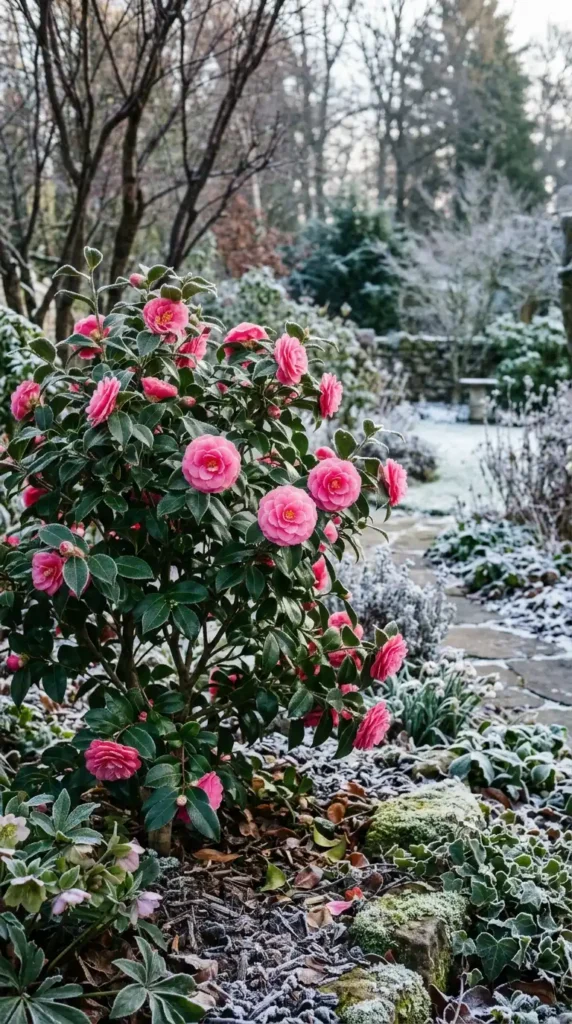
A garden without camellias is like a party without cake. These elegant blooms have graced gardens for centuries, offering rose-like flowers in multiple hues . With more than 100 species of this plant in the world, they are challenging to describe fully. This flowering shrub has been around for centuries, and because of their lush petals, it is common to mistake them for peonies .
Camellias are especially popular in tea, as certain varieties are used to produce tea leaves. They thrive in shade, making them ideal for less sunny spots. Their rich history stretches back to ancient China, where they were symbols of desire and passion . They are also a landscaping favorite.
Camellias prefer partial shade and acidic, well-drained soil. They are hardy in USDA zones 7 through 10 and bloom from late fall to mid-spring. In Japan, camellias are symbols of admiration .
3. Chrysanthemum: The Jewel of Autumn
✦ Best for: Fall gardens, borders, and bouquets where you want rich, long-lasting color
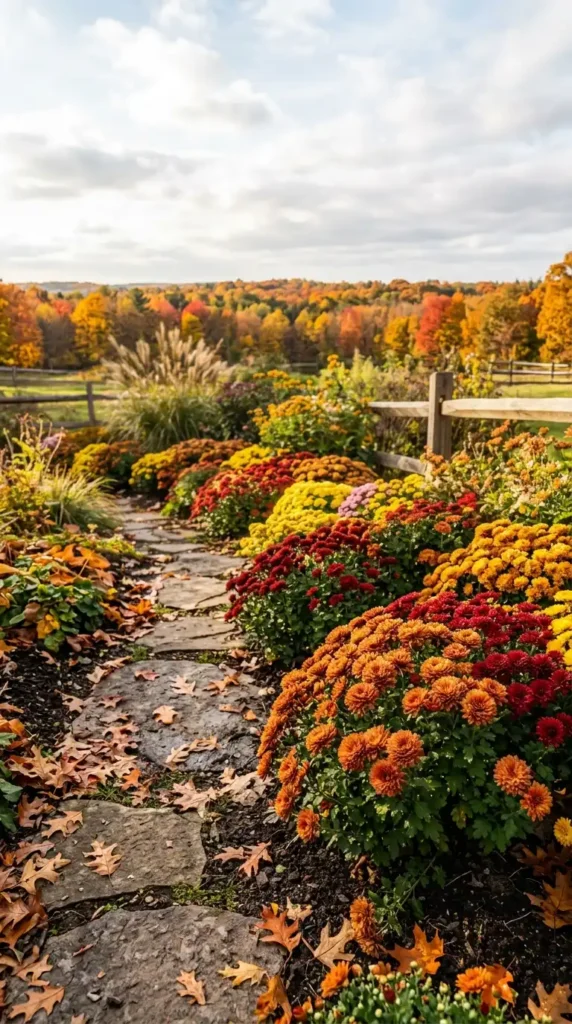
Chrysanthemums are the jewels of autumn. Bursting with color, they enliven gardens with their multi-petaled blooms. Originating from Asia, they have been cultivated for over 2,500 years . Also known as “mums,” they are popular products in garden centers and grocery stores as bouquet flowers .
Revered as symbols of longevity and rejuvenation, they hold a special place in many cultures. Chrysanthemums are not just pretty faces; their petals have been used in teas and medicine. The 36 recognized species of the genus, which blooms from late summer to early winter, feature a wide range of cultivars and hybrids that differ in size, color, shape, and texture .
Chrysanthemums prefer full sun and well-drained soil. They are hardy in USDA zones 5 through 9 and bloom from late summer to early winter. Pinch back stems in early summer to encourage bushier growth.
4. Clematis: The Climbing Showstopper
✦ Best for: Fences, trellises, and arbors where you want vertical interest and dramatic flowers
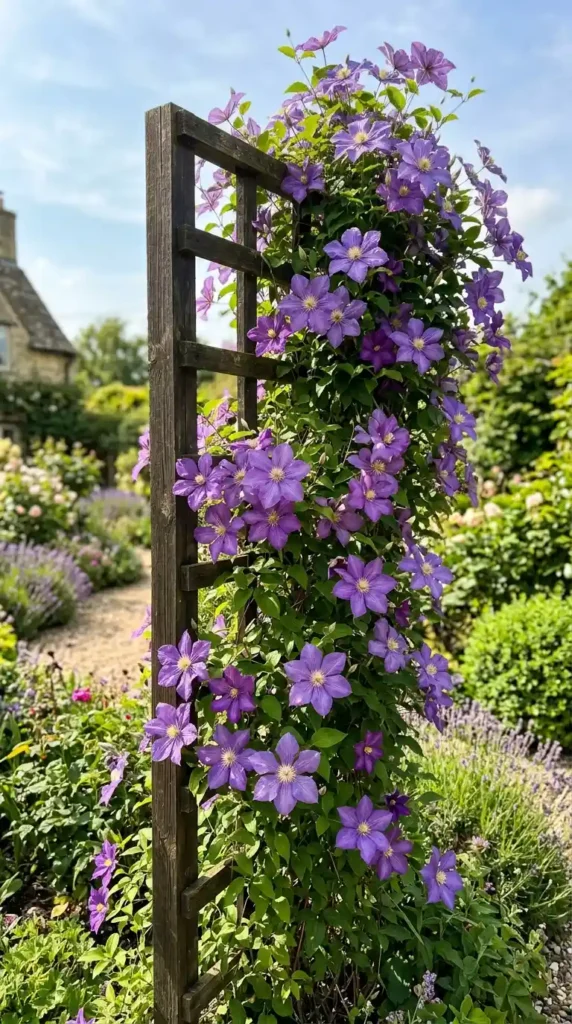
Clematis is a climber’s dream, reaching for the sky with its striking star-shaped flowers. This plant can scale fences, walls, and trellises with ease . With over 300 species, there is a clematis for every garden . They are originally from China and Japan and are not too hard to take care of .
In Victorian times, these flowers symbolized ingenuity, often given to those with a love for puzzles. Their captivating blooms not only add vertical interest but also create a tapestry of color. Clematis is the go-to plant for anyone looking to add drama to their outdoor space . The colors and shapes vary depending on the species, including bright fuschia to gentle lilacs .
Clematis prefers full sun on the flowers with cool, shaded roots. They are hardy in USDA zones 4 through 9 and bloom from spring to fall, depending on the variety. Mulch around the base to keep roots cool.
5. Calla Lily: The Elegant Beauty
✦ Best for: Containers, cutting gardens, and formal flower arrangements where you want striking, elegant blooms
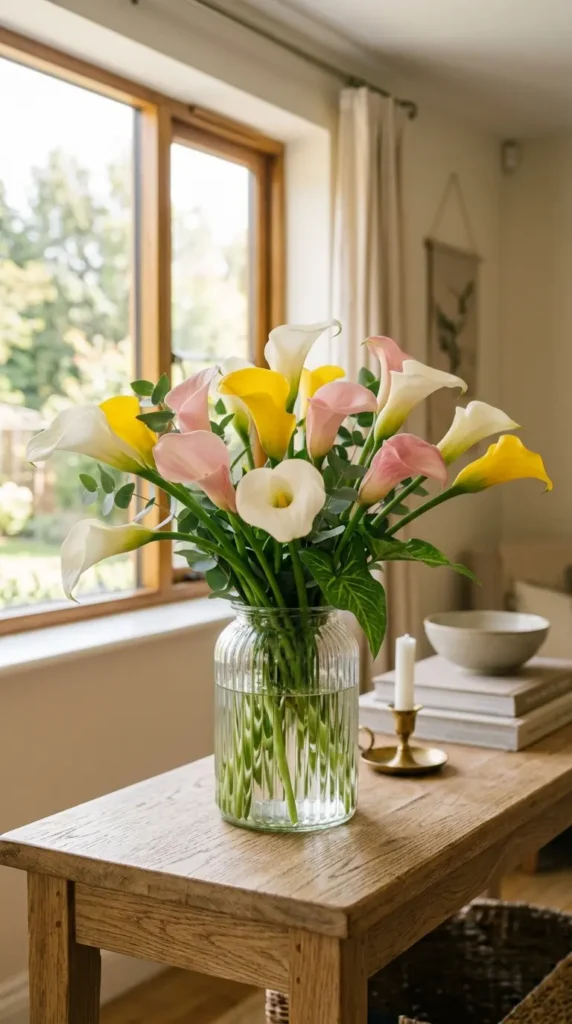
Callas are a showstopper in any garden. Despite the name, canna lilies aren’t true lilies. Instead, this is a genus of about 10 flower species that provide large lily-like flowers that start with C and are popular amongst horticulturists . The white version is a popular choice for bridal bouquets and centerpieces, though you can find pink, yellow, orange, lavender, and rose calla lilies .
Because of how the petals curl at the edges around the green stem, they often stand out among other flowers. They are a perfect choice for flowerbeds, cutting gardens, and even containers . In the language of flowers, they stand for glorious beauty .
Calla lilies prefer full sun to partial shade and consistently moist soil. They are hardy in USDA zones 8 through 10 and bloom from late spring to early summer. In colder zones, lift the rhizomes before the first frost.
6. Coreopsis: The Sunshine Flower
✦ Best for: Sunny borders, wildflower gardens, and where you want long-blooming, drought-tolerant color
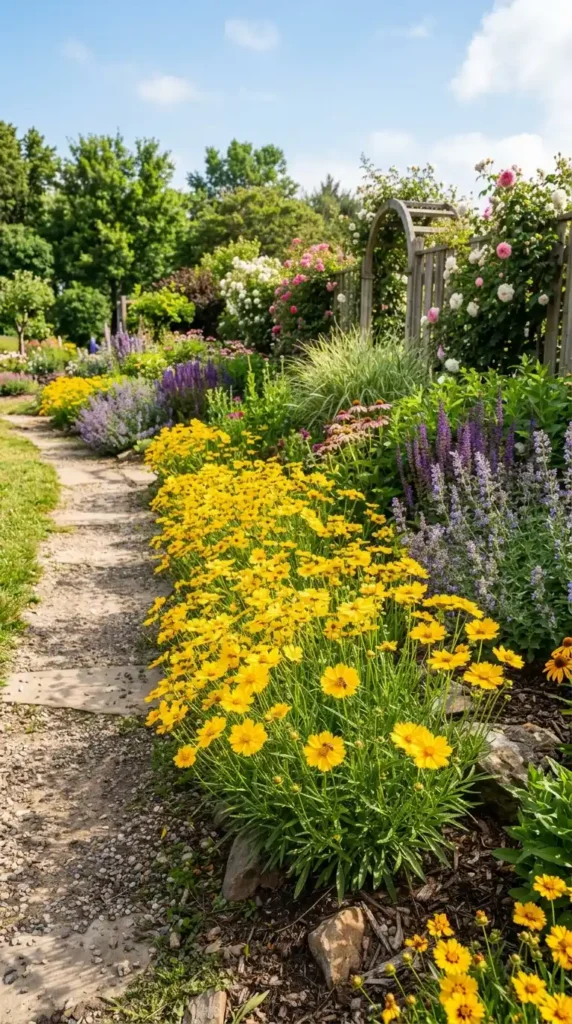
Coreopsis dots the landscape with its cheerful yellow flowers. Known as “Tickseed,” these bright blooms are popular for their long-lasting nature and ability to thrive in poor soil. Native to North America, they are beloved by pollinators, making them a favorite in wildflower gardens .
Coreopsis is a genus of flowering plants known for their dense yet delicate red or yellow flowers. These flowers are frequently visited by bees thanks to their bright colorings . They are easy to grow and maintain, perfect for those who want a burst of color with minimal effort .
Coreopsis prefers full sun and well-drained soil. They are hardy in USDA zones 3 through 9 and bloom from late spring through fall. Deadheading encourages continuous blooms. They are drought-tolerant once established.
7. Cosmos: The Whimsical Favorite
✦ Best for: Cottage gardens, cutting gardens, and sunny borders where you want airy, whimsical flowers
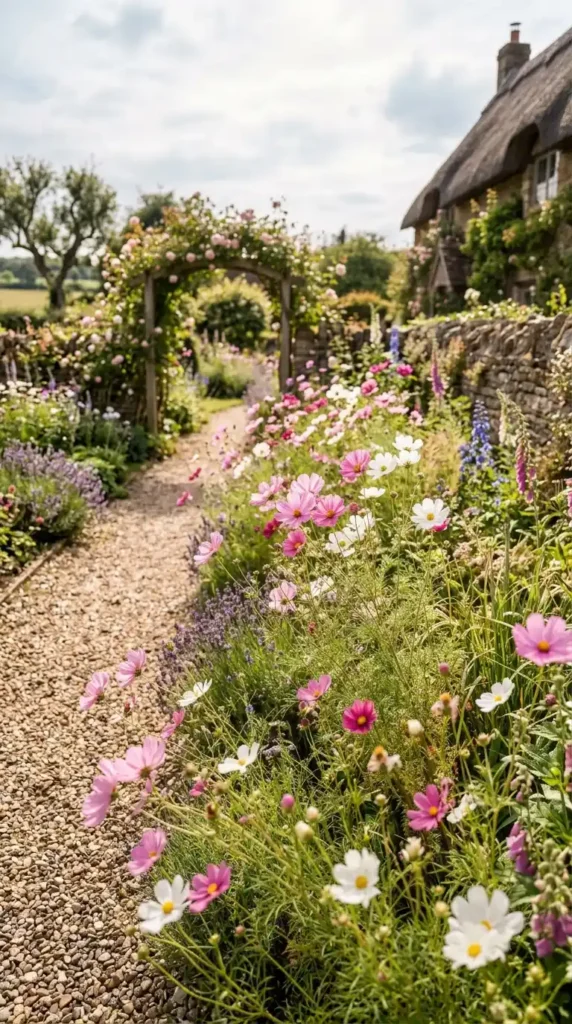
Floating like butterflies in a summer garden, cosmos brings whimsy with its feathery foliage and daisy-like flowers. Native to Mexico, these flowers are easy to grow, attracting bees and butterflies . They come in a variety of colors, from bright pinks to soft whites .
In Victorian times, giving cosmos meant “peaceful,” a fitting tribute to their beauty. Known for their resilience, they continue to bloom even in poor soil conditions. Cosmos is for dreamers, adding poetry to any garden . Most species are native to Mexico and parts of the United States .
Cosmos prefers full sun and well-drained soil. They are annuals in most climates but will self-seed readily. Bloom from summer to autumn. They are heat-tolerant and drought-resistant once established.
8. Columbine: The Fairy Garden Favorite
✦ Best for: Shaded borders, woodland gardens, and where you want unique flowers that attract hummingbirds
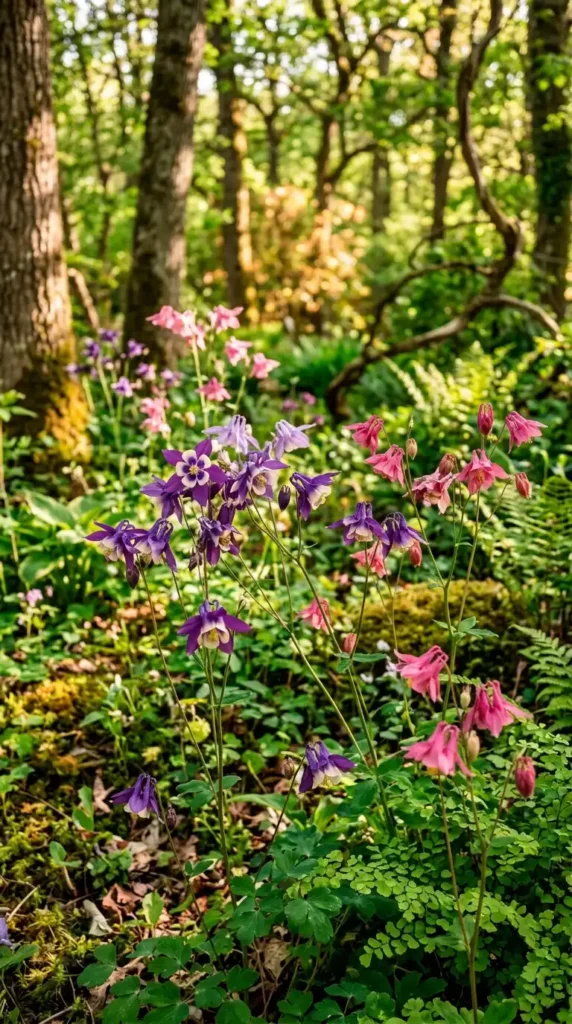
Think of a fairy garden and columbine will likely be there. With its spurred petals, it is a favorite among hummingbirds and gardeners alike. Native to the Northern Hemisphere, these flowers symbolize wisdom and strength . Their unique shape makes them a standout in any floral arrangement.
Despite their delicate appearance, columbines are incredibly hardy. They are a perfect choice for gardeners looking to add a touch of magic to their landscape . Columbine flowers are tall, branching plants found in damp woodlands and gardens. They produce violet-blue flowers in a unique bonnet shape .
Columbine prefers partial shade and moist, well-drained soil. They are hardy in USDA zones 3 through 8 and bloom in spring. They self-seed readily, creating a naturalized look.
9. Canna Lily: The Tropical Showstopper
✦ Best for: Garden beds, containers, and anywhere you want bold, tropical foliage and blooms
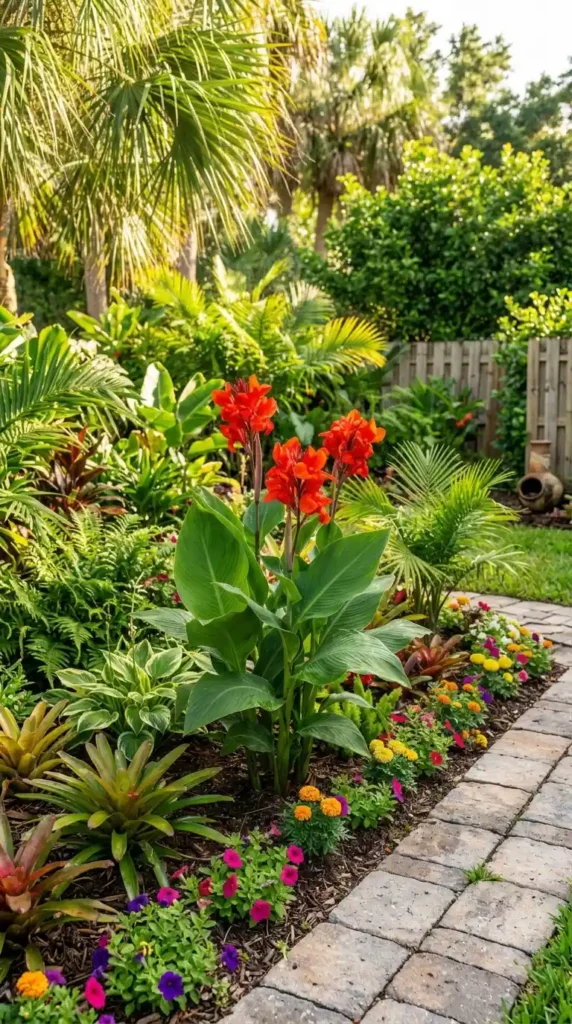
Think of a tropical paradise, and cannas might just come to mind. With their banana-like leaves and exotic blooms, they bring a touch of the tropics wherever they go . Originating from warmer climates, cannas are surprisingly easy to grow, thriving in both garden beds and containers .
The canna lilies consist of 10 different species. You can enjoy this beauty in your home or garden in loads of different colors, such as pink, yellow, purple, red, orange, green, and bronze . They love the sun and make bold statements in gardens . Their flowers come in an array of colors, adding a splash of heat to any setting .
Cannas prefer full sun and rich, moist soil. They are hardy in USDA zones 7 through 10 and bloom from midsummer to fall. In colder zones, lift the rhizomes before the first frost and store them in a cool, dry place.
10. Calendula: The Medicinal Marvel
✦ Best for: Herb gardens, vegetable gardens, and borders where you want edible, medicinal flowers
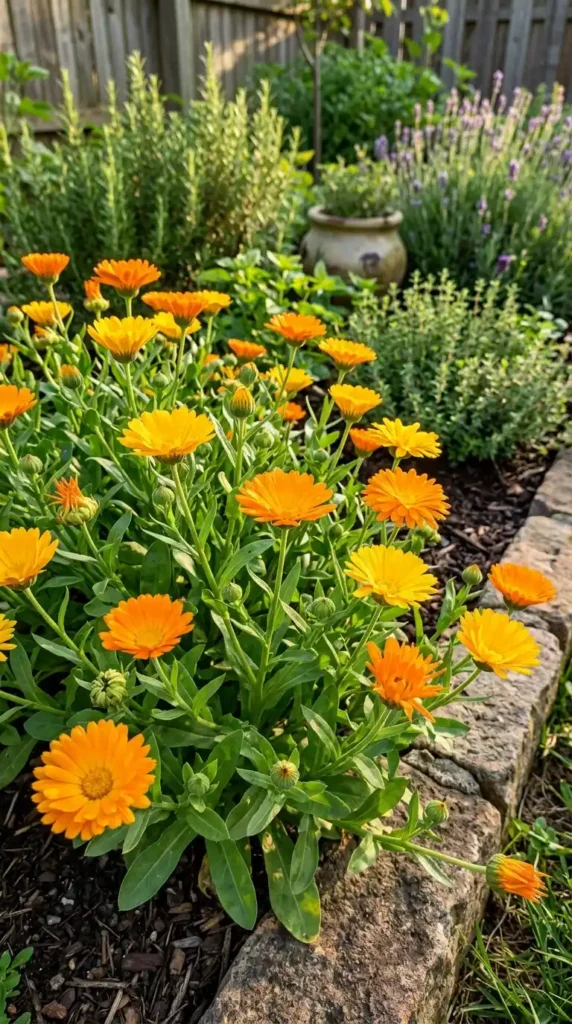
Picture marigolds with a twist, and you have calendula. Known as “pot marigolds,” these cheerful blooms are more than just pretty faces . Calendula, which you may know as marigold, is a species of annual or perennial plants. They can be yellow, orange, reddish, or even blue .
They hold a special place in herbal medicine, known for their healing properties. Calendula’s orange petals are a favorite in many gardens, attracting beneficial insects . The flowers are common ingredients of ancient infusions, cosmetics, and food supplements. You can even use the petals fresh in salads or dried to add color to your food .
Calendulas prefer full sun and well-drained soil. They are hardy in USDA zones 2 through 11 and bloom from spring through frost. They are easy to grow from seed and will self-seed readily.
11. Crocus: The First Sign of Spring
✦ Best for: Lawns, woodland areas, and borders where you want early spring color and naturalization
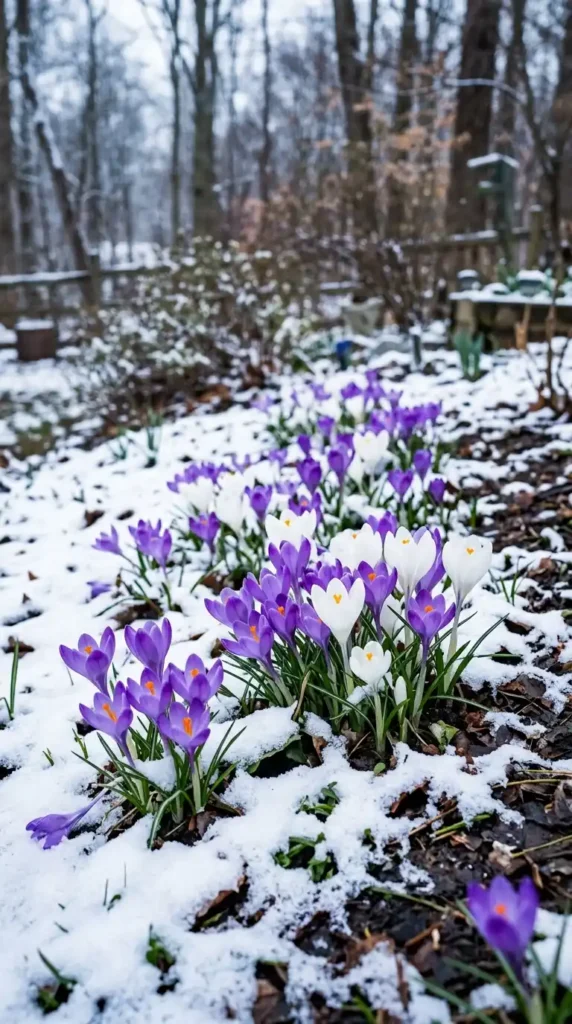
Picture crocuses pushing through the snow, one of the first signs of spring after a long winter. These resilient little flowers bring a burst of color and hope, announcing the end of cold days . Crocus is a genus of flowering plants in the iris family that are known for their lilac petals, though they also come in mauve, white, and yellow varieties .
Their elegant shape adds a touch of charm to any garden or lawn. Crocuses thrive in a variety of environments and are beloved by bees. When you spot a crocus, you know warmer days are just around the corner, and it is impossible not to smile . They are excellent for naturalizing lawns and woodland areas .
Crocuses prefer full sun to partial shade and well-drained soil. They are hardy in USDA zones 3 through 8 and bloom in late winter to early spring. Plant the bulbs in the fall.
12. Coneflower (Echinacea): The Native Powerhouse
✦ Best for: Sunny borders, wildflower gardens, and where you want pollinator-friendly, drought-tolerant perennials
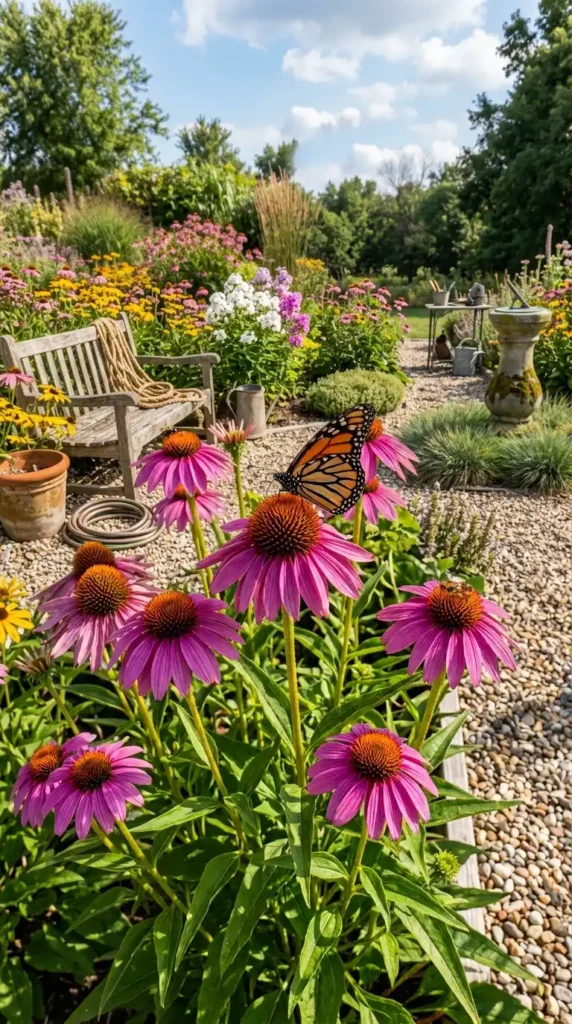
Coneflowers are among the most beloved perennials for American gardens. Most commonly known as echinacea, coneflowers feature large showy heads that are typically purple or lilac . They are tough, drought-tolerant, and bloom from summer into fall with daisy-like flowers in shades of purple, pink, red, orange, yellow, and white .
Coneflowers are native to central or North America. You will like this kind since it is so resilient. In fact, it is heat and drought-resistant while being super easy to grow in any conditions . They are mostly used in traditional medicine for the plant’s many health benefits .
Coneflowers prefer full sun and well-drained soil. They are hardy in USDA zones 3 through 9 and bloom from summer to early fall. Deadheading encourages continuous blooms, and they are drought-tolerant once established.
13. Cyclamen: The Charming Houseplant
✦ Best for: Indoor display, cool-weather gardens, and containers where you want heart-shaped leaves and delicate blooms
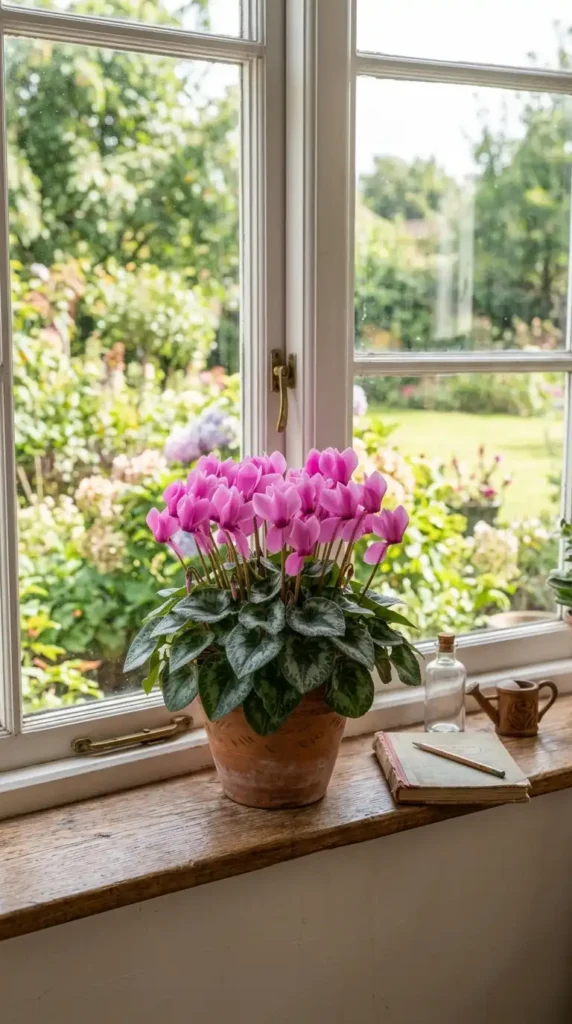
Cyclamen is a lovely houseplant or cool-weather garden addition with heart-shaped leaves and sweet pink or white flowers . Cyclamen is a genus of flowering plants that are native to Europe, the Mediterranean basin, and as far as Iran. All species feature a tuber where the leaves, roots, and flowers grow that stores nutrients during the dormancy period .
These plants are a popular choice for indoor display, blooming from fall to spring. They make great houseplants and can be grown for a short time in window boxes, but they are best as houseplants . They are dormant in summer, so don’t panic if it disappears .
Cyclamen prefer bright, indirect light and cool temperatures. They are hardy in USDA zones 9 through 11 and bloom from fall to spring. Water from the bottom to avoid wetting the crown, which can cause rot.
14. Celosia: The Fiery Showstopper
✦ Best for: Annual beds, containers, and where you want bold, unusual flowers that look like flames
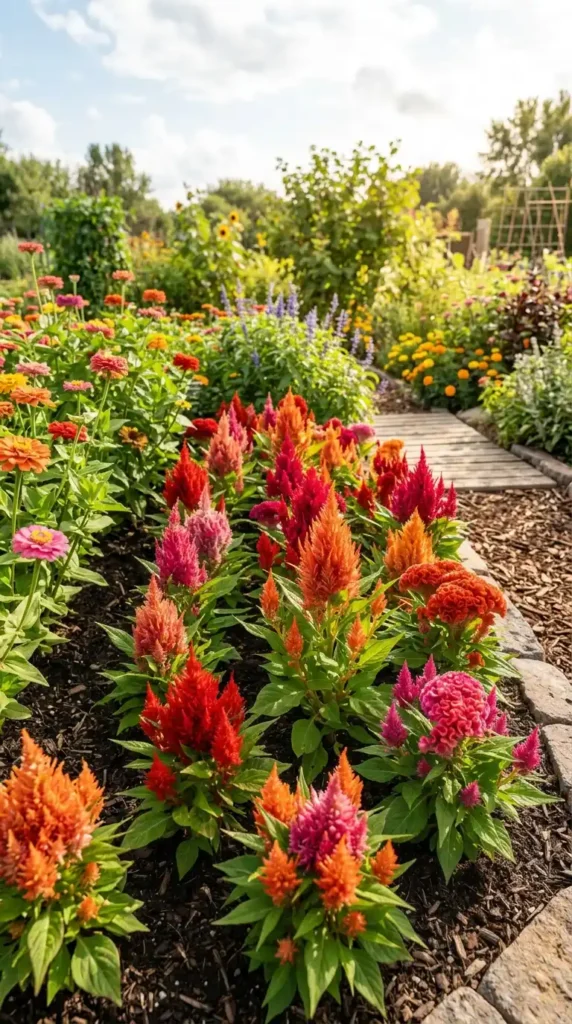
Also known as cockscomb, celosia comes in fiery hues of red, pink, orange, and yellow. Its flame-like appearance makes it a showstopper . Celosia is a genus of ornamental and edible plants that feature dramatic flowers that often look like flames or coral .
The name comes from the Greek word for “burning” . Aptly named after the comb on a cockerel, the cockscomb is a spectacular ornamental plant that originated in India before almost running into extinction. The flowers, leaves, and stems are sometimes grown as vegetables .
Celosia prefers full sun and well-drained soil. They are annuals in most climates and bloom from summer to fall. They are heat-tolerant and make excellent cut and dried flowers.
15. Candytuft: The Sparkling Ground Cover
✦ Best for: Rock gardens, borders, and where you want low-growing, evergreen color in spring
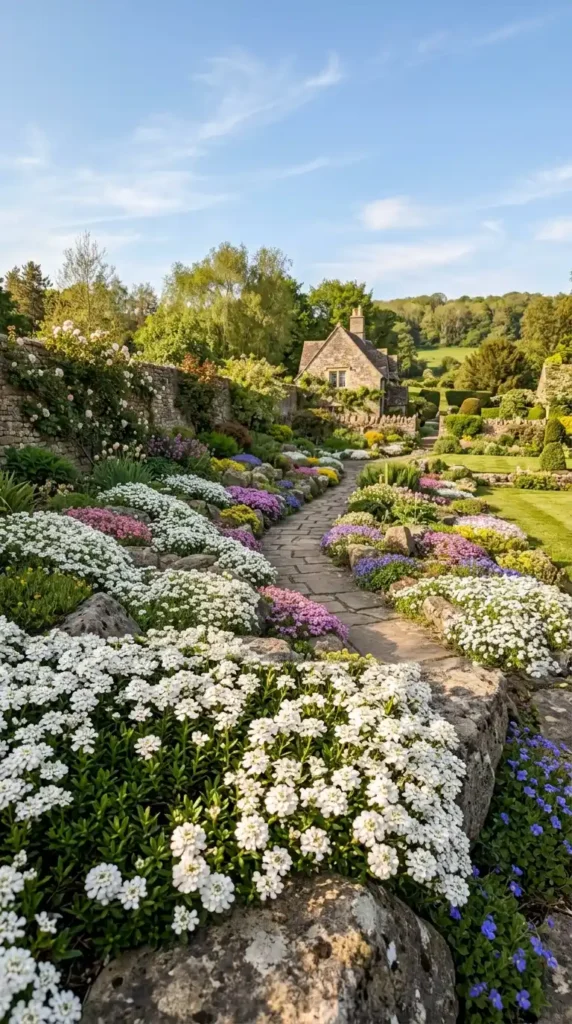
Candytuft is the sparkling gem of rock gardens. These low-growing perennials are known for their abundant flowers that create a carpet-like effect . Originating from Europe, they love sunny spots and well-drained soil . These flowers are a symbol of indifference, making a subtle addition to gardens .
Their evergreen nature provides year-round interest, even when not in bloom. Easy to care for and perfect for borders, candytuft adds a touch of elegance and simplicity to any landscape . With flat corymbs of white, purple, or pink flowers and emerald-green foliage, it makes a pretty ground cover that draws butterflies .
Candytuft prefers full sun and well-drained soil. They are hardy in USDA zones 3 through 8 and bloom in spring to early summer. They are drought-tolerant once established and deer-resistant.
Frequently Asked Questions About Flowers That Start With C
What are the most popular flowers that start with C?
The most popular flowers that start with C include carnations, camellias, chrysanthemums, clematis, calla lilies, coreopsis, cosmos, and coneflowers . These flowers are widely grown in gardens, used in bouquets, and available at garden centers across the country. They offer a wide range of colors, sizes, and growing habits.
What are the easiest flowers that start with C to grow?
Coreopsis, cosmos, and coneflowers are among the easiest C-flowers to grow. They are drought-tolerant, disease-resistant, and thrive in poor soil . Calendula is also easy to grow from seed and self-seeds readily . For beginners, these low-maintenance plants deliver beautiful results with minimal care.
What flowers that start with C grow in shade?
Camellias are the most popular shade-loving flower starting with C . Columbine also performs well in shaded borders and woodland gardens . Coral bells are known for bringing color to shady corners with their tiny bell-shaped flowers and colorful foliage . Cyclamen is another excellent choice for indoor display in low light.
What flowers that start with C are best for hummingbirds?
Cardinal flowers are a hummingbird favorite with their vibrant red, tubular blooms . Columbine is another excellent choice, as its unique spurred petals attract hummingbirds . Coral bells (Heuchera) and clematis vines also draw hummingbirds to the garden.
What climbing flowers start with C?
Clematis is the most popular climber starting with C, with over 300 species available . It climbs fences, walls, and trellises with ease, producing stunning star-shaped flowers. Trumpet vine (Campsis) is another vigorous climber with bright orange flowers .
Related Articles
Best Indoor Plants for Low Light That Thrive in Dim Rooms
Best Plants for Beginners That Make Gardening Easy
Plants That Attract Dragonflies and Keep Mosquitoes Away
Plants That Attract Butterflies Every Gardener Should Grow
From climbing clematis to ground-hugging candytuft, flowers that start with C offer endless possibilities for every garden style. Choose your favorites and start planting.

Sheikh Hassaan is a digital architect for small businesses and the founder of The Glow Up System. He writes about home decor, garden design, and outdoor living for real American homes – practical ideas that work in actual spaces without oversized budgets.