
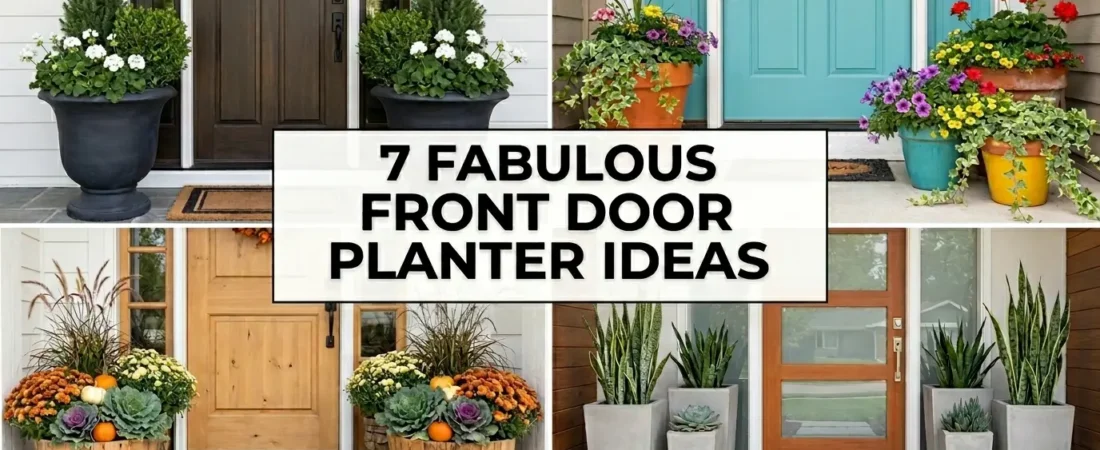
Front door planter ideas have one job that every other garden planter does not: they must perform from a distance. A patio planter is seen up close, walked past, and appreciated at arm’s length. A front door planter is assessed from 30 feet away by every person who approaches the house. The container size, the planting density, and the relationship between the planters and the door architecture all read differently at that distance than they do in a garden center or a lifestyle photograph.
These 7 front door planter ideas are each evaluated for how they read from the street approach — the perspective that actually matters.
Table of Contents
1. The Symmetrical Pair: Why Two Matching Planters Do What No Single Pot Can
✦ Symmetrical Entry Planters
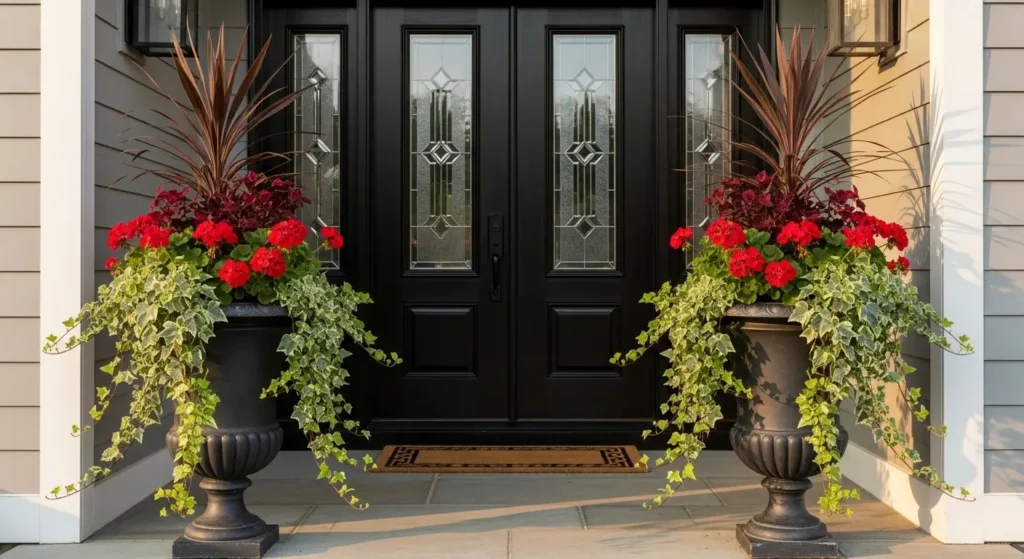
A single planter beside a front door looks like decoration. Two matching planters flanking it look like design. The symmetrical pair communicates intentionality to anyone approaching — this was chosen and placed, not accumulated. That distinction is legible from the street in a way that no amount of plant quality in a single pot achieves.
The geometry of a symmetrical entry works because the front door is the axis of the composition. Matching planters on each side of that axis create visual balance that the eye reads as resolved and complete. Remove one planter and the facade feels unfinished. Add a third and the symmetry breaks. Two matching pots at identical distances from the door center is the precise configuration that creates the formal arrival moment.
Scale is the most commonly misjudged variable. Planters that look generous at purchase look small beside a front door when viewed from the path. For a standard 30-inch wide residential door the minimum effective planter diameter that reads correctly from street distance is 14 inches. For a wide door or a property with generous front steps 18 to 20 inches is the better choice. The Quarut Large Planter Pots provide the correct scale for most residential front door applications. Find them linked on Amazon.
PRO TIP: Measure the distance from your front door to the point where visitors first see the house as they approach — typically 25 to 40 feet. Stand at that distance and look at the door. Whatever is visible at that distance is what your planter choice needs to address. Anything that requires closer proximity to appreciate is invisible to the primary audience.
2. Tall Pots Add the Vertical Dimension That Wide Entry Planters Cannot Provide
✦ Tall Statement Pots
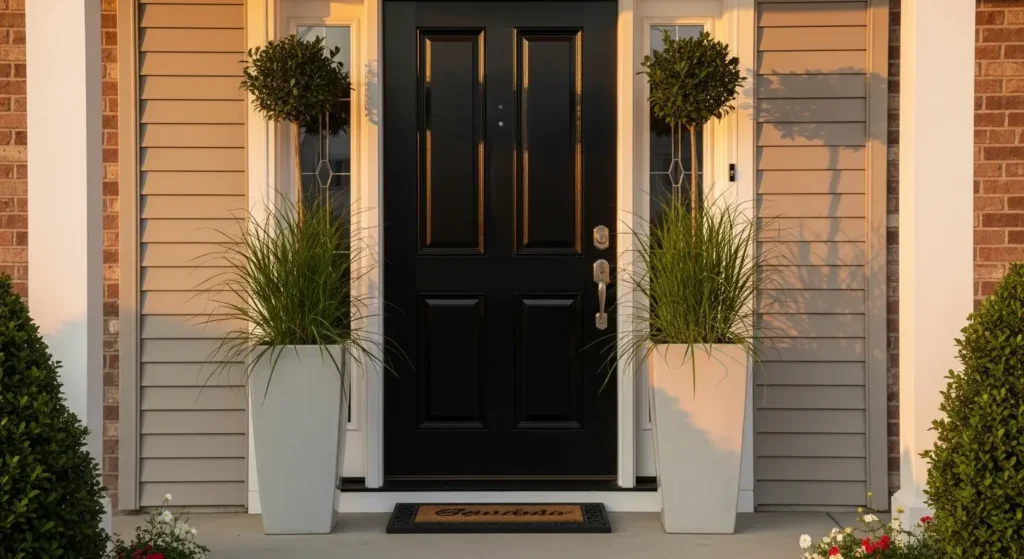
Tall pots at the front door create a vertical entry statement that wide squat planters cannot achieve regardless of planting quality. The height of the container extends the eye upward, echoes the vertical lines of the door frame, and creates the impression of an architecturally considered entrance that low containers never produce.
The planting choice for tall entry pots is more constrained than for standard planters because the container height shifts the visual center of gravity upward. Plants that work: topiary standards with a clear stem and a clipped globe or cone head that continues the column form. Single tall ornamental grasses whose arching habit creates movement above the static container. Narrow upright evergreens like columnar junipers or fastigiate yews that maintain the vertical emphasis without the maintenance of clipped topiary.
The container material for tall front door pots must handle the weight-to-stability ratio that height creates. A tall fibreglass pot filled with heavy compost and a large plant becomes top-heavy and susceptible to wind topple. Partially filling the base of tall pots with a layer of heavy stones before adding compost lowers the center of gravity and anchors the pot against wind loading without adding unnecessary weight to the upper sections.
3. Seasonal Rotation: The Front Door Planter Approach That Never Looks the Same Twice
✦ Seasonal Flower Pair
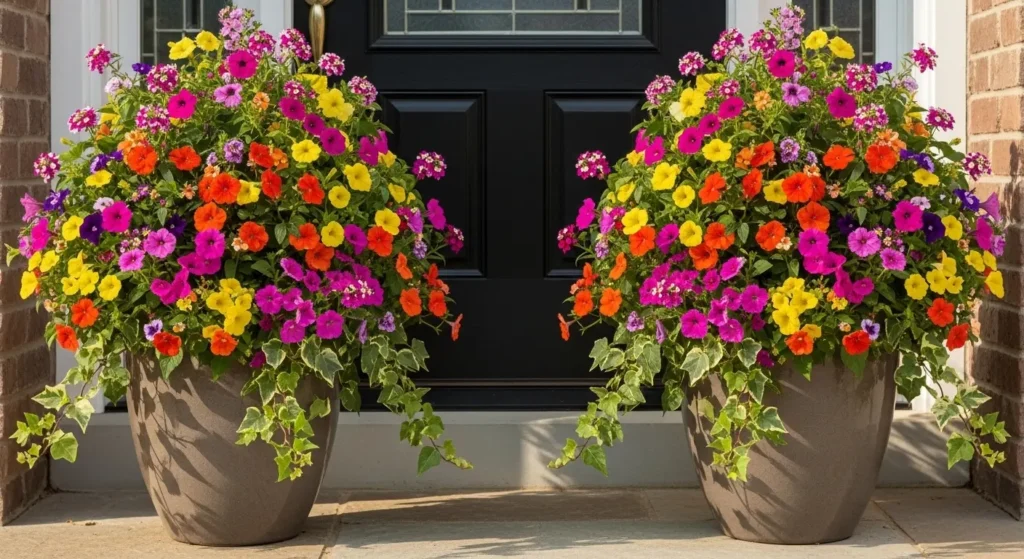
A front door planter pair designed for seasonal rotation uses a permanent neutral container as the fixed element and seasonal planting as the variable. The container is chosen once for quality, scale, and fit with the house facade. The planting changes four times per year — spring bulbs, summer bedding, autumn foliage, winter evergreen with berries — creating a front entry that reads as actively maintained and seasonally current throughout the year.
The seasonal rotation approach requires a neutral container that works with every planting combination rather than a container whose color or texture competes with or dictates planting choices. Warm grey, charcoal, natural stone effect, and aged terracotta all read as seasonal-neutral. Bright colored or heavily patterned containers constrain planting combinations and make the seasonal rotation less flexible.
The four-rotation planting calendar: Spring — tulips or daffodils underplanted with forget-me-nots. Summer — the thriller-filler-spiller combination at its most abundant. Autumn — ornamental grasses, sedums, and trailing ivy with seasonal berry sprays. Winter — clipped evergreen, holly, and white-berried skimmia with pine cone accessories. Each seasonal display at its peak for eight to ten weeks before the next rotation.
PRO TIP: Plant seasonal front door containers slightly later than the recommended planting time for the variety. Nursery-purchased spring containers are planted for maximum early spring impact that peaks before most visitors see them. Planting two to three weeks later than standard creates a display that peaks during the period when the garden is most used and most visited.
4. The Year-Round Evergreen Pair: Low Maintenance, High Consistency, Never Disappoints
✦ Evergreen Welcome Planters
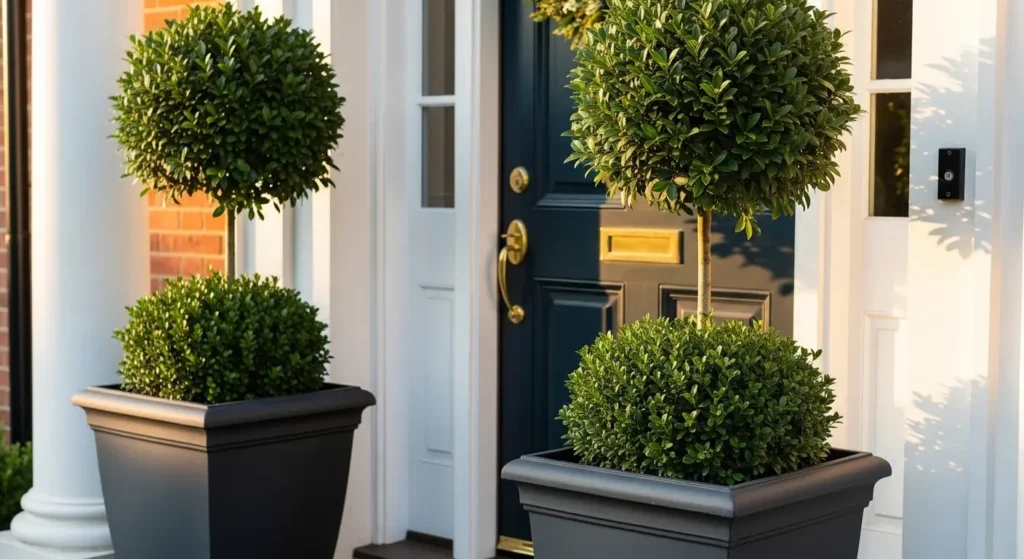
Evergreen front door planters solve the consistency problem that seasonal planting creates. Seasonal containers look spectacular at their peak and bare or shabby in transition. A well-chosen evergreen in a quality container looks correct every day of the year — in January frost, in July heat, and in November rain.
The evergreens that perform best as permanent front door planters: clipped box (Buxus) spheres or cones which maintain their shape with one annual clipping and provide the most formal and most classically proportioned entry planting. Bay standards (Laurus nobilis) with a clear stem and clipped head which add height and the bonus of harvestable cooking herbs. Phormium and architectural grasses for modern facades where the sculptural form of the plant matters more than the clipped formality of box or bay.
Maintenance reality check: evergreen front door planters require feeding in spring and summer, annual top-dressing of the compost surface, and protection from extreme frost in cold climates. They do not require seasonal replanting, deadheading, or the year-round watering frequency of flowering annuals. The maintenance investment is lower than seasonal planters spread over a full year while the visual consistency is significantly higher.
PRO TIP: Feed evergreen front door planters with a slow-release fertilizer granule applied once in spring rather than liquid feeding throughout the season. Push the granules into the compost surface around the root zone rather than scattering on the surface where they wash off in rain without delivering nutrients to the root system.
5. Concrete Front Door Pots: The Material That Makes a House Look Like a Design Decision
✦ Modern Concrete Pots
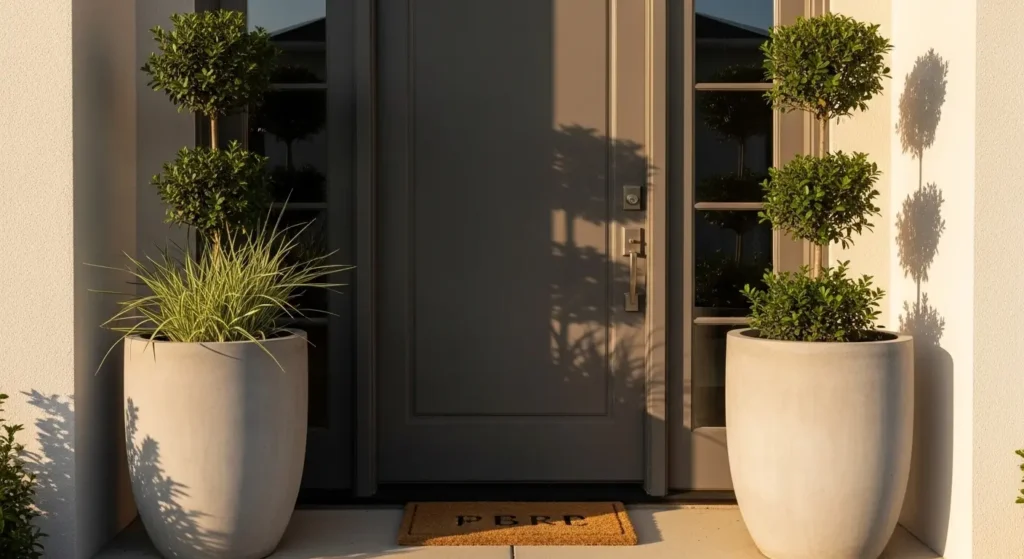
Concrete front door pots signal architectural intent in a way no other material achieves at entry scale. The weight, the texture, and the grey tones of concrete communicate permanence and considered design — the opposite of the provisional quality that lightweight plastic or thin ceramic entry planters create regardless of their styling.
The practical challenge of genuine concrete pots at front door scale is weight. A concrete pot of 18-inch diameter and appropriate depth weighs 40 to 60 pounds empty and 80 to 120 pounds when planted and watered. This weight is desirable for stability but requires careful placement — concrete entry pots are not repositioned seasonally and require a flat stable surface with adequate load-bearing capacity.
For the concrete aesthetic without the weight and handling challenges fibreglass concrete-effect pots produce identical visual results at 20 to 30% of the weight. Modern fibreglass concrete-effect manufacturing quality is indistinguishable from genuine concrete at conversational distance and significantly outperforms genuine concrete in frost resistance — a relevant advantage for front entry planters exposed to winter conditions without shelter.
PRO TIP: Position concrete or concrete-effect front door pots on purpose-made pot feet rather than directly on the step or paving surface. Pot feet elevate the base drainage holes above the surface, prevent water pooling beneath the pot which can stain paving and damage pot bases, and create the visual impression of a deliberately elevated display rather than a pot placed directly on the ground.
6. Cottage Entry Planters: The Combination That Makes Every House Look Like It Has a Garden
✦ Cottage Style Flower Combo
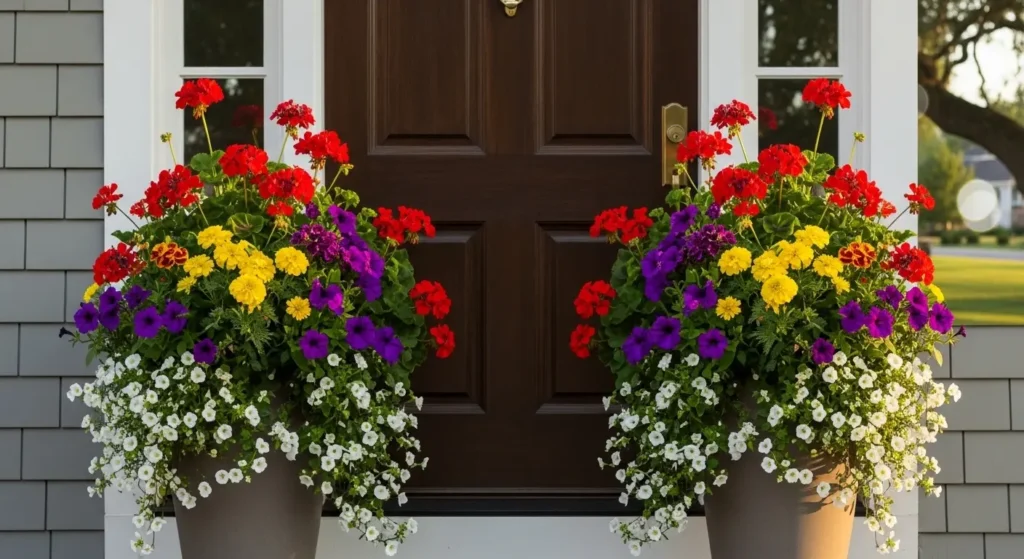
Cottage entry planters create a different emotional response from formal or architectural alternatives. Where symmetrical topiary and concrete pots communicate design and permanence cottage flower combinations communicate warmth, abundance, and the sense of a household that genuinely loves growing things. The cottage entry says come in — not just enter.
The cottage combination formula for front door planters: fragrant lavender at the back of each pot for height and scent released as visitors approach. Sweet william, pansies, or wallflowers as the mid-height color mass in warm cottage tones — pink, coral, purple, and cream. Trailing lobelia or bacopa at the front edges to soften the container rim and cascade downward. The fragrance element is the distinctive detail that separates cottage entry planters from simply colorful ones — a front door planter that smells as good as it looks creates a sensory memory that no visual-only display achieves.
Cottage entry planters should be slightly asymmetric in their planting even though the container pair is matched. Identical planting in both pots looks retail. Planting that uses the same varieties in slightly different proportions and arrangements looks gardened — as though the same plant palette has expressed itself slightly differently in each pot, which is how plants naturally grow.
7. A Beautiful Front Door Planter Pair for Under $40: The Exact Approach
✦ Budget-Friendly Entry Setup
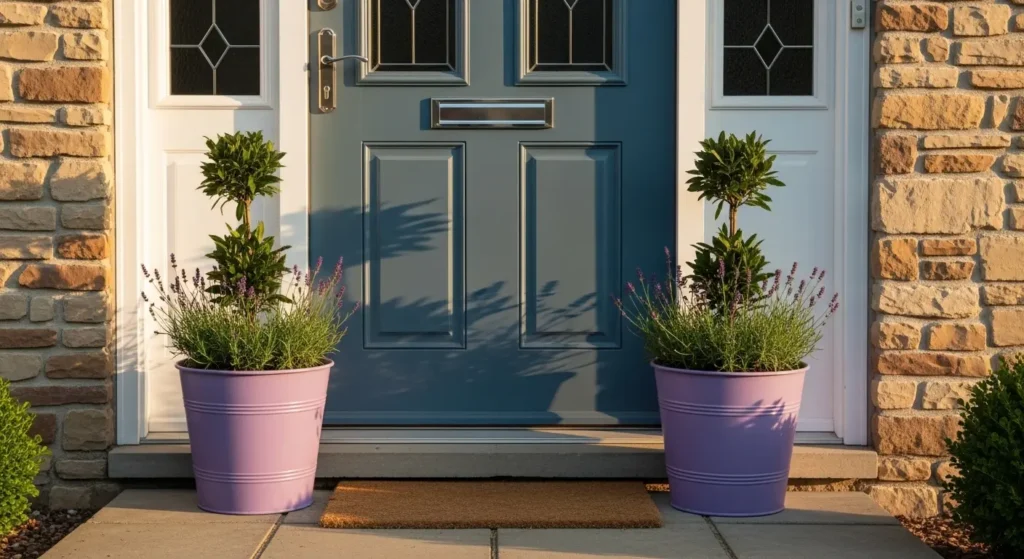
A budget front door planter pair looks designed when two specific decisions are made correctly: matching containers and a single confident plant choice per pot. Both decisions are free — they cost nothing over the alternative of mismatched containers with mixed planting — but they create disproportionately more designed impact.
The budget entry planter approach that works: two identical inexpensive containers in any material — plastic, terracotta, or basic ceramic — painted in exterior paint to match or complement the front door color. One plant per pot in a variety with genuine presence — a single lavender, a clipped rosemary standard, or one bold geranium per container. The paint cost is under $10. The plants are $3 to $5 each. Total investment under $40.
The paint is the detail that elevates cheap containers to designed entry planters. A plastic pot painted in the same deep blue as the front door reads as a deliberate color decision rather than a random container purchase. The color continuity between door and planter creates the coordinated entry statement that expensive planters in the wrong color cannot achieve.
PRO TIP: Choose a paint color for budget entry containers that is already present somewhere on the house facade — the door color, the window frame color, or a feature brick tone. Color that echoes an existing architectural element looks chosen rather than added. Color that introduces a new tone not present on the facade looks decorative rather than architectural.
Matching Front Door Planters to Your House Style
The container material and planting style that looks right at one house facade looks wrong at another. These pairings produce the most consistently resolved results:
Victorian and Edwardian terraces → Terracotta or aged stone pots with cottage flower combinations or clipped box. The period architecture suits traditional planting materials.
1930s semi-detached → Glazed ceramic or simple terracotta with lavender or bay standards. The domestic scale suits classic planting without formality.
Contemporary and new build → Concrete or concrete-effect pots with architectural grasses or single specimen evergreens. Clean lines suit minimal planting.
Farmhouse and rural → Rustic barrel planters or galvanized containers with wildflower mixes, herbs, and informal planting. The vernacular style suits natural informal materials.
📌 More front door and curb appeal ideas → 12 Front Porch Ideas That Instantly Wow
Frequently Asked Questions
What plants look best in front door planters?
The plants that look best in front door planters are those chosen for visibility from street distance, appropriate scale to the container and door, and season-long performance. For year-round structure: clipped box topiary, bay standards, and architectural grasses. For summer color: trailing petunias, geraniums, and the thriller-filler-spiller combination. For fragrance: lavender, sweet peas, and rosemary which release scent as visitors approach. According to the RHS the most consistently successful front door planting uses a single dominant plant variety per container rather than mixed planting which loses clarity at street distance.
How big should front door planters be?
Front door planters should be sized for how they read from the street approach rather than how they look at close range. For a standard 30-inch residential door the minimum effective planter diameter is 14 inches. For wide doors, grand entrances, or properties with deep front steps 18 to 20 inches reads more proportionally. When in doubt choose one size larger than feels natural — the most consistent front door planter mistake is choosing containers that look correct up close but invisible from the street.
Should front door planters be symmetrical?
Symmetrical front door planters create the most universally resolved entry appearance for houses with a centered front door and equal space on each side. Asymmetric or single-planter entries work for doors set to one side of the facade or for aesthetic styles — cottage, boho, or eclectic — where symmetry would feel too formal. When the door is centered and the architecture is balanced symmetry always produces a more finished result than asymmetric arrangements regardless of the plant or container quality.
The First Impression Is the Only One That Cannot Be Corrected
Front door planters are seen by everyone who visits your home and by everyone who passes it. They form the first impression of the property before the door is opened and before anything inside is experienced. That makes them the highest-visibility garden investment available — more people see a well-planted front entry than see any other element of the garden.
Choose the front door planter idea from this guide that suits your house style and your commitment to maintenance. Invest in the right container scale. Plant generously. Maintain consistently. The result is a front entry that makes arriving home genuinely better every single day.
All the products mentioned in this article are linked on Amazon. Every recommendation is something we genuinely believe in.
More Curb Appeal and Garden Ideas
→ 12 Lovely Front Yard Garden Ideas
→ 16 Garden Planter Ideas That Transform Outdoor Spaces
→ 12 Tiny Front Garden Ideas on a Budget 🌿
→ 12 Genius Garden Planter Box Ideas
Choose the front door planter idea that suits your house style. Invest in the right container scale. Plant generously. Maintain consistently. The result is a front entry that makes arriving home genuinely better every day.

Sheikh Hassaan is a digital architect for small businesses and the founder of The Glow Up System. He writes about home decor, garden design, and outdoor living for real American homes – practical ideas that work in actual spaces without oversized budgets.