

A great guest bedroom is one that makes visitors feel genuinely cared for rather than accommodated — the difference between a room that communicates that someone thought about their comfort specifically and one that communicates that there happened to be a spare bed available. Guest bedroom ideas that actually work treat the room as a private hotel suite for whoever is staying in it, anticipating needs before they arise and removing friction from every aspect of the stay.
This guide covers guest bedroom ideas organized by the specific decisions that most directly affect how welcome a guest feels — from the foundational bed and bedding quality through the practical amenities, storage, and finishing details that separate a genuinely thoughtful guest room from one that simply has the basic requirements covered.
Table of Contents
Design the Guest Bedroom From the Guest’s Perspective
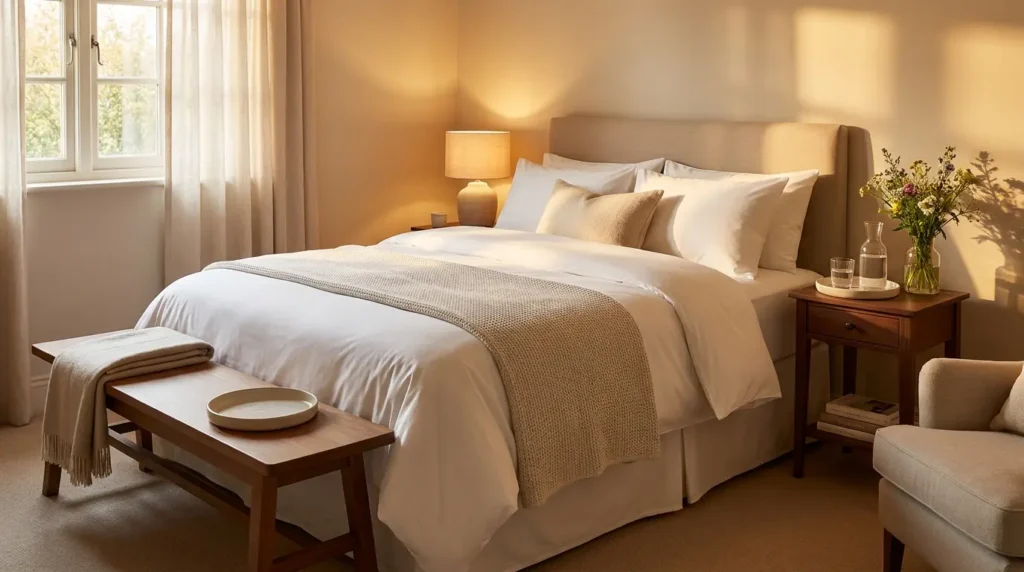
The most useful exercise for designing a guest bedroom is to mentally walk through a guest’s experience from arrival to departure and identify every moment where friction, uncertainty, or discomfort could occur. Where do they put their suitcase? Where do they hang their clothes? Is there a mirror? Where do they charge their phone? Is there water on the nightstand? Is there somewhere to sit other than the bed? Each of these questions identifies a practical need — and a guest bedroom that answers all of them before the guest has to ask creates the specific quality of thoughtfulness that makes visitors feel genuinely welcome.
The most common guest bedroom design mistake is treating the room as storage overflow rather than as a genuine bedroom — filling available surfaces and closet space with the household’s extra belongings and leaving minimal room for the guest’s own things. A guest bedroom where the closet is full of off-season clothes and the surfaces are occupied by household items communicates that the guest is being accommodated in spite of the room’s other uses rather than welcomed into a space prepared for them.
The baseline standard for a guest bedroom that genuinely serves its purpose: a bed that is at least a full size and ideally a queen, with bedding that has been freshly washed. At least half a closet cleared with empty hangers available. One completely clear nightstand surface with a lamp and a glass of water. A mirror the guest can see their full reflection in. These four things are the minimum — everything else is the upgrade that takes a functional guest room to a genuinely welcoming one.
1. Hotel-Quality Bedding That Makes the Bed the Room’s Best Feature
✦ Best for: immediately communicating quality and thoughtfulness the moment a guest enters the room

The bed is the most important element in a guest bedroom because it is the primary reason the guest is using the room — and the quality of the sleep they get directly determines how they feel about the entire stay. A guest bed that is comfortable, well-dressed, and clearly freshly prepared communicates care before the guest has even sat down on it. A bed with pillows that feel flat, a duvet that is not quite the right size for the cover, or bedding that smells faintly of storage communicates the opposite.
The hotel bedding approach adapted for a guest bedroom: crisp white cotton or linen duvet cover freshly washed and dried — white because it reads as clean and fresh more immediately than any other color. Two sleeping pillows in matching white cases per person expected. Two Euro square pillows against the headboard as a decorative layer that also provides comfortable reading support. A neatly folded throw at the foot of the bed in case the guest runs cold. This arrangement takes under five minutes to assemble and creates an immediately welcoming bed presentation.
The Blissy Silk Pillowcase placed on the sleeping pillows is the single guest bedding upgrade that most directly communicates luxury — silk against the face at sleep temperature is a genuinely different and better experience than cotton or linen, and a guest who notices the pillowcase quality will remember the stay for that specific detail. Find it linked on Amazon. The investment is small relative to the impression it creates.
2. The Nightstand Setup That Anticipates Every Guest Need
✦ Best for: the bedside area where small practical details communicate the most direct thoughtfulness
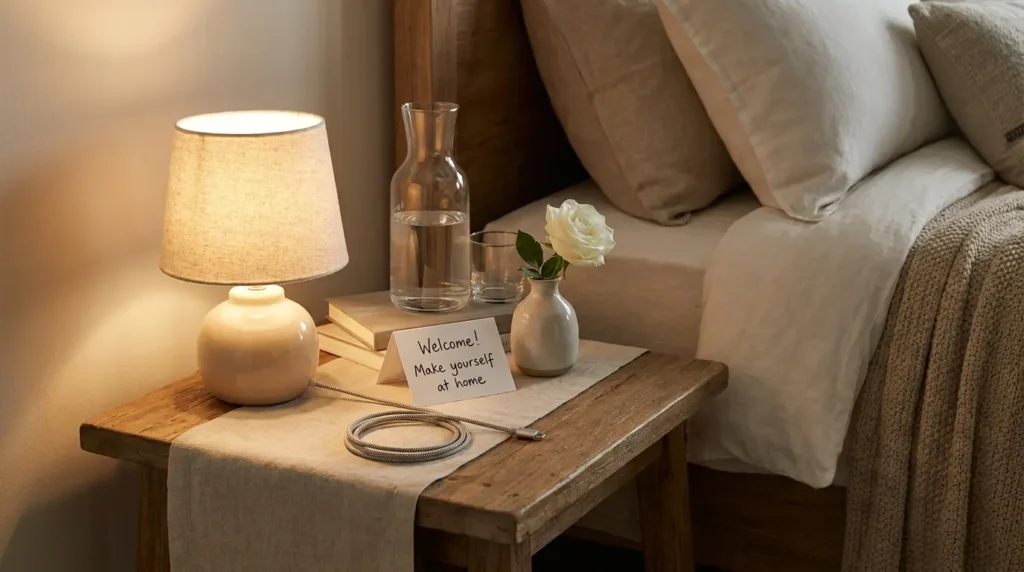
The nightstand in a guest bedroom does more communicative work than any other surface in the room because it is the last thing a guest sees before sleep and the first thing they reach for in the night and morning. A thoughtfully set nightstand signals that the host thought specifically about the guest’s experience after the lights go out — which is the most intimate and most personal form of hospitality available in a guest bedroom.
The complete thoughtful nightstand setup:
A small lamp with a warm bulb that the guest can control from the bed without getting up. A glass water carafe or a sealed water bottle — the specific provision of water at the bedside is the single detail that most guests notice and appreciate most directly because it addresses the most common middle-of-the-night need without requiring any action from the guest. A charging cable or a small multi-port USB charger — specifying the cable type or including both Lightning and USB-C covers the most common configurations. One small item of personal touch — a single flower in a bud vase, a small bar of quality chocolate, or a handwritten welcome note.
The nightstand surface should be completely clear of everything else — no household items, no decorative objects competing for space, no items that belong to the host rather than being provided for the guest. The cleared surface communicates that this space is the guest’s own for the duration of their stay rather than borrowed from a room that has other purposes.
3. Cleared Storage That Gives Guests Room to Actually Unpack
✦ Best for: making guests feel genuinely settled rather than temporarily camping in someone else’s space
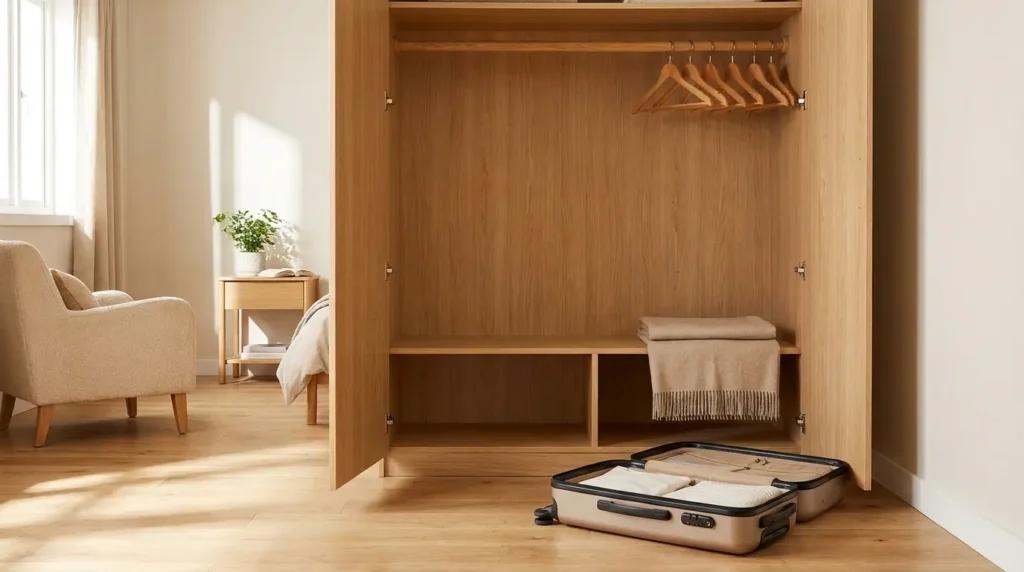
A guest who can unpack their suitcase and hang their clothes feels settled rather than visiting — and the psychological difference between feeling settled and feeling temporarily tolerated in a spare room is enormous. Providing genuine storage space for a guest’s belongings is one of the most impactful hospitality decisions available in a guest bedroom and one of the most commonly neglected.
The storage minimum for a guest bedroom: half a wardrobe rail cleared with six to eight empty hangers already on it — not bare rail for the guest to add their own hangers to, but hangers already in place so hanging clothes requires no searching. One clear shelf or drawer for folded items. A clear floor space beside or at the end of the bed specifically for a suitcase — this eliminates the awkward suitcase-on-the-bed situation that forces the guest to move their own bag every time they want to access it.
For guest bedrooms that double as home offices or storage rooms between visits: invest in a quality storage ottoman or large lidded basket that consolidates the household overflow items in a single contained piece rather than spread across every available surface. A room that has one clearly designated storage piece for household items communicates more thoughtfulness than a room that has been hastily cleared by pushing things to the back of the wardrobe.
4. Small Guest Bedroom Ideas That Make the Most of Limited Space
✦ Best for: a spare room with limited floor space where clever furniture choices make the room feel larger and more functional
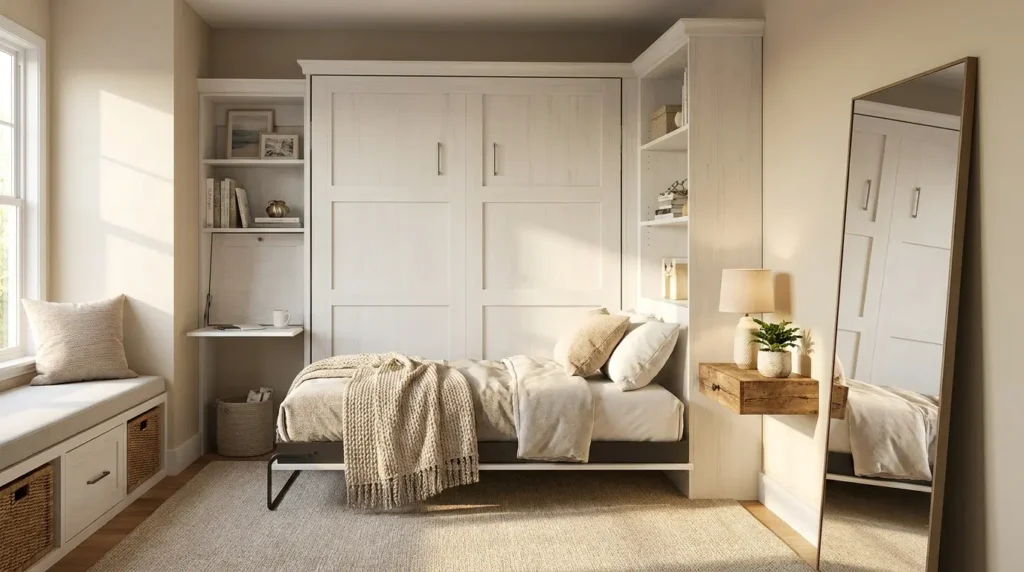
A small guest bedroom requires furniture choices that maximize the usable floor space while maintaining the quality of the sleeping environment. The bed takes priority because sleep quality is the primary guest bedroom function — but the bed platform and storage decisions can dramatically increase the room’s usable space without compromising comfort.
Space-saving furniture strategies for a small guest bedroom:
A platform bed with built-in under-bed storage drawers uses the dead floor space beneath the bed for extra bedding, towels, and guest supplies without requiring any additional storage furniture. A floating wall-mounted nightstand instead of a freestanding bedside table eliminates the floor footprint of a table and creates the impression of more floor space by revealing the floor beneath it.
A full-length mirror positioned on or beside the wardrobe door creates the visual impression of a larger room by reflecting light and depth into the space — a small guest bedroom with a full-length mirror reads as considerably larger than the same room without one. The mirror also provides the practical function of a full-length reflection that most guests need for dressing.
A daybed or a murphy bed are both worth considering for a small guest bedroom that is used infrequently — a daybed functions as a sofa during the day and a single bed for overnight guests, doubling the room’s functionality. A murphy bed folds into the wall when not in use, converting the entire room to an office or sitting room between guest visits and back to a bedroom in minutes when needed.
5. The Dual-Purpose Guest Bedroom That Works as a Home Office Too
✦ Best for: homes where the spare room needs to serve as a home office between guest visits
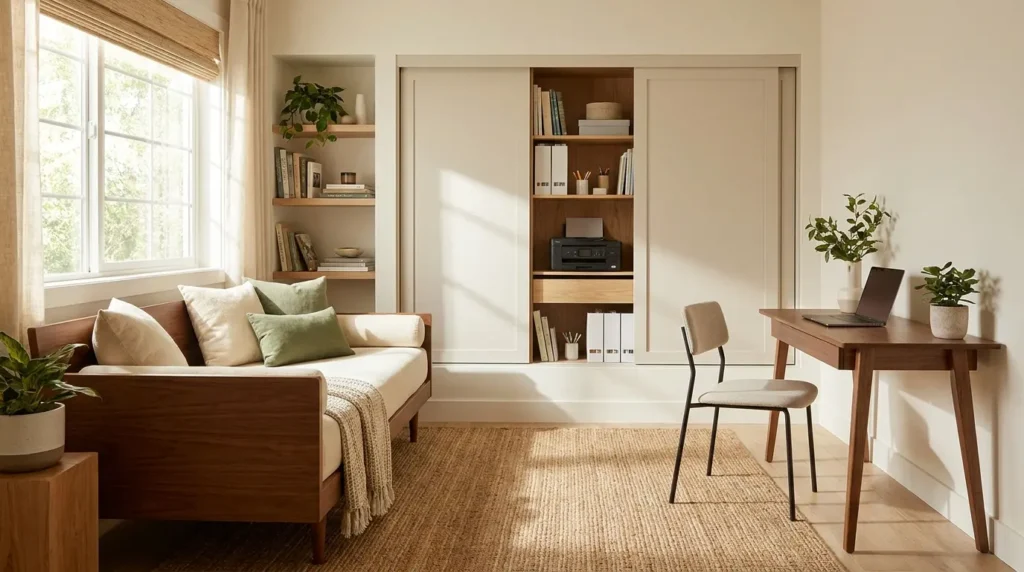
The guest bedroom and home office combination is one of the most common challenges in residential interior design — both functions are legitimate, both have specific requirements, and they are most often competing for the same limited space. The combination works best when the two functions are given clearly separate zones within the room rather than overlapping on the same surfaces, and when the guest function is specifically prioritized over the office function in the furniture quality decisions.
The layout approach that works most consistently: bed or daybed on the wall opposite the door — the first thing seen when entering the room is the sleeping surface, which signals that the room’s primary purpose is guest accommodation. Desk and chair on an adjacent wall with a clear sight-line separation from the bed area. A room divider, curtain, or shelving unit between the two zones that can be deployed to give the guest the visual privacy of a room without office equipment in view while they sleep.
The office equipment that is most important to conceal or remove when the room is in guest mode: the computer monitor, any work-in-progress documents or materials, and the ergonomic chair if it is visually dominant. A laptop can be closed and placed in a drawer. A monitor can be covered with a fabric panel or positioned facing the wall. The transformation from office to guest room does not require removing furniture — it requires removing the visible evidence of work.
6. The Luxury Guest Bedroom With Boutique Hotel Details
✦ Best for: creating the most memorable guest experience possible when the room and budget allow for premium touches
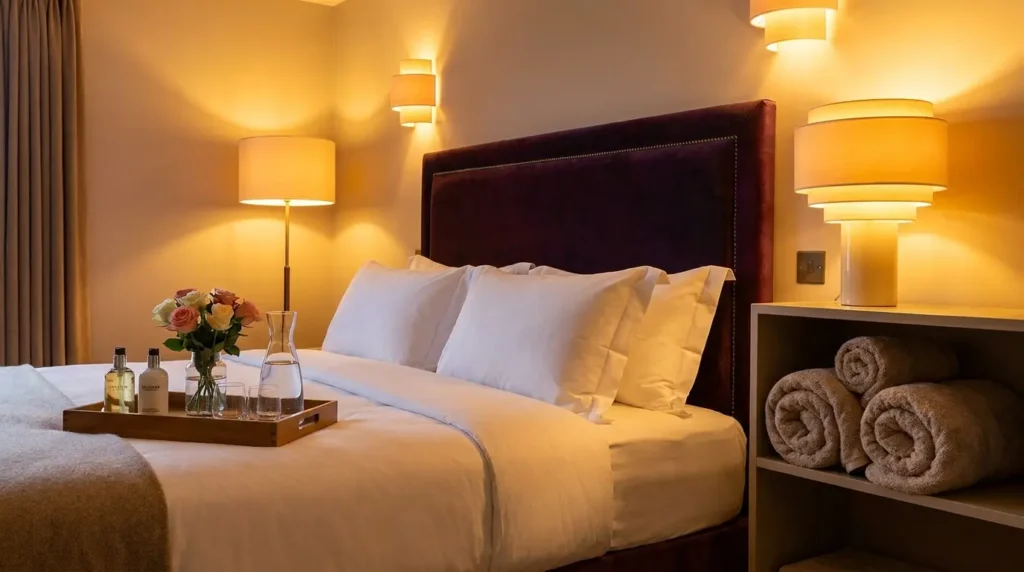
A luxury guest bedroom does not require an expensive renovation — it requires a specific set of details that communicate quality through material and thoughtfulness rather than through scale or price. The boutique hotel aesthetic that most resonates with guests is one of personalized attention to detail: items that were chosen specifically for a guest’s comfort rather than items that happen to be available.
The boutique hotel details that create the most memorable guest experience: a small basket or tray on the dresser containing travel-sized quality toiletries — shampoo, conditioner, body wash, hand cream, and a new toothbrush — so the guest does not need to unpack their own toiletries bag for a short stay. Plush white towels rolled or folded hotel-style at the foot of the bed or on a towel rack in the room rather than requiring the guest to ask for towels. A printed or handwritten room card with the WiFi password, check-out time if relevant, and a personal welcome note.
Fresh flowers in a simple vase on the nightstand or dresser are the single most impactful luxury detail available for a guest bedroom because they communicate that someone prepared the room the day the guest arrived rather than weeks beforehand — and that the preparation included something living and time-sensitive. A single stem or small bunch of seasonal flowers from a garden or grocery store costs almost nothing and creates an impression of care that expensive permanent decor cannot replicate.
7. A Calm Neutral Palette That Suits Every Guest’s Taste
✦ Best for: a guest bedroom that needs to feel welcoming and restful to the widest range of guests with different aesthetic preferences
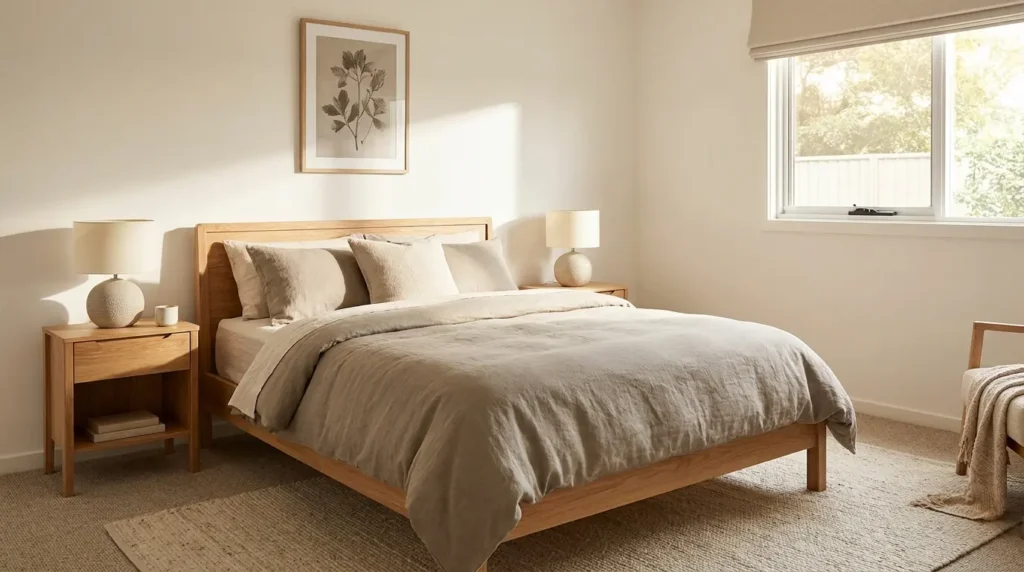
A guest bedroom is used by different people with different aesthetic sensibilities — the maximalist guest who lives surrounded by color and pattern and the minimalist guest who prefers visual quiet both need to feel comfortable in the same room. A neutral palette with warm rather than cool tones creates the most universally restful and most universally appealing guest bedroom environment because it is neither too stimulating nor too stark, and it allows each guest to project their own sense of comfort onto the space rather than reacting to someone else’s strong design statement.
The warm neutral palette that works best in a guest bedroom: warm white on the walls — Benjamin Moore White Dove or Sherwin-Williams Alabaster — that reads as neither stark nor yellowed. Warm greige or stone for the bedding in a linen or high-thread-count cotton. Natural timber in a warm medium stain for the bed frame and nightstands. One botanical or landscape print in a simple natural wood or black frame as the only art. This four-element palette creates a complete room that photographs well, ages well, and suits every guest.
The one design element that can express personality in a neutral guest bedroom without alienating any guest: the art. A single well-chosen piece of art — a botanical illustration, a landscape photograph, or an abstract print in warm neutrals — introduces visual interest and personal taste without the room ever reading as aggressively styled. The art should be the room’s one statement piece rather than one of many competing elements.
📌 More bedroom and home decor ideas: Master Bedroom Ideas That Make You Never Want to Leave
Frequently Asked Questions
What should a guest bedroom have?
The essentials a guest bedroom should have: a comfortable bed at least full size and ideally queen with freshly washed bedding. A lamp on or beside the nightstand that the guest can control from the bed. A glass of water or carafe at the bedside. At least half a closet cleared with empty hangers. A mirror large enough to see a full reflection. A clear surface where the guest can place their belongings. Access to towels — either in the room or clearly communicated. According to the American Hotel and Lodging Association, the amenities that hotel guests rate most highly for satisfaction are consistently comfortable bedding, adequate lighting, and accessible water — the same three priorities apply directly to a private guest bedroom.
How do I make a small guest bedroom feel bigger?
The changes that most effectively make a small guest bedroom feel larger: install a full-length mirror on or beside the wardrobe — it reflects light and depth into the room and creates the impression of significantly more space. Choose a platform bed with under-bed storage to eliminate visible storage furniture that takes up floor space. Use floating wall-mounted nightstands instead of freestanding tables. Paint the walls and ceiling the same warm white to remove the visual boundary that makes the ceiling feel low. Keep all surfaces clear — a small room with clear surfaces reads as larger than a large room with cluttered surfaces.
What color should a guest bedroom be?
A guest bedroom should be painted in a warm neutral that feels universally restful rather than in a color that strongly expresses the host’s personal taste. Warm white, soft greige, pale sage green, and warm light gray are the four colors that most consistently produce a calming and welcoming guest bedroom because they suit all furniture colors, all bedding choices, and all guest aesthetic preferences. Avoid strong accent colors on all four walls — a guest bedroom with red walls or bold wallpaper throughout may suit the host’s taste but creates a visually dominant environment that some guests find stimulating rather than restful.
How do I make my guest bedroom feel like a hotel?
The hotel details that translate most directly to a private guest bedroom: use crisp white linen bedding freshly washed and pressed before each guest. Provide a small basket of travel-sized quality toiletries on the dresser. Place fresh flowers in a small vase on the nightstand. Put a water carafe and glass at the bedside. Provide plush white towels in the room rather than directing the guest to a bathroom cupboard. Leave a handwritten welcome note. Clear every surface completely. These details together create the specific quality of prepared thoughtfulness that hotel guests pay premium prices for — and they cost very little to provide in a private home.
More Bedroom and Home Decor Ideas
→ Boho Bedroom Ideas You’ll Want to Copy
→ Family Photo Wall Ideas That Never Look Tacky
→ Minimalist Men’s Bedroom Ideas for a No-Fuss Dad
Clear the nightstand. Put water on it. The guest notices that first and remembers it longest.

Sheikh Hassaan is a digital architect for small businesses and the founder of The Glow Up System. He writes about home decor, garden design, and outdoor living for real American homes – practical ideas that work in actual spaces without oversized budgets.