
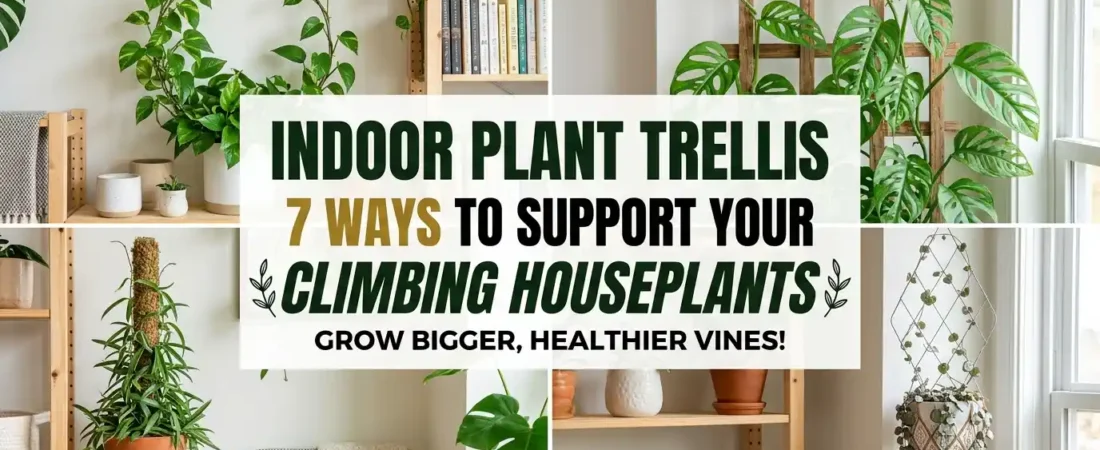
If your indoor plants are starting to look leggy, sprawling, or just plain chaotic, they might be telling you something. Many popular houseplants are natural climbers. In the wild, they attach themselves to tree trunks and grow upward toward the light. Without that support indoors, they tend to sprawl, stretch, and lose their shape.
An indoor plant trellis solves this problem. It gives your plants the structure they need to grow healthy and strong while turning them into stunning vertical displays. This guide covers what a trellis is, which plants need one, and seven ways to support your climbing houseplants.
Table of Contents
What Is an Indoor Plant Trellis and Why Do You Need One?
An indoor plant trellis is a structure that supports climbing or trailing plants indoors. Think of it as a ladder or net for your plant to grab onto as it grows upward or outward. It turns your plant from a sprawling mess into a vertical showstopper.
Using a trellis saves space, improves air circulation, and can even boost the health of your plant. Better growth and fewer pest issues are common once you start using trellises regularly. A good trellis mimics the plant’s natural environment, encouraging stronger stems and larger, more evenly spaced leaves.
Which Plants Need a Trellis?
Not all houseplants need a trellis. The ones that benefit most are climbing and vining plants that naturally seek vertical support. Here are some common examples:
- Pothos (Epipremnum aureum): A classic trailing plant that climbs eagerly with support.
- Philodendrons: Heartleaf and other vining types love to climb.
- Monstera: These plants develop larger leaves when they can climb.
- Hoyas: Many varieties are twining vines that wrap around supports.
- String of Hearts: Can be trained up a small wire trellis.
- English Ivy: A natural climber that attaches to surfaces.
Flopping stems and leggy growth are signs it is time to install a trellis. Vining plants cannot support their shape on their own and will either spill out of their pot or trail onto the floor. A trellis provides the vertical support they need to stay healthy and look more appealing.
7 Indoor Plant Trellis Ideas
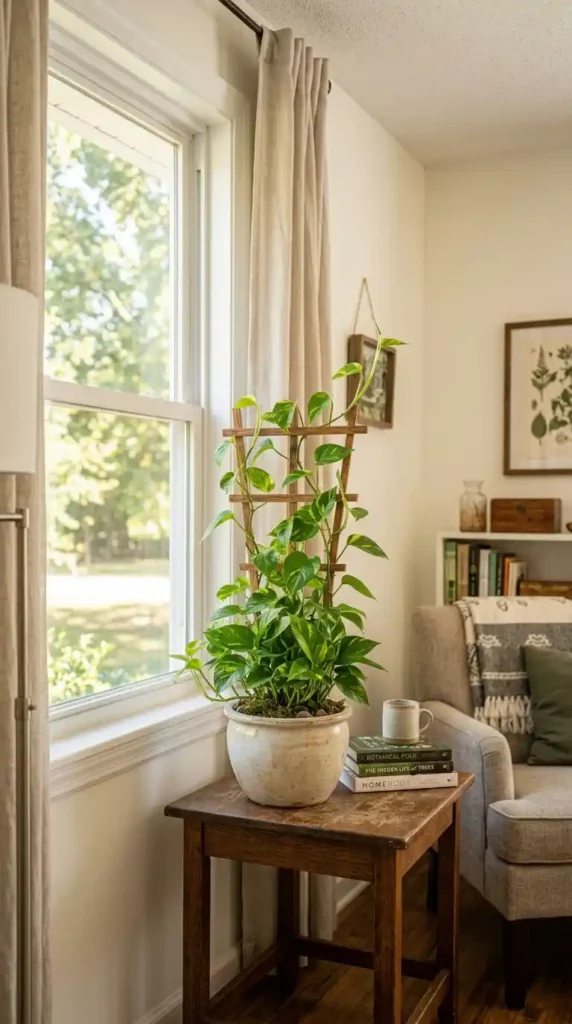
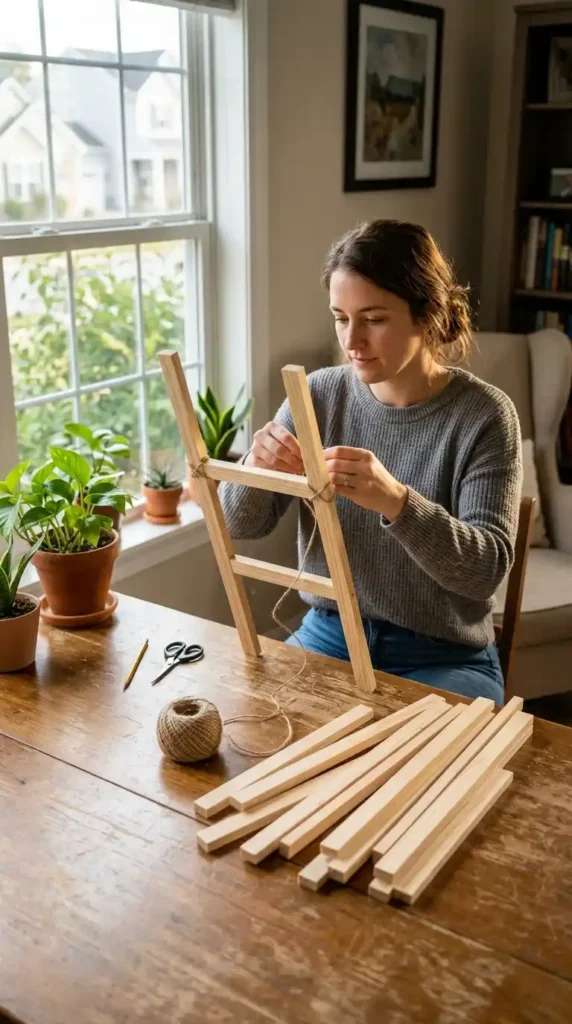
1. DIY Ladder Trellis
A ladder-style trellis is one of the most popular and versatile options. It is easy to make and works well with a variety of plants.
How to make it: Cut two wooden legs to your desired height and cut dowels for the rungs. Drill pilot holes into the legs and insert the dowels with wood glue. This design is adjustable for any pot size and can be as tall as you want it to be.
Best for: Pothos, philodendrons, and monsteras.
2. Wire Hoop Trellis
A wire hoop trellis is a simple and charming option. It is especially good for smaller pots.
How to make it: Use a piece of 16-gauge galvanized steel wire. Fold it in half around a jar to create a circle, twist the wires, and continue until you have three or four circles. Bend the loose ends to fit into the soil.
Best for: Hoyas, string of hearts, and other small vining plants.
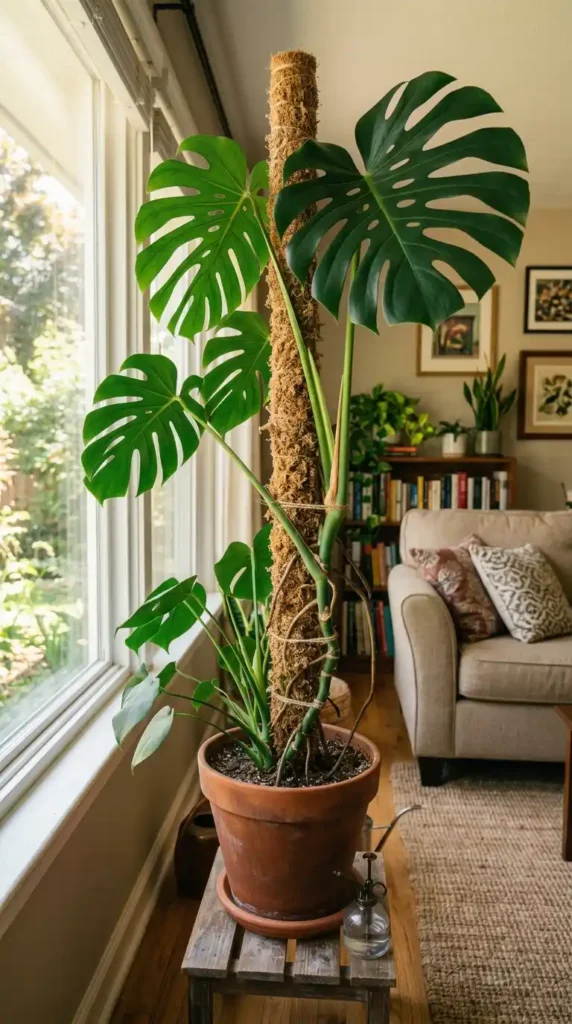
3. Moss Pole
Moss poles are the most popular method in the plant support category. They are excellent for plants with aerial roots.
How to make it: Soak sphagnum moss, wrap it around a PVC pipe or bamboo stick, and cover it with wire mesh secured with zip ties. Place the moss pole in the planter and attach the houseplant.
Best for: Monsteras, philodendrons, and pothos.
4. Bamboo Teepee Trellis
Bamboo stakes tied together in a teepee shape create a simple, rustic support.
How to make it: Cut bamboo sticks to the desired height. Arrange them in a teepee shape and secure at the top with twine. Insert the base into the soil.
Best for: Small planters and lightweight climbers.
5. Wall-Mounted Grid Trellis
A wall-mounted grid is perfect for creating a living wall effect without the expense of a full green wall.
How to make it: Use a metal grid or repurpose a wire shelf. Mount it on the wall and train your plants to grow up it using plant ties.
Best for: Trailing plants like pothos or string of hearts.
6. Geometric or Hexagon Frame Trellis
Geometric frames add an architectural vibe and let you guide the plant creatively.
How to make it: Use wire or wood to create a hexagon or other geometric shape. Insert it into the pot and gently tie the vines to the frame.
Best for: Modern interiors and plants with flexible vines.
7. Plank from the Hardware Store
Growing plants on planks is one of the easiest methods.
How to make it: Get an untreated cedar or pine plank from the hardware store. Place it in the pot and attach your plant to it.
Best for: Monsteras and other plants with aerial roots.
How to Choose the Right Trellis for Your Plant
Choosing the right trellis depends on several factors.
- Match Trellis Size with Pot Diameter and Vine Length: A good rule of thumb is that the trellis should be about 1.5 times the height of the pot. If you are working with short vines or small pots, try a hoop trellis or even chopsticks and twine.
- Match Materials to Watering Habits: Moss poles stay wet, which some plants love and others hate. For tropical clingers like philodendrons or monsteras, coir or moss poles are great. If your plant prefers dry feet, go for a bamboo, wood, or metal trellis.
- Consider Plant Type: Clingers vs. Twining Vines: Philodendrons are clingers. They latch onto moss or bark with aerial roots. Hoyas or string of hearts are twining vines. They like to wrap around wire or thin rods.
- Think About Available Light: Make sure any upright structure lets light through or is placed off to the side so it does not block the sunniest spot.
- Match Your Interior Style: Woven jute might not match a modern living room. Matte black wire might feel too stark for a soft, earthy bedroom. Choose a trellis that fits your aesthetic.
How to Install and Train Your Plant on a Trellis
Once you have your trellis, proper installation is key.
- Insert the Trellis: Insert the base of the trellis into the pot, making sure it is stably grounded without damaging the roots.
- Secure the Plant: Carefully secure the plant’s shoots to the supports using soft materials like plastic-coated wire or rubber ties. Work very carefully to ensure you do not squeeze and damage any shoots.
- Train New Growth: Keep securing new shoots to the trellis and adjust old ones as the stems grow.
- Upgrade When Needed: You may need to upgrade to a larger trellis when your plant gets bigger. In this case, carefully cut the ties to remove the old trellis and then replace it with the new one.
Frequently Asked Questions About Indoor Plant Trellises
1. What plants need a trellis?
Plants with climbing or vining growth habits benefit from a trellis. This includes pothos, philodendrons, monsteras, hoyas, string of hearts, and English ivy.
2. How do I make a simple indoor plant trellis?
A simple ladder trellis can be made with wooden legs and dowels. A wire hoop trellis can be made with 16-gauge steel wire. Bamboo stakes tied together also work well.
3. Can I use a moss pole for any plant?
Moss poles are best for plants with aerial roots, such as monsteras and philodendrons. They are less effective for twining vines like hoyas.
4. Do I need to water a moss pole?
Yes, moss poles retain water and provide humidity for the plant’s aerial roots. They should be misted or watered periodically.
5. Where can I buy an indoor plant trellis?
Indoor plant trellises are available at garden centers, home improvement stores, and online retailers. IKEA’s DOFTRIPS mini trellises are a popular budget option.
Related Articles
Never Buy Rosemary Again: Grow Rosemary Plant Indoors
Easy Indoor Plants: 10 Foolproof Picks for Beginners
DIY Garden Fence: 10 Budget-Friendly Ideas to Protect and Beautify Your Yard
Large Indoor Plants That Make a Statement in Any Room
An indoor plant trellis is more than just a support structure. It is a tool that helps your plants reach their full potential while adding beauty and interest to your home.

Sheikh Hassaan is a digital architect for small businesses and the founder of The Glow Up System. He writes about home decor, garden design, and outdoor living for real American homes – practical ideas that work in actual spaces without oversized budgets.