
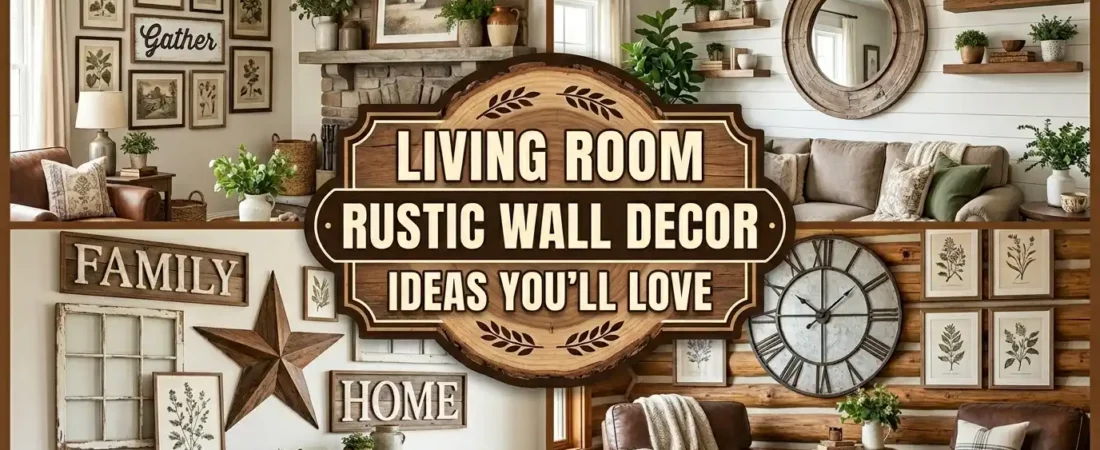
The living room wall is either the most wasted surface in a home or the most defining one, and rustic living room wall decor done well turns it into the latter without requiring a renovation budget or a designer. The challenge with the rustic aesthetic specifically is that it sits closer to the line between characterful and cluttered than almost any other interior style, and crossing that line comes down to a handful of specific decisions about material, scale, and restraint.
This guide covers living room rustic wall decor ideas that look intentional rather than accumulated — organized by wall treatment type, with specific guidance on the scale, material, and placement decisions that keep each element reading as designed rather than decorative.
Table of Contents
Why Rustic Wall Decor Either Looks Designed or Cluttered
Rustic wall decor reads as cluttered when every surface is filled with multiple small objects that each reference the rustic aesthetic individually but create visual noise collectively. A wooden sign, a metal farmhouse star, three different-sized lanterns, a shiplap accent, and a collection of small botanical prints all belong to the rustic category — but together on one wall they create competing focal points that exhaust rather than warm the room.
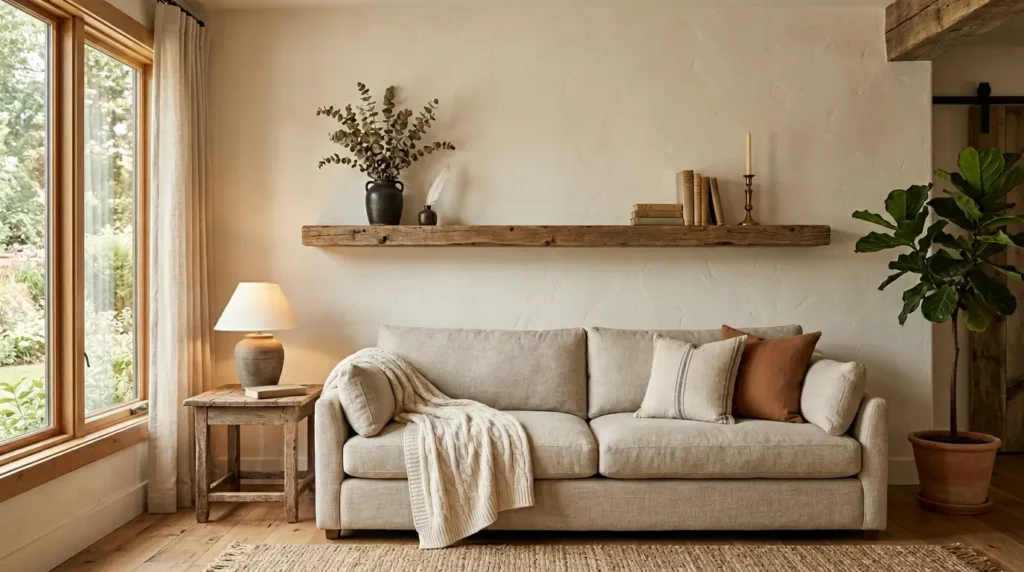
The same rustic elements read as designed when fewer of them are chosen and each is given genuine space on the wall. One large reclaimed wood shelf with two or three objects. One substantial piece of rustic wall art with empty wall on all sides. One shiplap accent panel as a complete feature rather than a partial treatment. The principle is exactly the same as for any other interior aesthetic — restraint and scale create the impression of intention, while accumulation creates the impression of decoration.
The specific question to ask about any rustic wall element before hanging it: does this add something the wall does not already have, or does it just add more of something the wall already has enough of? A room that already has warm wood tones from the furniture does not need more warm wood on the walls. A room that already has textural interest from a rug and throw pillows does not need additional texture on the walls. The wall decor should complete the room rather than repeat what the furniture is already doing.
1. Shiplap or Board-and-Batten as a Complete Feature Wall
✦ Best for: the primary wall behind the sofa or the fireplace wall where one complete architectural treatment creates more impact than multiple decorative objects
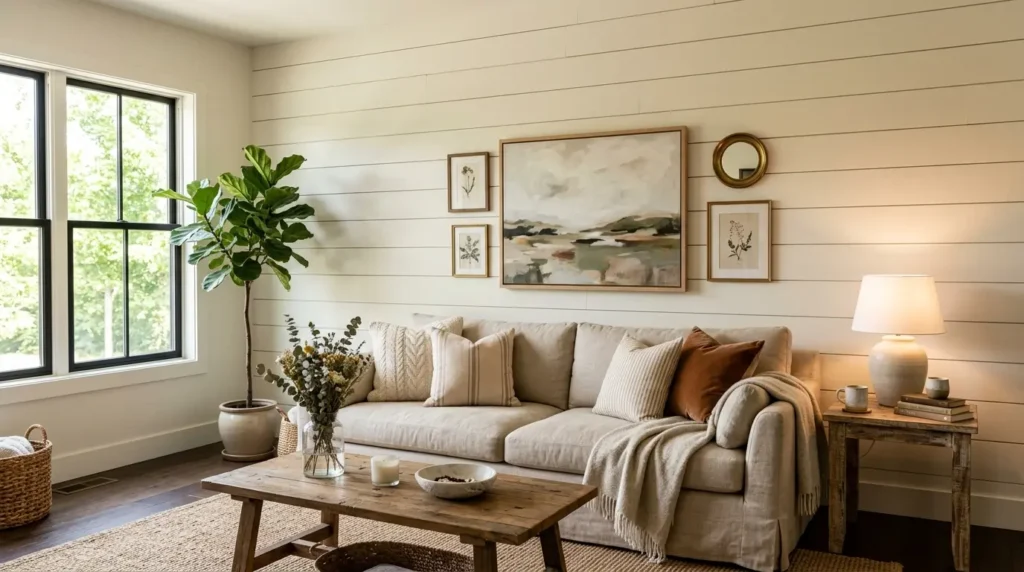
Shiplap paneling is the rustic wall treatment that consistently produces the most architecturally significant result because it transforms the entire wall surface rather than adding objects to it. A full shiplap feature wall from floor to ceiling creates the kind of textural presence that no collection of hanging objects can achieve — the horizontal lines draw the eye across the full width of the wall and create the impression of a room with more architectural character than its original construction provided.
Paint is the decision that determines whether shiplap reads as rustic, coastal, or contemporary. Warm white shiplap reads as farmhouse rustic — the most traditional version. Warm greige or soft gray shiplap reads as contemporary rustic — more sophisticated and better suited to a room with modern furniture. Dark charcoal or deep navy shiplap reads as dramatic contemporary with rustic material — the most unexpected and most current application of the treatment. The material is the same in all three cases; the paint creates entirely different aesthetic effects.
Peel-and-stick shiplap wallpaper has improved to the point where it creates a convincing shiplap appearance without any carpentry, tools, or wall damage — making it the correct choice for renters or anyone who wants to test the treatment before committing to real installation. The best peel-and-stick shiplap products use a slightly textured surface that reads as real wood grain rather than a flat printed finish.
Once the shiplap wall is installed and painted, resist the urge to hang multiple objects on it. The shiplap itself is the wall decor — one piece of large-format art or one substantial mirror is the maximum that the shiplap wall needs to feel complete. More than this competes with the architectural texture rather than complementing it.
2. A Single Thick Reclaimed Wood Shelf as a Wall Feature
✦ Best for: a living room wall that needs warmth and purpose without a full architectural treatment
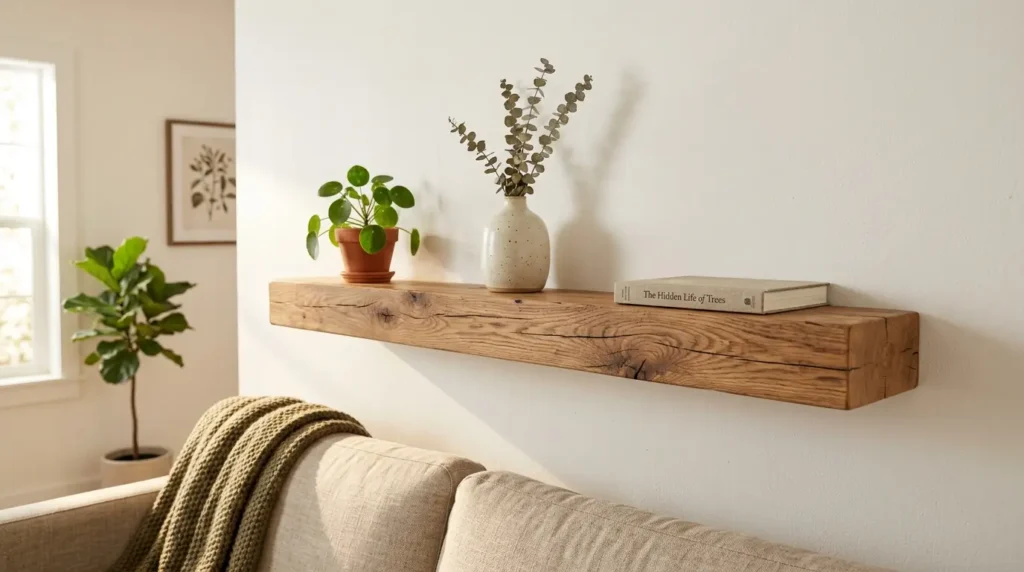
A single thick reclaimed wood shelf — 3 to 4 inches deep, 4 to 6 feet wide, mounted as a floating shelf with concealed hardware — is one of the most impactful and most versatile pieces of rustic wall decor available for a living room because it simultaneously adds architectural warmth, creates a display surface, and creates the specific visual presence of a substantial wood element on the wall without covering the entire wall surface.
The thickness of the shelf matters more than most people account for when purchasing. A standard half-inch shelf bracket shelf looks like storage hardware regardless of what material it is made from. A three to four inch thick slab of reclaimed timber with a live edge or a visibly rough-cut face reads as a genuine material object that belongs on the wall as much for how it looks as for what it holds.
Style the shelf with the fewest objects that make it feel complete rather than the most objects that fit on it — three objects at most, in odd numbers, at different heights. One small plant in a simple ceramic pot, one ceramic vase or vessel, and one book stood upright create more visual interest than six small objects arranged in a row. The empty shelf surface on either side of the objects is as important to the arrangement as the objects themselves.
3. One Large-Format Landscape or Nature Print in a Simple Frame
✦ Best for: the primary sofa wall where one substantial piece of art anchors the entire seating group
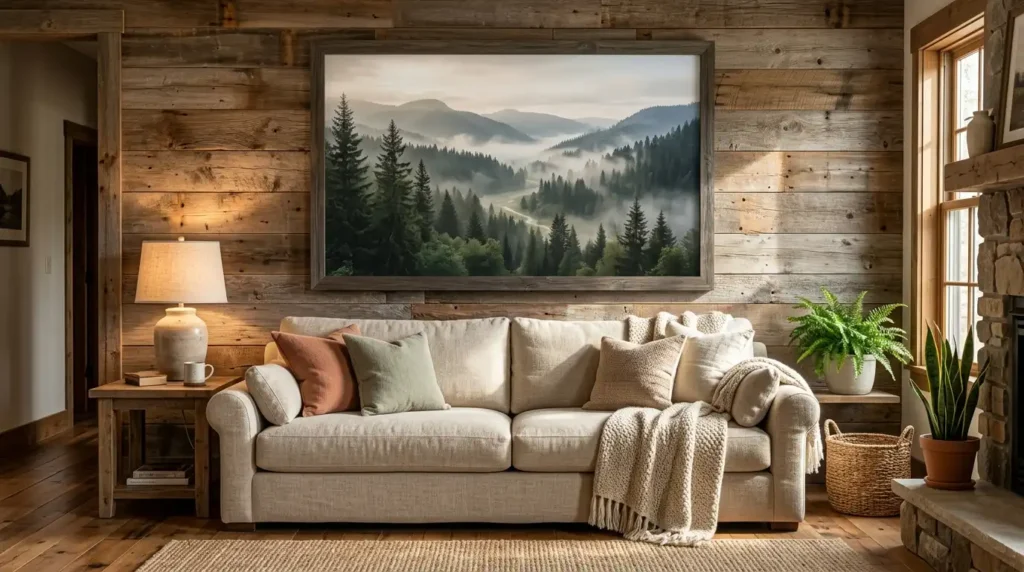
The rustic wall art approach that most consistently reads as designed rather than decorated: a single large format print in a simple frame, hung as the sole element on the primary wall, sized to fill 70 to 80 percent of the sofa width. This approach requires confidence — one large piece feels like a significant commitment — but it almost always looks more considered than a gallery wall of smaller pieces at the same total wall coverage.
Subject matter for rustic living room wall art: misty forest photography in black and white or in muted color reads as the most sophisticated version. Landscape oil or watercolor paintings in warm earth tones create warmth and depth that photography does not. Vintage botanical illustrations in sepia or warm tones suit a farmhouse rustic palette. Topographic maps of meaningful geographic areas add intellectual content. All of these choices share a quality of referencing the natural world without depicting it literally or decoratively.
The frame should be simple and consistent with the room’s other wood tones — a natural unstained timber frame suits a room with light wood furniture, a dark walnut frame suits a room with darker timber elements, a simple black frame suits a room with black iron hardware or fixtures. Avoid ornate or heavily detailed frames — the natural subject matter of rustic wall art looks best in the most understated frame available.
4. A Large Woven or Macrame Wall Hanging as a Textile Feature
✦ Best for: adding tactile texture to a wall that needs warmth but not another framed piece or wood element
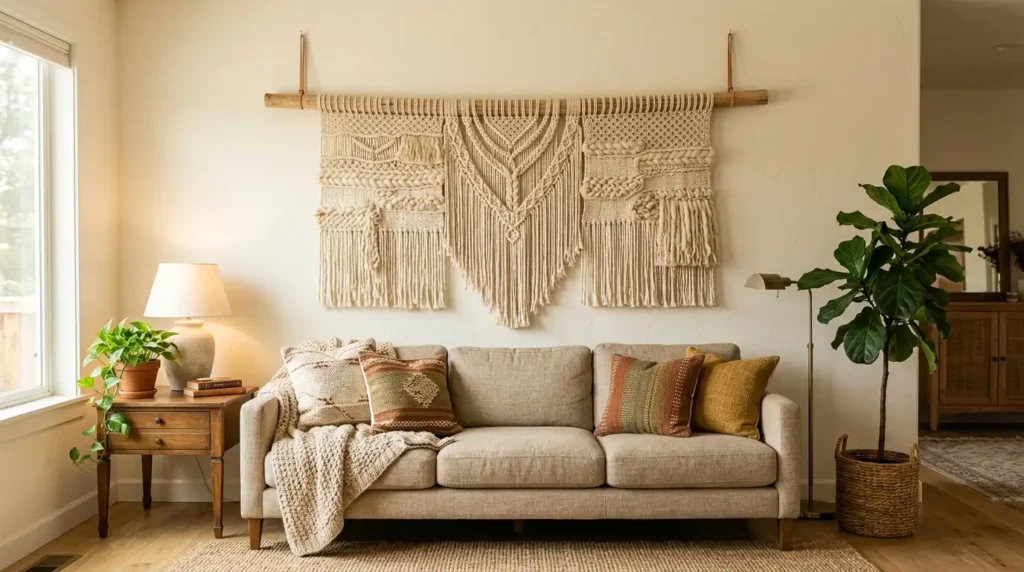
A large woven or macrame wall hanging introduces the one material quality that framed art and wood elements cannot provide — soft, three-dimensional textile texture on the wall surface. In a rustic living room that already has wood and leather in the furniture and natural fiber in the rug, a large woven textile above the sofa completes the natural material palette at the most visible wall position without adding any of the materials already present in the room.
Scale is the critical decision for a woven wall hanging — most people purchase one that is too small for the wall and the sofa below it, which reads as timid rather than intentional. A hanging that spans at least two thirds of the sofa width and drops at least 24 inches from the mounting rod creates genuine visual presence. A hanging narrower than half the sofa width disappears on the wall regardless of how beautiful the weave pattern is.
Natural undyed cotton or wool in its raw cream or oatmeal tone suits the rustic living room palette consistently well because it reads as genuinely natural rather than as a color choice — the material itself creates the warmth rather than the dye color. Avoid brightly colored or heavily patterned macrame pieces in a rustic living room where the textile should be a textural element rather than a color statement.
5. A Wood Plank Gallery Wall With Consistent Frames and Natural Tones
✦ Best for: a wall where multiple smaller images and objects are wanted but need a unifying structure to prevent the arrangement from reading as random
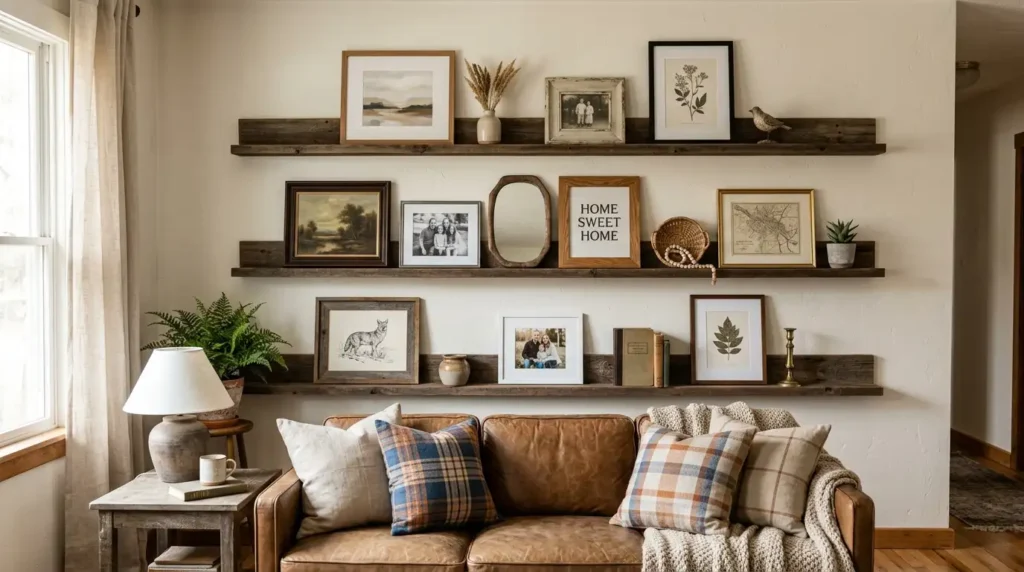
A gallery wall built on a series of horizontal reclaimed wood ledge shelves rather than hung directly on the wall solves the most common gallery wall problem — the arrangement that took hours to plan and install and still looks slightly wrong because the frames are at slightly different heights and the spacing is not quite consistent. Ledge shelves provide a physical horizontal baseline that makes every frame on them automatically level and allows objects to be rearranged without making new holes.
Three horizontal ledge shelves in reclaimed timber, spaced evenly down the wall with 12 to 14 inches of vertical space between each shelf, create a structured framework for a gallery arrangement that reads as intentional rather than random. Each shelf holds two or three frames leaned against the wall rather than hung, interspersed with one or two small objects — a small ceramic, a plant, a single stone — that break the uniformity of frames at the same depth.
The frames on the ledges should all use the same finish — natural timber frames throughout, or black frames throughout — while varying in size. The content inside the frames can mix photography, botanical prints, and abstract art, because the consistent frame finish creates enough visual unity to hold a mixed content arrangement together.
6. Wrought Iron or Aged Metal Wall Art as a Textural Contrast
✦ Best for: introducing a harder, cooler material element that contrasts with the warm organic textures already present in the room
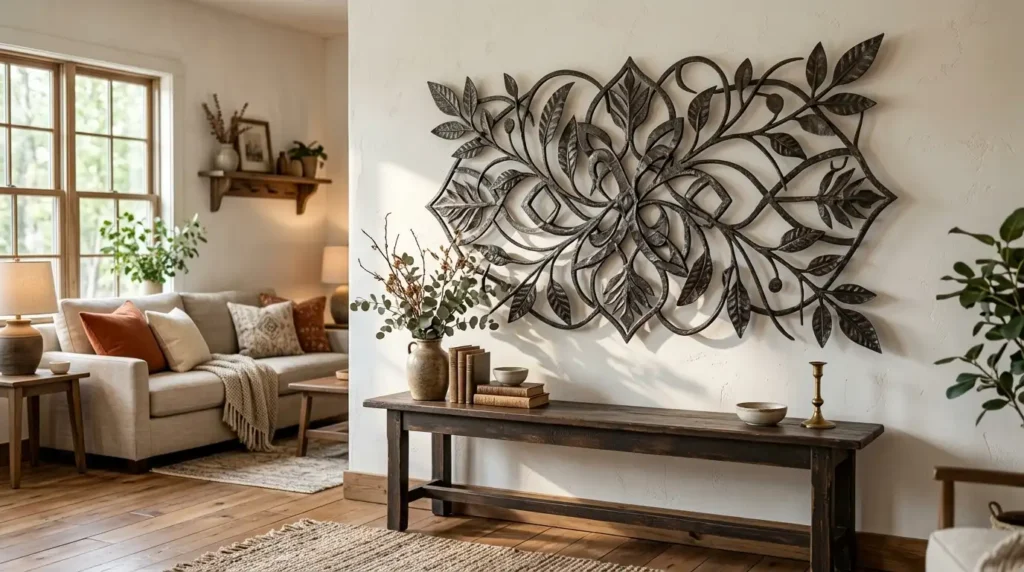
Wrought iron or aged metal wall art introduces the one material the rustic aesthetic uses that most living room wall decor approaches avoid — a hard, cool, heavy material that creates genuine contrast against the warm organic textures of wood, linen, and natural fiber that dominate the rustic interior. A single large metal wall piece reads as sculpture rather than decoration, and in a room full of soft warm materials it creates the visual tension that keeps the room interesting rather than uniformly cozy.
The metal wall art that works in a rustic living room: large-format abstract botanical forms in hammered black iron — the botanical subject connects the piece to the natural material aesthetic while the metal contrasts with the organic materials around it. Large-scale abstract geometric forms in aged or hand-hammered iron. Vintage-style clock faces in large-format iron — the clock format is functional as well as decorative and suits the farmhouse dimension of the rustic aesthetic.
Scale matters here as much as anywhere — a metal wall piece that is too small for the wall reads as an accent rather than an art piece. A piece that spans 24 to 36 inches or more creates genuine visual presence and reads as a primary wall feature rather than a secondary decorative addition. This is the wall decor category where going larger than feels comfortable almost always produces a better result than the more cautious choice.
7. How Rustic Wall Decor Works in a Coastal Living Room
✦ Best for: a coastal or beach house living room where rustic natural materials suit the aesthetic without any nautical references
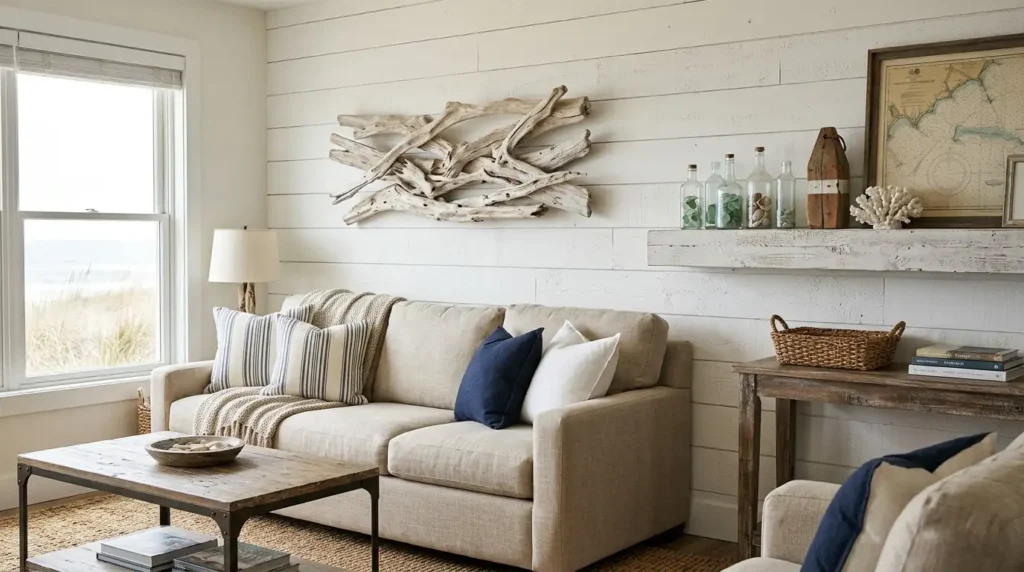
The rustic and coastal living room aesthetics share more visual DNA than most people realize — both draw on natural materials, both favor organic textures over manufactured ones, both use a warm neutral palette, and both benefit from the same principle of restraint over accumulation. A coastal living room that incorporates rustic wall decor elements does not need to reconcile two competing aesthetics — it simply applies the same natural material approach to the wall that the coastal aesthetic applies to the furniture and textiles.
The rustic wall elements that translate directly to a coastal living room: whitewashed or bleached timber used as a floating shelf or wall panel instead of the darker-stained versions used in farmhouse rustic. Driftwood pieces hung as sculptural wall art — a large driftwood branch or a collection of driftwood pieces arranged on the wall reads as both rustic and coastal simultaneously. Shiplap painted in warm white rather than left natural serves the coastal living room as well as the farmhouse rustic one.
The distinction to maintain even in a coastal rustic room: avoid explicitly nautical references — anchors, ropes, ship wheels — alongside the rustic elements. The coastal-rustic crossover works because both aesthetics use natural materials in a restrained way. Adding nautical iconography introduces a themed element that disrupts the material-based approach both aesthetics share. For more on styling a full coastal living room see our guides on contemporary coastal and California coastal living room design.
📌 More living room and home decor ideas: How To Style a Coastal Chic Living Room Like a Designer
Frequently Asked Questions
What is rustic wall decor?
Rustic wall decor is any wall treatment or hanging element that draws on natural, aged, or handcrafted materials to create warmth and organic texture on a living room wall. It includes shiplap and board-and-batten paneling, reclaimed wood shelves and ledges, large-format landscape art in natural-toned frames, woven textile and macrame hangings, wrought iron wall sculptures, and vintage botanical or topographic prints. According to Better Homes and Gardens, rustic wall decor is one of the most consistently popular interior design categories because it suits a wide range of room styles from farmhouse to coastal and adds warmth to any neutral palette.
How do I make rustic wall decor look designed rather than cluttered?
Rustic wall decor looks designed rather than cluttered when fewer elements are chosen and each is given genuine space on the wall. One large shiplap feature wall rather than a partial treatment. One substantial reclaimed wood shelf with two or three objects rather than a wall covered in small rustic items. One large-format landscape print rather than a gallery wall of multiple smaller pieces. The restraint that prevents rustic from becoming cluttered is the same principle that applies to any interior style — scale and space between elements communicate intention while accumulation communicates decoration.
What colors work best with rustic wall decor?
Rustic wall decor works best against wall colors in warm white, soft greige, and warm neutral tones that complement the natural wood, iron, and textile materials rather than competing with them. Warm white creates the most contrast and the most visually spacious background for rustic elements. Soft sage green and warm greige add color without reducing the warmth that the rustic aesthetic creates. Deep charcoal on one feature wall creates the most dramatic backdrop for natural wood and metal elements.
How large should rustic wall art be in a living room?
Rustic living room wall art should fill 70 to 80 percent of the sofa width when positioned above a sofa — the most common placement for primary living room wall art. A piece that fills less than 60 percent of the sofa width reads as undersized and creates an uncomfortable visual gap between the art and the furniture below it. For a 90-inch sofa this means a primary wall piece of 60 to 72 inches wide. Woven hangings and metal wall sculptures should follow the same general principle — larger than feels immediately comfortable almost always produces a better result than a more cautious size choice.
More Living Room and Home Decor Ideas
→ California Coastal Living Room Styling Tips for a Relaxed Luxury Look
→ Family Photo Wall Ideas That Never Look Tacky
→ Western Living Room Decor Ideas Designers Are Obsessed With
Choose fewer elements and give each one more space. The empty wall around a single substantial piece does more for the room than filling that space with three smaller ones.

Sheikh Hassaan is a digital architect for small businesses and the founder of The Glow Up System. He writes about home decor, garden design, and outdoor living for real American homes – practical ideas that work in actual spaces without oversized budgets.