
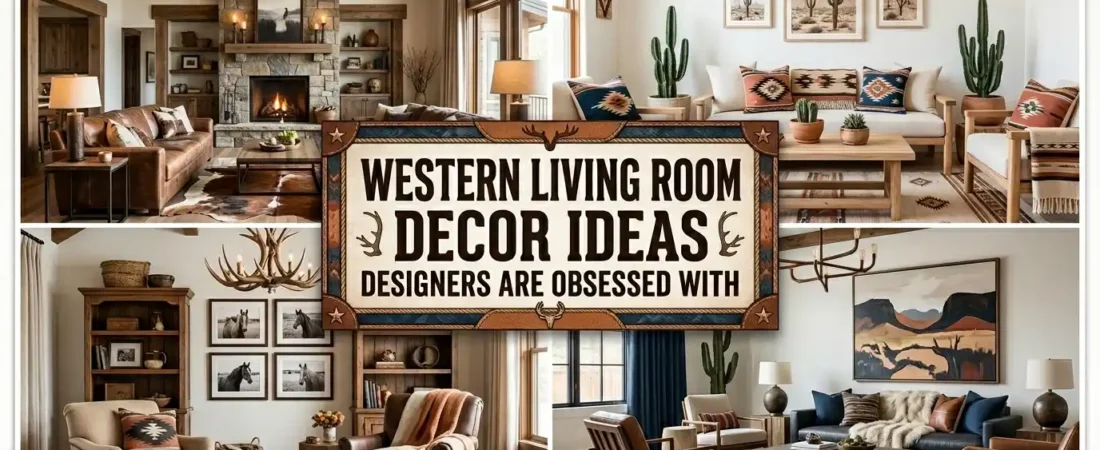
Getting western living room decor right is harder than it looks, not because the aesthetic is complicated but because the line between genuinely warm and characterful and accidentally themed like a roadside steakhouse is narrower than most people expect. The version that works draws on the actual material culture of the American West — raw leather, aged timber, woven textiles, iron hardware, and the specific palette of the high desert landscape — rather than the cartoon version that relies on wagon wheels and cowboy boots as decorative objects.
This guide covers the western living room decor ideas that look genuinely refined — the furniture choices, material pairings, color palette, and specific finishing details that create the warmth and character of a well-designed western interior without any of the elements that tip it into themed territory.
Table of Contents
What Separates Refined Western Decor From Themed Western Decor
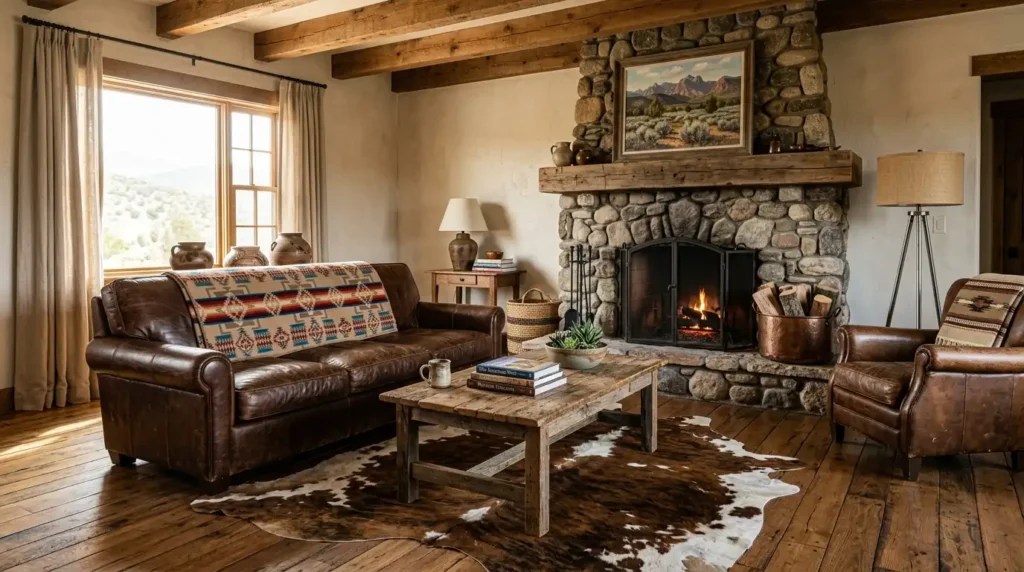
The western living room aesthetic that reads as designed rather than themed has one consistent characteristic: every element in it is a genuine material rather than a representation of one. A leather sofa that has developed a natural patina. A coffee table made from actual reclaimed barn timber. A woven blanket from a real textile tradition. A stone fireplace built from actual rock. The refinement comes from the authenticity and quality of each material rather than from the explicit iconography of the West being present everywhere.
Contrast this with the themed version: faux leather that looks plastic under direct light, a coffee table with a carved stagecoach motif, horseshoe wall art, and a throw pillow with a cactus print. Each of these is a representation of something western rather than a genuine material, and a room full of representations always reads as themed regardless of how many individual pieces are present.
The practical test for any western decor purchase: would this object exist in this form in a genuinely well-built ranch or mountain home, or does it exist specifically to signal westernness? A hand-thrown ceramic in a warm earth tone passes this test. A ceramic in the shape of a cowboy boot does not. This single question eliminates most of the elements that make western rooms look kitschy and leaves only those that contribute genuine material warmth.
1. Leather Sofas and Cowhide Rugs as the Material Foundation
✦ Best for: establishing the warm, tactile material foundation that makes everything else in the room work
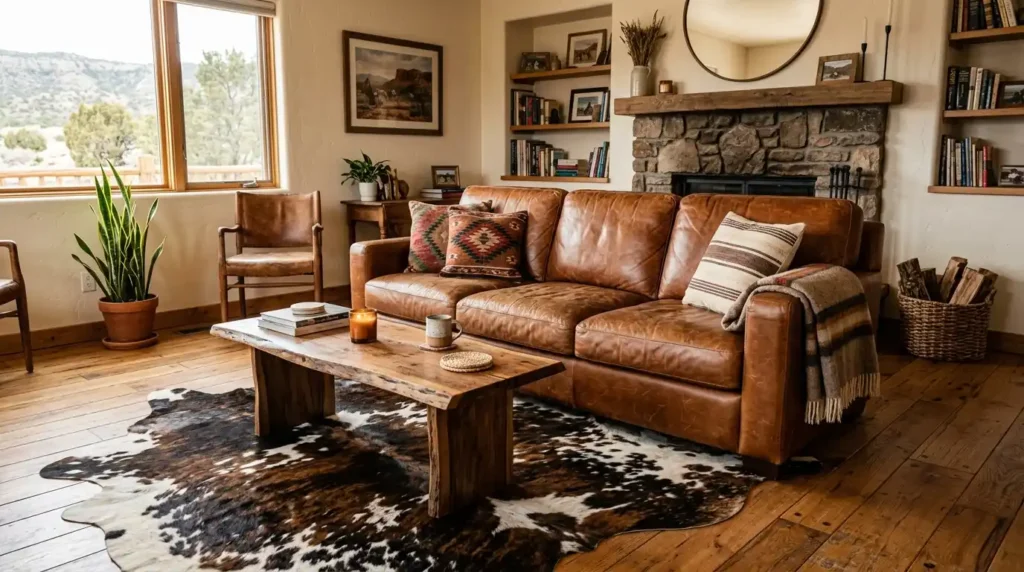
Leather and cowhide are the two materials most inseparably associated with western interior design, and they earn that association because they are genuine products of ranch life rather than stylistic references to it. A cognac or saddle-brown leather sofa that has been used long enough to develop character in its creases and contact points is the single most immediately western element a living room can contain — it communicates a relationship with the material that a new leather sofa has not yet developed but will, which makes buying quality more important than buying new.
The leather color that suits a western living room most consistently: cognac and saddle brown rather than black or dark chocolate. Black leather reads as urban contemporary rather than western. Dark chocolate reads as traditional English club rather than American ranch. Cognac and saddle brown have the specific warm amber tone of well-used leather goods — saddles, belts, work gloves — that gives them their unmistakable western character.
A natural cowhide rug layered over wide-plank hardwood or large-format stone tile flooring is the single most transformative ground-level addition to a western living room. Natural cowhide — in its actual patterning of black, white, and brown rather than dyed in an unnatural color — is one of those materials that immediately reads as western regardless of what surrounds it, because it is the most visually specific material the aesthetic uses. Position it under the coffee table and in front of the sofa rather than in the center of the room without the seating anchoring it.
Layer a woven Pendleton-style blanket in geometric earth tones over the back of the leather sofa as a throw. This combination of warm leather, natural cowhide at floor level, and woven textile on the sofa creates the three-material layering that defines the western aesthetic at its most sophisticated — natural animal material, natural plant-fiber weave, and the tanned hide of the sofa working together as a material family.
2. Reclaimed and Aged Timber as the Room’s Structural Character
✦ Best for: coffee tables, shelving, and ceiling beams that communicate genuine age and use rather than manufactured distressing
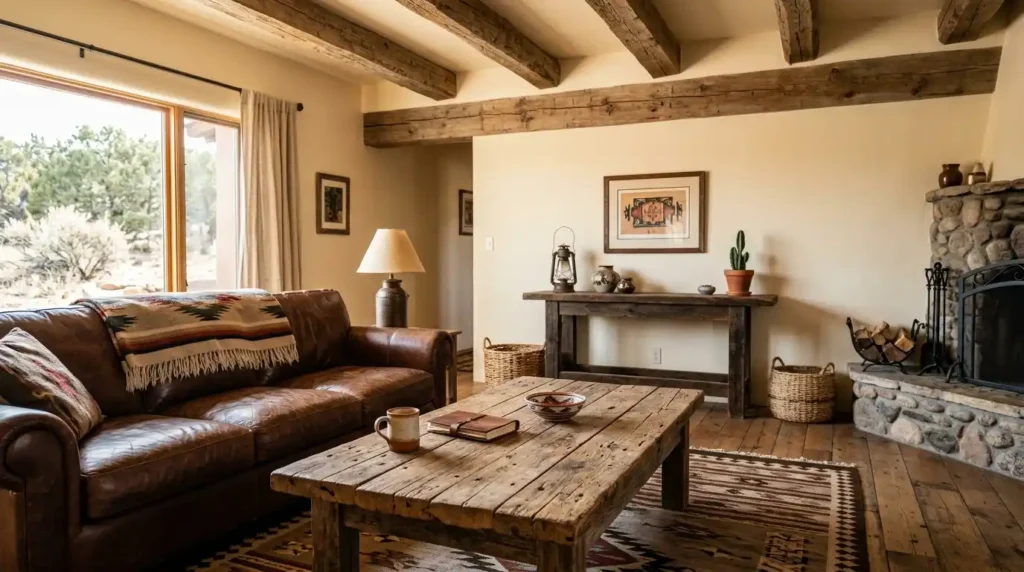
Aged and reclaimed timber does more visual work in a western living room than any decorative object because it carries actual history in its surface — the nail holes, saw marks, checking, and color variation of wood that has been used and exposed to weather for decades cannot be convincingly replicated by manufactured distressing, and the eye registers the difference even when the viewer cannot immediately articulate why one timber surface reads as genuine and another reads as artificially aged.
The most impactful reclaimed timber elements in a western living room, in order of visual impact: exposed ceiling beams in rough-hewn timber transform the entire room’s architecture and create the specific overhead character of a genuine ranch or mountain home interior. A thick reclaimed wood coffee table with visible nail holes and natural checking on the surface reads as the most characterful furniture piece in the room. A live-edge timber console table or mantel shelf introduces the natural wood form that connects the material to its source.
For rooms without exposed beams, faux beam wraps — hollow timber shells that slip over standard ceiling joists — add the visual presence of genuine beams at a fraction of the structural cost. The quality difference between a well-installed faux beam in genuine reclaimed timber and a real structural beam is negligible from normal viewing distance, making this one of the most cost-effective architectural upgrades available for creating a western living room atmosphere.
3. A Stone or Rock Fireplace as the Room’s Anchor Point
✦ Best for: the primary focal wall of the living room where the fireplace creates the architectural anchor the western aesthetic requires
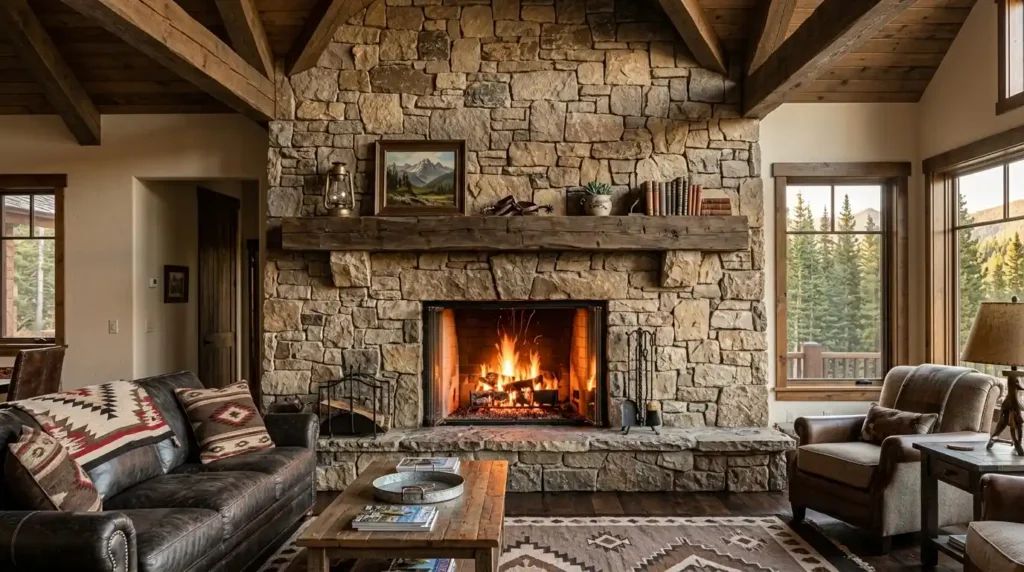
No single element communicates the western living room aesthetic as immediately and as powerfully as a stone fireplace — particularly one built floor to ceiling from natural fieldstone or river rock rather than a modest insert surrounded by drywall. The visual mass of a substantial stone fireplace anchors the entire room and creates the specific quality of permanence and shelter that the western interior draws from the tradition of building for durability in a harsh landscape.
The stone types that create the most authentic western fireplace appearance: natural fieldstone in irregular sizes and warm gray-brown tones, stacked in a random pattern that shows the natural variation of the material. River rock in rounded smooth forms in warm gray and tan creates a more refined version of the same effect. Large-format ledgestone in warm sandstone tones creates the most contemporary-western interpretation — still clearly natural stone but with more visual regularity than random fieldstone.
The mantel treatment matters as much as the stone choice. A thick rough-hewn timber beam mantel — ideally a single piece of aged oak, elm, or pine with visible saw marks and grain checking — creates the material contrast between stone and wood that defines the western fireplace aesthetic. Style the mantel minimally: one or two objects in natural materials, no more. A collection of small decorative objects on a substantial stone mantel reads as clutter rather than curation.
4. The High Desert Color Palette That Makes Western Feel Modern
✦ Best for: choosing wall color, textiles, and accessories that suit the western aesthetic without feeling dated or overly rustic
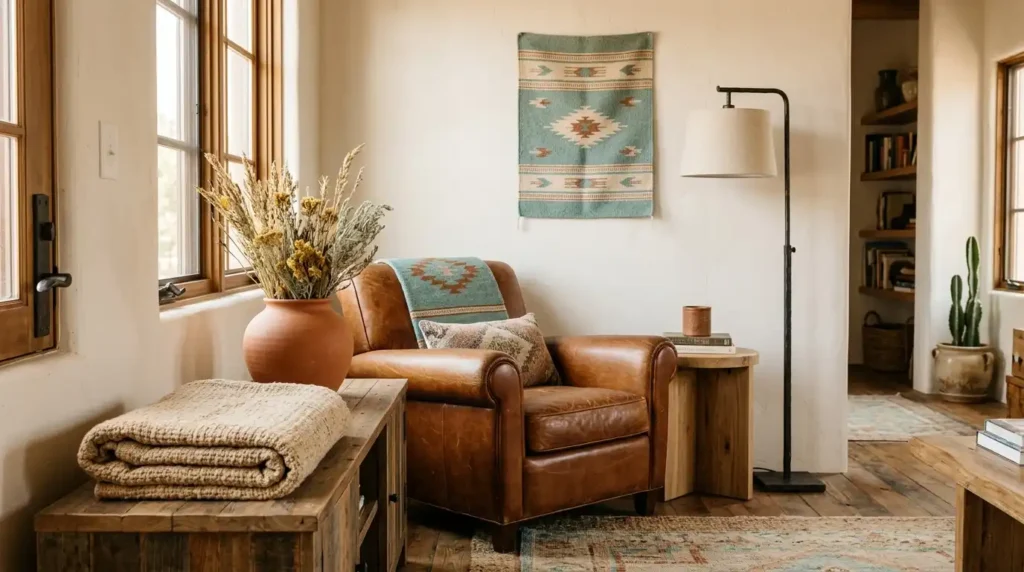
The western living room color palette that reads as sophisticated rather than dated draws from the high desert landscape rather than from the stereotype of red barns and dark wood paneling. The high desert palette — the colors of the American Southwest and the Great Basin — runs from bleached bone white through warm sand and terracotta to the specific muted turquoise of desert sky and the dark iron gray of storm clouds over a plateau. This palette is warmer and more complex than either the strictly neutral contemporary palette or the dark-dominated traditional western palette.
Wall color:
Warm white or off-white in a tone with visible warmth rather than a cool blue-white — Benjamin Moore White Dove or Sherwin-Williams Alabaster both have the specific warm quality that suits the western palette. One wall in warm terracotta or a muted clay tone creates the accent presence that the high desert palette requires.
Textile colors:
Woven textiles in geometric Navajo-inspired patterns use the full high desert palette simultaneously — the combination of warm red, deep teal, mustard, and natural cream in a single blanket or pillow cover creates more color richness than multiple solid-color textiles of the same number. One or two woven geometric pieces anchor the entire room’s color story.
The accent color to use sparingly: muted turquoise or dusty teal in one or two ceramic or glass objects on a shelf or coffee table. This is the color most associated with the Southwest — the color of turquoise jewelry, of old pottery glazes, of the specific blue sky above red rock — and it creates the geographic specificity that distinguishes a western palette from a generic warm-neutral one.
5. Woven Geometric Textiles That Carry the Room’s Color and Pattern
✦ Best for: introducing pattern and color to a western living room without any single element reading as too literal
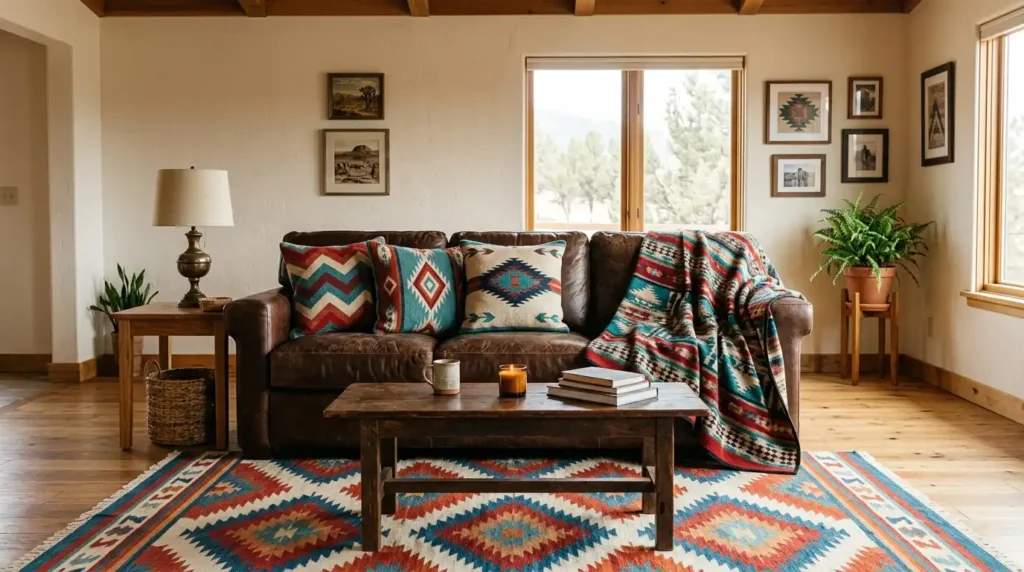
Woven geometric textiles are the pattern element of the western living room that is simultaneously the most culturally specific and the most widely appreciated outside the western context — Pendleton wool blankets, Navajo-inspired woven rugs, and geometric throw pillow covers in traditional pattern structures appear in interior design publications and design stores across the country precisely because the geometric language they use is genuinely beautiful regardless of its cultural reference.
The textile hierarchy in a western living room: a large woven geometric area rug anchors the seating group at floor level and is the most important textile purchase in the room — its pattern and color will set the tone for every other textile decision. Two or three woven geometric throw pillows on the leather sofa in patterns that share at least two colors with the area rug create the visual connection between floor and sofa level. One folded Pendleton-style blanket draped over a sofa arm or stored in a large woven basket beside the sofa completes the textile layer.
Pendleton Woolen Mills produces the most widely recognized authentic woven blankets in the western tradition, and their products sit at a price point that reflects the genuine wool content and American manufacturing. For a more accessible alternative, similar geometric woven patterns in cotton or cotton-wool blends from numerous contemporary manufacturers produce the same visual effect at significantly lower cost — the geometric pattern rather than the specific material is what creates the western textile reference in this context.
6. Wrought Iron Hardware and Lighting That Adds Western Character Without Props
✦ Best for: the functional hardware, lighting, and metal elements that give a western room its specific material quality at every touch point
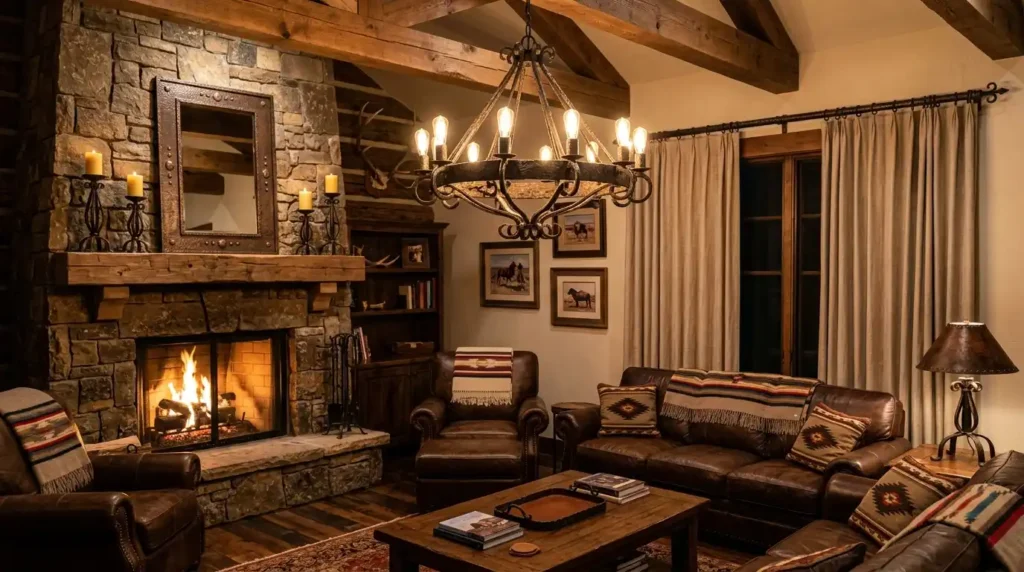
Wrought iron is to a western living room what brushed brass is to a coastal room — the metal finish that runs through every hardware element and binds the room’s material palette together. A wrought iron chandelier or ceiling pendant above the seating area, iron curtain rod hardware, iron cabinet pulls on any built-in furniture, and iron candle holders on the mantel all speak the same material language and create a consistency of finish that makes the room feel genuinely considered rather than assembled from different sources.
The quality distinction that matters most in wrought iron for a western room: hand-forged or hammer-textured iron with visible tool marks versus machined black metal with a uniform smooth surface. Hand-forged iron has the slightly irregular surface and visible texture of metal worked at high temperature — a quality that communicates craft and age in the same way that reclaimed timber communicates genuine history. Machined black metal with a flat uniform finish reads as industrial contemporary rather than western.
The wrought iron chandelier is the most impactful single hardware element in a western living room because it occupies the center of the room’s visual field from most seated positions and its scale and silhouette read from across the room. A substantial iron chandelier with four to six arms and visible hammer texture on the iron creates the specific quality of a hand-crafted functional object that western interior design consistently uses as its most prominent light fixture.
7. Western Wall Art That Feels Like a Collection Rather Than a Theme
✦ Best for: the wall surfaces that need visual interest without the room tipping into explicitly themed territory
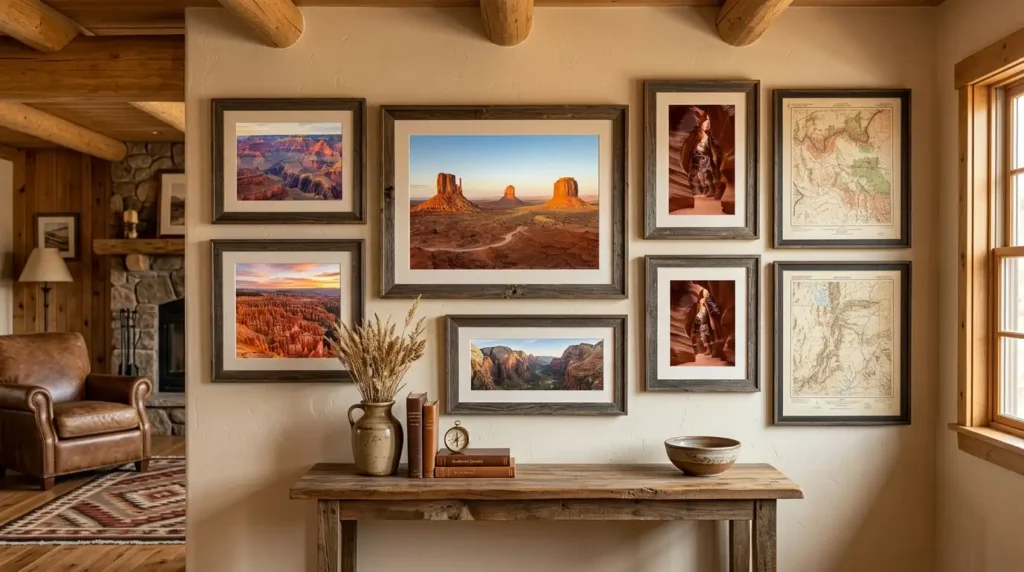
Western wall art fails most consistently when it depicts explicit western iconography — cattle skulls mounted on walls, horseshoe arrangements, vintage wanted posters, and rope lettering all belong to the themed category that the refined western aesthetic consistently avoids. The wall art that works in a sophisticated western living room draws from the landscape and the natural history of the American West rather than from its cultural mythology.
Large format landscape photography of the American Southwest — the canyon lands of Utah, the mesa country of New Mexico, the high desert of Wyoming — creates a direct visual connection to the landscape that the western aesthetic draws from without depicting any specific western iconography. These photographs in simple dark frames read as fine art photography while simultaneously communicating exactly the geographic and visual reference the western aesthetic is built on.
Vintage topographic maps of western territories, botanical illustrations of native desert plants, and antique geological survey prints all sit in the same territory — genuine historical documents related to the landscape rather than decorative western props. Mixed with one or two more contemporary landscape photographs in a small wall grouping with consistent dark frames, these pieces create the collected-over-time quality that makes a wall arrangement feel like a genuine personal collection.
How To Pull the Complete Western Living Room Together
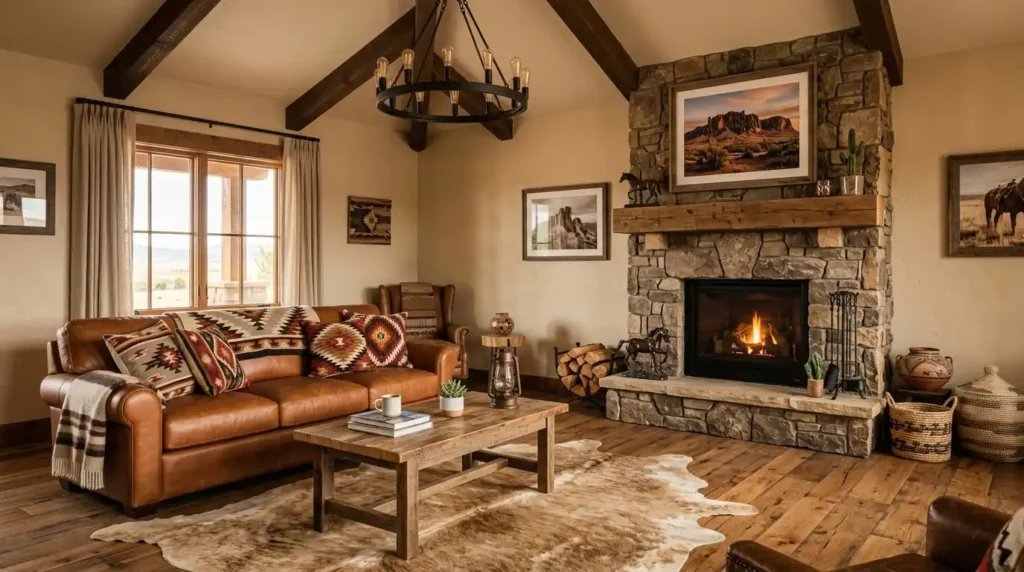
A refined western living room comes together when every element in it is chosen for the quality and authenticity of its material rather than for its explicit western reference. The leather sofa, the cowhide rug, the reclaimed timber coffee table, the stone fireplace, the woven geometric textiles, the wrought iron hardware, and the landscape photography on the walls all contribute genuine material presence — and that accumulation of genuine materials is what creates the warmth and character that makes the western aesthetic compelling.
The sequencing that works best for building this room from scratch: start with the largest surfaces — flooring, walls, and ceiling if beams are planned — since these set the material palette everything else responds to. Add the primary furniture next: leather sofa, reclaimed wood coffee table, and the area rug that anchors the seating group. Then layer in the textiles: woven throw pillows, blanket, and any additional textile elements. Hardware and lighting come next as the consistent metal finish that runs through the room. Art and accessories are the final layer — the collected-over-time element that gives the room its personal quality.
The objects that do not belong in a refined western living room regardless of how western they feel: mounted animal trophy heads above the fireplace unless from a genuine hunting tradition in the family, wagon wheel coffee tables or light fixtures, cactus-print textiles in cartoon rather than botanical form, and any object whose primary function is to signal westernness rather than to be genuinely useful or beautiful as a material object.
📌 More home decor ideas: Leather Furniture Modern Room Styling Tips for Dad
Frequently Asked Questions
What is western living room decor?
Western living room decor is an interior design aesthetic that draws from the material culture and landscape of the American West — natural leather, aged timber, stone, woven geometric textiles, wrought iron hardware, and the warm earth-tone palette of the high desert landscape. At its most refined it creates living rooms that are warm, characterful, and genuinely comfortable through the quality and authenticity of natural materials rather than through explicit western iconography. According to Architectural Digest, the western interior aesthetic has experienced significant design revival as part of the broader return to natural materials and craft traditions in contemporary American home design.
What colors work in a western living room?
The western living room palette draws from the high desert landscape: warm white and off-white for walls, warm sand and cognac for leather and timber surfaces, terracotta and warm clay as accent tones, muted turquoise or dusty teal as the southwestern accent color present in ceramics or woven textiles, and dark iron gray for metal hardware. This palette is warmer and more complex than a strictly neutral contemporary palette and creates the specific quality of a space that belongs geographically to the American West rather than to a generic traditional interior.
How do I make my living room look western without it looking like a saloon?
The key to western living room decor that looks refined rather than themed is to choose genuine materials over western iconography. A leather sofa, reclaimed timber coffee table, woven geometric rug, and stone fireplace all create a western atmosphere through the quality and authenticity of their materials rather than through explicit western symbols. Avoid objects whose primary purpose is to signal westernness — wagon wheel fixtures, horseshoe arrangements, boot-shaped ceramics — and focus instead on the natural materials that the actual western tradition uses for functional objects.
What rugs work in a western living room?
The two rug types that work best in a western living room: a natural cowhide rug in its natural black, white, and brown patterning positioned in front of the sofa and under the coffee table, which creates the most immediately western and most authentically material rug available. A large woven geometric area rug in a Navajo-inspired pattern using the warm earth tones of the high desert palette, which creates the pattern and color presence that a cowhide alone cannot provide. Both together — cowhide layered over a woven rug — is the most richly textured and most western-feeling combination of all.
More Home Decor Ideas
→ Family Photo Wall Ideas That Never Look Tacky
→ Bedroom Wall Decor Stickers That Make Small Rooms Feel Bigger
→ 7 Front Door Decor Ideas That Make Dad Feel Proud
Start with the leather and the cowhide. Every other decision in the room becomes easier once the two most material-specific elements of the western aesthetic are in place.

Sheikh Hassaan is a digital architect for small businesses and the founder of The Glow Up System. He writes about home decor, garden design, and outdoor living for real American homes – practical ideas that work in actual spaces without oversized budgets.