
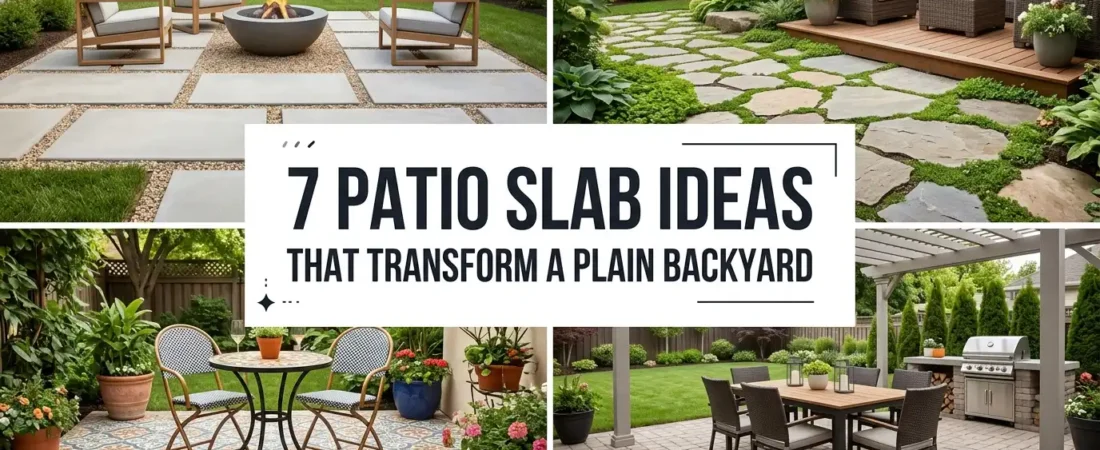
Most people spend weeks choosing patio furniture and about ten minutes choosing the slab underneath it. I think that is completely backwards. The slab is what you see every single day whether you are sitting outside or just glancing through the back door.
These patio slab ideas cover the materials and patterns that genuinely work in real American backyards, with honest notes on cost, durability, and what I would actually choose at different budget levels.
Table of Contents
Before You Choose a Patio Slab Material
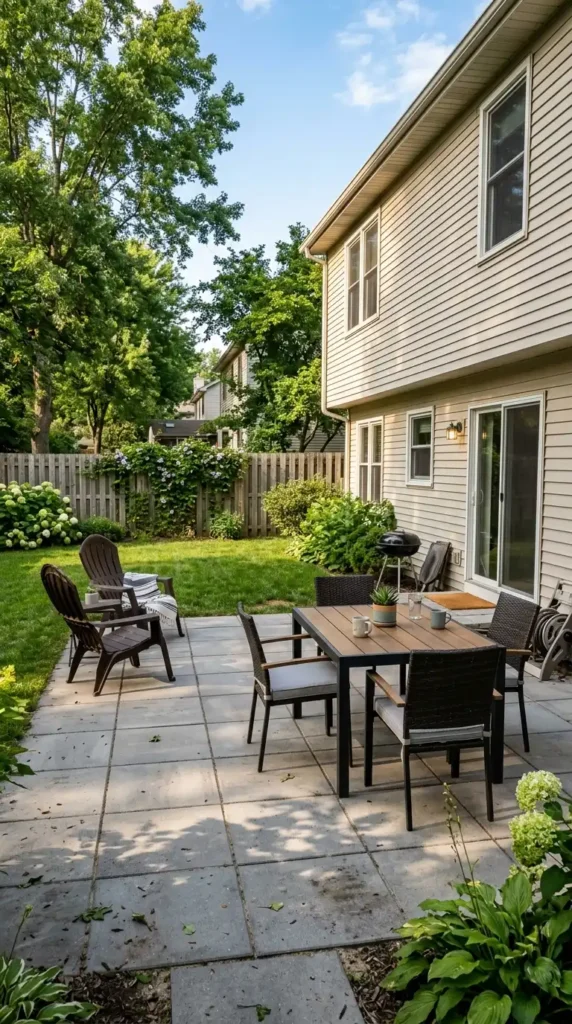
Two questions matter most before picking any material. First, what climate are you in? Freeze-thaw states like Minnesota, Ohio, and New York need dense non-porous materials. Porous stones crack when water freezes inside them.
Second, what is your realistic budget per square foot installed? Materials are only half the cost. Labor typically doubles the material price. A $5 per square foot paver becomes $12 to $15 installed.
I always tell people to spend more on the base preparation than they planned to. A properly compacted gravel and sand base is what separates a patio that lasts twenty years from one that starts shifting in year three.
1. Large Format Concrete Pavers for a Clean Modern Look
✦ Best for: contemporary homes on a mid-range budget who want minimal visible joints
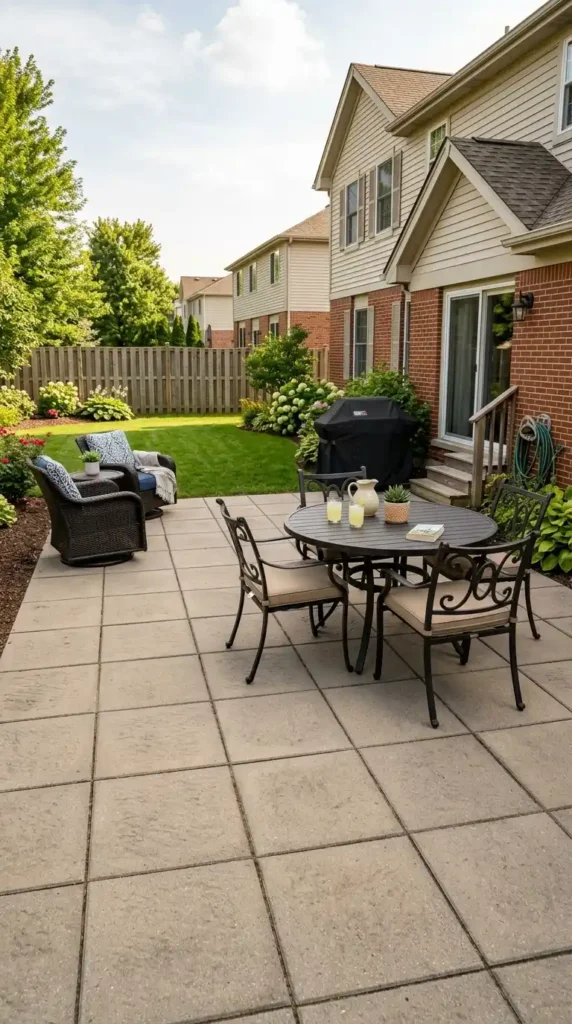
I recommend large format pavers to almost everyone who asks me. A 24 by 24 inch slab has fewer joints than a 12 by 12 inch one and fewer joints means the surface reads as one continuous material rather than a grid.
Warm light gray is the color that ages best. It hides dirt, suits most furniture colors, and does not look dated in five years the way trendy charcoal tones sometimes do.
One thing I want to flag: large format pavers need a perfectly level base or they rock and crack at the corners. This is not a DIY-friendly installation unless you have done it before.
2. Flagstone for a Natural Organic Patio That Looks Timeless
✦ Best for: cottage, farmhouse, and traditional homes where irregular natural stone fits the aesthetic
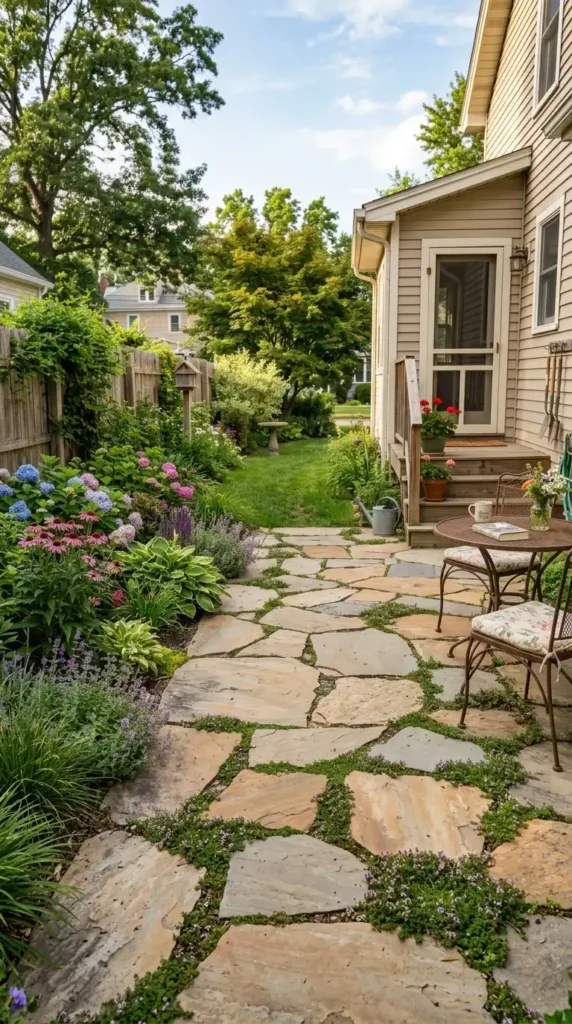
Flagstone is the material I personally find most beautiful for a residential patio. The irregular edges and natural color variation give it something manufactured pavers simply cannot replicate.
The joint width is the design decision that matters most here. Tight half-inch joints filled with sand mortar look formal and structured. Wider two-inch joints filled with creeping thyme or decomposed granite look relaxed and garden-like.
Specify 1.5 to 2 inch thickness minimum. I have seen thinner flagstone crack under chair legs within a season. It is worth paying for the extra thickness.
3. Brick Pavers for Classic American Patio Character
✦ Best for: traditional colonial, craftsman, and ranch homes where brick matches existing architectural details
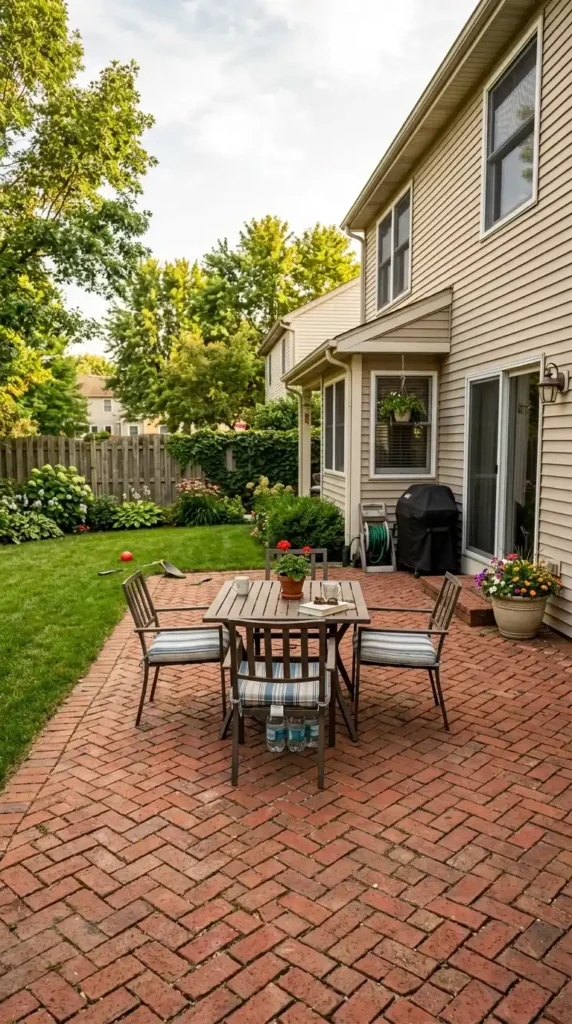
I love brick for traditional homes because it looks like it was always meant to be there. On a colonial or craftsman style house a brick patio connects visually to the existing architecture in a way that concrete pavers rarely do.
Herringbone is the laying pattern I recommend most. It is visually interesting and structurally stronger than a running bond because the interlocking angles distribute load evenly.
One critical note: only use pavers rated SW for severe weathering in cold climates. Regular building bricks are not made for ground contact and will spall and crumble within a few winters.
4. Stamped Concrete for a Budget Friendly Decorative Patio
✦ Best for: larger patios where natural stone costs too much and a decorative poured surface makes financial sense
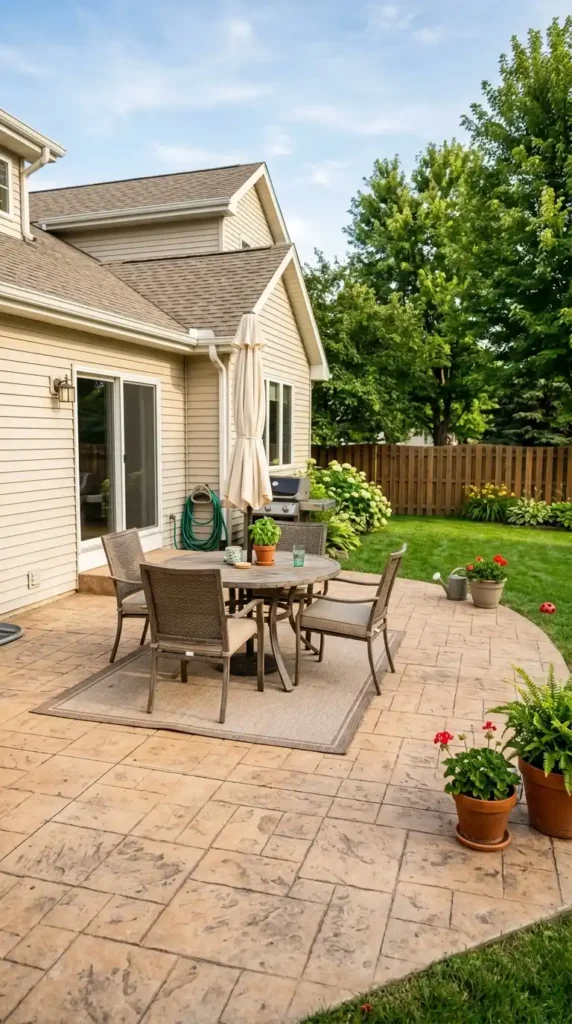
Stamped concrete costs $8 to $18 per square foot installed. That is significantly less than natural stone at $20 to $35. On a 300 square foot patio that difference is $3,000 to $5,000 in your pocket.
I recommend the large slate or ashlar cut stone patterns because they look the most realistic. Avoid wood plank and ornate medallion stamps. They look dated quickly and are harder to sell a home with.
Plan to reseal every two to three years. It is not a huge job but it is ongoing. Factor that into your decision if low maintenance is a priority for you.
5. Travertine Pavers for a Warm Upscale Feel in Warm Climates
✦ Best for: Florida, Texas, Arizona, and Gulf Coast states where travertine stays cool underfoot and looks genuinely luxurious
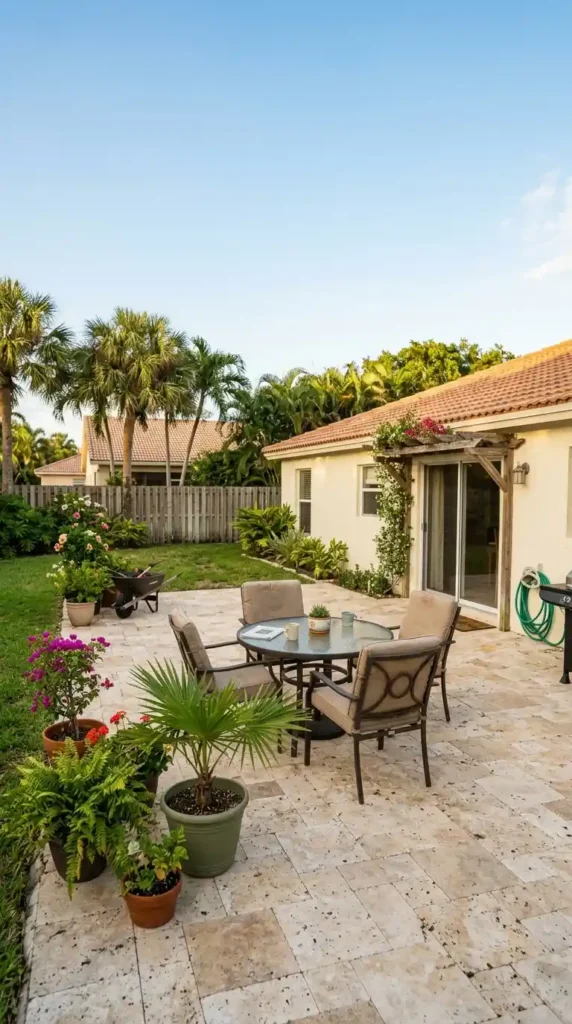
I grew up seeing travertine on pool decks in the South and it genuinely looks elegant without trying too hard. The cream and ivory tones absorb less heat than concrete or dark stone which matters a lot in a Texas or Florida summer.
Choose filled and honed travertine for a patio. The unfilled version has natural holes that trap dirt and debris outdoors. Honed means smooth rather than polished which is safer and less slippery when wet.
Do not use travertine in cold climates. I cannot stress this enough. The porosity that makes it beautiful in warm states makes it crack in freeze-thaw conditions.
6. Outdoor Porcelain Slabs for Zero Maintenance and Maximum Durability
✦ Best for: busy households who want a beautiful patio they never have to seal, treat, or worry about
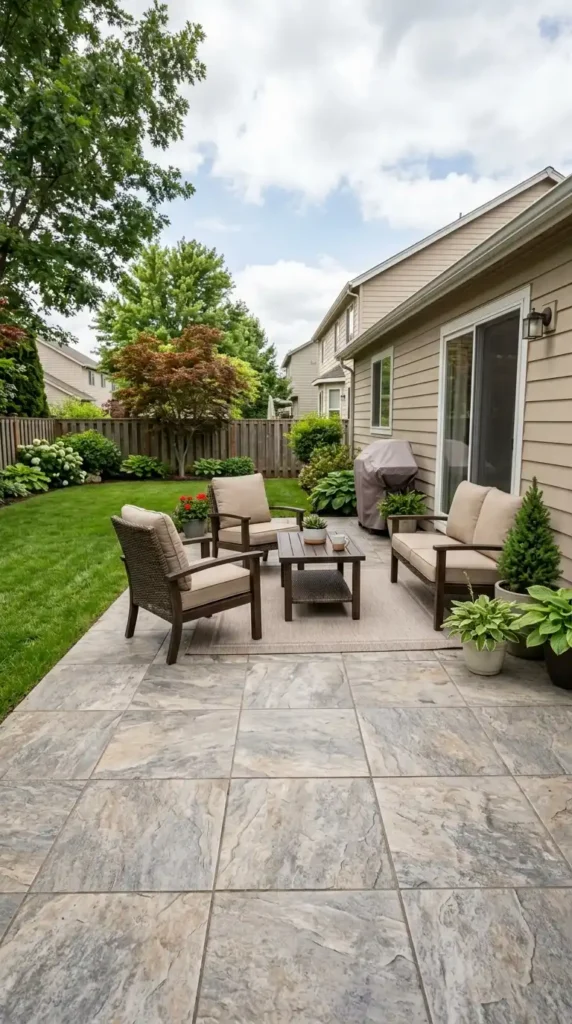
Outdoor porcelain is the material I recommend for people who want beautiful and done. No sealing. No staining. No maintenance. Modern porcelain in large format sizes looks so similar to natural stone that most visitors cannot tell the difference.
Specify 20mm thickness minimum for ground level installation. I have seen thinner porcelain used outdoors and it cracks under heavy planters and chair legs. The 20mm spec is non-negotiable.
The cost is real. Quality outdoor porcelain runs $15 to $30 per square foot in materials. On a 200 square foot patio you are looking at $3,000 to $6,000 before installation. For a long-term homeowner who hates maintenance I think it is worth every cent.
7. Mixed Material Patios for the Most Visual Interest
✦ Best for: homeowners who want a more designed look than a single material provides
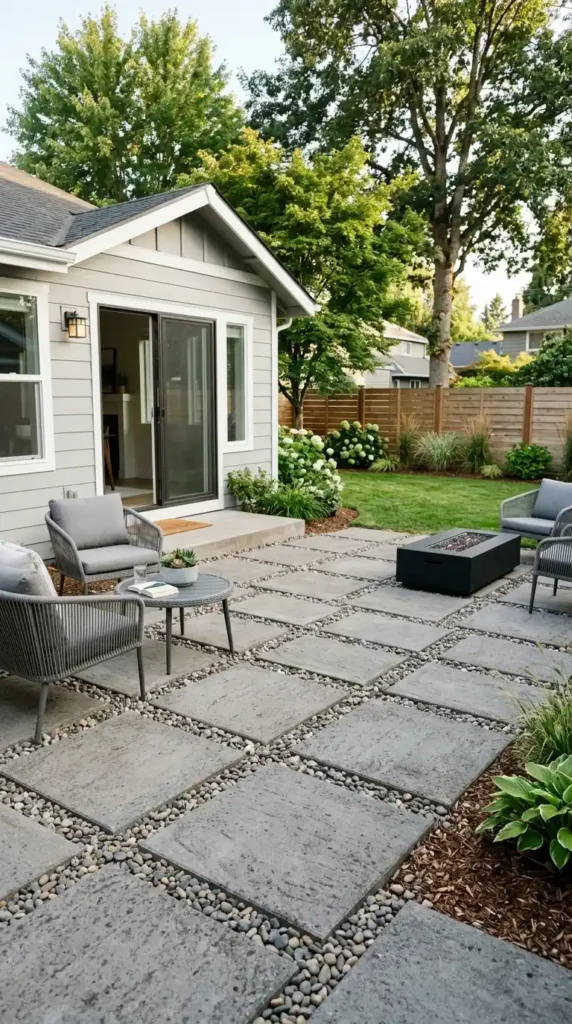
My favorite combination for a modern American backyard: large concrete pavers spaced two to three inches apart with pea gravel filling the gaps. It looks more expensive than a fully paved surface, costs less per square foot, and drains better.
A brick border around a gravel or concrete center is the traditional American version of this idea. The border defines the space cleanly without the cost of paving everything in brick.
The rule I follow with mixed materials: keep both materials in the same color temperature. Warm concrete with warm gravel. Cool gray stone with dark gray decomposed granite. Mixing warm and cool reads as unfinished rather than designed.
Frequently Asked Questions
What is the cheapest patio slab option?
Standard concrete pavers at $2 to $5 per square foot in materials are the most affordable. Poured concrete runs $6 to $10 installed and stamped concrete $8 to $18. According to the American Society of Landscape Architects, concrete pavers are the most specified residential patio material in the US because they balance cost, durability, and design flexibility better than any other option.
What patio slabs work best in cold climates?
Stick to dense non-porous materials: concrete pavers rated ASTM C936, bluestone flagstone, outdoor porcelain at 20mm, and SW-rated brick. Avoid travertine and most sandstones. They absorb water, which freezes and cracks the stone.
How thick should patio slabs be?
Concrete pavers need to be at least 2.375 inches thick. Natural flagstone 1.5 to 2 inches minimum. Outdoor porcelain 20mm for ground level. Thinner materials crack under furniture legs and temperature changes.
Do patio slabs need a concrete base?
Not always. Most residential patios use a compacted gravel base with a sand setting bed on top. A poured concrete base is needed for large format slabs over 24 by 24 inches and for mortar-set installations. Skipping proper base preparation is the number one cause of patio slab failure.
Which Patio Slab Should You Choose?
If I had to pick one material for most American backyards it would be large format concrete pavers in a warm gray. They are durable, look genuinely good, work in every climate, and cost less than natural stone.
If budget is tight, stamped concrete gives you the most decorative impact per dollar. If you are in a warm southern state and want something that truly impresses, travertine is hard to beat.
Whatever you choose, invest properly in the base. I have seen beautiful slabs on poor bases fail in three years and basic pavers on excellent bases look perfect after fifteen. The foundation matters more than the material sitting on top of it.
More Patio and Outdoor Ideas
→ Rectangle Patio Layout Ideas That Make the Most of Your Space
→ Patio Roofing Ideas That Keep You Outside Longer
→ Create a Herb Spiral Garden That Saves Space and Looks Beautiful
→ River Rock Landscaping – 7 Simple Ideas for a Beautiful Yard
Spend more on the base than you planned. Every extra dollar in preparation saves three dollars in repairs later.

Sheikh Hassaan is a digital architect for small businesses and the founder of The Glow Up System. He writes about home decor, garden design, and outdoor living for real American homes – practical ideas that work in actual spaces without oversized budgets.