
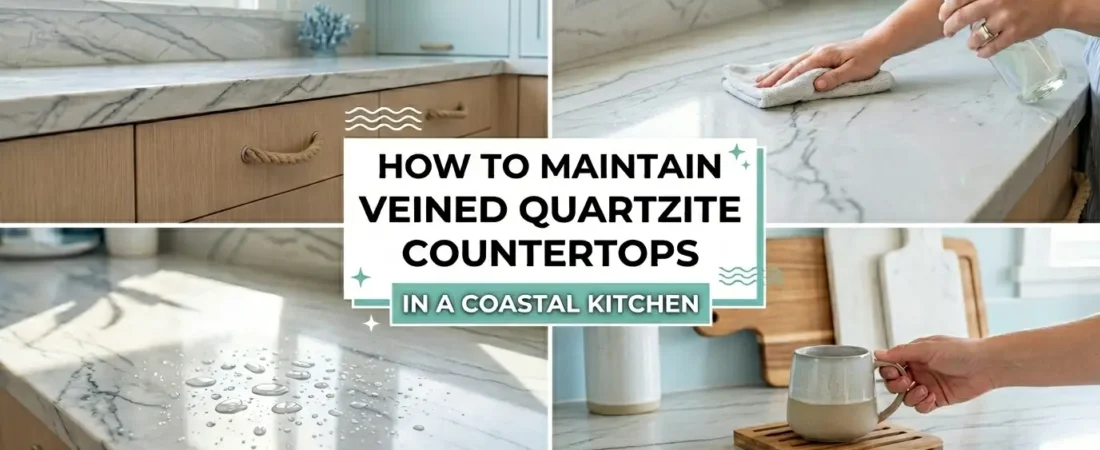
Maintaining veined quartzite countertops in a coastal kitchen requires understanding what quartzite actually is — not quartz, which is engineered and nearly maintenance-free, but quartzite, which is a natural metamorphic stone that is harder than granite but shares marble’s need for proper sealing and careful acid management. In a coastal kitchen where salt air, citrus, and seafood preparation are daily realities this distinction matters enormously.
This guide covers the complete quartzite countertop maintenance routine for a coastal kitchen — from understanding the stone’s specific properties through daily care, sealing schedules, stain removal, and the long-term maintenance habits that keep veined quartzite looking genuinely beautiful for decades.
Table of Contents
What Quartzite Is and Why It Behaves Differently From Quartz
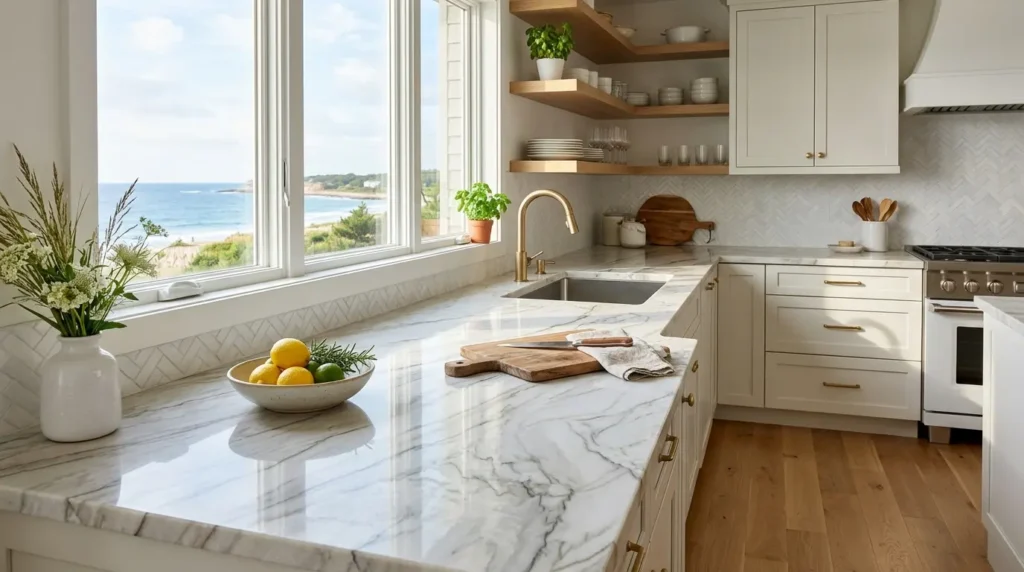
Quartzite countertops are natural stone — formed when sandstone undergoes intense heat and pressure metamorphosis that converts the quartz grains into an interlocking crystalline structure harder than granite. The veining in quartzite comes from mineral deposits laid down during the original sandstone formation and the subsequent metamorphic process — each slab is entirely unique and the veining pattern cannot be replicated by any engineered material.
The critical distinction that affects maintenance: quartzite is porous. Unlike engineered quartz which is non-porous and requires almost no maintenance, natural quartzite absorbs liquids through its crystalline structure if not properly sealed. In a coastal kitchen where acidic ingredients — citrus, vinegar, seafood brine — are used regularly the porosity of unsealed quartzite makes it vulnerable to etching and staining.
The Mohs hardness of quartzite is 7 to 8 — harder than marble at 3 to 4 and equal to or harder than granite at 6 to 7. This hardness makes quartzite highly scratch and heat resistant. The porosity, not the hardness, is what requires management in a coastal kitchen maintenance routine.
The Specific Risks Quartzite Faces in a Coastal Kitchen
Salt air humidity
Coastal kitchens experience higher ambient humidity from salt air than inland kitchens. Persistent humidity on an unsealed or poorly sealed quartzite surface can cause moisture to work into the stone’s pore structure over time creating the dull milky appearance called moisture hazing. Proper sealing prevents moisture penetration and proper ventilation reduces the ambient humidity that promotes hazing.
Citrus and acidic ingredients
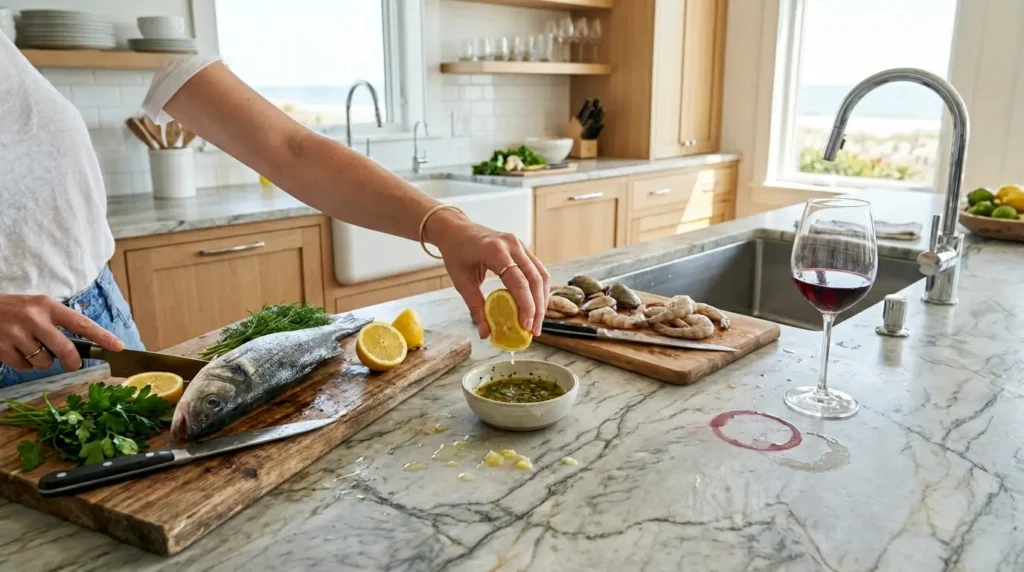
Lemon juice, lime juice, vinegar, and tomato are all acidic and all capable of etching natural stone surfaces. Etching is a chemical reaction between acid and the calcium carbonate component sometimes present in quartzite — it leaves a dull mark that is structurally different from a stain. True quartzite with high silica content is more acid-resistant than calcite-bearing quartzite varieties. Ask your stone supplier the calcium carbonate content of your specific slab — anything above 5% calcium carbonate requires more careful acid management.
Seafood preparation
Fish and seafood preparation introduces brine, blood, and iodine compounds to the countertop surface. These compounds can stain unsealed quartzite and the salt component in brine can be mildly abrasive to stone surfaces over time. A dedicated preparation board kept between the stone surface and any direct seafood preparation eliminates this risk entirely.
Wine and oil
Red wine and cooking oils are the two most common quartzite staining agents in any kitchen. Red wine contains tannins and pigments that penetrate porous stone within minutes of contact. Cooking oil left on the surface absorbs into the stone and creates the dark oil-shadow stain that is the most difficult to remove from quartzite. Both are prevented entirely by proper sealing and cleaned immediately if they occur.
Sealing Quartzite Countertops — The Most Important Maintenance Decision
How Often to Seal Quartzite in a Coastal Kitchen
Standard quartzite sealing recommendation is annually. In a coastal kitchen the recommendation is every 6 to 8 months because the higher ambient humidity and more frequent contact with acidic coastal kitchen ingredients accelerates sealer breakdown. The water test determines when resealing is needed regardless of the calendar: pour a tablespoon of water onto the counter and wait 15 minutes. If the water beads the seal is intact. If the water absorbs into the stone creating a dark wet mark the seal has failed and resealing is required immediately.
Choosing the Right Sealer
Not all stone sealers suit quartzite. The correct sealer for quartzite countertops in a coastal kitchen:
Penetrating or impregnating sealer:
This type of sealer penetrates into the stone’s pore structure and bonds within it rather than sitting on the surface. Penetrating sealers do not change the appearance of the stone — they do not add shine or alter the surface finish. This is the correct sealer type for quartzite because it protects without altering the natural stone character.
Fluorocarbon or silicone-based sealer:
Fluorocarbon sealers provide superior protection against both water-based and oil-based stains compared to silicone-only sealers. In a coastal kitchen where cooking oils are a regular staining risk a fluorocarbon impregnating sealer provides the most comprehensive protection.
Avoid topical or coating sealers:
Topical sealers sit on the stone surface and can peel, scratch, and build up over multiple applications creating a plastic-looking surface that obscures the natural stone beauty. They are not recommended for quartzite countertops in any kitchen environment.
Step-by-Step Sealing Process
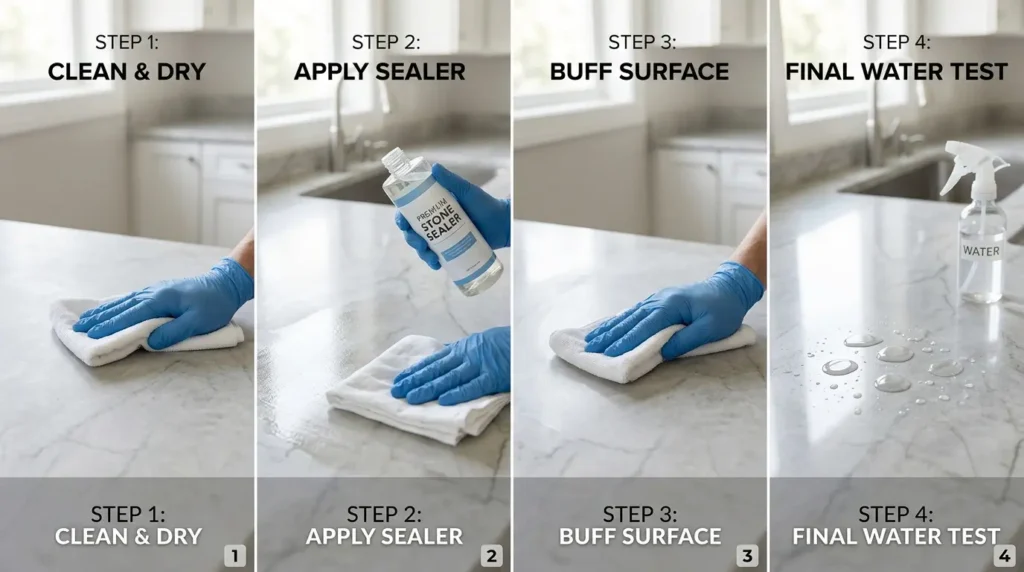
Step 1: Clean and dry the surface completely
Clean the entire countertop with a pH-neutral stone cleaner and allow to dry completely for a minimum of 24 hours before sealing. Any moisture in the stone when the sealer is applied prevents full penetration and creates uneven sealing. In a coastal kitchen with higher ambient humidity allow 48 hours drying time before sealing to ensure complete moisture removal from the stone.
Step 2: Apply the first sealer coat
Apply the penetrating sealer liberally to a section of the countertop using a clean lint-free cloth. Work in sections of approximately 60cm square. Keep the surface wet with sealer for the full penetration time specified by the manufacturer — typically 15 to 30 minutes. Do not allow the sealer to dry on the surface before buffing.
Step 3: Buff and apply second coat
Buff the sealer thoroughly with a clean cloth before it dries. Apply a second coat immediately after buffing the first — two coat sealing provides significantly better protection than one coat alone. Allow the second coat to penetrate and buff thoroughly. Allow 24 hours before using the countertop.
Step 4: Perform the water test after 24 hours
After 24 hours perform the water bead test on the freshly sealed surface. Water should bead immediately and completely on a properly sealed quartzite surface. If absorption still occurs in any area apply a third sealer coat to that specific zone.
Daily Care Routine for Quartzite in a Coastal Kitchen
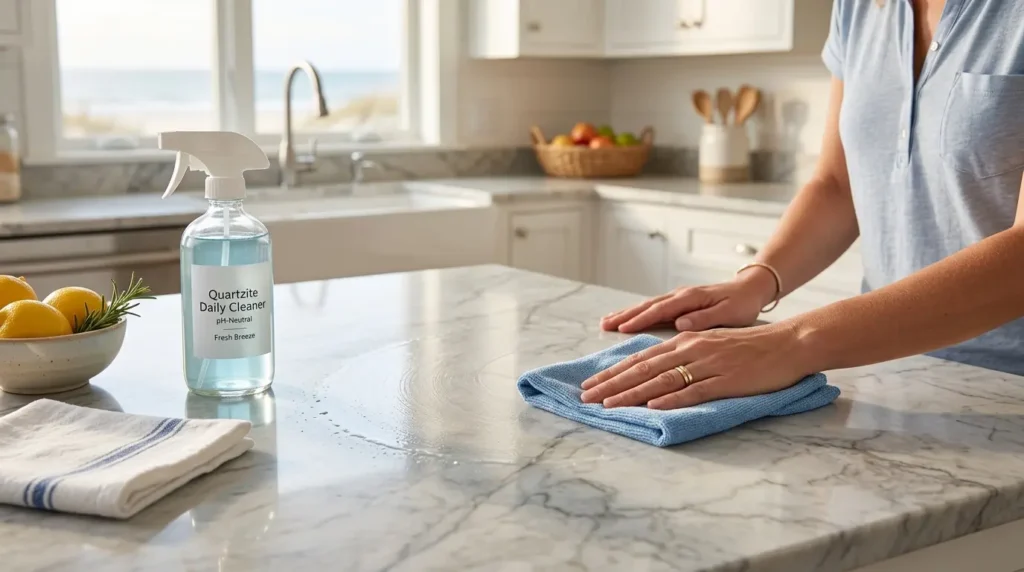
What to Use for Daily Cleaning
Use:
pH-neutral stone cleaner diluted to manufacturer specification. Warm water and a few drops of mild dish soap for routine cleaning. A soft microfiber cloth for wiping — never abrasive cloths or scouring pads. These three are the complete daily cleaning toolkit for quartzite countertops.
Never use:
Vinegar or any acid-based cleaner — acids etch natural stone. Bleach or ammonia-based cleaners — these break down the stone sealer. Citrus-based cleaning sprays — the citric acid etches stone. Bathroom or kitchen spray cleaners not specifically labeled safe for natural stone. Any abrasive cleaning pad, steel wool, or scouring cream.
The Immediate Response Rule
Any liquid spilled on quartzite must be blotted, not wiped, immediately. Wiping spreads the spill and increases the surface area in contact with the stone. Blotting lifts the liquid from the surface. Apply this immediate response to every spill including water in a coastal kitchen — the higher ambient humidity means any additional moisture source compounds the risk of moisture penetration.
Stain Removal from Quartzite Countertops
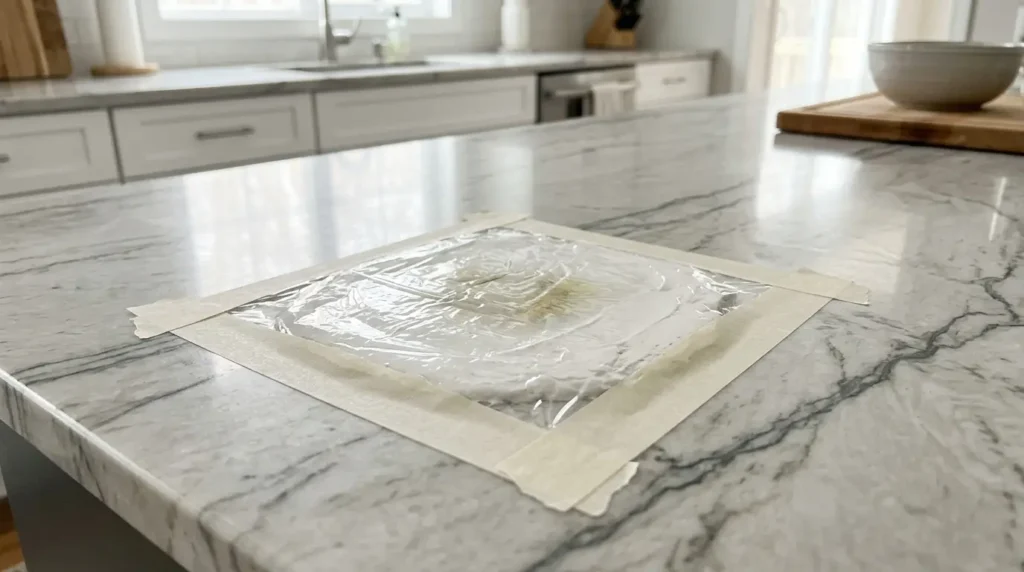
The Poultice Method for Deep Stains
A poultice is the professional technique for removing deep stains from natural stone — it works by drawing the staining substance back out of the stone’s pore structure through capillary action. Making a poultice: mix baking soda and hydrogen peroxide (3% concentration) into a thick paste. Apply the paste over the stained area to a depth of approximately 5mm. Cover with plastic wrap and tape the edges to seal. Leave for 24 to 48 hours. Remove the dried poultice and rinse thoroughly. Repeat if the stain is still visible.
Different stain types require different poultice agents: oil-based stains (cooking oil, grease) use baking soda and acetone. Organic stains (wine, coffee, tea) use baking soda and hydrogen peroxide. Biological stains (fish, seafood) use baking soda and hydrogen peroxide. Always test the poultice on an inconspicuous area before applying to a visible stain.
Etching vs Staining – Understanding the Difference
A stain is a discoloration caused by a substance penetrating the stone — it can often be removed with a poultice. An etch is surface damage caused by acid contact — it creates a dull mark by dissolving a tiny amount of the stone surface and cannot be removed by cleaning. Etching on quartzite with a high silica content is less common than on marble but still possible with prolonged acid contact. Light etching can be polished out with a stone-specific polishing powder. Deep etching requires professional stone refinishing.
Long-Term Maintenance Habits for a Coastal Kitchen

Always use cutting boards
Even though quartzite is harder than most knives it is still vulnerable to microscopic scratching from repeated knife contact over years. More importantly cutting boards keep acidic food juices — citrus, tomato, vinegar dressings — away from the stone surface entirely. In a coastal kitchen where seafood preparation involves brine and acidic marinades the cutting board habit is the single most protective daily practice.
Always use trivets and heat pads
Although quartzite is highly heat resistant sudden thermal shock — a very hot pan placed on a cold stone surface — can cause micro-fracturing in the stone surface over time. Trivets eliminate the thermal shock risk and protect the stone sealer from heat-related breakdown in the immediate pan contact area.
Improve kitchen ventilation in a coastal setting
Salt air humidity is the background risk factor that inland kitchen quartzite does not face. A quality range hood that exhausts cooking steam and humidity to the exterior reduces the ambient moisture level that promotes moisture hazing over time. Running the range hood during all cooking — not just when there is visible steam — keeps the kitchen air drier and the quartzite surface conditions more stable.
Professional polishing every 3 to 5 years
Even with perfect daily maintenance and regular sealing quartzite countertops benefit from professional stone polishing every 3 to 5 years in a heavily used coastal kitchen. Professional polishing removes the micro-scratches and surface dulling that accumulate over years of use and restores the depth and clarity of the veining that makes quartzite so beautiful. The cost of professional polishing — typically $200 to $400 for a standard kitchen — is significantly less than any other countertop restoration or replacement cost.
📌 More coastal kitchen and home decor ideas: Best Coastal Cottage Kitchen Color Schemes Compared
Frequently Asked Questions
Is quartzite good for kitchen countertops?
Quartzite is an excellent kitchen countertop material — it is harder than granite, highly heat resistant, and produces the most beautiful natural veining available in any stone countertop. Its one significant requirement is proper sealing because its natural porosity makes it vulnerable to staining from cooking oils, wine, and acidic ingredients if left unsealed. With a proper sealing schedule of every 6 to 8 months in a coastal kitchen and careful daily cleaning quartzite countertops are genuinely low-maintenance while providing unmatched natural beauty. According to the Natural Stone Institute quartzite is increasingly specified by designers for coastal kitchens specifically because its heat resistance and hardness suit the demands of serious cooking environments.
How do you clean quartzite countertops daily?
Clean quartzite countertops daily with a pH-neutral stone cleaner or warm water with a few drops of mild dish soap applied with a soft microfiber cloth. Wipe in gentle circular motions and dry with a clean cloth — never leave standing water on quartzite. Never use vinegar, bleach, ammonia, citrus-based sprays, or any abrasive cleaning tool on quartzite. Blot spills immediately rather than wiping to prevent spreading the spilled substance across more stone surface.
How often should quartzite countertops be sealed?
Standard quartzite countertops should be sealed annually. In a coastal kitchen the sealing frequency increases to every 6 to 8 months because higher ambient humidity, salt air, and more frequent contact with acidic coastal kitchen ingredients accelerates sealer breakdown. The water bead test determines when sealing is needed regardless of the calendar — pour a tablespoon of water on the surface and if it absorbs rather than beads the seal has failed and resealing is needed immediately.
What is the difference between quartzite and quartz countertops?
Quartzite is a natural metamorphic stone formed from sandstone under intense heat and pressure — it is mined from the earth, cut into slabs, and installed. Each slab is unique. Quartzite is porous and requires sealing but is extremely hard and heat resistant. Quartz is an engineered composite material — approximately 90 to 95% ground quartz crystals bound with polymer resins. It is non-porous, requires no sealing, and is available in consistent colors and patterns but is not natural stone. Quartzite produces the most beautiful natural veining. Quartz produces the most consistent appearance and the lowest maintenance requirement.
More Coastal Kitchen and Home Decor Ideas
→ How To Design a Small Coastal Kitchen
→ How To Decorate a Coastal Living Room on a Budget
→ 10 Modern Coastal Living Room Ideas
Seal it correctly twice a year and use cutting boards and trivets consistently. Those two habits alone protect quartzite countertops through decades of coastal kitchen use — everything else is a secondary measure.

Sheikh Hassaan is a digital architect for small businesses and the founder of The Glow Up System. He writes about home decor, garden design, and outdoor living for real American homes – practical ideas that work in actual spaces without oversized budgets.