
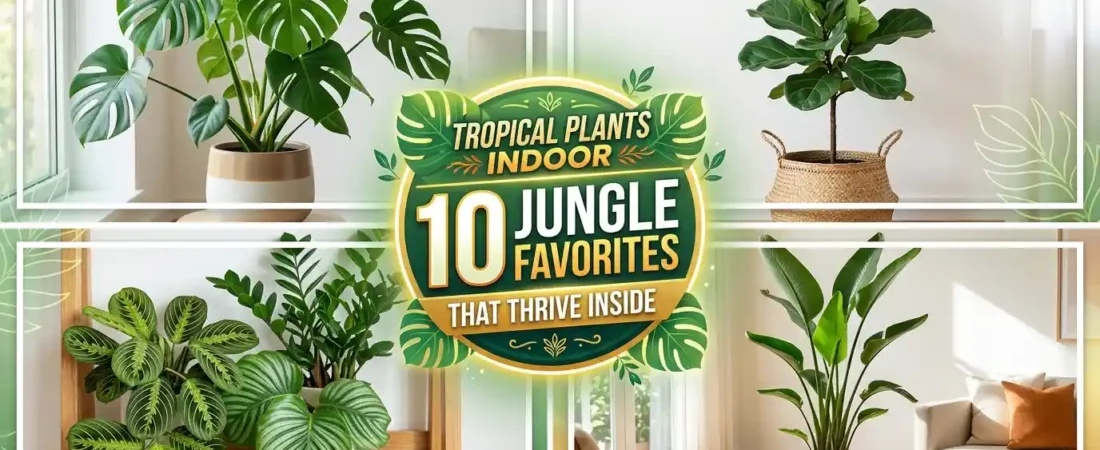
There is something magical about walking into a room filled with lush, oversized leaves that seem to transport you to a warm, exotic paradise. The good news is that you do not need a greenhouse or a tropical climate to grow these stunning plants. Many tropical plants adapt beautifully to indoor environments, adding a vibrant, lush feel to any home. From the iconic Monstera to the architectural Bird of Paradise, this guide covers ten tropical plants that will transform your indoor space into a green sanctuary.
Table of Contents
What Makes a Plant “Tropical” and Why Do They Thrive Indoors?
Tropical plants are native to warm, humid regions near the equator. They are adapted to consistent temperatures and high humidity. While our homes are generally drier and cooler than a rainforest, many tropical plants have proven to be adaptable houseplants. They bring a sense of drama, life, and exotic beauty that is unmatched. The key is to choose the right plants and provide them with the care they need.
1. Monstera Deliciosa: The Swiss Cheese Plant
✦ Best for: Making a bold statement in any room with its large, split leaves
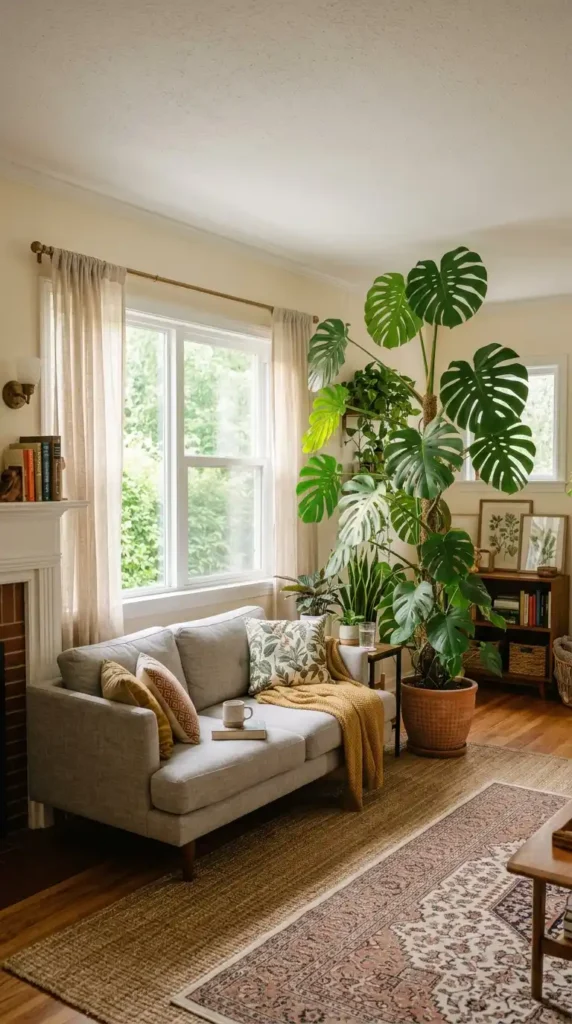
The Monstera deliciosa is perhaps the most recognizable tropical houseplant. Its large, glossy leaves develop characteristic holes and splits as they mature, giving it a unique and artistic appearance. It is a fast grower and can become a stunning focal point in any room.
Care Level: Beginner. Prefers bright, indirect light but tolerates some shade. Water when the top inch of soil feels dry. It likes humidity but adapts well to average household levels.
2. Fiddle Leaf Fig: The Dramatic Statement
✦ Best for: Bright rooms with high ceilings where you want a dramatic, sculptural focal point
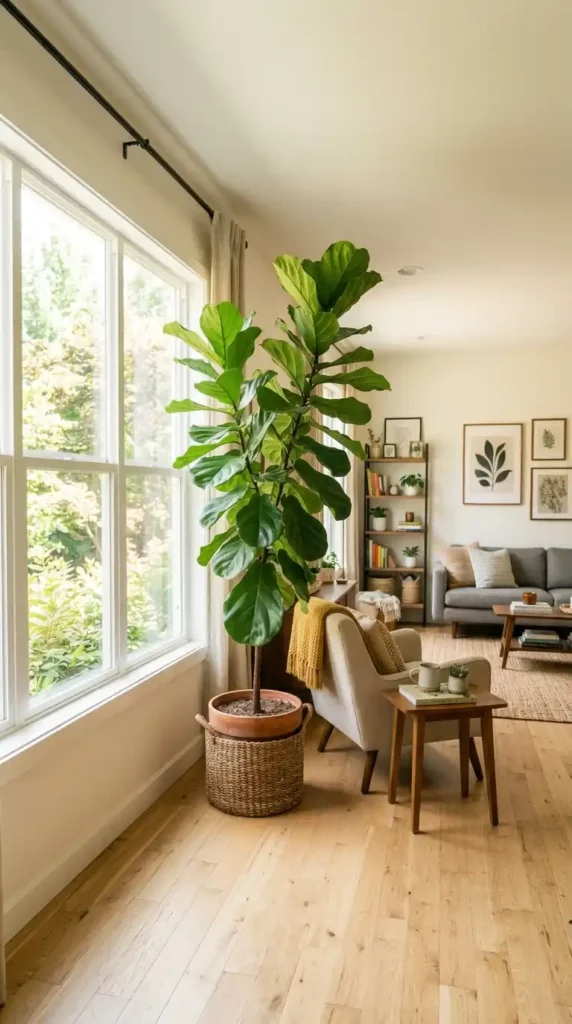
The fiddle leaf fig has become a modern design icon. Its large, glossy, violin-shaped leaves make a dramatic statement, instantly elevating any space. It has a sculptural quality that is unmatched.
Care Level: Intermediate. It thrives in bright, indirect light and prefers consistent moisture. It is sensitive to overwatering and changes in its environment.
3. Bird of Paradise: The Architectural Beauty
✦ Best for: Adding height and a touch of the exotic to bright, spacious rooms
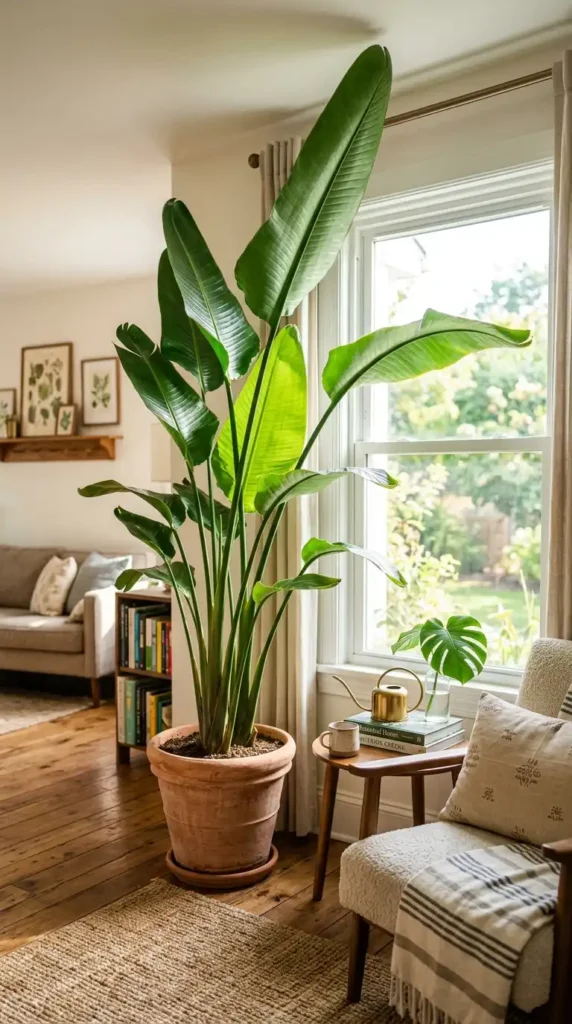
The Bird of Paradise is a stunning plant with large, banana-like leaves that add a bold, architectural element to a room. Outdoors it produces its iconic bird-like flowers, but indoors it is grown primarily for its impressive foliage.
Care Level: Intermediate. Needs bright, direct light. Water when the soil is dry to the touch. It needs room to grow, making it ideal for larger spaces.
4. Areca Palm: The Elegant Humidifier
✦ Best for: Adding a tropical feel and increasing humidity in bright, spacious rooms
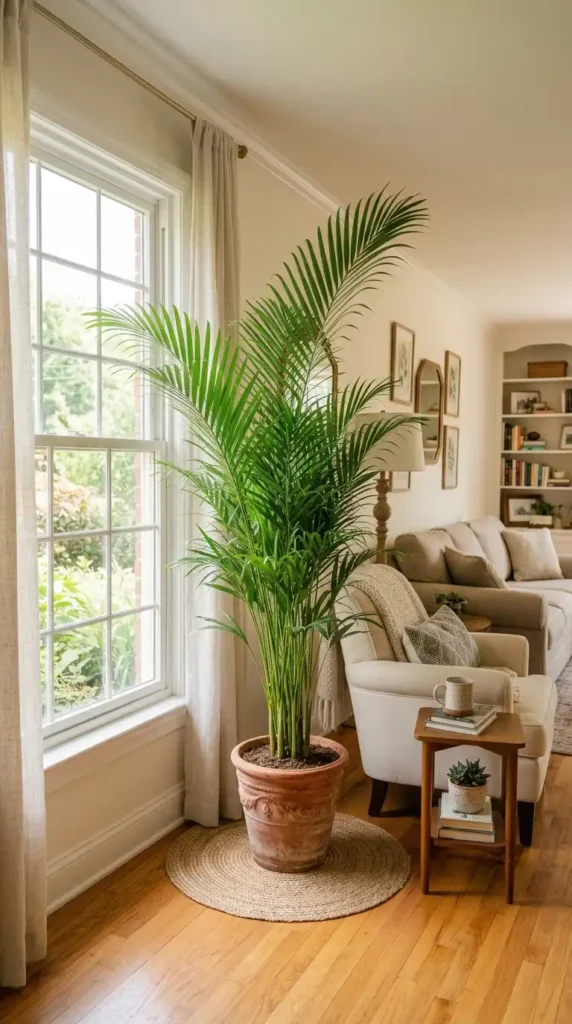
The areca palm, also known as the butterfly palm, is a classic tropical houseplant. Its feathery, arching fronds add a soft, elegant touch to any room. It is also one of the best natural humidifiers, adding moisture to dry indoor air.
Care Level: Intermediate. Prefers bright, indirect light. Water when the top inch of soil feels dry. It likes humidity and consistent moisture.
5. Monstera Adansonii: The Swiss Cheese Vine
✦ Best for: Hanging baskets, climbing trellises, and adding delicate, holey foliage
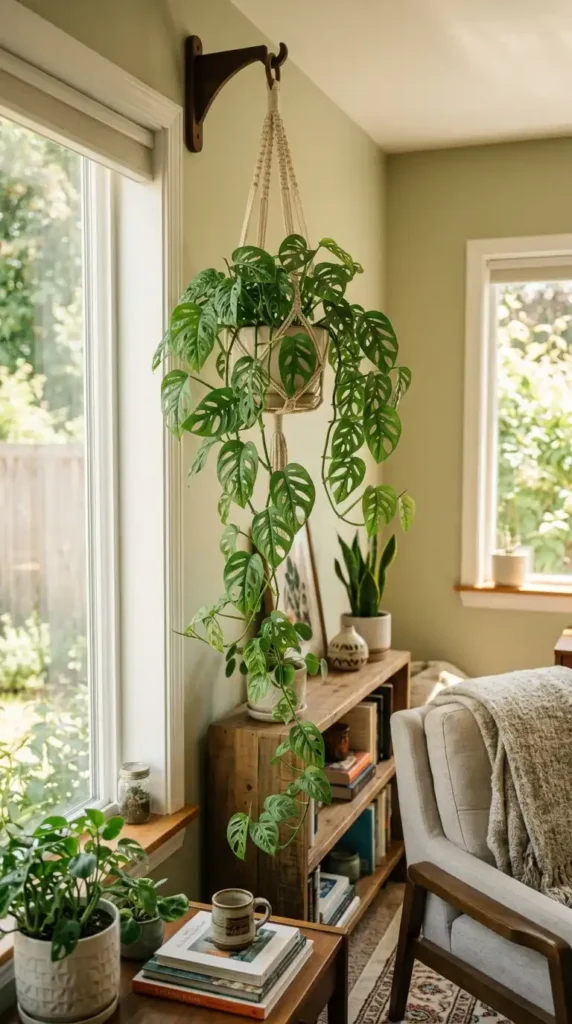
Often called the Swiss cheese vine, the Monstera adansonii is a smaller, more delicate relative of the Monstera deliciosa. Its leaves are covered in distinctive holes and splits, making it a fascinating and beautiful plant. It has a trailing or climbing habit.
Care Level: Beginner. Prefers bright, indirect light but tolerates lower light. Water when the top inch of soil feels dry. It is a fast grower and easy to propagate.
6. Strelitzia Nicolai: The White Bird of Paradise
✦ Best for: Making a grand statement in large rooms with high ceilings
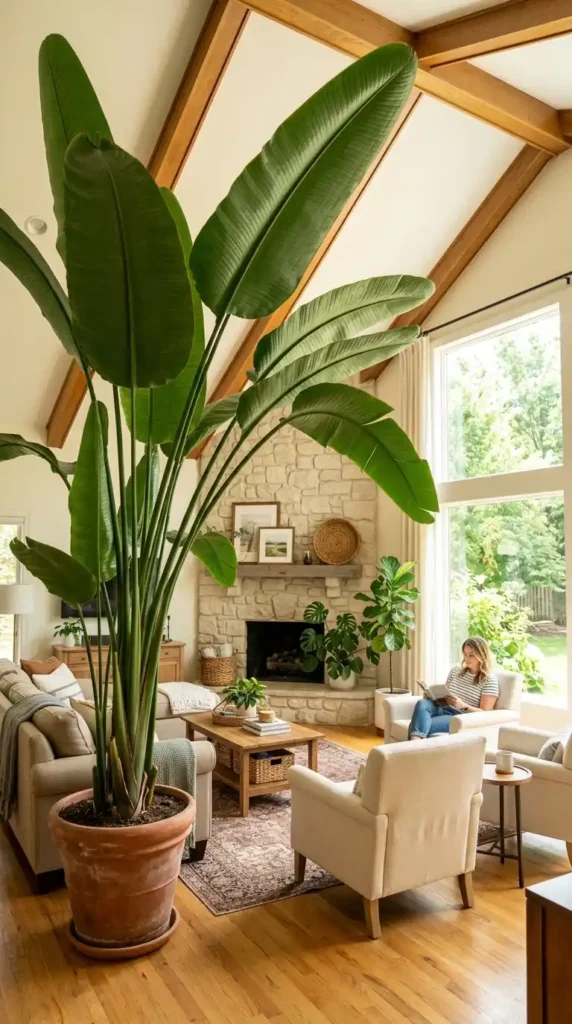
The Strelitzia nicolai, or white bird of paradise, is the larger cousin of the more common bird of paradise. It can grow to be an impressive size indoors, with its giant banana-like leaves making a bold statement. It is perfect for filling a large empty corner.
Care Level: Intermediate to Advanced. Needs bright, direct light. It requires a lot of space and a large pot.
7. Rubber Plant: The Glossy Showstopper
✦ Best for: Bright rooms where you want a plant with large, glossy leaves and a tree-like appearance
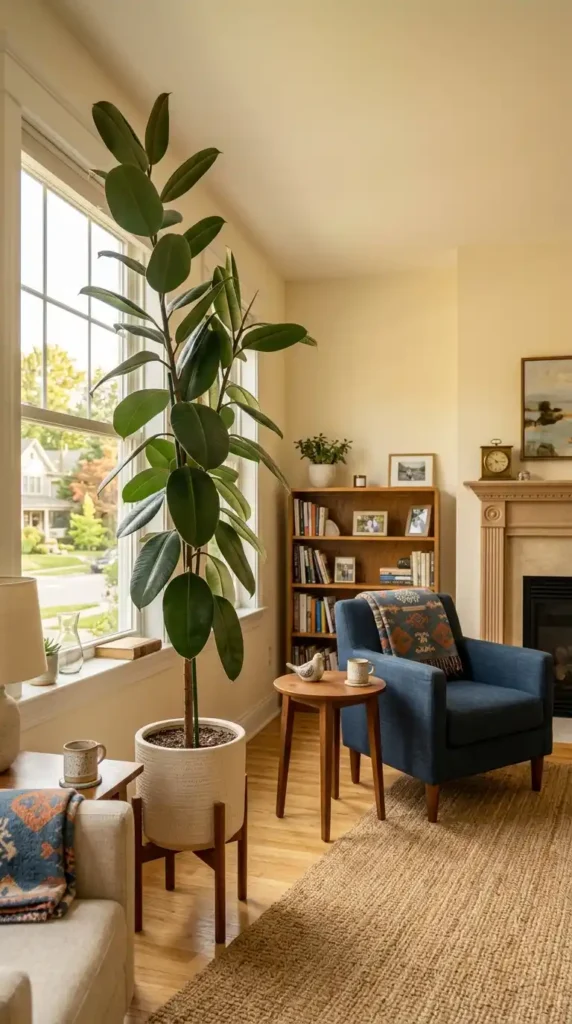
Rubber plants are popular for their large, glossy, dark green leaves that make a bold statement. They have a tree-like appearance and can grow up to 8 feet tall indoors. They are relatively easy to care for and add a touch of sophistication to any room.
Care Level: Beginner. Prefers bright, indirect light but tolerates medium light. Water when the top inch of soil feels dry. Dust leaves regularly to keep them glossy.
8. Alocasia: The Jewel Elephant Ear
✦ Best for: Collectors and those who love unique, striking foliage with a metallic sheen
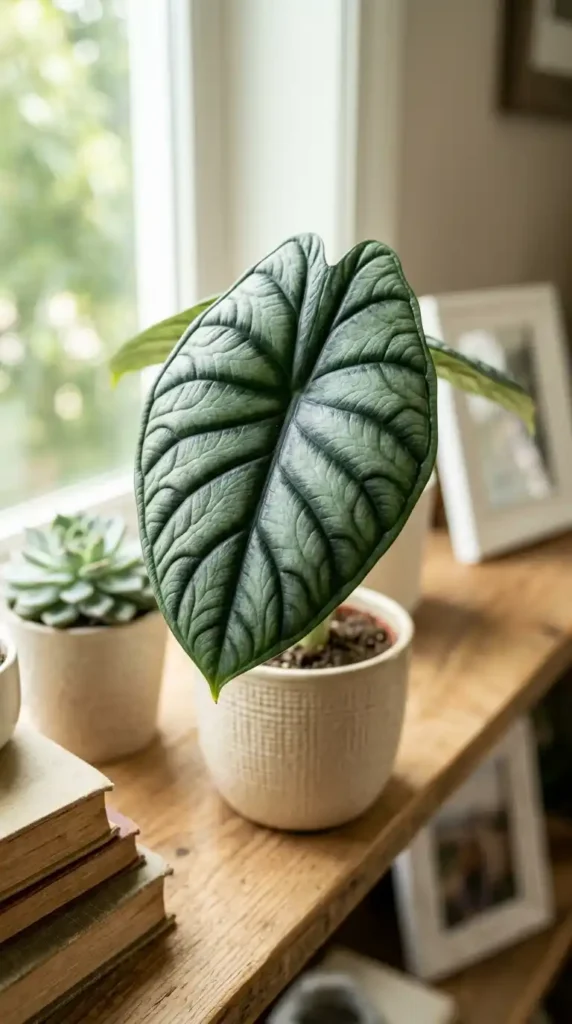
Jewel Alocasias are a group of tropical plants prized for their stunning, often metallic-looking leaves. They have become highly sought after by collectors. Varieties like the Alocasia dragon scale and Alocasia silver dragon are true showstoppers.
Care Level: Intermediate. They need bright, indirect light and high humidity. They prefer consistently moist soil but are sensitive to overwatering.
9. Dracaena Marginata: The Architectural Statement
✦ Best for: Adding height and architectural interest to rooms with medium light
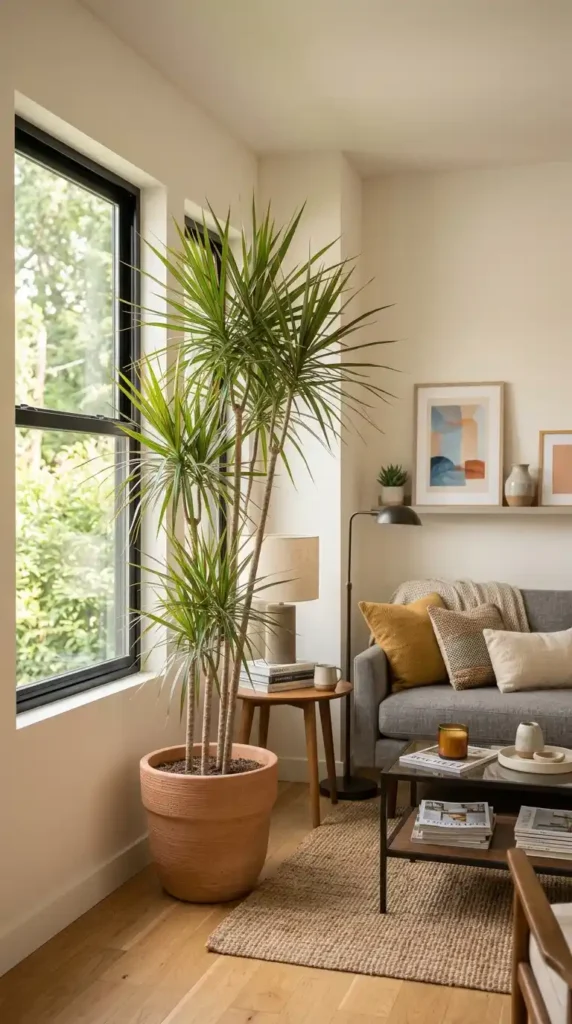
Dracaena marginata, also known as the Madagascar dragon tree, is a striking plant with slender, arching leaves that are edged in red. Its unique silhouette adds architectural interest to any room. It is low-maintenance and tolerates a wide range of light conditions.
Care Level: Beginner. Thrives in low to bright indirect light. Water sparingly, allowing the soil to dry out between waterings.
10. Calathea: The Living Artwork
✦ Best for: Adding stunning patterned foliage to low-light areas
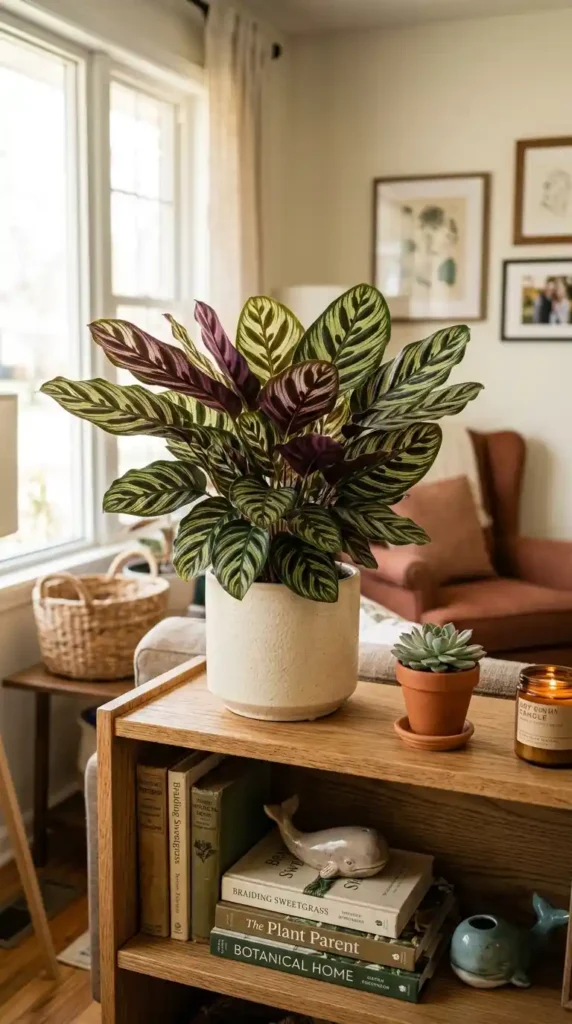
Calatheas are known for their stunning, intricate leaf patterns that look like living artwork. They come in a variety of patterns and colors, from the pinstripe Calathea ornata to the peacock Calathea makoyana. They are non-toxic to pets.
Care Level: Intermediate. They prefer medium to low indirect light. They need high humidity and consistent moisture. They are sensitive to drafts and temperature changes.
Frequently Asked Questions About Tropical Plants Indoor
1. What tropical plants are easiest to grow indoors?
Monstera deliciosa, pothos, spider plants, and rubber plants are among the easiest. They are forgiving and adapt well to average household conditions.
2. How do I increase humidity for tropical indoor plants?
- Group plants together.
- Place a tray of water with pebbles beneath pots.
- Mist leaves regularly.
- Use a humidifier.
- The bathroom or kitchen are often the most humid rooms in the house.
3. How much light do tropical plants need indoors?
Most tropical plants prefer bright, indirect light. Some, like the Fiddle Leaf Fig, need bright light to thrive, while others, like Calatheas, can tolerate medium to low indirect light.
4. Are tropical indoor plants safe for pets?
Many popular tropical plants are toxic to cats and dogs. The Monstera, Fiddle Leaf Fig, and Alocasia are all toxic. Calatheas are a great non-toxic option. Always check toxicity before bringing a new plant home.
Related Articles
10 Rare Indoor Plants That Look Too Beautiful to Be Real
Indoor Plant Trellis: 7 Ways to Support Your Climbing Houseplants
Never Buy Rosemary Again: Grow Rosemary Plant Indoors
Easy Indoor Plants: 10 Foolproof Picks for Beginners
Tropical indoor plants bring the beauty of the jungle into your home. With the right care, they will transform your space into a lush, green sanctuary.

Sheikh Hassaan is a digital architect for small businesses and the founder of The Glow Up System. He writes about home decor, garden design, and outdoor living for real American homes – practical ideas that work in actual spaces without oversized budgets.