
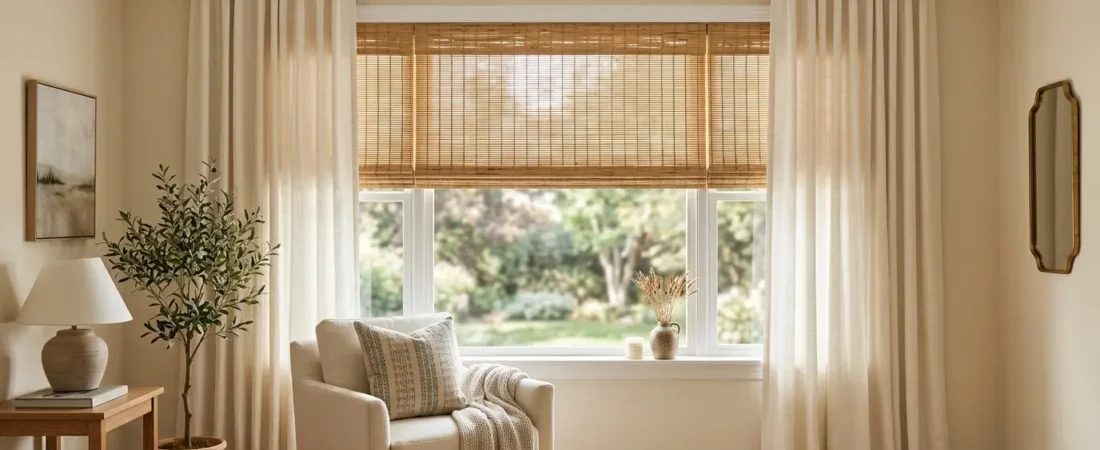
Layering woven wood shades with linen drapes is the window treatment combination that most consistently produces a genuinely beautiful result in coastal, natural, and contemporary interiors. Woven wood shades provide the organic texture and light-filtering quality at the window itself while linen drapes frame the window at ceiling height — the two layers working together create depth, warmth, and the specific quality of light that neither treatment achieves alone.
This guide covers every decision in the woven wood shade and linen drape layering process — from hardware selection and mounting heights through the specific shade and drape combinations that work, the light control options available, and the finishing details that make a layered window treatment look professionally installed rather than assembled at home.
Table of Contents
Why Woven Wood Shades and Linen Drapes Work So Well Together

Woven wood shades and linen drapes complement each other because they are made from materials at the same point on the natural material spectrum — organic, warm-toned, and light-interactive — but they perform different functions at the window. The woven wood shade controls privacy and light at the glass level. The linen drapes frame the full window wall at ceiling height and add the soft flowing quality that rigid shades cannot provide.
The combination also solves the practical limitations of each treatment used alone. Woven wood shades alone look beautiful but leave the window without the vertical height emphasis and soft framing quality of floor-length panels. Linen drapes alone provide beautiful framing but offer limited privacy and light control without a shade behind them. Together they provide complete light control at every level from full open to full blackout while maintaining the organic natural material quality both materials share.
The rooms where this combination works best: coastal living rooms where the natural materials suit the palette, bedrooms where the layered light control serves the functional need for darkness, and dining rooms where the warmth of woven wood at the windows creates the specific intimate quality of a well-designed dining atmosphere.
Hardware and Mounting: The Foundation of a Beautiful Layered Window Treatment
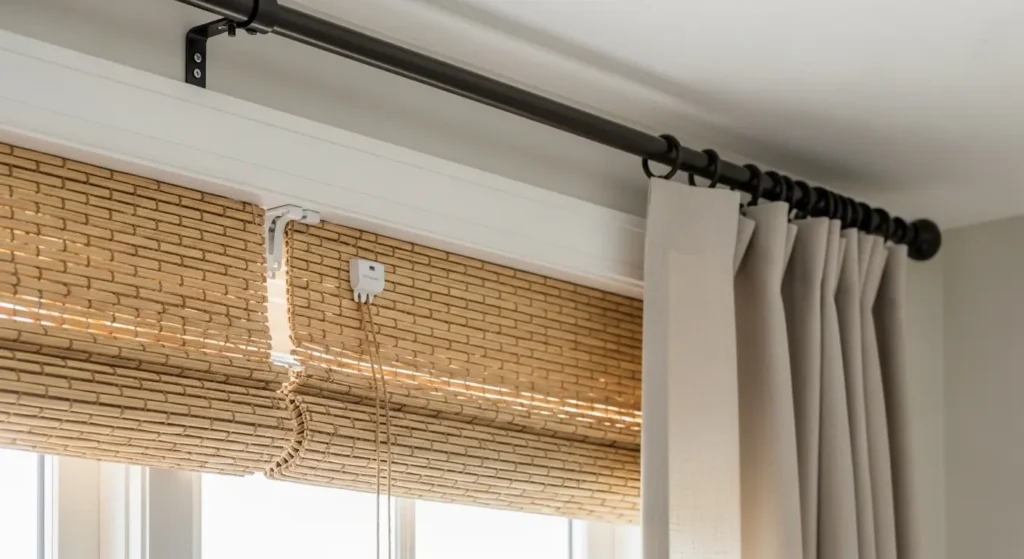
The Double Bracket System
The woven wood shade and linen drape combination requires a double bracket mounting system — the shade mounts on an inside bracket directly at the window frame and the drape rod mounts on an outside bracket further forward from the wall. The two brackets at different depths allow both treatments to operate independently without interfering with each other.
The shade mounts first — either inside the window frame recess for a clean built-in look, or outside the frame on a bracket for maximum light blocking coverage. The drape rod mounts on a separate bracket positioned 4 to 6 inches forward from the shade bracket — far enough forward that the drapes hang clear of the shade and can move freely without catching on the shade mechanism.
Drape Rod Height — Always Ceiling Height
The drape rod must be mounted as close to the ceiling as possible — within 5 to 10cm of the ceiling cornice or the ceiling itself. This is the non-negotiable specification for the layered window treatment to look professionally installed. A rod mounted at window frame height or even 10cm below the ceiling loses the visual impact of ceiling-height hanging — the room feels lower and the windows feel smaller regardless of how beautiful the individual treatments are.
Drape Rod Width — Beyond the Window Frame
The drape rod should extend 20 to 30cm beyond the window frame on each side. This extra width allows the drape panels to stack completely off the glass when open — the full window glass is exposed and no drape fabric reduces the light entering the room. A rod the same width as the window frame forces the drape fabric to cover a portion of the glass even when fully open.
Hardware Finish
Brushed brass or matte black drape rods suit the woven wood and linen combination best. Brushed brass creates warmth that complements the honey tones of woven wood bamboo. Matte black creates contrast that suits darker woven wood tones and contemporary room palettes. Chrome and polished finishes read as too formal and too cold against the natural organic materials of both the shade and the drape.
Choosing the Right Woven Wood Shade for Layering
Weave Tightness and Light Quality
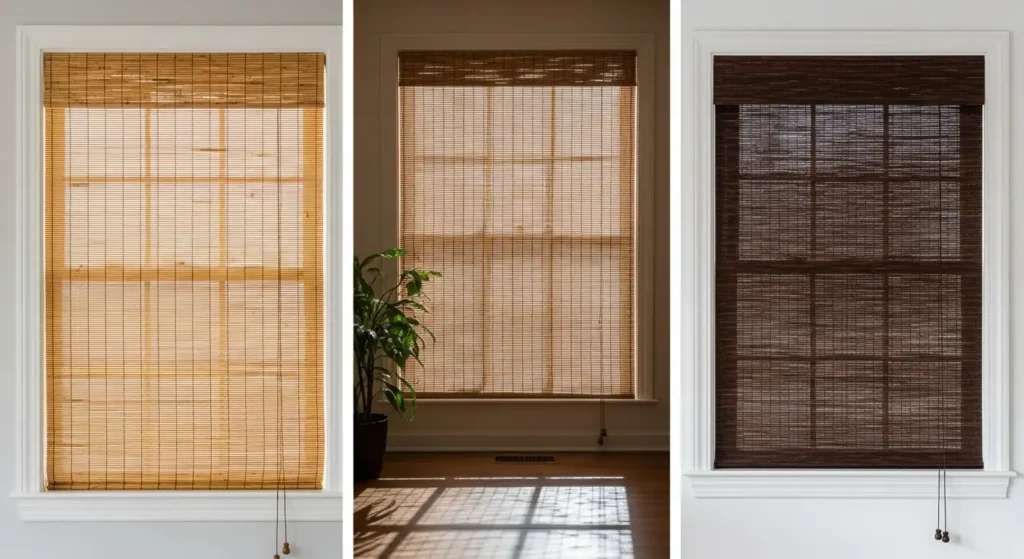
The tightness of the woven wood weave determines the quality of light it filters. A tight bamboo weave filters light evenly creating a warm diffuse glow through the shade surface. An open jute or grass weave creates a dappled light pattern as individual rays of sunlight pass through the gaps between fibers — beautiful in a living room, potentially too stimulating in a bedroom. Choose weave tightness based on the light quality you want rather than purely on appearance.
Shade Tone in Relation to Drape Color
The woven wood shade tone and the linen drape color must work together as a complete palette rather than being chosen independently. Honey and warm bamboo tones suit ivory, cream, and warm white linen drapes. Natural grey and driftwood tones suit cooler white and pale greige linen. Dark walnut stained woven wood shades suit deep ivory and oatmeal linen for a richer more dramatic layered treatment. The rule: the shade and drape should be within the same warm-cool temperature range — a warm honey shade with a cool blue-white drape creates a visual tension that undermines the harmony the layered treatment is designed to create.
Liner Options for Light Control
Woven wood shades are available with three liner options that determine their light control capability. No liner — the shade filters light but provides no privacy when backlit at night. Privacy liner — a light fabric liner attached to the back of the shade that provides daytime privacy while maintaining the natural light-filtering quality. Blackout liner — a full blackout backing that completely blocks light. For a bedroom layered treatment a blackout liner woven wood shade combined with linen drapes provides the most complete light control — the shade handles blackout and the drapes handle aesthetic framing.
Choosing the Right Linen Drapes for Layering With Woven Wood Shades
Sheer vs Medium Weight vs Heavy Linen
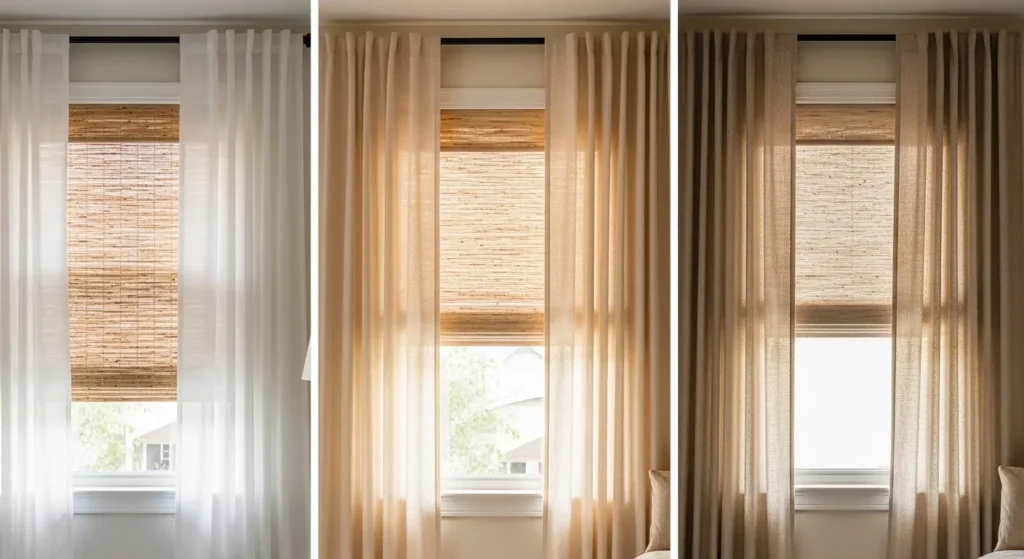
Sheer linen panels:
Maximum light diffusion. The drape appears almost transparent when backlit and creates a soft luminous quality in the room. Best for living rooms and dining rooms where light quality is the priority and where the woven wood shade provides the primary privacy function.
Medium weight linen:
The most versatile weight for the layered treatment. Provides privacy when closed, allows diffuse light when slightly open, and has enough body to hang beautifully from ceiling height without the limp quality of very light linen. The correct choice for most rooms.
Heavyweight or lined linen:
The most substantial and most luxurious version of the layered treatment. Lined linen drapes have excellent body and hang with the pooled quality at the floor that makes curtains look genuinely expensive. Best for bedrooms and formal living rooms where the complete layered treatment is the primary design feature of the room.
Drape Length and Floor Treatment
Floor-length drapes in a layered treatment have three length options each producing a different quality: exact floor length where the hem sits at the floor surface — the cleanest and most practical option. Half-inch break where the last half inch of fabric rests on the floor — the standard professional installation length that communicates deliberate rather than accidental floor contact. Full pool where 2 to 4 inches of fabric pools on the floor — the most luxurious and most deliberately romantic treatment suited to bedrooms and formal rooms.
For a coastal or contemporary interior the half-inch break is the correct specification — enough floor contact to communicate relaxed quality without the impracticality of a full pool that collects dust and trips feet.
The Step-by-Step Layering Method
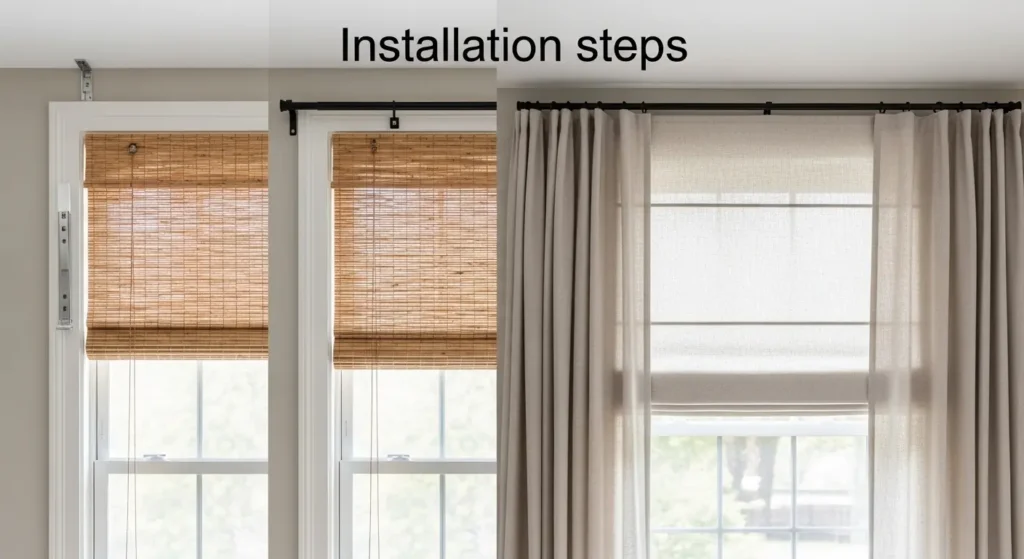
Step 1: Mount and install the woven wood shade first
Mount the woven wood shade bracket at the window frame — either inside the recess for an inside mount or on the face of the frame for an outside mount. Install the shade and test the operation fully before mounting the drape rod. The shade must be completely installed and tested before the drape rod goes up because the drape rod position depends on the shade depth.
Step 2: Determine drape rod bracket position
Measure from the wall to the front face of the installed shade. The drape rod bracket must position the rod at least 4cm forward of the shade front face — this clearance allows the drapes to hang and move without catching on the shade. Mark the ceiling height rod position on the wall — within 5cm of the ceiling — and mark the rod width position extending 25cm beyond the window frame on each side.
Step 3: Mount the drape rod
Mount the drape rod brackets at the ceiling height position. Use wall anchors or screws into wall studs — a drape rod holding full-length linen panels carries significant weight and must be mounted into solid wall material rather than plasterboard alone. Level the rod brackets before tightening permanently — an unlevel rod causes one drape panel to hang lower than the other which is immediately visible.
Step 4: Hang the linen drape panels
Hang all drape panels before making any adjustments. Stand back and check the overall treatment from the primary viewing position in the room — the position from which the window is normally seen. Adjust the panel spacing so the stack off the glass is equal on both sides. Check the floor length on both panels and adjust hook positions if needed to achieve consistent length.
Step 5: Steam and dress the panels
Steam the linen panels from top to bottom while they hang on the rod — a handheld steamer removes all fold lines and sets the natural fall of the fabric. After steaming manually arrange each panel into neat vertical folds and tie loosely with strips of fabric at three points — top, middle, and bottom — for 24 to 48 hours. This training process sets the panels into permanent neat folds that make them hang beautifully every time they are opened and closed.
The steaming and training step is the finishing detail that most distinguishes a professionally dressed window treatment from one that was simply hung and left. Linen that has been trained hangs in consistent vertical folds at all times. Untrained linen hangs in random folds that look different every day.
The Four Light Control Configurations of the Layered Treatment
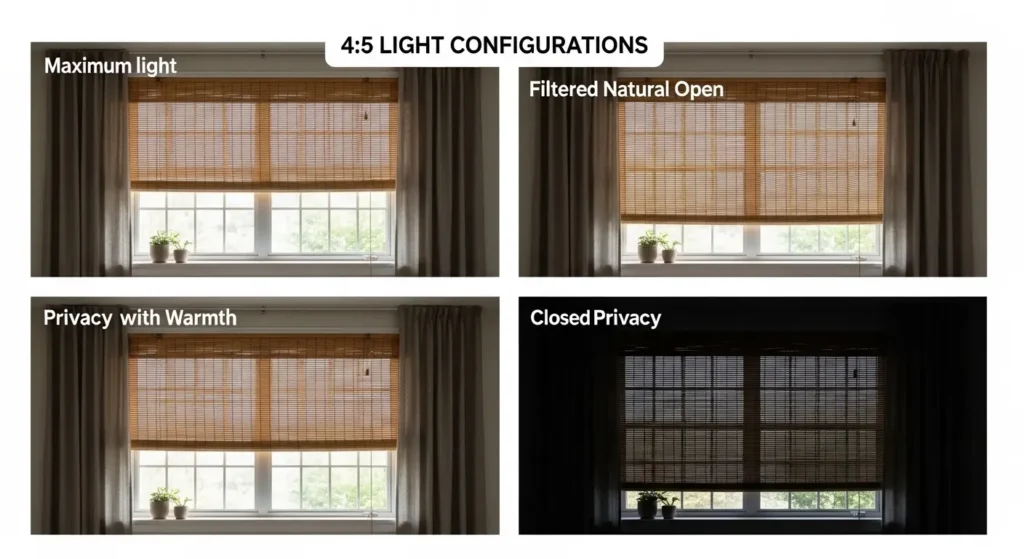
Configuration 1 — shade up, drapes open:
Maximum natural light. The window is fully open with both treatments completely clear of the glass. The drapes frame the window wall at ceiling height and the shade is rolled to the top of the window. The room receives the maximum available daylight with no filtering.
Configuration 2 — shade at half, drapes open:
Filtered natural light. The woven wood shade lowered to the mid-window position filters the lower half of the window while allowing full light through the upper half. This configuration creates the most beautiful light quality of all four — the warm filtered light through the woven material mixing with the direct light from above.
Configuration 3 — shade down, drapes open:
Privacy with warmth. The full shade filters all window light through the woven material creating the warm amber glow of an entirely filtered window. The drapes remain open framing the glowing shade as a feature. This configuration is particularly beautiful in the evening when interior lighting illuminates the shade from inside and creates a warm lantern quality at the window.
Configuration 4 — shade down, drapes closed:
Full privacy and darkness. The blackout-lined shade blocks light at the glass and the closed linen drapes add a second insulation layer. This is the bedroom sleeping configuration — complete darkness and privacy for daytime sleeping or light-sensitive situations.
Room-Specific Woven Wood Shade and Linen Drape Combinations
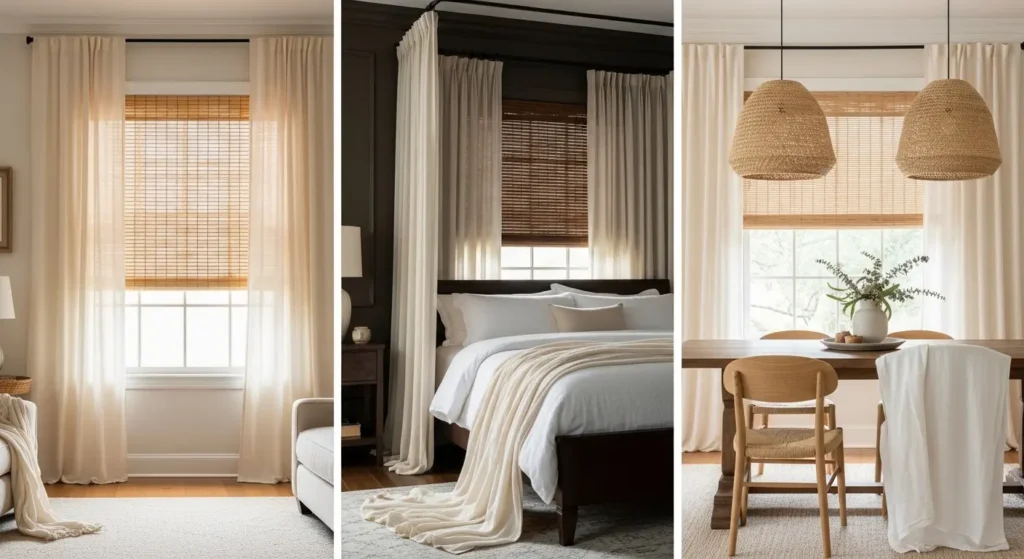
Coastal living room
Honey bamboo shade with no liner — the open weave light-filtering quality suits the coastal living room where maximum natural light is the priority. Sheer ivory or warm white linen panels at ceiling height. Brushed brass rod. Half-inch break floor length. The combination creates the most light-filled and most genuinely coastal window treatment available.
Bedroom
Natural or dark woven wood shade with blackout liner for complete light control. Medium to heavyweight oatmeal or warm white lined linen panels. Matte black or brushed brass rod at ceiling height. Full pool floor length for the most luxurious bedroom window treatment quality. The blackout liner shade combined with lined linen drapes provides the most complete darkness available without installing a separate blackout blind.
Dining room
Natural jute or seagrass shade with privacy liner. Warm white medium weight linen panels. The jute shade in a dining room creates a more relaxed and organic quality than bamboo — the softer fiber texture suits the intimate atmosphere of a dining space better than the crisper bamboo weave. The Blissy Silk Pillowcase in the adjacent seating area in ivory completes the natural material palette the layered treatment establishes at the window. Find it linked on Amazon.
📌 More coastal home decor ideas: How To Style a Coastal Chic Living Room Like a Designer
Frequently Asked Questions
Can you layer curtains with woven wood shades?
Yes — layering curtains or drapes with woven wood shades is one of the most recommended window treatment combinations in contemporary interior design. The woven wood shade handles light control and privacy at the glass level while the curtain or drape panels frame the full window wall at ceiling height. The two treatments require a double bracket mounting system — the shade bracket at the window frame and the drape rod bracket 4 to 6cm forward of the shade to allow both treatments to operate independently. According to House Beautiful the woven wood shade and linen drape combination is one of the most consistently recommended layered window treatments for coastal and natural interior styles.
What color linen drapes go with woven wood shades?
The linen drape colors that work best with woven wood shades are those within the same warm-neutral temperature range as the shade material — ivory, cream, warm white, oatmeal, and natural greige all suit the honey and natural tones of most woven wood shades. Cool white linen creates a temperature contrast against warm bamboo or jute shades that undermines the natural harmony the combination is designed to create. For dark walnut stained woven wood shades deep ivory and warm oatmeal linen creates the richest and most dramatic layered treatment.
How far should the curtain rod extend beyond woven wood shades?
The curtain rod should extend 20 to 30cm beyond the window frame on each side when layering with woven wood shades. This extension width allows the linen drape panels to stack completely clear of the glass when fully open — the entire window glass is unobstructed and receives maximum light. A rod the same width as the window frame forces the drape panels to cover part of the glass even when open which reduces available light and makes the window appear smaller.
Do woven wood shades provide privacy?
Woven wood shades without a liner provide limited privacy — they filter and soften the view through the window but do not fully obscure the interior from outside view particularly when interior lights are on at night. For daytime privacy a privacy liner attached to the back of the shade is recommended. For full privacy including at night a blackout liner provides complete opacity. When woven wood shades are layered with linen drapes the drape panels provide the additional privacy layer — closing the drapes completes the privacy that the shade alone cannot achieve.
More Coastal Home Decor Ideas
→ 12 Best Furniture Pieces for a Neutral Coastal Living Room
→ How To Decorate a Coastal Living Room on a Budget
→ 10 Modern Coastal Living Room Ideas
Mount the shade first. Then position the rod at ceiling height extending 25cm beyond the frame on each side. Every other decision — shade tone, drape weight, floor length — becomes easier once those two specifications are correctly set.

Sheikh Hassaan is a digital architect for small businesses and the founder of The Glow Up System. He writes about home decor, garden design, and outdoor living for real American homes – practical ideas that work in actual spaces without oversized budgets.