
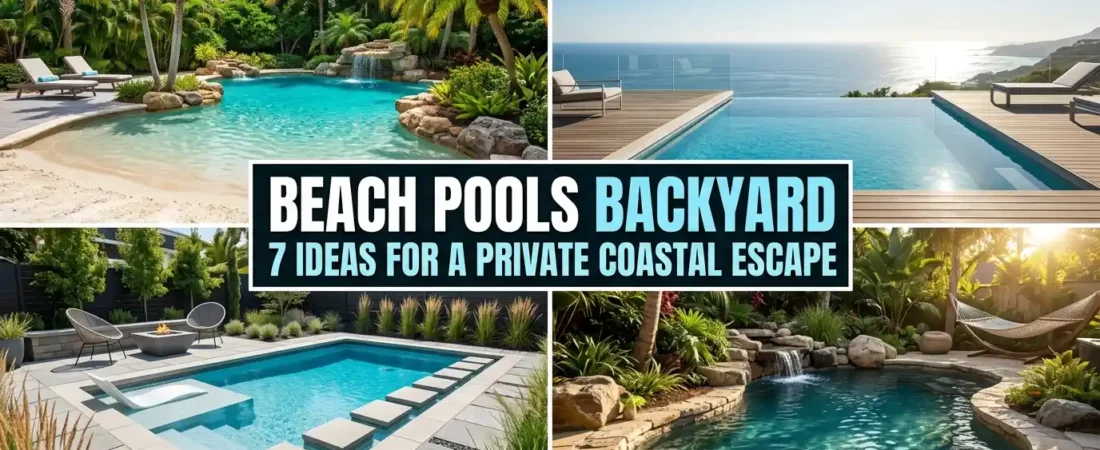
A beach entry pool brings the ocean shore to your backyard. Instead of steps or ladders, it features a gradual slope that mimics walking into the sea. The result is a pool that feels like a natural extension of the landscape, offering a safe, accessible, and resort-style experience for swimmers of all ages.
Here are 7 beach pool ideas to turn your backyard into a personal paradise.
Table of Contents
1. Zero-Entry Slope That Mimics the Ocean Shore
✦ Best for: Accessibility, safety, and creating a genuine beach-like experience
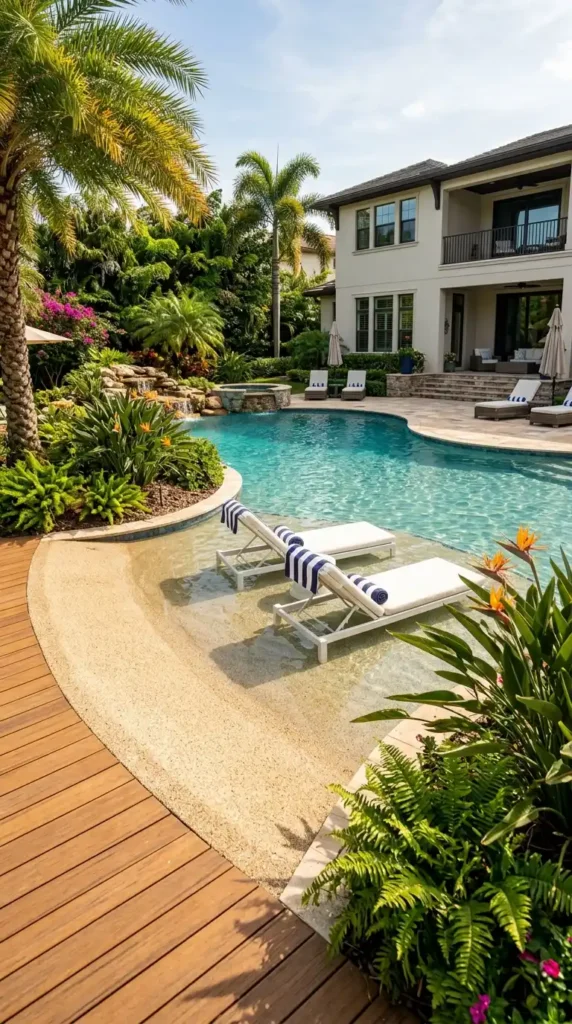
A well-designed zero-entry slope is the heart of a beach pool. It starts flat at the deck and descends at a gentle angle, usually hitting a wading depth around 12 to 18 inches before dropping to the main pool. This simple design changes how the pool feels every day, no ladders, no steep steps, just a smooth, natural transition into the water.
Beach entry pools are a popular choice for families, as the gradual slope provides a safe, shallow splash area for children. They are also ideal for older adults or anyone with mobility concerns, as the slope removes the need to navigate narrow steps or steep drops.
How to do it: Work with your builder to design a slope with a ratio no steeper than 1:7 or 1:8 for comfortable walking. Use a textured finish on the slope to prevent slipping.
2. Lagoon-Style Beach Entry with Natural Rock Borders
✦ Best for: Creating a natural, tropical look that feels like a hidden swimming hole
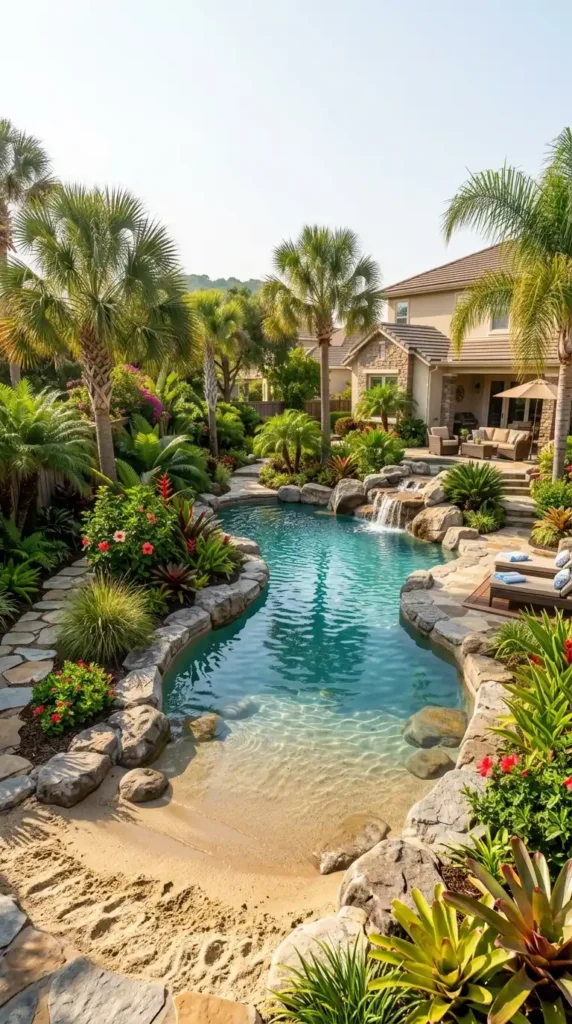
Pair your beach entry with freeform shaping and natural stone coping, and it begins to look like a hidden swimming hole. The rocks create an organic edge that softens the whole pool, and when you add lush plants behind them, the setup feels genuinely wild and tropical. This style works especially well if you want the backyard to feel like an escape rather than just a pool.
How to do it: Use locally sourced stone in warm earth tones. Place boulders in clusters rather than in a straight line. Bury each rock at least one-third of its depth so they look like they belong. Leave gaps between stones for tropical plants.
3. Sand-Toned Finish for a Real Beach Look
✦ Best for: An affordable way to get the beach aesthetic
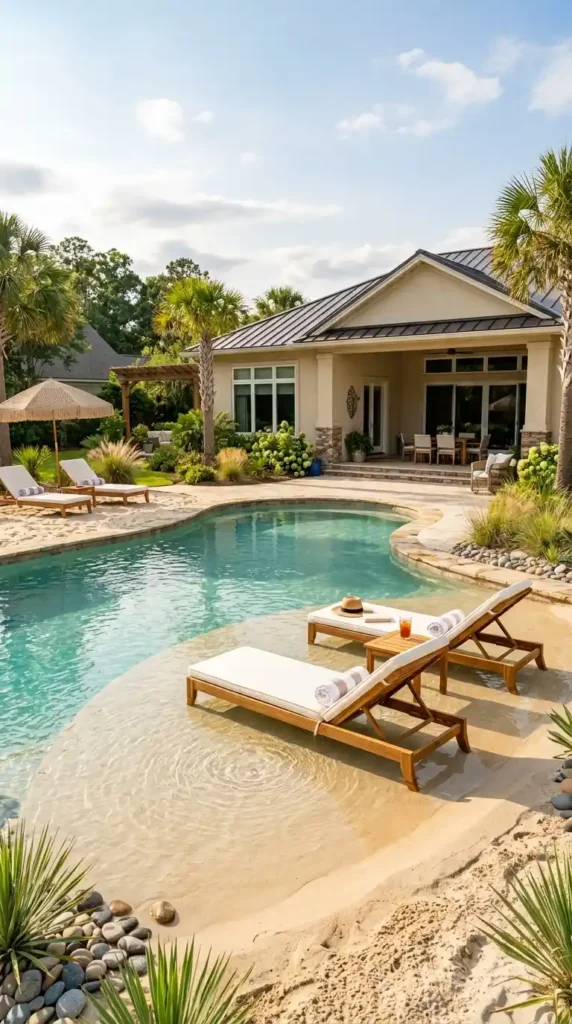
The color of your pool finish matters more than most people realize. A warm, sand-toned plaster, soft beige or creamy ivory, gives the shallow entry that sunlit, shoreline quality you see in travel photos. The light catches it differently depending on the time of day, and in the shallow water near the entry, it genuinely looks like you are standing on a sandbar.
How to do it: Ask your builder about sand-toned plaster or pebble finishes. These are available in dozens of color blends and give the pool a natural texture underfoot. The finish should extend consistently from the deck down into the water.
4. Compact Beach Entry for Small Backyards
✦ Best for: Smaller yards where space is limited
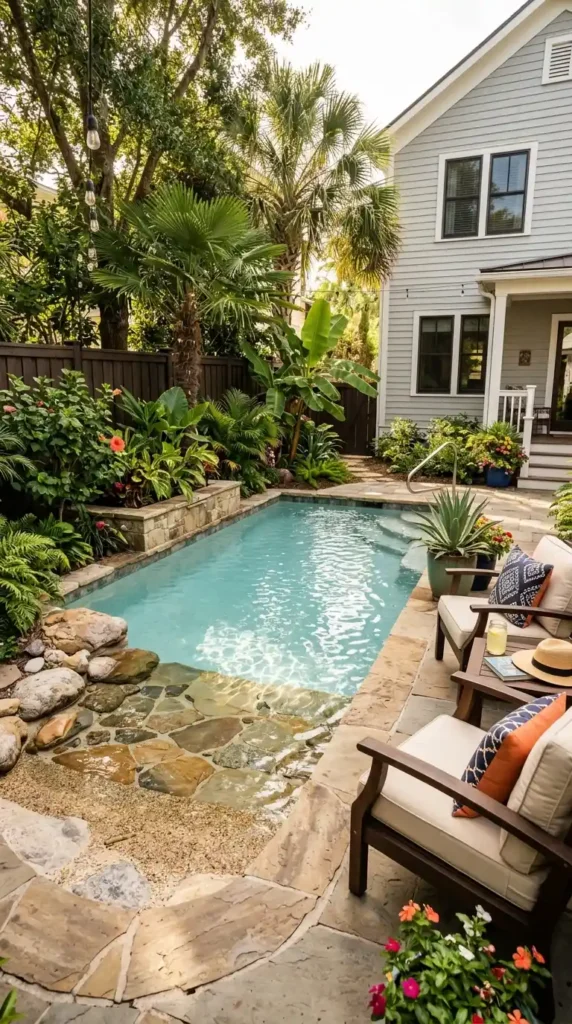
A beach entry can work in a surprisingly small yard. A narrower entry built into one corner gives you the same gradual, step-free access without eating up the entire footprint. It is especially smart for plunge pool designs, where every foot of space matters.
How to do it: Work with your builder to design a compact slope that fits your available space. Use light-colored materials to make the area feel more open. Add a few tropical plants to enhance the beach vibe without taking up too much room.
5. Lounge Chairs in the Shallow Water
✦ Best for: Maximizing the shallow zone for day-to-day relaxation
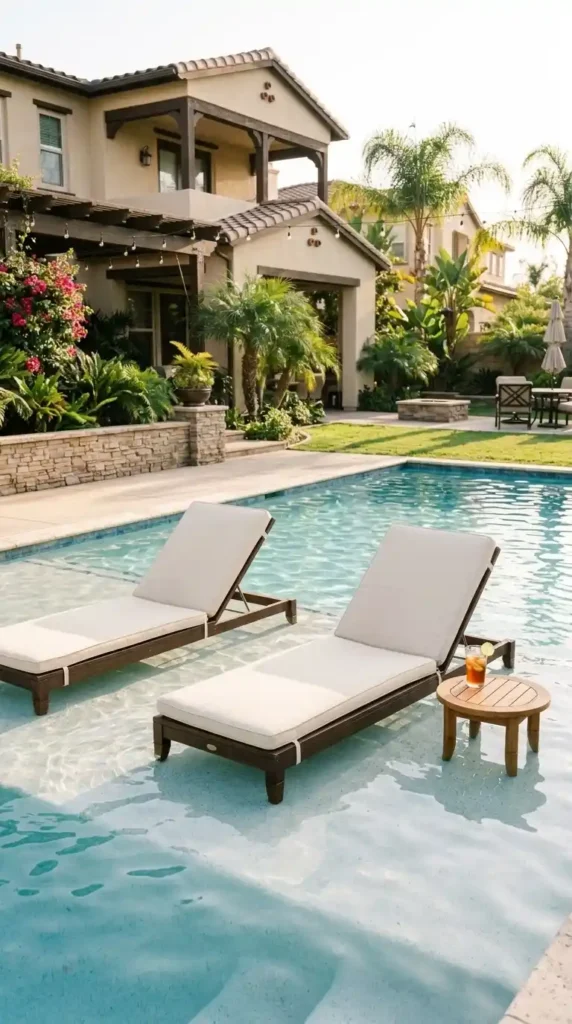
The shallow zone of a beach entry, just a few inches deep, is perfect for setting up lounge chairs. You are half in the water, half out, catching sun without fully committing to a swim. It has become one of the most popular ways homeowners use their beach entry day-to-day.
How to do it: Place loungers in the shallow entry area where the water is ankle to knee deep. Choose chairs designed for pool use. Add an umbrella for shade.
6. Tropical Landscaping with Palm Trees and Plants
✦ Best for: Creating an immersive, resort-like environment
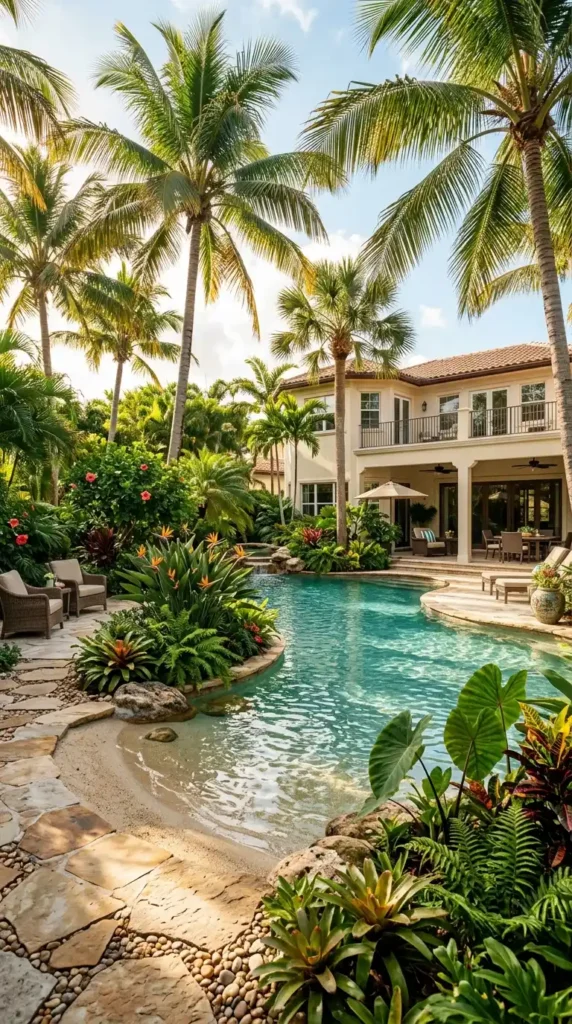
The plants around a beach entry are what sell the whole look. Tall palms giving overhead shade, birds of paradise along the edges, and low ground cover creeping toward the water create that immersive, resort-in-the-jungle feeling. When the landscaping flows right up to the pool’s edge and the beach entry disappears into greenery, the pool becomes part of the garden rather than sitting in the middle of it.
How to do it: Plant tall palms and tropical foliage around the pool edges. Use plants that thrive in your climate. Choose varieties that require minimal maintenance.
7. Modern Geometric Pool with a Wide Symmetrical Slope
✦ Best for: A clean, contemporary look that photographs beautifully
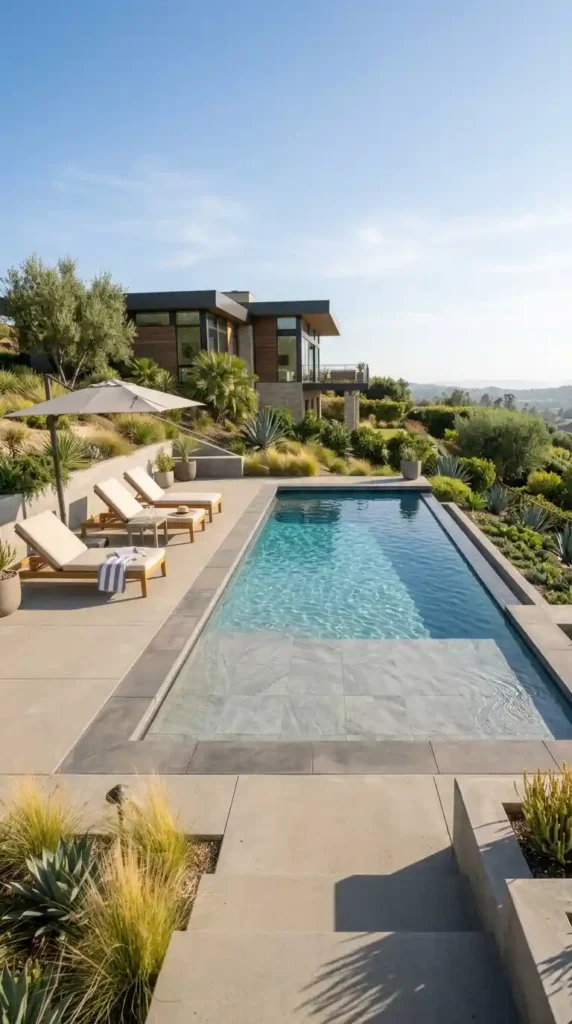
Beach entries do not have to mean tropical and organic. A rectangular pool with a wide, centered slope finished in large-format tile or smooth quartz aggregate reads more like a boutique hotel than an island escape. The geometry stays clean, the lines stay sharp, and the slope adds just enough softness to keep it from feeling cold.
How to do it: Keep the pool shape simple, a rectangle or square works best. Use a wide, centered slope. Pair with a concrete paver deck and simple landscaping.
Cost and Planning Considerations
Budget Range: Beach entry pools typically come with a higher price tag than traditional pools. The extended excavation, more complex structural design, and finishing work increase construction costs. According to Carlton Pools, a beach entry pool costs approximately $50,000 to $90,000 on average to have installed.
Space Requirements: Beach entries require more space than traditional pool designs. The gradual slope eats up square footage, so they are often best suited for medium to large yards. However, a narrower entry can be designed for smaller spaces.
Key Materials: Concrete is the more popular option for beach entry pools, offering flexibility in color and style. Fiberglass is another option that is quicker to install. Sand-toned plaster or pebble finishes help achieve the beach aesthetic.
Maintenance: Beach entry pools do not require significantly more maintenance than traditional pools. The shallow water makes debris more visible, so regular brushing and skimming keeps it clean. Filtration and chemical requirements are essentially the same as any other pool.
Frequently Asked Questions
1. What is a beach entry pool?
A beach entry pool, also called a zero-entry or walk-in pool, features a gradual slope from the deck into the water, similar to walking into the ocean. There are no steps or ladders, just a smooth, continuous transition.
2. Are beach entry pools good for small backyards?
Yes. A narrower entry built into one corner of the pool can give you the same step-free access without requiring a large footprint. A good builder can plan the slope into the layout so it fits naturally.
3. What is the difference between a beach entry and a tanning ledge?
A tanning ledge is a flat, submerged platform for lounging. It does not replace your steps or serve as a way into the deeper water. A beach entry replaces the steps entirely and functions as both an access point and a shallow relaxation zone.
4. How much does a beach entry pool cost?
A beach entry pool typically costs $50,000 to $90,000 on average. The cost is higher than a traditional pool due to the extended excavation and more complex structural design.
5. Do beach entry pools need more maintenance?
Not significantly. The shallow water makes debris more visible, so regular brushing and skimming keeps it clean. Filtration and chemical requirements are essentially the same as any other pool.
Related Articles
7 Backyard Lazy River Pool Designs for a Resort-Style Retreat
Desert Pool Landscaping — 7 Ideas for a Water-Wise Oasis
7 Best Small Spanish Style Pool Ideas
A beach entry pool is more than just a place to swim. It is a daily reminder of the coast, a safe space for all ages, and a resort-like escape that turns your backyard into a private paradise.

Sheikh Hassaan is a digital architect for small businesses and the founder of The Glow Up System. He writes about home decor, garden design, and outdoor living for real American homes – practical ideas that work in actual spaces without oversized budgets.