

Some of the most ordinary-looking afternoons turn out, years later, to be the ones that mattered most — kneeling beside someone in the dirt, not talking about anything important, just working side by side toward the same small goal. Family gardening benefits go far beyond the vegetables or flowers that eventually grow, touching on connection, mental health, and the kind of shared memory that conversation alone rarely produces.
This article looks at why gardening together with a father creates such a particular and lasting kind of bond, what the research says about the psychological and relational value of shared outdoor activity, and how to make the most of the time spent gardening together regardless of how much experience either person has.
Table of Contents
Why Working Side by Side Builds a Different Kind of Connection
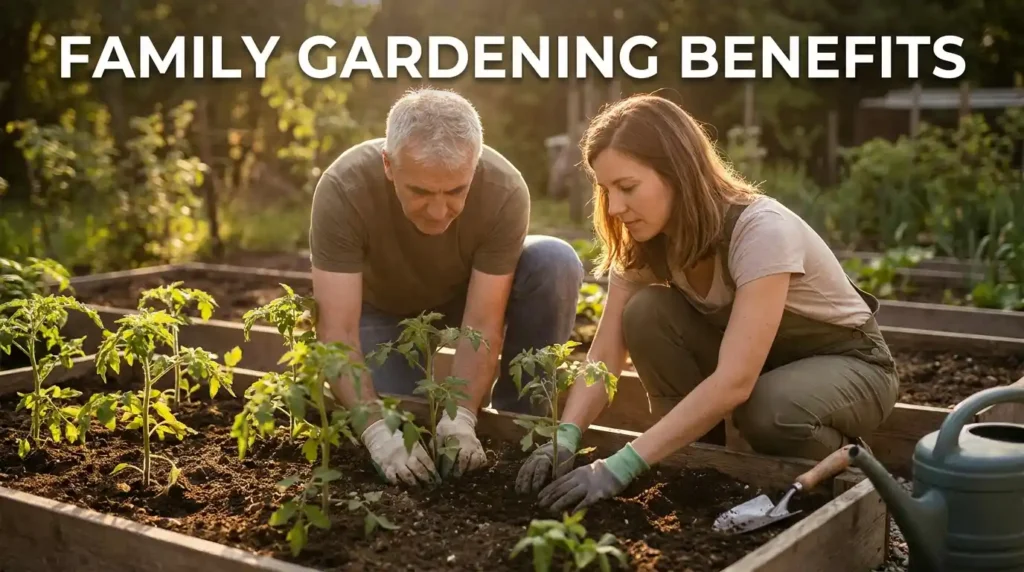
There is something psychologists call side-by-side bonding — the particular ease of connection that happens when two people work on a shared task without facing each other directly, as opposed to the more pressured, face-to-face format of a deliberate conversation. Gardening is almost entirely side-by-side activity: both people facing the same bed, the same weeds, the same task, rather than facing each other across a table.
This format tends to lower the social pressure that can make direct conversation between a parent and adult child feel effortful, particularly for families where emotional topics are not discussed easily. Conversation that happens during gardening tends to arise naturally between the silences rather than being the entire point of the interaction, which often makes it feel less forced and more honest than a conversation arranged specifically to talk.
The Grounding Power of Shared Outdoor Rituals Across Generations
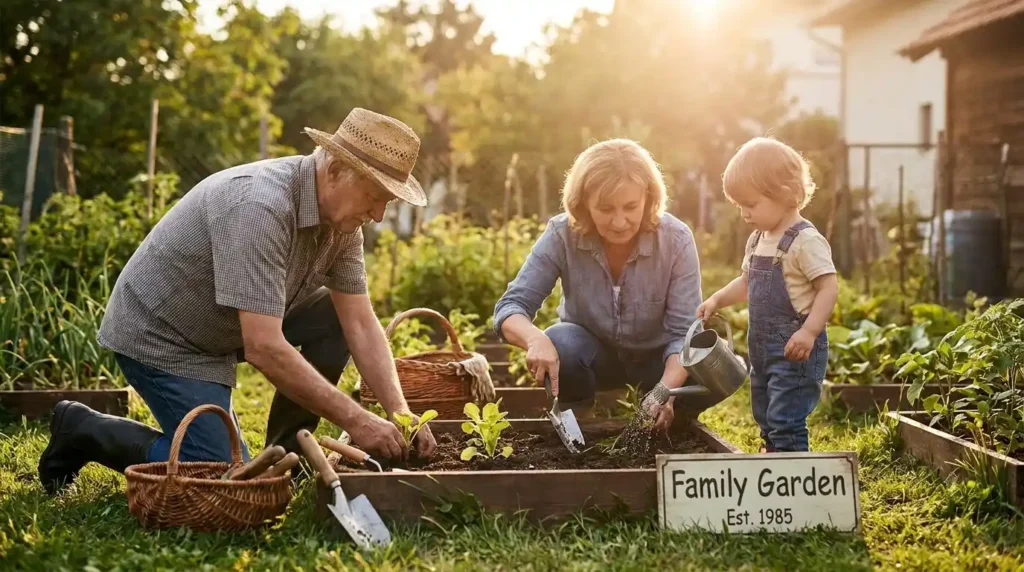
Gardening with a parent often becomes one of the few recurring rituals that survives across decades of changing life circumstances — moving house, changing jobs, having children of one’s own. Where many shared activities from childhood naturally fall away in adulthood, gardening tends to persist because it requires no special equipment, no scheduled commitment beyond showing up, and it adapts naturally to whatever physical capability each person currently has.
This persistence gives gardening a particular grounding quality. The repeated, predictable rhythm of seasons — preparing beds in spring, tending through summer, clearing in autumn — provides an anchor of continuity that connects each year’s gardening to every previous year spent doing the same thing with the same person, even as everything else in both lives continues to change around it.
For many adult children, the specific physical sensations of gardening — the particular smell of disturbed soil, the resistance of a weed pulled by the root, the weight of a watering can — become permanently associated with a parent, so that even gardening alone decades later can summon a vivid and specific memory of working beside them.
What the Research Says About Gardening and Mental Health
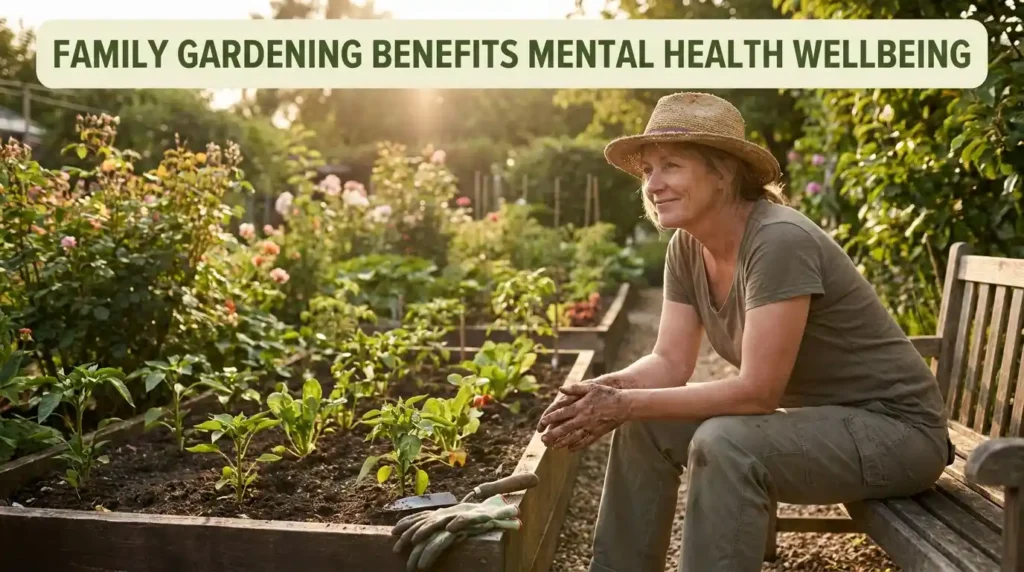
Beyond the relational benefits, gardening has measurable mental health effects on its own — moderate physical activity outdoors in natural light is associated with reduced symptoms of anxiety and depression, and the specific combination of focused attention and repetitive physical task that gardening requires has a documented effect similar to mindfulness practice in lowering stress hormone levels.
For older parents in particular, regular gardening is associated with better physical mobility, improved mood, and a stronger sense of purpose, all of which compound when the activity also involves regular contact with family rather than being done in isolation. The combination of gentle physical exercise, time outdoors, and meaningful social contact addresses several wellbeing factors simultaneously in a way few single activities manage.
This means that time spent gardening together is rarely just sentimental — it carries genuine, researched benefit for both people involved, which is part of why so many adult children report that gardening visits with a parent feel different from other kinds of visits, even when nothing especially significant is discussed.
Making the Most of Gardening Time Together

Choose a project with a visible result:
A defined task — building a raised bed, planting a tree, establishing a new border — gives the time together a clear shared goal and a satisfying sense of completion, which routine maintenance gardening alone does not always provide.
Let the silences happen naturally:
Resist the urge to fill every quiet moment with conversation. Some of the most valuable parts of gardening together are the comfortable silences where both people are simply present and working, which is precisely the quality that makes the activity feel different from a deliberate catch-up visit.
Match the task to current physical ability:
As a parent ages, adjust the task rather than the activity — lighter jobs like sowing seeds, light pruning, or directing rather than digging allow the gardening tradition to continue even as physical capability changes, rather than the activity stopping altogether once heavier tasks become difficult.
📌 More garden ideas: How To Create a Living Memorial Garden for a Father
Frequently Asked Questions
What are the benefits of gardening with family?
Family gardening benefits include stronger relational bonds built through low-pressure side-by-side activity, reduced stress and anxiety from time spent outdoors in natural light, improved mood and mobility particularly for older family members, and the creation of a recurring shared ritual that tends to persist across decades better than many other family activities. According to the American Psychological Association shared activities that involve a common physical task rather than direct face-to-face conversation often produce stronger feelings of closeness, particularly between generations.
Why is gardening good for mental health?
Gardening combines moderate physical activity, time spent outdoors in natural light, and a repetitive, focused task, all of which are independently associated with reduced symptoms of anxiety and depression. The focused attention gardening requires produces an effect similar to mindfulness practice, helping to lower stress hormone levels and improve overall mood, particularly when the activity is also social rather than done in isolation.
How can I keep gardening with an aging parent?
Adjust the tasks rather than ending the activity as physical ability changes. Lighter jobs such as sowing seeds, light pruning, watering, or simply directing and advising while someone else does the heavier digging allow the gardening tradition to continue safely. Raised beds, supportive kneelers, and lightweight ergonomic tools can also extend how long an aging parent is able to participate comfortably.
What gardening projects are good for bonding with a parent?
Projects with a clear, visible result tend to work particularly well for bonding, since they give the time together a shared goal and a satisfying sense of completion. Building a raised bed, planting a tree together, establishing a new flower border, or creating a small memorial or themed garden corner are all commonly cited as meaningful shared projects that create a lasting reference point in the relationship, beyond routine day-to-day maintenance gardening.
More Garden Ideas
→ 10 Father’s Day Gifts for Gardeners He Will Actually Love
→ Best Ergonomic Gardening Tools for Older Dads
→ 5 Nostalgic Garden Plants From Grandfather’s Garden
You will not remember most of what either of you said while gardening together. You will remember exactly how it felt to be there.

Sheikh Hassaan is a digital architect for small businesses and the founder of The Glow Up System. He writes about home decor, garden design, and outdoor living for real American homes – practical ideas that work in actual spaces without oversized budgets.