
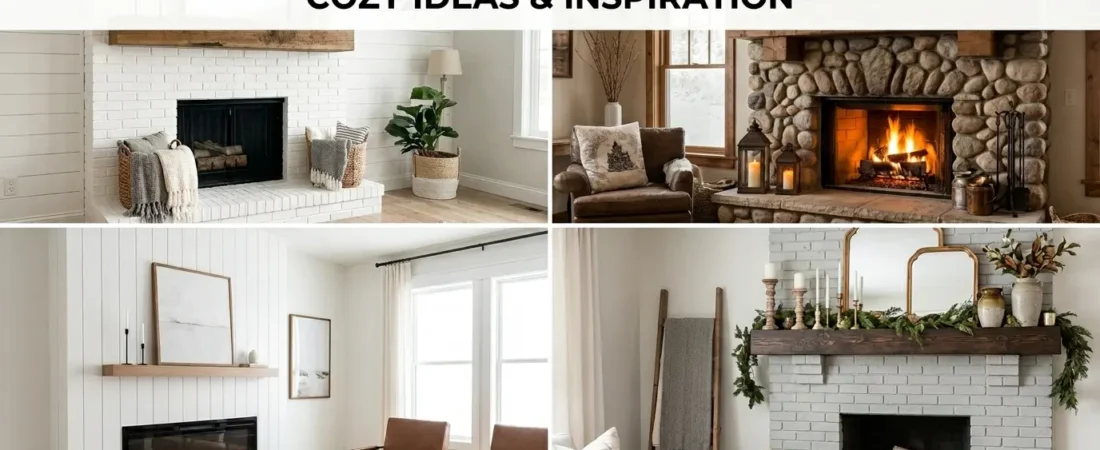
The fireplace is the defining feature of a farmhouse living room — the element around which everything else in the room is arranged and from which the whole room’s character radiates. Designing a farmhouse fireplace means making decisions about the surround, the mantel, the hearth, the firebox, and the styling that collectively determine whether the fireplace reads as genuinely architectural or simply decorative.
A farmhouse fireplace works best when it feels found rather than installed — when it looks like it has been in the house for generations even if it was designed last year. This guide covers every element of achieving that quality through specific material choices, proportional decisions, and styling approaches.
Table of Contents
What Makes a Fireplace Look Genuinely Farmhouse
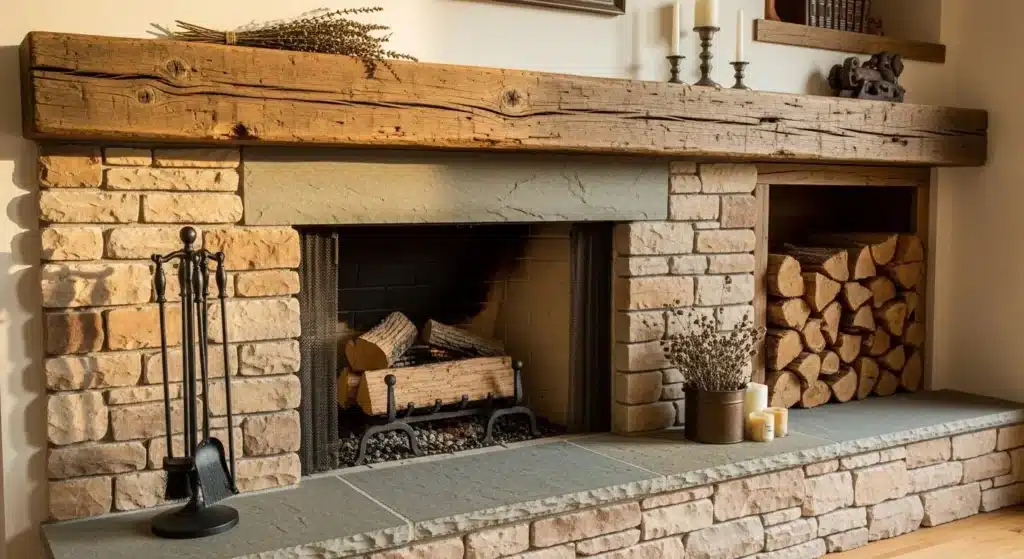
The farmhouse fireplace aesthetic rests on four visual qualities that distinguish it from other fireplace styles. First: natural aged materials — reclaimed timber, hand-made brick, rough-cut stone, and flagstone rather than smooth manufactured materials. Second: generous proportions — a wide opening, a deep hearth, and a substantial mantel that commands the wall. Third: evidence of use — the slight smoke-darkening around the firebox opening, the worn hearthstone, and the settled quality of a fireplace that has actually been used rather than installed for show. Fourth: simple honest styling — seasonal foliage, candles, and a few carefully chosen objects rather than coordinated decorative sets.
The materials are not incidental to the farmhouse fireplace character — they are the character. A farmhouse fireplace built from the wrong materials regardless of its proportions will always look like an imitation rather than the real thing.
The Fireplace Surround: Stone, Brick, or Plaster
Fieldstone or Rubble Stone Surround
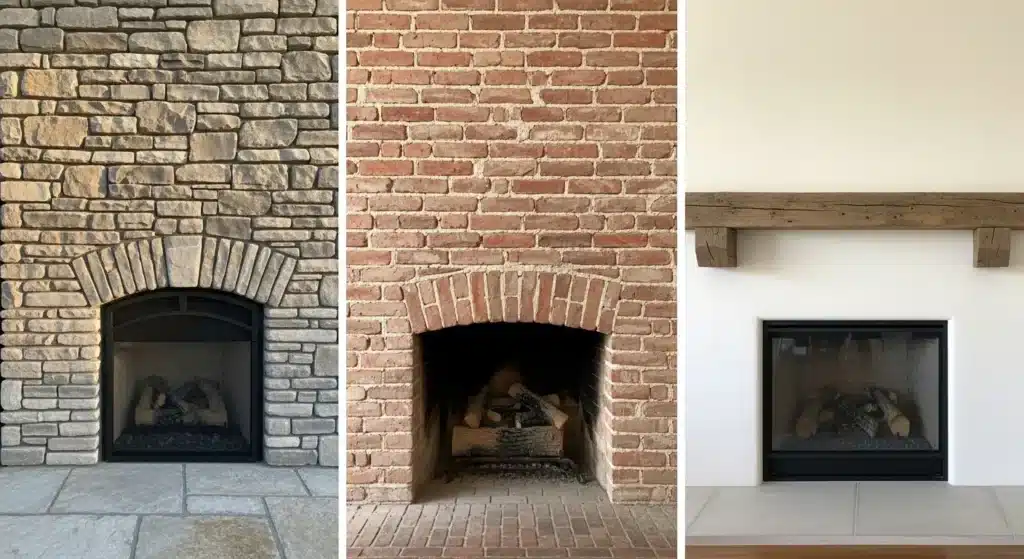
A fieldstone or rubble stone surround is the most authentic and most commanding farmhouse fireplace treatment. The irregular natural stone shapes, the visible mortar joints, and the variation in stone color and texture from stone to stone creates the organic quality that cut stone and brick cannot match. Fieldstone surrounds suit traditional and rustic farmhouse aesthetics and work particularly well in rooms with exposed timber beams and rough plaster walls.
The stone selection determines the character entirely. Warm honey and grey fieldstone suits traditional New England farmhouse aesthetics. Darker grey and blue slate suits Welsh and Scottish farmhouse references. Warm sandstone suits Southern and Midwestern farmhouse characters. Use stone that references the regional building tradition of the farmhouse style you are designing toward.
Hand-Made Brick Surround
Hand-made brick in warm red, orange, or buff tones creates a more refined farmhouse surround than fieldstone while maintaining the natural material authenticity. The slight variations in hand-made brick color and surface from brick to brick create the organic quality that machine-made engineering brick completely lacks. Reclaimed hand-made brick from demolition salvage provides the additional quality of genuine age.
The mortar joint profile determines how formal or informal the brick surround reads. Flush mortar joints create a cleaner more formal appearance. Recessed mortar joints create a more rustic appearance where each brick reads individually. A slightly raked or recessed joint suits the farmhouse aesthetic better than a flat-flush joint.
Limewashed Plaster Surround
A smooth or slightly textured plaster surround finished in limewash paint creates the most contemporary farmhouse fireplace treatment — cleaner and lighter than stone or brick while maintaining the organic material quality that synthetic finishes lack. Limewash on plaster creates the soft cloudy depth in the white surface that flat paint cannot produce and suits modern farmhouse and Scandinavian farmhouse interior directions.
The Farmhouse Mantel: The Most Important Single Element
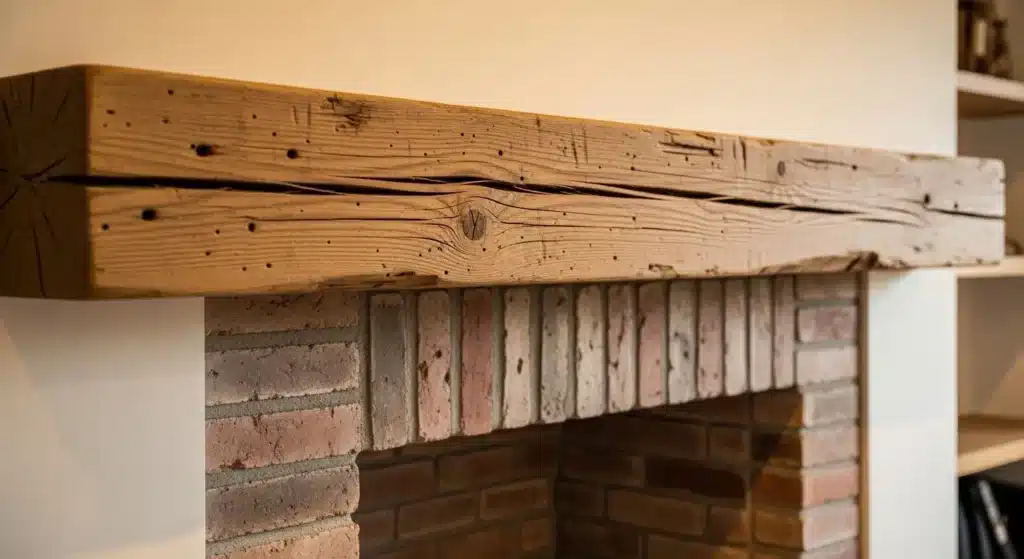
The mantel is the element that most defines the farmhouse fireplace character because it is the most visible and most personal surface in the room — the shelf that holds the objects, the seasonal decorations, and the framed photographs that make a house a home. A reclaimed timber beam mantel is the defining element of the farmhouse fireplace and the one that most immediately communicates authentic farmhouse character.
Reclaimed Timber Beam Mantel
A reclaimed timber beam mantel sources from an original agricultural or industrial building brings genuine age, genuine grain character, and the specific quality of old timber that new timber cannot replicate regardless of finishing treatment. The beam should be substantial — a minimum of 6 inches deep by 8 inches tall for a mantel that reads as architectural rather than decorative. Wider is better — a 10 to 12-inch beam has the presence that a 4-inch shelf does not.
Source reclaimed beams from architectural salvage yards, timber reclamation specialists, and farm clearances. The beam does not need to be structurally perfect — surface checks, bolt holes, and tool marks all add to the character rather than detracting from it. A beam with evidence of its previous life is more interesting than a pristine one.
Finish the reclaimed beam with pure beeswax applied with a cloth — it enriches the timber color, protects against moisture and dust, and creates the warm sheen that raw or oiled timber does not produce. Never sand a reclaimed beam flat — the surface marks and irregularities are its most valuable qualities.
Mantel Height and Proportions
The mantel should sit at a height of 54 to 60 inches from the finished floor level — above comfortable eye height when seated to provide visual separation between the firebox and the mantel display, but not so high that the mantel objects are lost at ceiling height. The mantel width should extend at least 6 inches beyond the firebox opening on each side — more on a wide chimney breast creates the generous proportioned farmhouse mantel that narrow mantels cannot achieve.
The Hearth: Stone, Slate, or Brick
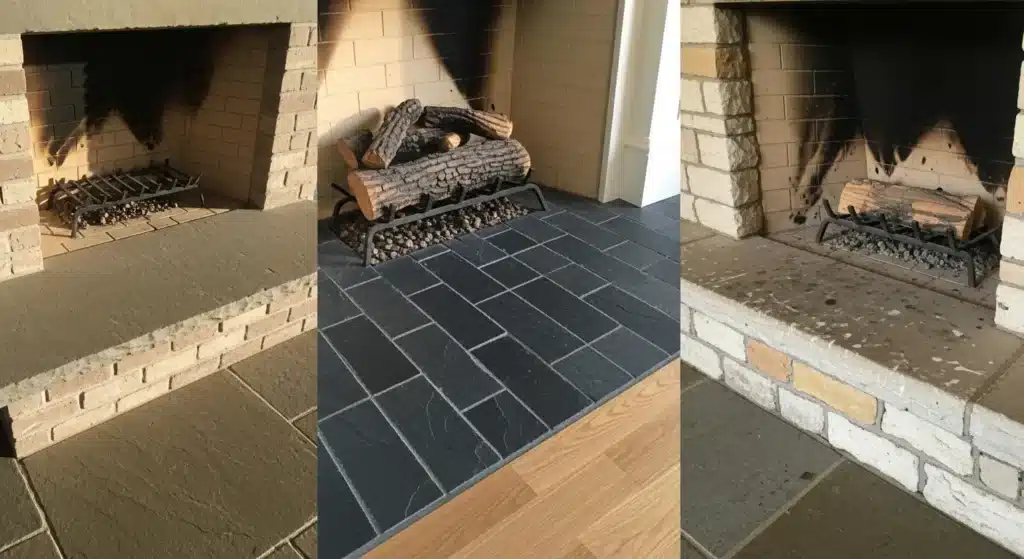
The hearth is both a functional and visual element — it protects the floor from sparks and embers while providing the platform that grounds the fireplace visually. A generous hearth that extends at least 18 inches in front of the firebox and the full width of the chimney breast creates the proportional foundation that makes a farmhouse fireplace look settled and architectural.
Flagstone:
The most authentic farmhouse hearth material. Large irregular flagstone pieces in warm grey, honey, or buff tones laid with wide mortar joints create the natural organic quality that cut tiles cannot replicate. Reclaimed flagstone with visible wear from previous use is the premium choice.
Dark slate:
Dark grey or charcoal slate hearth tiles create the strongest visual contrast with a warm stone or brick surround. Slate is the most practical hearth material — it is extremely heat resistant, virtually indestructible, and improves in character with age and use.
Reclaimed brick:
Reclaimed brick laid flat as a hearth surface suits a brick-surround fireplace where material continuity between surround and hearth creates a unified farmhouse character. Lay reclaimed brick in a herringbone or running bond pattern for the most distinctive hearth surface.
The Firebox: Wood Burning, Gas, or Electric
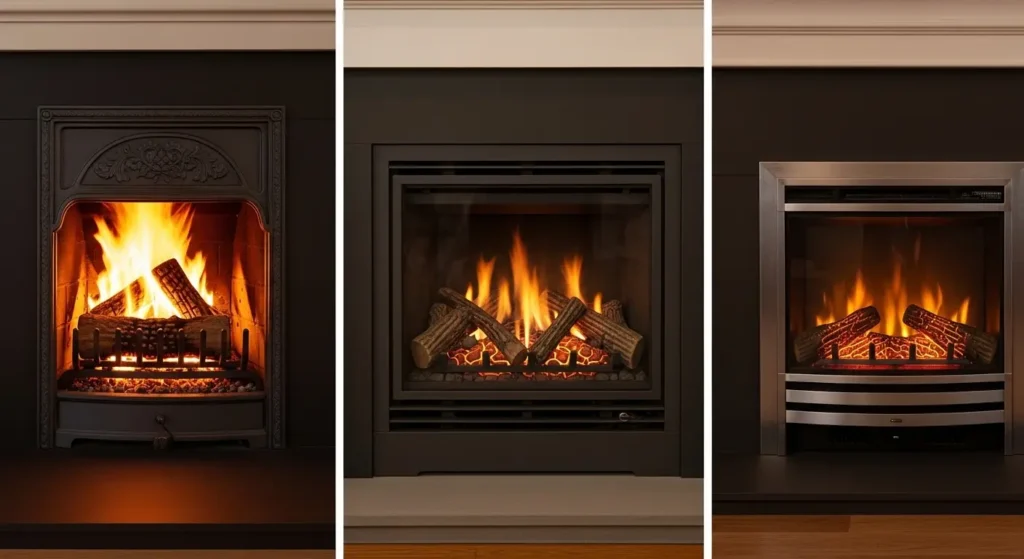
Wood-burning open fire
The most authentic farmhouse firebox and the one that produces the genuine farmhouse sensory experience — the sound of crackling wood, the smell of woodsmoke, and the radiant heat of an open fire. Requires a functional chimney, regular sweeping, and a wood supply. The cast iron fireback at the rear of the firebox reflects heat forward into the room and is the traditional farmhouse firebox finishing element.
Gas log burner insert
A contemporary gas log burner with realistic ceramic logs and a natural gas or propane connection creates genuine flames without the wood supply, smoke, and ash management of an open fire. The best gas log burners are visually indistinguishable from wood fires at normal room viewing distances. Requires a gas connection and a functional flue.
Electric fire insert
A high-quality electric fire insert with realistic LED flame technology provides the visual effect of a fire without any flue, gas connection, or fuel requirement. The best electric inserts are convincing at distances of 6 feet or more and suit properties where a gas connection or chimney is not available. The heating element provides supplementary warmth but not the radiant heat quality of a real fire.
How To Style a Farmhouse Fireplace Mantel
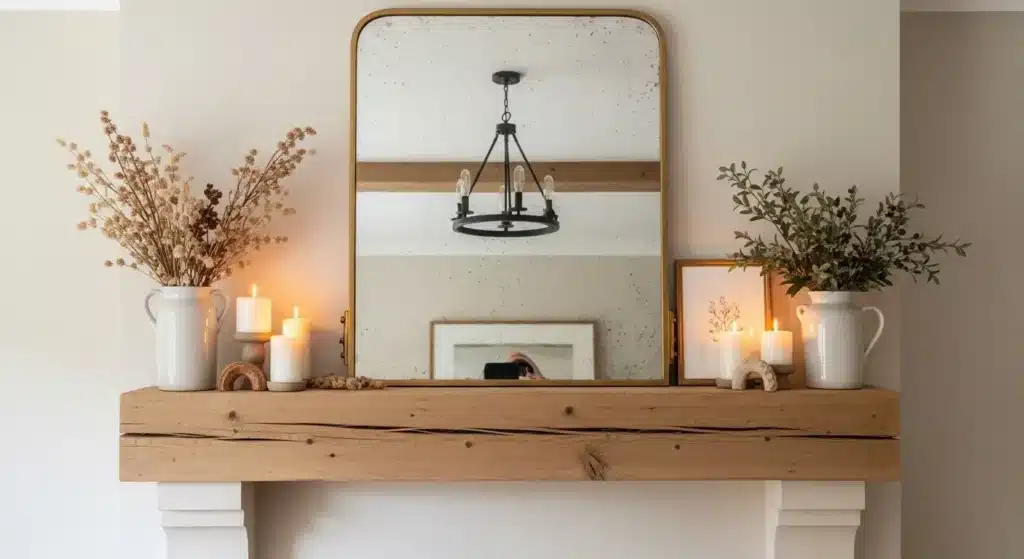
A farmhouse mantel styled well looks like it assembled itself over time — objects added as they were found, seasonal elements changing through the year, and the accumulated personal quality of a shelf that belongs to someone rather than a display that was installed. This quality requires specific styling decisions rather than simply placing objects on a shelf.
The leaning mirror:
A large vintage or aged-frame mirror leaned against the chimney breast rather than hung on the wall is the farmhouse mantel styling decision that most changes the character of the fireplace. The leaning position communicates informality. The mirror doubles the light in the room and reflects the fire. Use a frame with genuine age or a convincingly distressed finish.
Asymmetric groupings:
Farmhouse mantel styling uses asymmetric object groupings rather than symmetrical pairs. A tall candlestick on the left, a medium ceramic vessel in the center-left, and three small objects clustered at the right end creates more visual interest than matching objects on each side. The asymmetry communicates personal curation rather than purchased styling.
Natural and seasonal elements:
Dried botanicals — pampas grass, dried seed heads, eucalyptus branches — in simple ceramic or wooden vessels change the mantel with the seasons and introduce the organic material quality that purely decorative objects cannot provide. Fresh seasonal flowers in a simple vessel, foraged greenery, and seasonal produce arranged on the mantel all communicate the farmhouse connection to nature and the agricultural calendar.
📌 More home decor ideas: How To Decorate a Farmhouse Laundry Room
Frequently Asked Questions
What makes a fireplace look farmhouse?
A farmhouse fireplace looks authentic through four specific elements: a reclaimed timber beam mantel with visible grain and age marks, a natural stone or hand-made brick surround rather than smooth manufactured materials, a generous flagstone or slate hearth that extends well in front of the firebox, and simple honest styling with natural seasonal objects rather than coordinated decorative sets. According to Architectural Digest the farmhouse fireplace remains one of the most consistently searched interior fireplace styles because its combination of natural materials, generous proportions, and warm character suits a wider range of homes than any other fireplace style.
How do I make my fireplace look rustic and farmhouse?
The most impactful single change to make an existing fireplace look farmhouse is replacing the existing mantel with a reclaimed timber beam. A reclaimed beam mantel transforms the character of any fireplace regardless of the surround material below it. The second most impactful change is painting or limewashing a plain painted surround in a warm white tone. The third most impactful change is replacing a modern tile or granite hearth with a natural stone, slate, or flagstone hearth. These three changes applied sequentially produce a complete farmhouse fireplace transformation.
What wood is best for a farmhouse mantel?
Reclaimed hardwood beams from oak, elm, chestnut, or pine create the best farmhouse mantels because their grain character, surface marks, and the specific quality of old timber produce the authentic farmhouse appearance that new timber cannot replicate. Oak is the most durable and most widely available reclaimed beam timber. Elm produces the most distinctive and most beautiful grain pattern. Pine reclaimed from agricultural buildings has the warmest tone and the most obvious evidence of its original agricultural use.
How do you style a farmhouse mantel for each season?
A farmhouse mantel styled seasonally changes the living room atmosphere more completely than any other single room change. Spring — fresh flowers in ceramic jugs, new green foliage, and white pillar candles. Summer — dried lavender bundles, garden herbs in terracotta pots, and natural linen. Autumn — dried seed heads, small pumpkins and gourds, warm amber candles, and fallen leaves. Winter — evergreen garland draped along the full mantel length, pillar candles at different heights, dried orange slices, cinnamon sticks, and pinecones. Each seasonal change takes 20 minutes and uses primarily natural gathered materials at minimal cost.
More Home Decor Ideas
→ Farmhouse Kitchen Island Features Worth Adding
→ 10 Cozy Christmas Living Room Ideas
→ How To Decorate a Coastal Living Room on a Budget
Start with the mantel. A reclaimed timber beam above any existing fireplace changes the whole room character in an afternoon. Everything else — the surround, the hearth, the styling — builds from that single foundational decision.

Sheikh Hassaan is a digital architect for small businesses and the founder of The Glow Up System. He writes about home decor, garden design, and outdoor living for real American homes – practical ideas that work in actual spaces without oversized budgets.