
I put a bunch of supermarket tulips in a glass on the kitchen counter on a grey Tuesday in February. My partner walked in and said it feels like spring in here. The tulips cost $6.
Fresh flowers do something to a room that no object or paint color replicates. These 9 spring floral arrangements show exactly how to create them, from a classic tulip bouquet to a foliage-led display that lasts two weeks.
Table of Contents
1. Arrange a Classic Tulip Bouquet for Timeless Spring Color
✦ Classic Tulip Bouquet
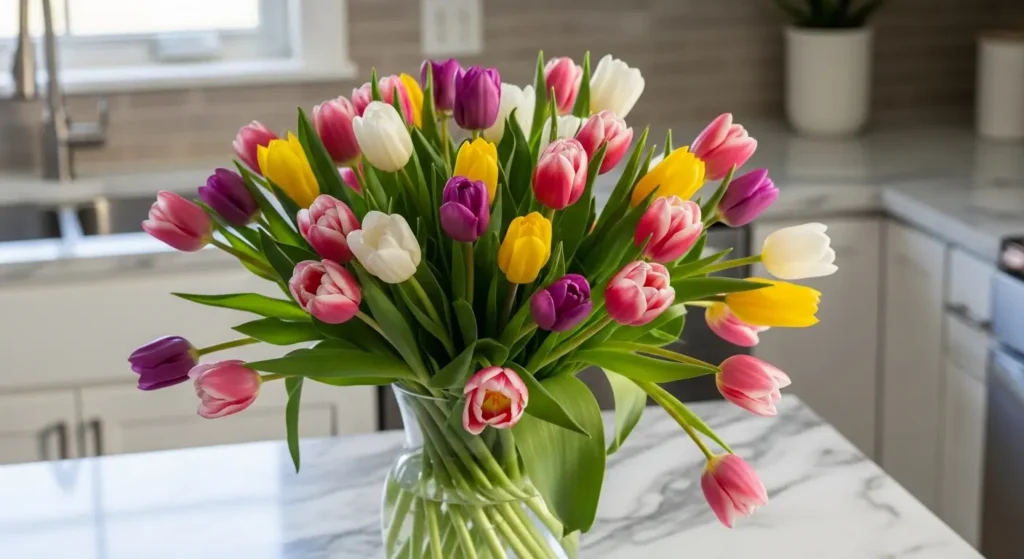
The classic tulip bouquet is the spring floral arrangement I reach for first because it requires no skill and looks like it did. Buy in bud. Cut at a diagonal. Rotate the vase daily.
Buy tulips when they are still in tight bud — they will open beautifully over the following days. Cut stems at a 45-degree angle under running water and place immediately in fresh cool water. Tulips continue to grow after cutting and their stems naturally curve toward light — rotate the vase daily for an even arrangement. Mixed colors in a single bouquet create the most visually rich display. Strip all leaves below the waterline to prevent bacterial growth that shortens vase life.
PRO TIP: Add a copper coin or a few drops of vodka to the vase water to inhibit bacterial growth. Both methods genuinely extend tulip vase life by two to three days — the copper ions and the alcohol both prevent the bacteria that cloud the water and block stem uptake.
2. Create a Soft Pastel Garden Mix Arrangement for Bedroom or Dining Table
✦ Pastel Garden Mix
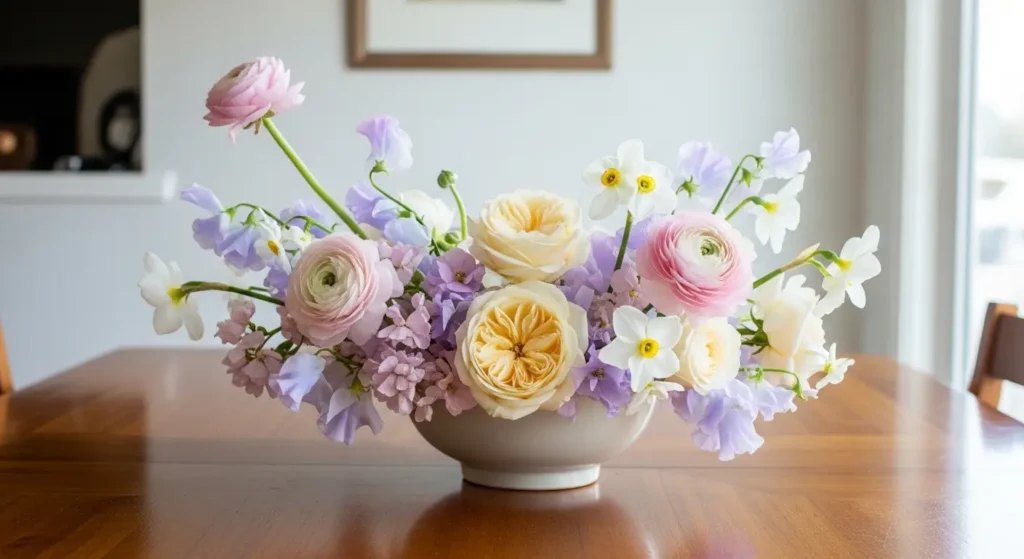
A pastel garden mix arrangement uses soft blush pinks, creams, pale lavenders, and whites to create a romantic display that suits bedrooms, dining tables, and any space where you want a feeling of gentle beauty rather than bold statement color. This is the arrangement style that gets saved thousands of times on Pinterest.
The pastel garden mix works because every element is in the same soft color family — the arrangement feels cohesive and intentional despite combining many different flower types. Ranunculus for layered petal depth. Sweet peas for fragrance and delicate form. Pale roses or garden roses for classic romance. White narcissus for freshness. Soft lavender for color variation. Arrange in a wide low ceramic bowl rather than a tall vase — the low wide shape suits the soft horizontal quality of the pastel palette.
3. Make a Wildflower-Inspired Loose Arrangement for Natural Charm
✦ Wildflower Inspired Arrangement
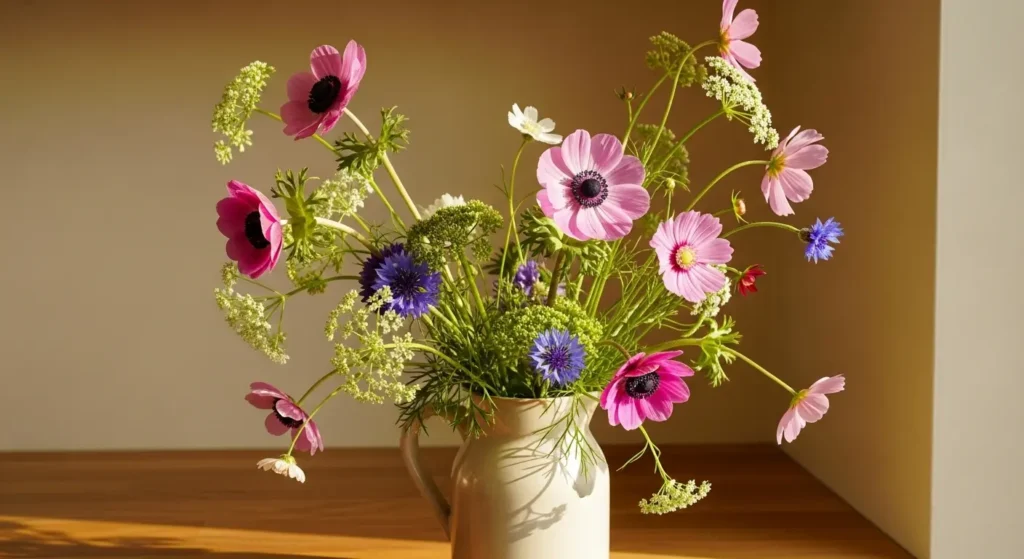
A wildflower-inspired arrangement deliberately rejects the formal rules of traditional flower arranging — no careful height graduation, no tightly packed symmetry, no wired stems. Instead flowers are placed loosely as though freshly gathered from a hedgerow or meadow, with natural stems at varying heights and some flowers drooping slightly at their natural angle.
Choose flowers with natural wildflower character — anemones, cosmos, cornflowers, cow parsley, sweet William, and field poppies all have the loose informal quality needed. Use a simple vessel — a pottery jug, a jam jar, or a recycled glass bottle. Place flowers one at a time and let each stem find its natural angle rather than arranging them into formal positions. The arrangement is finished when it looks like it grew naturally rather than was placed.
PRO TIP: Add cow parsley, Queen Anne’s lace, or any delicate white umbellifera to any wildflower arrangement. These feathery white flowers fill gaps, add movement, and create the airy quality that distinguishes a genuine wildflower arrangement from a formal bouquet with informal flowers.
4. Fill Mason Jars With Spring Flowers for Rustic Charm
✦ Rustic Mason Jar Flowers
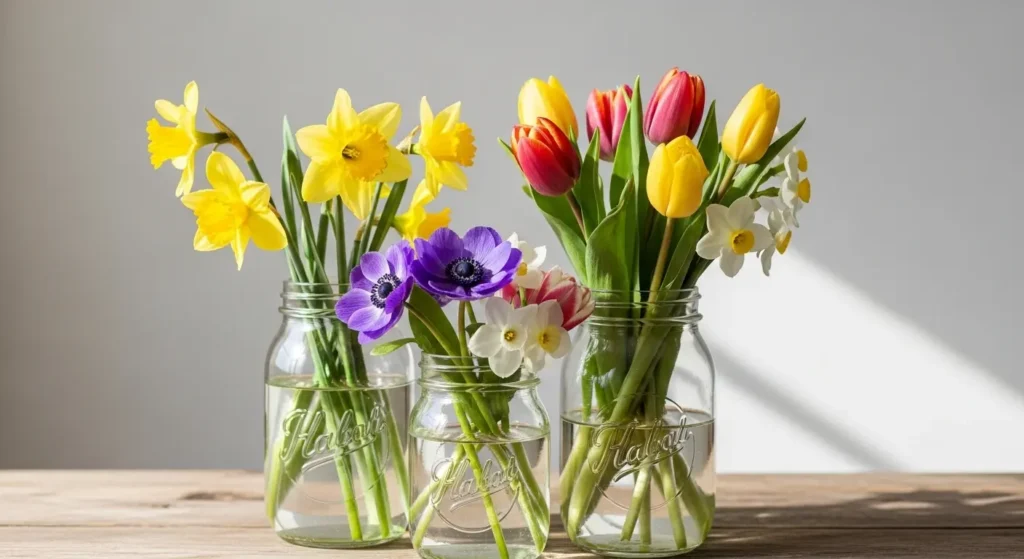
The three-jar grouping is the spring floral arrangement idea I recommend most for a kitchen table. Three jars of different heights with one flower type each looks more considered than one large arrangement with three types mixed.
For how mason jars work as both flower vessels and lanterns in a styled table setting see our spring decorating ideas guide which covers the full home spring refresh approach.
5. Create an Elegant Spring Centerpiece for a Dining Table
✦ Elegant Table Centerpiece
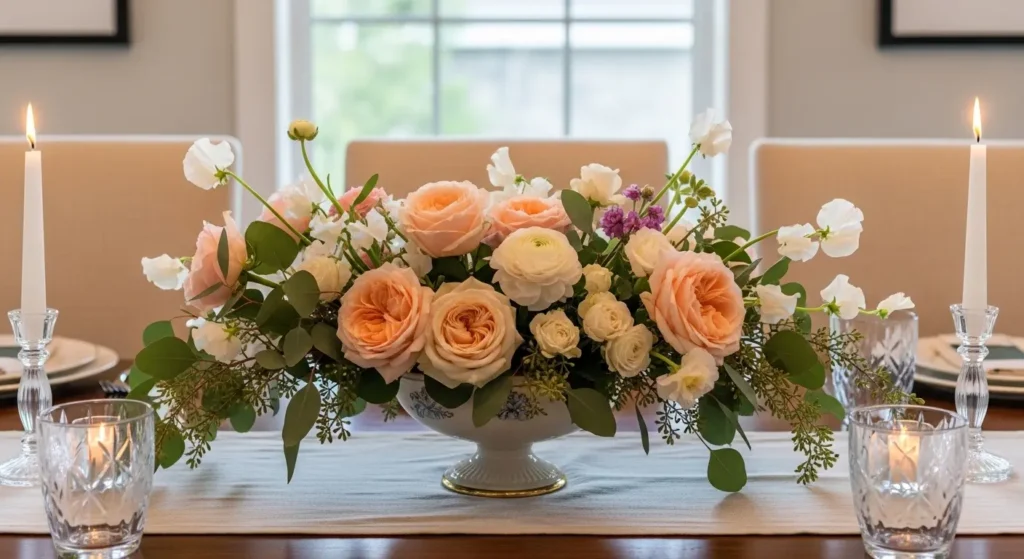
A spring dining table centerpiece serves both as a floral display and as the visual anchor of the entire table setting. The proportions are critical — a table centerpiece must be low enough for guests to see each other across the table, wide enough to feel generous, and beautiful from every angle since it will be viewed from all sides simultaneously.
Use a wide low bowl or a footed compote as your centerpiece vessel — the low profile keeps the arrangement below sightline across the table. Create a dome-shaped arrangement of mixed spring flowers that reads equally well from all sides. Garden roses and ranunculus as the focal flowers. Sweet peas and soft greenery as supporting elements. Tuck flowers in from different angles rotating the bowl as you work to ensure no side is neglected. Flanking candles at the same table level complete the centerpiece setting.
PRO TIP: Use a small amount of floral foam soaked in water inside your centerpiece bowl for arrangements that need to last through a dinner party. Floral foam holds each stem at exactly the angle you place it and keeps flowers hydrated through a long evening without the drooping that can occur when stems sit loosely in a low water vessel.
6. Combine Bold Seasonal Colors for a Statement Spring Arrangement
✦ Bright Seasonal Bloom Combo
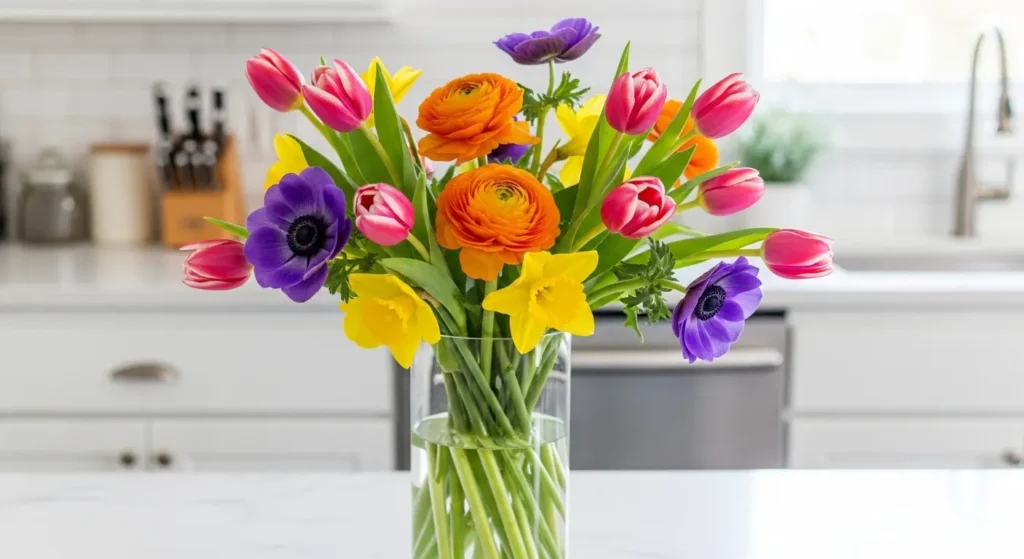
A bold seasonal spring arrangement embraces the full spectrum of spring color rather than restricting to a palette. Vivid pink alongside orange, yellow beside purple, red mixed with white — the deliberate combination of colors that would seem to clash creates an arrangement that feels vibrant, joyful, and completely alive.
The key to a successful bold mixed spring arrangement is using flowers with naturally harmonious forms rather than harmonious colors. When the shapes work together — round ranunculus beside trumpet narcissus beside cupped tulips — the eye reads the varied colors as an intentional celebration rather than a random collection. Use a tall clear glass vase that shows the stems — the parallel stems visible through the glass add to the structured quality that makes bold color combinations look designed.
7. Arrange an All-White Spring Display for Pure Elegant Simplicity
✦ Minimal White Floral Design
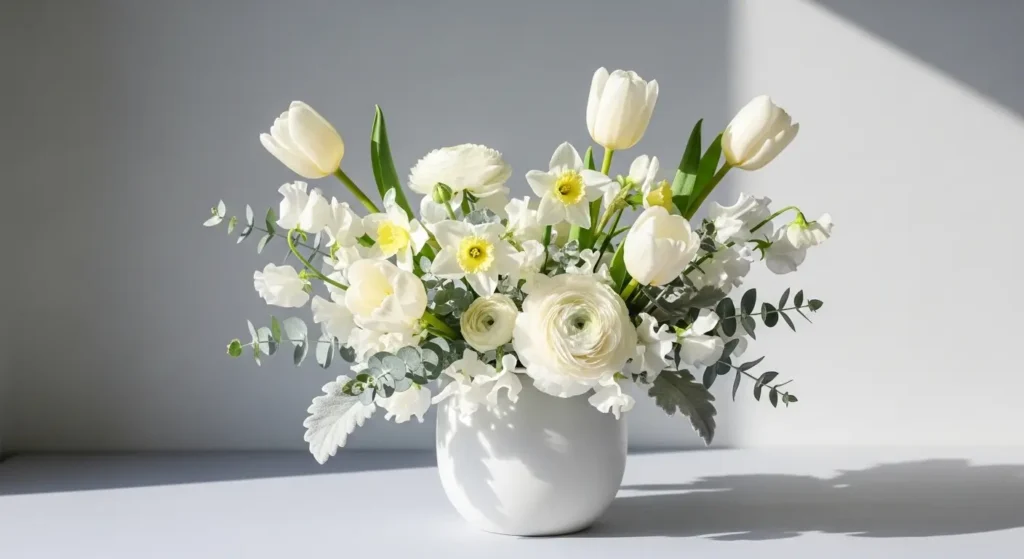
An all-white spring arrangement is the most elegant and most universally beautiful floral display available. White flowers photograph in a way that colored flowers cannot — the variations in petal texture, the shadows between petals, and the subtle gradations from pure white to cream all become visible in a way that color overshadows in mixed arrangements.
Use exclusively white and near-white flowers — white tulips, white narcissus, white ranunculus, white sweet peas, white hyacinth, and white anemones. Add silver-grey foliage — eucalyptus, dusty miller, or artemisia — as the only non-white element. The silver foliage provides the visual separation between flowers that makes an all-white arrangement readable rather than visually flat. Place in a clear glass vessel or a white ceramic vase for the cleanest most minimal result.
PRO TIP: Vary the white tones deliberately in an all-white arrangement. Pure white beside cream beside blush-white creates far more visual interest and depth than flowers all in exactly the same shade of white. A monochrome arrangement needs tonal variation to prevent it looking flat.
8. Create a Romantic Soft Pink Spring Arrangement for Any Room
✦ Romantic Soft Pink Display
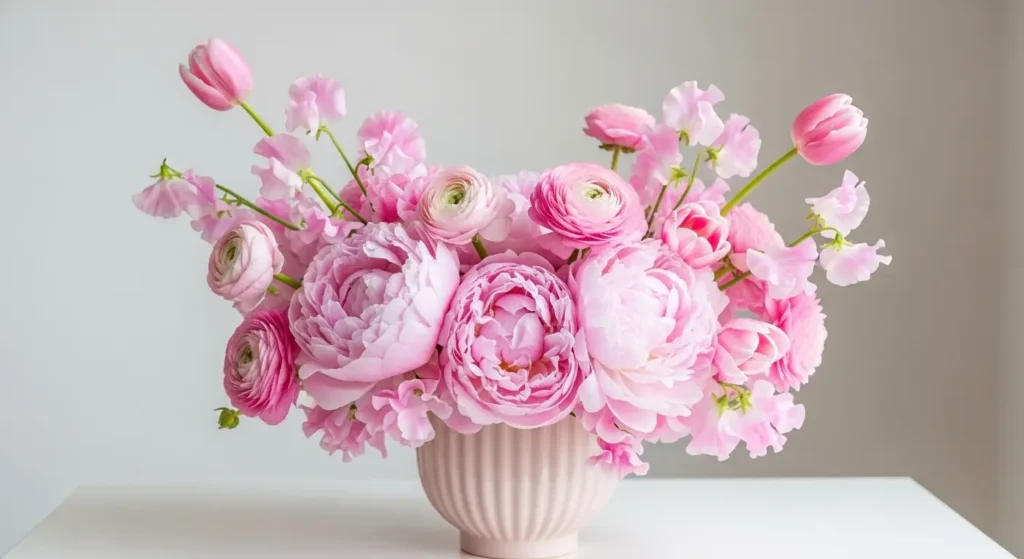
A soft pink spring arrangement is the most romantic and most saved floral display on Pinterest. The combination of different pink flowers — from the palest blush to a deeper rose — creates depth and richness within a single color family. Every flower enhances every other and the overall effect is one of abundant natural beauty.
Layer different shades of pink throughout the arrangement — pale blush ranunculus as the lightest tone, soft pink sweet peas in the middle range, and deeper pink tulips or garden roses as the richest tone. The tonal variation within the pink family creates the dimensional quality that makes a monochromatic arrangement look complex and beautiful. White or pale cream flowers tucked throughout keep the arrangement fresh and prevent it becoming too heavy.
9. Use Spring Greenery as the Hero of a Foliage-Led Arrangement
✦ Fresh Greenery Accent
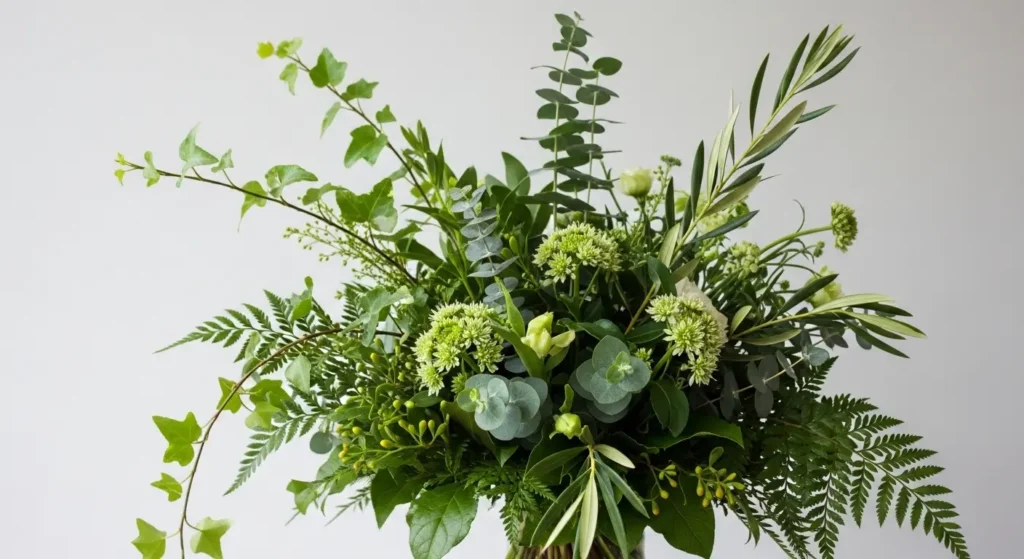
A foliage-led spring arrangement uses fresh greenery as the primary visual element with flowers playing a supporting accent role rather than dominating the display. This approach is the most enduring — green arrangements last significantly longer than flower-heavy ones and have a freshness and naturalism that traditional bouquets cannot replicate.
For more on using foliage as a primary garden and home display element see our mini dish garden ideas guide which covers foliage-forward indoor plant displays.
Frequently Asked Questions
What flowers are best for spring arrangements?
The best flowers for spring arrangements are tulips for height and bold color, ranunculus for layered petal texture and long vase life, sweet peas for fragrance and delicate form, narcissus and daffodils for classic spring freshness, anemones for their striking dark centers and vivid petals, and hyacinths for unmatched fragrance. According to the Society of American Florists tulips are consistently the most purchased spring cut flower in the United States due to their long vase life, wide color range, and universal recognition as a spring flower.
How long do spring flower arrangements last?
Tulips last 5 to 10 days, ranunculus 7 to 10 days, sweet peas 4 to 7 days, and narcissus 5 to 8 days with fresh water changes every two days. Remove spent flowers as they decline rather than discarding the whole arrangement.
How do I make spring flower arrangements last longer?
Buy in bud, cut stems at a diagonal and recut every two days, remove all leaves below the waterline, change the water every two days, and keep away from direct sun, heat, and ripening fruit. A flower preservative sachet adds nutrients and bactericide that extends vase life by two to three days.
Where is the best place to put a spring flower arrangement?
Dining tables, kitchen counters, and entrance halls where the arrangement is seen frequently. Avoid direct afternoon sun, near radiators, and near fruit bowls which produce ethylene gas that shortens flower life.
More Home and Garden Ideas You Will Love
→ 12 Lovely Front Yard Garden Ideas
→ 10 Mini Dish Garden Ideas You’ll Love
→ 12 Boho Garden Ideas You’ll Love
→ 12 Cute Mini Garden Ideas For Small Spaces
$6 tulips on a grey Tuesday. That is where this started for me.
Pick one arrangement from this list. Buy the flowers this week. Ten minutes of arranging. The room feels different immediately and it stays different for a week.

Sheikh Hassaan is a digital architect for small businesses and the founder of The Glow Up System. He writes about home decor, garden design, and outdoor living for real American homes – practical ideas that work in actual spaces without oversized budgets.