
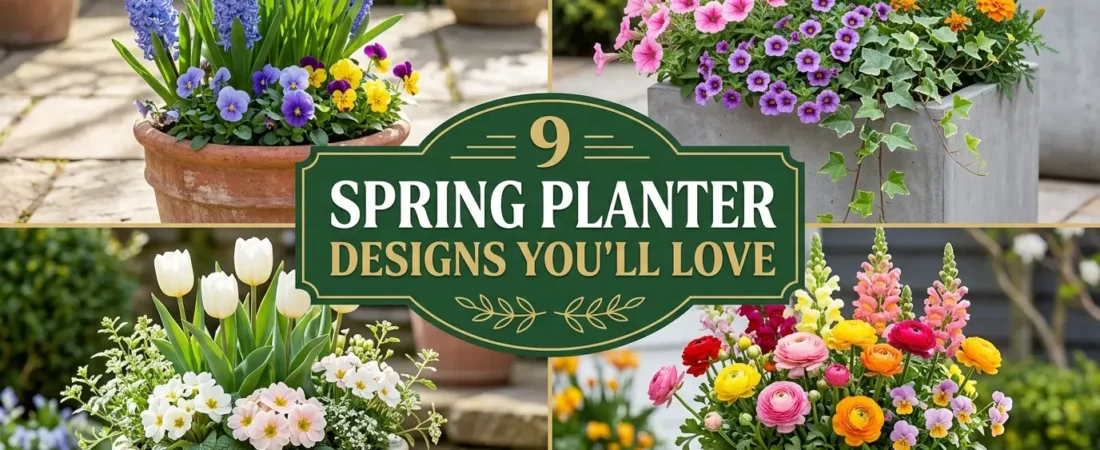
My neighbor put two terracotta pots of mixed tulips outside her front door on a Tuesday in March. By Wednesday three people had knocked to ask where she got them.
That is spring planter ideas at their most honest. The cost is almost nothing. The time is one afternoon. The result lasts six weeks and makes the whole house look awake again.
These 9 designs cover every style from a packed cottage mix to a modern single-variety statement. Every one costs under $40 in plants.
Table of Contents
1. Create a Classic Colorful Tulip Planter for Maximum Spring Impact
✦ Colorful Tulip Arrangement
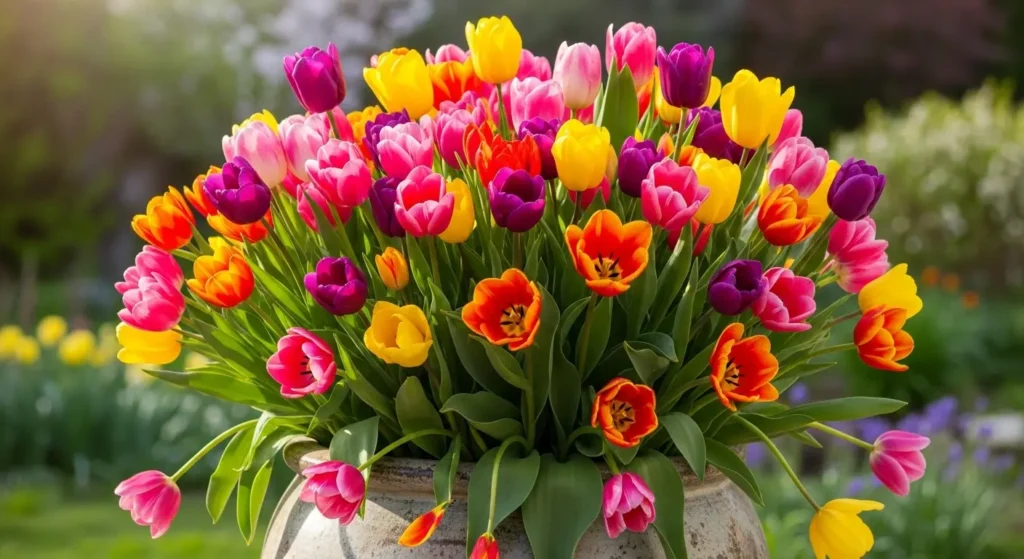
The tulip planter is the spring planter idea I recommend most to anyone who wants maximum impact from one purchase. Nothing else announces spring as immediately or as photographically.
Plant tulip bulbs in autumn for spring flowering — pack them densely at two depths in the pot for the most abundant display. Lower layer of bulbs at 8 inches deep, upper layer at 4 inches deep with each bulb positioned between the ones below. This double-layer planting doubles the number of flowers per pot. Choose a mix of early, mid, and late-flowering tulip varieties to extend the display period across six to eight weeks rather than all flowering at once.
PRO TIP: Plant small viola or forget-me-not plugs on top of your tulip bulbs when planting in autumn. The violas flower through winter and early spring, covering the bare soil above the bulbs beautifully. When the tulips emerge the violas fill the gaps between the stems creating a two-layer display that is more impressive than tulips alone.
2. Design a Cottage Garden Spring Planter With Mixed Old-Fashioned Flowers
✦ Cottage Garden Planter
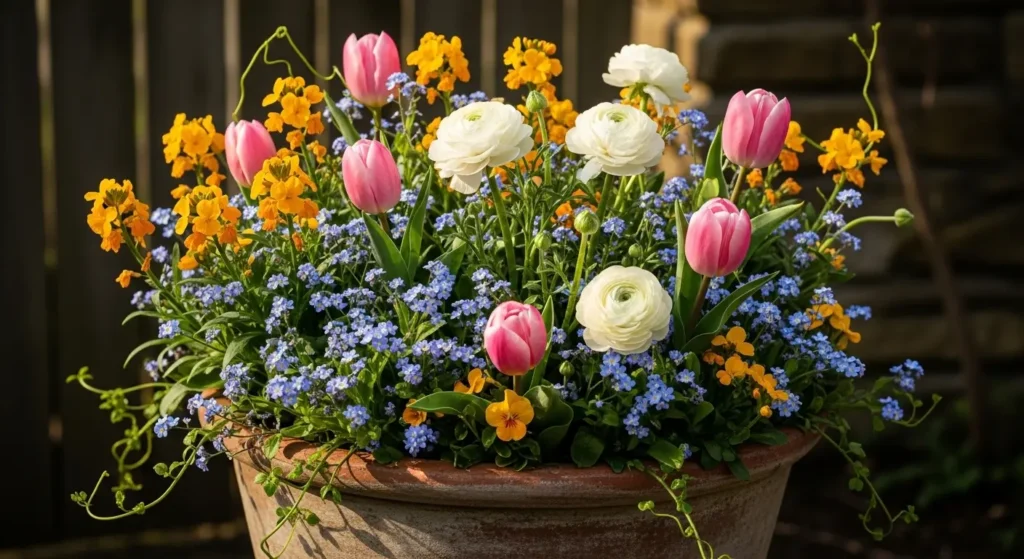
A cottage garden spring planter combines several different spring flowering plants in the same container — the deliberate informality and mix of heights, colors, and textures creating the lush abundant quality that defines cottage garden style. The arrangement looks as though it grew naturally rather than being planted.
Combine wallflowers for fragrance and warm color, forget-me-nots for the classic blue cloud effect, ranunculus for the layered petal display, and one or two tulips for height. Plant in a wide shallow bowl or large terracotta pot using quality multipurpose compost. The key to cottage planting success is density — pack the plants closely so no bare soil is visible from the first planting. The crowded planting style that defines cottage gardens looks intentional at this density.
3. Create a Beautiful Spring Planter for Under $15
✦ Budget-Friendly Spring Pot
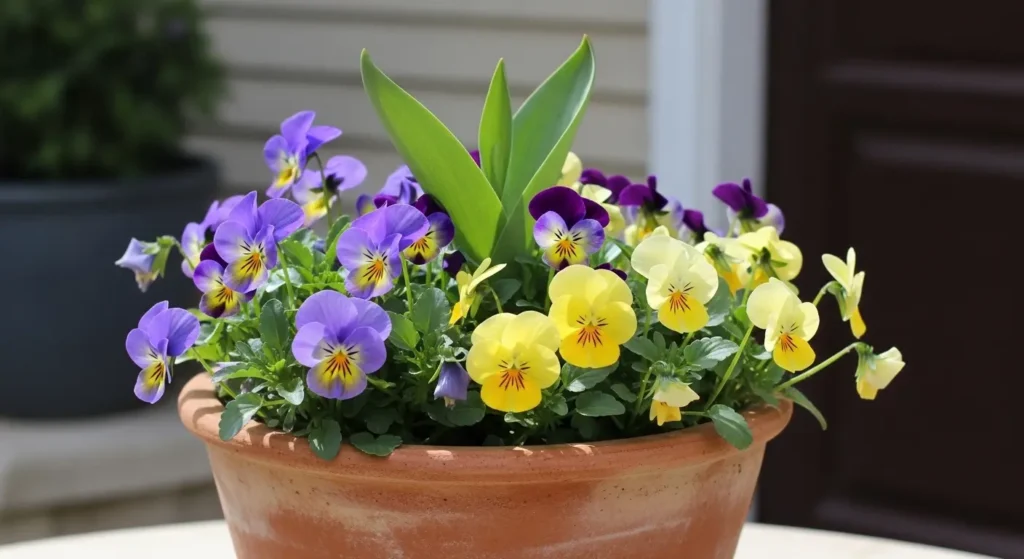
The under-$15 spring planter is the spring planter idea I recommend to anyone who thinks good planting requires a large budget. Five violas in a charity shop pot. Dense. Properly watered. Consistently beautiful for three months.
Budget breakdown for a beautiful under $15 spring planter: one terracotta pot from a dollar store or charity shop at $2 to $4. One tray of mixed pansy or viola plugs at $5 to $8. One small bag of multipurpose compost at $3 to $5. Total — $10 to $17 for a pot that will flower continuously for eight to twelve weeks. Plant generously — five or six pansy plants per 8-inch pot creates the dense display that looks designed.
4. Create a Soft Pastel Spring Planter for an Elegant Entrance
✦ Pastel Bloom Display
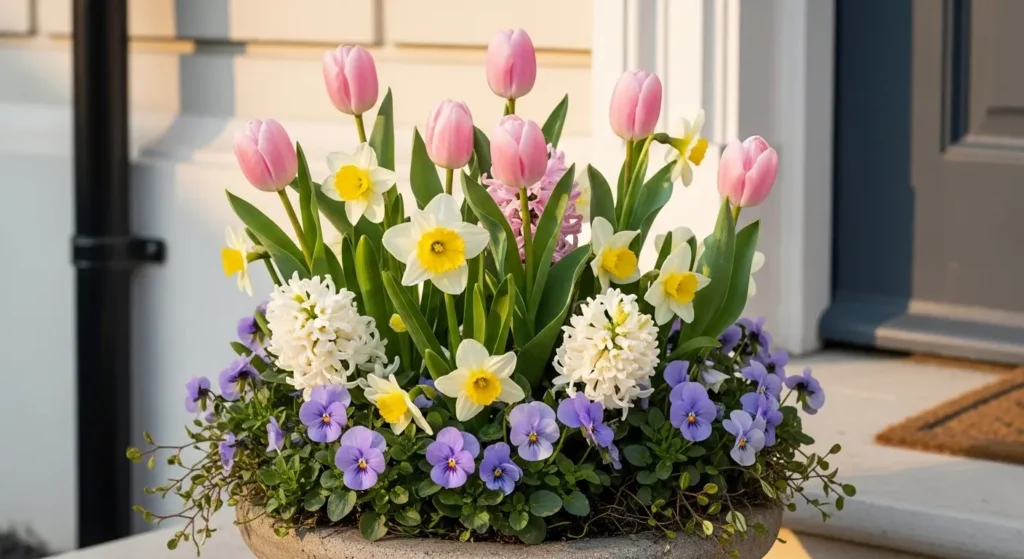
A pastel spring planter uses a deliberately restricted soft color palette — pale pink, cream, soft white, and lavender — to create a display that feels elegant and sophisticated rather than exuberant. Pastel arrangements photograph beautifully and suit formal entrances, modern minimal homes, and anyone who finds bright mixed colors too busy.
Choose plants from a strictly pastel palette — pale pink tulips, cream narcissus, white hyacinth, soft lavender violas, and pale yellow primrose all work beautifully together. Avoid any vivid or saturated colors that break the palette. The restraint of a single color family across the whole arrangement is what creates the elegant refined quality — use as many different plant varieties as you like as long as every single one is within the pale soft color range.
PRO TIP: Add one stem of silver or grey foliage — dusty miller, artemisia, or silver-leaved lamium — to any pastel planter. The silver-grey foliage acts as a visual bridge between the different pastel tones and makes the whole arrangement look more cohesive and designed.
5. Design a Matching Pair of Front Porch Spring Planters
✦ Front Porch Favorite
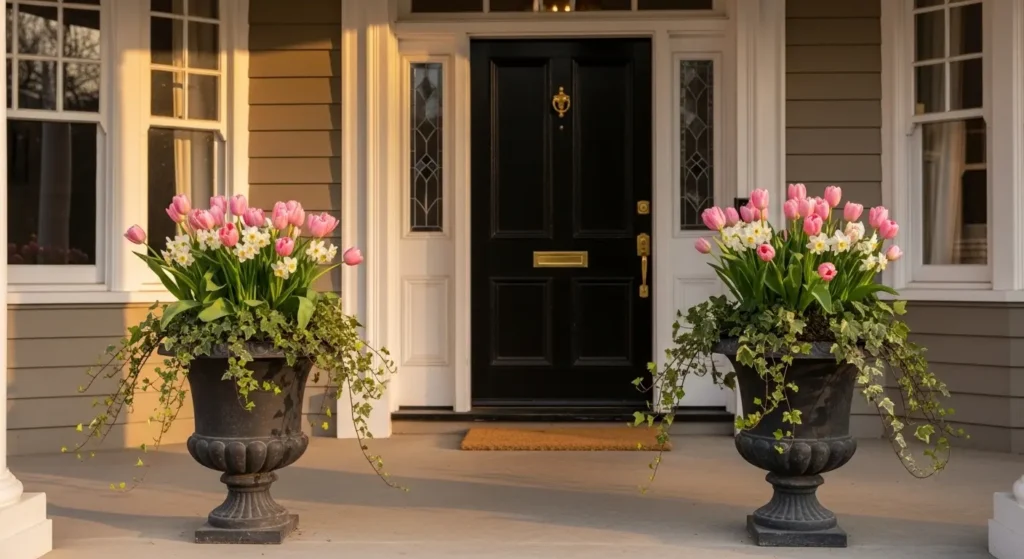
Two matching spring planters positioned symmetrically on either side of a front door create the most impactful curb appeal upgrade available for the investment. The symmetry signals design intention and makes a front entrance look genuinely considered rather than decorated as an afterthought.
For how matching porch planters work as part of a complete front porch design see our front porch ideas guide which covers symmetrical entrance styling in detail.
6. Style a Rustic Terracotta Spring Display With Layered Heights
✦ Rustic Terracotta Charm
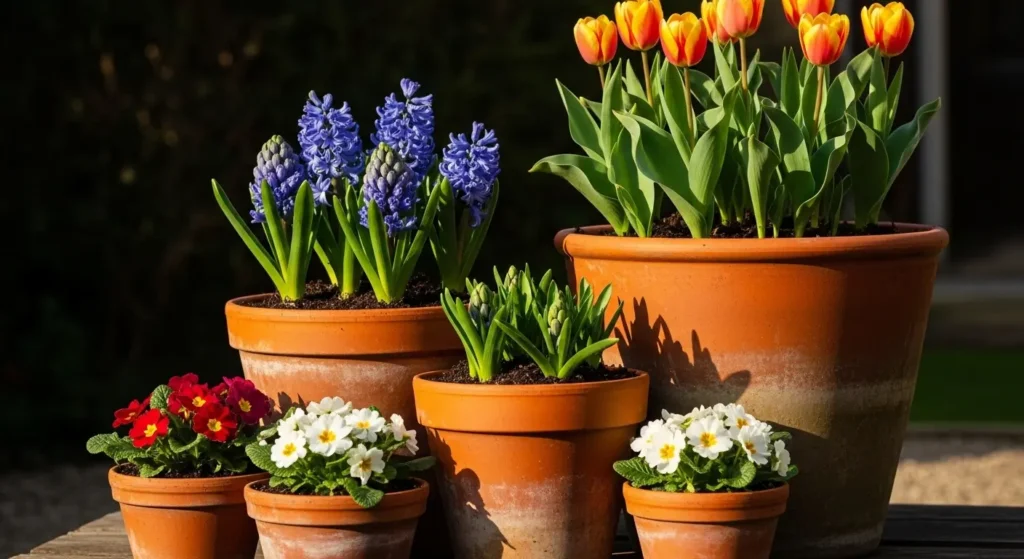
A grouped terracotta spring display uses multiple pots of different sizes to create a layered height arrangement where each pot is visible behind the one in front. The warm orange-red of aged terracotta is one of the most beautiful backdrops for spring flowers — the clay color makes pinks and purples look more vibrant and yellows look warmer.
Group five to seven terracotta pots of varying sizes — from a large 14-inch pot at the back to small 4-inch pots at the front. Plant each one with a different spring plant at different heights. Tall tulips in the largest back pot. Medium hyacinths or narcissus in mid-sized pots. Low primroses, violas, and muscari in the smallest front pots. The height graduation from back to front creates the layered display effect that makes a grouped pot arrangement look designed.
PRO TIP: Age new terracotta pots instantly by painting them with a solution of natural yogurt thinned with water. Apply the yogurt mix to the outside of the pot and leave in a shaded outdoor position for two to three weeks. The yogurt encourages moss and algae growth that creates the aged patina of a decades-old terracotta pot within weeks.
7. Make a Big Impact With a Small Space Spring Window Box
✦ Small Space Flower Planter
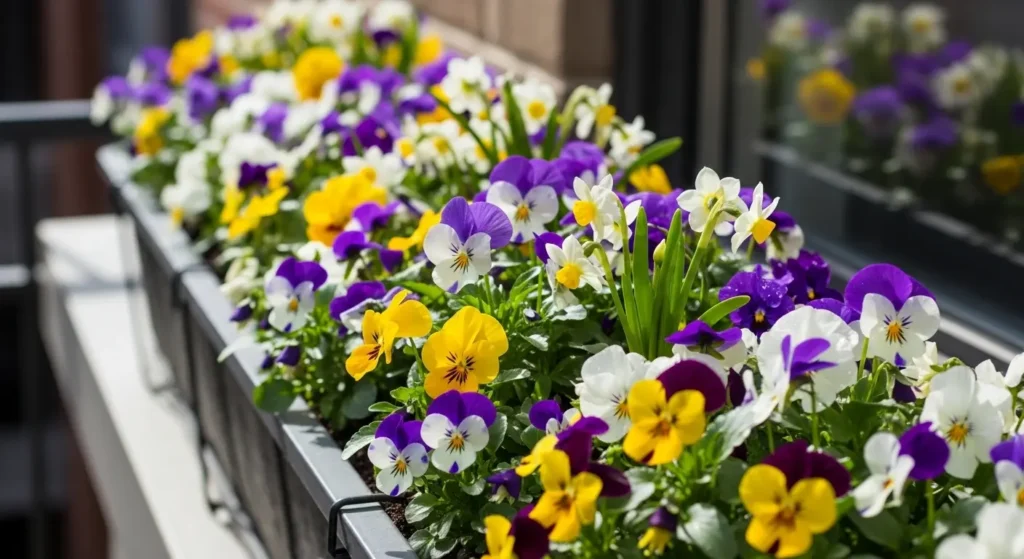
A window box is the most space-efficient spring planter available — it creates a display visible from both inside and outside the home while using zero floor or counter space. A well-planted spring window box transforms an apartment windowsill or balcony railing into a genuine garden feature.
Fill a window box to within an inch of the top with quality multipurpose compost. Plant densely with trailing violas or pansies at the front edges to cascade over the box sides, upright spring bulbs in the center for height, and compact plants to fill the middle ground. The trailing plants at the front edge are the most important element — they soften the hard edge of the box and connect the display to the wall or railing below it.
8. Plant a Pollinator-Friendly Spring Container to Support Wildlife
✦ Pollinator-Friendly Container
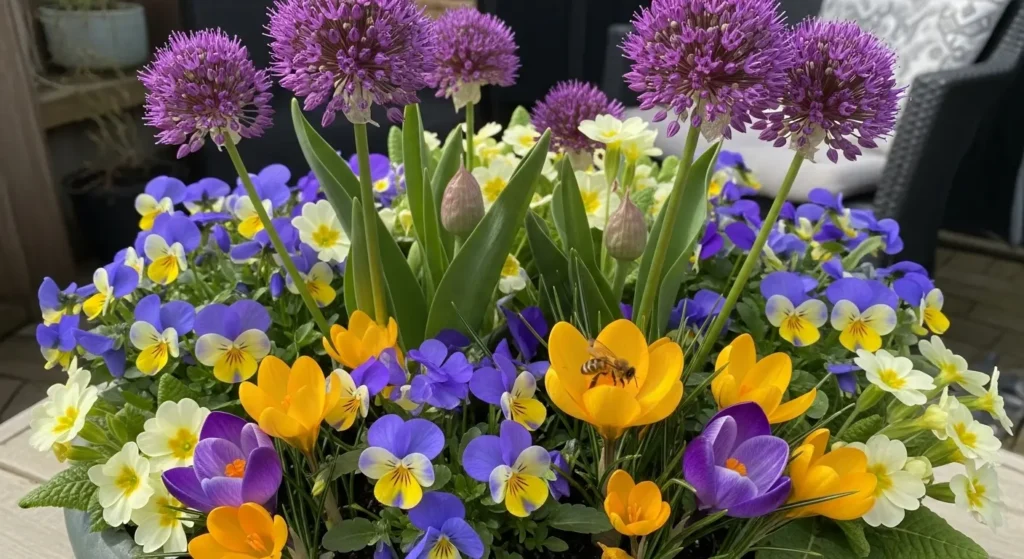
Early spring is the most critical time for pollinator survival — queens emerging from winter hibernation need immediate nectar access before they can establish new colonies. A pollinator-friendly spring planter provides exactly the food source early bees and butterflies need and the single-flowered varieties that pollinators prefer are often the most naturally beautiful planting choices anyway.
Choose single-flowered spring plants rather than double-flowered varieties — double flowers look lush but provide no accessible nectar for insects. Crocus, single violas, single primroses, muscari, pulmonaria, and native daffodil varieties are all excellent pollinator spring plants. Avoid highly bred double tulips, double hyacinths, and double narcissus which produce no useful nectar. The 5-Pack Heirloom Herb Seeds planted alongside your spring flowers adds early-season herbs that pollinators also value. Find them linked on Amazon.
9. Create a Modern Minimal Spring Planter With Architectural Restraint
✦ Modern Minimal Design
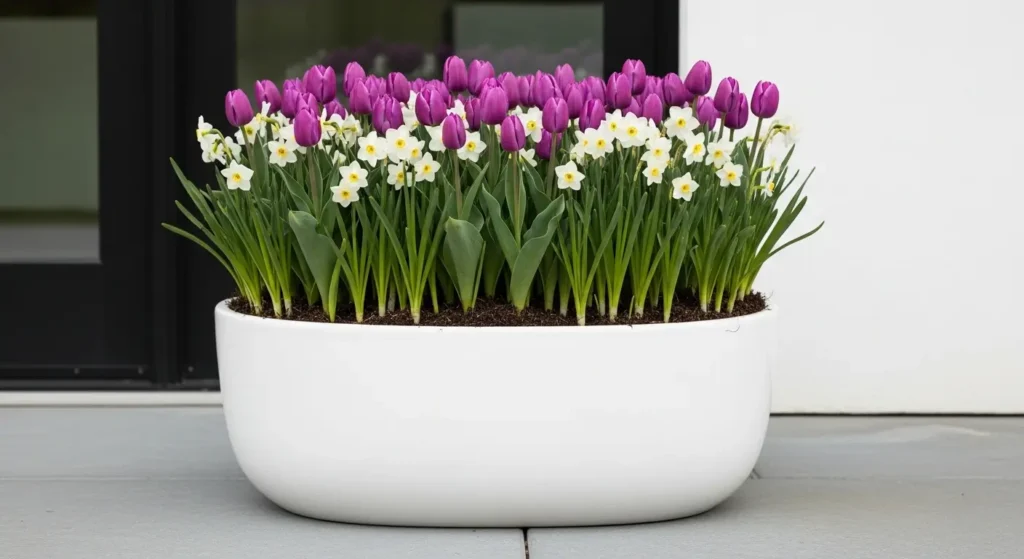
A modern minimal spring planter uses restraint as its design principle. One variety. One color. One clean container. The absence of mixing creates a boldness and clarity that complex mixed plantings cannot achieve. A large white ceramic bowl filled entirely with deep purple tulips is more visually powerful than the same bowl planted with ten different spring varieties.
Choose one spring plant and one color and commit entirely to it. All-white narcissus for pure freshness. All-purple tulips for dramatic monochrome color. All-yellow daffodils for bold sunshine impact. All-blue muscari for the most unusual spring statement. Plant at maximum density so the container surface is completely invisible — only the flowers and foliage of the single chosen variety should be visible. The Quarut large planter pots in grey provide the perfect minimal container for this approach. Find them linked on Amazon.
PRO TIP: For a modern minimal planter choose a container that is deeper than it appears necessary. A tall narrow container with a single variety of upright tulips creates a sculptural quality — the proportion of tall blooms emerging from a narrow vessel looks genuinely architectural and completely different from the standard wide bowl arrangement.
The Secrets Behind Beautiful Spring Planters
These five principles apply to every spring planter regardless of style:
1. Plant densely
The number one mistake in spring planting is leaving too much space between plants. Containers should look completely full at planting time — no visible compost between plants. Dense planting creates the luxurious abundant quality that makes spring planters look genuinely impressive.
2. Use trailing plants at the edges
Trailing plants that spill over the container edge soften the hard line between pot and surrounding surface. Trailing violas, bacopa, and ivy all create this cascading edge effect. Without trailing edge plants even a beautiful arrangement can look stiff and unfinished.
3. Create height variation
A single height level of planting looks flat. Tall plants at the back or center, medium plants around them, and low trailing plants at the edge creates the three-layer arrangement that makes spring planters look professionally designed.
4. Choose a color palette and stick to it
Random mixed colors look casual. A chosen palette of two or three complementary colors looks designed. Cool pastels, warm brights, or monochrome single-variety — choose one direction and plant every element within it.
5. Feed and deadhead regularly
Spring planters need weekly liquid feeding from first flowering for maximum performance. Remove spent flower heads regularly — deadheading extends the flowering period significantly by preventing plants from setting seed and stopping flower production.
5 Spring Planter Mistakes Worth Avoiding
These mistakes consistently reduce spring planter performance and appearance:
Mistake 1 — Planting too early in the season
Early spring plants in containers are vulnerable to hard frost damage. Wait until the risk of sustained hard frost has passed in your area before planting tender spring containers outdoors. Tulip bulbs planted in autumn handle frost underground but emerging plants in pots have less protection than ground-planted specimens.
Mistake 2 — Using old exhausted compost
Reusing old compost from previous seasons for spring planters produces poor plant performance. Old compost is depleted of nutrients, often compacted, and may harbor disease. Always use fresh quality multipurpose compost for spring container planting.
Mistake 3 — No drainage in the container
Spring is often the wettest season of the year. A container without drainage holes fills with water after heavy rain and drowns plant roots within days. Always ensure adequate drainage and never let spring containers sit in standing water in saucers.
Mistake 4 — Choosing all same-height plants
A container planted entirely with plants of the same height looks flat and uninteresting from a standing viewing position. Always include at least one tall element, one medium element, and one trailing or low element in any spring planting design.
Mistake 5 — Planting in a position with wrong light levels
Most spring flowering plants need bright light to perform well. Tulips, hyacinths, and narcissus in deep shade produce elongated weak stems that flop rather than standing upright. Always check light requirements before positioning spring planters and choose appropriate plants for shadier positions.
📌 More planter ideas → 7 Full Sun Planter Ideas For Hot Summer
Frequently Asked Questions
What are the best plants for spring planters?
The best plants for spring planters combine reliable color, good container performance, and seasonal timing. Top choices include tulips for height and bold color, narcissus and daffodils for fragrance and classic spring appeal, violas and pansies for continuous long-season flowering, hyacinths for spectacular fragrance, primroses for early color in lower light positions, and muscari for the distinctive blue that no other spring plant provides. According to the Royal Horticultural Society violas are the most versatile spring container plant due to their long flowering season, wide color range, and tolerance of both cool spring temperatures and unexpected late frosts.
When should I plant spring containers?
Spring bulbs are planted in autumn, typically October to November, for spring flowering. Hardy bedding like violas and primroses can go in from February onward; tender plants wait until after the last frost date for your area.
How long do spring planters last?
Tulips flower for 3 to 5 weeks, narcissus for 4 to 6 weeks, violas and pansies for 8 to 16 weeks with regular deadheading. Mixing plants with different flowering periods extends the overall display as one finishes and another takes over.
What do I do with spring planters after flowering?
Transition to summer planting by replacing spent spring plants with summer bedding or lift and store tulip and narcissus bulbs once foliage has died back naturally for replanting next autumn. Violas and pansies can continue into early summer with consistent deadheading.
More Planter and Garden Ideas
→ 12 Lovely Front Yard Garden Ideas
→ 12 Tiny Front Garden Ideas on a Budget 🌿
→ 10 Mini Dish Garden Ideas You’ll Love
→ 12 Cute Mini Garden Ideas For Small Spaces
The terracotta pot of tulips that prompted three knocks on my neighbor’s door cost her $12 and forty minutes on a Saturday morning.
That is the honest case for spring planter ideas. Pick one design from this list. Buy the plants this weekend. Plant densely. The porch looks completely different within days.

Sheikh Hassaan is a digital architect for small businesses and the founder of The Glow Up System. He writes about home decor, garden design, and outdoor living for real American homes – practical ideas that work in actual spaces without oversized budgets.