
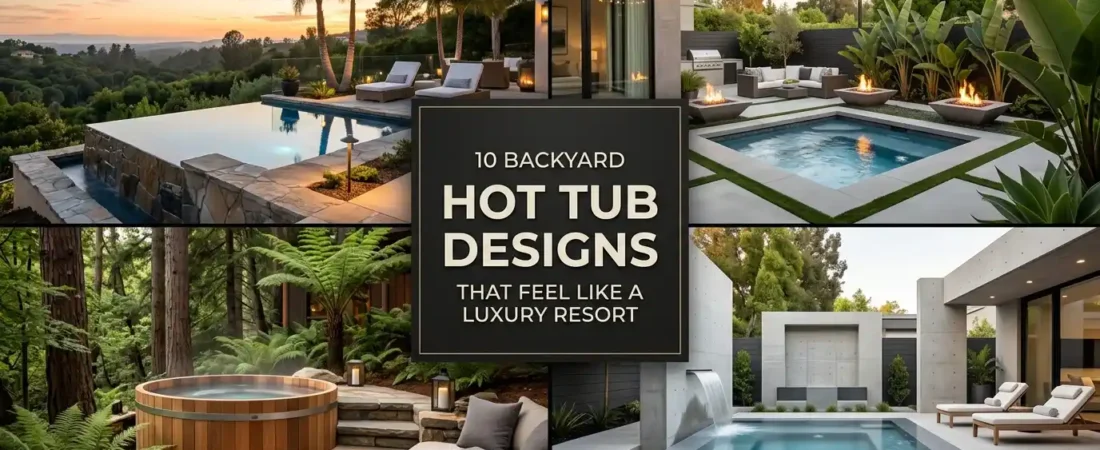
A well-designed backyard patio with a hot tub can transform your outdoor space into a personal spa retreat. Whether you have a sprawling yard or a compact patio, the right design makes your hot tub feel like an intentional part of the landscape rather than an afterthought. Here are 10 creative backyard patio designs with hot tubs to inspire your own outdoor oasis.
Table of Contents
1. Corner Hot Tub Patio
✦ Best for: Maximizing usable patio space in small or awkwardly shaped yards
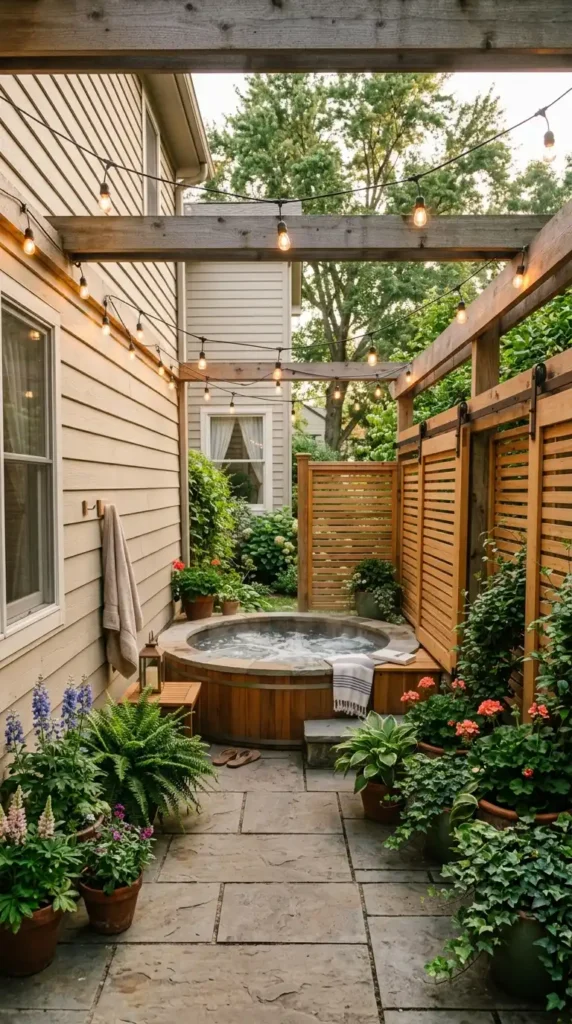
Placing your hot tub in a corner is one of the smartest ways to maximize usable patio space. This layout uses existing boundaries to create a naturally sheltered and cozy environment. By tucking the tub into a corner, you free up the rest of the patio for dining sets, lounge areas, or outdoor kitchens.
How to do it: Tuck the hot tub snugly into a corner of your yard or patio. Use a sliding wood-and-textile screen for privacy when needed and an open view when desired. This layout saves room and creates cozy sightlines. Just make sure to leave minimum clearance for access and maintenance of the hot tub cover.
2. Hot Tub Under a Pergola
✦ Best for: Adding architectural interest and shade while defining the hot tub area as a distinct outdoor room

A pergola adds architectural interest and a sense of enclosure to your hot tub area, creating a room-like feel. It provides light shade during the day and a place to hang ambient lighting at night. Climbing vines like jasmine or wisteria can be trained to grow up the posts, creating a fragrant and natural canopy.
How to do it: Build a pergola directly over your hot tub. Leave the top open for stargazing or add retractable fabric covers for extra protection against light rain or harsh sun. Drape string lights across the beams for a magical evening glow. Outdoor curtains on the sides can add privacy and a soft, romantic touch.
3. Sunken Hot Tub
✦ Best for: Creating a seamless, integrated look that makes the patio feel more spacious
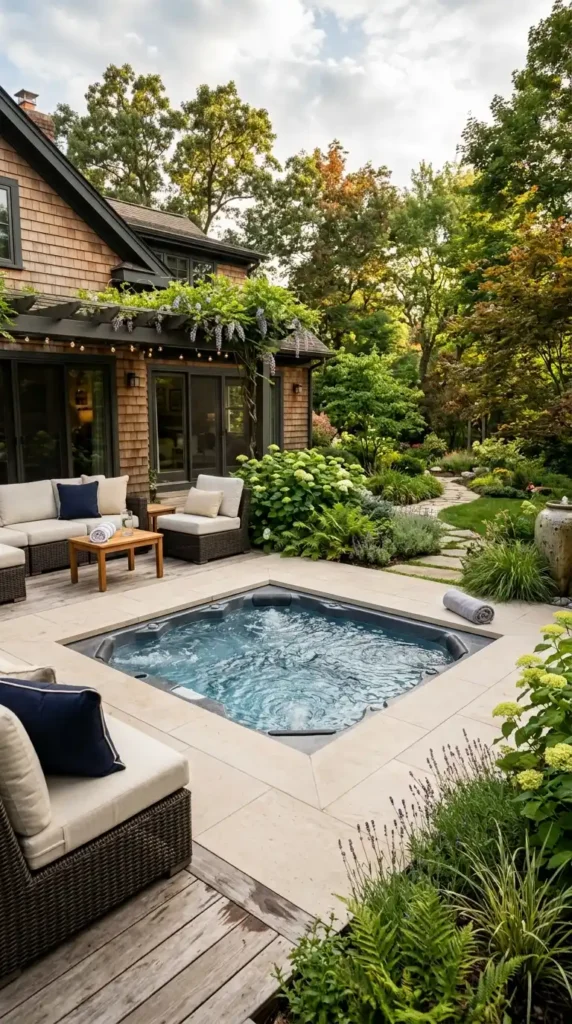
A sunken hot tub eliminates the bulky visual profile of a portable tub and creates a sophisticated, high-end look reminiscent of a luxury resort. Installing the unit directly into the ground or a raised platform so the rim is level with the floor creates a seamless, integrated appearance.
How to do it: Embed your hot tub into a raised deck or patio so the rim is level with the surrounding floor. Frame the area with smooth limestone or slate tiles to enhance the clean lines. This design improves accessibility and offers a better view of your surrounding garden. It works exceptionally well for open-concept patios where you want to maintain an unobstructed sightline across the entire yard.
4. Hot Tub with Privacy Screen
✦ Best for: Creating a secluded, intimate soaking space shielded from neighbors
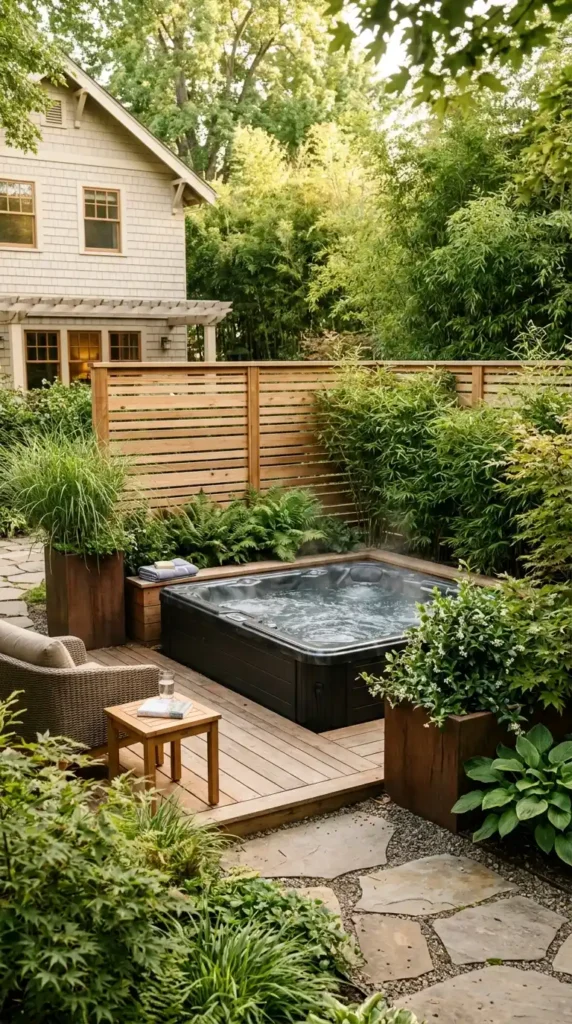
Privacy is often a top priority for homeowners who want to fully relax in their outdoor spa. A dedicated privacy screen can be both functional and a stunning design feature. Options range from modern horizontal wood slats to decorative laser-cut metal panels that cast beautiful shadows when lit from behind.
How to do it: Install privacy screens around your hot tub using wood slats, bamboo panels, frosted glass, or tall planter walls. This creates a “room within a room” effect, shielding you from the view of neighbors or street noise. You can also use tall shrubs or a lattice wall with climbing plants for a natural screen.
5. Hot Tub with Fire Pit
✦ Best for: Extending patio use into cooler evenings with a cozy, dual-sensory experience
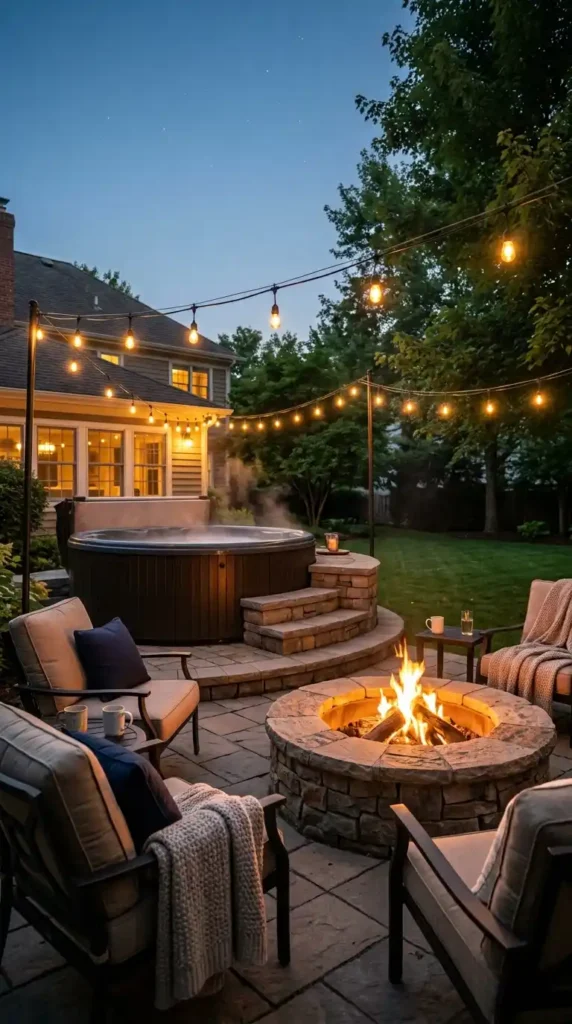
Positioning your hot tub near an outdoor fireplace or a large stone hearth creates a dual-sensory experience that is the height of luxury. The fireplace provides warmth for when you step out of the water and acts as a massive architectural anchor for the entire patio design.
How to do it: Place a fire pit or outdoor fireplace near your hot tub. Match the stone of the fireplace to the hot tub surround for a perfectly coordinated look. Add comfortable seating around the fire feature to create a distinct conversation zone that complements the relaxation of the hot tub.
6. Raised Deck Hot Tub
✦ Best for: Creating a dedicated platform that separates the wet zone from the rest of your outdoor living space
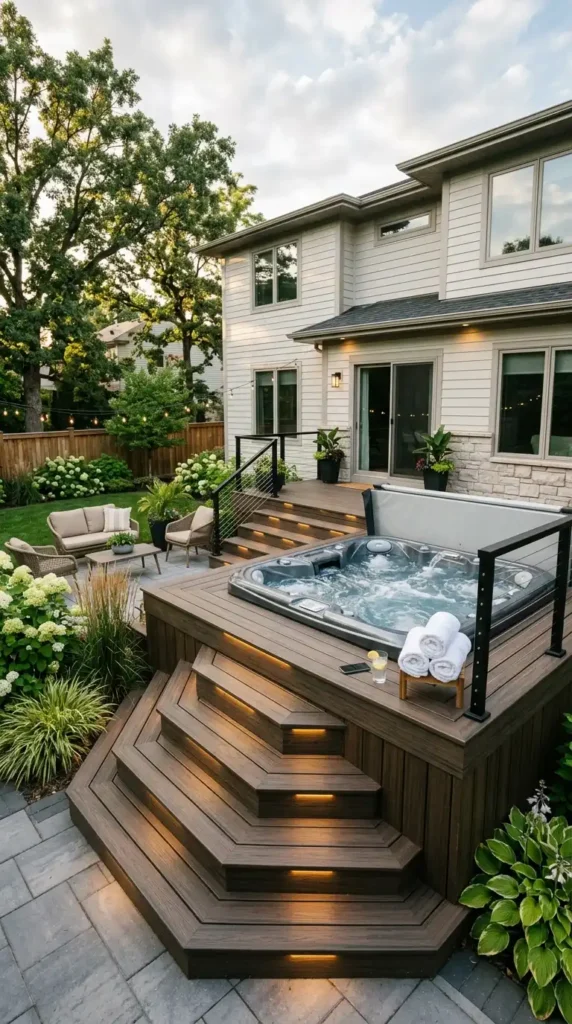
Building a raised deck specifically for your hot tub is a classic way to elevate the entire look of your backyard. This design allows you to create a dedicated platform that separates the wet zone from the rest of your dry living space.
How to do it: Build a raised platform using low-maintenance, slip-resistant composite decking. Integrate wide, wraparound steps for easy access and extra seating for guests. Add built-in LED lighting along the edges for safety and a gorgeous glow after dark. Use the same wood or composite material around the tub for a unified aesthetic.
7. Hot Tub Landscaping and Natural Stone Surround
✦ Best for: Creating a natural, organic look that blends the tub into the surrounding greenery
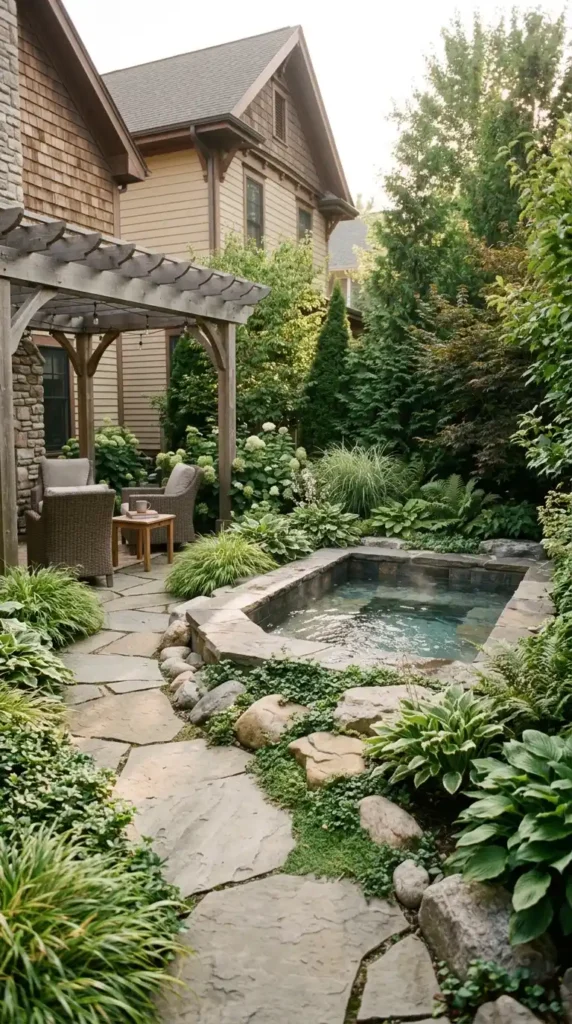
Lush landscaping can turn a basic patio into a hidden tropical or woodland oasis. By surrounding your spa with a mix of tall privacy plants, colorful flowers, and ornamental grasses, you create a natural screen that feels soft and inviting.
How to do it: Use natural stone like flagstone, slate, or travertine for the patio surface. They are durable, heat-resistant, and offer a natural grip for wet feet. Surround the tub with greenery, bamboo is a popular choice for quick privacy, while hostas and ferns thrive in the humid environment near the water. Incorporate large boulders or a small rock garden to add a rugged, naturalistic feel. This organic approach promotes a deeper sense of relaxation and connection with nature.
8. Built-In Bench Seating
✦ Best for: Social seating, extra storage, and a clean, cohesive look without extra furniture
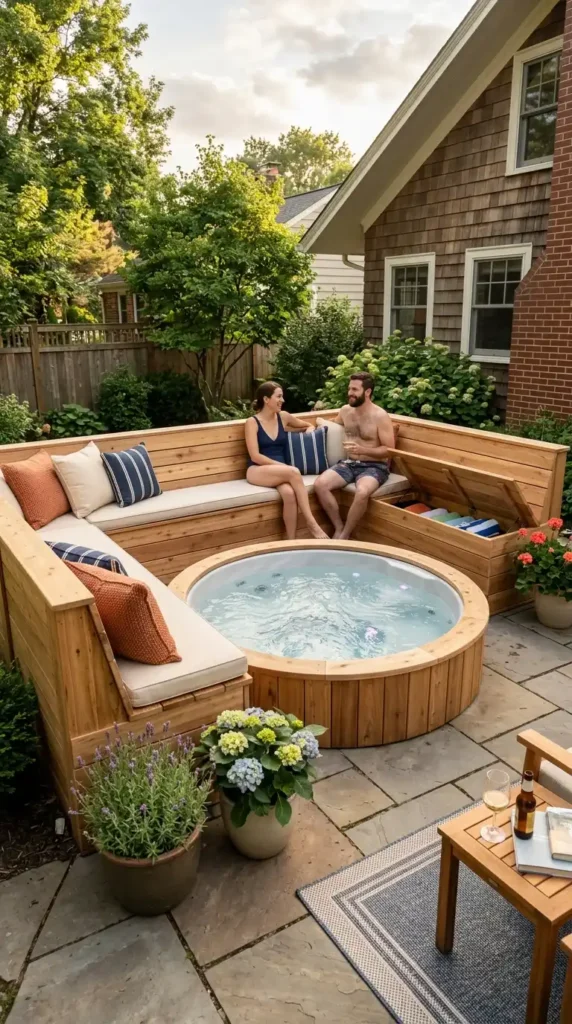
Framing your hot tub with built-in bench seating creates a clean, cohesive look and provides extra storage. This is perfect for small patios where there isn’t room for separate chairs.
How to do it: Build benches around your hot tub using weather-resistant materials. Use the benches for seating and as a landing spot for drinks and towels. You can also incorporate hidden compartments for storing towels and spa chemicals. This approach saves space and adds functionality to your hot tub area.
9. Multi-Level Deck or Patio
✦ Best for: Sloped yards and creating distinct functional zones for dining, lounging, and soaking
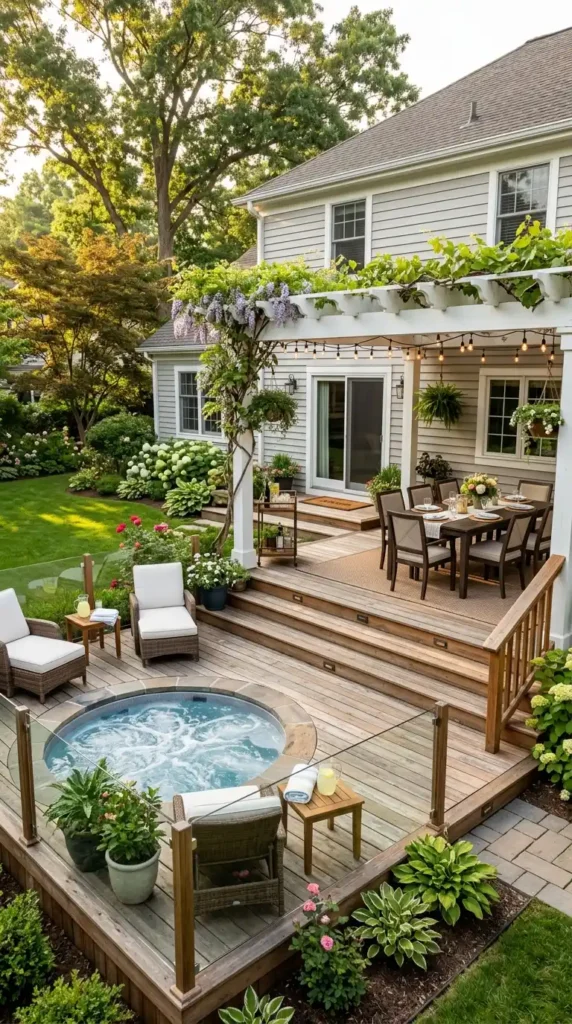
A multi-level deck is a fantastic solution for sloped yards and for creating distinct functional zones. This separation creates a dedicated relaxation zone.
How to do it: Place the hot tub on a lower level for privacy, with steps leading up to a main patio area for dining and entertaining. Use different wood stains or materials to define the different levels. Built-in benches on the upper deck can provide seating with a view of the hot tub area below, making it a great layout for entertaining.
10. Small-Space Hot Tub with Multi-Functional Furniture
✦ Best for: Tiny patios, balconies, and compact urban yards where every inch counts
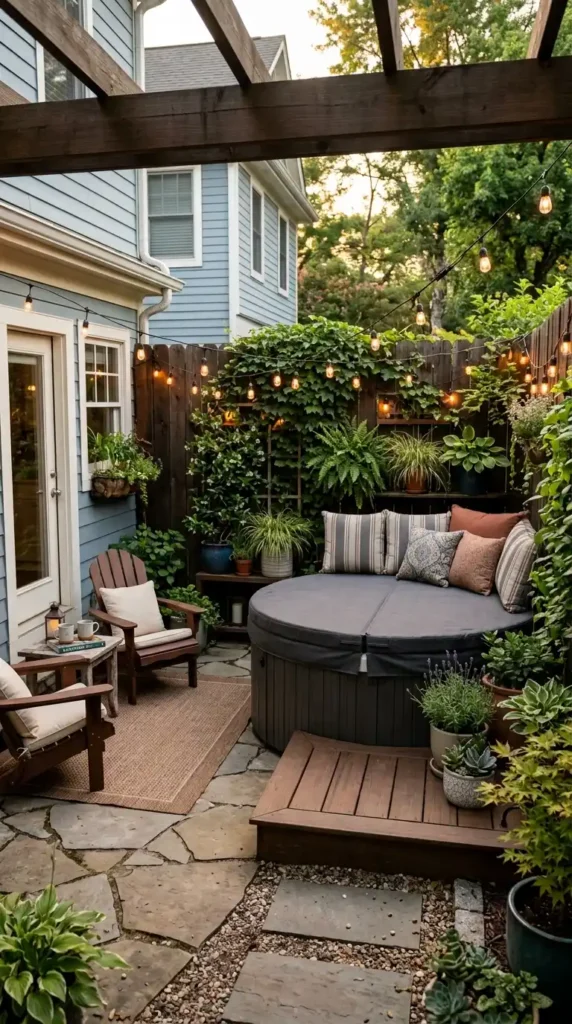
Even tiny backyards can host a hot tub with the right layout. Use compact tubs, vertical privacy screens, built-in benches, or corner placement to maximize every inch.
How to do it: Tuck a compact hot tub into a corner and use vertical elements like tall planters or a living wall for greenery. Consider a shallow tub with a removable, cushioned cover that becomes seating or a table when not in use. For a simpler option, a high-quality inflatable tub can save the day with low upfront cost and seasonal storage. Use light-colored pavers or decking to make the area feel more open and airy.
Frequently Asked Questions
1. What is the minimum patio size for a hot tub?
Most compact two-person hot tubs require about 6-8 square feet of footprint plus clearance for access. Plan at least a 6×6 ft area but aim for extra circulation space.
2. How do I ensure privacy for a patio hot tub?
Use vertical screens, planting, or sliding panels. Materials like bamboo or louvered wood work well to block sightlines while maintaining airflow.
3. What materials hold up best near hot tubs?
Composite decking, sealed hardwoods, and porcelain pavers resist moisture and are low maintenance.
4. Do I need a dedicated electrical circuit for my hot tub?
Yes, hot tubs typically require a dedicated GFCI-protected circuit installed by a licensed electrician to meet code requirements.
Related Articles
DIY Dog-Friendly Backyard Makeover: Before and After
Backyard Deck Ideas on a Budget That Look Expensive
Garden Path Ideas for a More Beautiful Backyard
7 Eye-Catching Backyard Ideas Full Of Color
A well-designed hot tub patio is more than just a place to soak. It is a personal retreat that enhances your outdoor living space, inviting relaxation and connection.

Sheikh Hassaan is a digital architect for small businesses and the founder of The Glow Up System. He writes about home decor, garden design, and outdoor living for real American homes – practical ideas that work in actual spaces without oversized budgets.