
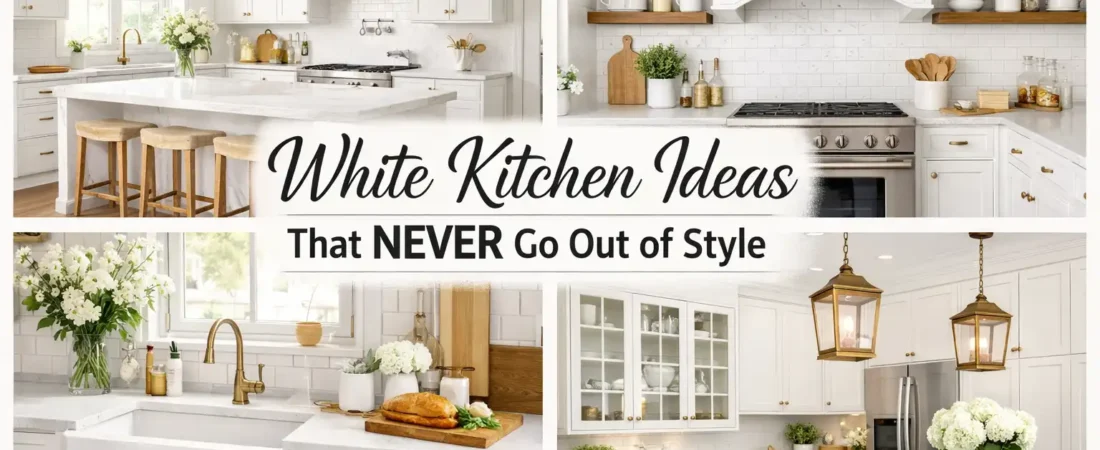
White has been the most popular kitchen color for three decades running, not because it is the safest choice but because it is genuinely the most versatile one. White kitchen ideas work across every architectural style, every budget, and every personal aesthetic because white is not a neutral that disappears into the background but an active design choice that creates light, space, and a specific quality of cleanliness that no other color achieves as reliably.
This guide covers white kitchen ideas organized by design approach — from the classic all-white kitchen through the warm white farmhouse version, the contemporary white kitchen with bold contrasts, and the specific finishing details that separate a white kitchen that looks genuinely designed from one that simply has white cabinets.
Table of Contents
Why White Kitchens Have Outlasted Every Other Kitchen Trend
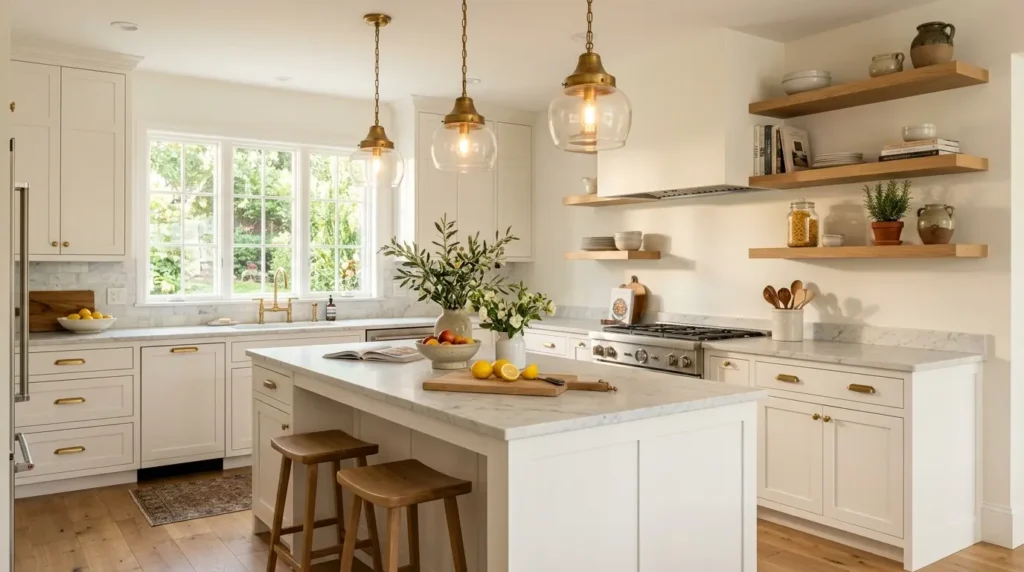
White kitchens outlast color trends because white is not a trend — it is the color that maximizes the two qualities that matter most in a kitchen: the perception of cleanliness and the perception of space. A kitchen that reads as clean and spacious is a kitchen that feels good to work in every day and photographs well every time. These are not aesthetic qualities that go in and out of fashion — they are functional qualities that remain desirable permanently.
The specific quality that white achieves in a kitchen that no other color does as reliably: it reflects light throughout the room rather than absorbing it, which means that a white kitchen looks brighter and more spacious than the same kitchen in any other color under identical lighting conditions. This is not a visual trick — it is a physical property of white surfaces that delivers genuine functional benefit in a room where light quality directly affects how enjoyable the space is to cook and gather in.
The most common white kitchen mistake: choosing the wrong white. There are warm whites — those with yellow, cream, or pink undertones — and cool whites — those with gray or blue undertones. A warm white kitchen with cool white appliances reads as mismatched even when both elements are technically white. Choosing a single white tone and holding it consistently across cabinets, walls, and trim is the foundational decision that makes a white kitchen look genuinely designed rather than simply white.
1. The Classic All-White Shaker Kitchen That Ages Like Fine Wine
✦ Best for: any home style from traditional through contemporary where maximum timelessness and resale value are the goals
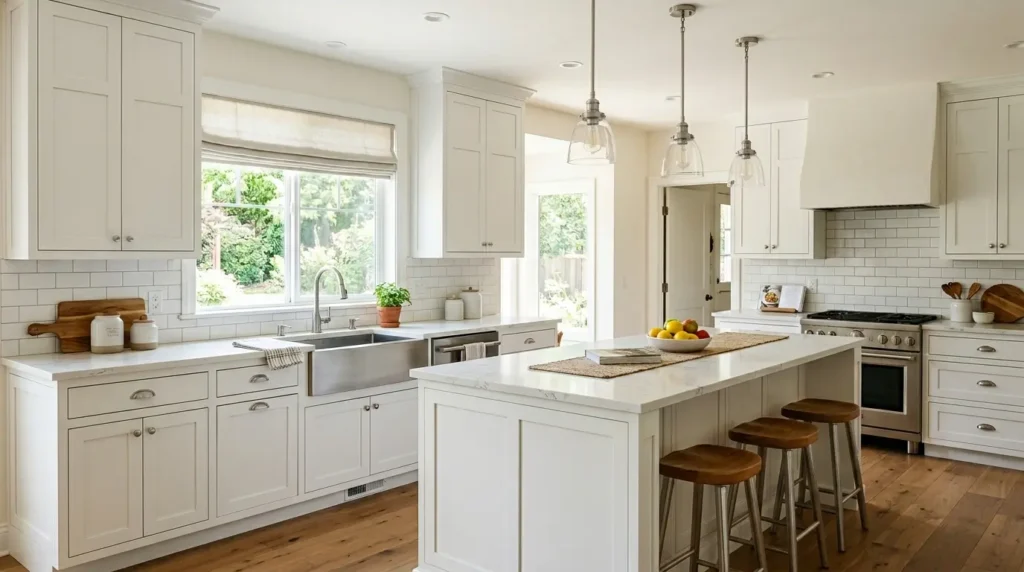
The white shaker cabinet kitchen is the most enduringly popular kitchen design in American residential architecture for a reason — the shaker door profile is the simplest possible framed door construction, which means it suits every architectural period from colonial through contemporary without belonging specifically to any of them. A white shaker kitchen installed today will look appropriate in twenty years in a way that a kitchen with a strongly period-specific door profile will not.
The classic all-white shaker kitchen palette: white shaker cabinets in a warm white — Benjamin Moore Chantilly Lace or Sherwin-Williams Extra White — with white subway tile backsplash, white quartz or marble countertops, and white walls in the same tone as the cabinets. The hardware is the one element that introduces a contrasting material: brushed nickel, brushed brass, or matte black depending on the home’s other metal finishes.
The resale value argument for a white shaker kitchen is genuine and well-documented — real estate agents consistently report that white kitchens with neutral countertops generate more buyer interest and higher offers than kitchens with strongly colored cabinetry, because buyers can immediately visualize themselves in a white kitchen without having to mentally repaint it. A white shaker kitchen is the closest thing to a universally appealing kitchen design that exists.
2. The Warm White Farmhouse Kitchen With Natural Timber Accents
✦ Best for: farmhouse, transitional, and traditional homes where warmth and natural material texture are needed alongside white cabinetry
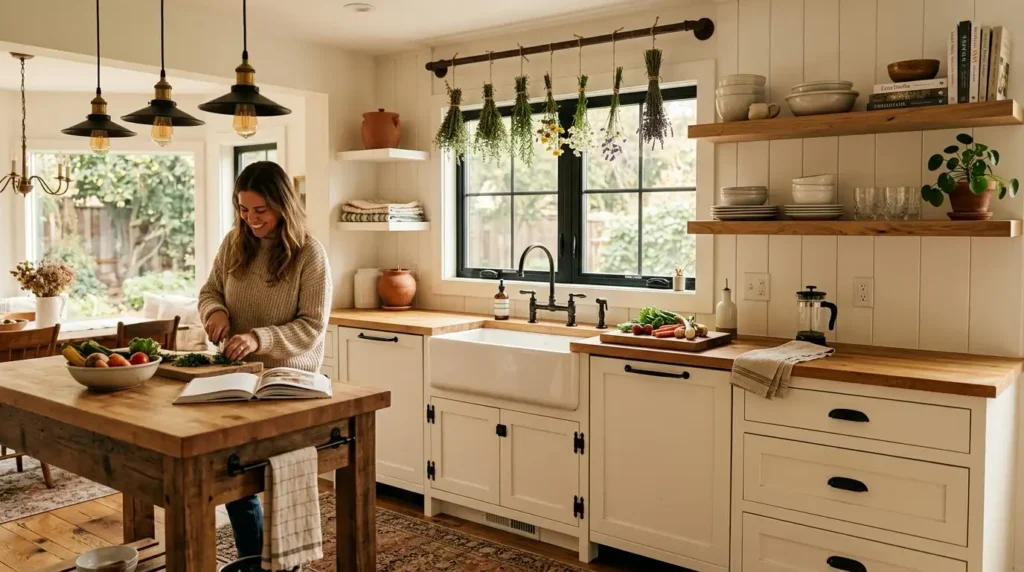
The warm white farmhouse kitchen addresses the most common criticism of all-white kitchens — that they feel cold and clinical rather than warm and welcoming — by introducing natural timber as the material that creates warmth within a primarily white scheme. The combination of white cabinetry and warm natural timber creates the specific quality of a well-used farmhouse kitchen that has been maintained and loved over years rather than installed as a showroom display.
The timber elements that add the most warmth to a white farmhouse kitchen: open timber shelves on the upper section of one wall — replacing upper cabinets with floating timber shelves creates the open, airy quality associated with farmhouse kitchens while introducing the natural wood grain that contrasts beautifully with white cabinetry. A butcher block counter section beside or integrated with the main countertop. A timber island top if the kitchen has a central island.
The farmhouse apron sink is the most immediately recognizable single element of the farmhouse kitchen aesthetic — a deep single-basin sink with the front face exposed rather than hidden behind a cabinet door. In white or fireclay it suits the warm white farmhouse kitchen directly. In black cast iron or dark gray it creates the material contrast that keeps the kitchen from reading as uniformly white. Either version makes the sink the kitchen’s most characterful functional element.
3. The White Kitchen With Black Accents for a Bold Contemporary Result
✦ Best for: contemporary and modern homes where the graphic contrast of black against white creates a stronger design statement than all-white
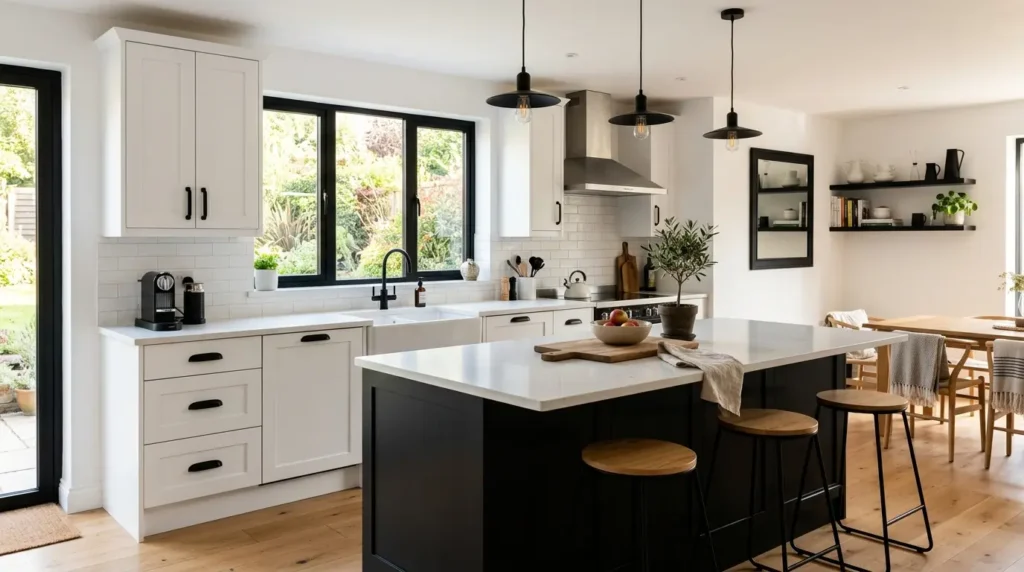
The white kitchen with black accents creates the strongest graphic design statement available in a residential kitchen without requiring colored cabinetry — the high contrast between white surfaces and black hardware, fixtures, and accent elements creates a visual boldness that reads as intentionally designed rather than neutrally safe. This is the white kitchen approach that photographs most dramatically and that suits contemporary and modern home styles most directly.
The black elements that create the most impact in a white kitchen: matte black cabinet hardware throughout — the matte finish reads as more sophisticated than glossy black and creates less visual noise than chrome. A black island base with a white or marble top, contrasting with white perimeter cabinets, creates the two-tone kitchen effect that has been one of the most sought-after kitchen design approaches for the past several years. Black pendant lights above the island provide overhead interest at eye level.
The proportional rule for black accents in a white kitchen: black should appear in small consistent doses rather than as large surface areas. Hardware, fixtures, light fittings, and window frames are the appropriate scale for black accents in a kitchen that is primarily white. A black island base is the largest black element that works — black upper cabinets throughout tips the kitchen from white with black accents to a two-tone kitchen where white is no longer the dominant color.
4. The White Kitchen With Marble Countertops for Luxury Quality
✦ Best for: kitchens where maximum perceived luxury and the specific beauty of natural stone are the primary design goals
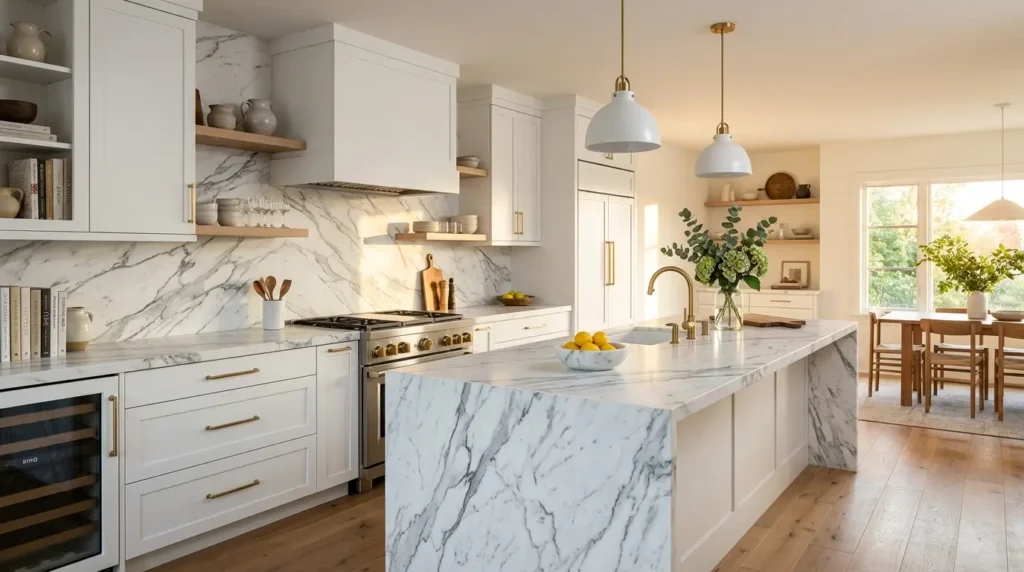
White marble countertops in a white kitchen create a tone-on-tone luxury effect that no other countertop material in any other kitchen color achieves — the white-on-white combination with the grey veining of the marble creates a surface that reads as genuinely luxurious while remaining tonally consistent with the cabinet color rather than introducing a contrasting material color.
The marble varieties that suit a white kitchen most directly: Carrara marble for the most classic and most affordable natural marble option — white background with soft gray veining that remains subtle enough to suit a kitchen that needs to feel calm rather than dramatic. Calacatta marble for the most dramatic veining pattern — bold gold or dark gray veins on a bright white background that creates a statement countertop without any additional design work. Statuario marble for the most sophisticated version — medium-gray veining on a pure white background that sits between Carrara and Calacatta in both drama and price.
The maintenance honest answer for marble in a kitchen: natural marble is porous and requires sealing annually and careful management of acidic foods and liquids — lemon juice, wine, and vinegar will etch the surface if left in contact. For the appearance of marble without the maintenance, porcelain tiles and engineered quartz in marble-look patterns have improved dramatically and create a visually convincing alternative that is significantly more practical for an active kitchen.
5. The White Open-Plan Kitchen That Connects to the Living Space
✦ Best for: open-plan homes where the kitchen design must work harmoniously with the living and dining areas it connects to
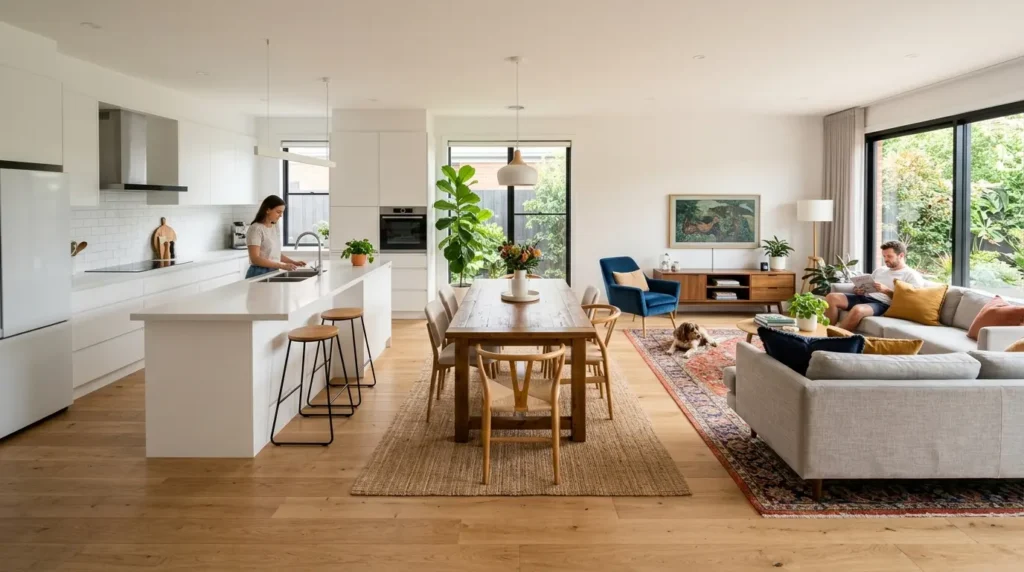
White is the kitchen color that works best in open-plan spaces precisely because it does not compete with the living and dining areas it connects to. A colored kitchen in an open-plan space dominates the visual composition of the entire floor — the kitchen color becomes the room color. A white kitchen recedes visually and acts as a clean neutral backdrop that allows the living area furniture, rugs, and art to read as the room’s primary design elements.
The design decision that most effectively connects an open-plan white kitchen to its surrounding living space: using the same flooring material throughout the entire open-plan zone rather than transitioning between kitchen and living room flooring at the kitchen boundary. A continuous flooring surface — whether hardwood, large format tile, or polished concrete — creates the visual flow that makes an open-plan space read as a single designed environment rather than two rooms without a wall between them.
The island or peninsula in an open-plan white kitchen serves the additional function of defining the kitchen zone without a wall — it creates the spatial boundary between cooking and living areas while maintaining visual connection between them. An island with seating on the living-room side creates the transitional social zone that makes open-plan living genuinely functional rather than simply spatially open.
6. The White Kitchen With Colored Lower Cabinets for Visual Interest
✦ Best for: kitchens where an all-white scheme feels too safe and a specific accent color is wanted without committing to colored upper cabinets
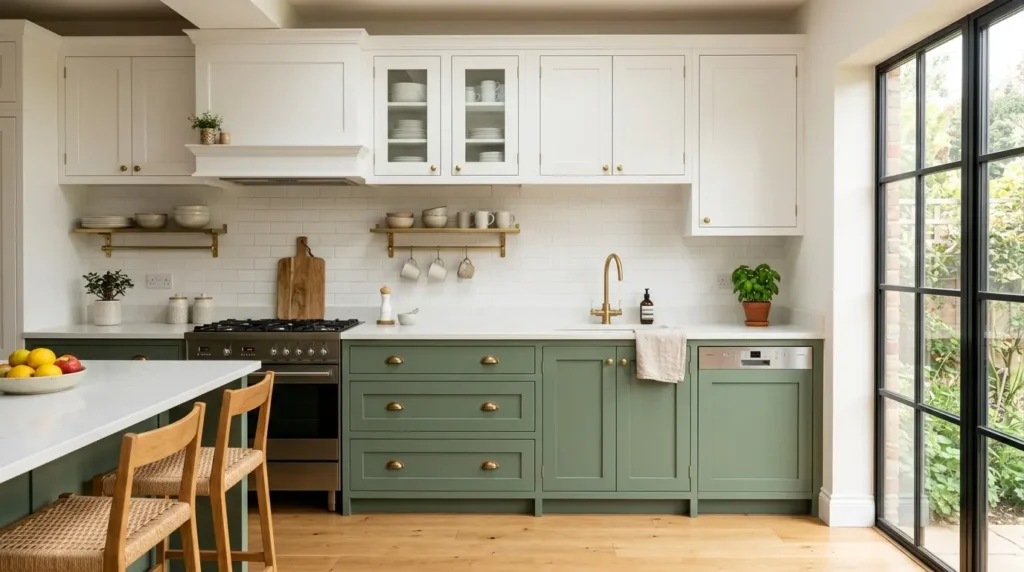
The two-tone kitchen with white upper cabinets and colored lower cabinets is one of the most popular current kitchen design approaches because it introduces personality and color without the commitment or the visual weight of coloring the entire kitchen. White upper cabinets keep the room light and maintain the visual spaciousness that white provides — colored lower cabinets add character and visual grounding at counter level where the color is present but not dominant.
The lower cabinet colors that work best with white uppers: sage green for the most popular and most versatile combination — sage green lower cabinets with white uppers suit farmhouse, contemporary, and transitional kitchens equally well and create the nature-connected warmth that is one of the defining aesthetic directions of current kitchen design. Navy blue for the most sophisticated version — the strong contrast between navy and white creates the most graphic and most contemporary two-tone result. Dusty pink or blush for a softer, more romantic version that suits cottage and farmhouse styles specifically.
The countertop choice in a two-tone kitchen is the element that ties the two cabinet colors together — it needs to work with both the white uppers and the colored lowers simultaneously. White quartz or light marble suits both by being tonally aligned with the white uppers. Natural timber butcher block creates warmth that bridges the white and the color. Dark stone or dark granite creates a bold base that grounds the colored lower cabinets further.
7. The White Kitchen Refresh That Transforms Without Full Renovation
✦ Best for: transforming an existing kitchen that has good bones but looks dated without the cost and disruption of a full cabinet replacement
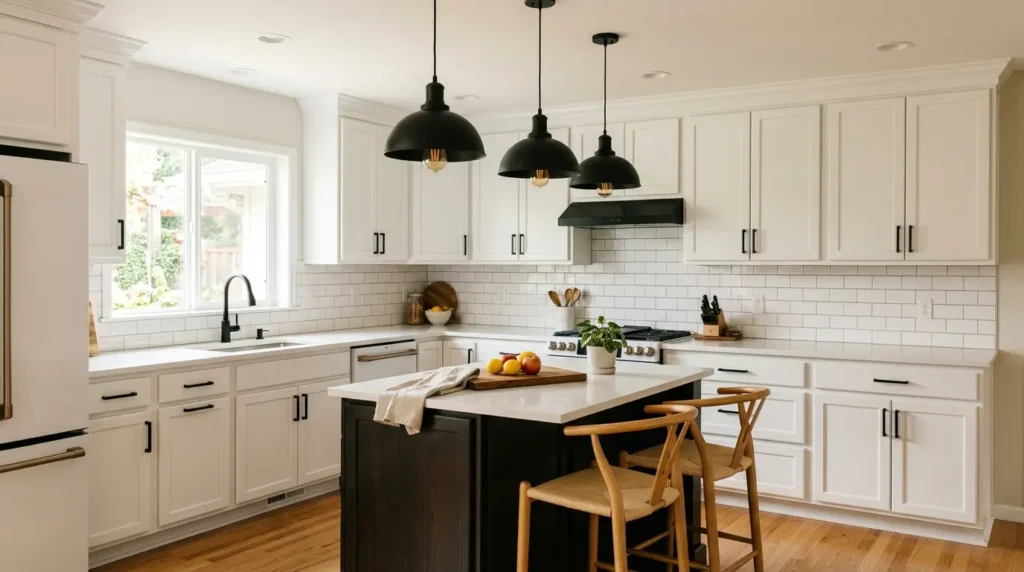
A full kitchen renovation costs $25,000 to $75,000 or more depending on scope. A white kitchen refresh that transforms the same space without replacing cabinet boxes costs $2,000 to $8,000 — a fraction of the full renovation cost with a visual transformation that is often indistinguishable from a complete replacement to anyone who did not see the before.
Paint the cabinets:
Cabinet painting by a professional produces a factory-finish quality result that DIY cabinet painting rarely achieves. The cost for a professional cabinet spray finish is $1,500 to $3,500 for a full kitchen and is the single highest-return investment available in a kitchen refresh. The transformation from dated oak, cherry, or dark-stained cabinets to crisp white is dramatic regardless of the door profile.
Replace the hardware:
New hardware on freshly painted cabinets is the detail that communicates renovation quality — the combination of white paint and new matte black or brushed brass hardware reads as a deliberate design decision rather than a refresh. Budget $200 to $600 for quality hardware across a full kitchen.
Add a new backsplash and lighting and the transformation is complete — fresh paint, new hardware, subway tile backsplash, and new pendant lights over the island creates a kitchen that reads as fully renovated at a total cost of $3,000 to $6,000 rather than $30,000 to $60,000.
📌 More home decor ideas: Western Living Room Decor Ideas Designers Are Obsessed With
Frequently Asked Questions
Are white kitchens still in style?
White kitchens have remained the most popular kitchen color choice for over three decades and show no signs of declining — because white is not a trend that comes and goes but a functional design choice that delivers genuine benefits of light reflection and perceived cleanliness that no other color provides as reliably. According to the National Kitchen and Bath Association, white and off-white remain the most specified cabinet colors in new kitchen installations and renovations year after year, with their market share actually increasing relative to other color choices over the past five years as the trend for dramatic colored kitchens has moderated.
What is the best white paint for kitchen cabinets?
The white paint colors most consistently used by kitchen designers for cabinets: Benjamin Moore Chantilly Lace for the most popular pure white with very slight warm undertones that prevents it from reading as cold or blue. Sherwin-Williams Alabaster for a slightly creamier white that suits farmhouse and traditional kitchens. Benjamin Moore White Dove for a soft warm white that pairs beautifully with natural timber accents. Sherwin-Williams Extra White for the brightest and crispest white available — best suited to contemporary kitchens with plenty of natural light.
How do I make a white kitchen feel warmer?
The most effective ways to add warmth to a white kitchen: introduce natural timber through open shelves, a butcher block counter section, or a timber island top. Use warm white paint with yellow or cream undertones rather than cool or blue-toned whites. Install warm-toned pendant lights above the island and set all kitchen lighting to 2700K warm white bulbs. Add a woven rattan or jute rug in the kitchen area if the floor permits. Display fresh herbs in terracotta pots on the windowsill or countertop. Each of these changes introduces organic warmth without changing the fundamental white kitchen palette.
What countertops go best with white kitchen cabinets?
The countertop materials that work best with white kitchen cabinets: white Carrara or Calacatta marble for the most luxurious tone-on-tone result. White quartz in a marble-look pattern for the same appearance with better durability and lower maintenance. Natural butcher block timber for warmth and organic material contrast. Dark soapstone or dark granite for the most dramatic contrast that grounds the white cabinetry visually. Light gray quartz for the most neutral and most versatile option that suits any white cabinet tone without either matching it too closely or contrasting it too strongly.
More Home Decor Ideas
→ Maximalist Decor Ideas You’ll Wish You Tried Sooner
→ Family Photo Wall Ideas That Never Look Tacky
→ Master Bedroom Ideas That Make You Never Want to Leave
Choose the white first and hold it consistently. Every other decision in a white kitchen becomes easier once that single tone is fixed.

Sheikh Hassaan is a digital architect for small businesses and the founder of The Glow Up System. He writes about home decor, garden design, and outdoor living for real American homes – practical ideas that work in actual spaces without oversized budgets.